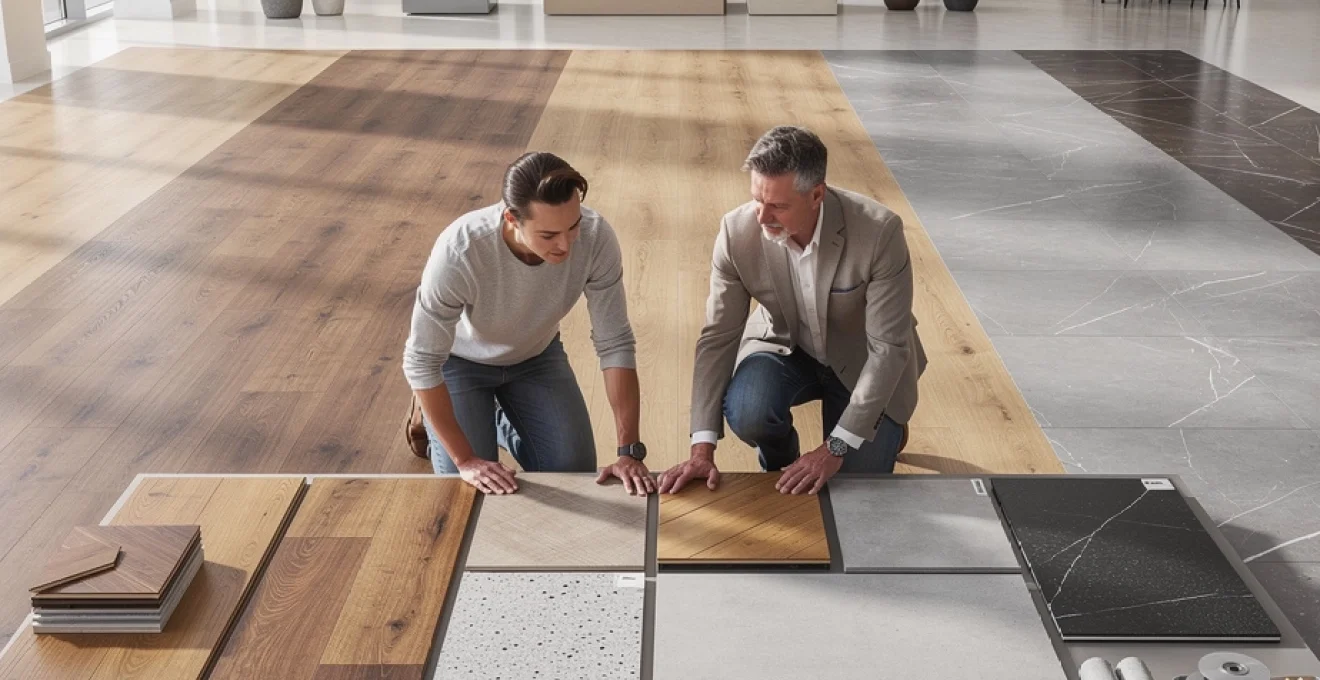
Selecting the right flooring represents one of the most significant decisions you’ll make when designing or renovating your property. The choice extends far beyond aesthetics—it’s an investment that influences your space’s functionality, maintenance requirements, and long-term value. Modern flooring technologies have evolved dramatically, offering solutions that refuse to compromise between visual appeal and performance. From engineered timber systems that outperform solid wood in stability to innovative vinyl composites that replicate natural materials with remarkable authenticity, today’s market provides sophisticated options for discerning homeowners and commercial developers alike.
Understanding the technical specifications, performance characteristics, and installation requirements of contemporary flooring materials empowers you to make informed decisions tailored to your specific environment. Whether you’re specifying materials for a high-traffic commercial lobby or selecting surfaces for a residential renovation, the balance between durability and design has never been more achievable.
Engineered hardwood flooring: lamella construction and wear layer specifications
Engineered hardwood flooring has revolutionised the timber flooring industry by addressing the dimensional instability issues inherent in solid wood planks. The construction methodology involves bonding a genuine hardwood wear layer to a multi-ply substrate, creating a product that delivers authentic wood aesthetics whilst dramatically reducing expansion and contraction caused by humidity fluctuations. The wear layer thickness typically ranges from 2.5mm to 6mm, with thicker veneers allowing for multiple refinishing cycles throughout the floor’s lifespan.
The quality of engineered flooring correlates directly with its construction complexity. Premium manufacturers utilise seven to eleven plies arranged in alternating grain directions, which creates exceptional dimensional stability. This cross-ply configuration distributes tension forces evenly across the board, preventing the cupping and warping that plague solid timber installations in challenging environments. You’ll find that properly constructed engineered floors can be installed over concrete slabs, radiant heating systems, and below-grade applications where solid wood would fail catastrophically.
Multi-ply core stability systems in engineered oak and walnut
The substrate composition significantly influences engineered flooring performance. High-density fibreboard (HDF) cores provide excellent stability and sound dampening properties, whilst birch or pine plywood substrates offer superior screw-holding capacity for secret-nailed installations. European oak and American walnut remain the most sought-after species for wear layers, combining distinctive grain patterns with practical durability. The manufacturing process involves precision milling to ensure each ply bonds seamlessly, eliminating potential delamination points that compromise structural integrity.
Recent innovations include thermally modified hardwood cores that enhance moisture resistance without chemical treatments. These heat-stabilised substrates undergo controlled exposure to temperatures exceeding 180°C in oxygen-deprived environments, fundamentally altering the wood’s cellular structure. The result is a core material with significantly reduced hygroscopic properties, making it ideal for installations in variable humidity environments such as kitchens and ground-floor rooms.
Uv-cured lacquer versus hardwax oil finish durability
The finish applied to engineered flooring profoundly affects both its appearance and longevity. UV-cured lacquer finishes create a resilient, impermeable surface layer that resists scratches, stains, and liquid penetration. Factory-applied UV lacquers cure within seconds under high-intensity ultraviolet light, forming molecular bonds that far exceed the hardness of air-dried finishes. Most commercial-grade engineered floors feature seven to nine coats of UV lacquer, building a finish thickness between 100 and 150 microns that can withstand years of foot traffic.
Alternatively, hardwax oil finishes penetrate the wood fibres rather than forming a surface film, creating a more natural appearance and tactile experience. These oil-based treatments enhance the wood’s inherent character whilst providing moderate protection against wear and moisture. Although hardwax oil finishes require more frequent maintenance—typically recoating every two to three years in residential settings—they offer the significant advantage of spot repairability. You can address localised damage without refinishing the entire floor, a practical consideration for high-value installations.
Janka hardness ratings for european oak and american cherry species
The
Janka hardness rating is one of the most reliable indicators of how well a timber species will resist denting and surface wear under everyday use. European oak typically records a Janka rating of around 1,120 lbf (4,980 N), striking a valuable balance between toughness and workability; it is hard enough to resist heel marks and furniture impressions, yet not so brittle that it becomes difficult to machine or prone to surface checking. American cherry, by contrast, sits at approximately 950 lbf (4,230 N), which places it in the medium-hardness category and makes it more susceptible to visible wear in heavy-traffic areas.
How should you interpret these Janka values when choosing durable flooring options that still look sophisticated? In practical terms, a higher Janka rating generally equates to better long-term performance in busy spaces such as hallways, kitchens, and open-plan living areas. However, finish systems, wear layer thickness, and maintenance schedules can narrow the performance gap between a harder species like European oak and a softer one like American cherry. For example, a cherry wear layer protected by a robust UV-cured lacquer can outperform an oiled oak floor in a poorly maintained setting. The key is to match species hardness, finish technology, and usage patterns to achieve the right balance of durability and style.
Click-lock installation systems and subfloor requirements
Modern engineered hardwood often features click-lock installation systems that enable floating floor assemblies without glue or nails. These precision-milled profiles mechanically engage along the board edges, producing tight joints that resist gapping and simplify installation for both professionals and advanced DIY renovators. Because the system relies on the integrity of the locking mechanism, manufacturers specify maximum room dimensions and expansion gap requirements to accommodate seasonal movement. When installed correctly, click-lock engineered flooring delivers a stable, visually continuous surface that rivals traditional tongue-and-groove layouts.
Subfloor conditions remain critical, regardless of how advanced the locking system may be. You should ensure that concrete slabs are dry (typically below 75% relative humidity or as per manufacturer guidance), flat within 3–5 mm over 2 metres, and free from contaminants that could undermine underlay adhesion. Timber substrates must be structurally sound, securely fixed, and deflection-free to prevent squeaks or joint stress. In moisture-prone zones or over ground-bearing concrete, an appropriate vapour barrier is non-negotiable to protect the multi-ply core from swelling. When we combine a high-quality underlay with meticulous subfloor preparation, click-lock engineered hardwood becomes one of the most durable and stylish flooring options for whole-house installations.
Luxury vinyl tile (LVT) and stone polymer composite (SPC) technologies
Luxury vinyl tile and stone polymer composite flooring have transformed perceptions of resilient surfaces over the last decade. These products deliver photorealistic wood, stone, and concrete visuals while offering impressive resistance to moisture, impact, and staining, making them ideal durable flooring options for kitchens, bathrooms, and basements. Unlike traditional sheet vinyl, LVT and SPC planks and tiles are dimensionally stable and often feature sophisticated locking systems that emulate the installation experience of laminate or engineered timber. The result is a practical yet design-forward solution that works equally well in residential and commercial environments.
From a performance standpoint, the secret lies in their multi-layer construction. Each board typically incorporates a decorative film, a protective wear layer, and a stabilising core that dictates rigidity and comfort underfoot. Because these materials are inherently water-resistant, you can specify them confidently in areas where real wood or laminate would be at risk of swelling or delamination. As manufacturers continue to refine textures, bevel profiles, and colour palettes, LVT and SPC now sit firmly in the category of stylish flooring options that do not compromise on durability or ease of maintenance.
Rigid core construction: WPC versus SPC layer composition
Within the rigid core category, two primary technologies dominate: wood plastic composite (WPC) and stone polymer composite (SPC). WPC cores are typically composed of a blend of PVC, wood flour, foaming agents, and stabilisers, resulting in a lighter, slightly softer board with enhanced acoustic and thermal comfort. This cushioned feel underfoot makes WPC a popular choice for living rooms and bedrooms where you want warm, forgiving flooring that can handle everyday wear. However, the foamed structure is marginally less impact-resistant and less dimensionally stable than stone-based cores in extreme temperature swings.
SPC cores, by contrast, use a high ratio of limestone powder combined with PVC resins and stabilisers to create an ultra-rigid, high-density board. Think of SPC as the “concrete slab” of vinyl flooring: thin yet exceptionally strong, with excellent resistance to indentation from heavy furniture or rolling loads. Because of its minimal thermal expansion, SPC is well suited to large open-plan spaces, glazed areas with solar gain, and commercial projects where climate control may fluctuate. When you are comparing durable vinyl flooring options, a useful rule of thumb is to favour WPC where comfort is paramount and SPC where dimensional stability and hardness are the top priorities.
Wear layer thickness standards: 0.3mm to 0.7mm commercial grade
The wear layer is the transparent, protective coating that sits above the decorative film and directly influences surface durability. For residential applications, wear layer thickness typically ranges from 0.3 mm (12 mil) to 0.5 mm (20 mil), with thicker layers providing improved resistance to abrasion, micro-scratching, and staining. In light commercial and hospitality environments, specifications often increase to 0.55–0.7 mm (22–28 mil) to cope with higher foot traffic and more intensive cleaning regimes. Just as a thicker clear coat extends the life of automotive paint, a robust wear layer significantly prolongs the aesthetics of LVT and SPC flooring.
When evaluating durable flooring options that mimic wood or stone, it is tempting to focus solely on visuals—but overlooking wear layer specifications can be a costly mistake. Many manufacturers apply additional surface treatments such as ceramic bead, aluminium oxide, or PU-enhanced coatings to further enhance scratch resistance and cleanability. If you expect pets, children, or rolling office chairs, prioritising a 0.5 mm or thicker wear layer is a smart investment. Over a typical 15–25 year product life, the marginal upfront cost difference between standard and commercial-grade wear layers can equate to substantial savings in repair and replacement.
Embossed-in-register (EIR) texturing and photorealistic printing
One of the reasons luxury vinyl has become such a compelling alternative to natural materials is the sophistication of its surface design. Photorealistic printing captures the tonal variation, knots, veining, and mineral streaks found in real timber and stone at resolutions exceeding 300 dpi. Embossed-in-register (EIR) technology then synchronises the surface texture with the printed pattern beneath, so that you feel a knot where you see one, and grain lines align with the tactile ridges. This alignment elevates the realism well beyond traditional “generic” embossing, which can look flat and repetitive.
Why does this matter when you are chasing both durability and style? High-quality EIR finishes not only improve aesthetics but also help disguise minor scratches and wear, as the visual complexity distracts the eye from small surface imperfections. In addition, matte and low-sheen coatings reduce reflection, further enhancing the illusion of authentic timber or stone. By selecting LVT or SPC products with EIR texturing and multi-plank pattern repeats, you can achieve a premium interior look while benefiting from the water resistance and low maintenance that resilient flooring is known for.
Acoustic underlayment integration and impact insulation class (IIC) ratings
Sound control is a critical, yet often overlooked, aspect of flooring specification—especially in multi-residential buildings and home offices. Many LVT and SPC systems now incorporate an attached acoustic underlayment, typically made from IXPE foam, EVA foam, or recycled rubber, to improve comfort and reduce impact noise. The performance of these systems is commonly expressed using an Impact Insulation Class (IIC) rating, with higher numbers indicating better sound attenuation. In apartment settings, building codes and strata by-laws often require a minimum IIC rating, so selecting a product with tested values can simplify approvals.
From a practical perspective, an integrated underlayment reduces installation steps and minimises the risk of compatibility issues between separate acoustic mats and click systems. However, you still need to consider subfloor flatness and structural transmission paths, as even the best underlay cannot fully compensate for major substrate deficiencies. If you are targeting quiet, durable flooring options for upper-storey bedrooms or media rooms, look for LVT or SPC products with documented IIC results achieved over a similar subfloor assembly to yours. Combining rigid core technology with quality acoustic backing delivers a floor that not only looks and wears beautifully but also contributes to a more comfortable acoustic environment.
Porcelain stoneware: rectified edges and through-body pigmentation
Porcelain stoneware has long been a benchmark for hard-wearing, stylish flooring in both residential and commercial spaces. Manufactured from refined clays fired at temperatures often exceeding 1,200°C, porcelain tiles achieve very low water absorption rates—typically less than 0.5%—which translates into exceptional resistance to staining, frost, and thermal shock. Rectified porcelain takes this a step further by mechanically grinding tile edges after firing to achieve precise, square profiles. This allows for narrow grout joints, often as tight as 2–3 mm, creating a sleek, almost monolithic appearance that suits contemporary interiors.
Through-body or full-body pigmentation is another feature worth understanding when evaluating durable tile flooring options. In these products, the colour and pattern run throughout the tile’s thickness, rather than being limited to the surface glaze. As a result, chips and wear are far less conspicuous because the underlying material visually matches the face. This makes through-body porcelain an excellent choice for high-traffic zones, commercial lobbies, and external walkways where durability and long-term aesthetics are paramount. When you want the minimalist look of polished stone without the associated porosity and maintenance, rectified, through-body porcelain stoneware offers an attractive middle ground.
Large format tile installation: 600x1200mm and 900x900mm specifications
Large format tiles, such as 600×1200 mm planks and 900×900 mm squares, have surged in popularity for both floor and wall applications. Their expansive dimensions minimise grout lines, enhancing visual continuity and making smaller rooms appear more spacious. However, the increased surface area amplifies any subfloor irregularities, so correct preparation becomes even more critical than with standard-sized tiles. Industry guidelines often specify a maximum deviation of 3 mm over 2 metres for large format porcelain, and self-levelling compounds are frequently used to achieve this standard.
Installation techniques also adapt to the scale of the tiles. You will often see the use of medium-bed or large-format tile adhesives to support the heavier units and minimise lippage between adjacent pieces. Mechanical levelling systems—clip-and-wedge or screw-cap types—help maintain a flat plane during curing, particularly with rectified edges that make even minor height differences more visible. When specified and installed correctly, 600×1200 mm and 900×900 mm porcelain tiles deliver a high-end, gallery-like aesthetic combined with the kind of durability and ease of cleaning that busy households and commercial operators value.
PEI abrasion resistance ratings for high-traffic commercial spaces
The Porcelain Enamel Institute (PEI) rating provides a useful measure of a glazed tile’s resistance to surface abrasion, particularly relevant for commercial and high-traffic residential environments. Ratings typically range from PEI 0 (walls only) to PEI 5 (heavy commercial traffic), with PEI 3 generally acceptable for standard residential floors and PEI 4 or 5 recommended for busy corridors, retail spaces, and public buildings. While PEI does not apply to unglazed or through-body porcelain in the same way, it remains a valuable specification point when comparing glazed products. Selecting an inadequate PEI class can lead to premature dulling of the surface in walk paths, especially where abrasive contaminants like sand are present.
When you’re assessing durable flooring options for shops, cafes, or hotel lobbies, pairing a PEI 4 or 5 glaze with a slip-resistant surface finish is often the most robust combination. It is also wise to consider the tile’s colour and pattern, as mid-tone, variegated designs are more forgiving of wear patterns than very light or very dark solids. Regular cleaning with appropriate, non-acidic detergents will further extend the lifespan of the glazed surface. By paying attention to PEI ratings alongside other technical criteria, you can select porcelain tiles that deliver long-term performance without sacrificing design intent.
Frost resistance and R11 slip rating for wet areas
Frost resistance is an essential property for exterior porcelain installations in climates where temperatures fall below freezing. Frost-resistant tiles have extremely low porosity, so absorbed water cannot expand and cause cracking when it freezes. Manufacturers subject these tiles to repeated freeze–thaw cycles during testing, and products that pass are typically marked as suitable for outdoor use. In addition to freeze–thaw stability, you should consider surface texture, as smooth, polished finishes can become dangerously slippery when wet.
Slip resistance is commonly expressed through classification systems such as R ratings (e.g., R9–R13), determined by ramp tests under lubricated conditions. For wet internal areas like shower floors, pool surrounds, and external terraces exposed to rain, an R11 rating is generally recommended to provide sufficient traction underfoot. Achieving this involves micro-texturing or structured surfaces that break up water films and improve grip, much like the tread pattern on a tyre. When combined with appropriate gradients and drainage, R11-rated porcelain provides a highly durable, low-maintenance solution for safety-critical zones without compromising on contemporary aesthetics.
Polished concrete flooring: diamond grinding and densifier applications
Polished concrete has evolved from an industrial necessity to a highly desirable design feature in modern homes, retail spaces, and offices. By mechanically refining the existing concrete slab, you can create a hard-wearing, low-maintenance surface with a distinctive, minimalist character. The process typically involves progressive diamond grinding to remove surface imperfections, followed by finer polishing stages and the application of chemical densifiers. Unlike topical coatings that sit on the surface, mechanically polished concrete modifies the slab itself, producing a floor that can rival stone in durability and visual impact.
One of the key advantages of polished concrete as a durable flooring option is its integration with the building structure—you are quite literally walking on the building’s skeleton. This eliminates the risk of delamination common to applied systems and reduces material consumption, which can be attractive from a sustainability perspective. With the right mix design, reinforcement strategy, and joint layout, polished concrete can withstand heavy foot traffic, trolleys, and even forklifts in commercial settings. For residential projects, it pairs particularly well with underfloor heating, as the slab acts as a large thermal mass that moderates temperature swings.
Mechanically polished systems versus topical sealer coatings
When people refer to “polished concrete,” they may be describing two quite different systems: mechanically polished concrete and sealed (or “grind and seal”) concrete. Mechanically polished systems use multiple passes of increasingly fine diamond abrasives to refine the concrete surface to a dense, glossy finish, often combined with densifiers that chemically harden the matrix. The sheen achieved is a product of the concrete itself rather than a film on top, which means it will not peel or flake and can be re-polished if required. This makes mechanical polishing the premium choice for longevity and low maintenance.
Topical sealer systems, by contrast, involve grinding the concrete to a relatively smooth state and then applying acrylic, polyurethane, or epoxy coatings to create the final finish. These coatings can deliver attractive aesthetics and improved stain resistance at a lower upfront cost and with fewer grinding stages. However, they are more vulnerable to scratching, hot tyre pickup, and chemical attack, and typically require periodic re-coating to maintain appearance. If you are prioritising maximum durability and lifecycle value in a high-traffic environment, a mechanically polished system is usually the better investment, whereas sealed systems can be suitable for light-duty residential areas or budget-conscious projects.
Aggregate exposure levels and grit progression sequences
The visual character of polished concrete largely depends on the level of aggregate exposure selected. “Cream” finishes expose minimal sand or stone, showcasing the cement paste layer for a more uniform, subtle look, while “salt and pepper” reveals fine aggregate for a lightly speckled appearance. At the other end of the spectrum, “full aggregate” exposure involves deeper grinding to reveal larger stones, creating a terrazzo-like aesthetic that many designers favour in hospitality and retail projects. The choice of exposure not only affects appearance but also influences how forgiving the floor will be to minor surface defects and future wear.
Achieving the desired exposure and gloss level relies on a carefully planned grit progression sequence for the diamond tooling. Installers typically begin with coarse grits (e.g., 30–70) to remove surface laitance and establish flatness, then progress through medium (100–200) and fine grits (400–800) before optional high-polish stages (1,500–3,000). Skipping intermediate steps may save time but often results in scratch patterns telegraphing through the finish, much like sanding timber with insufficient grits. By respecting the full progression, you end up with a denser, more reflective surface that is easier to clean and more resistant to staining.
Lithium silicate densifiers for surface hardness enhancement
Chemical densifiers are integral to the performance of polished concrete, and lithium silicate formulations have become the industry standard in many regions. These products react with the free calcium hydroxide in the concrete to form additional calcium silicate hydrate (C-S-H), effectively “filling in” microscopic pores and increasing surface density. Compared with older sodium or potassium silicate technologies, lithium silicates penetrate more uniformly, are less prone to efflorescence, and provide more stable long-term performance. Applied at the appropriate stage in the grinding sequence, they can significantly boost abrasion resistance and reduce dusting.
From a practical standpoint, densified concrete is easier to maintain because the tighter surface resists the ingress of dirt and liquids. Routine cleaning with neutral detergents and auto-scrubbers in commercial settings will typically suffice to keep the floor looking presentable for many years. In residential environments, a microfibre mop and occasional pH-neutral cleaner are usually adequate. When you pair lithium silicate densification with a correctly executed mechanical polish, polished concrete becomes one of the most robust and cost-effective flooring options across the entire lifecycle of a building.
Natural stone options: travertine, limestone, and honed granite characteristics
Natural stone flooring appeals to those who prioritise authenticity and long-term value, offering unique variation that no printed surface can fully replicate. Travertine, limestone, and honed granite each bring distinct aesthetic and performance characteristics, making them suitable for different zones within a home or commercial space. Travertine, a type of limestone formed around mineral springs, features characteristic voids and banding that create a warm, rustic feel. These pores can be filled at the factory or on-site to produce a smoother, more practical surface for interior floors.
Limestone presents a broader palette of colours—from soft creams and beiges to greys and blues—often with subtle fossils or veining that suit understated, elegant interiors. Its relatively moderate hardness means it can scratch and etch more readily than porcelain or granite, particularly under acidic spills, so sealing and sensible cleaning practices are vital. Honed granite, by contrast, offers superior density and hardness, with excellent resistance to scratching and thermal shock. The honed finish mutes the high gloss associated with polished granite, reducing slipperiness and glare while maintaining the stone’s characteristic crystalline depth.
When comparing durable natural stone flooring options, it is important to acknowledge that stone requires more maintenance awareness than many man-made alternatives. Regular sealing, pH-neutral cleaners, and the prompt removal of contaminants will help preserve the surface. In high-traffic commercial areas or busy family homes, selecting mid-tone colours with variegated patterns will better camouflage minor wear. If you appreciate the patina that develops over time and are prepared to follow basic care guidelines, natural stone can provide a timeless, high-value foundation for your interior design.
Performance metrics: MOE ratings, r-values, and lifecycle cost analysis
To objectively compare flooring options that claim to be both durable and stylish, it helps to look beyond marketing language to quantifiable performance metrics. The modulus of elasticity (MOE), for example, describes a material’s stiffness—its resistance to elastic deformation under load. Engineered hardwood with higher MOE values will feel more solid underfoot and be less prone to noticeable flex between joists, while SPC rigid core products benefit from the inherent stiffness of their limestone-filled cores. By contrast, softer materials with lower MOE may offer greater comfort but can transmit a sense of “bounce” that some users perceive as lower quality.
Thermal performance, often expressed through R-values, is another consideration—particularly for homes in colder climates or those using radiant heating systems. Carpet and cork provide higher R-values and therefore more insulation, while dense materials such as porcelain tile, polished concrete, and stone have low R-values but high thermal mass. This allows them to absorb and slowly release heat, which can be advantageous when paired with underfloor heating or passive solar design. When selecting durable flooring options for energy-efficient homes, you should weigh insulating value against thermal mass to align with your wider building strategy.
Lifecycle cost analysis (LCCA) offers a structured way to compare the true economic performance of different flooring systems over time. Instead of focusing solely on initial purchase and installation expenses, LCCA includes maintenance, repair, downtime, and eventual replacement costs over a defined period—often 20 to 30 years. For instance, while polished concrete or high-quality porcelain may demand a higher upfront investment than entry-level laminate, their extended service life and low maintenance profiles frequently deliver a lower cost per year of use. Similarly, commercial-grade LVT with a 0.7 mm wear layer may outlast cheaper alternatives by a decade, offsetting its higher initial price through reduced replacement cycles.
By combining metrics such as MOE, R-value, slip resistance, and manufacturer warranty periods with a basic lifecycle cost analysis, you can make more informed decisions that align with both your design aspirations and budgetary constraints. Asking questions like “How will this floor perform in 10 or 20 years?” rather than “What is the cheapest option today?” shifts the conversation toward long-term value. In doing so, you identify flooring solutions—whether engineered hardwood, LVT, porcelain, polished concrete, or natural stone—that genuinely integrate durability and style in a way that suits your specific project context.