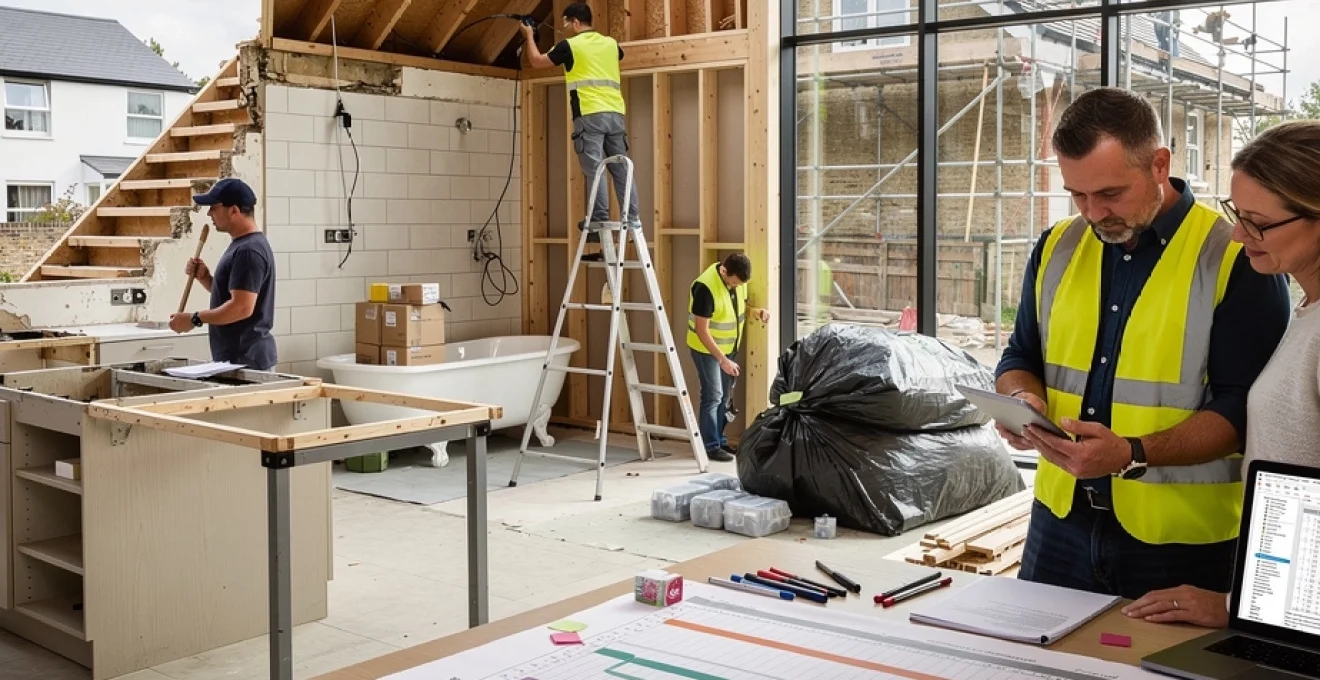
Renovation projects represent significant investments of time, money, and emotional energy. Whether you’re refreshing a tired kitchen or transforming a Victorian terrace from top to bottom, understanding realistic timelines separates successful projects from those plagued by frustration and overspend. The construction industry has faced unprecedented challenges in recent years, from Brexit-related supply chain disruptions to pandemic-induced material shortages, making accurate schedule planning more critical than ever. Professional project management techniques, once reserved for commercial builds, now provide homeowners with the tools to navigate complex renovation programmes while maintaining control over budgets and completion dates.
Average renovation duration by project scope and property type
Establishing realistic expectations begins with understanding how project scope, property characteristics, and structural complexity influence timelines. A cosmetic refresh involving decoration and new flooring might conclude within weeks, whilst structural alterations requiring building control sign-off can extend across multiple months. Property age matters considerably—a 1930s semi-detached house typically presents fewer surprises than a Georgian terrace with two centuries of modifications hidden behind plaster and floorboards.
Kitchen refurbishment timelines: from cosmetic updates to full gut renovations
Kitchen projects vary enormously in duration depending on the extent of works. A simple cosmetic update—replacing cabinet doors, worktops, and appliances whilst retaining existing layouts—typically completes within two to three weeks. This assumes no structural alterations, minimal plumbing adjustments, and readily available materials. Mid-range renovations involving layout changes, new electrical circuits, and upgraded plumbing extend timelines to four to six weeks, as building control inspections become necessary for relocated gas supplies and modified drainage routes.
Full gut renovations, where kitchens are stripped back to bare walls and floors, demand eight to twelve weeks for completion. These projects often uncover hidden issues—rotted floor joists, inadequate ventilation, or non-compliant electrics—that require remediation before progressing. Bespoke cabinetry can introduce ten to fourteen week lead times alone, meaning early procurement decisions become absolutely critical. Have you considered how appliance delivery schedules might impact your contractor’s programme? Delayed range cookers or integrated refrigeration units frequently create bottlenecks that idle entire trade teams.
Bathroom renovation schedules: ensuite, family, and wet room conversions
Bathroom renovations present unique scheduling challenges due to waterproofing requirements, drainage modifications, and building regulation compliance for ventilation. A straightforward ensuite replacement, maintaining existing layouts and fittings positions, typically requires two to three weeks. Family bathroom renovations with repositioned sanitaryware and upgraded shower enclosures extend to three to five weeks, accounting for additional first-fix plumbing and tiling preparation.
Wet room conversions demand meticulous waterproofing and floor gradient adjustments, pushing timelines toward four to six weeks. These projects require tanking membranes to cure properly, screeds to reach adequate moisture levels before tiling, and multiple building control inspections to verify drainage falls and watertight integrity. Underfloor heating installations add further complexity, as screeds incorporating heating elements need extended drying periods—sometimes three to four weeks—before final floor finishes can be applied.
Whole-house renovation programmes: victorian terrace vs modern Semi-Detached properties
Comprehensive house renovations vary dramatically based on property type and existing condition. Victorian terraces, with their solid wall construction, limited insulation, and outdated services, typically require four to six months for full refurbishment. These properties often need damp-proof course renewal, electrical rewiring throughout, plumbing system replacement, and thermal upgrade measures to meet current building regulations. Party wall agreements with neighbours can introduce two to three month delays before works even commence, particularly if adjacent owners raise concerns about structural alterations.
Modern semi-detached properties from the 1960s onwards generally complete within three to four months, benefiting from cavity wall construction, existing damp-proofing, and
more predictable structural conditions. However, even these homes can conceal undersized joists, poorly executed historic extensions, or non-compliant DIY wiring. When comparing renovation timelines, it is crucial to recognise that “like-for-like” refurbishments progress far quicker than projects involving reconfiguration of internal layouts, new bathrooms, or significant glazing additions, regardless of property age.
Loft conversion and extension build timeframes: single-storey, two-storey, and dormer projects
Extensions and loft conversions often represent the most schedule-sensitive elements of a renovation timeline because they combine structural work, weather exposure, and multiple trades. A straightforward single-storey rear extension without complex steelwork or extensive drainage modifications typically requires eight to twelve weeks on site once groundworks begin. Add bi-fold doors, rooflights, and a high-end kitchen, and this can quickly extend to fourteen to sixteen weeks, particularly in winter when external works must pause during heavy rain or freezing temperatures.
Two-storey extensions and dormer loft conversions are inherently more complex. Dormer lofts with structural steel, new staircases, and full insulation upgrades normally fall within the ten to sixteen week range, assuming straightforward access and no party wall disputes. Two-storey side or rear extensions can extend to four to six months, as scaffolding, brickwork, roofing, and internal fit-out must all be carefully sequenced. Have you considered how your neighbours’ properties might affect scaffolding design and party wall agreements? Resolving these issues early often prevents multi-week delays once the build is underway.
Critical path method analysis for residential renovation sequencing
While renovation timelines can seem opaque, professional project managers use the critical path method (CPM) to identify which tasks truly control the completion date. The critical path is the longest chain of dependent activities from start to finish; any delay to these activities pushes the entire renovation schedule out. For residential projects, critical path activities typically include structural works, inspections, weather-dependent tasks, and installation of long-lead materials such as windows, kitchens, and staircases. Understanding your project’s critical path turns vague promises into a clear roadmap you can monitor.
Trade dependency mapping: coordinating structural engineers, electricians, and plumbers
Renovation sequencing hinges on orchestrating multiple trades so that each can work efficiently without blocking others. Structural engineers and steel installers usually lead the way, as walls cannot be removed or openings formed without their designs and, in many cases, on-site sign-off. Only once new structures are in place can electricians and plumbers begin first-fix works, routing cables and pipework through new joists, stud walls, and service voids. If structural drawings arrive late, or steels are re-specified mid-build, this entire chain of activities slips.
Effective trade dependency mapping resembles a relay race: each specialist hands over a completed section to the next. You cannot plaster walls until first-fix services are signed off, and you cannot fit kitchens until plaster is dry and floors are level. A practical way to visualise this is to sketch out who needs to be “on stage” and when—structural engineer, builder, electrician, plumber, heating engineer, tiler, decorator—and then confirm availability against your target dates. Many renovation delays originate not from slow work, but from trades turning up to a site that is not yet ready for them.
Material procurement lead times: bespoke joinery, sanitaryware, and long-lead items
Even the most sophisticated critical path schedule collapses if key materials do not arrive on time. Bespoke joinery—kitchens, staircases, fitted wardrobes, and custom alcove units—can carry lead times of eight to sixteen weeks, particularly when manufactured abroad or during peak seasons. High-spec sanitaryware, porcelain tiles, and specialist brassware often add further complexity, as popular lines regularly go on backorder. It is not uncommon for a single missing shower valve or oven to hold up multiple trades, from tilers to electricians.
To keep your renovation timeline realistic, long-lead items should be identified and ordered as soon as designs are frozen, often while planning permission or building control approvals are still in progress. Think of procurement as running in parallel with approvals rather than in sequence. Have you reviewed your specification with your contractor to highlight any items exceeding a four-week lead time? Doing so early allows you to substitute products where necessary or adjust the programme before site activities begin.
Building control inspections and sign-off scheduling requirements
In the UK, many renovation projects require staged inspections by building control, whether through the local authority or an approved inspector. Typical inspection milestones include foundations, drainage, structural elements (such as steels and floor joists), insulation, and final completion. These visits must be booked in advance—often 24 to 72 hours—and inspectors may not always be available on your ideal day. If work is not ready when the inspector arrives, or if a stage is inadvertently covered up before inspection, you face potential rework and rebooking delays.
Integrating building control visits into your critical path prevents last-minute scrambles. A well-managed renovation timeline will schedule inspections as fixed milestones, with predecessor tasks clearly identified. For example, you cannot pour a concrete slab until foundations and reinforcement are inspected and approved. Similarly, second-fix electrics cannot be fully signed off without evidence of appropriate cabling routes and containment. Treat inspectors as partners in delivering a safe, compliant renovation, and ensure your contractor maintains clear documentation and photographs for any elements that may not be easily visible later.
Weather-dependent activities: external works, rendering, and roofing contingencies
British weather exerts a powerful influence on renovation timelines, particularly for tasks such as groundworks, roofing, external rendering, and masonry repairs. Mortars, screeds, and renders have minimum temperature and moisture requirements; laying brickwork or applying render during heavy rain or frost can compromise durability and appearance. Roofing works also become unsafe in high winds or persistent rain, forcing contractors to postpone activities, sometimes at very short notice.
Robust renovation programmes therefore include weather contingencies, typically adding 20 to 30 per cent buffer to external work durations during autumn and winter. One useful analogy is to think of your schedule as a train timetable that includes “recovery minutes” between key stations; if conditions are favourable, the project runs ahead of schedule, but if the weather turns, you have built-in slack. Where possible, sequencing internal works to coincide with likely bad weather periods enables your contractor to reassign labour indoors rather than losing whole days.
Common delay triggers in UK renovation projects
Even with meticulous planning, renovation timelines are vulnerable to unexpected events and hidden defects. Recognising the most common delay triggers helps you build realistic contingencies and make informed decisions when issues arise. Some risks stem from the existing building fabric—damp, asbestos, or poorly executed historic alterations—while others relate to external factors such as planning processes, supply chains, and labour availability. By anticipating these scenarios, you can respond proactively rather than reactively.
Structural discovery issues: hidden damp, asbestos, and load-bearing wall complications
Many of the most disruptive renovation delays emerge only once strip-out begins. Hidden damp behind skirting boards, rotten timbers under bathrooms, and corroded steel lintels above windows often remain invisible during initial surveys. Discovering such issues typically necessitates additional structural design input, remedial works, and extended drying times. In older properties, especially pre-1980s housing, the risk of asbestos-containing materials—Artex ceilings, old floor tiles, pipe insulation—also looms large, requiring specialised surveys and licensed removal.
Load-bearing wall complications are another frequent culprit. Walls assumed to be non-structural can turn out to support joists or roof elements, forcing a redesign of steelwork and connection details. This is where a structural engineer’s early involvement pays dividends. When planning your renovation timeline, it is sensible to include an allowance of 10 to 20 per cent additional time in the early structural phases to accommodate such discoveries. Would you rather uncover these issues while the programme still has slack or at the point you were hoping to start decorating?
Planning permission amendments and listed building consent variations
Planning permission and listed building consent introduce formal processes and statutory timeframes that can significantly impact renovation schedules. Standard householder planning applications in England are typically assessed within eight weeks, but requests for amendments, neighbour objections, or design revisions can extend this period. For listed buildings and properties in conservation areas, consent requirements are more stringent; heritage officers may require detailed method statements and material samples, adding weeks or even months.
Delays often arise when homeowners wish to alter designs mid-application or during construction—switching window styles, adjusting roof heights, or relocating openings. Such changes can trigger fresh planning submissions or non-material amendment applications, during which time contractors may be unable to proceed with affected elements. To minimise these risks, finalise external appearance decisions before submitting plans and maintain close communication with your designer if unavoidable changes arise. Treat your approved drawings as the legal blueprint; deviations without consent can jeopardise both timelines and future resale.
Supply chain disruptions: brexit impact and post-pandemic material shortages
The UK construction sector continues to feel the effects of Brexit and the COVID-19 pandemic, particularly in terms of material availability and pricing volatility. Imported products—timber, tiles, sanitaryware, and mechanical components—have experienced extended lead times and sporadic shortages. While conditions have stabilised compared to 2021 peaks, many suppliers still warn of four to twelve week lead times on popular items, with occasional sudden stockouts.
These supply chain challenges mean that “just-in-time” procurement strategies common before 2020 are no longer reliable for residential renovations. Instead, you and your contractor should agree on specifications early and secure orders well in advance, especially for any item on the critical path such as windows, doors, and structural components. Considering alternative suppliers or UK-manufactured options can sometimes reduce risk, but switching products mid-project may still require re-approvals or design tweaks. Building a modest stock buffer for consumables—plasterboard, insulation, basic fixings—also helps guard against short-term shortages.
Contractor availability bottlenecks and subcontractor scheduling conflicts
High-quality contractors and specialist subcontractors are in sustained demand across much of the UK, particularly in metropolitan areas. As a result, diaries often fill three to six months in advance, and short-notice schedule changes can be difficult to accommodate. If your renovation programme slips due to earlier delays, you may find that key trades—plasterers, tilers, kitchen fitters—are no longer available at the revised dates, forcing you to either wait or compromise on your preferred team.
Subcontractor scheduling conflicts are especially common on multi-room or whole-house renovations. A single electrician juggling several projects may only be able to attend for limited days each week, slowing progress even when materials and access are ready. Mitigating these bottlenecks involves agreeing a detailed programme with your main contractor at contract stage, including provisional dates for each trade, and ensuring that any changes are communicated as early as possible. Remember that contractor availability is a finite resource; treating timelines as flexible only in your favour can backfire when trades simply cannot rearrange other commitments.
Proactive delay mitigation strategies using construction management software
Modern construction management tools are no longer reserved for large commercial sites. Increasingly, residential renovation projects benefit from software that visualises programmes, tracks dependencies, and consolidates communication. Using digital tools allows you and your contractor to see the entire renovation timeline at a glance, identify pressure points on the critical path, and adjust sequence or resourcing before delays become critical. Think of software as the “control tower” for your project, coordinating dozens of moving parts to avoid mid-air collisions.
Microsoft project and buildertrend for gantt chart timeline tracking
Gantt charts remain one of the most effective ways to represent a renovation schedule visually, showing each task as a bar along a horizontal time axis. Tools such as Microsoft Project and cloud-based platforms like Buildertrend allow contractors to build detailed programmes that link tasks, highlight dependencies, and flag slippage. For homeowners, even a simplified Gantt view helps clarify when key milestones—demolition, first fix, plastering, second fix, and snagging—are expected to occur.
Many smaller builders prefer lighter-weight tools or even spreadsheets, but the underlying principle is the same: make the schedule visible and update it regularly. If you are comfortable with technology, you might request shared read-only access to your contractor’s schedule, allowing you to check progress and understand the impact of design decisions or late selections. Have you ever found yourself wondering “why nothing seems to be happening” on site? A live Gantt chart often reveals that behind-the-scenes activities—drying times, inspection waits, or off-site fabrication—are in fact driving the timeline.
Float time allocation and buffer management techniques
Successful renovation schedules do not attempt to eliminate slack; instead, they manage it deliberately. In project management terminology, “float” refers to the amount of time a task can slip without affecting the overall completion date. Non-critical activities—decorating secondary rooms, landscaping, or installing built-in storage—often carry float, while critical tasks such as structural work and inspections do not. By consciously allocating float, you ensure that inevitable small delays do not cascade into major overruns.
One effective technique is to insert buffer periods at the end of each major phase—strip-out, structural works, first fix, and second fix—rather than relying on a single contingency at the project’s end. This approach is similar to leaving extra connection time between flights instead of banking on a tight transfer. If a particular phase runs smoothly, you can either pull subsequent tasks forward or retain the buffer as insurance against later surprises. Discuss with your contractor where they see the highest risk and agree where explicit buffers should sit in the programme.
Weekly site meetings and progress photography documentation protocols
Regular communication is one of the simplest yet most powerful delay mitigation strategies. Weekly site meetings—ideally held at the same time and day each week—provide a structured forum to review progress, flag emerging issues, and confirm upcoming decisions. These meetings need not be long; even a focused 20 to 30-minute discussion can prevent misunderstandings that might otherwise cost days. Agreeing an agenda in advance—progress against the programme, health and safety, design clarifications, and material delivery status—keeps conversations efficient.
Progress photography complements these meetings by creating a visual record of the project. Photographs of open walls, service routes, and concealed junctions not only assist with future maintenance but also support building control and warranty documentation. Many project management apps allow site teams to upload photos tagged to specific rooms or tasks, making it easier to track completion percentages and verify claims about delays. From your perspective as a homeowner, regular photo updates (especially if you cannot visit site frequently) provide reassurance that the renovation is moving forward in line with the agreed timeline.
Contractual protections and liquidated damages clauses
While software and planning reduce the likelihood of delays, robust contracts protect you when projects overrun unreasonably. Well-drafted building contracts—for example, those based on JCT Home Owner forms—will specify start and completion dates, outline procedures for agreeing extensions of time, and set out consequences if the contractor fails to achieve practical completion without valid cause. This is where liquidated damages clauses come into play, detailing pre-agreed daily or weekly amounts payable to you to compensate for extended rent, storage, or alternative accommodation costs.
Liquidated damages are not designed as penalties but as a fair estimate of loss should the renovation timeline be exceeded. To be enforceable, they must be proportionate and clearly stated in the contract. Equally important is a transparent mechanism for assessing legitimate time extensions—for instance, delays due to extreme weather, late client variations, or planning authority actions. Before signing, you should discuss with your contractor how delay events will be documented, what evidence is required, and how revised completion dates will be agreed. A clear contractual framework often encourages both parties to address potential delays collaboratively rather than resorting to disputes.
Post-delay recovery acceleration methods and fast-track completion techniques
Even with the best planning and protections, some renovation projects inevitably fall behind schedule. At this point, the focus shifts from prevention to recovery: how can you recapture lost time without compromising quality or safety? Acceleration strategies range from modest adjustments—such as resequencing tasks or extending working hours—to more intensive measures like adding labour or splitting activities across parallel work fronts. Each option carries cost, quality, and disruption implications that must be weighed carefully.
One common fast-track technique involves overlapping tasks that would traditionally run sequentially. For example, decorators might start in completed rooms while second-fix carpentry continues elsewhere, or kitchen installation might begin on one side of the room while flooring is finished on the other. This approach resembles opening extra lanes on a motorway to clear congestion faster, but it demands tight coordination to avoid trades working on top of each other. In some cases, your contractor may propose weekend or evening work, subject to local noise restrictions and neighbour agreements, to claw back time.
However, acceleration is not always the right answer. Rushing drying processes, skipping snagging stages, or compressing inspection windows can create latent defects that cost more to remedy later than any perceived time gain. A balanced strategy might accept a modest extension of the renovation timeline while prioritising critical completion areas—for instance, making the kitchen and main bathroom habitable—so you can return home sooner even if secondary spaces finish later. By approaching recovery in a structured way, informed by your critical path and contractual rights, you can steer a delayed project back toward a satisfactory outcome.