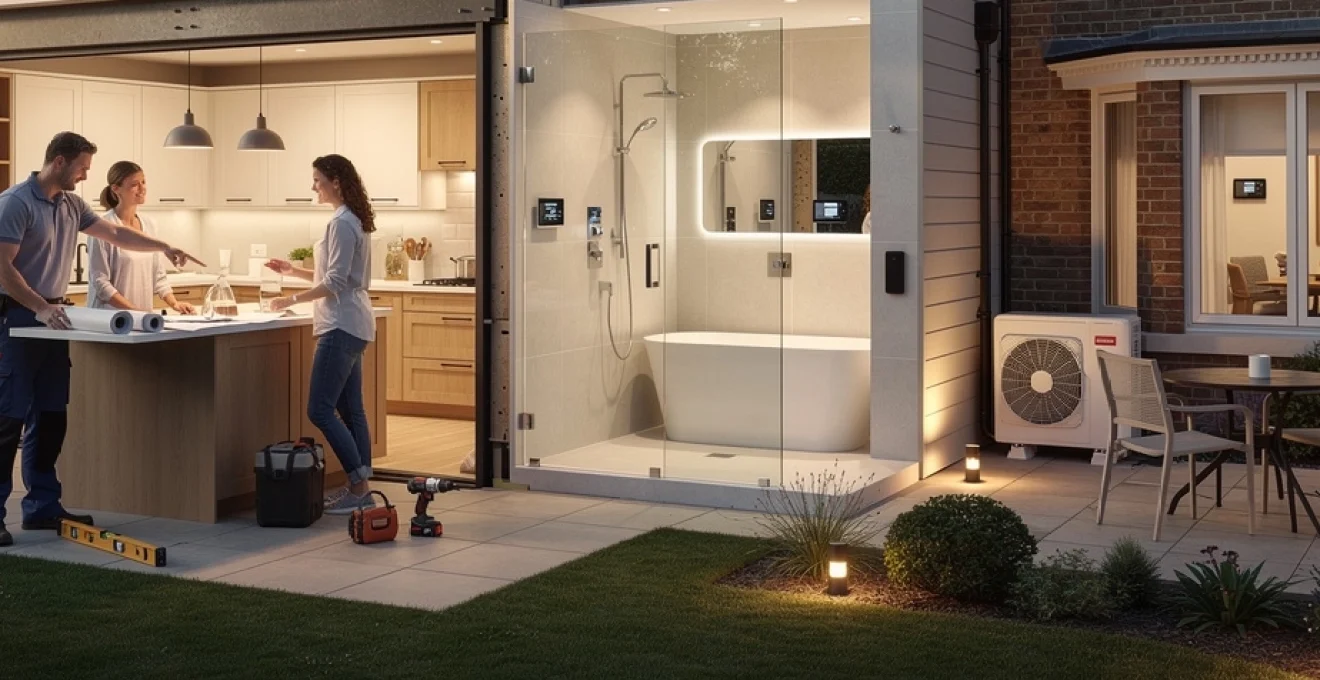
Property value enhancement through strategic upgrades has become increasingly sophisticated in today’s competitive real estate market. Modern homeowners are discovering that carefully planned improvements can yield substantial returns on investment, often exceeding traditional investment opportunities. Strategic property enhancement involves identifying the most impactful modifications that align with current market demands while maximising financial returns. Understanding which upgrades deliver the greatest value requires knowledge of buyer preferences, planning regulations, and construction costs across different property types.
Market data consistently demonstrates that specific improvements can add significantly more value than their initial investment cost. Recent property transactions reveal that well-executed kitchen extensions, premium bathroom installations, and energy-efficient upgrades are among the most sought-after features by today’s buyers. The key lies in selecting improvements that not only enhance your living experience but also appeal to the broadest possible market when you eventually decide to sell.
Kitchen extensions and Open-Plan conversions: High-Impact structural modifications
Kitchen extensions represent one of the most transformative property improvements available to homeowners seeking substantial value increases. These modifications typically deliver return on investment rates between 70% and 100% of the initial expenditure, making them particularly attractive for properties with limited kitchen space or outdated layouts. Modern buyers consistently prioritise spacious, well-designed kitchen areas that serve as the heart of family life, combining cooking, dining, and social functions within a single, flowing space.
The appeal of open-plan kitchen conversions extends beyond mere aesthetics, addressing fundamental lifestyle changes in how families use their homes. Contemporary living demands flexible, multifunctional spaces that accommodate everything from remote working to home schooling, entertainment, and casual dining. Properties featuring well-executed open-plan kitchen extensions often command premium prices, particularly in urban areas where space is at a premium.
Single-storey rear extensions: planning permission and permitted development rights
Single-storey rear extensions offer exceptional opportunities for creating expansive kitchen-dining areas without the complexity and cost associated with multi-storey additions. Under current permitted development rights, homeowners can typically extend up to six metres for semi-detached and detached properties, and four metres for terraced houses, without requiring full planning permission. This regulatory framework significantly reduces both timeframes and costs associated with kitchen extension projects.
The design possibilities for single-storey extensions are virtually limitless, ranging from contemporary glass box additions to traditional brick constructions that seamlessly blend with existing architecture. Popular design elements include vaulted ceilings with roof lights, bi-fold doors opening onto garden spaces, and integrated kitchen islands that serve as natural dividers between cooking and dining zones. Construction costs typically range from £15,000 to £25,000 per square metre, depending on specification levels and local labour costs.
Loft conversions with dormer windows: maximising useable floor space
Loft conversions with dormer windows provide exceptional value enhancement opportunities, particularly for properties where ground-floor extensions are restricted by garden space or planning constraints. These modifications can add 20% to 25% to property values while creating valuable additional bedrooms, home offices, or leisure spaces. The key to successful loft conversions lies in maximising useable floor space through strategic dormer placement and staircase positioning.
Modern dormer designs have evolved far beyond traditional pitched-roof additions, embracing contemporary flat-roof constructions with large glazed areas that flood converted spaces with natural light. L-shaped dormers are particularly effective for maximising floor area, while rear dormers can often be constructed under permitted development rights. Installation costs vary significantly based on complexity, ranging from £20,000 for basic conversions to £60,000 for high-specification projects including en-suite facilities.
Knock-through projects: Load-Bearing wall removal and steel beam installation
Knock-through projects involving load-bearing wall removal represent some of the most dramatic transformations possible within existing property footprints. These structural modifications require careful planning and professional structural engineering input to ensure building integrity while creating the desired open-plan living spaces. The installation of steel beams or reinforced concrete lintels enables the creation of expansive kitchen-living areas that modern buyers particularly value.
The process typically involves detailed structural calculations, building control approval, and careful sequencing of demolition and
temporary support. While this can feel disruptive, reputable contractors will phase works to keep dust, noise, and downtime to a minimum. Budget-wise, you should typically allow £3,000 to £8,000 for a standard knock-through project, including structural engineer fees and building control sign-off, with higher costs for complex layouts or finishes. When completed, the improved flow and sense of space can materially lift your property’s value and broaden its appeal to buyers seeking modern, open-plan living.
Bi-fold door installation: creating seamless indoor-outdoor living spaces
Bi-fold door installations have become a hallmark of contemporary kitchen extensions and open-plan conversions, particularly in homes where the garden is considered an extension of the living space. By replacing a solid rear wall with a wide expanse of glazing, you create a visual and physical connection between indoors and outdoors, enhancing natural light and improving perceived room size. This type of upgrade is especially attractive in family homes, where easy access to the garden for children, pets, and entertaining can be a major selling point.
From a technical perspective, bi-fold doors must balance aesthetics with performance. Modern aluminium systems offer slim sightlines, strong thermal breaks, and excellent security features, often outperforming older uPVC options. Expect installation costs to range from £1,200 to £2,000 per linear metre, depending on specification, glazing type, and brand. Investing in high-quality double- or triple-glazed units with low U-values improves both energy efficiency and acoustic insulation, which can be decisive factors for buyers in urban areas or on busy roads.
When planning bi-fold doors as part of a strategic property upgrade, consider factors such as threshold level, solar gain, and furniture layout. Achieving a flush threshold between the interior floor and external patio is particularly desirable, as it reinforces the sense of seamless indoor-outdoor living and improves accessibility. Careful orientation planning will help you manage overheating risks in south-facing spaces, potentially combining bi-folds with shading, overhangs, or high-performance glazing. Well-executed bi-fold installations can turn an ordinary kitchen-diner into a lifestyle-driven space that commands a premium price on the open market.
Premium bathroom renovations: luxury fixtures and modern suite installations
Premium bathroom renovations are one of the most effective ways to increase your property’s value without altering the overall footprint. Buyers consistently prioritise contemporary, hotel-style bathrooms, often perceiving them as an indicator of how well the property has been maintained. A well-designed main bathroom or en-suite can deliver a return on investment in the region of 50% to 70%, and sometimes more in higher-value markets where expectations for finishes are elevated.
Strategic bathroom upgrades focus on both functionality and luxury. Rather than simply replacing like-for-like, consider how you can reconfigure the layout to maximise space, storage, and usability. High-quality fixtures, efficient plumbing systems, and modern ventilation not only enhance day-to-day comfort but also reduce the likelihood of future maintenance issues, which savvy buyers will appreciate. In competitive markets, a property boasting multiple well-appointed bathrooms often holds a distinct advantage over similar homes with dated or cramped facilities.
Walk-in shower enclosures with rainfall systems and thermostatic controls
Walk-in shower enclosures have surged in popularity, particularly among buyers seeking a blend of luxury and practicality. Unlike traditional shower-over-bath setups, a generous walk-in shower with a frameless glass screen creates a spa-like feel, improving accessibility and making smaller bathrooms appear larger. Adding a rainfall shower head combined with a handheld unit offers flexibility for different users, from quick morning showers to more indulgent experiences.
Thermostatic shower controls further elevate this upgrade by maintaining a consistent water temperature and preventing scalding, which is especially important for families and older occupants. High-quality thermostatic mixers also tend to be more durable, offering long-term reliability and reduced maintenance costs. Installation costs for a premium walk-in shower can range from £3,000 to £7,000 depending on tiling choices, plumbing alterations, and the complexity of drainage solutions. When executed correctly, this type of bathroom renovation can significantly increase your property’s perceived value and help it stand out in online listings.
When designing a walk-in shower as part of your strategic property enhancement, pay close attention to fall gradients and waterproofing systems. Proper installation of tanking membranes and linear drains is essential to prevent leaks and water damage, which can be costly to rectify and off-putting to potential buyers. You may also want to consider low-profile trays or fully tiled wet-room floors for a sleek finish. By combining rainfall systems, thermostatic controls, and thoughtful detailing, you create a bathroom that feels both luxurious and futureproof.
Underfloor heating systems: electric vs wet system ROI analysis
Underfloor heating is a highly desirable feature in premium bathrooms, eliminating the need for bulky radiators and creating a warm, comfortable environment underfoot. When weighing electric versus wet (water-based) systems, it’s helpful to think of the decision like choosing between a sports car and a family saloon: both will get you there, but with different running costs and performance characteristics. Electric systems are typically cheaper and quicker to install, making them ideal for single-room renovations, while wet systems are more efficient in the long term when integrated with the central heating or low-temperature heat sources such as heat pumps.
From a return on investment perspective, electric underfloor heating can cost between £500 and £1,500 per bathroom, including controls, but may be slightly more expensive to run depending on electricity tariffs. Wet systems involve higher upfront costs—often £2,000 to £4,000 per room if retrofitted—but deliver superior efficiency when paired with modern boilers or renewable technologies. Buyers increasingly associate underfloor heating with high-end finishes, so its presence can subtly push your home into a higher value bracket, particularly in open-plan living areas and master suites.
To maximise value, we recommend using underfloor heating in targeted, high-impact areas rather than throughout the entire property, unless you are undertaking a comprehensive renovation. Pairing underfloor systems with good-quality insulation and smart thermostats ensures you are not simply pouring heat into poorly insulated floors. Clear documentation of installation, warranties, and system specifications will also reassure potential buyers of the quality and longevity of the upgrade, supporting a higher asking price.
Smart bathroom technology: digital showers and heated mirror integration
Smart bathroom technology is rapidly evolving from a niche luxury to a mainstream expectation in modern, value-focused homes. Digital showers, for example, allow you to set precise temperatures and flow rates, store user profiles, and control the system via wall-mounted panels or even smartphone apps. For buyers used to integrated technology elsewhere in the home, stepping into a digitally controlled shower feels like a logical extension of their connected lifestyle.
Heated mirrors with built-in demister pads and LED lighting are another relatively low-cost upgrade that adds a sense of sophistication. These features prevent fogging, improve task lighting, and often include touch controls or integrated shaver sockets, enhancing practicality. Installation costs for smart bathroom technology will vary, but many elements can be added within a £500 to £2,000 budget per room, especially if they are incorporated during a broader renovation.
Will every buyer pay more simply because your bathroom has a digital shower? Perhaps not directly, but these features contribute to an overall impression of a property that is modern, convenient, and well thought out. In competitive markets, that impression can translate into stronger offers and a faster sale. As with any smart home feature, ensure that controls are intuitive; overly complex systems can have the opposite effect, leaving potential buyers feeling intimidated rather than impressed.
Natural stone tiling: porcelain vs marble installation costs and durability
Floor and wall finishes play a pivotal role in how premium a bathroom feels, and natural stone tiling is often at the top of buyers’ wish lists. However, when considering porcelain versus marble, it’s essential to understand the trade-off between installation costs, durability, and day-to-day maintenance. High-quality porcelain tiles can convincingly mimic the look of natural stone while offering superior resistance to staining, scratching, and water absorption, making them ideal for busy family homes.
Marble, by contrast, delivers an unmistakable sense of luxury and uniqueness, thanks to its natural veining and colour variations. Yet this beauty comes at a price—not only in terms of material cost, which can be double or triple that of porcelain, but also ongoing care requirements. Marble is porous and more susceptible to etching from acidic products, so it must be sealed regularly and treated with care. Professional installation costs for both materials can start from £50 to £100 per square metre, with marble often sitting at the upper end due to more complex cutting and finishing.
From a property value perspective, the key is aligning your choice with the expectations of your target market and the overall value of your home. In mid-range properties, high-end porcelain will usually deliver better long-term value, as it provides a premium look with minimal maintenance. In top-tier homes, genuine marble in key areas such as master en-suites can reinforce a sense of exclusivity that justifies higher asking prices. Either way, precise tiling, high-quality grout, and good detailing at edges and corners will matter more to most buyers than the specific type of stone you choose.
Energy efficiency upgrades: sustainable technologies for long-term value creation
Energy efficiency upgrades have moved from being a “nice-to-have” to a central component of strategic property enhancement. With rising utility costs and increasing environmental awareness, buyers are scrutinising EPC ratings and running costs more closely than ever. Properties that perform well in these areas can attract premium prices and stand out in crowded markets, especially where local authorities or lenders favour homes with strong sustainability credentials.
Strategic investments in heating systems, insulation, and renewable technologies not only reduce your monthly bills but also futureproof your property against evolving regulations. As governments continue to push towards net-zero targets, homes with poor efficiency are likely to face greater pressure, potentially affecting both saleability and value. By contrast, a property that already incorporates sustainable technologies signals to buyers that they won’t face large, disruptive upgrade projects shortly after moving in.
Air source heat pumps: installation costs vs annual energy savings
Air source heat pumps (ASHPs) are becoming a mainstream option for homeowners seeking to improve their property’s energy performance and reduce carbon emissions. Functioning a bit like a reverse fridge, an ASHP extracts heat from the outside air and upgrades it for use in your home’s heating and hot water systems. While installation costs are higher than replacing a standard gas boiler—typically ranging from £7,000 to £14,000 depending on property size and system complexity—the long-term savings and environmental benefits can be substantial.
Annual energy savings depend on factors such as insulation levels, existing heating systems, and energy tariffs, but many households report lower running costs compared to older, inefficient boilers. Government incentives, where available, can also offset a portion of the upfront expense, improving the overall return on investment. From a property value perspective, an ASHP can be particularly attractive in homes off the gas grid or in areas where environmental performance is a key concern for buyers.
To maximise the value uplift from an air source heat pump installation, it’s important to ensure the rest of the property is well insulated and that radiators or underfloor systems are designed to work efficiently at lower flow temperatures. Documenting design calculations, warranties, and any grant-backed schemes can reassure prospective buyers of the system’s robustness and cost-effectiveness. As the market becomes more familiar with heat pumps, properties that already incorporate them may enjoy a competitive edge over less efficient alternatives.
Triple-glazed window replacement: u-values and acoustic performance benefits
Replacing old, single- or early-generation double-glazed windows with modern triple-glazed units is another powerful way to increase energy efficiency and enhance comfort. U-values, which measure how well a window prevents heat loss, can be significantly improved with triple glazing, often dropping below 1.0 W/m²K in high-performance systems. This translates into reduced drafts, more stable indoor temperatures, and lower heating bills—benefits that buyers immediately notice during viewings.
Beyond thermal performance, triple-glazed windows offer superior acoustic insulation, which is particularly valuable for homes near main roads, rail lines, or busy urban centres. Quieter interiors create a sense of sanctuary that can be a strong emotional selling point. Installation costs vary widely based on frame material, glass specification, and property size, but a typical three-bedroom home might see costs in the £8,000 to £20,000 range for a full upgrade.
When considering triple glazing as part of your strategic property upgrades, it’s wise to prioritise elevations most exposed to traffic noise or heat loss, rather than attempting to replace every unit at once. Matching or complementing existing architectural styles and frame colours will ensure the upgrade feels integrated rather than piecemeal. By highlighting improved U-values and sound reduction in your property marketing, you can help buyers understand the long-term value of this investment.
Solar panel systems: grid-tie installations and battery storage integration
Solar photovoltaic (PV) systems have matured into one of the most recognised and trusted renewable technologies for residential properties. A typical grid-tied solar array can generate a significant portion of a home’s electricity needs, reducing reliance on the grid and cutting annual energy bills. Installation costs have fallen markedly over the past decade, with many standard systems now costing between £4,000 and £8,000, depending on array size and component quality.
Integrating battery storage takes this upgrade a step further, allowing you to store daytime generation for use in the evening or during peak tariff periods. While batteries add to upfront costs—often £3,000 to £7,000 or more—they can materially increase self-consumption of solar electricity and provide resilience during power cuts. For buyers thinking long-term about energy independence and cost stability, a well-designed solar-plus-storage system can be a compelling differentiator.
From a property value standpoint, the key is clarity: buyers want to know the age of the system, output capacity, typical annual generation, and any feed-in tariff or smart export guarantee arrangements. Clear documentation, including warranties and maintenance records, helps potential purchasers quantify the financial benefits. In an era of volatile energy prices, a home that generates its own clean electricity can feel less like a luxury and more like a smart, strategic investment.
External wall insulation: EWI systems and cavity wall improvements
Insulation upgrades are often the unsung heroes of property value enhancement, improving comfort and cutting running costs without dramatically altering a home’s layout. External wall insulation (EWI) systems involve fixing insulating boards to the outside of solid-walled properties, then finishing with render or cladding. This approach can significantly improve thermal performance, particularly in older homes built before cavity wall construction became standard.
Installation costs for EWI typically range from £8,000 to £20,000 for a standard house, depending on wall area and finish quality. While this may seem substantial, the benefits include reduced heat loss, improved internal comfort, and sometimes a refreshed external appearance that modernises dated façades. For cavity wall properties, cavity wall insulation remains a cost-effective option, often costing under £1,000 for a typical home and delivering rapid payback through lower heating bills.
When planning insulation improvements as part of a strategic upgrade strategy, consider them as the foundation on which other energy-efficient technologies rest. A well-insulated building envelope allows heat pumps, efficient boilers, and underfloor heating systems to operate at their best. Buyers will often be reassured by visible evidence of recent insulation works and by improved EPC ratings, both of which signal lower ongoing costs and a more comfortable living environment.
Landscaping and outdoor living: garden design projects that enhance property appeal
Landscaping and outdoor living improvements are sometimes underestimated in their ability to increase a property’s value, yet they play a crucial role in first impressions and day-to-day enjoyment. A well-designed garden can feel like an additional room, particularly when it incorporates dedicated areas for dining, relaxation, and play. In many markets, outdoor spaces have become even more important since the rise of remote working, as buyers seek homes that support both productivity and leisure.
Strategic upgrades might include creating a level patio or deck adjacent to the main living area, installing low-maintenance planting schemes, and adding subtle lighting to extend usability into the evening. Thoughtful zoning—separating family play areas from quieter seating zones, for example—helps buyers imagine how they might use the space. Much like interior renovations, outdoor projects that strike the right balance between style and practicality tend to yield the strongest returns.
Privacy and security are also key considerations in garden design that directly influence perceived value. Simple measures such as taller planting, pergolas with climbers, or well-positioned screens can shield seating areas from neighbouring properties without making the garden feel boxed in. Robust fencing, lockable gates, and secure storage for bikes and tools reassure buyers with children or expensive outdoor equipment. By presenting a garden that feels both inviting and secure, you enhance the overall attractiveness of your home to a broad range of purchasers.
Smart home integration: technology upgrades for modern property buyers
Smart home integration has shifted from being a tech enthusiast’s hobby to a mainstream expectation in many segments of the property market. Buyers increasingly look for homes that support connected living—whether that means app-controlled heating, integrated security systems, or whole-house Wi-Fi coverage. Strategic smart upgrades can make your property stand out without the need for extensive structural work, offering a relatively cost-effective route to increasing perceived value.
Core systems such as smart thermostats, video doorbells, and app-controlled lighting are often the best starting points. They deliver tangible benefits in terms of convenience, energy savings, and security, while remaining intuitive enough for most users to adopt quickly. More advanced integrations might include multi-room audio, smart blinds, or voice-controlled scenes that adjust lighting, heating, and entertainment systems simultaneously. The key is to create a cohesive ecosystem rather than a patchwork of incompatible devices.
From a resale perspective, documentation and simplicity are essential. Ensure that any smart home infrastructure you install can be easily reset and transferred to new users, and provide basic guidance on how systems operate. Think of it like handing over the keys not only to the front door but also to the “digital backbone” of the house. A well-presented, thoughtfully integrated smart home setup can subtly convey that the property is up to date, well maintained, and ready to support modern lifestyles, all of which contribute to stronger buyer interest and, ultimately, higher offers.
Period property restoration: heritage features and listed building compliance
Period property restoration presents a distinct set of opportunities and challenges when it comes to increasing value through strategic upgrades. Character features such as original sash windows, cornices, fireplaces, and timber floors can be powerful selling points if they are well preserved and sensitively restored. Rather than stripping out these elements in favour of contemporary finishes, the most successful projects blend old and new, enhancing historic charm while discreetly upgrading comfort, safety, and efficiency.
For listed buildings or those in conservation areas, compliance with planning rules and heritage guidelines is critical. Alterations often require listed building consent as well as standard planning permission, and unauthorised works can not only reduce value but also create legal liabilities. Engaging with conservation officers and heritage specialists at an early stage helps you understand what is possible, from secondary glazing solutions to sympathetic extensions that respect the original architecture. Buyers of period homes are typically well informed and will place a premium on properties where upgrades have been carried out in line with best practice.
Strategic restoration work might include repairing or upgrading original windows, restoring plasterwork, and refinishing floors, while carefully integrating modern services such as updated wiring, plumbing, and discreet insulation. Think of it as tuning a classic car: the goal is to preserve its character while ensuring it performs reliably in everyday use. Detailed records of works, including before-and-after photographs and approvals from relevant authorities, can significantly increase buyer confidence and justify higher asking prices.
Ultimately, period property restoration is about respecting the building’s story while preparing it for the future. When done well, these projects create unique homes that command strong emotional responses from prospective buyers—often translating into competitive bidding and resilient long-term value. By combining sensitive heritage restoration with targeted modern upgrades, you can unlock the full potential of your period property in today’s market.