Natural light transforms living spaces in ways that artificial illumination simply cannot replicate. The quality of daylight streaming through your windows affects everything from your mood and productivity to your energy bills and the perceived size of your rooms. While many homeowners dream of installing skylights or enlarging windows, these major renovations often require planning permission, significant investment, and months of disruption.
Fortunately, there are numerous proven methods to dramatically increase natural light levels using strategic modifications that don’t require structural alterations. From clever mirror placement to sophisticated window treatments, these approaches can brighten even the most challenging spaces. The key lies in understanding how light behaves within interior environments and manipulating existing elements to maximise photon transmission and reflection throughout your home.
Strategic mirror placement and reflective surface optimisation
Mirrors represent the most effective non-structural solution for amplifying natural light within residential spaces. The science behind mirror effectiveness lies in the law of reflection, where light rays bounce off reflective surfaces at angles equal to their approach. This fundamental principle allows strategically positioned mirrors to redirect and multiply existing daylight, creating the illusion of additional light sources while genuinely increasing ambient illumination levels.
Convex mirror positioning for Multi-Directional light amplification
Convex mirrors offer unique advantages over traditional flat mirrors when maximising light distribution. Their curved surface creates a wider field of reflection, capturing light from multiple angles and dispersing it across broader areas. Position convex mirrors in hallways or narrow spaces where single-direction light reflection might create harsh contrasts. The fisheye effect of convex mirrors, while distorting images, actually enhances their light-gathering capabilities by capturing illumination from sources that flat mirrors would miss entirely.
When installing convex mirrors, consider mounting them at ceiling corners where walls meet. This positioning allows the curved surface to catch light from windows on adjacent walls, creating a multi-directional light source that illuminates previously shadowed areas. Professional interior designers often recommend convex mirrors with diameters between 24-36 inches for optimal light distribution in standard-sized rooms.
Antique venetian glass and modern acrylic mirror comparative analysis
The choice between traditional glass mirrors and modern acrylic alternatives significantly impacts light reflection efficiency. Antique Venetian glass mirrors, with their silvered backing, typically reflect 85-90% of incident light, while modern float glass mirrors achieve 95% reflectance. However, Venetian glass creates warmer light tones due to slight colour tinting in the glass substrate, which can enhance the perceived cosiness of spaces even while increasing brightness.
Modern acrylic mirrors offer practical advantages including lighter weight, impact resistance, and UV stability. Their reflectance rates match traditional glass at around 94-95%, but they eliminate the risk of silver deterioration that affects antique mirrors. For rooms with high humidity levels, such as bathrooms or kitchens, acrylic mirrors maintain consistent performance without the edge degradation common in traditional silvered glass.
Adjacent wall reflectivity enhancement using metallic paint finishes
Metallic paint finishes create subtle reflective surfaces that complement mirror installations without overwhelming spaces with excessive shine. Copper-based metallic paints reflect warm-toned light, enhancing morning and evening illumination with golden undertones. Silver and platinum-based formulations provide neutral reflection, maintaining colour accuracy while increasing overall brightness levels.
Application technique significantly affects metallic paint performance. Cross-hatching application methods create micro-faceted surfaces that scatter light more effectively than smooth applications. Professional painters recommend applying metallic finishes to accent walls rather than entire rooms, preventing the disco ball effect that can make spaces feel uncomfortable or artificial.
Mirrored furniture integration: wardrobes, side tables, and console units
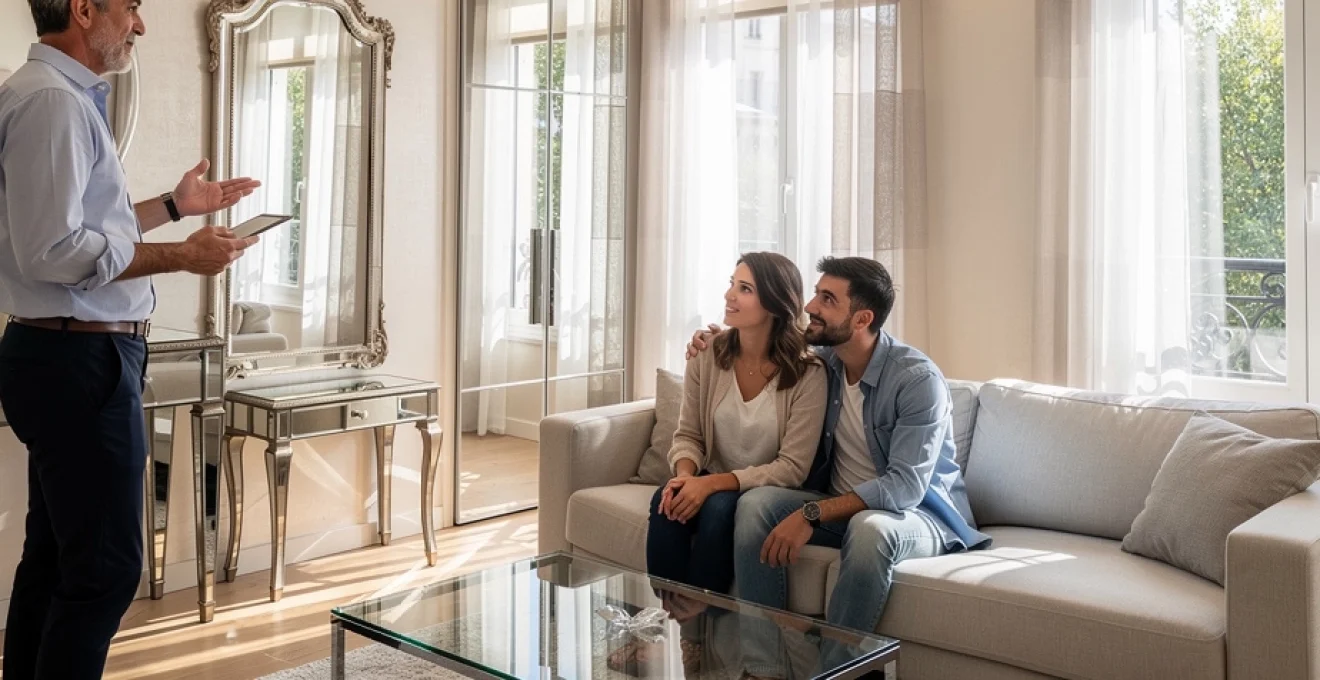
Mirrored furniture serves dual purposes by providing functional storage while amplifying ambient light levels. Mirrored wardrobes in bedrooms can double the apparent size of windows by reflecting them across the room. However, positioning requires careful consideration to avoid creating blinding reflections during peak sunlight hours. Angling mirrored wardrobe doors slightly away from direct window alignment prevents glare while maintaining light amplification benefits.
Console
console units positioned beneath or adjacent to windows can act as horizontal reflectors, pushing daylight deeper into the room rather than allowing it to dissipate near the façade. In living rooms and entrance halls, mirrored side tables and consoles introduce reflective surfaces at mid-height, where they can catch both natural light and artificial lighting. To prevent a space from feeling overly glossy, balance mirrored pieces with matte textiles, natural wood, or textured finishes. As a rule of thumb, limit mirrored furniture to 20-30% of visible surfaces within a single room to maintain a sophisticated, rather than showroom-like, aesthetic.
Window treatment modifications for enhanced light transmission
Even the best-positioned windows cannot improve natural light if they are covered by heavy, light-absorbing fabrics or poorly chosen blinds. Window treatments act as filters between the outdoors and your interior, and the right specification can dramatically increase light transmission without compromising privacy or thermal performance. By refining fabric type, control systems, and glazing enhancements, you can fine-tune how daylight enters and spreads through each room.
Sheer fabric selection: voile, organza, and linen blend performance
Sheer fabrics allow you to soften and diffuse sunlight while still maximising the amount of natural light in a room. Voile, typically woven from polyester or cotton, offers a fine, semi-transparent finish that can transmit 60-80% of visible light depending on weight and weave density. Organza has a crisper handle and slightly more sheen, which can help bounce light further into the space, though its stiffer structure may create stronger highlights.
Linen blends provide an excellent balance between softness, texture, and light transmission. A high-quality linen-cotton blend in a pale, neutral tone can filter glare while maintaining a bright, airy ambience—ideal if you are improving natural light in a living room or bedroom where privacy is still important. When specifying sheers, choose fabrics with a tight but lightweight weave and avoid strong patterns or dark colours, which can reduce effective light transmission by up to 30%. Floor-to-ceiling panels, mounted higher and wider than the window frame, further increase the perceived window size and allow maximum glass exposure when drawn back.
Motorised blind systems: somfy and lutron automated light control
Motorised blind systems, such as those from Somfy and Lutron, provide precise control over daylight entry, enabling you to respond to changing sun angles throughout the day without manual adjustment. By programming blinds to rise during low-light periods and partially close during peak sun, you can maintain consistent natural light levels while reducing glare and overheating. This is especially useful in home offices and south-facing living spaces where daylight comfort directly influences productivity and wellbeing.
Somfy systems are widely used for retrofits due to their compatibility with existing blinds and integration options with smart home platforms. Lutron, often specified in high-end residential projects, offers fine-grained control of blind positions in 1% increments and can be synchronised with circadian lighting schedules. While motorisation does represent an investment, it is still a non-structural modification that can significantly optimise natural light without altering the building envelope. For multi-storey homes, grouping blinds by façade orientation allows you to adjust entire elevations at once, effectively “tuning” the building to the sun’s path.
Window film applications: 3M crystalline and llumar SelectPro technologies
High-performance window films represent a subtle but effective method of enhancing natural light while managing solar heat gain and UV exposure. Products like 3M Crystalline and Llumar SelectPro are engineered to transmit a high proportion of visible light—often 60-70%—while blocking up to 97-99% of UV rays and a significant portion of infrared heat. This means you can enjoy brighter rooms and clearer views without the fading, glare, or overheating often associated with unprotected glazing.
For north-facing or shaded windows where heat gain is less of a concern, opt for films with high visible light transmission (VLT) and minimal tint, preserving maximum brightness. On south and west façades, slightly darker or spectrally selective films can provide glare control and thermal comfort while still increasing natural light compared to heavy curtains or closed blinds. Because films are applied directly to existing glass, installation is minimally disruptive, making them an ideal option if you want to improve natural light without replacing windows.
Café curtain configurations for lower sash privacy retention
Café curtains—short curtains that cover only the lower portion of a window—offer a practical compromise between privacy and natural light. By screening the lower sash, they protect sightlines from the street or neighbouring properties while leaving the upper sash fully exposed to admit daylight. This configuration is particularly effective for period sash windows, kitchens overlooking pavements, and ground-floor living rooms.
To maximise light, select lightweight fabrics in pale colours, mirroring the principles used for sheer full-length drapes. Mounting the café rod just above mid-height on the window prevents the curtain from bisecting key sightlines, and pairing café curtains with a simple upper valance or sheer roller blind allows flexible control throughout the day. When combined with reflective surfaces and light wall colours, café curtains can significantly improve natural light in privacy-sensitive spaces without resorting to opaque blinds or shutters.
Interior surface colour theory and light reflectance values
The colour and finish of your interior surfaces determine how effectively natural light is reflected, absorbed, or diffused within a room. Light Reflectance Value (LRV) provides a measurable indication of how much visible light a paint colour reflects on a scale from 0 (pure black) to 100 (pure white). Understanding LRVs allows you to select paint colours that work with your daylight conditions rather than against them. Even a 10-point increase in LRV can produce a visibly brighter space, making this one of the most efficient ways to improve natural light without major work.
Farrow & ball pointing and dulux natural white LRV calculations
Two commonly specified “soft white” paints in residential design are Farrow & Ball Pointing and Dulux Natural White, both offering high LRVs while avoiding the clinical feel of pure brilliant white. Pointing has an approximate LRV in the low 80s, which means it reflects around 80% of incident light, lending warmth to north-facing rooms without overpowering south-facing spaces. Its subtle red undertones help counteract cool daylight, making it ideal for improving natural light in rooms that otherwise feel flat or grey.
Dulux Natural White sits at a similar LRV, generally in the mid- to high-70s depending on formulation, with a slightly more neutral-yellow base. In practice, this means it performs well in both cool and warm light conditions, bouncing light effectively while remaining forgiving on uneven walls. When assessing paint for natural light optimisation, compare LRVs rather than relying solely on colour names; two “off-whites” can differ by 15-20 LRV points, which in a small room is the difference between dim and comfortably bright.
Satin finish paint applications for optimal light distribution
Beyond colour, paint sheen significantly affects how light behaves on a surface. While high-gloss paints reflect a large proportion of light, they can create harsh specular highlights and emphasise surface imperfections, leading to uncomfortable glare. At the other end of the spectrum, flat or ultra-matte finishes absorb more light, producing a softer look but limiting the perceived brightness of the room. Satin and eggshell finishes offer a balanced middle ground, providing gentle sheen that diffuses light without creating mirror-like reflections.
In practice, specifying satin finishes on walls in hallways, stairwells, and darker living areas can increase apparent natural light while remaining easy to maintain. For high-traffic spaces where scuffs are common, satin’s slight sheen also improves cleanability compared with matte paints. If you are concerned about uneven plasterwork, choose an eggshell or low-sheen satin formulation, which will still enhance light distribution but is more forgiving than semi-gloss alternatives.
Accent wall colour psychology: magnolia, cream, and off-white variants
Accent walls can be used strategically to either deepen or brighten a space, depending on their hue and placement relative to incoming light. Traditional colours such as magnolia, warm cream, and soft off-whites may seem conservative, but their psychological and optical effects are well-documented. Warm neutrals on the wall opposite a primary light source reflect light with a gentle, inviting tone, making the room feel more welcoming and less stark than if all surfaces were pure white.
For example, painting the far wall of a narrow, low-light hallway in a warm cream can create the impression of depth and draw light further into the corridor, acting almost like a subtle reflector. Off-whites with a hint of yellow or red undertone work particularly well in north-facing rooms, counterbalancing the bluish daylight typical in those orientations. When using accent colours, keep LRVs in the mid-60s or above if your primary goal is to increase natural light rather than create dramatic contrast.
Ceiling paint selection for vertical light bounce maximisation
Ceilings play a critical, often overlooked role in distributing natural light vertically through a room. Because they sit opposite both windows and floor surfaces, their reflectivity directly affects how far daylight penetrates into deeper zones. Specifying a ceiling paint with an LRV above 85—typically a dedicated “ceiling white” or a slightly warmer variant—ensures that light reaching the upper part of the room is bounced back down effectively.
To enhance this effect, consider using a flatter finish on ceilings than on walls. A matte or ultra-matte white ceiling reduces visible imperfections while still reflecting a high proportion of light, as the angle of incidence is usually shallow. In tall spaces or rooms with limited glazing, a very light tint (for example, a 10% version of your wall colour) can visually lower the ceiling while still supporting strong light bounce, creating a more cohesive and comfortable atmosphere.
Architectural light wells and internal glazing solutions
While major structural changes are beyond the scope of this guide, there are modest architectural interventions that can dramatically improve natural light without altering the primary external envelope. Light wells and internal glazing fall into this category, as they focus on redistributing existing daylight rather than creating new external openings. Think of them as internal “light highways”, channeling brightness from well-lit areas into deeper, previously underlit zones.
Internal glazing—such as glazed partitions, transoms above doors, and full-height glass panels—allows light to pass between rooms while maintaining acoustic separation and privacy where needed. For example, replacing a solid hallway wall with a partially glazed screen adjacent to a bright living room can immediately transform a dark circulation space. Fire-rated glass options mean that even code-sensitive locations, such as stair enclosures, can benefit from borrowed light without compromising safety.
Compact light wells, which can sometimes be formed within existing roof voids or unused corner spaces, act like vertical conduits for daylight. By opening a small area of floor or ceiling and lining the sides with high-LRV materials, you create a shaft that pulls light from one level to another. Even a modest 600mm x 600mm opening, combined with a roof window above, can deliver sufficient light to change the character of a stair landing or internal study. Because these interventions are highly project-specific, it is wise to consult an architect or designer to assess feasibility, structural implications, and any planning considerations.
LED lighting integration mimicking natural daylight spectrum
No matter how carefully you optimise mirrors, colours, and window treatments, there will be times—particularly in winter or at night—when natural light alone is insufficient. In these scenarios, integrating LED lighting that closely mimics the natural daylight spectrum helps maintain visual comfort and continuity. Rather than fighting the difference between day and artificial light, you bridge the gap, so the transition feels more seamless for your eyes and circadian rhythm.
Modern LED technology offers tunable white fittings, allowing you to adjust colour temperature from warm (around 2700K) to cool daylight (up to 6500K). During overcast days, setting LEDs to around 4000K can supplement natural light without appearing too stark, while evening use might favour warmer tones to encourage relaxation. High Colour Rendering Index (CRI) values—90 and above—ensure that colours appear natural and consistent whether lit by the sun or artificial sources, especially important in kitchens, studios, and home offices.
For best results, combine indirect lighting—such as LED coves that wash light onto ceilings or walls—with task lighting positioned where you need it most. Indirect light mimics the diffuse quality of daylight, reducing harsh shadows and glare. Smart controls, which adjust LED intensity based on available daylight (via sensors or programmed schedules), help you maintain a stable level of brightness without over-illuminating the space. This approach respects natural light as the primary source while using technology as a subtle, supportive layer.
Furniture arrangement and spatial planning for unobstructed light flow
The way you arrange furniture can either support or sabotage your efforts to improve natural light. Even the brightest window cannot perform well if it is blocked by bulky wardrobes, high-backed sofas, or tall bookcases. Spatial planning is therefore a critical, zero-structural-cost tool: by rethinking layouts and circulation routes, you can unlock light that is already available but currently trapped.
Start by identifying the primary light sources in each room and mapping how far their rays can travel before hitting solid objects. Wherever possible, keep the area directly in front of windows clear for at least 600-900mm, using low-profile pieces such as benches, open console tables, or plants on slim stands instead of tall furniture. In narrow living rooms, rotating the sofa to run parallel to the window rather than perpendicular can prevent it from forming a visual barrier that blocks light from reaching the back of the space.
Open-backed shelving, glass-topped tables, and leggy furniture (with visible space beneath) all allow light to pass through, much like airflow through a well-ventilated room. If you are working with a compact home office or bedroom, choose wardrobes and storage units for the darkest wall and leave lighter, reflective finishes on walls adjacent to windows. Finally, maintain clear sightlines between key rooms—such as the kitchen and living area—by aligning doorways and avoiding oversized pieces in thresholds. This way, light can travel freely through your home, making it feel brighter, larger, and more cohesive without any structural alterations.