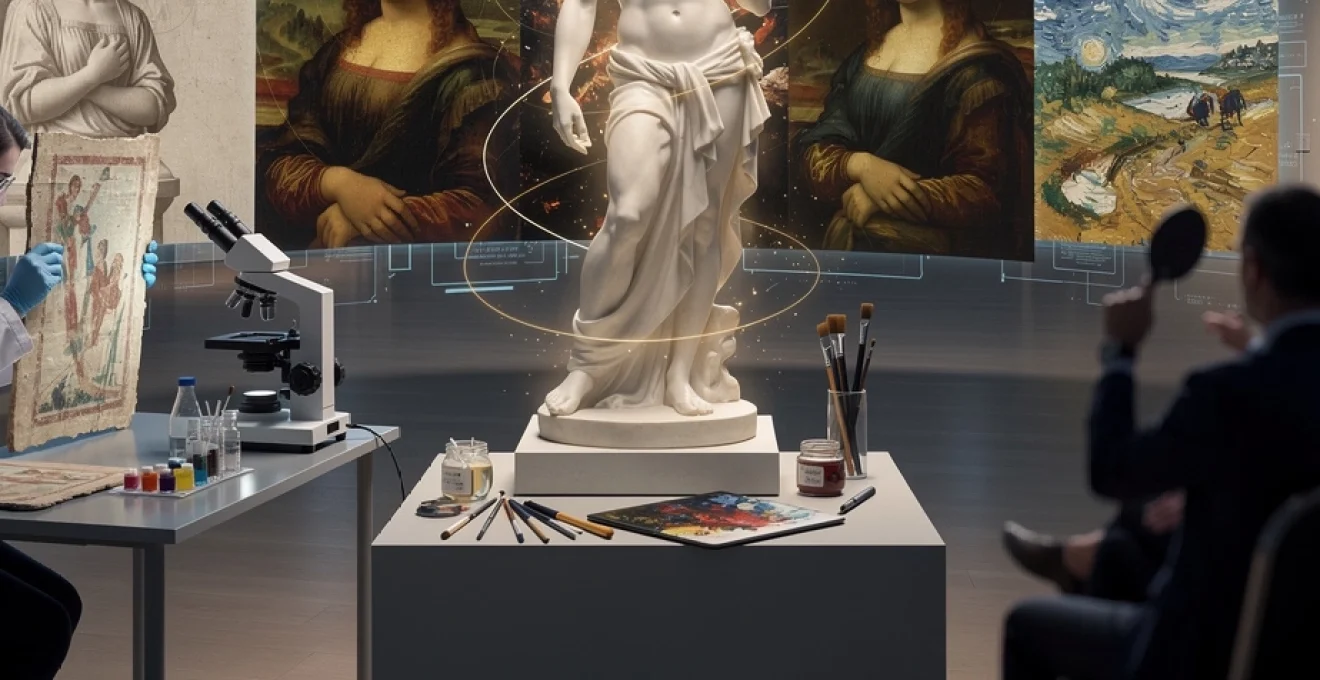
The question of what makes certain artworks endure across centuries while others fade into obscurity has fascinated scholars, critics, and art enthusiasts for generations. From Michelangelo’s David standing proudly in Florence to Van Gogh’s swirling night skies continuing to mesmerise viewers worldwide, some masterpieces possess an indefinable quality that transcends temporal boundaries. This phenomenon extends far beyond mere historical significance or monetary value, touching something fundamental about human perception, emotion, and our shared cultural consciousness.
The enduring power of timeless art lies in its ability to speak to universal human experiences whilst simultaneously showcasing technical mastery that remains relevant across evolving artistic movements. These works operate on multiple levels, engaging our visual perception through carefully orchestrated compositional elements, whilst simultaneously triggering profound emotional and psychological responses. Understanding the mechanisms behind artistic longevity reveals fascinating insights into both the nature of human cognition and the essential qualities that elevate craft to the realm of transcendent art.
Universal aesthetic principles in Cross-Cultural visual perception
The foundation of timeless art often rests upon universal aesthetic principles that resonate with human visual perception regardless of cultural background or historical period. These principles operate at a neurological level, tapping into cognitive patterns that have remained consistent throughout human evolution. Research in visual psychology demonstrates that certain compositional elements—symmetry, balance, proportion, and colour harmony—trigger positive responses in the human brain, creating an immediate sense of visual satisfaction that transcends learned cultural preferences.
The human visual system processes information through predictable pathways, seeking patterns, balance, and harmony in visual stimuli. Timeless artworks often exploit these innate tendencies, creating compositions that feel intuitively “correct” to viewers across different cultures and time periods. This biological basis for aesthetic appreciation explains why certain mathematical ratios, proportional relationships, and colour combinations appear consistently in acclaimed artworks from diverse civilisations, suggesting that truly timeless art speaks to something deeper than cultural conditioning.
Golden ratio applications in michelangelo’s david and leonardo’s vitruvian man
The golden ratio, approximately 1:1.618, appears frequently in nature and has been deliberately employed by master artists to create visually pleasing proportions. Michelangelo’s David demonstrates sophisticated understanding of this mathematical principle, with the sculpture’s overall height relating to key anatomical divisions in golden ratio proportions. The distance from David’s navel to the top of his head compared to his full height, and the relationship between his torso and leg measurements, all approximate this sacred geometric relationship.
Leonardo da Vinci’s Vitruvian Man serves as perhaps the most explicit demonstration of golden ratio application in Renaissance art. Beyond its obvious geometric construction, the drawing reveals Leonardo’s deep understanding of how mathematical harmony translates into aesthetic appeal. The proportional relationships between the figure’s limbs, torso, and head create a sense of perfect balance that continues to captivate viewers five centuries after its creation. These mathematical foundations provide a structural framework that ensures the artwork’s visual impact remains consistent across generations.
Symmetry and proportion analysis in classical greek sculpture
Classical Greek sculpture established proportional standards that continue to influence artistic creation and aesthetic appreciation today. The Parthenon sculptures demonstrate how ancient artists understood the psychological impact of subtle asymmetries within overall balanced compositions. Rather than achieving perfect mathematical symmetry, Greek sculptors employed slight variations that create dynamic tension whilst maintaining overall harmonic balance.
The contrapposto pose, exemplified in sculptures like the Doryphoros, creates visual interest through asymmetrical weight distribution whilst maintaining proportional harmony. This technique produces a sense of life and movement within static marble, contributing to the sculpture’s enduring appeal. The sophisticated understanding of how the human eye processes balanced asymmetry demonstrates why these ancient works continue to serve as artistic references across diverse contemporary contexts.
Colour theory fundamentals in turner’s atmospheric landscapes
J.M.W. Turner’s revolutionary approach to colour harmony established principles that remain relevant to contemporary visual arts. His atmospheric landscapes demonstrate mastery of complementary colour relationships, using warm and cool tones to create depth, mood, and emotional resonance. Turner’s understanding of how colours interact psychologically—warm tones advancing toward the viewer whilst cool tones recede—creates spatial illusions that feel natural to human visual perception.
Turner’s later
Turner’s later works, with their almost abstract veils of colour and light, push this understanding to its limit. By dissolving solid form into vibrating fields of yellow, orange, and blue, he anticipates both Impressionism and aspects of modern abstraction. The sun in paintings such as The Fighting Temeraire becomes not just an object but a radiant centre that structures the entire composition through value contrast and colour temperature. Because the underlying colour relationships reflect how our eyes and brains interpret light in the natural world, these landscapes retain their power for viewers who may know nothing of 19th-century Britain yet still feel the same awe and melancholy Turner intended.
Compositional balance in hokusai’s great wave off kanagawa
Hokusai’s Great Wave off Kanagawa is a striking example of compositional balance that feels timeless despite its highly stylised aesthetic. At first glance, the towering wave dominates the scene, threatening to crush the tiny boats and the distant silhouette of Mount Fuji. Yet the composition is carefully calibrated: the sweeping curve of the wave frames Fuji like a ceremonial arch, while the triangular form of the mountain stabilises the image at the horizon. This interplay between overwhelming movement and quiet stability creates a visual tension that keeps the eye moving but never lost.
The work also demonstrates how balance can be achieved without strict symmetry. The heavy mass of the wave on the left is counterweighted by the empty expanse of sky and the calm presence of Fuji on the right. The foam claws that curl inward act almost like pointing arrows, directing our gaze back toward the centre of the scene. Even if we are unfamiliar with Japanese woodblock printing or Edo-period culture, the underlying structure feels “right” because it mirrors how we intuitively seek equilibrium between chaos and order. This gives the print a cross-cultural visual clarity that continues to resonate with contemporary audiences.
Technical mastery and artistic innovation across historical periods
Beyond universal aesthetic principles, timeless artworks often embody a high degree of technical mastery combined with deliberate innovation. Artists who transform their medium—pushing existing techniques to new limits or inventing fresh approaches—create works that remain reference points long after stylistic fashions change. We might think of this as a kind of “technical DNA”: once a method fundamentally alters what is possible in painting, sculpture, or photography, subsequent generations build on that breakthrough, keeping the original work present in the collective artistic memory.
Technical excellence alone, however, rarely guarantees longevity. What distinguishes enduring masterpieces is how skill serves vision. When an artist welds precise control of materials to a distinctive way of seeing the world, the result often feels ahead of its time yet deeply grounded. This combination allows works to be continuously reinterpreted: each era discovers new layers in the same object, rather like reading a classic novel at different life stages and finding fresh meanings in the same sentences.
Sfumato technique development from leonardo da vinci to contemporary applications
Leonardo da Vinci’s development of sfumato—the subtle gradation of tone without harsh outlines—revolutionised the depiction of volume and atmosphere in painting. In works such as the Mona Lisa and Virgin of the Rocks, contours dissolve into soft transitions, mimicking the way our eyes perceive edges in natural light. This technique gives faces a lifelike ambiguity: expressions seem to shift as we look, contributing to the mysterious quality that has fascinated viewers for centuries.
Today, the principle of sfumato extends far beyond Renaissance oil painting. Contemporary portrait photographers use diffused lighting and shallow depth of field to achieve a similar soft-edged realism, blurring backgrounds while keeping key features delicately focused. Digital painters and visual effects artists also simulate sfumato through controlled gradients and atmospheric scattering algorithms, especially in cinematic close-ups. The persistence of this approach across mediums suggests that Leonardo tapped into a fundamental perceptual preference: we are drawn to images that echo the subtle, continuous transitions of light and shadow in the real world.
Chiaroscuro evolution from caravaggio to rembrandt’s portrait methodology
Chiaroscuro—the dramatic contrast between light and dark—opened another powerful path to timelessness by shaping how we emotionally read an image. Caravaggio used stark illumination, often from a single directional source, to drag figures out of deep shadow into almost theatrical visibility. In works like The Calling of Saint Matthew, the shaft of light is both literal and symbolic, guiding the viewer’s attention and reinforcing the narrative of spiritual awakening. This high-contrast style still feels striking today because it mirrors how we instinctively focus on what is lit while leaving the rest to our imagination.
Rembrandt refined chiaroscuro into a more introspective tool in his portrait methodology. Instead of harsh spotlight effects, he modulated shadows with extraordinary subtlety, allowing faces to emerge gradually from darkness. This creates a psychological depth: the half-lit features suggest inner complexity, inviting us to speculate about the sitter’s thoughts and experiences. Modern cinematography, especially in film noir and contemporary prestige dramas, owes a clear debt to these developments. When we see a character half-immersed in shadow on screen, we are responding to a visual language established centuries earlier, one that continues to shape how stories of conflict, guilt, and revelation are told.
Brushwork innovation in van gogh’s impasto versus vermeer’s glazing techniques
The contrast between Van Gogh’s impasto brushwork and Vermeer’s delicate glazing illustrates two very different yet equally enduring approaches to surface and texture. Van Gogh applied paint in thick, expressive strokes that remain physically present on the canvas, turning the painted surface into a record of his gestures. In Starry Night or his sunflower series, ridges of pigment catch the light, making the image feel almost sculptural. This tactile quality reinforces the emotional intensity of his subjects; we sense not just what he saw but how he felt as he painted.
Vermeer, by contrast, used multiple transparent glazes to build up luminous, glass-like surfaces. Colours seem to glow from within, particularly in works such as Girl with a Pearl Earring or The Milkmaid. The lack of visible brushwork creates an illusion of serene stillness, as if time has paused in a single moment of quiet domestic life. Both approaches have inspired countless artists: contemporary painters might combine impasto and glazing within a single canvas, while digital artists simulate textured and smooth surfaces through layered rendering. The enduring appeal lies in how these techniques resonate with different psychological states—Van Gogh’s restless energy versus Vermeer’s meditative calm—allowing viewers across generations to find a mode that reflects their own inner tempo.
Medium experimentation in picasso’s blue period oil paintings
Picasso’s Blue Period marks a crucial moment of medium experimentation that helped redefine what oil painting could communicate emotionally. Limiting his palette primarily to blues, greens, and muted earth tones, he used colour temperature and value rather than a wide chromatic range to evoke melancholy and isolation. The thin, sometimes patchy application of paint in works like The Old Guitarist enhances this mood, making figures appear almost spectral, as if fading into the background.
This deliberate restriction functioned like a scientific experiment: by narrowing variables, Picasso could test how far line, composition, and tonal variation alone could carry emotional impact. The lessons he learned in this phase fed directly into later, more radical innovations such as Cubism. For contemporary artists, the Blue Period provides a template for creative limitation as a path to timeless work: by choosing a constrained medium, palette, or format, you can focus more intensely on expressive essentials. Viewers, in turn, respond to the clarity of intention, sensing that every stroke and hue has been carefully weighed.
Psychological impact and neurological response to enduring artworks
While technical mastery and composition shape how an artwork looks, its timelessness often depends on how it makes us feel and think. Neuroscientific studies using fMRI and other imaging methods have shown that viewing compelling artworks activates reward pathways in the brain, including regions associated with pleasure, memory, and empathy. A 2021 review in Frontiers in Psychology noted that experiencing visual art can reduce stress markers and modulate heart rate—effects comparable to listening to music or spending time in nature. When we stand before a painting that has moved viewers for centuries, we are participating in a shared neurological response that cuts across generations.
Timeless art also engages what psychologists call “cognitive openness.” Rather than delivering a single, fixed message, it invites interpretation, prompting us to project our own memories and emotions onto the scene. Think of the enigmatic expression of the Mona Lisa or the ambiguous narrative of Edward Hopper’s urban interiors. Do we see loneliness, anticipation, or quiet contentment? The answer often tells us as much about ourselves as about the work. This capacity for layered readings ensures that an artwork remains relevant even as cultural contexts change; new viewers bring new life to the same image.
On a more subtle level, mirror neuron systems may play a role in the enduring impact of figurative art. When we see a painted gesture—a hand reaching out, a body in motion—our brains partially simulate that action, creating an embodied sense of participation. This helps explain why dynamic compositions, from Baroque altarpieces to contemporary dance photography, can feel viscerally exciting even without narrative explanation. Timeless artworks harness this mechanism, using pose, rhythm, and implied movement to create an “emotional echo” in the viewer, one that can be felt as strongly today as when the piece was first unveiled.
Cultural symbolism and archetypal imagery in timeless masterpieces
Another pillar of artistic timelessness is the use of cultural symbolism and archetypal imagery that speaks to shared human narratives. Many enduring artworks draw on motifs that psychologists like Carl Jung would describe as archetypes: the mother and child, the hero, the journey, the threshold between worlds. Michelangelo’s Pietà, for instance, is not just a Christian image of Mary and Christ; it also resonates as a universal symbol of parental grief and sacrificial love. Viewers who do not share the religious background can still connect deeply with the scene because the underlying emotional script is recognisably human.
Similarly, landscape painters often lean on archetypal settings—the storm, the mountain, the forest path—to frame existential themes. Caspar David Friedrich’s solitary figures facing vast natural vistas embody the tension between individual fragility and cosmic scale, a tension that remains relevant in an age of climate anxiety and technological acceleration. Such images operate like visual myths, condensing complex ideas into immediately graspable scenes. As long as we grapple with questions of identity, mortality, and purpose, these archetypal structures give artworks a durable relevance that outlives specific historical circumstances.
At the same time, cultural symbolism is not static. What once meant one thing can be reinterpreted by later artists to comment on new realities. Contemporary creators frequently quote, remix, or subvert canonical images—think of reimagined Last Supper scenes or modern takes on classical statues—to question power structures, gender roles, or colonial histories. This ongoing dialogue with the past helps keep older works visible and meaningful: we return to them not only to admire their craft but to understand how their symbols continue to shape, and be reshaped by, current debates.
Preservation science and conservation technology for artistic longevity
Even the most powerful artwork cannot be truly timeless if it physically disappears. The survival of masterpieces across generations depends heavily on preservation science and conservation technology. Advances in chemistry, materials science, and environmental engineering have transformed how museums and conservators protect fragile works, from ancient frescoes to modern mixed-media installations. In a sense, conservation is the invisible partner of artistic genius: without it, much of what we now consider “timeless” would have been lost to light, humidity, pollution, or simple decay.
Conservation decisions also influence how future viewers experience art. Choices about cleaning, retouching, or stabilising a work must balance respect for the original materials with the need to prevent further deterioration. These decisions are rarely straightforward; they involve ethical as well as technical considerations. Yet the overarching goal remains consistent: to allow as many people as possible, for as long as possible, to encounter the work in a state that honours the artist’s intention while acknowledging the inevitable passage of time.
Pigment analysis and chemical stability in renaissance frescoes
Renaissance frescoes, such as those in Italian churches and civic buildings, pose particular challenges for long-term preservation. Painted directly onto wet plaster, their pigments become part of the wall itself, making removal almost impossible without damage. Over centuries, environmental fluctuations, candle smoke, and later overpainting have altered their appearance. Modern conservation begins with rigorous pigment analysis, often using non-invasive techniques like X-ray fluorescence (XRF) and Raman spectroscopy to identify the chemical composition of colours.
This analytical data helps conservators understand which pigments are chemically stable and which are prone to fading or reacting with pollutants. For example, certain lead-based whites can darken when exposed to sulphur compounds, while some organic reds are highly light-sensitive. By mapping these vulnerabilities across a fresco’s surface, teams can design targeted interventions, such as installing microclimate controls or adjusting lighting to minimise UV exposure. In this way, scientific insight supports the aesthetic goal of keeping Renaissance walls visually legible for future generations.
Environmental control systems for mona lisa display at the louvre
The display of Leonardo’s Mona Lisa at the Louvre has become a case study in environmental control for iconic artworks. Housed behind bulletproof glass in a specially designed enclosure, the painting is protected not only from physical threats but from subtle environmental stresses. Temperature and relative humidity are tightly regulated, with fluctuations kept within narrow bands to prevent the wood panel from warping or the paint layers from cracking. Air filtration systems remove particulate matter and corrosive gases that could interact with the varnish or pigments over time.
These measures might seem extreme, yet they reflect the reality that even small, repeated environmental changes can accumulate into significant damage over decades. By stabilising the painting’s microclimate, conservators effectively slow down the clock of material ageing. The lesson applies on a smaller scale as well: whether you own a modest work on paper or a contemporary photographic print, consistent conditions—avoiding direct sunlight, high humidity, and rapid temperature swings—are among the most powerful tools you have to ensure that your own collection remains visually intact for the next generation.
Digital restoration techniques applied to sistine chapel ceiling
The restoration of Michelangelo’s Sistine Chapel ceiling, completed in the 1990s, showcased how digital technologies can complement traditional conservation methods. Before and during the cleaning process, high-resolution imaging captured every centimetre of the surface, creating a detailed visual and infrared record. These digital maps allowed conservators to distinguish between Michelangelo’s original paint layers and later soot, varnish, and overpainting. Algorithms helped enhance faint underdrawings and colour variations, guiding decisions about how far to remove accumulated grime.
Digital tools also make it possible to share different “states” of the artwork with a global audience. Online interfaces can toggle between pre- and post-restoration images, or simulate how the fresco might have appeared when newly painted. While no digital surrogate can fully replace the experience of standing beneath the actual ceiling, these technologies extend access and support scholarly analysis without further exposing the original to light and crowds. As scanning and 3D modelling continue to advance, we can expect even more sophisticated virtual reconstructions that both preserve and reinterpret historic works.
Market valuation trends and auction performance of iconic artworks
The art market offers another lens through which to view timelessness, albeit one shaped by economics as much as aesthetics. Iconic artworks by artists such as Picasso, Monet, and Basquiat routinely achieve record prices at auction, with several surpassing the $100 million mark in the past decade. While market value does not equate to artistic worth, sustained demand across generations suggests that certain works continue to hold symbolic and cultural capital. They are seen not only as investments but as touchstones of art history, desirable for museums and private collectors who wish to align themselves with that legacy.
Long-term auction data reveals interesting patterns. Works that mark a pivotal moment in an artist’s career—an early breakthrough, a definitive mature style, or a key experiment—tend to outperform more typical pieces. This correlates with the idea of artistic innovation as a driver of timelessness: collectors and institutions are often willing to pay a premium for objects that represent turning points in the story of visual culture. At the same time, shifts in social values can bring new attention to previously marginalised artists, as seen in the rising market recognition of women artists and artists of colour whose contributions had long been underrepresented in major collections.
For living artists and emerging collectors, understanding these dynamics can be instructive without becoming determinative. Chasing trends rarely leads to work with lasting resonance. Instead, focusing on authenticity, sustained craft, and engagement with broader human themes tends to create artworks that hold both aesthetic and, potentially, financial value over time. Ultimately, the market is just one of several ecosystems—alongside museums, academia, and everyday viewers—in which the question of what makes an artwork timeless continues to be debated, tested, and redefined.