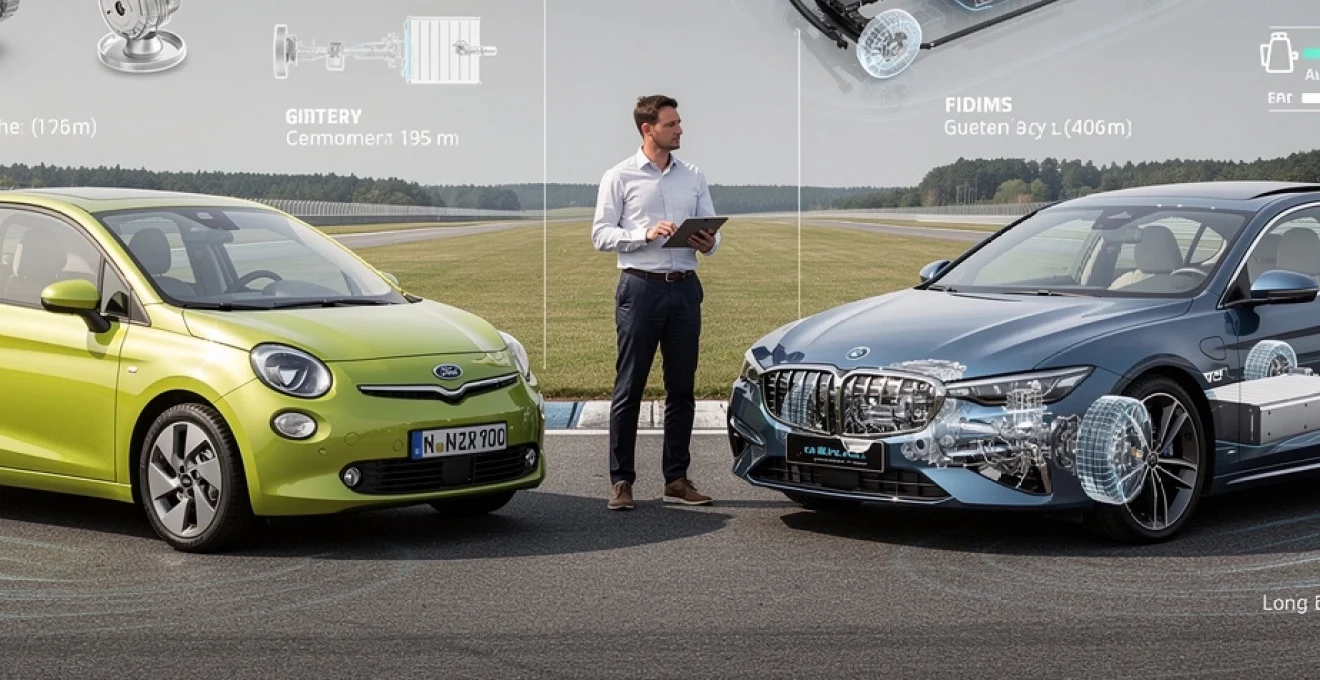
The automotive landscape presents drivers with an increasingly complex array of choices, and understanding the fundamental distinctions between city cars and long-range vehicles has never been more critical. Whether you’re navigating cramped urban streets or embarking on cross-continental journeys, the vehicle you choose profoundly impacts your driving experience, running costs, and environmental footprint. City cars and long-range vehicles represent two distinct automotive philosophies, each engineered with specific priorities that cater to vastly different usage patterns. These differences extend far beyond mere size considerations, encompassing everything from powertrain architecture to suspension geometry, infotainment complexity to total ownership costs. Making an informed decision requires a thorough understanding of how these vehicle categories differ across multiple technical and practical dimensions.
Engine architecture and powertrain configuration variances
The powertrain represents the fundamental distinction between city cars and long-range vehicles, with each category employing architectures optimised for their intended operating environments. Understanding these differences helps you appreciate why certain vehicles excel in specific scenarios whilst struggling in others.
Three-cylinder turbocharged units in urban microcars vs Multi-Cylinder naturally aspirated engines
City cars predominantly feature three-cylinder turbocharged petrol engines ranging from 0.9 to 1.2 litres in displacement. These compact powerplants deliver adequate performance for urban environments whilst minimising weight and physical dimensions. The Ford Fiesta’s 1.0-litre EcoBoost exemplifies this approach, producing 100-125 bhp through forced induction whilst maintaining excellent fuel economy. The turbocharger compensates for the smaller displacement, providing torque at lower engine speeds—ideal for city driving where frequent acceleration from standstill occurs. However, these engines typically exhibit more vibration than their larger counterparts due to inherent imbalance in three-cylinder configurations.
Long-range vehicles traditionally employ four-cylinder or six-cylinder naturally aspirated engines, though turbocharged variants have become increasingly common. The Toyota Camry’s 2.5-litre four-cylinder engine produces smooth, linear power delivery particularly suited to motorway cruising. These larger-displacement engines operate at lower stress levels during sustained high-speed driving, contributing to enhanced refinement and longevity. The additional cylinders provide superior balance and reduced vibration—characteristics passengers appreciate during extended journeys. Multi-cylinder configurations also facilitate more sophisticated variable valve timing systems, optimising performance across broader rev ranges than smaller engines typically achieve.
Hybrid synergy drive systems: toyota yaris vs camry hybrid powertrain differences
Hybrid technology has transformed both city cars and long-range vehicles, though implementation differs significantly between segments. The Toyota Yaris Hybrid combines a 1.5-litre three-cylinder petrol engine with a compact electric motor, producing a combined 116 bhp. This system prioritises electric-only operation at low speeds, making it exceptionally efficient in urban stop-start conditions where regenerative braking recaptures energy. The battery pack remains relatively small—around 1 kWh—minimising weight penalties crucial for compact vehicles.
Conversely, the Toyota Camry Hybrid employs a more powerful 2.5-litre four-cylinder engine paired with larger electric motors, generating 218 bhp combined. This configuration provides effortless motorway acceleration whilst maintaining respectable fuel economy during extended cruising. The larger battery capacity enables more substantial electric-only operation even at moderate speeds. These powertrain distinctions reflect fundamentally different design briefs: city cars maximise efficiency during urban crawling, whilst long-range hybrids balance efficiency with sustained performance capability.
Electric motor output and battery capacity: renault zoe vs tesla model 3 long range
Battery electric vehicles demonstrate perhaps the starkest contrasts between city-focused and long-range philosophies. The Renault Zoe features a 52 kWh battery pack powering a single electric motor producing 135 bhp. This configuration provides approximately 245 miles of real-world range—adequate for urban commuting and local errands whilst keeping vehicle weight and costs manageable. The relatively modest power output prioritises efficiency over performance, with acceleration sufficient for city traffic but less impressive at motorway speeds.
The Tesla Model
3 Long Range Long Range model demonstrates the opposite approach. It utilises a dual-motor all-wheel-drive setup in its Long Range guise, producing around 351 bhp and a substantial 440+ km of real-world range from its 75–82 kWh (usable) battery pack, depending on model year and specification. This power and capacity provide strong acceleration even at motorway speeds, making sustained high-speed travel far more relaxed. However, the larger battery significantly increases kerb weight, which in turn affects tyre wear and braking system demands.
These differences in electric motor output and battery capacity reflect contrasting priorities in electric city cars versus long-range vehicles. While a Renault Zoe is optimised for short to medium daily commutes with occasional longer trips, a Tesla Model 3 Long Range is engineered for frequent intercity travel and high annual mileage. When you choose between an urban EV and a long-range electric vehicle, you are really choosing how the car allocates its energy budget: maximum efficiency and low running costs in town, or sustained performance and convenience on long journeys.
Transmission ratios and gear selection: CVT vs eight-speed automatic gearboxes
Transmission choice is another area where city cars and long-range vehicles diverge significantly. Many compact hybrids and smaller petrol-powered city cars employ continuously variable transmissions (CVTs), which provide seamless acceleration by eliminating fixed gear steps. In a city environment, this smooth and shift-free operation makes stop-start traffic less tiring, and the transmission can keep the engine in its most efficient rev range. However, some drivers find CVTs produce a droning engine note under heavy acceleration, which can become intrusive during longer trips.
Long-range vehicles, on the other hand, frequently feature sophisticated multi-ratio automatic gearboxes, often with eight or even nine speeds. An eight-speed automatic allows the engine to spin at very low revolutions per minute (RPM) at motorway speeds, reducing cabin noise and improving fuel economy. These gearboxes also provide rapid, almost imperceptible shifts when accelerating, especially in premium models from BMW, Audi, and Mercedes-Benz. Compared with a CVT, a well-calibrated torque-converter or dual-clutch automatic delivers a more traditional, engaging driving experience, which many drivers appreciate on extended journeys.
Dimensional specifications and aerodynamic coefficient analysis
Beyond powertrains, the physical dimensions and aerodynamic characteristics of city cars and long-range vehicles profoundly influence how they behave in real-world conditions. Compact exterior measurements work wonders for parking and manoeuvrability, but they inevitably involve compromises in stability, luggage space, and high-speed refinement. Conversely, the longer wheelbases and sleeker profiles of long-range vehicles are designed to provide comfort, stability, and low aerodynamic drag on fast roads, even if they feel unwieldy in tight urban environments.
Wheelbase measurements: smart ForTwo 1,873mm vs Mercedes-Benz E-Class 2,939mm
Wheelbase—the distance between the front and rear axles—is a key differentiator between city cars and long-range vehicles. The Smart ForTwo, with its ultra-short 1,873 mm wheelbase, is purpose-built for urban use, allowing it to slot into parking spaces that would defeat most other cars. This short wheelbase contributes to impressive agility at low speeds, making tight U-turns and narrow side streets far less stressful. However, the downside is a choppier ride quality over uneven surfaces and reduced directional stability at higher speeds.
In contrast, the Mercedes-Benz E-Class boasts a substantial 2,939 mm wheelbase, nearly a full metre longer than the Smart. This extended footprint provides a more planted feel at motorway speeds, improving straight-line stability and reducing the car’s sensitivity to crosswinds. It also allows engineers to carve out significantly more interior space, especially for rear passengers, and to tune the suspension for superior ride comfort. When you compare a short-wheelbase city car to a long-range executive saloon, you are essentially trading ultimate manoeuvrability for long-distance comfort.
Drag coefficient performance: fiat 500 0.32 cd vs tesla model S 0.208 cd
Aerodynamic efficiency becomes increasingly important as speeds rise, and here long-range vehicles tend to outclass city cars. The Fiat 500, with its retro-inspired upright design, achieves a drag coefficient (Cd) of around 0.32. While perfectly acceptable for urban speeds, this bluff shape means it has to work harder to push through the air at 120 km/h, increasing fuel consumption and wind noise. City cars also typically have a higher frontal area relative to their length, compounding aerodynamic drag at motorway velocities.
By comparison, the Tesla Model S has been engineered with long-distance efficiency as a top priority, achieving a remarkably low drag coefficient of 0.208 in its latest iterations. The sleek, teardrop profile, flush door handles, and careful underbody sculpting all help the car slip through the air with minimal resistance. The result is lower energy usage at high speed, quieter cruising, and greater long-range capability from a given battery size. If you regularly undertake long motorway journeys, this aerodynamic optimisation can make the difference between needing a mid-journey charging stop and arriving in one uninterrupted run.
Kerb weight distribution and chassis rigidity parameters
Kerb weight and its distribution across the axles heavily influence how a car feels to drive and how safe and predictable it is at speed. Lightweight city cars often tip the scales at under 1,000 kg, with a front-biased weight distribution due to compact engines sitting ahead of the front axle. This layout promotes safe understeer at the limit—where the car runs wide rather than spinning—but can result in skittishness on rough roads and more pronounced reactions to crosswinds. Their relatively basic body structures, while perfectly adequate for urban speeds, generally offer lower torsional rigidity than larger, more expensive vehicles.
Long-range vehicles, particularly premium saloons and larger SUVs, are both heavier and stiffer. It is not uncommon for an executive saloon to weigh between 1,600 and 1,900 kg, with a near 50:50 weight distribution in rear-wheel-drive platforms. Increased chassis rigidity allows engineers to fine-tune suspension geometry more precisely, improving both ride and handling. It also contributes to superior crash safety performance, especially in high-speed impacts. The trade-off is higher inertia, which demands more powerful brakes and tyres, as well as a more robust suspension setup to cope with sustained high-speed use and full passenger loads.
Boot capacity and rear legroom dimensional compromises
Interior space allocations highlight another stark distinction between city cars and long-range vehicles. Urban-focused cars prioritise compact exterior dimensions over expansive cabins, leading to modest boot capacities and limited rear legroom. A typical city car might offer 200–250 litres of luggage space, enough for a weekly shop or a couple of small suitcases. Rear seats can be tight for adults, especially on longer journeys, which makes these models less suitable as primary family vehicles if you regularly travel with four or five occupants.
Long-range vehicles are designed with sustained passenger comfort and practicality in mind. Executive saloons and estate cars often provide 480–600 litres of boot capacity, ample for holiday luggage or bulky items such as prams and sports equipment. Rear legroom is significantly more generous, with better seat cushioning and backrest angles tuned for long-distance comfort. If you frequently undertake motorway trips with passengers and luggage, the additional space and comfort of a long-range car can transform the overall driving experience, turning potential endurance tests into genuinely relaxing journeys.
Fuel efficiency metrics and real-world consumption patterns
Fuel efficiency numbers on brochures only tell part of the story when comparing city cars and long-range vehicles. Their real-world consumption patterns diverge depending on whether you primarily drive in dense urban traffic, on open motorways, or a mixture of both. Understanding these patterns helps you avoid the common trap of choosing a car that looks economical on paper but proves expensive to run in your actual use case.
WLTP combined cycle results: city cars achieving 4.5-5.5 l/100km
Under the WLTP combined cycle, many modern petrol city cars return figures in the 4.5–5.5 L/100 km range (roughly 50–63 mpg UK). These impressive numbers stem from small-capacity engines, low vehicle mass, and gearing optimised for low- to medium-speed operation. Hybrids like the Toyota Yaris can achieve even lower combined figures thanks to electric assistance in stop-start scenarios. For drivers whose daily mileage is modest and predominantly urban, these WLTP values often align reasonably well with real-world results.
However, WLTP is still a laboratory-based test, and actual consumption can vary considerably. Short trips with cold engines, heavy use of air conditioning, or frequent heavy acceleration can push fuel usage above official ratings. That said, compared with larger long-range vehicles, city cars generally remain more economical in town, as they reach operating temperature more quickly and require less energy to get moving. If your regular journeys seldom exceed 15–20 km, a small, efficient city car might deliver the best overall fuel efficiency for your needs.
Motorway cruising efficiency at 120 km/h: long-range vehicle optimisation
On the motorway at a steady 120 km/h, the picture can change dramatically. Aerodynamic drag rises with the square of speed, so a bluff city car body shape and short gearing can lead to a disproportionately high fuel burn. Engines may run at higher RPM to maintain speed, creating more noise and vibration while consuming more fuel than their WLTP figures suggest. Many drivers are surprised to find that their supposedly frugal small car performs worse than a larger saloon when driven predominantly on fast roads.
Long-range vehicles are specifically optimised for this type of use. Taller gearing, more powerful and relaxed engines, and smoother aerodynamic profiles all contribute to superior motorway efficiency. A diesel or hybrid executive saloon can realistically return 5–6 L/100 km on long motorway runs, even with a larger engine and heavier body than a typical city car. The result is that, if you clock up high annual mileage on motorways, a long-range vehicle may actually prove more economical per kilometre than a small city hatchback, despite its higher official CO₂ output and fuel consumption ratings.
Urban stop-start fuel consumption: micro-hybrid 48V system integration
In congested urban environments, where average speeds may fall below 20 km/h, micro-hybrid technology plays an increasingly important role. Many modern city cars and compact crossovers now incorporate 12V or 48V mild-hybrid systems that enable smooth, rapid start-stop operation and limited electric boost under acceleration. These systems use a belt-driven starter-generator to recover energy during braking and redeploy it when moving off, reducing fuel consumption without the cost and complexity of a full hybrid system. For drivers constantly battling traffic lights and congestion, this can translate into tangible savings at the pump.
Long-range vehicles are also embracing 48V architectures, particularly in larger petrol and diesel engines where even small efficiency gains significantly reduce overall CO₂ emissions. However, the relative benefit in pure city driving is often more pronounced in smaller cars, as they spend a higher proportion of their time at low speeds. When you evaluate “real-world fuel consumption in city driving”, it is worth considering not only official figures but also whether the vehicle features advanced stop-start systems, mild-hybrid integration, and intelligent eco-driving modes tailored to urban conditions.
Suspension geometry and ride comfort characteristics
Suspension design is another area where the divergent priorities of city cars and long-range vehicles become obvious. Urban cars focus on simplicity, durability, and low cost, whereas long-range tourers justify more complex and expensive setups to deliver superior comfort and handling at speed. You can think of city car suspension as a sturdy pair of everyday trainers, while a long-distance cruiser wears bespoke hiking boots crafted for all-day comfort on varied terrain.
Macpherson strut vs multi-link independent rear suspension systems
The majority of city cars employ a straightforward MacPherson strut arrangement at the front and a torsion-beam or twist-beam axle at the rear. This combination is compact, inexpensive, and robust, making it ideal for low-cost, light vehicles that must endure potholes and speed bumps. However, torsion-beam rears offer limited independent wheel movement, which can result in less composure over uneven surfaces when cornering quickly. While this is rarely an issue in slow urban driving, it becomes more noticeable at higher speeds.
Long-range vehicles, especially in the mid-size and executive segments, commonly adopt multi-link independent rear suspension systems. These allow each rear wheel to react more independently to road imperfections, improving grip, stability, and ride comfort simultaneously. The more sophisticated geometry also enables better control of camber and toe angles during cornering, which enhances both safety and driver confidence at motorway speeds. This complexity does add cost and weight, but for buyers who prioritise long-distance refinement, the benefits are substantial.
Short-travel dampers in city cars: citroën C1 vs volkswagen up spring rates
City cars such as the Citroën C1 and Volkswagen Up are often tuned with relatively short-travel dampers and firmer spring rates to control body movements within their small dimensions. This setup prevents excessive roll in tight corners and helps the car feel nimble when darting through traffic. On smooth city streets, the ride can feel perfectly acceptable, and the firmer suspension contributes to a sense of agility that many drivers appreciate in dense urban environments. Nonetheless, sharp bumps and rough surfaces can transmit more directly into the cabin, especially at higher speeds.
Differences in tuning between models highlight how manufacturers prioritise comfort versus control. The Citroën C1, for instance, tends to favour a slightly softer, more compliant setup than the Volkswagen Up, which is known for its taut, almost “grown-up” handling characteristics. Neither can match the long-travel, finely damped suspension of a larger tourer when it comes to soaking up motorway expansion joints and high-speed undulations. If your daily commute includes a mix of cobblestones, potholes, and speed humps, it is worth test-driving several city cars to find the suspension tuning that best aligns with your comfort preferences.
Adaptive damping control in long-distance tourers: BMW 5 series EDC technology
Premium long-range vehicles increasingly offer adaptive damping control systems, such as BMW’s Electronic Damper Control (EDC) in the 5 Series. These systems continuously adjust damper stiffness in response to road conditions, driving style, and selected drive modes. In Comfort mode, the dampers soften to absorb imperfections and reduce fatigue on long journeys. Switch to Sport or Sport+ and the system tightens body control, reducing roll and pitch for a more engaging drive on twisty roads.
This adaptability allows long-range vehicles to deliver a broader spread of abilities than city cars with fixed-rate dampers. You effectively get two cars in one: a relaxed, supple cruiser for everyday use and a more focused machine when you want to enjoy a spirited drive. While such technology adds cost and complexity, it can be transformative if you regularly mix high-speed motorway travel with demanding back-road routes. For drivers seeking “maximum comfort on long journeys” without sacrificing driving pleasure, adaptive damping has become a highly desirable feature.
Ground clearance and approach angle considerations for urban manoeuvring
Ground clearance and approach angles might not be the first metrics that spring to mind when choosing between city cars and long-range vehicles, but they matter more than you might think. City cars usually feature modest ground clearance with short overhangs, which helps them negotiate steep driveways, speed bumps, and multi-storey car park ramps without scraping. Their compact footprints and light steering also make kerbside parking and tight manoeuvres easier, reducing the risk of damage to bumpers and undertrays.
Long-range saloons and estates often sit lower to the ground for improved aerodynamics and handling. While this benefits high-speed stability, it can create challenges in urban environments with aggressive traffic-calming measures or poorly maintained roads. Larger SUVs and crossovers offset this with increased ride height and more generous approach and departure angles, but they may feel cumbersome in narrow city streets. When evaluating “best car for mixed city and motorway driving”, consider both ground clearance for your local road conditions and the potential comfort and stability advantages of a lower, more aerodynamic body at speed.
Technology integration and infotainment system complexity
The digital experience inside modern cars has evolved rapidly, and here the gulf between basic city runabouts and tech-laden long-distance cruisers is particularly wide. While some drivers are content with simple audio and phone connectivity for short hops, others value advanced navigation, rich media options, and sophisticated driver assistance systems for long journeys. How much in-car technology you truly need often correlates with how long you spend behind the wheel on each trip.
Basic head unit functionality vs Mercedes-Benz MBUX augmented reality navigation
Most entry-level city cars offer straightforward infotainment systems focused on essential functions: FM/DAB radio, Bluetooth hands-free, and sometimes a basic touchscreen with smartphone mirroring via Apple CarPlay or Android Auto. This approach keeps costs down and minimises distractions, which is often ideal if your journeys rarely exceed 20–30 minutes. The simplicity also means a gentler learning curve—there are fewer menus to navigate and fewer features to configure.
By contrast, long-range vehicles like the Mercedes-Benz E-Class can be equipped with the latest MBUX infotainment platform, featuring large high-resolution displays and augmented reality navigation. This system overlays directional arrows and street names onto live camera footage of the road ahead, making complex junctions easier to understand at a glance. For drivers who frequently traverse unfamiliar cities or long cross-country routes, such technology can significantly reduce stress and missed turns. However, it requires more time to learn and may feel overwhelming if you prefer a minimalist interface.
Advanced driver assistance systems: adaptive cruise control and lane centring technology
Advanced driver assistance systems (ADAS) have become increasingly common across all segments, but their sophistication often scales with vehicle class and price. Many city cars now offer basic autonomous emergency braking, lane departure warnings, and simple cruise control—features that enhance safety at urban speeds. These systems are particularly valuable if you spend a lot of time in dense traffic, where even a brief lapse in concentration can lead to minor collisions.
Long-range vehicles go further, incorporating adaptive cruise control, lane-keeping assist, and even lane-centring technology that can support semi-autonomous driving on motorways. When operating correctly and within legal limits, these systems help maintain a safe gap to the car ahead and gently keep you centred in your lane. On lengthy journeys, this assistance can reduce fatigue and make hours of driving feel less taxing. Nevertheless, they are aids rather than replacements for driver attention, so it is essential to understand their limitations and keep your hands on the wheel at all times.
Connected car services: volkswagen we connect vs peugeot connect SOS integration
Connected car ecosystems extend vehicle functionality beyond the cabin, offering remote services and safety features that can be particularly valuable on long trips. Volkswagen’s We Connect platform, for instance, allows you to check fuel or battery status, lock or unlock the car, and even pre-condition the cabin climate from a smartphone app. For long-range EVs, remote charging management and route planning with live charger availability can make the difference between a smooth journey and an anxious search for power. These features are increasingly becoming standard in mid-size and larger vehicles aimed at frequent travellers.
Emergency connectivity is another crucial dimension. Peugeot Connect SOS and similar systems automatically alert emergency services in the event of a serious collision, transmitting your location and vehicle details. While many city cars also feature eCall functionality, long-range vehicles often integrate these services with extended telematics, breakdown assistance, and concierge support. If peace of mind on long-distance drives is a priority for you, it is worth evaluating how comprehensive a manufacturer’s connected services package is, not just whether the car has Bluetooth and navigation.
Total cost of ownership and depreciation trajectory analysis
Initial purchase price is only part of the financial equation when choosing between a city car and a long-range vehicle. Insurance, servicing, fuel or electricity, tyres, and depreciation all contribute to the total cost of ownership over several years. Interestingly, while city cars are cheaper to buy and insure, the stronger residual values and longer service intervals of some long-range models can narrow the cost gap over the full ownership cycle.
Insurance group classifications: city cars group 1-10 vs executive saloons group 30-50
Insurance group ratings in many markets provide a useful shorthand for understanding risk and repair costs. City cars generally fall into the lower insurance groups, typically between 1 and 10 out of 50. Their modest performance, lower repair costs, and reduced appeal to thieves help keep premiums relatively affordable, which is a major advantage for new drivers and urban commuters. If you are trying to minimise fixed monthly outgoings, a low-group city car can make a noticeable difference.
Executive saloons and high-performance long-range vehicles often reside in groups 30–50, reflecting more powerful engines, expensive bodywork, and complex technology. Premium tyres, advanced driver assistance sensors, and intricate lighting systems all raise potential repair costs, which insurers factor into premiums. That said, some long-range hybrids and EVs benefit from strong safety records and advanced crash-avoidance systems, which can mitigate insurance expenses somewhat. When comparing total running costs, it is wise to obtain real quotes for your profile, as the gap between segments can vary significantly depending on your driving history and location.
Service interval schedules and maintenance cost projections over 100,000 miles
Servicing and maintenance schedules also differ between city cars and long-range vehicles. Smaller petrol city cars often require routine servicing every 10,000–15,000 km or annually, whichever comes first. While each visit may be relatively inexpensive, frequent short trips and cold starts can accelerate wear on components such as spark plugs, exhaust systems, and particulate filters. Over 100,000 miles (approximately 160,000 km), these incremental costs add up, particularly if you rely exclusively on main dealers.
Long-range vehicles, especially diesels and some modern petrol engines, frequently adopt extended service intervals—sometimes up to 30,000 km or two years. Although each service can be more costly due to larger oil capacities and more complex systems, the reduced frequency can partially offset this. In addition, vehicles designed for high annual mileage are often engineered with durability in mind, potentially lowering the likelihood of major failures if maintained correctly. Electric long-range cars further shift the equation, with fewer moving parts, no oil changes, and reduced brake wear thanks to regenerative braking, which can substantially cut maintenance spend over 100,000 miles.
Residual value retention rates: three-year depreciation comparisons across segments
Depreciation—how much value a car loses over time—is often the single largest cost of ownership. City cars typically have low absolute depreciation because their purchase prices are modest, but in percentage terms they can sometimes lose a larger share of their value over three years, especially if heavily discounted new. Market saturation and changing consumer tastes can also impact resale demand for older compact models, which may lack the latest safety and infotainment features.
Long-range vehicles, particularly desirable premium saloons, estates, and popular EVs, can exhibit stronger residual value performance. A well-specified executive saloon from a respected brand may retain 45–55% of its value after three years and 60,000 km, compared with 35–45% for some mainstream city cars. High-demand long-range EVs with good charging networks and long battery warranties can perform even better, although rapid technology advances introduce some uncertainty. When assessing “which is cheaper in the long run: city car or long-range car?”, it is essential to consider not only fuel and servicing but also how well your chosen model is likely to hold its value in the used market.