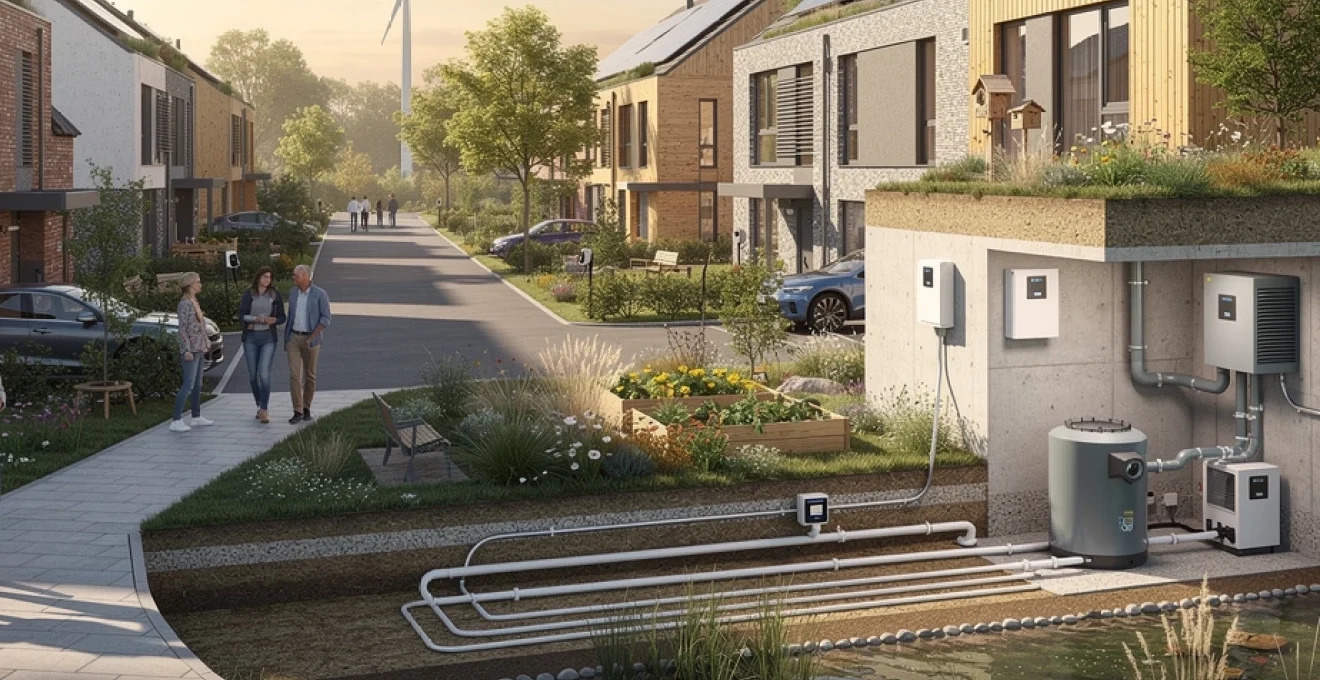
Across the United Kingdom and beyond, the residential property sector is undergoing a profound transformation. Escalating environmental awareness, increasingly stringent regulatory frameworks, and genuine consumer demand for sustainable living environments are converging to reshape how housing developments are conceived, designed, and delivered. The transition from conventional construction methods to environmentally conscious approaches represents more than incremental improvement—it signals a fundamental reimagining of what residential development can and should achieve in the 21st century.
This shift is particularly evident in the proliferation of housing schemes that prioritise energy efficiency, renewable energy integration, sustainable material selection, and ecological stewardship. What was once the preserve of pioneering demonstration projects has entered the mainstream, covered by lifestyle publications focused on sustainable living, with developers, associations, and authorities incorporating green building principles into delivery strategies. The motivations are multifaceted: regulatory compliance, operational cost reduction, enhanced marketability, and growing commitment to environmental responsibility.
The economic case for sustainable housing has strengthened considerably. Energy-efficient homes deliver tangible benefits to occupants through reduced utility bills, whilst developers find that green credentials enhance asset values and differentiate their offerings in competitive markets. Government incentives, evolving building standards, and the growing sophistication of green finance mechanisms further accelerate adoption. Yet challenges remain, including higher upfront costs, skills gaps within the construction sector, and the need to balance environmental ambitions with affordability objectives. Understanding how these competing pressures are being navigated provides valuable insight into the future trajectory of residential development.
Passive house standards and BREEAM certification in modern sustainable developments
The adoption of internationally recognised environmental performance frameworks has become increasingly prevalent within the UK housing sector. These certification schemes provide standardised methodologies for assessing and verifying the sustainability credentials of residential developments, offering assurance to purchasers, tenants, investors, and regulators that buildings meet rigorously defined environmental performance thresholds. Two frameworks in particular—Passive House (Passivhaus) and BREEAM—have gained substantial traction among developers seeking to demonstrate environmental leadership.
Achieving passivhaus institute requirements through advanced building envelope design
The Passivhaus Standard, originating in Germany but now implemented globally, sets exceptionally demanding requirements for building energy performance. At its core, the standard prioritises a fabric-first approach, emphasising the importance of a high-performance building envelope that minimises heat loss and eliminates thermal bridging. Achieving Passivhaus certification requires space heating demand not to exceed 15 kWh per square metre annually—a fraction of conventional building energy consumption.
This extraordinary performance is delivered through meticulous attention to detail during design and construction. Super-insulation, typically incorporating 300-400mm of high-performance insulation in walls and roofs, forms the foundation. Triple-glazed windows with insulated frames prevent heat escape whilst maximising solar gain. Airtightness is paramount, with Passivhaus buildings required to achieve air permeability rates of less than 0.6 air changes per hour at 50 Pascals pressure—approximately ten times tighter than standard UK building regulations.
Mechanical ventilation with heat recovery (MVHR) systems are integral to the Passivhaus approach. These systems continuously supply fresh filtered air whilst recovering up to 90% of the heat from extracted stale air, maintaining excellent indoor air quality without the energy penalty of conventional ventilation. The result is a dwelling that requires minimal active heating, often satisfied by a small heat pump or even the waste heat from appliances and occupants. Residents consistently report exceptional comfort, with stable temperatures throughout the year and freedom from draughts and cold spots.
BREEAM outstanding ratings: case studies from BedZED and one brighton
BREEAM (Building Research Establishment Environmental Assessment Method) takes a broader view of sustainability, assessing buildings across multiple environmental criteria including energy, water, materials, waste, ecology, pollution, health and wellbeing, and management processes. The scheme awards ratings from Pass to Outstanding, with the highest tier recognising truly exceptional environmental performance. Whilst less prescriptive than Passivhaus regarding specific energy targets, BREEAM encourages holistic consideration of environmental impacts throughout a building’s lifecycle.
BedZED (Beddington Zero Energy Development) in South London exemplifies pioneering sustainable residential design. Completed in 2002, this
BedZED (Beddington Zero Energy Development) in South London exemplifies pioneering sustainable residential design. Completed in 2002, this mixed-use eco-village combined high levels of insulation, passive solar design, on-site combined heat and power (CHP), and extensive green roofs to reduce operational energy demand by around 45% compared with the UK average at the time. The scheme incorporated rainwater harvesting, on-site wastewater treatment and a strong emphasis on walkability and public transport access. Although some of the original energy systems have since been adapted, BedZED remains a reference point for what integrated, eco-friendly housing developments can achieve over the long term.
One Brighton, developed by Bioregional Quintain and completed in 2010, was one of the UK’s first large-scale, high-density residential projects to achieve a BREEAM rating of Excellent and incorporate One Planet Living principles. The scheme features mixed-tenure apartments constructed using prefabricated cross-laminated timber (CLT), extensive communal gardens, rooftop allotments, and a biomass-fuelled district heating system. Residents benefit from reduced energy bills, strong community facilities and low car dependency thanks to its proximity to Brighton station and city-centre amenities. Together, BedZED and One Brighton illustrate how BREEAM can support holistic sustainability outcomes that go well beyond basic energy performance metrics.
LEED platinum certification pathways for residential communities
While BREEAM and Passivhaus dominate in the UK and Europe, many large eco-friendly housing developments targeting international investors also pursue Leadership in Energy and Environmental Design (LEED) certification. LEED for Homes and LEED for Neighborhood Development (LEED ND) provide structured pathways for achieving high environmental performance at both building and community scale. Platinum—the highest LEED rating—requires exemplary results across categories including energy and atmosphere, water efficiency, sustainable sites, materials and resources, and indoor environmental quality.
For residential communities, LEED Platinum strategies typically begin with compact, mixed-use masterplanning that reduces car dependency and encourages walking, cycling, and public transport use. High-efficiency building services, on-site renewables, low-embodied carbon materials, and comprehensive construction waste management plans are then layered onto this urban design foundation. Developers often integrate smart metering and building management systems, enabling residents to track and reduce their own energy and water consumption. In practice, this means that an eco-friendly housing estate designed for LEED Platinum will operate more like a finely tuned ecosystem than a loose collection of individual homes.
From a practical perspective, UK developers considering LEED certification should weigh the costs and benefits against more familiar schemes such as BREEAM. For projects with a strong international marketing focus—particularly those targeting overseas buyers or institutional investors—LEED’s global brand recognition can add tangible value. For others, the most effective approach may be to align with LEED principles (for example, by targeting low energy use intensities, high walkability, and robust green infrastructure) while certifying through regionally established frameworks.
Energy performance certificate a-ratings and zero-carbon home specifications
At the level of individual dwellings, Energy Performance Certificates (EPCs) remain the most visible indicator of energy efficiency and carbon performance for UK homebuyers and tenants. An EPC A-rating signifies that a home is among the most energy-efficient on the market, typically relying on high levels of insulation, efficient heating systems, and, increasingly, on-site renewable energy generation. According to UK government data, new-build homes are significantly more likely to achieve EPC ratings of A or B than existing stock, yet genuine A-rated, near-zero-energy homes still represent a relatively small proportion of completions.
Designing for EPC A and beyond—towards true zero-carbon home specifications—usually entails combining a fabric-first approach with efficient electrified heating and substantial on-site renewables. Air source or ground source heat pumps, solar photovoltaic (PV) arrays, and mechanical ventilation with heat recovery are becoming standard components in high-performing schemes. Developers targeting net-zero operational carbon are also paying close attention to thermal bridging, airtightness, and smart controls, ensuring that predicted performance is realised in use. In practice, this means specifying U-values and airtightness levels that exceed current Building Regulations, then rigorously testing them on site.
As the Future Homes Standard comes into force and electricity grid carbon intensity continues to fall, we can expect EPC A-ratings and zero-carbon-ready specifications to become the norm for new eco-friendly housing developments. For buyers and investors, this will make it increasingly important to look beyond headline ratings and ask how performance is being achieved. Are heat pumps appropriately sized? Is there robust monitoring and aftercare? Homes that pair high ratings with proven in-use performance will command the strongest long-term value and resilience.
Integrated renewable energy systems in green housing estates
Eco-friendly housing developments are no longer limited to bolt-on solar panels or token green technologies. Instead, we are seeing a shift towards fully integrated renewable energy systems that operate at neighbourhood scale. By optimising generation, storage, and distribution across multiple dwellings, these schemes can achieve higher efficiencies and lower running costs than standalone systems on individual properties. They also support national decarbonisation goals by reducing peak grid demand and enabling flexible load management.
Ground source heat pump networks: the retrofit london housing estate model
Ground source heat pump (GSHP) networks are emerging as one of the most promising low-carbon heating solutions for both new and existing housing estates. Rather than installing individual boreholes for every property, shared ground loops can serve entire blocks or streets, significantly reducing drilling costs per dwelling. Retrofit programmes in London and other UK cities are demonstrating that GSHP networks can replace ageing gas or electric heating systems with minimal disruption to residents, while cutting carbon emissions by 60–70% compared with traditional boilers.
In a typical retrofit model, vertical boreholes are drilled in communal areas, car parks, or adjacent open spaces, with insulated pipework connecting to compact heat pump units inside each flat or house. Residents retain individual controls and metering, but benefit from improved efficiency and stable running costs. When coupled with fabric upgrades—such as better insulation and double or triple glazing—these networks can move older housing stock much closer to contemporary low-carbon performance benchmarks. For local authorities and housing associations, the ability to decarbonise heat at scale, without relying on uncertain future hydrogen infrastructure, is a major strategic advantage.
For new eco-friendly housing developments, incorporating a shared GSHP network from the outset can be even more cost-effective. Land can be zoned for borefields at masterplanning stage, distribution pipework designed for optimal routing, and plant rooms sized to accommodate future expansion. Developers should, however, ensure that long-term ownership and operation models are clearly defined—whether through an energy services company (ESCO), a residents’ co-operative, or direct landlord management—to avoid future disputes or performance issues.
Solar photovoltaic arrays and battery storage integration in community developments
Solar PV remains the most widely adopted renewable technology in residential schemes, thanks to its modularity, falling capital costs, and straightforward installation. The real innovation in recent years lies in how PV is being combined with battery storage and smart controls at community scale. Instead of every dwelling operating as an isolated generator, entire housing estates can now function as virtual power plants, storing excess solar generation and exporting it when grid prices and carbon intensity are highest.
In practice, this might involve a mix of rooftop PV on individual homes, larger arrays on apartment blocks, and ground-mounted panels on underused land. Energy storage can be distributed—small batteries in each home—or centralised in a shared plant room, depending on the development’s layout and commercial model. Smart inverters and energy management systems then co-ordinate charging and discharging, prioritising on-site consumption to maximise savings on electricity bills before exporting surplus power. For residents, the benefit is a more predictable and often lower energy cost profile, with some schemes offering fixed-price green tariffs over many years.
When evaluating eco-friendly housing developments, you may wish to ask how solar generation is shared and how the financial benefits are allocated. Do residents see direct reductions in their bills, or is revenue primarily captured by the landlord or ESCO? Transparent governance and fair benefit-sharing are crucial if community energy models are to enjoy broad public support and long-term viability.
District heating systems using biomass boilers and combined heat and power units
District heating systems have long been used in northern Europe to deliver low-carbon heat to dense urban areas, and they are increasingly being integrated into UK green housing estates. Modern networks typically rely on a mix of heat sources, including biomass boilers, gas or biomass-fuelled combined heat and power (CHP) units, and, more recently, large-scale heat pumps. Heat is generated centrally and distributed via insulated pipework to individual dwellings, where it is transferred to radiators or underfloor systems through heat interface units.
Biomass and CHP-based systems can deliver significant carbon savings when carefully designed, supplied with sustainable fuel, and appropriately metered. However, they also present challenges. Fuel supply chains must be robust and locally appropriate, emissions must be tightly controlled to avoid air quality impacts, and tariff structures need to be transparent and affordable. Some early UK schemes have suffered reputational damage due to high standing charges or poor performance, underlining the importance of rigorous feasibility studies and long-term operational planning.
Looking ahead, we are likely to see an evolution towards “fifth generation” ambient temperature heat networks that combine central heat pumps, waste heat recovery, and distributed heat pumps in individual homes. For developers, the key is to ensure flexibility—designing networks that can adapt as technology and policy evolve, rather than locking residents into legacy systems that may become costly or non-compliant.
Wind turbine micro-generation in low-rise residential settings
Onshore wind remains one of the cheapest forms of renewable electricity generation, yet integrating turbines into low-rise residential settings is technically and socially complex. Small building-mounted turbines have often underperformed due to turbulent urban wind conditions, while larger masts can raise visual and noise concerns. Nonetheless, in the right context—typically exposed rural or coastal eco-developments—community-scale wind can be a valuable part of a diversified renewable energy mix.
Where micro-generation wind is pursued, successful schemes tend to site turbines on the periphery of the development, away from homes, and combine them with robust community engagement from the outset. Clear explanations of expected output, noise levels, and benefit-sharing mechanisms (such as reduced tariffs or community funds) can help build local support. From a technical standpoint, pairing wind generation with battery storage and flexible loads—such as EV charging or communal heat pumps—can increase self-consumption and protect residents from volatile wholesale prices.
For most urban eco-friendly housing developments, however, the focus is likely to remain on solar PV, heat pumps, and, where appropriate, connection to larger off-site wind farms through green power purchase agreements. In effect, you can still live in a wind-powered home, even if there is no turbine on the skyline of your estate.
Sustainable building materials and circular economy construction methods
The embodied carbon of construction materials now accounts for a growing share of a building’s total lifecycle emissions, particularly as operational energy use falls in high-performance homes. As a result, eco-friendly housing developments are increasingly scrutinised not just for how little energy they use in operation, but also for how much carbon is locked into their walls, floors, and finishes. Circular economy principles—prioritising low-carbon, renewable, recycled, and recyclable materials—are moving from niche to mainstream in ambitious schemes.
Cross-laminated timber structures: the dalston lane and stadthaus examples
Cross-laminated timber (CLT) has become emblematic of low-carbon structural design in multi-storey residential buildings. By replacing steel and concrete with engineered timber panels, CLT structures can reduce embodied carbon by 20–60%, while also sequestering biogenic carbon for the lifetime of the building. In London, projects such as Dalston Lane and Stadthaus (Murray Grove) have demonstrated that mid-rise apartment blocks of up to ten storeys can be safely and efficiently constructed using predominantly timber frames.
These schemes highlight several practical advantages of CLT for eco-friendly housing developments. Panels are prefabricated off-site to high tolerances, enabling rapid erection and reducing on-site waste and disruption. The lightweight nature of timber allows for smaller foundations, which can be particularly beneficial on constrained or brownfield sites. Internally, exposed timber surfaces contribute to a warm, natural aesthetic and can enhance occupants’ sense of wellbeing. From a regulatory perspective, fire safety remains a key consideration, but modern CLT designs incorporate robust compartmentation, sprinkler systems, and protective charring behaviour that meets or exceeds stringent standards.
For developers considering CLT, early engagement with insurers, lenders, and building control bodies is essential to address any perceived risks and secure favourable terms. As guidance and case study evidence continue to accumulate, CLT is likely to feature more prominently in the next generation of low-rise and mid-rise eco-housing schemes across the UK.
Hempcrete and natural insulation materials in load-bearing applications
Alongside engineered timber, natural insulation materials such as hempcrete, wood fibre, sheep’s wool, and cellulose are gaining traction in sustainable housing. Hempcrete—a composite of hemp shiv, lime, and water—provides both thermal insulation and thermal mass, regulating indoor temperatures much like a breathable duvet wrapped around the building. It is typically used as an infill around a structural frame rather than as the primary load-bearing element, but research and pilot projects are exploring more structurally capable formulations.
Natural insulation materials offer several advantages from a circular economy perspective. They are often renewable, low-toxic, and vapour-permeable, helping to manage moisture within the building fabric and reduce the risk of mould. Many also have negative or very low embodied carbon, especially when sourced locally and processed with minimal energy input. For residents, this can translate into more stable indoor temperatures, improved air quality, and a reduced reliance on synthetic materials derived from petrochemicals.
However, successful use of natural materials demands careful detailing and contractor training. Incorrect installation—such as trapping moisture behind impermeable membranes—can undermine performance. As with any innovative product, robust testing, warranties, and clear guidance are important to give developers, lenders, and occupiers confidence.
Recycled aggregate concrete and reclaimed brick utilisation techniques
Given the dominance of concrete and masonry in UK construction, strategies for reducing their embodied carbon can have outsized impacts. Recycled aggregate concrete (RAC) replaces a proportion of virgin aggregates with crushed demolition waste, reducing both raw material extraction and landfill. When combined with cement substitutes such as ground granulated blast-furnace slag (GGBS) or fly ash, RAC can deliver substantial carbon savings without compromising structural performance in many applications.
Reclaimed bricks and masonry units are another valuable resource in eco-friendly housing developments, particularly on brownfield or regeneration sites where existing buildings are being deconstructed. Salvaged bricks can either be reused in their original form—retaining character and patina—or crushed for use as sub-base or aggregate. Some developers now adopt “design for deconstruction” principles, assembling façades and partitions in ways that will allow components to be dismantled and reused at end of life, rather than crushed or landfilled.
From a practical standpoint, integrating recycled and reclaimed materials requires close collaboration between designers, demolition contractors, and material suppliers. Early audits of existing structures, clear specifications, and flexible design details can unlock significant circular value, while still delivering modern performance and aesthetics.
Lifecycle assessment tools for low-embodied carbon material selection
As material choices multiply, lifecycle assessment (LCA) tools are becoming indispensable for quantifying embodied carbon and other environmental impacts. Using product-specific Environmental Product Declarations (EPDs) and project data, designers can compare alternative construction systems and finishes on a like-for-like basis. Many leading eco-friendly housing developments now set explicit embodied carbon targets—measured in kgCO₂e per square metre—and track progress against them throughout design and procurement.
Digital platforms and plug-ins for building information modelling (BIM) make it easier to run iterative LCAs as designs evolve, rather than treating assessment as a one-off exercise at the end of the process. This allows teams to identify “hotspots” and explore substitution options, such as switching from conventional blockwork to timber stud walls, or from aluminium to timber windows. Over time, we can expect embodied carbon benchmarks to become as familiar to developers as EPC ratings and fabric U-values are today.
For buyers and investors, asking whether an eco-friendly housing development has undertaken whole-life carbon assessment—and what its results are—can be a powerful way to differentiate genuinely low-impact schemes from those relying on green marketing alone.
Water management technologies and greywater recycling infrastructure
Water efficiency and resilience are increasingly central to sustainable housing design, particularly in regions facing growing pressure on water resources and sewerage networks. Eco-friendly housing developments are adopting a suite of technologies and strategies to reduce potable water demand, attenuate stormwater, and reuse wastewater on site. These measures not only lower environmental impacts but can also reduce flood risk and infrastructure costs.
At the building scale, dual-flush WCs, aerated taps, low-flow showers, and water-efficient appliances are now standard in most high-performing schemes. More advanced developments go further by installing greywater recycling systems that collect lightly contaminated water from showers, baths, and basins, treat it through filtration and disinfection, and reuse it for toilet flushing or irrigation. This can cut mains water use by 25–40%, particularly in apartment blocks where shared systems benefit from economies of scale.
On the site-wide level, sustainable drainage systems (SuDS) such as swales, rain gardens, permeable paving, and detention basins are designed to mimic natural hydrology. Instead of channelling rainfall rapidly into underground pipes, SuDS slow, filter, and infiltrate water into the ground, reducing pressure on combined sewers and improving water quality. Green roofs and blue roofs add further capacity, storing rainfall temporarily and releasing it gradually. In dense urban eco-developments, these features double as attractive landscape elements and play areas, making water management visible and engaging rather than hidden.
For residents and management companies, the key considerations are maintenance and clear responsibilities. Well-designed SuDS and greywater systems require modest but regular upkeep to perform effectively. Developers who provide robust guidance, training, and budget provision for long-term management are far more likely to see their water strategies deliver the promised environmental and financial benefits.
Biodiversity net gain and green infrastructure planning requirements
In England, the introduction of mandatory Biodiversity Net Gain (BNG) requirements means that most new developments must now deliver at least a 10% increase in biodiversity value compared with the pre-development baseline. For eco-friendly housing schemes, this is driving a step change in how green infrastructure is planned, implemented, and monitored. Rather than treating landscaping as an aesthetic afterthought, leading projects now approach it as critical ecological infrastructure.
Practical measures to deliver biodiversity net gain include retaining and enhancing existing habitats where possible, creating new wildlife-rich areas such as wildflower meadows, ponds, and native hedgerows, and installing features like bird and bat boxes, insect hotels, and log piles. Green roofs and living walls can provide valuable refuge in dense urban environments, while street trees and pocket parks form part of a wider green network that supports pollinators and urban cooling. Crucially, planting choices prioritise native or climate-resilient species that offer high ecological value.
From a planning perspective, BNG is quantified using standardised metrics that assess habitat type, condition, and connectivity. This encourages early collaboration between ecologists, landscape architects, and masterplanners to ensure that biodiversity objectives are embedded from the outset. For residents, well-designed green infrastructure offers multiple co-benefits: improved mental and physical wellbeing, opportunities for food growing and community activities, and enhanced microclimates that reduce overheating and wind exposure.
As climate risks intensify, we can expect biodiversity and green infrastructure requirements to become even more central to the definition of an eco-friendly housing development. Schemes that deliver genuine nature recovery alongside low-carbon living will be best placed to meet evolving policy expectations and public aspirations.
Financial incentives and government schemes driving eco-development growth
The rapid growth of eco-friendly housing developments is not driven by design ambition alone; it is underpinned by a shifting financial and regulatory landscape. Government schemes, green finance products, and evolving consumer expectations are combining to make sustainable development not just ethically desirable but commercially compelling. Understanding these drivers is essential for developers, investors, and homebuyers alike.
On the policy side, Building Regulations tightening, the Future Homes Standard, and local planning policies that favour low-carbon, high-density schemes are creating a strong regulatory “pull” towards greener housing. At the same time, financial incentives such as reduced stamp duty for energy-efficient homes (in some jurisdictions), grants for heat pump installations, and business rates relief for certain renewable energy assets help offset upfront costs. Green mortgages—offering preferential interest rates or cashback for high EPC-rated properties—are becoming more widespread, effectively rewarding buyers who choose more efficient homes.
For developers, access to sustainability-linked loans and green bonds can lower the cost of capital for eco-friendly housing projects, provided measurable environmental performance targets are met. Institutional investors are increasingly screening assets against Environmental, Social and Governance (ESG) criteria, favouring portfolios that demonstrate resilience to climate risks and alignment with net-zero pathways. In this context, developments that can evidence robust energy performance, low embodied carbon, strong biodiversity outcomes, and social value are likely to enjoy a competitive edge.
Of course, challenges remain. Upfront capital costs for advanced building envelopes, heat pump networks, and renewable energy systems can still be higher than for traditional construction, and not all incentives are easy to access or long-term in nature. Skills shortages in the construction and building services sectors can also slow delivery and increase risk. Yet the direction of travel is clear: policy, finance, and market demand are converging to favour eco-friendly housing developments that are future-proofed, low-carbon, and nature-positive. For those willing to embrace this shift, the opportunity is not only to comply—but to lead.