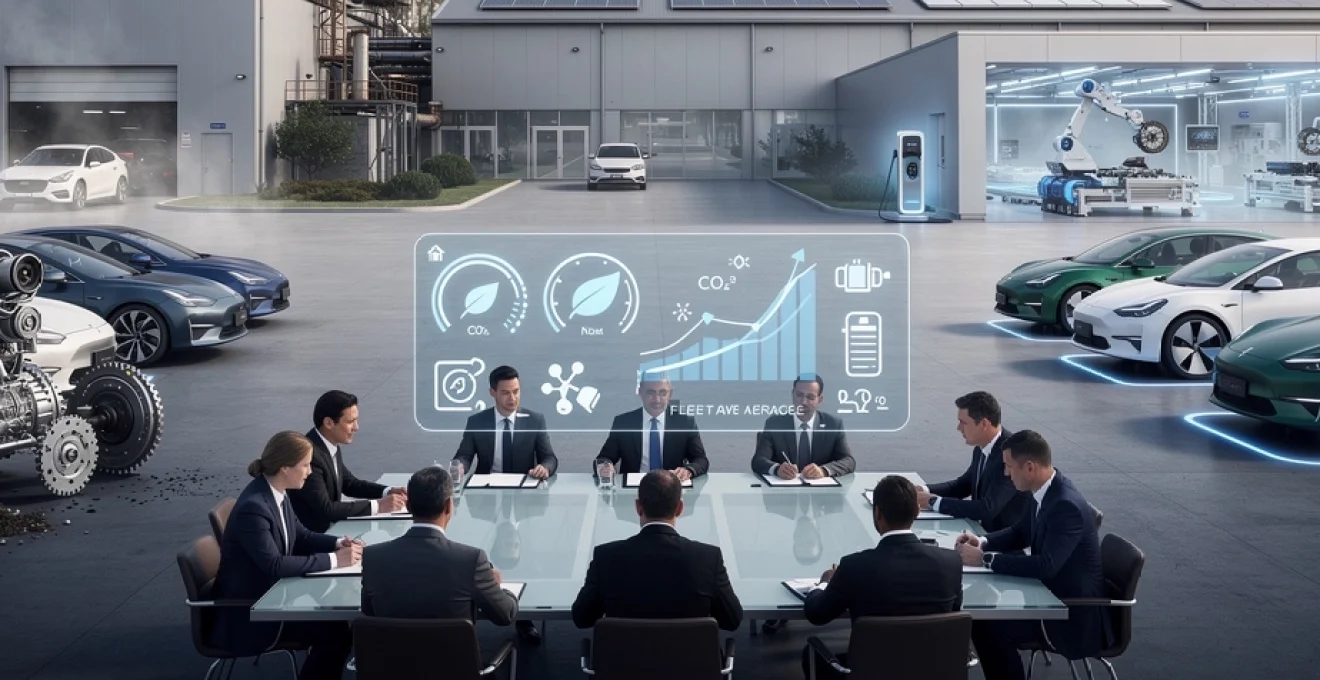
The automotive industry stands at a pivotal crossroads where regulatory pressure and environmental necessity converge to reshape the very foundation of vehicle manufacturing. Across the globe, governments are implementing stringent emissions standards and zero-emission mandates that fundamentally challenge traditional internal combustion engine technologies. These regulatory frameworks are not merely policy adjustments—they represent a seismic shift that compels manufacturers to reimagine their entire product portfolios and manufacturing processes.
The transformation extends far beyond simple compliance requirements. Modern automotive regulations encompass everything from real-world emissions testing to battery supply chain transparency, creating a comprehensive ecosystem of environmental accountability. This regulatory evolution has accelerated innovation cycles, forcing manufacturers to invest billions in electric powertrains, hybrid technologies, and sustainable manufacturing practices. The result is an industry undergoing its most significant transformation since the advent of mass production, where regulatory compliance and competitive advantage have become inextricably linked.
European union’s euro 7 emission standards and their impact on ICE vehicle production
The European Union’s forthcoming Euro 7 emission standards represent the most ambitious regulatory framework for internal combustion engines in automotive history. These standards, expected to take effect in 2025, will fundamentally alter how manufacturers design, test, and produce traditional vehicles. The new regulations extend beyond laboratory testing environments to encompass real-world driving conditions, creating unprecedented challenges for automotive engineers. The standards address not only tailpipe emissions but also particles from brakes and tyres, establishing a holistic approach to vehicle environmental impact.
Euro 7 standards will require manufacturers to demonstrate emissions compliance across a broader range of operating conditions, including extreme temperatures, high altitudes, and varying driving styles. This comprehensive approach eliminates the previous gap between laboratory results and real-world performance that has plagued the industry for decades. The financial implications are substantial—manufacturers face potential fines of up to €95 per gram of CO₂ above the limit, multiplied by the number of vehicles sold, creating powerful economic incentives for rapid technological advancement.
Real driving emissions (RDE) testing requirements under euro 7 framework
Real Driving Emissions testing represents a revolutionary shift from controlled laboratory environments to actual road conditions. Under Euro 7, vehicles must demonstrate compliance during everyday driving scenarios, including traffic congestion, motorway cruising, and urban stop-and-go conditions. The testing protocol employs portable emissions measurement systems that monitor NOx, particulate matter, and other pollutants throughout extended driving cycles. This approach has already forced manufacturers to develop more sophisticated after-treatment systems and advanced engine management strategies.
The RDE testing framework utilises dynamic boundary conditions that reflect genuine driving patterns rather than optimised test cycles. Manufacturers can no longer fine-tune vehicles specifically for laboratory conditions, as the new protocols capture emissions variations across temperature ranges from -7°C to 35°C and altitudes up to 1,300 metres. This comprehensive approach has prompted significant investments in real-time emissions monitoring and adaptive control systems that maintain performance across diverse operating conditions.
Particulate number (PN) limits for petrol engines and direct injection technologies
Euro 7 introduces stringent particulate number limits for petrol engines, particularly targeting direct injection technologies that have become prevalent in modern vehicle designs. The new standards establish a maximum of 6.0 x 10^11 particles per kilometre, representing a 60% reduction from current Euro 6 levels. This regulatory pressure has accelerated the development of gasoline particulate filters (GPFs) and advanced injection strategies that minimise particle formation during combustion.
Direct injection engines, previously favoured for their fuel efficiency advantages, now require sophisticated particulate filtration systems to meet the new standards. Manufacturers are investing heavily in multi-injection strategies, wall-guided combustion systems, and particulate filter regeneration technologies. The implementation of these systems adds complexity and cost to traditional powertrains, making electric alternatives increasingly attractive from both regulatory and economic perspectives.
Nox reduction mandates and selective catalytic reduction (SCR) implementation
Nitrogen oxide reduction requirements under Euro 7 demand unprecedented levels of after-treatment efficiency, particularly for diesel engines. The standards maintain NOx limits at 80 mg/km for diesel vehicles while extending the durability requirements to 240,000 kilometres for passenger cars
and light commercial vehicles. To achieve these levels in real driving conditions and over such long mileage, automakers are deploying more advanced selective catalytic reduction systems, often in combination with dual-dosing urea injection and sophisticated thermal management. The aim is to keep exhaust temperatures within the optimal window for NOx conversion, even during short urban trips or cold starts. In practice, this means redesigned exhaust layouts, larger catalysts, and control software that constantly balances fuel efficiency against emissions performance.
From an engineering perspective, Euro 7 NOx mandates are pushing diesel technology close to its economic limit. Adding extra sensors, more durable catalysts, and higher-capacity DEF (AdBlue) tanks increases both weight and cost. Many manufacturers are therefore reassessing the long‑term viability of small diesel engines in passenger cars and shifting investment toward plug‑in hybrids and battery electric vehicles instead. For larger commercial vehicles where diesel remains hard to replace, we can expect even greater emphasis on high‑efficiency SCR systems and predictive controls linked to telematics data.
Brake particle emissions regulation and regenerative braking system integration
One of the most innovative aspects of Euro 7 is its focus on non‑exhaust emissions, especially brake particle pollution. For the first time, the regulation will set limits for brake particle mass (PM) emissions, measured in milligrams per kilometre using a standardized brake dynamometer test. This is a response to mounting evidence that as tailpipe emissions fall, particles from brakes and tyres are becoming a larger share of urban air pollution. For internal combustion engine vehicles, especially heavier SUVs, meeting these new thresholds will be a serious design challenge.
To comply, automakers are turning to low‑abrasion friction materials, enclosed brake designs, and dust collection systems that capture particles at the source. Yet the most powerful lever is the wider adoption of regenerative braking systems, which reduce reliance on mechanical friction brakes altogether. By allowing the electric motor to decelerate the vehicle and recover kinetic energy, regenerative braking not only cuts particle emissions but also improves efficiency and extends brake component life. This is one of the clearest examples of how an emissions rule nudges the market toward electrified powertrains, even in models that still carry internal combustion engines.
We are already seeing mild hybrids and full hybrids calibrated to maximise electric braking in everyday driving, sometimes engaging friction brakes only at very low speeds or during emergency stops. For you as a driver, the change may simply feel like smoother deceleration and longer intervals between brake service. For manufacturers, however, the need to meet brake particle limits accelerates investment in electrified chassis systems and advanced brake‑by‑wire architectures that integrate seamlessly with electric motors and battery management systems.
Zero emission vehicle (ZEV) mandates accelerating electric powertrain development
While Euro 7 tightens the screws on combustion engines, zero emission vehicle mandates worldwide are pulling the market toward fully electric architectures. Rather than focusing on grams of CO₂ per kilometre, these policies set explicit targets for the share of new vehicles that must be zero tailpipe emission. This shift from incremental efficiency gains to structural change is reshaping automakers’ product planning cycles, capital allocation, and long‑term technology roadmaps. For many brands, ZEV rules have turned electric vehicles from niche projects into the core of their future business.
The impact goes far beyond the vehicles you see on the road. ZEV mandates influence where manufacturers build new factories, how suppliers invest in components like inverters and motors, and which skills are in demand across the automotive workforce. In effect, they are re‑wiring the entire mobility ecosystem around electric powertrains. Let’s look at how some of the most influential regulatory frameworks are driving this shift in key markets.
California air resources board (CARB) ZEV credit system and automaker compliance
The California Air Resources Board pioneered the ZEV concept in the 1990s, and its credit system still sets the template for many other regions. Under the CARB ZEV program, automakers earn credits for selling vehicles that produce zero tailpipe emissions, such as battery electric and hydrogen fuel cell models, with partial credits for certain plug‑in hybrids. Each manufacturer must accumulate a minimum number of ZEV credits each year based on its total vehicle sales in the CARB states; falling short leads to penalties or the need to buy credits from competitors.
This mechanism has had two major effects. First, it gave early movers like Tesla a powerful revenue stream by allowing them to sell surplus ZEV credits to traditional automakers that were slow to electrify. Second, it forced legacy brands to accelerate their own electric vehicle programs to avoid growing compliance costs. For example, in the late 2010s several major automakers entered pooling or credit purchase agreements precisely to stay within CARB limits while their first generation of EVs ramped up. Over time, as more electric models enter the market, the cost of buying credits becomes less attractive than investing directly in EV development.
For you as a consumer in a CARB state or any of the jurisdictions that have adopted similar rules, this translates into a broader choice of electric models and more aggressive marketing of cleaner vehicles. Behind the scenes, automakers are carefully balancing their portfolios: they might prioritise shipping higher‑margin combustion SUVs to non‑CARB markets while reserving more EV inventory for regions where ZEV compliance is critical. It’s a complex optimisation problem, but the outcome is clear—the ZEV credit system has dramatically increased the pace of electric powertrain deployment in North America.
Advanced clean cars II regulation and battery electric vehicle (BEV) sales targets
The next stage of California’s strategy, known as Advanced Clean Cars II (ACC II), raises the stakes even further. Adopted in 2022, ACC II requires that 100% of new light‑duty vehicle sales in California be zero‑emission by 2035, with interim milestones along the way (for example, about 35% ZEV sales by 2026 and 68% by 2030). Several other U.S. states, including New York and Massachusetts, have already signalled their intention to follow this roadmap, multiplying its impact on automaker planning.
These binding sales targets effectively set a countdown for the internal combustion engine in one of the world’s largest car markets. Automakers can no longer treat electric vehicles as optional add‑ons; they must design entire BEV‑first platforms, scale up battery production, and build service networks tailored to electric drivetrains. From a regulatory perspective, ACC II also tightens durability and warranty requirements for EV batteries, ensuring that real‑world performance aligns with consumer expectations. For manufacturers, this means more rigorous validation testing, better thermal management, and smarter software to preserve battery health over time.
One useful way to think about ACC II is as a conveyor belt that slowly but inexorably moves the industry from combustion to electric. If a brand fails to keep pace with the mandated ZEV share in a given year, catching up later becomes harder and more expensive. That is why we are seeing long‑term announcements—such as commitments to sell only zero‑emission light vehicles by the early 2030s—from many global automakers. In practice, these regulations are synchronizing corporate decarbonisation timelines with public climate goals.
Uk’s 2030 ICE ban and manufacturer fleet electrification strategies
Across the Atlantic, the United Kingdom has set its own ambitious course with plans to phase out the sale of new pure internal combustion engine cars and vans by 2030, followed by a ban on most hybrids by 2035. Although the precise milestones have seen some political debate, the direction of travel is unmistakable: new car sales must become predominantly electric within the next decade. This has turned the UK into a regulatory bellwether within Europe, especially after its departure from the EU.
To adapt, automakers are rethinking their UK fleet strategies. Many brands now prioritise launching their latest battery electric vehicles in the British market, using it as a proving ground for new business models such as subscription services, bundled home charging solutions, or vehicle‑to‑grid pilots. At the same time, traditional ICE line‑ups are being pruned; low‑volume engines and niche models that cannot justify the cost of emissions compliance are being dropped. Fleet operators, from leasing companies to last‑mile delivery firms, are also accelerating their own fleet electrification strategies to align with both regulation and corporate ESG commitments.
For you as a business customer or fleet manager, this changing landscape can feel like swapping out the engine of a plane while it’s in flight. There are legitimate concerns about charging infrastructure readiness, residual values of combustion vehicles, and total cost of ownership for EVs. Yet regulatory certainty also creates planning clarity: knowing that combustion engines will be phased out by a given date allows companies to map out a stepwise transition, lock in supplier partnerships, and invest in driver training and energy management systems.
China’s new energy vehicle (NEV) quota system and double credit policy
No discussion of regulations pushing greener solutions would be complete without China, now the world’s largest EV market. The Chinese government’s New Energy Vehicle (NEV) quota system and “double credit” policy combine fuel consumption requirements with mandatory NEV production targets. Automakers earn NEV credits for each qualifying vehicle they sell—typically battery electric, plug‑in hybrid, or fuel cell models—and must meet a minimum credit percentage relative to their total output. Failing to achieve enough NEV credits requires them to buy credits from other manufacturers or face production restrictions.
This policy has been a powerful catalyst for rapid EV adoption. Domestic brands have emerged that design vehicles around Chinese consumer preferences, from city runabouts to long‑range premium models, while global manufacturers have set up local joint ventures to comply with the rules. The “double credit” aspect means that companies must optimize both their corporate average fuel consumption and their NEV share, nudging them to improve efficiency across their entire line‑up. Think of it as a two‑dimensional scoreboard, where scoring well requires both better combustion engines and a strong electric offering.
From a supply chain perspective, China’s regulatory framework has also encouraged heavy investment in battery production, raw material processing, and charging infrastructure. This has created economies of scale that are now influencing global battery prices and technology standards. For automakers selling into the Chinese market, compliance is not just about avoiding penalties; it is about staying competitive in a fast‑moving ecosystem where regulatory support for EVs and consumer demand reinforce each other.
Corporate average fuel economy (CAFE) standards driving hybrid technology adoption
While ZEV mandates focus squarely on electric vehicles, Corporate Average Fuel Economy (CAFE) standards continue to shape how manufacturers design combustion and hybrid models, particularly in the United States. CAFE rules set minimum average fuel economy requirements, expressed in miles per gallon (mpg), that each automaker’s fleet must achieve in a given model year. Falling short can result in significant fines or the need to buy compliance credits from more efficient competitors, similar to the mechanisms seen in emissions trading.
In recent years, U.S. regulators have proposed tightening CAFE targets again, aiming for fleet averages that effectively require large portions of the line‑up to be hybrid or electric. For automakers, one pragmatic response has been the widespread deployment of hybrid powertrains as a bridge technology. Hybrids allow manufacturers to improve fuel economy across high‑volume segments like SUVs and pickups without asking consumers to change their refuelling habits or driving patterns overnight. In some markets, full and plug‑in hybrids now account for a double‑digit share of new vehicle sales, largely driven by CAFE and related CO₂ rules.
From your perspective as a driver, hybrid technology often feels like an invisible efficiency booster. The engine shuts off at traffic lights, the electric motor assists during acceleration, and regenerative braking recovers energy that would otherwise be wasted as heat. Behind the scenes, sophisticated control algorithms constantly juggle energy flows to maximise mpg and minimise emissions. As CAFE standards tighten, expect to see mild hybrid systems (48‑volt architectures) become standard on many models, blurring the line between conventional and electrified vehicles and preparing both consumers and supply chains for a fully electric future.
Battery supply chain regulations and critical raw material sourcing requirements
As regulations push automakers toward electric vehicles, policymakers are also turning their attention to what happens before a battery reaches the factory and after it leaves the vehicle. New rules in the EU, U.S., and other regions address the environmental and social footprint of the battery supply chain, from mining and refining critical raw materials to recycling end‑of‑life packs. The logic is simple: if EVs are to deliver genuine climate benefits, the upstream and downstream impacts of battery production must be tightly managed.
The European Union’s updated Battery Regulation, for instance, introduces mandatory requirements for minimum recycled content in batteries, detailed carbon footprint disclosures, and robust due diligence on sourcing materials like cobalt, lithium, and nickel. It also paves the way for digital battery passports—electronic records that track a battery’s composition, origin, and performance history across its lifecycle. In the U.S., the Inflation Reduction Act links consumer tax credits for EV purchases to critical mineral sourcing thresholds, effectively encouraging automakers to build cleaner, more transparent supply chains closer to home.
For manufacturers, these measures are both a challenge and an opportunity. On one hand, they must map complex, globalised supplier networks, verify compliance with labour and environmental standards, and invest in recycling technologies. On the other, firms that move early to secure responsible sources of critical materials can lock in cost advantages and brand credibility. We are already seeing joint ventures between automakers and mining companies, long‑term offtake agreements for low‑carbon lithium, and the integration of closed‑loop recycling facilities into battery plants. In effect, regulations are turning battery supply chains from opaque black boxes into strategic assets that must be actively managed.
Volkswagen group’s MEB platform response to regulatory pressure
The Volkswagen Group’s Modularer E‑Antriebs‑Baukasten (MEB) platform is a textbook example of how regulatory pressure can catalyse a fundamental shift in product strategy. After the Dieselgate scandal and facing tightening CO₂ fleet limits in Europe and China, VW committed tens of billions of euros to develop a dedicated electric vehicle architecture. Unlike previous “compliance cars” that adapted combustion platforms for EV use, MEB was designed from the ground up around batteries and electric motors, enabling better packaging, lower costs, and improved range.
MEB underpins a wide range of models—from the VW ID.3 and ID.4 to Škoda, SEAT, and Audi derivatives—allowing the group to spread development and tooling costs across millions of vehicles. This scale is crucial for meeting EU fleet CO₂ targets, where every high‑volume electric sale helps offset emissions from remaining combustion models. By standardising components such as battery modules, inverters, and software interfaces, VW can also respond more quickly as emissions regulations and ZEV mandates evolve, updating one core platform instead of dozens of separate model lines.
For consumers, the MEB strategy means more choice in body styles and price points within a consistent technology ecosystem, similar to how smartphone makers use shared hardware platforms across different models. For regulators, it demonstrates that clear, long‑term CO₂ and ZEV policies can motivate incumbents to embrace transformative change rather than incremental tweaks. Looking forward, VW plans to evolve MEB into new generations with higher energy‑density batteries, faster charging, and even more efficient motors—all of which will make it easier to meet the next wave of emissions and efficiency standards without sacrificing performance or affordability.
General motors’ ultium battery technology and regulatory compliance strategy
General Motors offers another instructive case of regulation‑driven innovation with its Ultium battery platform. In response to stricter U.S. CAFE standards, state‑level ZEV mandates, and global CO₂ commitments, GM has pledged to sell only zero‑emission light‑duty vehicles by 2035 and to become carbon‑neutral in its operations by 2040. Achieving this vision requires a flexible, scalable battery system that can support everything from compact crossovers to full‑size pickup trucks and commercial vans—exactly the role Ultium is designed to play.
Ultium uses large‑format pouch cells that can be stacked vertically or horizontally within the pack, allowing engineers to tailor capacity and layout to different vehicle architectures. Combined with a common set of drive units and power electronics, this gives GM a modular toolkit for building a diverse electric portfolio while still meeting tight cost and performance targets. Crucially, Ultium is being produced in new battery plants built through joint ventures in North America, which helps GM align with domestic content and critical mineral sourcing rules tied to EV incentives in the Inflation Reduction Act.
From a regulatory compliance perspective, Ultium is GM’s answer to the question, “How do we turn a patchwork of emissions, fuel economy, and ZEV rules into a coherent product strategy?” By concentrating investment in one highly adaptable platform, GM can amortise R&D across multiple brands—Chevrolet, GMC, Cadillac, and others—while ensuring that each new model contributes positively to its overall emissions balance. For you as a potential buyer, this should translate into more EV options across price tiers and use cases, not just a handful of halo models.
In the broader picture, Ultium and similar platforms show how automakers are moving from reactive compliance—tweaking engines and exhaust systems to pass the next test—to proactive regulation‑aligned design, where entire vehicle ecosystems are conceived with future standards in mind. Regulations may be the catalyst, but the resulting innovations are likely to define the next era of mobility.