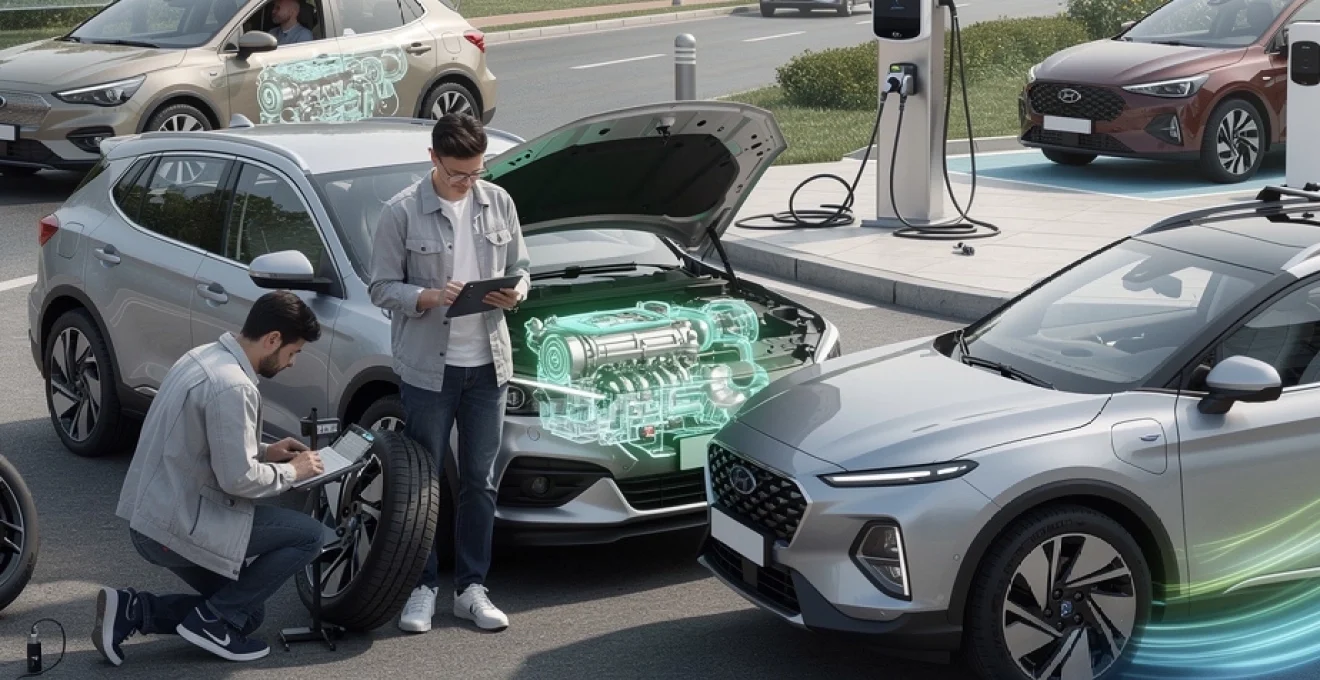
The automotive industry faces unprecedented pressure to reduce environmental impact as transportation accounts for approximately 15-20% of global carbon emissions. Modern drivers increasingly recognise that reducing their vehicle’s environmental footprint extends beyond simply purchasing an electric car – it encompasses a comprehensive approach to maintenance, driving techniques, and technological optimisation. With fuel costs rising and environmental regulations tightening across the UK, implementing effective emission reduction strategies has become both an economic necessity and environmental responsibility.
Vehicle emissions reduction requires a multifaceted approach that addresses engine efficiency, aerodynamic performance, driving behaviour, and alternative fuel systems. Even minor modifications to your current vehicle can yield significant improvements in fuel economy and emission levels. Understanding these techniques empowers drivers to make immediate, measurable changes whilst planning for future vehicle upgrades or conversions.
Advanced engine efficiency optimisation techniques for petrol and diesel vehicles
Engine efficiency directly correlates with emission levels, making internal combustion engine optimisation crucial for environmental footprint reduction. Modern engines incorporate sophisticated technologies that, when properly maintained and calibrated, can achieve remarkable efficiency improvements. The key lies in understanding how these systems interact and implementing targeted optimisation strategies.
Cold start emission reduction through engine block heaters and synthetic oil selection
Cold starts generate disproportionately high emissions due to incomplete combustion during the warm-up phase. Engine block heaters pre-warm the coolant system, reducing warm-up time by up to 75% and decreasing cold-start emissions by 30-40%. These devices prove particularly effective in temperatures below 10°C, where traditional engines struggle to reach optimal operating temperature efficiently.
Synthetic oil selection significantly impacts cold-start performance and overall engine efficiency. Full synthetic oils maintain consistent viscosity across temperature ranges, reducing internal friction and enabling faster oil circulation during startup. Modern 0W-20 and 5W-30 synthetic formulations can improve fuel economy by 2-3% compared to conventional oils whilst extending service intervals and reducing maintenance frequency.
Variable valve timing systems: VTEC, VVT-i, and MIVEC performance tuning
Variable valve timing systems optimise engine breathing characteristics across different operating conditions. Honda’s VTEC (Variable Valve Timing and Lift Electronic Control) adjusts both timing and lift duration, whilst Toyota’s VVT-i (Variable Valve Timing with Intelligence) focuses primarily on timing adjustments. Mitsubishi’s MIVEC (Mitsubishi Innovative Valve timing Electronic Control) combines both approaches for maximum flexibility.
Proper calibration of these systems requires professional diagnostics to ensure optimal transition points between timing maps. OBD-II scan tools can monitor valve timing parameters in real-time, identifying potential issues before they impact performance. Regular carbon cleaning of intake valves maintains system responsiveness, particularly important for direct-injection engines where carbon deposits can interfere with valve operation.
Fuel injection mapping optimisation using OBD-II port diagnostics
Modern fuel injection systems rely on precise mapping to deliver optimal air-fuel ratios across all operating conditions. OBD-II diagnostics provide access to real-time fuel trim data, enabling identification of mixture imbalances that increase emissions and reduce efficiency. Long-term fuel trims exceeding ±10% typically indicate underlying issues requiring attention.
Professional remapping services can optimise injection timing and duration for specific driving patterns and fuel types. These modifications often yield 5-15% improvements in fuel economy whilst reducing particulate emissions. However, ensure any modifications comply with MOT emission standards and vehicle warranty requirements. Unauthorised modifications can void insurance coverage and create legal complications during roadside inspections.
Turbocharger wastegate calibration for improved combustion efficiency
Turbocharger wastegate calibration significantly impacts combustion efficiency and emission levels. Properly adjusted wastegates maintain optimal boost pressure whilst preventing over-boost conditions that increase NOx emissions. Electronic wastegate controllers offer precise boost management, adapting to driving conditions and ambient temperatures automatically.
Regular wastegate inspection prevents carbon buildup that can cause wastegate sticking, leading to uncontrolled
boost spikes, which not only increase fuel consumption but can also damage the turbocharger itself. Having a specialist check and, if necessary, recalibrate the wastegate during major services ensures that boost pressure curves match factory specifications. If you are considering performance tuning, prioritise reliability and compliance over headline power gains, as excessive boost often results in higher particulate output and elevated NOx emissions rather than genuinely cleaner performance.
Aerodynamic drag coefficient reduction and vehicle weight management
Aerodynamic drag and unnecessary weight are silent contributors to higher fuel consumption and CO2 emissions. Above 50 mph, aerodynamic drag becomes the dominant force your engine must overcome, so even modest improvements can have a tangible impact on your vehicle’s environmental footprint. Likewise, every additional 45–50 kg of weight typically increases fuel use by around 1–2%, particularly in stop-start urban driving.
By targeting your car’s drag coefficient and mass together, you effectively “de-load” the engine, allowing it to operate in a more efficient window more of the time. The result is lower emissions, reduced tyre and brake wear, and often a noticeable improvement in high-speed stability. Many of these aerodynamic and weight management changes are low-cost and reversible, making them well suited to existing petrol and diesel vehicles.
Underbody panel installation and front air dam modifications
The underside of most production cars is far from smooth: exposed suspension components, exhaust sections and structural members create turbulent airflow that increases drag. Installing underbody panels or “belly pans” helps streamline this airflow, similar to the flat floors used in motorsport and on some high-efficiency hybrids. In independent tests, well-designed underbody panels have reduced drag coefficients by 0.01–0.03, translating to motorway fuel savings of 2–4%.
Front air dams and splitters serve a complementary role by reducing the volume of air flowing under the vehicle in the first place. When sensibly sized and installed at a conservative ride height, they can lower lift and drag simultaneously, improving both stability and fuel efficiency. However, aggressive aftermarket body kits can have the opposite effect, increasing frontal area and turbulence, so it is prudent to choose components that prioritise aerodynamic efficiency over styling. Before undertaking major bodywork changes, always check insurance and type-approval implications to ensure your modifications remain road-legal.
Low rolling resistance tyre selection: michelin energy saver vs continental EcoContact
Tyres account for a significant share of the energy lost as your car rolls along the road surface. Low rolling resistance (LRR) tyres use optimised rubber compounds, tread patterns and sidewall designs to cut this friction, helping your engine work less hard at any given speed. For many drivers, simply switching to LRR tyres is one of the most straightforward ways to reduce a vehicle’s environmental footprint without altering driving habits.
Two popular examples in the UK and European markets are the Michelin Energy Saver and Continental EcoContact ranges. Independent tests often show fuel savings in the region of 3–6% compared with standard touring tyres, depending on wheel size and driving profile. The EU tyre label provides an at-a-glance rating for rolling resistance, wet grip and noise; aiming for an A or B rating in fuel efficiency typically offers the best balance between reduced CO2 emissions and safe handling. When comparing specific models, consider real-world owner reviews as well as laboratory figures, as driving style and local climate can influence the benefits you experience.
Roof box and carrier removal impact on fuel consumption rates
Roof boxes, bike carriers and roof racks are convenient, but they are also among the biggest offenders when it comes to unnecessary aerodynamic drag. At motorway speeds, a large roof box can increase fuel consumption by 10–20%, effectively cancelling out many of the gains from eco-driving techniques. The additional frontal area and turbulent airflow above the roofline act like a permanent headwind your vehicle must push through.
The simplest solution is to treat roof-mounted accessories as temporary equipment rather than permanent fixtures. Removing roof racks, crossbars and boxes when they are not actively needed can instantly improve your car’s aerodynamic profile and reduce wind noise. If you frequently transport bikes or sports equipment, consider rear-mounted carriers, which often have a smaller drag penalty. By remaining conscious of what you carry on the outside of your vehicle, you reduce emissions every single time you drive, often with zero financial cost.
Eco-driving methodology implementation and real-time monitoring systems
Eco-driving goes beyond generic advice to “drive more gently”; it is a structured methodology that uses real-time feedback to refine your driving style. When applied consistently, eco-driving can reduce fuel consumption and CO2 emissions by 10–20% without increasing journey time significantly. Many modern vehicles already provide the tools you need, from instantaneous fuel economy displays to driving efficiency scores.
Combining these built-in systems with smartphone apps and telematics devices helps you turn your daily commutes into ongoing experiments in efficiency. You start to see cause and effect in real time: how harsh acceleration, unnecessary braking, or excess idling all conspire to raise your emissions. Over time, eco-driving becomes second nature, offering both environmental benefits and long-term savings on fuel and maintenance.
Progressive acceleration techniques and engine load optimisation
Progressive acceleration is the art of building speed smoothly while keeping the engine in its most efficient operating range. Instead of “flooring it” from standstill or crawling away with excessive low-gear revs, you apply moderate throttle and shift up promptly, typically around 2,000–2,500 rpm in most modern diesels and 2,500–3,000 rpm in petrol engines. This approach minimises both fuel-rich operation and unnecessary stress on drivetrain components.
Think of your engine as an athlete: it performs best when it is neither sprinting nor shuffling, but working at a sustainable pace. Using higher gears sooner at light loads, while avoiding “lugging” the engine at very low rpm, keeps combustion efficient and emissions lower. If your car has an eco mode or shift indicator, it is designed to support exactly this kind of engine load optimisation. Over a few weeks of practice, you will likely notice smoother journeys, reduced brake wear and a tangible improvement in average fuel economy.
Regenerative braking maximisation in hybrid powertrains
If you drive a hybrid or plug-in hybrid, regenerative braking is your most powerful tool for reducing energy waste. Instead of dissipating kinetic energy as heat in the brake discs, the electric motor works as a generator, capturing energy and storing it in the high-voltage battery. To maximise this effect, you want to anticipate traffic flow and use gentle, early deceleration rather than last-second heavy braking.
Many hybrid vehicles offer selectable regenerative braking levels, often labelled “B mode” or similar on the gear selector. Using higher regeneration settings in urban driving can significantly increase the proportion of distance driven on electric power, directly reducing tailpipe emissions. Some models display real-time energy flow diagrams, allowing you to see exactly when you are recovering energy. By treating your brake pedal as a “recycling switch” rather than a simple on-off control, you convert more of each journey’s wasted energy back into useful propulsion.
Gps-based route planning using waze and google maps traffic data
Eco-driving is not just about how you use the pedals; it is also about where and when you choose to drive. GPS-based navigation apps such as Waze and Google Maps leverage live traffic data to help you avoid congestion, roadworks and stop-start conditions that dramatically increase fuel consumption and emissions. A route that is a few miles longer but keeps you moving steadily at moderate speeds is often cleaner and quicker than a shorter path clogged with traffic lights and queues.
Most major navigation platforms now offer route options that highlight lower fuel consumption or reduced emissions, not just fastest arrival time. Activating these eco-routing features can reduce CO2 output on longer trips by 5–10%, especially in urban areas. Before setting off, ask yourself: can a slight adjustment to departure time or route avoid the worst of the congestion? By planning ahead with intelligent navigation tools, you turn every journey into an opportunity for cleaner driving.
Instantaneous fuel economy display calibration and interpretation
Your vehicle’s instantaneous fuel economy display is effectively a real-time emissions meter, but it is only useful if it is accurate and well understood. In some vehicles, discrepancies between displayed and actual consumption arise from incorrect tyre sizes, outdated software or miscalibrated fuel flow calculations. If you suspect your readings are unrealistic, compare them against “full tank to full tank” calculations over several refuels to estimate any consistent error.
Once you trust the data, you can use the display as feedback to refine your eco-driving techniques. Watch how small changes in throttle position, gear selection or speed affect the live mpg or l/100 km figure; over time, you will learn the “sweet spots” where your car delivers the best efficiency. Some drivers treat this process like a game, aiming to beat their previous best average on regular routes. By turning the abstract idea of emissions into a visible number on your dashboard, you make efficient driving a tangible, daily habit.
Alternative fuel conversion systems: LPG, CNG, and biofuel adaptation
For drivers who are not yet ready to switch to a full battery-electric vehicle, alternative fuel conversion systems can significantly reduce a vehicle’s environmental footprint. Liquefied petroleum gas (LPG), compressed natural gas (CNG) and certain biofuels produce lower CO2 and pollutant emissions per kilometre than conventional petrol or diesel when implemented correctly. They can also offer lower running costs, though availability and infrastructure vary by region.
LPG conversions are among the most established options for petrol engines in the UK and Europe, with dual-fuel systems allowing you to switch between petrol and LPG. Properly installed, LPG can reduce CO2 emissions by around 10–15% and cut particulate output to almost negligible levels. CNG is more common in dedicated fleets and certain markets, offering even lower CO2 per unit of energy, but requires robust refuelling infrastructure and high-pressure storage tanks. In both cases, it is essential to use certified installers and ensure that tank placement, crash protection and periodic inspections meet national safety standards.
Biofuel adaptation offers another route to reducing net greenhouse gas emissions, particularly for diesel vehicles. High-quality biodiesel blends (such as B20 or B30) and hydrotreated vegetable oil (HVO) can often be used with minimal modification, though you must check manufacturer approvals to avoid warranty issues. Because these fuels are derived from biological sources, their lifecycle emissions can be significantly lower than fossil diesel, provided they are produced from sustainable feedstocks. As with any alternative fuel, consistency of supply and clear documentation of sustainability credentials are key; not all biofuels are equal in their environmental impact.
Electric vehicle charging infrastructure optimisation and battery longevity protocols
Electric vehicles eliminate tailpipe emissions altogether, but their true environmental footprint depends on how they are charged and how long their batteries remain in serviceable condition. Optimising your charging patterns to align with low-carbon electricity generation, such as overnight wind or off-peak nuclear, can substantially reduce well-to-wheel emissions. Many energy suppliers in the UK and EU now offer tariffs specifically designed for EV owners, with lower rates during periods of high renewable output.
Smart chargers and vehicle-to-grid (V2G) capable systems take this a step further by dynamically adjusting charging speed based on grid demand and carbon intensity. By scheduling most of your charging sessions using a timer or smartphone app, you help stabilise the grid and reduce reliance on peaking fossil-fuel plants. Have you considered how often you really need public rapid charging? While fast chargers are invaluable on long trips, relying on them daily can be both more expensive and moderately less efficient due to higher losses.
Battery longevity protocols play a crucial role in maintaining an EV’s efficiency and reducing its lifecycle environmental impact. Lithium-ion batteries experience the least wear when they are kept within a moderate state-of-charge window, typically between 20% and 80%. Many manufacturers now provide “battery care” or “long-life” charging modes that automatically limit maximum charge to extend battery health. Avoiding frequent full 0–100% charges, limiting exposure to extreme heat, and minimising repeated high-power fast charging where possible can extend usable battery life well beyond 10 years.
From an environmental perspective, a long-lived EV battery means fewer replacements, reduced demand for raw materials and lower overall emissions associated with manufacturing and recycling. Think of your battery like a long-distance runner rather than a sprinter: treat it gently day to day, and it will continue to deliver reliable range and performance for many years. When the time eventually comes to replace or repurpose the battery, using manufacturer-approved recycling or second-life programmes ensures that valuable materials are recovered and reintroduced into the supply chain.
Carbon offset calculation methodologies and third-party verification standards
Even with the most advanced engine optimisation, eco-driving techniques and alternative fuels, some emissions from vehicle use are unavoidable. Carbon offsetting offers a way to compensate for these residual emissions by funding projects that remove or reduce greenhouse gases elsewhere, such as reforestation, renewable energy or methane capture initiatives. To ensure that your offsets genuinely balance your vehicle’s environmental footprint, robust calculation methods and credible verification standards are essential.
The first step is to quantify your annual emissions as accurately as possible. This typically involves multiplying your yearly mileage by an emissions factor for your specific fuel type and vehicle efficiency, often expressed in grams of CO2 per kilometre. Many reputable offset providers and environmental organisations offer online calculators that incorporate up-to-date emissions factors and can distinguish between petrol, diesel, LPG and electric vehicles (the latter using grid-average carbon intensity). For fleets, telematics data can provide even more granular insights, capturing variations in route, load and driving style.
Once you have a reliable emissions estimate, the choice of carbon offset projects and verification standards becomes crucial. Internationally recognised frameworks such as the Verified Carbon Standard (VCS), Gold Standard and CDM (Clean Development Mechanism) impose strict criteria around additionality, permanence and double counting. In simple terms, these standards help ensure that the emission reductions you pay for are real, independently audited and would not have happened without your contribution. Offsets that meet these benchmarks might cost slightly more per tonne of CO2, but they provide far greater assurance that your money is driving genuine climate action.
For businesses, integrating carbon offsetting into broader sustainability and fleet management strategies can deliver both environmental and reputational benefits. Some organisations choose to offset the full projected lifetime emissions of a vehicle at the point of purchase, while others offset annually based on actual mileage data. For individual drivers, the cost is often surprisingly modest: offsetting a typical car’s yearly emissions can be less than the price of a single tank of fuel. By combining reduction at source with high-quality offsets, you create a comprehensive, verifiable pathway to minimising your vehicle’s overall environmental impact.