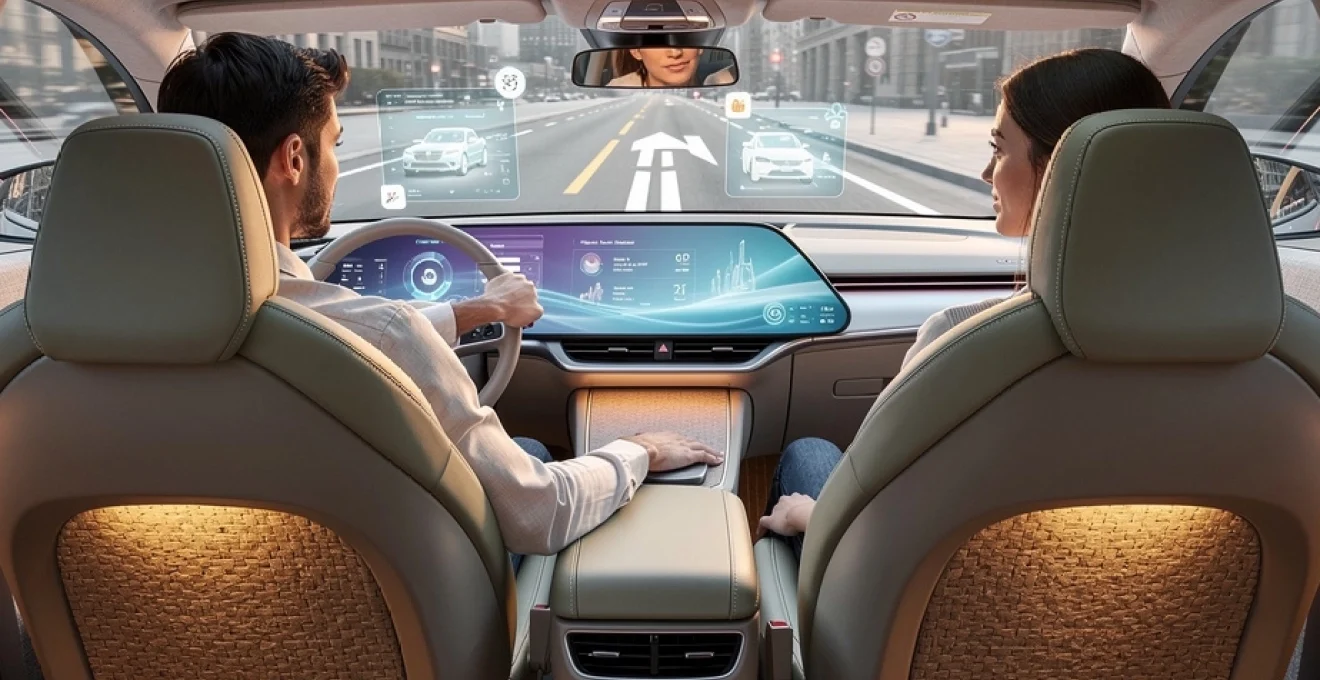
The automotive industry stands at the precipice of its most dramatic interior transformation in over a century. While exterior styling and powertrain evolution have traditionally dominated headlines, the cabin has emerged as the primary battleground for differentiation among manufacturers. Today’s vehicle interiors are no longer simply functional spaces designed to transport occupants from point A to point B—they’ve evolved into sophisticated environments that integrate cutting-edge technology, sustainable materials, and personalised comfort systems. This shift reflects broader societal trends towards wellness, environmental consciousness, and digital integration, fundamentally reimagining what it means to spend time inside a vehicle.
As electric powertrains eliminate traditional mechanical constraints like transmission tunnels and engine compartments, designers enjoy unprecedented freedom to reconfigure interior architecture. Simultaneously, advances in materials science, display technology, and biometric systems are converging to create cabins that respond intelligently to occupant needs. The result is a radical departure from the grey, black, and beige monotony that characterised automotive interiors for decades, ushering in an era where your car’s cabin might rival your living room in comfort, functionality, and aesthetic appeal.
Sustainable and vegan material integration in automotive upholstery
The automotive sector’s environmental awakening has catalysed perhaps the most significant materials revolution since the introduction of synthetic fabrics in the mid-20th century. Today’s manufacturers are moving far beyond token gestures, implementing comprehensive sustainability strategies that address the entire lifecycle of interior components. This transformation stems from dual pressures: increasingly stringent environmental regulations and evolving consumer preferences, particularly among younger demographics who prioritise ecological responsibility in purchasing decisions.
According to recent industry analyses, approximately 65% of consumers now consider sustainability an important factor when selecting a vehicle, with that figure climbing to 78% among millennials and Generation Z buyers. This demographic shift has compelled even traditionally conservative luxury manufacturers to reconsider their material choices, moving away from resource-intensive options towards innovative alternatives that maintain premium aesthetics whilst dramatically reducing environmental impact.
Mycelium-based leather alternatives from bolt threads and MycoWorks
Fungal biotechnology represents one of the most promising frontiers in sustainable automotive materials. Mycelium—the root structure of mushrooms—can be cultivated in controlled environments within weeks, offering a dramatically accelerated production timeline compared to traditional leather, which requires years of animal husbandry. Companies like Bolt Threads and MycoWorks have pioneered processes that transform mycelium into leather-like materials with remarkable tactile properties and durability characteristics suitable for automotive applications.
The manufacturing process involves growing mycelium on agricultural waste substrates, then treating and finishing the resulting material to achieve desired textures and performance characteristics. What makes mycelium particularly compelling for automotive use is its tunability—manufacturers can adjust growth conditions and processing techniques to create materials ranging from supple, suede-like textures to firmer, more structured surfaces appropriate for bolsters and trim panels. Early adopters report that mycelium leather alternatives demonstrate excellent abrasion resistance, often exceeding 50,000 Martindale cycles, whilst maintaining breathability that prevents the clammy sensation associated with some synthetic alternatives.
Piñatex pineapple fibre applications in seat construction
Carmen Hijosa’s revolutionary Piñatex material exemplifies the circular economy principles increasingly valued by automotive manufacturers. This non-woven textile, created from fibres extracted from pineapple leaves—a waste product of pineapple harvesting—offers multiple sustainability advantages. Globally, approximately 25 million tonnes of pineapple leaves are harvested annually, with the vast majority either burnt or left to decompose. Piñatex transforms this agricultural waste stream into a valuable resource whilst providing supplementary income for farming communities in pineapple-growing regions.
From a performance standpoint, Piñatex delivers compelling advantages for automotive applications. The material weighs roughly one-quarter that of traditional leather whilst costing approximately two-thirds as much to produce, creating attractive economics for manufacturers. Several European carmakers have already integrated Piñatex into floor mat production, with ongoing trials evaluating its suitability for seat upholstery and door panel applications. The material’s natural breathability and moisture-wicking properties make it particularly appropriate for seating surfaces, whilst its resistance
to cracking and UV damage is being enhanced through next‑generation coatings, allowing Piñatex to withstand years of exposure to sunlight, temperature swings and everyday abrasion. Engineers are also experimenting with layered seat constructions that combine Piñatex with recycled foam and natural fibre backings to deliver the comfort and durability required for high‑mileage vehicles. As these test programmes mature, you can expect to see pineapple fibre move from niche concept cars into mainstream, factory‑option interiors across compact EVs and urban mobility vehicles.
Recycled ocean plastic textiles in dashboard and door panel manufacturing
Reclaimed ocean plastic has rapidly evolved from a marketing talking point into a credible structural and aesthetic material for car interiors. Brands such as Volvo, Mercedes-Benz and BMW are already using yarns spun from discarded fishing nets, PET bottles and marine debris to create seat fabrics, headliners, and trim accents. In some recent electric models, up to 25% of visible interior plastics now incorporate recycled content, significantly reducing reliance on virgin petroleum-based polymers. The key innovation lies in advanced sorting and cleaning technologies that transform mixed waste into consistent, high-quality feedstock suitable for precision moulding.
From a design perspective, recycled ocean plastics are opening the door to new textures and visual signatures. Engineers can tune fibre blends and weaving patterns to deliver everything from technical mesh fabrics for sporty cabins to soft, wool-like textiles for premium EV lounges. Dashboard inserts and door panels made from these materials often feature subtle speckling or heathered effects that visually signal their recycled origin, turning sustainability into a proud aesthetic statement. To ensure long-term durability, automakers are pairing these textiles with UV-stable coatings and stain-resistant treatments, so eco-conscious drivers do not have to compromise on longevity or ease of cleaning.
Bio-fabricated spider silk for luxury trim components
Among the most futuristic sustainable materials under development is bio‑fabricated spider silk, produced through fermentation rather than farming. Companies working in this field engineer microbes to spin protein fibres that mimic the extraordinary strength‑to‑weight ratio and elasticity of natural spider silk. For automotive interiors, these fibres can be woven into ultra‑thin yet robust textiles, or blended with other sustainable yarns to create high‑performance composites for trim elements. Imagine steering wheel wraps, seat inserts or door pulls that feel as soft as premium leather yet rival advanced technical fabrics in tensile strength.
Because spider silk proteins can be engineered at the molecular level, designers gain fine-grained control over attributes like sheen, stretch and thermal behaviour. This enables the creation of bespoke materials for specific touchpoints, such as slightly grippy, temperature-neutral wraps for gear selectors or breathable, supportive meshes for seat bolsters. While large-scale deployment is still a few years away, several luxury manufacturers are already collaborating with bio‑fabrication startups on limited-run concept vehicles. As production scales, bio‑fabricated spider silk could become the pinnacle of vegan luxury trim, offering a compelling alternative to both animal-derived and petrochemical-based materials.
Ambient lighting systems and chromotherapy technology
As cabins become quieter and more lounge-like, light is emerging as a powerful tool for shaping mood, comfort and even perceived temperature. Modern ambient lighting systems now go far beyond simple footwell illumination, evolving into fully programmable ecosystems that wrap around the cockpit. Engineers are drawing on principles of chromotherapy—the idea that different colours can influence psychological and physiological states—to help drivers feel more alert, relaxed or focused. Combined with intelligent software, these systems can adapt in real time to driving conditions, time of day and even biometric data, turning the car interior into a responsive, wellbeing-oriented space.
Mercedes-benz MBUX interior assist with 64-colour palette configurations
Mercedes-Benz was one of the first manufacturers to popularise multi‑colour ambient lighting, and its latest MBUX Interior Assist system takes this concept several steps further. Drivers can choose from a palette of up to 64 colours, with preconfigured themes that synchronise light strips across the dashboard, doors, centre console and footwells. For instance, a dynamic “Energising” profile might blend cool blues and crisp whites to promote alertness during night driving, while a “Relax” mode favours warmer ambers and soft purples for winding down after a long day. You can even link lighting schemes to drive modes, so switching to “Sport” triggers a dramatic shift to red accents.
Where MBUX really stands out is in its ability to react intelligently to user behaviour. Gesture recognition and proximity sensors allow light zones to brighten subtly when your hand approaches a control surface, making it easier to locate functions without taking your eyes off the road. In some models, the system can also provide visual feedback for driver-assistance features, using colour shifts to signal lane-keeping interventions or blind-spot warnings. This blend of ambience and communication shows how ambient lighting is evolving from pure decoration into an intuitive human-machine interface.
BMW laser-etched panoramic glass roof with dynamic light projection
BMW has taken a different approach by turning the glass roof itself into a luminous canvas. In recent concept and production vehicles, the brand has showcased panoramic roofs with laser‑etched patterns that act as light guides for integrated LED arrays. When activated, these micro-etchings scatter light across the surface, creating starfield effects, flowing lines or brand-specific motifs that seem to float above occupants’ heads. During the day, the etched glass still functions like a conventional sunroof, while at night it transforms the cabin into a lounge-like environment reminiscent of a high-end hotel lobby.
Dynamic control over these projections enables context-aware experiences. For example, the roof can simulate a slowly moving constellation pattern on long highway journeys to create a sense of spaciousness and calm. In autonomous or semi‑autonomous modes, the same system could be used to display subtle directional cues or highlight ideal seating positions for work or relaxation. Because the LEDs are hidden in the roof structure, you gain an immersive lighting effect without visible light sources or bulky fixtures, preserving the minimalist aesthetic prized in next‑generation car interiors.
Audi matrix OLED taillight integration into cabin mood lighting
Audi’s expertise with Matrix OLED lighting on the exterior is beginning to influence its interior design language as well. While OLEDs are currently best known for customisable taillight signatures, engineers are exploring ways to extend these wafer-thin, uniformly bright panels into the cabin. Imagine door cards, dashboard inlays or seat shells incorporating flexible OLED elements that mirror the car’s external light animations, creating a seamless visual identity inside and out. Because OLEDs emit soft, low‑glare light, they are ideal for subtle accent illumination that avoids the harshness sometimes associated with LEDs.
One intriguing application is the synchronisation of interior and exterior signals. When the vehicle indicates a lane change or hazard to other road users via its Matrix OLED taillights, corresponding colour shifts or patterns could appear along the interior beltline. This gives occupants a more intuitive sense of the vehicle’s intentions and surroundings, especially useful in highly automated driving scenarios. As OLED manufacturing costs decline, we are likely to see wider adoption of these “living surfaces” that can switch from decorative to communicative roles in an instant.
Circadian rhythm synchronisation through adaptive LED arrays
Beyond pure aesthetics, automakers and research institutes are investigating how adaptive light spectra can support human circadian rhythms during long journeys. Much like smart lighting in modern offices, advanced LED arrays in the car interior can subtly adjust colour temperature and intensity over the course of the day. Cooler, blue-enriched light in the morning helps stimulate alertness, while warmer tones in the evening encourage relaxation and signal the approach of rest. For frequent business travellers or ride‑hailing passengers, this “circadian-aware” lighting could reduce fatigue and jet lag, making time spent on the road feel more restorative.
Implementing such systems requires close collaboration between designers, lighting engineers and behavioural scientists. Sensors track external light conditions, trip duration and sometimes even biometric cues such as heart rate or eye blink frequency. Algorithms then determine the optimal lighting profile, balancing comfort with safety—after all, you still need enough contrast to read instrumentation clearly. As cabins become more autonomous, circadian‑tuned ambient lighting may converge with seating, climate control and even audio to form holistic wellness programmes that adapt to each occupant, much like a personalised spa inside your car.
Haptic feedback and tactile interface advancements
While large touchscreens and voice control dominate headlines, the sense of touch remains crucial for safe, intuitive operation inside the vehicle. Many drivers have discovered the downside of flat, glass-heavy interfaces: without tactile cues, simple tasks like adjusting climate settings can demand too much visual attention. In response, suppliers and OEMs are reinventing haptics to bring the “feel” back into digital controls. New technologies aim to give flat surfaces the richness of physical buttons, while using subtle vibration and force cues to guide eco‑driving and enhance situational awareness.
Ultrasonic surface haptics on touchscreen control panels
Ultrasonic surface haptics use high-frequency vibrations to modulate friction on glass, creating the illusion of textures, detents and clicks on an otherwise smooth touchscreen. Companies in this space can generate everything from the feeling of a knurled dial to the stop‑start resistance of a slider, all without moving parts. For the driver, this means you can feel when your finger passes over a virtual button or slider, dramatically reducing the need to glance down at the display. It is a bit like reading Braille on a screen that can change its pattern on demand.
From a design standpoint, ultrasonic haptics free up valuable real estate by allowing the same surface area to host multiple context-aware controls. In navigation mode, you might feel a distinct groove where you can scroll through route options; when audio settings are active, that same zone could emulate a volume wheel with discrete steps. As software updates roll out new functions, the haptic language can evolve without any hardware changes, future‑proofing the interior interface. For carmakers focused on minimalism, this technology offers a way to keep dashboards clean without sacrificing tactility.
Continental AG force-feedback steering wheel technology
Continental AG and other suppliers are pushing haptics beyond screens and into the steering wheel itself. Force‑feedback steering wheels can subtly modulate resistance, vibration and even micro‑movements to communicate information to the driver. For instance, gentle pulses on one side of the rim can reinforce lane-keeping assistance, while a temporary increase in steering effort might warn you about an upcoming curve or slippery surface. Because these cues are delivered directly through the primary control interface, they can be perceived quickly without adding to visual or auditory clutter.
Looking ahead, such steering wheels could play a pivotal role in semi‑autonomous driving transitions. When the vehicle needs to hand control back to the driver, a distinct combination of haptic patterns can provide a more urgent, unmistakable alert than dashboard messages alone. Conversely, when assistance systems are active and performing well, the wheel might feel slightly lighter, reinforcing trust in the automation. The challenge for designers is to create a consistent “haptic vocabulary” that drivers can learn intuitively, much like we have learned to interpret different vibration patterns on our smartphones.
Bosch haptic accelerator pedal for eco-driving guidance
Bosch’s haptic accelerator pedal illustrates how tactile feedback can encourage more efficient, safer driving habits. By integrating actuators into the pedal mechanism, the system can generate a noticeable “pressure point” when the driver’s input exceeds an optimal threshold for fuel or energy consumption. Push past this point and you’re consciously choosing to accelerate harder; ease off and you stay within the eco‑friendly zone. It functions as a gentle nudge rather than an intrusive limiter, helping drivers save fuel or battery range without constantly watching efficiency gauges.
The same technology can also support advanced driver-assistance systems. For example, if the vehicle ahead brakes suddenly, the pedal can vibrate or stiffen to prompt a quicker reaction, even before automatic emergency braking intervenes. As vehicles become more connected, the haptic pedal could respond to traffic data, speed limit changes or upcoming gradients, subtly coaching the driver to adopt smoother, more anticipatory driving styles. Over time, this kind of feedback may make eco‑driving feel less like a chore and more like a natural, rewarded behaviour.
Augmented reality head-up display integration
Head-up displays (HUDs) have been present in premium cars for years, but augmented reality is transforming them from simple speed readouts into immersive guidance systems. By projecting graphics that align precisely with the real world outside the windscreen, AR‑HUDs can highlight lanes, mark hazard zones and overlay navigation cues directly onto the road ahead. This reduces cognitive load, as drivers no longer need to translate abstract arrows on a screen into real-world actions. In an era of ever more complex driver-assistance features, AR becomes a powerful tool for making technology feel transparent and trustworthy.
Continental’s AR-HUD with 3D object detection and navigation overlays
Continental’s AR-HUD platform uses a combination of cameras, radar and LiDAR data to generate a dynamic 3D model of the environment in front of the vehicle. The system then projects context-aware graphics onto the lower portion of the windscreen, with virtual elements appearing to sit 7–15 metres ahead on the road surface. For navigation, this allows for highly intuitive guidance—turn arrows can be “pinned” to the actual junction you need to take, and the correct lane can be subtly highlighted. When combined with 3D object detection, pedestrians, cyclists or stopped vehicles can be framed with gentle outlines to draw your attention when necessary.
A key challenge for AR‑HUDs is ensuring that the graphics feel stable and well anchored, even over bumps and at high speeds. Continental addresses this with advanced rendering algorithms and precise head‑tracking calibration, minimising parallax errors that might otherwise cause distraction. As display fields of view grow and projection units become more compact, we can expect AR‑HUDs to migrate from luxury flagships into mid‑segment vehicles, making “eyes on the road” information delivery a mainstream feature.
Hyundai genesis holographic windscreen projection systems
The Hyundai Genesis brand has been experimenting with holographic windscreen projection in collaboration with specialised optics companies. Unlike conventional HUDs that project onto a small portion of the glass, these systems use complex optical elements embedded in the windscreen laminate to create floating images that appear at varying depths in front of the car. The effect is somewhat akin to a lightweight hologram, with navigation cues and safety warnings seemingly hovering over the road surface or above key objects.
This depth layering offers more nuanced communication possibilities. For example, imminent hazards could appear closer and more vivid, while informational icons like speed limits sit further away and more subdued. Because the images are integrated over a larger field of view, drivers can receive guidance without feeling like they are staring at a confined display area. As holographic projection technology matures, it could enable shared AR experiences for passengers as well, such as contextual information about landmarks during autonomous sightseeing drives.
Wayray true AR technology with retinal tracking calibration
WayRay’s True AR system represents one of the most ambitious approaches to in‑car augmented reality. Rather than relying on conventional reflection-based HUDs, it uses a holographic optical element to project a wide-angle virtual layer directly into the driver’s line of sight. Coupled with retinal tracking and precise vehicle-position data, the system can maintain accurate registration of virtual objects regardless of head movement or seating position. In practice, this means that lane highlights, distance markers and navigation prompts remain “locked” to their real-world counterparts, preserving immersion and reducing motion-induced misalignment.
For future autonomous or semi‑autonomous applications, such a robust AR layer could serve as the primary interface between occupants and the outside world. Imagine being able to tap a point of interest on the windscreen to get more information, or seeing suggested overtaking zones rendered directly on the roadway ahead. Of course, with this level of immersion comes responsibility: designers must ensure graphical elements remain subtle and non‑intrusive, especially at higher speeds. The industry is still refining best practices, but the direction of travel is clear—AR will play a central role in how we perceive and interact with the driving environment.
Mercedes-benz hyperscreen with OLED display spanning dashboard width
While technically a series of screens rather than a projection system, Mercedes-Benz’s MBUX Hyperscreen deserves mention in the context of augmented interfaces. Spanning almost the entire width of the dashboard in some EQ models, this curved OLED assembly integrates the instrument cluster, central infotainment and passenger display behind a single glass surface. Software-driven “layers” prioritise information based on context, reducing on‑screen clutter and anticipating what you’re likely to need next. In a sense, the Hyperscreen brings AR principles—contextual, adaptive content—into a tactile, near‑field format.
For drivers, this means navigation, media and vehicle data can be arranged in a way that feels more like a personalised digital workspace than a traditional cockpit. When combined with a smaller HUD, the Hyperscreen can offload secondary tasks and deeper configuration options to the main dashboard while leaving critical driving information projected in the line of sight. As OLED technology advances, we may see even more seamless integration between physical trim and display surfaces, blurring the line between “screen” and “interior architecture.”
Biometric authentication and occupant monitoring systems
As vehicles gain more connectivity and autonomy, the question of who is inside—and how they are feeling—becomes increasingly important. Biometric authentication and occupant monitoring systems address both security and wellbeing, using sensors to identify individuals and assess their state in real time. This enables personalised cabin settings, improved theft protection and proactive safety interventions when fatigue or health issues are detected. In effect, your future car may know you almost as well as your smartphone does today.
Fingerprint recognition ignition systems in hyundai santa fe
Hyundai has already brought biometric authentication into the mainstream with fingerprint recognition in models like the Santa Fe. Instead of relying solely on key fobs, drivers can start the engine and unlock doors using capacitive fingerprint sensors integrated into the door handle and ignition area. These sensors encrypt and store multiple profiles, allowing each authorised user to trigger a customised set of preferences—seat and mirror positions, ambient lighting themes, favourite radio stations and even preferred driver-assistance settings—all before the journey begins.
Beyond convenience, fingerprint-based ignition reduces the risk of unauthorised use, particularly in markets where keyless entry relay attacks have become more common. It also lays the groundwork for more sophisticated access schemes, such as time‑limited profiles for valet parking or car‑sharing scenarios. As biometric technology becomes cheaper and more robust, we can expect other brands to follow suit, potentially combining fingerprints with secondary factors like smartphone proximity for multi-layer authentication.
Facial recognition camera arrays for driver drowsiness detection
Interior-facing cameras are rapidly becoming standard equipment, particularly in vehicles targeting high safety ratings. Using computer vision and AI, these camera arrays can track facial landmarks, eyelid movements and head position to infer driver alertness. If the system detects frequent micro‑sleeps, prolonged eye closure or repeated head nodding, it can trigger escalating warnings—from gentle audio alerts and seat vibrations to more assertive interventions such as tightening seat belts or preparing driver-assistance systems for an emergency stop.
Some manufacturers are also exploring the use of facial recognition for personalisation and access control. Imagine your car greeting you by name, automatically loading your cloud-based profile and even adjusting voice assistant behaviour based on your past preferences. Of course, these capabilities raise valid privacy concerns, so transparent data handling policies and robust on‑device processing will be crucial. For many drivers, though, the prospect of a car that can notice and respond when they are dangerously tired is a compelling safety benefit.
Capacitive steering wheel sensors for heart rate monitoring
Capacitive sensors embedded in the steering wheel rim enable another layer of physiological monitoring. Similar to the electrodes on a fitness tracker, these sensors can pick up heart rate and in some cases heart rate variability when the driver maintains contact with the wheel. Combined with other data such as steering patterns and pedal usage, this information can help infer stress levels or detect potential medical events. In extreme situations, a sudden loss of contact combined with abnormal biometrics could prompt the vehicle to initiate an automated emergency stop and contact first responders.
In everyday use, heart rate data can feed into comfort and wellness features. If the system notices an elevated pulse during heavy traffic, it might gradually switch the ambient lighting to calmer hues, soften the suspension (if available) and suggest a short break at the next rest area. While such interventions must remain subtle to avoid feeling intrusive, they hint at a future where the car acts as an active participant in managing driver wellbeing rather than a passive environment.
Interior radar technology for child presence detection in rear seats
Tragically, incidents of children or pets being left in hot cars continue to occur worldwide. To combat this, several automakers and suppliers are developing interior radar systems that can detect micro‑movements such as breathing, even under blankets or behind seatbacks. Unlike simple weight sensors or door-open logic, radar-based child presence detection can distinguish between inanimate objects and living occupants, significantly reducing false alarms. If motion is detected after the vehicle is locked, the system can trigger visual and audible alerts, send notifications to the owner’s smartphone and, in some cases, activate climate control or contact emergency services.
Because radar waves can penetrate soft materials, these systems offer coverage of the entire cabin, including the footwells and luggage compartment. Regulators in some regions are already considering making child presence detection mandatory, which would accelerate adoption across segments. As radar modules shrink and become more power efficient, they may also contribute to broader occupant monitoring, supporting features like automatic airbag deactivation when a seat is unoccupied or optimised deployment strategies based on occupant position.
Modular and reconfigurable cabin architecture
Electric platforms and the gradual shift toward automated driving are liberating interior designers from many traditional constraints. Without bulky transmission tunnels and with more compact powertrains, cabins can become flatter, more spacious and more adaptable. At the same time, changing mobility patterns—from subscription services to shared autonomous shuttles—are creating demand for interiors that can be reconfigured quickly for different use cases. The result is a wave of modular, lounge-like cabin concepts that treat the vehicle less as a fixed cockpit and more as a flexible living or working space on wheels.
Renault EZ-GO concept with rotating lounge seating configurations
Renault’s EZ‑GO concept illustrates how radically interior layouts could change in a world of fully autonomous urban mobility. Instead of forward-facing rows, the cabin features a U‑shaped lounge arrangement with seats that can swivel and recline, encouraging face‑to‑face interaction among passengers. Entry is via a large front opening rather than conventional side doors, allowing people to step into an open, room-like space rather than squeeze into a narrow aisle. For city dwellers who may not own a car, such shared robo‑shuttles could function as mobile meeting rooms, social pods or quiet workspaces.
Translating these ideas into near‑term products, we already see features like rotating front seats and deployable work tables appearing in advanced prototypes. The challenge for automakers is to balance flexibility with crash safety requirements and cost constraints. Modular seat rails, fold‑flat mechanisms and integrated seatbelt systems are all part of the solution, enabling multiple layouts without compromising structural integrity. As regulations evolve to accommodate higher levels of autonomy, we can expect more production vehicles to adopt at least some elements of the lounge seating experience.
Canoo skateboard platform with removable interior modules
Startup Canoo has taken modularity a step further by designing its vehicles around a flat “skateboard” platform that contains all major mechanical and electronic components. Above this base, the interior becomes almost like a plug‑and‑play environment: benches, storage consoles, entertainment pods and even entire seating clusters can theoretically be swapped out or reconfigured with relative ease. For commercial fleets, this could mean rapidly adapting the same base vehicle for ride‑sharing, last‑mile delivery or mobile retail simply by changing the interior modules.
For private users, a modular interior opens interesting possibilities. Imagine leasing a family‑oriented cabin module with extra seats during school years, then switching to a minimalist two‑seat configuration with additional cargo and workspace later on. Although such radical reconfigurability is still in its infancy, the Canoo model hints at a future where the software-like flexibility we expect from digital products starts to influence the physical layout of our vehicles as well.
Rivian R1T gear tunnel storage integration and pass-through design
Rivian’s R1T pickup takes a more incremental but highly practical approach to rethinking interior space. Its signature “gear tunnel” is a pass‑through storage compartment running laterally between the cabin and the bed, accessible from doors on both sides of the vehicle. While technically outside the main passenger cell, this space is deeply integrated into the interior architecture, enabling creative use cases such as slide‑out camp kitchens, foldable seating or secure storage for long items like skis. By exploiting the packaging advantages of an electric skateboard chassis, Rivian demonstrates how even traditional vehicle categories can gain novel interior functionality.
Inside the cabin, flat floors and flexible storage solutions complement the gear tunnel, making it easier for owners to adapt the space to daily life—whether that means hauling gear, transporting kids or working remotely from a scenic overlook. As more EV manufacturers explore skateboard platforms, we are likely to see a proliferation of similar pass‑throughs, hidden compartments and multi‑functional surfaces. Put simply, the future of car interiors is not just about screens and sensors; it is also about smarter, more imaginative use of every cubic centimetre of space.