Sports rivalries represent far more than simple competitive matchups between athletes or teams. They embody complex psychological, cultural, and economic phenomena that transform ordinary sporting events into cultural touchstones capable of captivating millions of viewers worldwide. From the intense atmosphere of a Belgrade derby to the global spectacle of El Clásico, these contested narratives generate measurable spikes in audience engagement, broadcast revenue, and social media activity. Understanding the mechanisms driving this heightened investment reveals fundamental insights into human behaviour, tribal identity formation, and the modern media landscape. As the sports industry increasingly relies on quantifiable metrics to justify broadcast deals and sponsorship agreements, the role of rivalries in amplifying engagement has never been more strategically important.
Psychological mechanisms driving fan investment in sports rivalries
The intense emotional investment supporters demonstrate during rivalry fixtures stems from deeply rooted psychological processes that transcend the actual sporting contest. These mechanisms operate at both conscious and unconscious levels, creating powerful bonds between individuals, their chosen teams, and the collective identity represented by those organisations. Research in social psychology and neuroscience has illuminated why certain matchups generate exponentially greater emotional responses than others, even when league standings or championship implications remain identical.
Social identity theory and In-Group bias formation in derby matches
Social identity theory, originally developed by Henri Tajfel and John Turner in the 1970s, provides the foundational framework for understanding rivalry psychology. According to this theory, individuals derive significant portions of their self-esteem from group memberships, creating powerful motivations to view their chosen groups favourably whilst simultaneously denigrating competing groups. In sporting contexts, this manifests as passionate support for one’s team coupled with intense dislike—sometimes approaching hostility—toward rival supporters.
Derby matches particularly exemplify these dynamics because geographical proximity intensifies the salience of group boundaries. When Partizan faces Crvena Zvezda in Belgrade, or when Celtic meets Rangers in Glasgow’s Old Firm fixture, supporters aren’t merely watching football—they’re participating in symbolic battles over identity, cultural values, and community pride. The “us versus them” dichotomy becomes sharply defined, with the rival team serving as the quintessential out-group against which in-group identity crystallises. Studies examining derby attendance patterns reveal that fans prioritise rivalry fixtures over matches with objectively greater championship implications, demonstrating that identity concerns often supersede rational sporting considerations.
Parasocial relationships between supporters and contested derby narratives
Beyond group identity, individual supporters develop what psychologists term “parasocial relationships” with the ongoing narratives surrounding rivalry fixtures. These one-sided psychological relationships mirror the emotional investment typically reserved for personal friendships, despite supporters having no direct interaction with players or meaningful influence over outcomes. The serialised nature of recurring rivalry fixtures creates narrative continuity similar to television drama series, with each encounter representing a new chapter in an ongoing saga.
This narrative dimension explains why historical context matters tremendously in rivalry engagement. A Boca Juniors versus River Plate Superclásico carries emotional weight accumulated across more than a century of contested matches, legendary players, and dramatic moments. New supporters inherit these narrative frameworks, immediately accessing decades of cultural memory that frames their interpretation of current fixtures. The rivalry becomes a story in which supporters participate, not merely a sporting event they passively observe. Media organisations recognise this dynamic, consistently emphasising historical precedents and previous encounters when promoting upcoming rivalry fixtures.
Neurological responses to competitive threat during el clásico viewership
Recent neuroscientific research employing functional magnetic resonance imaging (fMRI) has revealed that watching rivalry matches activates brain regions associated with threat perception and stress response. When supporters view their team competing against rivals, activity increases in the amygdala—the brain structure responsible for processing fear and anxiety—alongside elevated cortisol levels indicating physiological stress. These biological responses occur despite viewers having no personal stake in the outcome beyond emotional investment.
Interestingly, victory against rivals activates reward centres more intensely than equivalent wins against non-rival opponents. Dopamine release following rivalry victories creates pleasurable sensations that reinforce continued engagement, effectively creating neurochemical incentives for supporters to prioritise rivalry fixtures. This biological dimension helps explain the seemingly irrational intensity supporters demonstrate during derby matches. Their brains genuinely process these contests
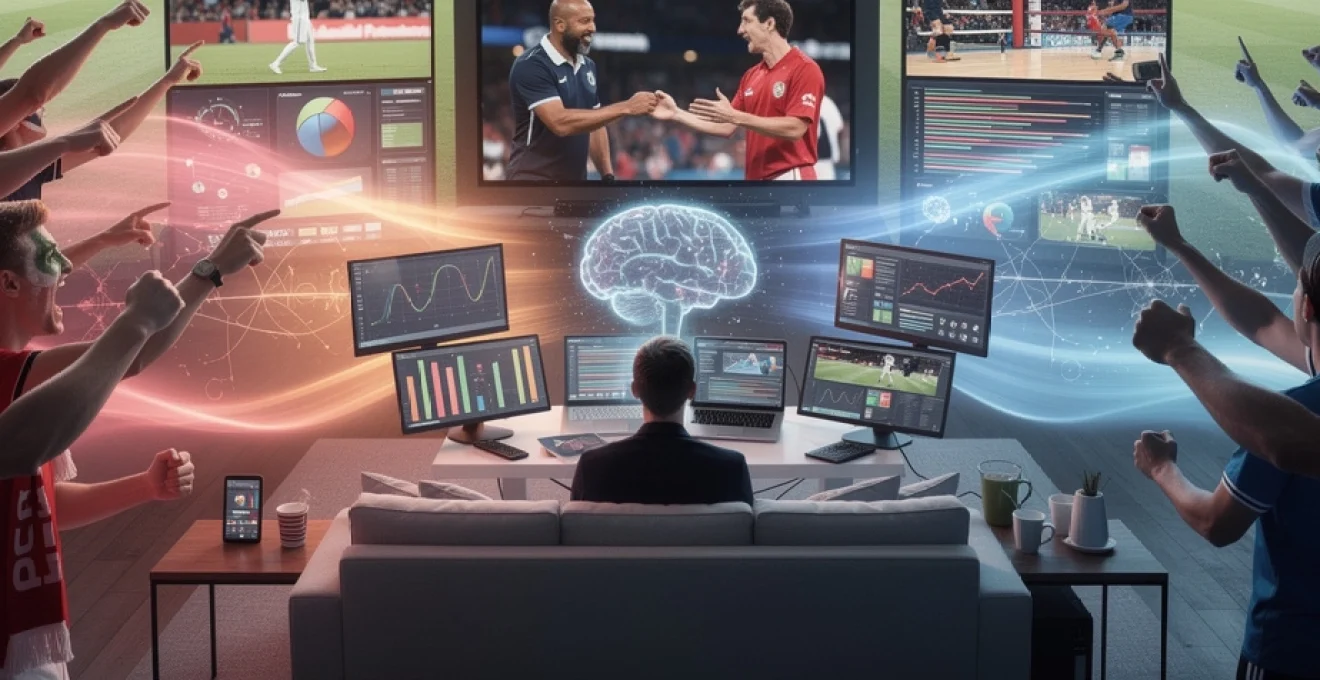
as personally consequential threats and rewards, even though the viewer is sitting safely on a sofa. From an audience engagement perspective, this means rivalry broadcasts are literally more arousing at a neurological level, which translates into longer viewing times, stronger memory of key moments, and higher likelihood of post-match discussion and content sharing.
Collective effervescence and emotional contagion in stadium atmospheres
While brain imaging helps explain individual responses, sociological concepts such as Émile Durkheim’s “collective effervescence” illuminate why stadium atmospheres during sports rivalries feel uniquely electric. When tens of thousands of supporters sing, chant, and celebrate in synchrony, they experience a powerful sense of shared emotion and temporary loss of individual boundaries. This heightened collective state amplifies every high and low of the rivalry match, making goals, controversial calls, and final results feel disproportionately significant.
Emotional contagion further intensifies this experience. Research on crowd behaviour shows that visible displays of emotion—joy, anger, frustration—spread quickly through groups, particularly when individuals are already primed by strong expectations. In a derby environment, one section’s eruption after a late winning goal can rapidly cascade across the stadium, influencing how neutral spectators and even broadcasters react. For clubs and leagues, understanding this dynamic underscores why full stadiums, choreographed tifos, and coordinated supporter groups are strategic assets for maximising live and televised audience engagement during rivalry fixtures.
Quantifiable audience engagement metrics across historic rivalries
Psychological intensity is only part of the story; sports rivalries also leave a clear quantitative footprint across multiple audience engagement metrics. Broadcasters, leagues, and sponsors closely monitor spikes in television ratings, digital viewership, search volume, and social media activity around key rivalry dates. These data points consistently show that fixtures such as Manchester United vs Liverpool or the Yankees-Red Sox series outperform comparable non-rival games, even when team form or league position would suggest otherwise. Rivalries effectively function as built-in rating guarantees within sports calendars.
Television viewership spikes during manchester united vs liverpool fixtures
In English football, few rivalries demonstrate the impact on audience engagement as clearly as Manchester United vs Liverpool. Premier League viewership data from recent seasons show that matches between these clubs regularly rank among the most-watched domestic and international broadcasts, often delivering 20–30% higher average audiences than standard league fixtures. Even when one team is in transition or out of title contention, the historical rivalry and narrative stakes sustain elevated interest.
These fixtures also drive disproportionate international audiences. Broadcasters in Asia, North America, and Africa report that United-Liverpool games attract casual fans who might otherwise skip neutral mid-table matchups. For rights holders, this rivalry becomes a key asset during negotiations, as they can point to consistent rating spikes to justify higher carriage fees and advertising rates. When we consider sports rivalries as content products rather than isolated games, United vs Liverpool emerges as a case study in how historic animosity can be reliably converted into measurable broadcast value.
Social media sentiment analysis of Yankees-Red sox twitter discourse
Baseball’s Yankees-Red Sox rivalry offers a rich laboratory for examining how sports rivalries shape digital conversation. Sentiment analysis of Twitter discourse during regular-season series between these teams typically reveals extreme emotional polarisation, with peaks in both highly positive and highly negative language compared to other MLB matchups. Volume also surges: major rivalry games can generate several hundred thousand tweets, far exceeding baseline chatter for standard divisional contests.
For social media managers and sponsors, this volatility carries both opportunity and risk. On one hand, the heightened emotions translate into more replies, quote-tweets, and meme sharing, which boosts algorithmic visibility and organic reach. On the other hand, the same intensity can produce abusive messages, inter-fan harassment, and reputational risks if brands or teams misread the tone. Effective rivalry engagement therefore requires careful community management, clear moderation policies, and content strategies that channel passion into playful competition rather than destructive conflict.
Digital content consumption patterns surrounding ashes series cricket
The Ashes cricket series between England and Australia illustrates how rivalries reshape digital content consumption over extended periods. Rather than a single high-stakes match, the Ashes consists of multiple Tests across several weeks, yet engagement metrics cluster around key turning points: opening days, momentum-shifting sessions, and decisive finales. Search data and traffic to cricket news sites typically show pronounced surges around squad announcements, controversial umpiring decisions, and standout individual performances.
Streaming platforms and highlights distributors also report longer watch times for Ashes-related clips compared to standard bilateral series. Fans rewatch classic moments, analyse tactical breakdowns, and seek historical context pieces that link current events to legendary past contests. For publishers, this creates a layered content opportunity: live ball-by-ball coverage can be supplemented with explainers, archival footage, and data visualisations, all underpinned by the enduring England-Australia rivalry. In effect, the Ashes transforms routine cricket coverage into a serialized narrative with recurring spikes in engagement across the entire series.
Secondary screen behaviour and multi-platform engagement during clásico matches
El Clásico between Barcelona and Real Madrid showcases how modern audiences increasingly experience sports rivalries across multiple screens simultaneously. Studies of second-screen behaviour indicate that a large proportion of viewers keep smartphones or tablets active while watching Clásico broadcasts, using them for live tweeting, group chats, fantasy updates, and real-time statistic checks. This dual engagement extends average attention time, as fans remain connected to the rivalry conversation before kick-off and long after the final whistle.
From a strategic standpoint, clubs and broadcasters now design integrated campaigns that anticipate this behaviour. Live polls, interactive graphics, and companion apps encourage viewers to participate in the unfolding narrative rather than passively consume it. For example, during contentious refereeing decisions, official accounts may share slow-motion clips or data on past incidents, knowing that fans are already searching for additional context. By aligning broadcast content with second-screen usage patterns, rights holders can extract maximum engagement value from each Clásico, turning a 90-minute match into a multi-hour, multi-platform experience.
Broadcast revenue amplification through rivalry-driven programming
Because sports rivalries consistently deliver superior audience engagement metrics, they occupy a privileged position in broadcast economics. Networks build programming schedules, promotional campaigns, and even subscription strategies around these high-yield fixtures. From college basketball’s most heated matchups to global boxing events, rivalries underpin revenue models by providing predictable peaks in ratings, advertiser demand, and pay-per-view purchases. Understanding how these mechanisms operate is crucial for stakeholders seeking to monetise rivalry-driven attention without oversaturating the market.
Premium subscription uptake for exclusive duke vs north carolina basketball coverage
The Duke vs North Carolina college basketball rivalry offers a clear example of how exclusivity around rivalry coverage can drive premium subscription uptake. When streaming platforms or cable networks secure rights to specific rivalry games, they often position these fixtures as marquee benefits of higher-tier packages. Historical data from major U.S. broadcasters show noticeable spikes in short-term subscription trials and package upgrades in the weeks preceding high-profile Duke-UNC clashes, particularly when both teams are ranked.
For rights holders, the key is converting this surge of short-term interest into longer-term retention. Strategies include bundling rivalry broadcasts with access to archival content—classic games, behind-the-scenes features, and documentary storytelling that deepen the narrative universe of the rivalry. By giving subscribers reasons to stay engaged between fixtures, broadcasters transform a single high-demand event into a recurring revenue anchor. In practice, Duke vs North Carolina is not just “a game” but an ongoing subscription driver around which entire college basketball programming strategies can be built.
Advertising rate premiums during super bowl rivalry match-ups
In American football, the Super Bowl already commands the highest advertising rates in sport, but rivalry narratives can further inflate the value of individual slots. When matchups feature historic antagonists, long-standing conference feuds, or quarterbacks with personal histories, advertisers anticipate even higher audience engagement and social media amplification. The result is often willingness to pay additional premiums to secure placements adjacent to key rivalry-driven storylines, such as halftime analysis segments or pre-game features.
From the network side, rivalry framing can help justify rate cards that exceed standard inflation year over year. By highlighting anticipated talking points—revenge for a previous playoff loss, coaching grudges, or contrasting regional identities—sales teams position specific Super Bowls as once-in-a-generation spectacles rather than interchangeable championship games. This narrative inflation, when executed effectively, reinforces the commercial logic of investing heavily in rivalry advertising, even for brands that might not otherwise participate at such costs.
Pay-per-view revenue models for Mayweather-Pacquiao boxing rivalries
Combat sports provide perhaps the most direct illustration of how rivalries translate into pay-per-view (PPV) revenue, with the Mayweather-Pacquiao bout standing as a landmark case. Years of will-they-won’t-they speculation, promotional barbs, and fanbase debates built an extraordinary reservoir of pent-up demand. When the fight finally occurred, it generated record-breaking PPV buys and gate revenue, despite later criticism that the in-ring action failed to match the pre-fight hype. The financial success was rooted less in pure sporting merit and more in the carefully constructed rivalry narrative.
Promoters now frequently attempt to replicate this model, engineering rematches, trilogy bouts, and cross-promotional events around perceived or manufactured rivalries. However, there is a delicate balance to maintain: overhyping lukewarm matchups can erode consumer trust, while delaying obvious marquee clashes risks losing momentum. For stakeholders designing PPV calendars, the lesson from Mayweather-Pacquiao is clear: sustained storytelling, clear contrasts in style and persona, and strategic scarcity can turn individual fights into cultural events that significantly outperform baseline PPV benchmarks.
Strategic narrative construction by media organisations and franchises
Given the outsized economic and engagement value of sports rivalries, it is unsurprising that media organisations and franchises invest heavily in narrative construction. Rather than simply reporting fixtures, they curate storylines, emphasise historical grievances, and highlight symbolic contrasts that heighten audience interest. This process often blurs the line between organic competition and manufactured drama, raising important questions about ethical limits and long-term fan trust. Yet when handled responsibly, strategic storytelling can deepen appreciation for sporting history and enrich the fan experience.
Espn’s manufactured rivalry storylines in college football programming
ESPN’s extensive college football coverage demonstrates how networks can amplify existing rivalries while also nudging emerging ones into public consciousness. Through pre-game shows, documentary segments, and weekly rankings debates, producers spotlight certain matchups as “must-watch” clashes, sometimes even when on-field histories are relatively short. The creation of branded rivalry weeks, trophy games, and countdown segments encourages viewers to see these fixtures through a narrative lens emphasising tradition and animosity.
This manufactured emphasis is not purely cynical; it also responds to and shapes fan demand. When ESPN devotes extended coverage to, say, an SEC showdown framed as a battle for regional supremacy, social media conversation and ticket demand often follow. However, there is a risk that continual escalation of “biggest ever” rhetoric can lead to narrative fatigue. For sustainable engagement, networks must balance celebratory hype with accurate historical context, ensuring that new or revived rivalries are rooted in genuine competitive and cultural significance.
Premier league club media departments amplifying north london derby tension
Within club-run media channels, the North London Derby between Arsenal and Tottenham Hotspur illustrates how internal communications teams harness rivalry narratives. In the days leading up to the fixture, official websites and social accounts typically release archival goal compilations, fan testimonial videos, and interviews with past players recalling decisive moments. These content pieces are designed to remind supporters of shared emotional memories, thereby priming them for maximum engagement with the upcoming match.
Clubs also employ more subtle techniques, such as colour palettes, slogans, and visual motifs that draw sharp contrasts between “our” identity and that of the rival. Behind the scenes, this strategy extends to email campaigns, ticketing prompts, and membership drives timed around derby weeks. For marketers, the North London Derby becomes a focal point in the seasonal content calendar, a reliable opportunity to drive merchandise sales, app downloads, and subscriber growth by tapping into heightened fan sentiment.
Documentary series exploitation of historic feuds for streaming platforms
Streaming platforms have increasingly recognised that historic sports rivalries provide ready-made scaffolding for binge-worthy documentary series. Productions focused on episodes like Michael Jordan’s battles with the Detroit Pistons, F1 driver feuds, or decades-long team antagonisms invite viewers to re-experience familiar stories with added behind-the-scenes detail. The appeal lies in combining nostalgia with new information: we know the outcome, but we don’t yet know all the interpersonal tensions, tactical disputes, and off-field politics that shaped it.
From an engagement standpoint, these series extend the life of rivalries far beyond individual seasons. They generate renewed interest in archival footage, spur social media debates comparing eras, and often introduce younger audiences to feuds that pre-date their active fandom. For rights holders, participating in or licensing content to such series can create a virtuous cycle: documentaries spark interest, which drives viewership of current rivalry fixtures, which in turn creates new material for future long-form storytelling.
Social media content calendars synchronised with rivalry fixture schedules
On social platforms, timing is everything, and rivalry fixture schedules offer predictable peaks around which to build content calendars. Clubs, leagues, and broadcasters increasingly map out months-long sequences of posts that escalate in intensity as key dates approach. Early-phase content might include historical trivia or subtle reminders, progressing to player quotes, tactical previews, and fan-generated artwork as the match nears. On game day, real-time updates, reaction clips, and meme-friendly moments dominate feeds.
For marketers managing these calendars, the goal is to maintain a sense of anticipation without exhausting audiences. One effective approach is to treat each rivalry cycle like a mini-season: introduce the narrative, build tension, deliver the live experience, then provide post-match catharsis and reflection. By aligning social output with the emotional journey supporters naturally follow, organisations can turn each rivalry into a structured engagement campaign rather than an isolated spike of activity.
Geographic and cultural variables intensifying rivalry engagement
Not all sports rivalries are created equal; their emotional charge often depends on underlying geographic and cultural variables. When competitions map onto deeper societal divides—religion, class, politics, or national identity—the resulting fixtures resonate well beyond the pitch or court. For audiences, these games offer a symbolic arena in which broader tensions can be expressed and, at least temporarily, resolved. For media and marketers, understanding these contextual layers is essential for responsible coverage that leverages engagement without inflaming real-world conflict.
Cross-border animosity in rangers vs celtic old firm fixtures
The Old Firm rivalry between Rangers and Celtic in Glasgow is among the most complex and sensitive in world sport, interweaving football with religious, political, and national identity dimensions. Historically, Rangers have been associated with Protestant and unionist communities, while Celtic have drawn support from Catholic and Irish nationalist backgrounds. Although contemporary fan bases are more diverse, echoes of these alignments persist, making Old Firm fixtures flashpoints for cross-border and cross-community tensions.
From an audience engagement standpoint, this layered identity conflict ensures that matches attract intense media scrutiny and high viewership across Scotland, Ireland, and diaspora communities. Yet it also imposes ethical responsibilities on broadcasters and clubs. Careless amplification of sectarian chants or inflammatory symbols can spill beyond the stadium, exacerbating social divisions. Consequently, recent years have seen coordinated efforts to promote anti-discrimination campaigns, emphasise shared football culture, and frame the rivalry in sporting rather than sectarian terms while still acknowledging its historical roots.
Regional identity expression through boca juniors vs river plate superclásico
In Buenos Aires, the Superclásico between Boca Juniors and River Plate serves as a stage for competing visions of Argentine identity. Boca is often portrayed as representing working-class, port-based communities, while River historically cultivated an image of refinement and middle-class aspiration. Though these stereotypes oversimplify reality, they remain powerful lenses through which supporters and media interpret each encounter, turning every match into a symbolic referendum on social belonging.
Stadium rituals reflect this regional and class-inflected storytelling. Boca’s La Bombonera is famed for its intense acoustics and vibrant terraces, reinforcing the club’s identity as the voice of the people; River’s Monumental exudes a different kind of grandeur. For global audiences discovering the rivalry through highlights packages or documentaries, these contrasting environments become visual shorthand for deeper cultural narratives. As a result, the Superclásico consistently ranks among the most-watched club games worldwide, with its regional identity drama functioning as a key driver of international fascination.
Post-colonial narratives in India-Pakistan cricket test matches
Few sporting rivalries are as explicitly tied to post-colonial history as cricket matches between India and Pakistan. Born from the partition of British India and subsequent geopolitical conflicts, this rivalry carries layers of national memory, displacement, and political tension. When the two sides meet in Tests or limited-overs tournaments, millions of viewers across South Asia and the global diaspora experience the match as more than sport; it becomes a symbolic confrontation shaped by decades of diplomatic highs and lows.
Digital platforms vividly capture this dynamic, with match days producing enormous spikes in streaming numbers, social media debate, and cross-border banter. Yet, like the Old Firm, this rivalry raises delicate questions about responsible framing. Media outlets must navigate a fine line between acknowledging historical grievances and avoiding inflammatory language that could exacerbate real-world hostilities. When handled thoughtfully, India-Pakistan cricket can also serve as a rare shared cultural space, where mutual admiration for skill and drama temporarily transcends political divides, offering a glimpse of sport’s unifying potential even within fraught post-colonial contexts.
Algorithmic content distribution leveraging rivalry keywords and sentiment
In the contemporary digital ecosystem, audience engagement with sports rivalries is increasingly mediated by algorithms. Recommendation systems on platforms such as YouTube, TikTok, and Google Search detect surges in interest around specific rivalry keywords—“El Clásico highlights,” “Lakers Celtics fights,” “Iron Bowl 2025 prediction”—and respond by prioritising related content. This feedback loop amplifies attention: the more people search and watch, the more prominently rivalry material appears, drawing in additional viewers who might not have sought it out proactively.
For rights holders and content creators, understanding these algorithmic dynamics is now as important as knowing kick-off times or TV slots. Effective rivalry strategies involve optimising titles, thumbnails, tags, and descriptions to align with how fans naturally search for and discuss these fixtures. At the same time, over-reliance on sensationalist or conflict-driven keywords can backfire, both in terms of platform policy and brand perception. The challenge is to harness algorithmic distribution to showcase the full richness of rivalry narratives—skill, history, and emotion—without reducing them to clickbait controversy.
Youtube recommendation systems prioritising Barcelona-Real madrid highlight compilations
On YouTube, El Clásico content offers a clear illustration of recommendation systems at work. Around each Barcelona-Real Madrid fixture, highlight compilations, tactical analyses, and fan reaction videos experience dramatic increases in impressions and click-through rates. The platform’s algorithm detects high watch time and strong engagement signals—likes, comments, shares—and responds by surfacing similar videos on homepages and in “Up Next” carousels for users who have watched related football content.
Creators who anticipate this cycle can time their uploads to coincide with peaks in interest, using descriptive phrases like “full El Clásico highlights” or “best Barcelona vs Real Madrid goals” that match common search queries. For official channels, maintaining high production quality and rapid turnaround is critical, as algorithmic preference often goes to videos that capture early momentum in the first hours after a match. In essence, YouTube turns each Clásico into a multi-day content festival, with recommendation systems acting as the unseen schedulers.
Tiktok virality coefficients for controversial moments in Lakers-Celtics history
TikTok’s short-form, sound-driven format lends itself particularly well to bite-sized slices of rivalry history. For the NBA’s Lakers-Celtics feud, controversial calls, dramatic buzzer-beaters, and emotional player reactions are frequently clipped, set to trending audio, and circulated with rivalry-specific hashtags. The platform’s “virality coefficients”—how quickly and widely a clip spreads—tend to be highest when videos tap into both nostalgia and present-day debate, such as comparing 1980s battles between Magic and Bird to modern showdowns.
Because TikTok’s algorithm is highly responsive to early engagement, creators and league accounts benefit from posting swiftly and encouraging comments that prompt users to take sides. Questions like “Which era had the better rivalry?” or “Was this foul call fair?” invite duelling perspectives, boosting watch time and interaction. For the NBA, these micro-moments function like digital trailers, drawing younger audiences into deeper exploration of long-form rivalry content on other platforms and, ultimately, into live game broadcasts.
Google search volume correlations with iron bowl Alabama-Auburn week
Google search data around the Iron Bowl—the annual college football clash between Alabama and Auburn—demonstrate how rivalries shape information-seeking behaviour. In the week leading up to the game, queries related to team news, injury reports, historical records, and ticket availability spike dramatically, often surpassing search interest in national-title contenders playing less storied opponents. Even neutral fans type in long-tail keywords such as “best Iron Bowl moments ever” or “why do Alabama and Auburn hate each other,” seeking narrative context alongside tactical previews.
For athletic departments, local businesses, and media outlets, aligning content publication with these search surges is a practical way to capture organic traffic. SEO-optimised explainers, interactive timelines, and locally focused guides (for example, “Iron Bowl game day travel tips”) can meet user intent while reinforcing the rivalry’s cultural significance. Over time, consistent production of high-quality, search-friendly material helps institutions position themselves as authoritative sources on the Iron Bowl, ensuring that each year’s spike in curiosity deepens both brand recognition and audience loyalty.