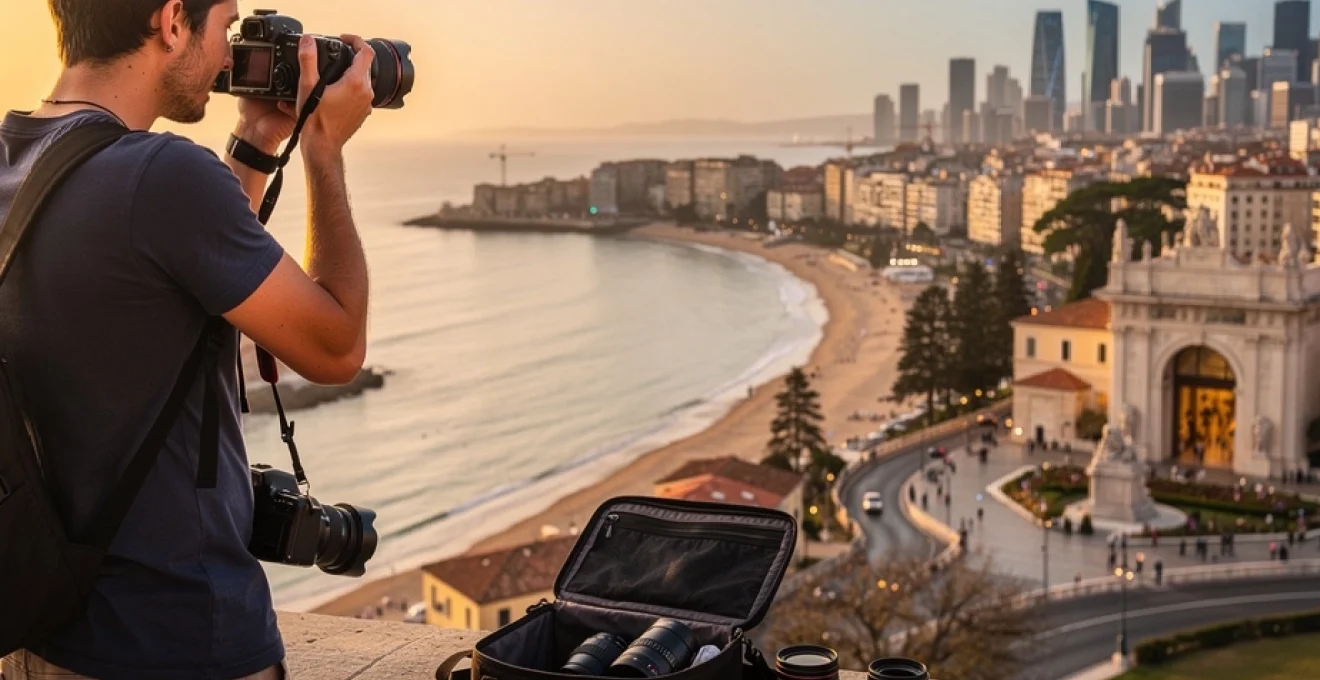
Travel photography transforms fleeting moments into lasting memories, yet many photographers return from adventures with disappointing results that fail to capture the essence of their experiences. The difference between snapshot tourism and compelling travel imagery lies in understanding the technical foundations, compositional mastery, and cultural sensitivity required to document authentic moments. Whether you’re exploring bustling European markets, serene Mediterranean coastlines, or towering mountain landscapes, exceptional travel photography demands preparation, patience, and a keen understanding of both your equipment and the environments you encounter.
The art of travel photography extends far beyond simply pointing and shooting at famous landmarks. Professional travel photographers understand that compelling imagery emerges from the intersection of technical proficiency, creative vision, and cultural awareness. Modern digital cameras offer unprecedented capabilities, yet many travellers struggle to harness these tools effectively in challenging field conditions. Success requires mastering camera settings, composition techniques, and lighting principles whilst simultaneously navigating unfamiliar environments and respecting local customs.
Essential camera equipment and settings for travel photography
The foundation of exceptional travel photography begins with selecting appropriate equipment and understanding how to configure camera settings for diverse shooting conditions. Professional travel photographers prioritise versatility and reliability, often carrying minimal gear that performs consistently across varied environments. The choice between different camera systems significantly impacts both image quality and practical mobility considerations during extended travel periods.
DSLR vs mirrorless camera selection for mobility
Modern mirrorless cameras have revolutionised travel photography by delivering professional image quality whilst significantly reducing weight and bulk compared to traditional DSLR systems. Mirrorless cameras typically weigh 40-50% less than equivalent DSLR bodies, making them ideal for extended walking tours through historic city centres or challenging mountain hikes. The electronic viewfinder provides real-time exposure preview, allowing photographers to see exactly how settings adjustments affect the final image before pressing the shutter.
However, DSLR cameras maintain certain advantages in specific travel scenarios, particularly regarding battery life and lens selection. Professional DSLRs often provide 800-1,200 shots per battery charge compared to 300-500 shots for mirrorless systems. For remote locations where charging opportunities are limited, this extended battery performance proves invaluable. Additionally, the extensive selection of affordable third-party lenses for established DSLR systems offers budget-conscious travellers greater flexibility.
Prime lens selection: 35mm vs 50mm for street photography
Prime lenses offer superior image quality and wider maximum apertures compared to zoom alternatives, making them particularly valuable for travel photography in challenging lighting conditions. The choice between 35mm and 50mm focal lengths fundamentally affects photographic perspective and working distance requirements. A 35mm lens provides wider coverage, ideal for capturing architectural details and environmental portraits that include contextual background elements.
The 50mm focal length more closely approximates human vision, creating natural-looking perspectives that work exceptionally well for portrait photography and isolating subjects from busy backgrounds. This focal length requires photographers to work closer to subjects, encouraging more intimate interactions with local people and environments. Many professional travel photographers carry both focal lengths or select a 35mm for versatility, particularly when photographing in crowded tourist areas where stepping back for proper framing proves impossible.
Aperture priority mode configuration for depth of field control
Aperture Priority mode provides the optimal balance between creative control and operational efficiency for travel photography. This semi-automatic mode allows photographers to control depth of field through aperture selection whilst the camera automatically adjusts shutter speed for proper exposure. Professional travel photographers typically work between f/5.6 and f/8 for maximum lens sharpness, opening to f/2.8 or wider only when shallow depth of field effects are specifically desired.
Understanding the relationship between aperture settings and depth of field proves crucial for effective travel photography. Wide apertures (f/1.4-f/2.8) create shallow focus effects that isolate subjects from distracting backgrounds, particularly useful in crowded tourist locations. Narrow apertures (f/8-f/11) ensure front-to-back sharpness essential for landscape photography and architectural documentation. Modern cameras provide depth of field preview functions that allow photographers to visualise focus effects before capturing the image.
ISO performance optimisation in variable lighting conditions
When shooting in rapidly changing light, such as moving from bright streets into dim markets, Auto ISO with a capped maximum value (for example ISO 3200 or 6400 on modern sensors) can be extremely effective. This configuration allows you to maintain your preferred aperture and minimum shutter speed while the camera adjusts sensitivity to maintain exposure. Always review images at 100% on your camera screen after large ISO changes to ensure noise levels remain acceptable, and consider slightly underexposing (by -0.3 to -0.7 EV) in very high ISO situations to protect highlights and recover shadows later in post-processing.
Noise reduction technology has improved dramatically, both in-camera and in software such as Lightroom, DxO PureRAW, and Topaz Photo AI. This means that using higher ISO settings is often preferable to accepting motion blur or camera shake. As a rule of thumb for travel photography, prioritise sharpness and moment capture over perfectly clean files. A sharp, slightly noisy image of a fleeting street scene in Marrakech will be far more valuable than a soft, noise-free frame that fails to communicate the energy of the moment.
Advanced composition techniques for destination photography
Once you have a solid handle on camera settings, composition becomes the main differentiator between average travel photos and images that truly resonate. Advanced composition techniques help you guide the viewer’s eye, simplify busy scenes, and tell clearer visual stories about the destinations you visit. Rather than relying on luck, you can approach each scene with a toolkit of compositional strategies tailored to landscapes, cityscapes, portraits, and monuments.
Many of these principles—such as the rule of thirds, leading lines, and foreground-background layering—are rooted in classical art theory and remain just as relevant in digital travel photography. By deliberately applying them, you can transform a chaotic piazza in Rome or a crowded crossing in Tokyo into a structured and engaging image. The goal is not to rigidly follow rules, but to understand them well enough that you know when breaking them will strengthen your travel story.
Rule of thirds application in landscape photography
The rule of thirds remains one of the most practical tools for composing balanced travel landscape photography. By dividing your frame into a three-by-three grid and placing key elements—such as horizons, mountain peaks, or coastal villages—along these lines or at their intersections, you create a dynamic balance that feels natural to the viewer. For example, when photographing a Mediterranean bay, placing the horizon on the upper third and filling the lower two-thirds with textured water and rocks can produce a more immersive image than centring the horizon.
Consider how the rule of thirds can support your storytelling goals. If the sky above the Dolomites is dramatic with colourful clouds, emphasise it by placing the mountains on the lower third. Conversely, if the coastline features intricate foreground details like tidal pools or patterned sand, lower the horizon to draw attention to these elements. Most modern cameras and smartphones offer an in-viewfinder or on-screen grid; enabling this feature helps you internalise the rule until it becomes second nature during your travels.
Leading lines utilisation in urban architecture shots
Leading lines are powerful compositional tools that guide the viewer’s gaze through the frame, making them invaluable for urban travel photography in cities such as Barcelona, Dubai, or New York. Architectural features like roads, railings, bridges, and building edges can act as visual pathways that pull attention toward your main subject. When you arrive at a location, ask yourself: which lines in this scene naturally draw my eye, and how can I position myself to use them deliberately?
In practice, this might mean stepping into a doorway to use a row of columns as converging lines toward a cathedral entrance, or crouching low so tram tracks in Lisbon lead directly to a historic square. Diagonal lines tend to create more dynamism than horizontals or verticals, so experiment with tilting your camera slightly to increase visual energy while keeping key structural elements straight. By aligning leading lines with your subject rather than allowing them to exit the frame, you ensure your viewer’s attention remains exactly where you want it.
Foreground-background layering in monument photography
Iconic monuments—from the Eiffel Tower to the Taj Mahal—are among the most photographed structures in the world, which makes creating unique travel images particularly challenging. Foreground-background layering helps you break away from postcard clichés by introducing contextual elements that add depth and narrative. Instead of photographing a monument in isolation, look for foreground subjects such as local vendors, flowers, reflections, or architectural details that can frame and complement the primary structure.
This technique works especially well with wide-angle lenses, where placing a foreground element close to the camera exaggerates the sense of depth between it and the distant monument. For example, you might place a colourful bicycle in the foreground with Amsterdam canals and townhouses behind, or use patterned tiles in Marrakech to lead the eye toward a grand doorway. By consciously arranging multiple layers—foreground, mid-ground, and background—you create three-dimensional monument photography that feels immersive rather than flat.
Golden ratio implementation for portrait compositions
While the rule of thirds is widely known, the golden ratio offers a more subtle alternative for composing travel portraits with a natural flow. Originating from classical art and architecture, the golden ratio (approximately 1.618:1) can be visualised as a spiral or series of nested rectangles within your frame. When photographing people on your journeys—whether a fisherman on the Amalfi Coast or a tea vendor in Istanbul—placing their face or eyes near the end of this spiral can create a pleasing sense of balance.
Most cameras do not display a golden ratio overlay by default, but you can approximate it by placing your subject slightly closer to the centre than a rule-of-thirds intersection and allowing key lines in the environment to curve or lead toward them. Think of the golden ratio as a gentle suggestion rather than a strict blueprint: use natural arcs formed by staircases, alleyways, or rivers to create a flowing visual path that culminates at your subject. Over time, this approach can give your travel portraits a more refined and painterly quality without feeling overly staged.
Lighting mastery across different travel environments
Light is the raw material of travel photography, and mastering it across varied environments separates experienced photographers from casual travellers. Because you cannot control the sun or the weather, you must learn to adapt your approach to whatever conditions greet you on location. By understanding how different types of light affect colour, contrast, and mood, you can plan your shooting schedule and camera settings to match your creative intent.
From glowing sunsets over Mediterranean harbours to neon-lit rain in Tokyo, each lighting scenario offers both limitations and unique opportunities. Rather than waiting for “perfect” light that may never arrive, skilled travel photographers ask: what kind of story does this light allow me to tell right now? This mindset transforms harsh midday sun, flat overcast skies, and dim interiors into creative challenges rather than obstacles.
Golden hour photography in mediterranean coastal regions
Golden hour—the period shortly after sunrise and before sunset—is especially magical along Mediterranean coasts like Santorini, the Amalfi Coast, or the French Riviera. The low-angle sun casts long, soft shadows that sculpt cliffs, villages, and boats with gentle contrast, while warm colour temperatures enhance the natural hues of stone, terracotta, and sea. For travel photographers, this is the ideal time to capture wide landscapes, intimate harbour scenes, and environmental portraits with flattering, directional light.
To maximise golden hour travel photography, arrive at your chosen location at least 30–45 minutes early to scout compositions and determine where the sun will set or rise. Use Aperture Priority with a moderate aperture (around f/5.6–f/8) and keep an eye on your shutter speed as light levels fall, raising ISO as needed to avoid motion blur. Consider shooting both toward and away from the sun: backlit scenes can produce glowing edges around buildings and people, while side-lit compositions emphasise textures in cliffs and old town walls.
Blue hour techniques for cityscapes in tokyo and new york
Blue hour—the short window of deep twilight after sunset and before full night—can be even more powerful than golden hour for urban travel photography in cities such as Tokyo and New York. During this time, the sky retains a rich cobalt tone that balances beautifully with artificial city lights, preventing the inky black void that often plagues night cityscapes. Skyscrapers, street signage, and vehicle trails all stand out crisply against this luminous backdrop.
For best results, use a tripod or stable surface and set your ISO as low as practical (ISO 100–400) to minimise noise in long exposures. Shoot in Aperture Priority around f/8–f/11 and allow the shutter to lengthen, capturing the movement of traffic and pedestrians as soft trails that convey the pace of city life. If you prefer to travel light, brace your camera against a railing or building and enable image stabilisation, accepting slightly higher ISO values to maintain handholdable shutter speeds around 1/30s or faster.
Harsh midday light management in desert landscapes
Desert destinations such as the Sahara, the American Southwest, or Wadi Rum often force you to work under harsh midday sun, especially during guided tours. This intense, overhead light creates deep shadows and extreme contrast that can easily blow out highlights and obscure detail. Rather than putting your camera away, you can adapt your technique to harness this dramatic light for striking black-and-white conversions, high-contrast textures, and graphic compositions.
First, enable your camera’s highlight warning or zebra pattern to avoid overexposure in bright sand or rock surfaces. Consider underexposing by -0.3 to -1 EV to protect highlights, then recover shadow detail later in post-processing. Look for strong shapes, dunes, and rock formations where the hard light carves out patterns and leading lines. Incorporating human figures or camels as small silhouettes against the bright sand or sky adds scale and narrative, turning challenging conditions into an opportunity for bold, minimalist travel photography.
Overcast weather photography in european countryside
Overcast skies in regions like the Scottish Highlands, the Black Forest, or rural France may seem uninspiring at first, but they provide soft, even light that is ideal for detailed travel photography. Without harsh shadows, textures in stone cottages, mossy forests, and rolling fields appear rich and subtle. Colours become more saturated and nuanced, making overcast days perfect for capturing authentic atmospheres in villages, markets, and woodland trails.
Because the sky often appears featureless under heavy cloud, it can be effective to minimise it in your composition or use it as a clean backdrop for silhouetted trees and church spires. Slightly increase contrast and clarity in-camera or in post-processing to restore depth to the scene. Overcast days are also excellent for travel portraits: ask a companion or local subject to stand near a window or open doorway, using the soft directional light as a natural studio without worrying about squinting or harsh facial shadows.
Indoor cultural site photography without flash
Many museums, temples, mosques, and historic palaces prohibit flash photography to protect delicate artworks and preserve the atmosphere. To capture these cultural interiors respectfully, you must rely on available light and careful technique. Start by opening your aperture as wide as your lens allows (f/1.4–f/2.8 where possible) and raising your ISO to maintain a safe shutter speed—generally 1/60s or faster for hand-held shots, depending on focal length and image stabilisation.
Use walls, columns, and railings as improvised supports to steady your camera for slower exposures if tripods are not allowed, which is often the case. When photographing stained glass, frescoes, or sculptures, pay attention to the direction of ambient light from windows or skylights and move your position until the illumination reveals texture without causing glare. Above all, be discreet and respectful: avoid blocking pathways, keep your shutter sound to a minimum if possible, and always follow local guidelines and staff instructions.
Post-processing workflow for travel image enhancement
Post-processing is where your travel photographs are refined from raw captures into polished visual stories that reflect how the scene truly felt. A consistent workflow not only improves image quality, but also helps you maintain a cohesive style across a full trip—from sunrise landscapes in Iceland to night markets in Bangkok. Think of editing as the digital equivalent of a film darkroom: you are not “fixing” bad images so much as carefully developing the potential already present in your files.
A professional travel photography workflow typically begins with organised import and backup. Create folders named by location and date, and apply descriptive keywords such as “Tokyo street photography”, “Mediterranean golden hour”, or “desert landscape midday light” to make later searches easier. Perform a first pass to flag the strongest frames, then concentrate your editing time on this curated selection rather than every shot. This discipline keeps your portfolio focused and prevents you from being overwhelmed by thousands of similar images.
In Lightroom, Capture One, or similar software, start with global adjustments: correct white balance, fine-tune exposure, and adjust contrast, highlights, and shadows to reveal the full tonal range. From there, apply local adjustments to direct attention where you want it—subtle vignettes to centre the viewer’s gaze, graduated filters to balance bright skies, or radial filters to enhance light on a subject’s face. Resist the temptation to oversaturate; authentic travel photography should preserve believable colours that match the atmosphere of the location.
Noise reduction and sharpening are especially important for high-ISO travel images captured in low light. Apply luminance noise reduction sparingly to avoid plastic-looking skin and textures, and use masking in the sharpening panel so that edges receive most of the sharpening rather than flat areas like skies or walls. When editing for social media or web display, export at appropriate resolutions and apply slight extra sharpening to counteract compression. By maintaining consistent colour grading and contrast across your images, you create a recognisable visual signature that makes your travel work stand out.
Cultural sensitivity and legal considerations in travel photography
Compelling travel photography depends not only on technical skill, but also on ethical and legal awareness. As a visitor documenting cultures, communities, and sacred places, you carry a responsibility to treat subjects with respect and to understand the boundaries of what is acceptable. Ignoring cultural norms or local laws can damage trust, put you at risk, and contribute to negative perceptions of photographers in general.
Start by researching photography laws and customs in your destination before you travel. Some countries restrict tripod use in historic centres, prohibit photographing certain government buildings, or require permits for commercial shoots. In many cultures, photographing military or police infrastructure is illegal or highly discouraged. When in doubt, err on the side of caution: it is always better to ask a guide or local contact than to risk equipment confiscation or fines.
Cultural sensitivity becomes particularly important when photographing people. In some regions, including parts of North Africa, South Asia, and the Middle East, locals—especially women and older generations—may be uncomfortable being photographed. Whenever possible, seek consent through a smile, gesture, or simple conversation, and respect a refusal without argument. If you have taken a close-up portrait, offer to show the image on your camera screen; this small act often turns a potentially tense situation into a positive interaction.
Consider the long-term impact of your images as well. Avoid reinforcing stereotypes or portraying communities only through poverty, conflict, or exoticism. Instead, look for balanced stories that show everyday life, dignity, and resilience alongside visual drama. If you plan to license or sell images featuring recognisable individuals, familiarise yourself with model release requirements in your home country and destination, particularly for commercial use. Responsible travel photography not only protects you legally, it also helps ensure that the people and places you photograph are represented fairly.
Practical field techniques for spontaneous moment capture
Many of the most unforgettable travel photographs are unscripted: a child chasing pigeons in a Venetian square, a sudden shaft of light hitting a market stall, or a burst of laughter between strangers on a train. Capturing these moments requires more than luck; it demands readiness, awareness, and efficient technique. The aim is to reduce friction between seeing a potential image and pressing the shutter so that you can respond instinctively when a scene unfolds.
First, keep your camera set up for quick reaction. A practical “walk-around” configuration for spontaneous travel photography might be Aperture Priority at f/4–f/5.6, Auto ISO with a minimum shutter speed of 1/250s, and continuous autofocus with subject tracking enabled. This setup balances depth of field, motion-freezing capability, and exposure flexibility, allowing you to move from bright streets into shaded alleys without constantly changing settings. Keep your camera out and ready rather than buried in a bag; the extra seconds often mean the difference between capturing a fleeting gesture and missing it entirely.
Develop the habit of observing scenes before lifting your camera. Ask yourself: what is likely to happen in the next few seconds? Where might someone walk into the frame, and how will the light interact with them? This anticipatory mindset is similar to playing chess—you are always thinking one or two moves ahead. Position yourself where interesting backgrounds, leading lines, and light are already in place, then wait for people or events to complete the composition. Patience here can yield travel photographs that feel perfectly timed, even though they are the result of careful preparation.
Finally, shoot short bursts when a key moment unfolds, especially in fast-moving environments like festivals, parades, or street performances. Modern cameras offer impressive continuous shooting rates, but use them deliberately rather than holding the shutter down indiscriminately. Review your images periodically to check focus accuracy and exposure, but avoid “chimping” after every frame so you remain engaged with your surroundings. By combining technical readiness with situational awareness, you position yourself to capture spontaneous moments that truly encapsulate the spirit of your journeys.