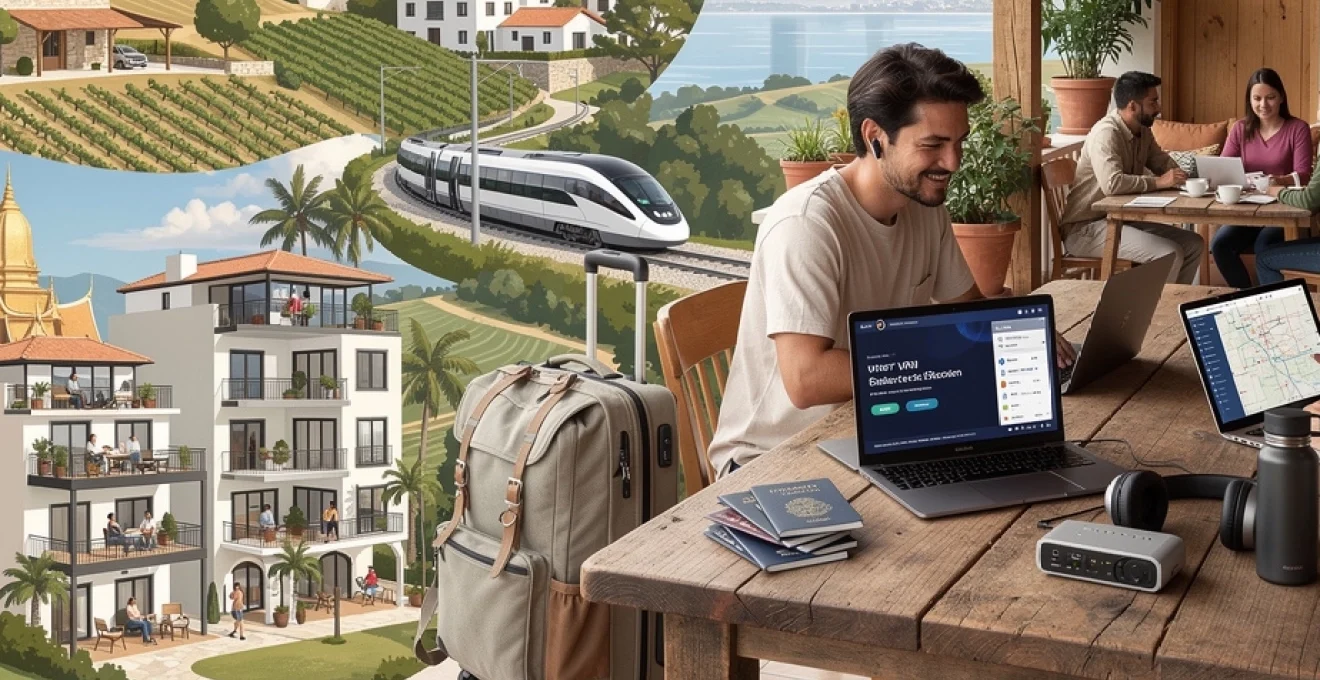
The travel industry is witnessing a profound shift as more travellers abandon the frenetic pace of traditional tourism in favour of deeper, more meaningful connections with destinations. This movement, known as slow travel, emphasises quality over quantity, encouraging extended stays that allow for genuine cultural immersion and sustainable exploration. Rather than rushing through multiple destinations to tick items off a bucket list, slow travel advocates spending weeks or months in a single location, fostering authentic relationships with local communities and developing a nuanced understanding of regional customs, traditions, and daily rhythms.
The rise of remote work capabilities has catalysed this transformation, enabling digital nomads and location-independent professionals to combine work obligations with extended travel experiences. This convergence of technology, changing work patterns, and evolving travel preferences has created unprecedented opportunities for immersive tourism that benefits both travellers and destination communities through sustained economic engagement and reduced environmental impact.
Defining slow travel: immersive tourism philosophy and extended duration stays
Slow travel represents a fundamental departure from conventional tourism models, prioritising depth of experience over breadth of destinations visited. This philosophy emerged as a natural extension of the slow food movement, advocating for mindful consumption and appreciation of local resources. At its core, slow travel challenges the notion that successful trips are measured by the number of attractions visited or countries explored within a limited timeframe.
The movement emphasises temporal sustainability – the idea that meaningful travel experiences require sufficient time to develop genuine connections with places and people. This approach recognises that understanding a destination’s cultural nuances, historical context, and social dynamics cannot be achieved through brief visits or guided tours alone. Instead, slow travellers seek to integrate temporarily into local communities, participating in daily routines and seasonal rhythms that reveal the authentic character of a place.
Minimum stay duration frameworks: 7-day to Multi-Month residency models
Establishing appropriate duration frameworks is crucial for maximising the benefits of slow travel experiences. Research indicates that meaningful cultural adaptation begins after approximately seven days in a new environment, when initial novelty subsides and travellers start recognising local patterns and establishing routines. This represents the minimum threshold for slow travel experiences, though many practitioners advocate for significantly longer periods.
The monthly residency model has gained particular traction among digital nomads and extended-stay travellers. This timeframe allows for deeper integration into local communities whilst maintaining practical considerations such as visa limitations and accommodation availability. Many destinations now offer month-to-month rental options and co-living spaces specifically designed for this demographic, recognising the economic benefits of sustained visitor engagement.
Cultural immersion methodologies: language learning and local community integration
Effective cultural immersion requires structured approaches that facilitate genuine connections with local communities. Language learning represents perhaps the most significant factor in achieving meaningful cultural engagement. Even basic conversational skills dramatically enhance the quality of interactions with residents and provide access to experiences unavailable to non-speakers.
Community integration methodologies include participation in local volunteer projects, attendance at cultural events and festivals, engagement with neighbourhood associations, and patronage of locally-owned businesses. These activities create reciprocal relationships where travellers contribute to community wellbeing whilst gaining insider perspectives on local life. Skill-sharing programmes have proven particularly effective, allowing slow travellers to offer expertise in areas such as language teaching, digital marketing, or specialised crafts in exchange for cultural mentorship and community acceptance.
Sustainable mobility patterns: overland transport and carbon footprint reduction
Sustainable transportation choices are fundamental to slow travel philosophy, with overland routes preferred over aviation whenever feasible. This approach not only reduces environmental impact but also enhances the journey experience by revealing geographical transitions and cultural gradations that are invisible from aircraft. Train networks across Europe, Asia, and increasingly North America provide extensive connectivity for slow travellers seeking low-carbon alternatives.
The development of overland travel corridors has created new opportunities for multi-destination slow travel experiences. Routes such as the Trans-Siberian Railway, European rail networks, and emerging bus rapid transit systems in Latin America enable travellers to maintain slow travel principles whilst exploring multiple connected destinations. These transportation networks often integrate with local accommodation providers and cultural institutions to create comprehensive slow travel ecosystems.
Accommodation types: homestays, co-living spaces, and Extended-Stay
play an essential role in shaping the character of slow travel experiences, influencing everything from social connection to environmental impact. Traditional homestays and guesthouse arrangements offer the highest degree of cultural immersion, placing travellers directly within local households or small family-run properties. These settings provide day-to-day exposure to local customs, home-cooked cuisine, and intergenerational knowledge that would be difficult to access through standard hotels.
Co-living spaces and extended-stay platforms have emerged as complementary options, particularly for digital nomads and professionals seeking reliable infrastructure for longer periods. Co-living properties typically combine private rooms with shared kitchens, lounges, and workspaces, enabling residents to form micro-communities with other long-stay travellers and local residents. Extended-stay platforms, including serviced apartments and long-term rental marketplaces, emphasise autonomy and routine, allowing travellers to establish a home-like environment while maintaining the flexibility to move on when their slow travel itinerary evolves.
Digital nomadism infrastructure supporting extended destination experiences
The global rise of digital nomadism has significantly expanded the practical possibilities of slow travel, turning what was once a niche lifestyle into a mainstream option for remote professionals. As companies normalise hybrid and fully remote work models, more individuals are blending long-term travel with stable employment, staying months rather than days in each destination. This shift has prompted rapid development of digital infrastructure, dedicated co-working spaces, and specialised visas that support extended-stay tourism.
For slow travellers, this emerging ecosystem reduces friction and uncertainty. Instead of worrying about where to work, how to access high-speed internet, or whether a stay is legally compliant, they can rely on mature digital nomad infrastructures that provide clear pathways. The result is a more predictable, sustainable framework for extended destination experiences that balance productivity with deep cultural immersion.
Co-working space networks: selina, WeWork, and regional hub development
Co-working spaces act as the physical backbone of many slow travel and digital nomad ecosystems. Global brands like Selina and WeWork, alongside regional operators, offer consistent workspace standards across multiple countries, giving travellers reliable internet, ergonomic desks, and meeting facilities. For many remote workers, this consistency removes a major barrier to longer stays, making it feasible to maintain professional commitments while exploring new regions at a slower pace.
Beyond basic infrastructure, co-working networks foster community through events, workshops, and social gatherings that help slow travellers build local connections quickly. Locations in neighbourhoods such as Lisbon’s Cais do Sodré, Bali’s Canggu, or Mexico City’s Roma Norte often act as anchor points for wider regional development. Over time, clusters of co-working spaces, cafés, and co-living properties create self-sustaining hubs that attract more long-stay visitors, reinforcing the appeal of immersive travel experiences in those areas.
Visa regulations: portugal’s D7, estonia’s digital nomad, and barbados welcome stamp
Visa frameworks are a critical enabler of slow travel, determining how long visitors can lawfully remain in a destination and whether they can work remotely while there. In recent years, several countries have introduced specialised visas targeting digital nomads and long-stay travellers, explicitly recognising the economic value of this demographic. Portugal’s D7 visa, for example, allows remote workers and passive-income earners to reside in the country for extended periods, often serving as a gateway to deeper integration and even residency pathways.
Estonia’s Digital Nomad Visa and Barbados’ Welcome Stamp programme similarly provide legal clarity and extended stay durations for remote professionals. These visas typically require proof of income, health insurance, and an intention to work for overseas employers rather than local companies. For slow travellers, such schemes reduce the uncertainty associated with frequent border runs or short-stay tourist visas, making it easier to commit to multi-month stays that support both cultural immersion and sustainable economic contributions to host communities.
Internet connectivity requirements: starlink coverage and fibre infrastructure mapping
Reliable internet connectivity is non-negotiable for most digital nomads and long-stay travellers, directly influencing which destinations qualify as viable slow travel bases. Urban areas increasingly benefit from fibre-optic networks offering speeds that rival or surpass those in travellers’ home countries, enabling seamless video calls, cloud-based collaboration, and bandwidth-heavy tasks. In many cities, internet speeds above 100 Mbps are now standard in co-working spaces and modern apartments, creating favourable conditions for extended digital nomad stays.
Rural and remote destinations, historically disadvantaged in terms of connectivity, are being transformed by satellite services such as Starlink. By providing high-speed internet in regions previously underserved by traditional infrastructure, these technologies open up new slow travel possibilities in mountain villages, islands, and countryside retreats. However, travellers still need to assess connectivity carefully, using coverage maps, local forums, and accommodation reviews to ensure that their chosen base supports both work and leisure requirements. In practice, this means approaching connectivity planning with the same diligence one might apply to checking visa rules or healthcare facilities.
Remote work technology stack: VPN solutions, cloud storage, and communication tools
A robust remote work technology stack underpins successful long-term slow travel, ensuring that work remains secure, efficient, and resilient across borders. Virtual Private Networks (VPNs) are foundational for protecting sensitive data on public Wi‑Fi networks and accessing region-restricted services such as online banking or corporate intranets. For slow travellers moving between cafés, co-working spaces, and homestays, a trusted VPN solution is as essential as a valid passport.
Cloud storage platforms and communication tools further streamline remote collaboration across time zones. Services like Google Drive, Dropbox, and Microsoft OneDrive enable file access from any device, while tools such as Slack, Microsoft Teams, and Zoom maintain real-time connectivity with colleagues and clients. When combined with project management applications like Trello or Asana, this technology stack allows travellers to maintain professional consistency even as their physical surroundings change, supporting the long-term, low‑stress rhythm that defines authentic slow travel experiences.
Destination case studies: slow travel hotspots and regional implementation
While the principles of slow travel can be applied almost anywhere, certain destinations have become emblematic of this movement due to their infrastructure, cultural richness, and supportive policies. Examining these slow travel hotspots helps illustrate how regions can translate abstract ideas into practical, on-the-ground experiences. From European agriturismos to Southeast Asian long-stay schemes, each case study demonstrates different ways in which extended-stay travellers, local businesses, and public institutions can co-create sustainable, immersive tourism models.
For travellers, understanding how slow travel manifests in different regions offers a blueprint for planning their own journeys. For destination managers and policymakers, these examples provide evidence that extended stays can deliver higher per-visitor economic value, smoother seasonal demand, and stronger community benefits than fast-paced tourism patterns. The following regional implementations highlight both best practices and emerging opportunities in the global slow travel landscape.
European slow travel circuits: tuscany agriturismos and portuguese aldeias rurais
Europe has long been at the forefront of slow travel, with dense rail networks, compact distances, and deep cultural layers that reward extended stays. In Italy, agriturismos in Tuscany exemplify immersive rural tourism, inviting guests to stay on working farms where they can participate in olive harvesting, wine production, or traditional cooking. These farm-based accommodations often encourage week-long or monthly stays, allowing visitors to experience the full rhythm of rural life rather than just a snapshot weekend.
Portugal’s aldeias rurais (rural villages) offer another compelling model, particularly in regions such as the Serra da Lousã or the Schist Villages network. Here, revitalised stone hamlets provide a base for hiking, local festivals, and cultural workshops, often supported by government and EU funding to combat rural depopulation. Slow travel circuits connect these villages by regional buses and rail lines, encouraging visitors to linger in each settlement rather than rushing through. The result is a distributed tourism economy where small businesses, artisans, and community projects all benefit from steady, long-stay visitors.
Southeast asian long-stay programs: thailand’s STV and indonesia’s B213A visa
Southeast Asia has become synonymous with long-term travel, thanks to its relatively low cost of living, warm climate, and established backpacker routes that have evolved into digital nomad hubs. Thailand’s Special Tourist Visa (STV), introduced during the pandemic, extended legal stay durations for select travellers up to 270 days with renewals. While policies continue to evolve, this initiative highlighted the country’s intention to attract slow travellers who contribute consistently to local economies through accommodation, dining, and domestic transport.
Indonesia’s B213A visa, often used by remote workers and long-stay visitors in Bali and beyond, similarly facilitates longer, more immersive stays than typical short-stay tourist permits. Combined with co-working spaces in hubs like Canggu and Ubud, and community-led initiatives such as beach clean-ups and local language classes, these visa frameworks support a slow travel culture rooted in both lifestyle and responsibility. Travellers who take advantage of these long-stay programmes are better positioned to engage with local communities, understand cultural norms, and contribute to sustainability efforts over time.
Latin american digital nomad hubs: medellín innovation district and mexico city roma norte
Latin America has emerged as a powerful magnet for slow travellers seeking urban culture, favourable climates, and comparatively affordable living costs. Medellín, Colombia, once known primarily for its troubled past, has transformed into a forward-looking innovation hub centred around areas like El Poblado and the Innovation District near the Universidad de Antioquia. Extensive metro and cable-car systems, modern co-working spaces, and a thriving tech scene make the city attractive for long-stay visitors who wish to balance professional development with cultural immersion.
In Mexico City, neighbourhoods such as Roma Norte and Condesa have become synonymous with digital nomad and slow travel communities. Tree-lined streets, abundant cafés with reliable Wi‑Fi, and proximity to galleries, markets, and parks create an ideal environment for extended stays. However, this popularity also raises questions around gentrification and rising rents. Responsible slow travellers increasingly seek ways to mitigate negative impacts by renting from local hosts, supporting independent businesses, and engaging respectfully with community initiatives rather than treating these districts as transient playgrounds.
Emerging markets: georgia’s remotely from georgia and dubai’s virtual working programme
Emerging markets are rapidly recognising the potential of slow travel and digital nomadism as tools for economic diversification. Georgia’s Remotely from Georgia programme, launched in 2020, invited remote workers from dozens of countries to live and work in cities like Tbilisi and Batumi for extended periods. With a low cost of living, hospitable culture, and improving digital infrastructure, Georgia has positioned itself as an accessible stepping stone between Europe and Asia for long-stay travellers seeking something beyond established hubs.
Dubai’s Virtual Working Programme presents a contrasting model, targeting higher-income remote professionals who wish to base themselves in a global business and transport hub. Participants can access resident-style services, including schooling options for families, while working for overseas employers. Although Dubai might not fit the stereotypical image of slow travel, its programme illustrates how even high-density urban centres can adapt to extended-stay tourism by offering legal clarity, infrastructure, and lifestyle amenities that encourage longer, more intentional visits.
Economic impact analysis: local community revenue and tourism sustainability metrics
From an economic perspective, slow travel tends to generate higher per-capita value for host communities than traditional high-volume tourism. While slow travellers may visit fewer attractions, they often spend more on accommodation, local services, and everyday purchases over the course of weeks or months. Studies from European and Asian destinations suggest that long-stay visitors can spend up to three times more per trip than short-stay tourists, despite lower daily spending, because their extended presence supports a broader range of businesses.
Importantly, this revenue is often better distributed across local economies. Instead of flowing primarily to large tour operators and international hotel chains, slow travel spending frequently reaches independent cafés, small retailers, co-working spaces, and cultural venues. This diversified economic base can increase resilience against shocks such as seasonality or sudden drops in visitor arrivals. For policymakers, tracking sustainability metrics—such as average length of stay, repeat visitation rates, and local business density—provides a more accurate picture of tourism health than raw arrival numbers alone.
Slow travel also aligns with broader sustainability objectives by smoothing out demand peaks that strain infrastructure and natural resources. When visitors stay longer and travel outside of peak seasons, pressures on water use, waste management, and public transport are easier to manage. However, destinations must still address potential challenges such as housing affordability and community displacement. Transparent data collection, community consultation, and regulation of short-term rentals are crucial to ensure that the economic benefits of slow travel translate into long-term wellbeing for residents rather than unintended negative consequences.
Transportation methodologies: overland routes and low-carbon journey planning
Transportation choices are among the most significant determinants of a trip’s carbon footprint, making them central to any discussion of sustainable slow travel. While aviation will likely remain essential for many long-haul journeys, slow travellers increasingly seek to minimise flights by favouring overland routes where feasible. In Europe, integrated rail networks like Eurail and Interrail enable travellers to move between countries using electric trains, drastically reducing emissions compared with short-haul flights on similar routes.
Beyond rail, long-distance buses, ferries, and regional coaches form part of a broader low-carbon transport toolkit. For example, travellers might take an overnight train from Paris to Vienna, then connect via bus to smaller towns, or combine coastal ferries with local buses in the Greek islands or Scandinavian archipelagos. Planning these routes can feel like assembling a jigsaw puzzle, but digital tools now simplify the process by aggregating timetables, emissions data, and pricing. The result is a journey that may take longer in chronological time but often feels richer, more scenic, and more aligned with slow travel values.
Practical low-carbon journey planning involves balancing time, cost, and environmental impact. Travellers can calculate emissions using online carbon calculators, compare options that include rail passes versus budget airlines, and decide where it makes sense to invest extra travel time in exchange for lower emissions and greater experiential depth. In many cases, choosing a single overland route and staying longer at the destination offers the best compromise between sustainability and practicality, turning the act of getting there into an integral part of the slow travel experience.
Technology platforms facilitating extended stay experiences and community building
Digital platforms have become indispensable tools for planning, executing, and enriching slow travel experiences. Accommodation marketplaces specialising in monthly rentals, co-living networks, and extended-stay booking engines help travellers secure housing that suits both budget and lifestyle needs. At the same time, trip-planning platforms focused on flight-free or low-carbon itineraries—such as those that prioritise trains, buses, and boats—enable users to design journeys that align with slow tourism principles without spending hours cross-referencing timetables.
Community-building platforms also play a pivotal role in transforming long stays into meaningful experiences. Online groups, location-specific forums, and dedicated slow travel communities connect newcomers with local events, language exchanges, volunteering opportunities, and meetups. This digital scaffolding can dramatically shorten the time it takes to feel at home in a new place, helping travellers avoid the isolation that sometimes accompanies extended solo stays.
At their best, these technology platforms function as bridges rather than barriers, guiding travellers towards offline experiences and genuine human connections. They help answer practical questions—Where can you find a month-to-month rental that includes a workspace? Which neighbourhoods balance affordability with safety and culture?—while also highlighting local initiatives that welcome visitor participation. As slow travel continues to grow, the interplay between digital tools and real-world immersion will likely determine how accessible, inclusive, and sustainable extended-stay tourism becomes for the next generation of travellers.