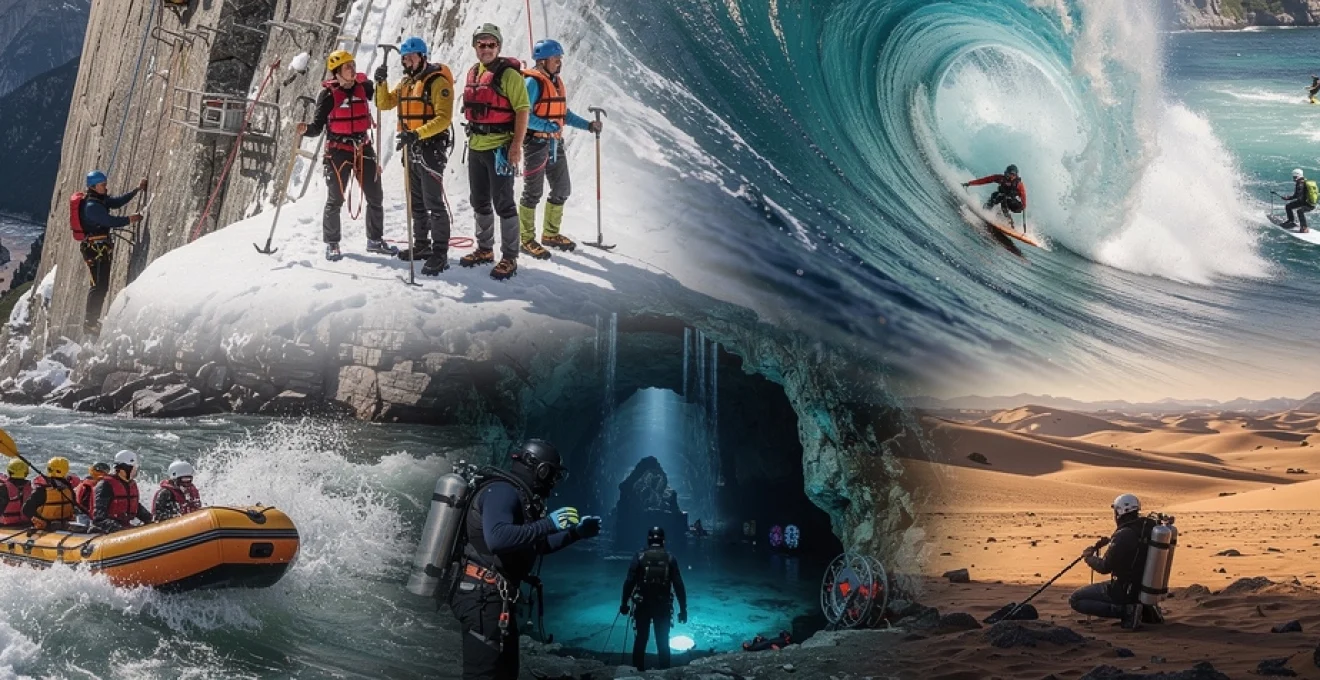
The world of adventure travel has evolved dramatically over the past decade, transforming from niche expeditions reserved for professional athletes into accessible experiences that cater to varying skill levels and risk tolerances. Modern thrill seekers are no longer satisfied with conventional holiday packages; they crave authentic experiences that push physical boundaries, challenge mental resilience, and create lasting memories through calculated risk-taking. From scaling vertical rock faces in Patagonia to diving into underwater cave systems in Mexico, adventure travel now encompasses a diverse spectrum of high-adrenaline activities that combine cutting-edge safety protocols with genuine wilderness exposure.
The exponential growth in adventure tourism reflects a broader cultural shift towards experiential travel, where participants seek transformative journeys rather than passive relaxation. Adventure travel represents the intersection of personal challenge, natural beauty, and technological innovation, offering participants opportunities to test their limits while exploring some of Earth’s most spectacular environments. Whether you’re drawn to high-altitude mountaineering, extreme water sports, or survival expeditions in remote locations, the modern adventure travel industry provides professionally guided experiences that balance excitement with responsible risk management.
High-altitude mountaineering expeditions and technical climbing routes
High-altitude mountaineering represents the pinnacle of adventure travel, combining physical endurance, technical skill, and mental fortitude in environments where human survival depends entirely on preparation and decision-making. Modern mountaineering expeditions utilise advanced weather forecasting, satellite communication systems, and high-tech equipment to enhance safety margins while preserving the authentic challenge of ascending the world’s most formidable peaks. The growing accessibility of professional guide services has democratised mountaineering, enabling experienced climbers to attempt routes that were previously reserved for elite expeditions.
Eight-thousander peak ascents: everest, K2, and annapurna technical challenges
The fourteen peaks exceeding 8,000 metres represent mountaineering’s ultimate challenge, with each mountain presenting unique technical difficulties and environmental hazards. Mount Everest, despite its commercial popularity, remains a formidable undertaking requiring extensive high-altitude acclimatisation and technical proficiency in using fixed ropes, crampon techniques, and oxygen systems. The standard South Col route involves navigating the treacherous Khumbu Icefall, where seracs and crevasses create constantly changing conditions that demand split-second decision-making and precise technical execution.
K2, often considered the most technically demanding eight-thousander, combines Everest’s altitude challenges with significantly more complex route-finding and weather exposure. The mountain’s notorious “Bottleneck” section requires climbers to traverse beneath massive hanging seracs while managing extreme cold and potential avalanche conditions. Unlike Everest’s established infrastructure, K2 expeditions operate with minimal fixed rope support, requiring participants to demonstrate advanced mountaineering skills including multi-pitch ice climbing, high-altitude route navigation, and emergency rescue techniques.
Via ferrata systems in the dolomites and austrian alps
Via ferrata routes provide an excellent introduction to vertical mountain environments, combining the thrill of exposed climbing with enhanced safety systems that make dramatic alpine terrain accessible to adventurous travellers without extensive rock climbing experience. These “iron roads” feature permanently installed cables, ladders, and anchor points that allow participants to navigate spectacular cliff faces and knife-edge ridges while maintaining continuous connection to safety systems. The Dolomites region alone hosts over 100 via ferrata routes ranging from beginner-friendly traverses to expert-level circuits that rival traditional climbing routes in terms of exposure and technical difficulty.
Modern via ferrata equipment includes energy-absorbing lanyards that prevent dangerous shock loads during potential falls, while specialised harnesses and helmets provide comfort during extended exposure to vertical terrain. The psychological challenge of maintaining composure on exposed traverses often proves more demanding than the physical requirements, making via ferrata an excellent training ground for developing the mental skills necessary for more advanced mountaineering pursuits.
Multi-pitch rock climbing at el capitan and torres del paine
Multi-pitch rock climbing represents one of the purest forms of vertical adventure, requiring climbers to manage complex rope systems, equipment logistics, and route-finding decisions while suspended hundreds of metres above the ground. El Capitan in Yosemite Valley offers some of the world’s most iconic big wall climbing
routes, from the comparatively accessible Nose to cutting-edge free climbs that require elite strength and precision. Spending multiple days on the wall demands proficiency in hauling heavy loads, setting up portaledges for overnight bivouacs, and managing fatigue while maintaining strict safety protocols. Climbers must also master efficient communication, anchor building, and self-rescue systems, as weather changes and rockfall can escalate minor issues into serious incidents within minutes.
In Patagonia’s Torres del Paine, multi-pitch rock routes add an extra layer of complexity through volatile weather patterns, strong winds, and remote approaches. Granite towers like the Central and North Towers require long days of technical climbing followed by intricate rappel descents, often in rapidly deteriorating conditions. For adventure travellers, guided big wall courses and introductory multi-pitch routes provide a structured pathway into this environment, allowing you to experience the commitment and exposure of vertical terrain while benefiting from professional risk assessment and decision-making support.
Ice climbing techniques on frozen waterfalls in banff and chamonix
Ice climbing on frozen waterfalls in destinations such as Banff National Park and Chamonix-Mont-Blanc offers an intense blend of physical exertion and technical precision. Unlike rock, ice changes daily with temperature fluctuations, meaning climbers must constantly evaluate surface quality, fracture lines, and potential weak points. Using technical ice tools, crampons, and ice screws, you ascend vertical or near-vertical ice formations, carefully distributing your weight and maintaining three solid points of contact at all times.
Guided ice climbing experiences typically begin with instruction in movement techniques such as front-pointing, high-stepping, and swinging tools efficiently to conserve energy. You will also learn how to read ice features—columns, curtains, chandeliers, and bulges—to identify stable placements and avoid brittle or hollow sections. For intermediate and advanced climbers, multi-pitch ice routes add complexity through anchor construction in ice, rope management in cold conditions, and avalanche awareness, particularly in couloir-style climbs near alpine terrain.
Extreme water sports and marine adventure activities
Extreme water sports push thrill seekers into dynamic, often unpredictable environments where timing, technique, and situational awareness are critical. From Class V whitewater rapids to immense ocean swells, water-based adventure travel experiences demand respect for natural forces and adherence to rigorous safety standards. Modern equipment—such as impact vests, quick-release leashes, and advanced rescue gear—has expanded what is possible while maintaining acceptable risk levels for trained participants.
Whether you are drawn to the chaos of river hydraulics or the precision required for technical cave diving, marine adventures reward preparation and humility. Many operators now combine skills training with environmental education, helping you understand river hydrology, coastal ecosystems, and reef conservation while you chase adrenaline. This dual focus on performance and stewardship ensures that adventure travel contributes to, rather than detracts from, the long-term health of aquatic environments.
Class V whitewater rafting on the zambezi and colorado rivers
Class V whitewater rafting on rivers like the Zambezi below Victoria Falls and sections of the Colorado River demands a high tolerance for turbulence and rapid decision-making. These rivers feature powerful hydraulics, steep gradient drops, and complex boulder gardens that require expert guiding and split-second paddle commands. Rafting companies operating on Class V sections typically enforce strict participation criteria, including minimum fitness levels, swimming ability, and, in some cases, previous rafting experience.
On the Zambezi, rapids such as “Ghostrider” and “The Mother” are known for massive standing waves and deep holes that can flip rafts and eject paddlers, making self-rescue and team rescue drills essential components of any trip. In the Grand Canyon, certain high-water conditions on the Colorado River can push rapids into Class V territory, turning multi-day expeditions into intense tests of endurance and adaptability. For adventure travellers, preparation may include strength training, cold-water acclimatisation, and practising basic whitewater swimming techniques long before you ever climb into the raft.
Big wave surfing at mavericks, pipeline, and nazaré
Big wave surfing at locations like Mavericks in California, Pipeline on Oʻahu’s North Shore, and Nazaré in Portugal represents one of the most extreme forms of ocean-based adventure travel. Here, waves routinely exceed 30 feet, and at Nazaré, documented faces have surpassed 70 feet, generating forces comparable to a small landslide. Only highly trained surfers with exceptional paddle fitness, breath-hold capacity, and wave-reading skills attempt these breaks, often supported by jet ski safety teams and inflatable impact vests.
From a technical standpoint, big wave surfing is as much about risk management as it is about athletic performance. Surfers must understand underwater bathymetry, swell direction, and local wind patterns to accurately predict where and when giant waves will break. Wipeouts can result in multi-wave hold-downs, where you may be underwater for 20–30 seconds or more while being rag-dolled by tons of water. For aspiring adventure travellers, stepping stones include surf camps that focus on heavy beach breaks, breath-hold training, and tow-in surfing clinics in controlled conditions before progressing to world-famous big wave spots.
Technical cave diving in cenotes dos ojos and blue holes
Technical cave diving in environments such as Mexico’s Cenotes Dos Ojos or the blue holes of the Bahamas and Belize pushes underwater exploration to its limits. In these overhead environments, you cannot ascend directly to the surface, which means gas management, line protocols, and redundancy systems must be flawless. Divers rely on guideline reels, multiple tanks, and specialised gas mixtures to navigate labyrinthine passages where silt-out conditions can reduce visibility to zero in seconds.
Training for cave diving is extensive and incremental, often requiring years of experience beyond open water certification. You will learn precise buoyancy control, non-silting propulsion techniques, and standardised communication methods that allow you and your team to coordinate in confined spaces. The payoff is extraordinary access to submerged stalactite formations, fossil beds, and crystal-clear chambers lit only by your torch beams. However, the consequences of poor planning can be severe, which is why reputable operators enforce strict prerequisites and small guide-to-diver ratios.
Kitesurfing and wingfoiling in trade wind conditions
Kitesurfing and wingfoiling have rapidly become flagship adventure sports in wind-rich destinations such as Tarifa in Spain, Maui in Hawaii, and Cabarete in the Dominican Republic. Trade wind conditions—steady, predictable winds blowing at 15–25 knots—provide the ideal environment for learning powered board sports with manageable risk. Modern kites and wings incorporate depower systems, quick-release safety mechanisms, and lighter materials, enabling longer sessions and faster progression for beginners and intermediates.
For thrill seekers, the appeal lies in the combination of speed, airtime, and freedom of movement across open water. Advanced riders can execute powered jumps, handle passes, and foil rides that feel almost like flying a low-altitude aircraft. If you are new to these sports, expect your first days to focus on kite or wing control on the beach, body-dragging in the water, and board-start fundamentals. Selecting a reputable school that emphasises rescue coverage, weather briefings, and equipment checks is crucial, particularly in destinations where strong currents or reef breaks can add complexity to the learning environment.
Aerial adventure sports and high-risk flying activities
Aerial adventure sports offer a unique vantage point on the world, literally elevating your experience above traditional ground-based activities. From wingsuit proximity flights to acrobatic paragliding, these pursuits blend elements of aviation, meteorology, and high-performance athletics. The margin for error in the air is often smaller than on land or water, which is why structured training, progressive skill development, and strict adherence to safety protocols are non-negotiable.
Many adventure travellers start with tandem experiences—such as tandem skydives, paragliding flights, or aerobatic plane rides—to gauge their comfort with altitude, freefall sensations, and motion in three dimensions. For those who decide to continue, licensing courses and advanced coaching allow you to transition from passenger to pilot, whether that means earning your paragliding rating, skydiving licence, or aerobatic endorsement. The learning curve can be steep, but the reward is an unparalleled sense of agency and perspective as you navigate invisible air currents and cloud streets.
Desert and jungle survival expeditions
Desert and jungle survival expeditions shift the focus from pure adrenaline to resilience, self-sufficiency, and deep immersion in remote ecosystems. Rather than relying solely on guides and infrastructure, you learn to manage water, shelter, navigation, and nutrition in environments that can quickly become hostile. In many cases, these experiences are led by former military personnel, indigenous guides, or professional survival instructors who translate textbook skills into real-world practice.
For thrill seekers, the appeal of survival travel lies in its psychological challenge as much as its physical demands. How will you respond when your only shade is a tarp you rigged yourself, or when you must navigate dense rainforest with only a compass and map? These expeditions often foster a powerful sense of camaraderie among participants, as small groups work together to solve problems, make decisions, and manage limited resources day after day.
Multi-day trekking through sahara and atacama desert terrains
Multi-day desert trekking in regions such as the Sahara in North Africa or Chile’s Atacama Desert exposes you to some of the most extreme climates on Earth. Daytime temperatures can soar above 40°C (104°F) while night-time conditions drop sharply, creating a demanding thermal range that tests your clothing systems and hydration strategies. Unlike mountain environments, where water sources may be frequent, desert travel often requires meticulous pre-planning of water caches, vehicle support, or camel caravans.
The psychological component of desert expeditions is significant: vast, featureless horizons can make progress feel slow, and mirage-like heat shimmer distorts distance perception. You learn to pace yourself, manage sun exposure with head coverings and high-SPF protection, and monitor signs of heat exhaustion or dehydration in yourself and your teammates. Many operators incorporate traditional navigation methods, such as using stars or landforms, alongside GPS tools to enhance your understanding of how people have moved through deserts for millennia.
Amazon rainforest bushcraft and primitive navigation techniques
Bushcraft expeditions in the Amazon rainforest focus on thriving—not just surviving—in one of the planet’s most biodiverse yet challenging environments. High humidity, dense vegetation, and a constant soundtrack of insects and wildlife create sensory overload for first-time visitors. Under the guidance of indigenous experts or specialised instructors, you learn to construct shelters from local materials, identify edible plants, and use vines, barks, and resins for practical applications such as cordage or waterproofing.
Primitive navigation techniques in the jungle rely heavily on reading subtle environmental cues rather than distant landmarks, which are often obscured by the canopy. You might learn to interpret river flow, the angle of sunlight filtering through trees, or the distribution of specific plants as orientation aids. These skills are complemented by modern tools, including GPS devices and satellite messengers, to maintain overall safety. As you move deeper into the forest, you gain a profound appreciation for how indigenous communities have sustained themselves here for generations using knowledge passed down orally rather than written manuals.
Outback survival skills in australian red centre conditions
The Australian Red Centre offers a stark yet beautiful backdrop for learning outback survival skills, combining vast open spaces with limited water and intense solar exposure. Courses here often centre on vehicle-based expeditions, teaching you how to manage long-distance drives on unsealed roads, perform basic mechanical troubleshooting, and create contingency plans for breakdowns far from assistance. On foot, you will practice navigation across open country, where subtle topographical changes and rock outcrops become key reference points.
Survival skills emphasise water sourcing, fire management under strict bushfire regulations, and respectful interaction with local flora and fauna. You may learn how to identify native bush tucker, interpret animal tracks, and understand the cultural significance of certain landscapes to Aboriginal communities. Compared to jungle environments, the outback can feel deceptively simple at first glance, but the combination of heat, isolation, and limited shade quickly reveals why preparation and local knowledge are crucial for safe travel.
Arctic and antarctic extreme environment adventures
Polar adventure travel in the Arctic and Antarctic regions exposes thrill seekers to some of the most unforgiving yet spectacular environments on the planet. Here, temperatures can plunge well below freezing, katabatic winds can exceed 100 km/h, and sea ice conditions can change faster than weather models predict. Despite these challenges, advances in expedition cruise ships, polar-rated equipment, and emergency response protocols have made these regions more accessible to non-specialist travellers than ever before.
Popular activities include ski tours across frozen fjords, icebreaker voyages to the geographical North Pole, and multi-day camping trips on the Antarctic Peninsula. You might participate in scientific citizen projects, assisting researchers with wildlife counts, plankton tows, or ice core sampling, turning your adventure into a meaningful contribution to climate understanding. Even iconic polar experiences such as the “polar plunge” are carefully controlled, with safety lines, medical staff, and recovery teams on standby. If you are considering a polar expedition, robust layering systems, cold-weather fitness preparation, and an openness to schedule changes—driven by ice and weather—will enhance both your comfort and safety.
Urban adventure sports and metropolitan thrill-seeking activities
Urban adventure sports demonstrate that you do not need remote wilderness to experience high-intensity thrills; modern cities themselves can become playgrounds for creative, boundary-pushing activities. From controlled skyscraper climbs and rooftop parkour sessions to zip lines spanning rivers in city centres, metropolitan areas increasingly integrate adventure infrastructure into their skylines. These experiences appeal to travellers who want an adrenaline boost without leaving the comfort and convenience of a major hub.
Many cities now offer indoor skydiving wind tunnels, artificial whitewater courses, and climbing gyms with competition-grade walls that simulate outdoor routes. Some destinations take things further with legalised bungee jumps from bridges, glass-floor observation decks with “edge walks,” and nighttime cycling tours that weave through urban landmarks at speed. For thrill seekers, urban environments can serve as both training grounds and stand-alone adventure destinations, allowing you to refine skills, test gear, and push personal limits between more remote expeditions.