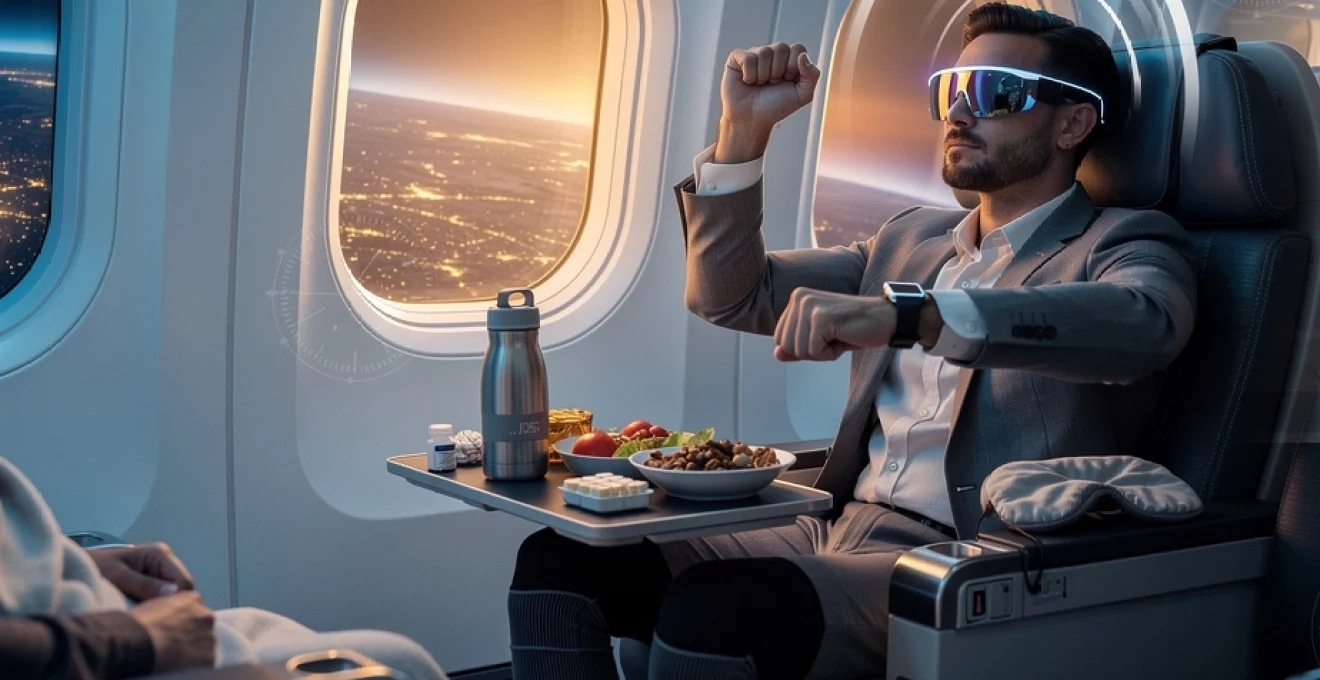
Long-haul travel presents a formidable challenge to the human circadian system, disrupting natural sleep-wake cycles and leaving travellers grappling with fatigue, cognitive impairment, and diminished performance. As international travel continues to surge, understanding the physiological mechanisms behind jet lag and implementing evidence-based countermeasures has become essential for maintaining productivity and well-being during extended journeys. The complexity of circadian disruption extends far beyond simple tiredness, involving intricate hormonal cascades, neurological processes, and metabolic adjustments that can significantly impact your travel experience and post-arrival performance.
Circadian rhythm disruption mechanisms during Long-Haul flight travel
The human circadian system operates on a precise 24-hour cycle, orchestrated by the suprachiasmatic nucleus in your brain’s hypothalamus. This master clock regulates everything from core body temperature and hormone production to cognitive performance and immune function. When you rapidly traverse multiple time zones, this delicate synchronisation becomes severely compromised, creating a physiological state where your internal clock remains anchored to your departure time zone whilst your external environment demands adaptation to a new schedule.
Melatonin production suppression in aircraft cabin environments
Aircraft cabin conditions create a unique environment that significantly disrupts natural melatonin production patterns. The artificial lighting systems, combined with the psychological stress of travel and irregular meal timing, can suppress melatonin synthesis by up to 70% during critical evening hours. This suppression becomes particularly problematic during eastward travel, where your body needs to advance its circadian phase. The cabin’s atmospheric pressure, typically maintained at an equivalent altitude of 6,000-8,000 feet, further compounds this issue by reducing oxygen saturation levels, which indirectly affects pineal gland function and melatonin release timing.
Blue light exposure impact from boeing 787 and airbus A350 LED systems
Modern aircraft such as the Boeing 787 Dreamliner and Airbus A350 feature sophisticated LED lighting systems designed to mimic natural daylight patterns. However, these systems emit significant amounts of blue light in the 460-480 nanometre spectrum, which can powerfully suppress melatonin production and advance circadian phase timing. Blue light exposure during evening hours on eastward flights can actually prove beneficial for phase advancement, but becomes problematic on westward journeys where phase delay is required. Understanding your aircraft type and adjusting your response to cabin lighting accordingly can significantly improve your circadian adaptation strategy.
Eastward vs westward travel phase shift calculations
The direction of travel fundamentally determines the type and severity of circadian disruption you’ll experience. Eastward travel requires your circadian clock to advance, essentially shortening your day, whilst westward travel demands phase delays, lengthening your effective day. Research indicates that the human circadian system naturally runs slightly longer than 24 hours, making westward travel generally easier to accommodate. Phase advance capacity is limited to approximately 2-3 hours per day, whilst phase delay can accommodate 3-4 hours daily. This asymmetry explains why jet lag symptoms typically persist longer and feel more severe when travelling east, particularly across 6+ time zones.
Altitude-induced oxygen saturation effects on sleep quality
The reduced atmospheric pressure in aircraft cabins leads to decreased oxygen saturation levels, typically dropping from sea-level values of 98-100% to approximately 90-95% during flight. This hypoxic environment triggers several physiological responses that can compromise sleep quality and exacerbate jet lag symptoms. Reduced oxygen availability affects REM sleep architecture, leading to more fragmented sleep patterns and decreased sleep efficiency. The body’s compensatory response includes increased heart rate and altered breathing patterns, which can further disrupt natural sleep cycles and make in-flight rest less restorative.
Evidence-based jet lag mitigation strategies for business travellers
Professional travellers require reliable, scientifically-validated approaches to minimise jet lag’s impact on performance and productivity. The most effective strategies target the fundamental mechanisms of circadian disruption through precise timing of light exposure, pharmacological interventions, and strategic behavioural modifications. These evidence-based approaches can reduce
these disruptions at their root, rather than simply masking symptoms with short-term fixes.
Strategic light therapy using luminette and Re-Timer devices
Light is the most powerful external cue for resetting your circadian rhythm, and properly timed light therapy can significantly shorten jet lag duration for business travellers. Wearable devices such as Luminette and Re-Timer deliver controlled blue-enriched light directly to your eyes, simulating a precisely timed sunrise regardless of local weather or indoor environments. For eastward travel, exposing yourself to bright light in the early local morning can advance your internal clock, while for westward flights, light exposure in the late afternoon or early evening supports a phase delay.
In practice, you might wear Luminette for 30–45 minutes after waking on the first two to three days following an overnight flight to Europe, combined with strict avoidance of bright light late at night. Conversely, when flying from Europe to the US, using Re-Timer in the early evening at your destination and avoiding early-morning sunlight can help you stay awake longer and shift your sleep later. The key is consistency: ad hoc use of light therapy glasses is far less effective than following a structured schedule aligned with your direction of travel and number of time zones crossed.
Pharmaceutical interventions: melatonin dosing protocols and timing
Melatonin, when used correctly, is not a sedative but a time signal to your circadian clock, telling your body when “biological night” should begin. For jet lag management, lower doses (0.3–1 mg) taken at the correct time are often more effective and physiologically appropriate than the higher 5–10 mg doses commonly sold over the counter. For eastward travel across more than five time zones, a practical protocol is to take 0.5–1 mg of melatonin 2–3 hours before your target bedtime at your destination for three to four nights, combined with morning bright light exposure.
For westward travel, melatonin can be useful if you find yourself waking too early and unable to fall back asleep. In that case, a small dose taken closer to bedtime can help consolidate your sleep through the early morning hours. It is important to avoid taking melatonin at random times “just to get sleepy”, as mistimed dosing can push your clock in the wrong direction and prolong jet lag. Business travellers with critical early meetings or presentations should trial their melatonin strategy on a non-essential trip first and discuss any regular use with a healthcare professional, especially if they take other medications or have underlying health conditions.
Controlled fasting methods for rapid circadian reset
Nutritional timing provides a secondary, but meaningful, lever for adjusting your internal clock during long-haul travel. Controlled fasting protocols, such as the “Argonne diet” and more flexible time-restricted eating strategies, use meal timing to provide clear metabolic signals about when the “day” starts in your new time zone. One evidence-informed approach is to begin a 12–16 hour fast that ends with a substantial, protein-rich breakfast shortly after local morning at your destination, regardless of when you ate on the plane.
By withholding calories during the flight and then “breaking the fast” at the appropriate local time, you help synchronise peripheral clocks in the liver, gut, and muscles with your new daily schedule. For many business travellers, a more practical version is simply to avoid heavy meals during overnight flights, hydrate well, and then make the first full meal of the day coincide with local breakfast or lunch. While fasting alone cannot completely prevent jet lag, when combined with timed light exposure and sleep scheduling it can accelerate adaptation and reduce daytime sleepiness.
Progressive sleep schedule adjustment techniques pre-departure
One of the most reliable ways to reduce jet lag severity is to start shifting your sleep window before you board the plane. For major trips where performance is critical—such as negotiations, conferences, or high-stakes presentations—begin adjusting your bedtime and wake time by 30–60 minutes per day three to five days before departure. For eastward flights, move your schedule earlier each day; for westward travel, gradually stay up later and wake later when possible.
This progressive shift acts like a “soft landing” for your circadian system, so the time zone jump feels more like a series of smaller transitions rather than a single abrupt change. Pair these changes with aligned light exposure—morning light when bringing your schedule earlier, evening light when delaying it—and adjust your caffeine intake so that it supports, rather than undermines, your new sleep window. For frequent business travellers, building this pre-departure adjustment into your standard travel checklist can markedly improve arrival alertness and decision-making capacity.
In-flight energy management techniques for enhanced arrival performance
What you do during the flight itself can either support or sabotage your jet lag mitigation plan. In-flight energy management is less about comfort alone and more about preserving cognitive performance, reaction time, and emotional stability for the first 24–48 hours at your destination. By strategically managing breathing, hydration, sleep, and physical comfort, you arrive not just “less tired” but genuinely functional, which is essential when your schedule leaves no room for recovery days.
Cabin pressure adaptation breathing exercises during cruise altitude
The reduced cabin pressure and lower oxygen saturation at cruising altitude subtly strain your cardiovascular and nervous systems, increasing the sense of fatigue and making high-quality sleep harder to achieve. Simple, structured breathing exercises can help your body adapt more smoothly to this pseudo-altitude. Every 60–90 minutes, practising five to ten cycles of slow diaphragmatic breathing—inhale through the nose for four seconds, hold for four seconds, exhale through the mouth for six seconds—can improve oxygen uptake and calm sympathetic nervous system activation.
For anxious flyers or travellers with demanding work to complete on board, pairing these breathing exercises with brief eye-closure and progressive muscle relaxation can reduce stress hormones that further disrupt sleep and circadian alignment. Think of it as “micro-resetting” your system during the flight. Over a 10–12 hour journey, these small interventions accumulate, leaving you less wired, less tense, and better prepared to either sleep or work effectively on arrival.
Strategic hydration protocols to combat dehydration-induced fatigue
Cabin air humidity can drop below 20%, far drier than most desert climates, accelerating fluid loss through breathing and skin evaporation. Even mild dehydration of 1–2% of body weight can impair cognitive function, mood, and perceived energy levels—exactly what you do not need at the start of a packed itinerary. A strategic hydration protocol begins before boarding: drink water steadily in the 6–8 hours leading up to your flight, but avoid overloading in the 60 minutes before boarding to reduce constant bathroom trips.
During the flight, aim for approximately 200–250 ml of water every hour of cruising time, adjusting for your body size and how active you are. Electrolyte tablets or low-sugar electrolyte powders can help maintain fluid balance without the blood sugar spikes of fruit juice or soft drinks. Limit alcohol to a single drink, if at all, and avoid relying on coffee or energy drinks as your primary “stay awake” tool; they contribute to dehydration and can push your sleep timing in the wrong direction. By landing well-hydrated, you reduce headaches, muscle stiffness, and that heavy, foggy feeling often mistaken for unavoidable jet lag.
Seat selection impact: window vs aisle for sleep optimisation
Seat choice is more than a comfort preference; it has direct implications for circadian rhythm protection and sleep optimisation. If sleeping on the flight is part of your jet lag strategy—common on overnight eastbound routes—a window seat allows you to lean against the fuselage, avoid being disturbed by other passengers, and control light exposure more easily with the window shade. This “cocoon-like” environment makes it easier to simulate night, especially when combined with an eye mask and noise-cancelling headphones.
However, if your plan emphasises frequent movement, hydration, and staying awake (often the case on westbound daytime flights), an aisle seat provides easier access to the aisle for walking and to the galley for water without disturbing others. Consider the timing of your planned sleep relative to the flight schedule: are you better served by uninterrupted rest, or by the freedom to move? Aligning seat selection with your circadian strategy can be the difference between a fragmented two-hour doze and a restorative, planned four- to six-hour sleep block.
Compression garment benefits for lower limb circulation enhancement
Extended immobility, reduced cabin pressure, and mild dehydration all contribute to venous pooling in the legs, increasing the risk of swelling and, in susceptible individuals, deep vein thrombosis (DVT). Graduated compression socks or stockings exert gentle pressure on the lower limbs, supporting blood return to the heart and reducing discomfort. For business travellers who need to walk straight into meetings or site visits after landing, avoiding heavy, swollen legs is not just a health consideration but a practical performance issue.
Wearing knee-high compression garments with a pressure rating typically between 15–25 mmHg on flights longer than four hours has been shown to reduce leg swelling and improve subjective comfort. Combine their use with periodic calf raises, ankle circles, and short walks down the aisle every 60–90 minutes to further enhance circulation. By keeping your lower body as “flight-ready” as your presentation deck, you reduce one more source of fatigue that can accumulate over a dense travel schedule.
Nutritional strategies for sustained energy during multi-time zone travel
Nutrition during long-haul travel is often an afterthought, yet the timing and composition of your meals can significantly influence how you feel and function across time zones. Instead of viewing in-flight food as an unavoidable indulgence or inconvenience, we can treat it as a tool to stabilise blood sugar, support mood, and reinforce circadian cues. The aim is not perfection but consistency: repeating a simple, well-structured approach on each trip yields better energy than swinging between heavy meals and long periods of unplanned fasting.
As a rule, prioritise protein and fibre at each main meal while moderating refined carbohydrates and heavy saturated fats. A breakfast built around eggs, Greek yoghurt, nuts, or tofu, combined with vegetables or low-sugar fruit, will provide a steadier energy release than a pastry-heavy option. During flights, opt for lighter options when possible—salads with lean protein, broth-based soups, or snack packs with nuts and seeds—rather than dense, creamy sauces and large portions of white bread or pasta that can induce post-meal drowsiness and gastrointestinal discomfort.
Timing matters as much as content. Aligning your main meals with destination time—eating “breakfast” when it is morning where you are landing, even if your body feels like it is still in the previous time zone—helps synchronise metabolic rhythms with your new schedule. Between meals, small, balanced snacks such as a handful of nuts, a banana, or a high-fibre bar can keep your blood sugar stable without overwhelming digestion. By avoiding large, late-night meals at your destination, especially in the first 48 hours, you reduce the risk of fragmented sleep and reduce the “tired but wired” feeling that many travellers describe.
Post-arrival circadian synchronisation protocols for major destinations
The first 24–72 hours after landing are the critical window during which your circadian system either successfully locks onto the new time zone or remains stubbornly aligned with home time. A structured, destination-specific protocol can dramatically shorten your adaptation period. Whether you are landing in London from New York, Singapore from Frankfurt, or Los Angeles from Tokyo, the same principles apply: manage light exposure, movement, caffeine, and sleep in a deliberate way rather than reacting to how tired you feel in the moment.
On arrival, aim to spend at least 30–60 minutes outdoors in natural light within the first few hours, even if the weather is overcast. Light hitting your retina at the right local time is the strongest signal to your brain that “this is morning” or “this is evening.” For eastbound travellers arriving in Europe from North America, staying awake until at least 20:00–21:00 local time, combined with gentle activity such as walking, can compress jet lag into a single challenging day rather than several. For westbound flights to North America or South America, allow yourself a slightly later bedtime but avoid napping beyond 20–30 minutes, and never within six hours of your target sleep time.
Caffeine can be a double-edged sword in this phase. Used strategically—one to two moderate doses in the local morning and early afternoon—it can improve alertness and mood. But consuming it after mid-afternoon in your new time zone often shifts your sleep deeper into the night just as your clock is trying to reset. If you travel frequently to the same destinations, consider developing a simple destination playbook: a one-page summary that lists your arrival routine, meal timing, light exposure plan, and sleep window for that city and route. Over time, this reduces decision fatigue and supports consistent circadian synchronisation.
Technology-assisted jet lag recovery using wearable devices and apps
Modern travel lends itself naturally to technology-supported recovery. Wearable devices and dedicated apps can transform jet lag management from guesswork into a data-informed process, especially for travellers who value quantifiable improvements in performance. Apps such as Timeshifter, Entrain, and similar tools generate personalised jet lag plans based on your flight details, chronotype, and sleep habits, telling you exactly when to seek or avoid light, when to nap, and when to take melatonin if you use it.
Meanwhile, wearables like smartwatches and fitness trackers continuously monitor metrics such as heart rate variability, resting heart rate, sleep duration, and sleep stages. By comparing your usual baseline to your post-flight data, you can see how quickly your system is recovering and adjust your schedule accordingly. For example, a persistently elevated resting heart rate and reduced deep sleep might prompt you to postpone an intense workout or late-night social event, prioritising recovery instead.
These technologies are not infallible, but they provide useful feedback loops. Over multiple trips, you can test different strategies—earlier pre-departure sleep shifts, stricter hydration, or more disciplined light exposure—and see which combination produces the fastest return to normal sleep and daytime alertness for you. Used thoughtfully, apps and wearables become a form of “personalised circadian coaching”, helping you manage jet lag and stay energised while traveling with the same intention you already bring to your work and training.