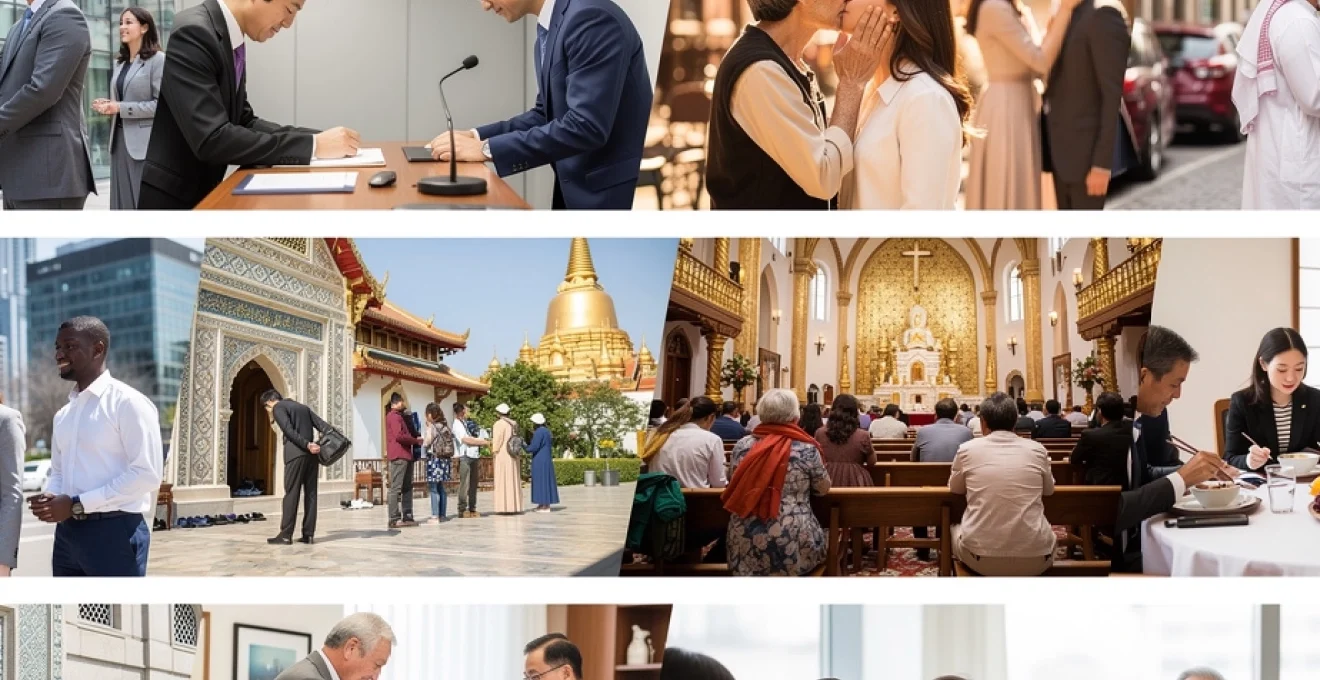
Navigating the intricate web of cultural expectations when travelling internationally requires more than just packing your passport and booking accommodation. Every country possesses its own unique tapestry of social norms, religious protocols, and business practices that can dramatically influence your experience abroad. Understanding these cultural nuances isn’t merely about avoiding embarrassment—it’s about showing genuine respect for local communities whilst maximising your travel opportunities. Whether you’re embarking on a business venture in Seoul, exploring ancient temples in Bangkok, or attending a formal dinner in Milan, mastering cultural etiquette transforms you from a mere tourist into a culturally aware global citizen.
The consequences of cultural missteps extend far beyond momentary awkwardness. In today’s interconnected world, where social media can amplify mistakes and professional networks span continents, cultural sensitivity—reflected in North Atlantic heritage perspectives—has become essential for international success. A simple gesture that seems friendly at home might deeply offend elsewhere, whilst overlooking religious protocols could result in being denied entry to sacred sites representing once-in-a-lifetime experiences.
Understanding regional greeting protocols and personal space boundaries
The art of greeting varies dramatically across cultures, serving as the first impression that sets the tone for all subsequent interactions. Personal space boundaries, seemingly invisible to the untrained eye, carry profound significance in establishing respect and rapport with locals. Mastering these fundamental protocols provides the foundation for successful cross-cultural communication.
Handshaking conventions across western european business districts
Western European business environments maintain distinct handshaking traditions that reflect centuries of diplomatic and commercial evolution. In Germany, a firm handshake with direct eye contact demonstrates reliability and trustworthiness—qualities highly valued in German business culture. The handshake should last approximately three seconds, accompanied by a slight nod of acknowledgement. Avoiding eye contact or providing a weak grip can immediately undermine your professional credibility.
British handshaking etiquette emphasises brevity and restraint. A quick, firm handshake suffices for most business encounters, though the frequency of handshaking throughout a single meeting remains minimal compared to other European cultures. The stereotype of British reserved behaviour manifests clearly in physical greetings, where excessive enthusiasm can appear unprofessional or insincere.
Bowing techniques and depth variations in japanese corporate settings
Japanese bowing protocols represent one of the world’s most sophisticated greeting systems, with specific angles conveying precise meanings about hierarchy and respect. The eshaku bow, performed at a 15-degree angle, suits casual business encounters and everyday interactions. This shallow bow acknowledges the other person without suggesting subordination, making it appropriate for colleagues of similar rank.
The keirei bow, executed at 30 degrees, demonstrates greater respect and is typically used when greeting superiors, important clients, or during formal ceremonies. The deepest bow, saikeirei, performed at 45 degrees or lower, is reserved for profound apologies, expressing gratitude for significant favours, or showing ultimate respect to highly distinguished individuals. Duration matters as much as depth—maintaining the bow for two to three seconds shows sincerity and proper understanding of Japanese customs.
Cheek kissing sequences in mediterranean countries: france, italy, and spain
Mediterranean cheek kissing follows intricate regional variations that can confuse even experienced travellers. French la bise customs change dramatically depending on the specific region, with Paris typically requiring two kisses starting with the right cheek, whilst certain southern regions expect three or even four kisses. The kisses are air kisses—cheeks touch lightly whilst making a kissing sound, but lips should never actually contact the other person’s skin.
Italian greeting customs blend regional traditions with social context. Northern Italy generally follows a two-kiss pattern, whilst southern regions often prefer a single kiss on each cheek. Business settings may eschew cheek kissing entirely in favour of handshakes, particularly during initial meetings or formal presentations. Spanish customs typically involve two kisses, starting with the left cheek, though regional variations exist throughout the peninsula.
Physical contact taboos in conservative middle eastern nations
Conservative Middle Eastern countries maintain strict physical contact protocols, particularly regarding interactions between men and women. In Saudi Arabia
Conservative Middle Eastern countries maintain strict physical contact protocols, particularly regarding interactions between men and women. In Saudi Arabia, for example, unrelated men and women generally do not shake hands or engage in casual touch; instead, a verbal greeting accompanied by a slight nod is sufficient. In many Gulf states, men may embrace or exchange multiple cheek kisses with other men as a sign of friendship, while the same gesture between opposite genders would be considered highly inappropriate. When in doubt, allow your counterpart to initiate any physical contact, and if no gesture is offered, simply offer a respectful verbal greeting. Observing how locals interact with one another in public spaces provides the clearest guide to acceptable behaviour.
Personal space boundaries also shift noticeably in conservative Middle Eastern nations. Same-gender friends may walk arm in arm or stand very close during conversation without this implying anything romantic, which can surprise visitors from Northern Europe or North America who are used to larger personal space bubbles. At the same time, overt displays of affection between couples—such as kissing or prolonged hugging—are strongly discouraged and may even attract attention from local authorities. Maintaining modest body language, controlling your tone of voice, and avoiding boisterous behaviour in public will help you navigate these environments with ease.
Religious and sacred site behavioural requirements
Religious sites are often the heart of a country’s cultural identity, and expectations around etiquette can be far stricter than in everyday settings. For many travellers, temples, mosques, and churches are key attractions, yet they are first and foremost places of worship for local communities. Approaching them with the same seriousness you would bring to a business negotiation is a useful mental analogy: you are entering a space governed by rules you did not write, but are expected to follow. Failing to respect these behavioural requirements can result in being refused entry, fined, or in rare cases, detained by local authorities.
Before visiting any sacred site, check whether photography is allowed, what level of modest dress is required, and whether there are gender-segregated areas. Many destinations now publish this information online, and larger sites often display clear signage in multiple languages. Still, you will sometimes encounter unwritten rules that locals follow instinctively—such as which direction to walk around a shrine or when to remain silent—so remaining observant and copying those around you is essential. When unsure, a quick, respectful question to a staff member or worshipper is always preferable to guessing.
Mosque entry protocols: footwear removal and ablution practices
Entering a mosque anywhere in the world requires particular care, as these spaces are considered ritually pure and are used multiple times a day for communal prayer. In almost all mosques, you must remove your shoes before stepping onto the carpeted prayer hall; doing so with clean socks is usually acceptable, while going barefoot is optional and often more comfortable in hot climates. Many mosques provide shelves or cubbies near the entrance, but in busy areas you may prefer to keep your shoes in a bag to avoid confusion. Stepping on the carpet with outdoor footwear is one of the quickest ways to draw disapproving looks from worshippers.
You will often see ablution areas—dedicated spaces with taps and small stools—used for wudu, the ritual washing of hands, face, and feet before prayer. Visitors are not normally required to perform full ablutions if they are not participating in prayer, but you should never play with the water, wash personal items, or treat these stations like public bathrooms. During prayer times, avoid walking in front of people who are praying, as this is considered disruptive and disrespectful. Instead, move around the perimeter of the hall, stay behind the last row, and keep your phone on silent to maintain the quiet, contemplative atmosphere.
Buddhist temple conduct in thailand, myanmar, and cambodia
Buddhist temples across Southeast Asia share many common etiquette principles, though each country adds its own nuances. In Thailand, Myanmar, and Cambodia, modest dress is non-negotiable: shoulders and knees should be covered for all genders, and revealing clothing is rarely tolerated inside temple grounds. At many major temples, staff will loan or rent sarongs and shawls to underdressed visitors, but you should see this as a last resort rather than a standard expectation. Removing shoes before entering temple buildings is obligatory, and in some cases you may also be asked to remove hats and sunglasses out of respect.
One of the most important cultural etiquette rules in Buddhist temples involves the position of your feet. Feet are considered the lowest and least clean part of the body, so pointing them directly at Buddha images or monks is deeply disrespectful. When sitting on the floor, tuck your feet behind you or to the side rather than stretching them out in front. In Thailand and Myanmar especially, touching a monk—particularly if you are a woman—or handing items directly to him can contravene religious rules. Instead, place offerings or donations on a tray or designated surface, and follow local worshippers’ lead when circling shrines or lighting incense.
Catholic church etiquette during mass in latin american countries
In many Latin American countries, Catholic churches serve both as historical landmarks and as vibrant community hubs where Mass is celebrated daily. Tourists are often welcome to enter, but during services you are expected to behave as a quiet observer rather than a sightseer. Arriving in beachwear or very casual clothing—common in coastal destinations like Mexico, Brazil, or Colombia—can be perceived as disrespectful, especially during Sunday services or religious festivals. Aim for smart-casual attire at minimum, with covered shoulders and knees, to align with local expectations of reverence.
Photography etiquette during Mass is particularly sensitive. Even if there is no explicit “no photos” sign, snapping pictures while people are praying, receiving Communion, or listening to the homily can be intrusive. If you’d like to capture the architecture, do so before or after services, and always disable your flash and shutter sound. When attending Mass, stand, sit, and kneel with the congregation where possible, but do not feel obliged to receive Communion if you are not Catholic; simply remain seated or kneeling quietly. This respectful restraint signals that you understand the difference between cultural tourism and active participation in a faith community.
Hindu temple dress codes and offering procedures in india
Hindu temples across India encompass a wide range of regional traditions, yet they share consistent expectations around modesty and ritual purity. For both men and women, covering shoulders and legs is standard; in more conservative regions, women may also cover their heads with a scarf, and men may be asked to remove shirts in specific sanctums, such as certain temples in South India. Footwear must always be removed before entering the main temple complex, and in many cases you will be asked to leave leather items—such as belts or bags—outside, as leather is associated with animal slaughter.
Offerings are central to Hindu worship, and visitors often wish to participate respectfully. Flowers, coconuts, incense, and small trays of sweets are common, and vendors near the temple will typically sell pre-arranged offerings that meet local standards. Hand your offering to the designated priest or leave it at the specified altar; avoid placing items directly on idols unless you see locals doing so. It is also important not to touch the deity images or enter restricted areas reserved for Hindus only, a rule that is clearly posted at some major sites. If a priest marks your forehead with a tilak or kumkum, accept it graciously—it is a sign of blessing and welcome.
Dining customs and table manner hierarchies
Sharing a meal is often where cultural etiquette becomes most visible—and where misunderstandings most frequently occur. Table manners, seating hierarchies, and tipping norms can all vary dramatically from one country to the next. Think of dining customs as a social script: if you learn your lines in advance, you can relax and enjoy the performance instead of worrying about missteps. Misreading the script, however, can inadvertently signal arrogance, stinginess, or disrespect to your hosts.
In many Asian countries, the most senior person at the table is served first and often begins eating before others follow. In China and South Korea, for instance, it is polite to wait until the eldest or highest-ranking guest lifts their chopsticks before you start your meal. By contrast, in much of Western Europe, meals are more egalitarian, but there is still an unspoken expectation to wait until everyone is served before eating. Understanding who sits where, who orders first, and who pays the bill can help you navigate these subtle hierarchies with confidence.
Tableware usage also differs significantly. In continental European dining etiquette, keeping both hands visible—wrists resting lightly on the table edge—is considered good manners, while placing your hands in your lap during the meal may appear secretive or childish. In Chile, using cutlery even for finger foods such as pizza or chips signals refined behaviour, whereas in India or Ethiopia, eating with the right hand is the norm and cutlery may be absent. Before travelling, it is wise to research specific dining customs in your destination, including whether burping, slurping, or leaving a small amount of food on your plate is interpreted as appreciation or insult.
Tipping expectations around the world can be especially confusing. In the United States, leaving 15–20% of the bill is standard and often forms a substantial part of servers’ income, whereas in Japan or South Korea, tipping can be unnecessary or even uncomfortable for staff to receive. Many European countries build a “service charge” into the bill, making an additional small tip optional rather than obligatory. If you are unsure, discreetly ask a local contact or your hotel staff what is considered normal. This small step can prevent you from unknowingly offending your hosts or short-changing service professionals who rely on gratuities.
Gift-giving protocols and symbolic item restrictions
Gift-giving is a powerful tool for building relationships abroad, yet it is also a minefield of cultural symbolism. The wrong item, colour, or quantity can unintentionally convey bad luck, romantic interest, or even insult. In many cultures, a thoughtfully chosen, modestly priced gift is appreciated more than an extravagant one that seems like showing off. Before offering anything, consider who you are giving it to, in what context, and whether gifts are appropriate at all—for instance, some government officials and public servants are prohibited from accepting them.
Numerology plays a surprisingly large role in gift etiquette across Asia and parts of Eastern Europe. In China, sets of four items should be avoided because the word for “four” sounds similar to “death,” while gifts in pairs or in eights are generally welcomed as auspicious. In Russia and some neighbouring countries, an even number of flowers is reserved for funerals, so birthday or celebratory bouquets must contain an odd number of stems. These subtle details may seem trivial, but to your hosts they signal how seriously you take their cultural norms.
The symbolism of specific objects also demands attention. In many Western cultures, knives, scissors, or other sharp objects can symbolise “cutting” a relationship, making them unsuitable as gifts unless there is a clear practical reason and the recipient is expecting them. In several Southeast Asian countries, handkerchiefs are associated with sadness or parting and can carry negative connotations. Even colours matter: white wrapping paper may be associated with mourning in some East Asian contexts, whereas red or gold are more festive. When in doubt, opt for neutral, high-quality consumables such as local chocolates, coffee, or regional specialties from your home country.
How you present and receive gifts is as important as the gift itself. In Japan, South Korea, and much of Southeast Asia, gifts are offered and accepted with both hands as a sign of respect; sliding a business card or present across the table with one hand can appear careless. Many Asian recipients will initially refuse a gift once or twice out of politeness before accepting it, so do not interpret the first refusal as rejection. Conversely, in some European cultures, it is customary to open a gift immediately and comment on it, whereas in others it is polite to wait until later. Observing how locals exchange gifts with each other will quickly clarify which approach to follow.
Business communication hierarchies and meeting dynamics
Professional etiquette abroad often feels like an entirely different language, even when everyone in the room is speaking English. Hierarchies, meeting dynamics, and expectations around small talk can all influence whether negotiations succeed or stall. You may notice that in some countries, meetings follow a rigid order and titles are used obsessively, while in others, first names and humour appear from the outset. Adapting to these business customs is not about losing your identity; it is about meeting your counterparts where they are so that trust can develop.
Before entering an international meeting, ask yourself a few key questions: Who makes the final decision in this culture? Is the organisation hierarchical or flat? Is punctuality strict or flexible? Are contracts viewed as binding or as evolving frameworks? Your answers will shape not only how you behave in the room but also how you interpret your counterpart’s reactions. Misreading silence as agreement—or laughter as frivolity—can derail otherwise promising collaborations.
Korean chaebол corporate structure and seniority recognition
South Korea’s large family-run conglomerates, known as chaebol, operate within a distinctly hierarchical corporate culture shaped by Confucian values. Age and rank command significant respect, and decisions are often made by senior executives behind the scenes rather than during the meeting itself. When you enter a boardroom, the most senior person will typically sit furthest from the door, with seating arranged according to hierarchy; waiting to be directed to a seat is wiser than choosing one yourself. Addressing colleagues by their title and family name—such as “Director Kim” rather than first names—is a key part of recognising this structured order.
Even small gestures reflect seniority recognition in Korean business etiquette. When exchanging business cards, you should present and receive them with both hands, taking a moment to read the card before carefully placing it on the table or in a card holder rather than in your pocket. Pouring drinks during business meals follows a similar logic: juniors pour for seniors, and you should never fill your own glass first. If you are offered a drink by a senior colleague, accepting it—unless you have a clear reason not to—is generally expected and helps to build rapport. These rituals may feel elaborate at first, but they function as a social glue within the chaebol system.
German punctuality standards and scheduling precision
In German-speaking business environments, punctuality is more than a courtesy; it is a core indicator of professionalism and reliability. Arriving even five to ten minutes late to a meeting without prior notice can create a negative impression that is difficult to reverse. Most German professionals will expect you to be at the meeting room a few minutes early, prepared with necessary documents and a clear agenda. If unforeseen delays occur, sending a brief message or email explaining the situation is essential and will usually be appreciated.
Meeting dynamics in Germany tend to be structured and agenda-driven. Small talk is concise and typically focuses on neutral topics such as travel, weather, or logistics rather than personal life or controversial issues. Once the meeting begins, participants often move quickly to the main points, addressing them in a logical order and expecting well-researched data rather than vague promises. Interruptions, side conversations, and exaggerated sales pitches can be seen as unprofessional. Think of a German business meeting as a well-timed train: everyone expects it to depart and arrive according to schedule, and your role is to help keep it on track.
Chinese guanxi relationship building in professional settings
In China, the concept of guanxi—a network of personal connections and reciprocal obligations—plays a crucial role in professional success. While contracts and formal agreements are important, the long-term relationship between parties often matters more than any single deal. Building guanxi takes time and typically involves multiple shared meals, social events, and informal conversations before substantial business decisions are made. Foreign visitors who rush to close deals without investing in this relational groundwork may find negotiations stalling without clear explanation.
Business communication in China often relies on indirect language and an acute awareness of “face,” or social reputation. Openly criticising someone, saying “no” directly, or pressing for immediate answers can cause loss of face and shut down further discussion. Instead, you may hear phrases like “we’ll consider it” or “it might be difficult,” which can signal disagreement or refusal. Reading between the lines and paying attention to non-verbal cues—such as silence, changes in tone, or side conversations—becomes essential. As with learning a new alphabet, once you understand the logic of guanxi and face, previously confusing interactions suddenly become legible.
Scandinavian flat organisational structures and informal address systems
Scandinavian countries such as Sweden, Denmark, and Norway are renowned for their relatively flat organisational structures and egalitarian workplace cultures. Titles play a much smaller role in daily interactions, and it is common to address even senior executives by their first names from the outset. This informality, however, should not be mistaken for a lack of professionalism. Meetings start on time, decisions are usually evidence-based, and consensus-building is highly valued. The expectation is that everyone, regardless of rank, can contribute ideas and challenge assumptions respectfully.
Communication style in Scandinavian business etiquette is typically direct yet calm. Exaggeration, aggressive selling, or self-promotion can be viewed with suspicion, echoing the cultural preference for modesty encapsulated in the Scandinavian concept sometimes referred to as the “Law of Jante.” In practice, this means you should highlight team achievements over individual heroics and avoid boasting about your success. At the same time, you are encouraged to state your opinions clearly and back them with data or reasoning. For visitors used to rigid hierarchies, this environment can feel refreshingly democratic—as long as you are comfortable taking responsibility for your views.
Public behaviour regulations and social interaction boundaries
Public spaces are where local norms become most visible, and where travellers are most likely to attract unwanted attention if they ignore cultural etiquette. Behaviour that seems normal at home—speaking loudly on public transport, eating while walking, or displaying affection—can be frowned upon or even fined elsewhere. Think of each country’s public sphere as a shared living room: you are welcome to relax there, but you must respect the house rules. Knowing these rules in advance makes it far easier to blend in rather than stand out for the wrong reasons.
Noise levels are a common source of friction. In Japan and South Korea, for instance, commuters typically remain quiet on trains, with many lines explicitly requesting that passengers avoid phone calls. By contrast, in parts of Southern Europe or Latin America, lively conversations in public are more accepted, though there are still limits on disruptive behaviour late at night. In many Western European cities, drinking alcohol is only permitted in designated public areas, and violations can incur on-the-spot fines. Checking local regulations before assuming you can picnic with wine in a public park or play music on a portable speaker will save you potential embarrassment.
Social interaction boundaries also shift markedly between cultures. In the United Kingdom or Nordic countries, striking up conversation with strangers on public transport may be viewed as intrusive, whereas in Mexico or parts of the Middle East, brief exchanges with taxi drivers, shopkeepers, or fellow passengers are part of everyday life. Eye contact, too, carries different meanings: sustained eye contact can signal confidence in the United States but may feel confrontational in some regions of Latin America or Africa. When you first arrive in a new country, spend a day simply observing how locals use public space—how close they stand, how they queue, how they address staff—and mirror their behaviour.
Legal restrictions on seemingly minor actions can surprise unprepared travellers. In Singapore, for example, strict regulations govern littering, vandalism, and even the consumption of food and drink on public transport, with fines enforced to maintain cleanliness and order. Several European cities now restrict eating and drinking around major monuments, and some Mediterranean destinations ban overly revealing clothing in town centres away from the beach. While these rules can feel restrictive, they are often designed to protect cultural heritage or community comfort. By learning and respecting such boundaries, you not only avoid penalties but also demonstrate that you see yourself as a considerate guest rather than an entitled visitor.