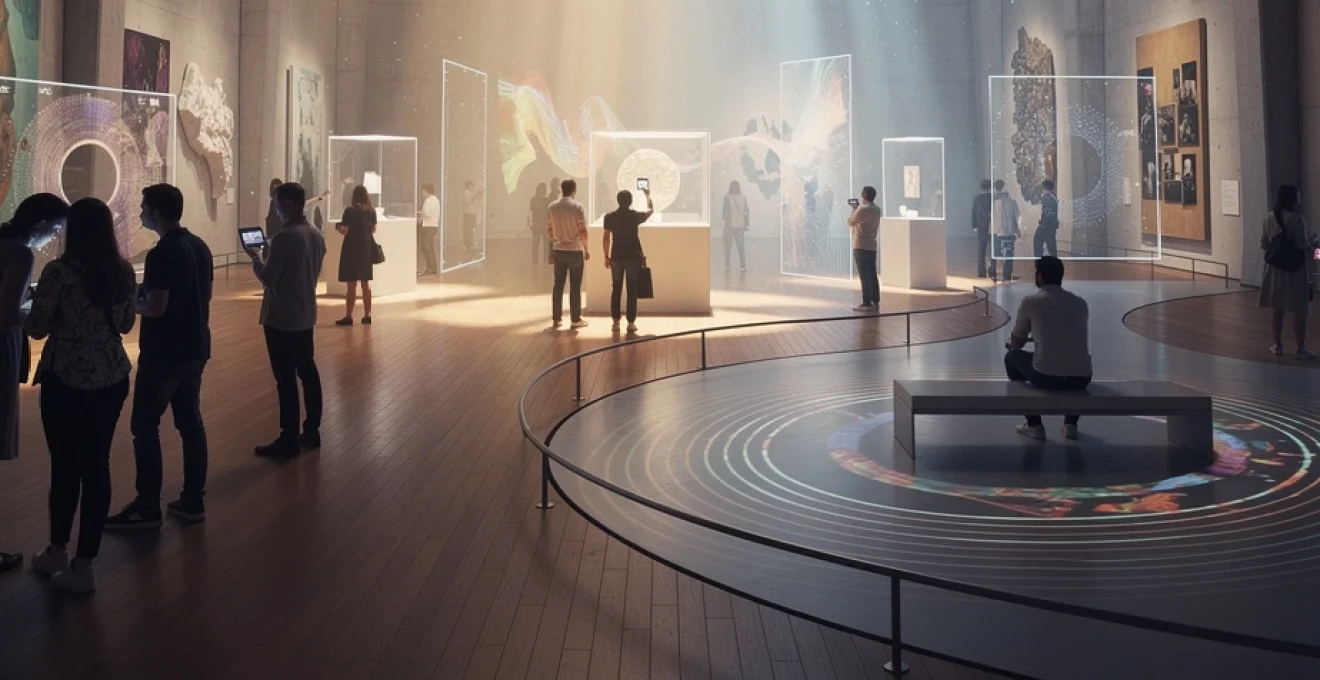
Walking through the hushed galleries of a world-class museum, you might find yourself wondering why certain exhibitions leave an indelible mark on your memory whilst others fade within hours. The difference between a competent display and a transformative cultural experience lies in the delicate alchemy of curatorial vision, spatial design, technological innovation, and profound artistic engagement. When these elements converge harmoniously, they create exhibitions that don’t merely showcase art—they fundamentally alter how visitors perceive the world around them.
The most memorable exhibitions transcend traditional boundaries between education and emotion, creating immersive environments where intellectual curiosity meets visceral response. These exceptional cultural experiences emerge from years of meticulous planning, collaborative vision, and an unwavering commitment to authenticity. Understanding the intricate mechanisms that drive exhibition excellence reveals why some shows become cultural landmarks whilst others remain footnotes in art history.
Curatorial vision and thematic coherence in contemporary exhibition design
The foundation of any extraordinary exhibition rests upon a curator’s ability to weave disparate artworks into a coherent narrative that resonates across cultural and temporal boundaries. Curatorial excellence demands more than academic knowledge—it requires an intuitive understanding of how objects communicate with each other and with audiences. The most successful curators approach their work as master storytellers, crafting experiences that unfold naturally whilst maintaining intellectual rigour throughout every gallery space.
Contemporary exhibition design increasingly emphasises thematic coherence over chronological or geographical organisation. This approach allows curators to explore complex ideas through carefully selected artworks that might otherwise never share the same physical space. When executed masterfully, thematic exhibitions create unexpected dialogues between historical periods, artistic movements, and cultural traditions, revealing universal human experiences that transcend specific contexts.
Hans ulrich obrist’s collaborative curatorial methodology
Hans Ulrich Obrist’s revolutionary approach to exhibition making exemplifies how collaborative methodologies can transform traditional curatorial practice. His emphasis on working directly with living artists to realise previously impossible projects has redefined what exhibitions can achieve. Obrist’s philosophy centres on the curator as facilitator rather than authoritative interpreter, creating space for artistic voices to emerge authentically whilst maintaining scholarly rigour.
The legendary “Do It” exhibition series, co-curated by Obrist, demonstrates how innovative curatorial thinking can create lasting cultural impact. By presenting artists’ instructions rather than finished works, the exhibition challenged conventional notions of artistic authorship and authenticity. This approach has influenced contemporary curatorial practice globally, encouraging curators to explore new formats that prioritise process over product.
Site-specific installation integration at tate modern’s turbine hall
Tate Modern’s Turbine Hall commissions have revolutionised how audiences experience large-scale contemporary art installations. The vast industrial space demands artworks that can command attention whilst respecting the architectural heritage of the former power station. Successful Turbine Hall installations demonstrate how site-specific approaches can create unprecedented emotional and spatial experiences for visitors.
Artists working in this monumental space must consider how their interventions will function across multiple viewing perspectives, from the ground level to the elevated galleries surrounding the hall. The most memorable installations, such as Olafur Eliasson’s “Weather Project” or Ai Weiwei’s “Sunflower Seeds,” transformed the space into immersive environments that encouraged contemplation, interaction, and social engagement amongst diverse audiences.
Narrative arc development through sequential gallery progression
The physical journey through an exhibition space profoundly influences how visitors absorb and interpret artistic content. Sequential gallery progression requires careful consideration of emotional pacing, intellectual development, and visual rhythm. Successful exhibitions create narrative arcs that build tension, provide moments of reflection, and culminate in transformative revelations that recontextualise everything previously encountered.
Master curators understand that gallery sequence functions like musical composition, with movements that flow naturally whilst maintaining overall structural integrity. The placement of particularly powerful or challenging works requires strategic thinking about audience psychology and emotional capacity. This orchestrated approach ensures that visitors remain engaged throughout their journey whilst having adequate processing time for complex or confrontational content.
Cross-cultural dialogue facilitation in global biennales
Global biennales such as Venice, São Paulo, and Gwangju have become crucial platforms for cross-cultural dialogue in contemporary exhibition design. Their sprawling formats invite curators to juxtapose artistic positions from vastly different social, political, and historical contexts, creating spaces where similarities and tensions surface in unexpected ways. When thoughtfully curated, these large-scale exhibitions resist tokenism and instead foster genuine conversations about migration, identity, ecology, and technology across cultures.
Memorable biennale exhibitions move beyond simplistic geographical groupings to explore shared concerns through nuanced thematic frameworks. Curators increasingly collaborate with local communities, researchers, and artists-in-residence to avoid imposing an external narrative onto the host city. This collaborative model acknowledges power imbalances inherent in global art circuits and seeks to redistribute authority by foregrounding diverse voices, languages, and epistemologies within the exhibition space.
Immersive spatial architecture and visitor flow dynamics
Even the most visionary curatorial concept can falter if the spatial architecture and visitor flow undermine the experience. Immersive exhibition design treats the museum not as a neutral container but as an active medium that shapes perception, pace, and emotional response. From entrance thresholds to final exits, every architectural decision influences how visitors navigate, interpret, and remember an art exhibition.
Designing memorable exhibitions therefore involves a sensitive choreography of bodies in space. Architects, exhibition designers, and curators collaborate to balance clarity with discovery, ensuring that visitors feel gently guided rather than constrained. When spatial architecture and visitor circulation are aligned with the exhibition’s conceptual rhythm, the resulting experience feels effortless—like reading a well-structured novel where each chapter leads organically to the next.
Phenomenological space design principles by peter zumthor
Swiss architect Peter Zumthor has profoundly influenced how cultural institutions think about phenomenological space design. Rather than focusing solely on visual spectacle, Zumthor emphasises the multisensory qualities of architecture—sound, temperature, texture, and even smell. His museums, such as Kunsthaus Bregenz, demonstrate how carefully calibrated spatial atmospheres can heighten visitors’ awareness of artworks and of their own bodily presence within the exhibition.
In a Zumthor-inspired approach, galleries are conceived as distinct yet related “rooms of experience”, each with its own acoustic character, light levels, and material palette. This subtle differentiation helps visitors intuit shifts in tone or theme without heavy-handed didacticism. For curators seeking to create memorable exhibition environments, such phenomenological sensitivity reminds us that meaning arises not only from artworks and text panels but also from the way we inhabit space moment to moment.
Wayfinding psychology and circulation pattern optimisation
Effective wayfinding is one of the most underestimated aspects of exhibition design. When visitors feel disoriented, anxious about missing key works, or trapped in bottlenecks, their cognitive bandwidth for engaging with art decreases significantly. Applying wayfinding psychology means designing intuitive circulation patterns that reduce decision fatigue while preserving a sense of exploration.
Museums that excel in visitor flow optimisation use a combination of clear sightlines, subtle visual cues, and strategic signage to support navigation. For instance, anchoring each major section with a distinctive focal artwork or colour cue helps visitors subconsciously map the exhibition. Designers also consider different visitor behaviours—some people prefer linear journeys, others like to wander—creating primary and secondary pathways that accommodate both without compromising the narrative arc.
Ambient lighting systems and colour temperature calibration
Lighting is to exhibitions what sound is to cinema: omnipresent, often unnoticed when done well, yet capable of transforming the entire mood. Ambient lighting systems must simultaneously protect sensitive works, reveal detail, and support the intended emotional tone of each gallery. Subtle adjustments in colour temperature—warmer light for intimate, historical displays; cooler, crisper light for contemporary conceptual work—can profoundly influence how visitors read and feel an artwork.
Advances in LED technology now allow for highly precise colour temperature calibration across an exhibition, often controlled through programmable lighting schemes. Curators and lighting designers collaborate to ensure that key works receive accent lighting that draws the eye without creating glare or distortion. When visitors describe an exhibition as “atmospheric” or “serene” without quite knowing why, it is frequently the result of invisible yet meticulous lighting design decisions.
Acoustic environment control for contemplative viewing
The acoustic dimension of an exhibition can either support deep contemplation or generate distraction and fatigue. Reverberant halls, intrusive audio from nearby video works, or constant crowd noise can make it difficult to sustain focus on subtle or quiet pieces. Thoughtful acoustic environment control aims to create sonic conditions that align with the exhibition’s conceptual and emotional intentions.
Strategies include using sound-absorbing materials, designing “acoustic pockets” for video and sound installations, and separating noisy interactives from contemplative galleries. Some institutions integrate bespoke soundscapes—barely audible ambient tones or field recordings—to gently modulate visitor pace and attention. In truly memorable art exhibitions, the sound environment feels as carefully composed as the visual one, enabling moments of stillness and reflection amid the flow of visitors.
Interactive digital technologies and augmented reality integration
Digital technologies have fundamentally expanded what an art exhibition can be, but their success depends on thoughtful integration rather than spectacle for its own sake. When used judiciously, interactive digital tools and augmented reality (AR) can deepen interpretation, personalise journeys, and make complex ideas more accessible. When overused or poorly implemented, they risk distracting from the artworks and exhausting visitors with constant stimuli.
The most effective technology-enhanced exhibitions begin with a clear question: what can digital interaction offer that traditional display cannot? For example, AR overlays can reveal underdrawings beneath a painting’s surface, reconstruct lost architectural contexts, or animate archival photographs with oral histories. Touchscreens and mobile apps can provide layered content—technical analyses, artist interviews, community responses—allowing visitors to choose their own level of engagement without crowding walls with text.
However, designing memorable digital exhibition experiences also requires attention to user comfort and cognitive load. Interfaces must be intuitive, inclusive, and physically accessible; interactions should enhance, not compete with, the aura of the artworks. As museums increasingly experiment with immersive projection rooms and virtual reality, curators face an ongoing ethical and aesthetic question: are these tools serving the art and its publics, or simply replicating entertainment industry tropes within cultural spaces?
Provocative contemporary artists and groundbreaking installation pieces
While architecture and technology shape the context, it is ultimately the artworks themselves that anchor an exhibition in visitors’ memories. Certain contemporary artists have developed installation practices so distinctive that they redefine expectations of what a museum visit can entail. Their works often operate at the threshold between art, environment, and social experiment, inviting viewers to become active participants rather than passive observers.
Exploring a few emblematic practices allows us to see how groundbreaking installation art contributes to unforgettable exhibitions. These artists harness scale, repetition, vulnerability, and political urgency to generate experiences that are as intellectually challenging as they are emotionally resonant. In doing so, they exemplify how individual artistic visions interact with curatorial strategy to produce lasting cultural impact.
Olafur eliasson’s sensory perception experiments
Olafur Eliasson has become synonymous with large-scale installations that probe the mechanics of perception and the politics of climate and landscape. Works such as The Weather Project at Tate Modern or Ice Watch in public squares transform familiar spaces into laboratories for collective experience. By manipulating light, mist, temperature, and reflection, Eliasson encourages visitors to question how they construct reality through their senses.
These sensory perception experiments are powerful not because they offer simple spectacle, but because they make viewers acutely aware of their own looking. Standing beneath an artificial sun or walking alongside melting glacial ice, we confront our embodied presence and our ecological entanglements simultaneously. Curators working with Eliasson’s installations must carefully balance crowd management with opportunities for introspection, ensuring that the work’s critical dimensions are not overshadowed by its photogenic qualities.
Yayoi kusama’s infinity room psychological impact
Yayoi Kusama’s Infinity Mirror Rooms have become global phenomena, drawing unprecedented queues and social media attention. Yet beyond their Instagram appeal lies a profound exploration of repetition, self-obliteration, and mental health. Entering one of Kusama’s mirrored environments, visitors encounter endless reflections of points of light or polka dots, producing a vertiginous sensation of both expansion and dissolution.
The psychological impact of these installations rests on their ability to suspend ordinary spatial cues. For a brief timed interval, visitors inhabit a fragile, otherworldly environment that mirrors Kusama’s lifelong engagement with hallucination and obsession. Curators face the challenge of framing these experiences not merely as photo opportunities but as intimate encounters with an artist’s interior universe, contextualised through archival material, writings, and more contemplative works elsewhere in the exhibition.
Ai weiwei’s political commentary through material transformation
Ai Weiwei’s installations demonstrate how material can become a vehicle for incisive political commentary. Whether scattering millions of porcelain sunflower seeds across a museum floor or reconfiguring confiscated life jackets from refugees into monumental sculptures, Ai uses material transformation to render abstract geopolitical issues viscerally tangible. Ordinary objects—chairs, bicycles, rebar—are reassembled into forms that speak of state violence, surveillance, and migration.
These works often depend on their spatial context for full effect. Walking across a field of handmade seeds or weaving through a forest of suspended stools, visitors physically experience scale, labour, and precarity. Curators collaborating with Ai must navigate sensitive ethical terrain, ensuring that the communities implicated in these materials are not reduced to spectacle. When handled with care, such installations can catalyse meaningful dialogue about human rights within the ostensibly neutral space of the museum.
Marina abramović’s performance art documentation and presence
Performance art poses unique challenges for exhibition-makers because its primary medium—live presence in time—resists traditional object-based display. Marina Abramović has been central to debates about how to exhibit performance both during and after the event. Her landmark retrospective The Artist Is Present at MoMA combined live performance with video documentation, photographs, and re-performances by trained interpreters, transforming the museum into a durational stage.
What made this exhibition unforgettable for many was not only the endurance aspect but the intensity of relational encounter. Visitors queued for hours to sit opposite Abramović, participating in a silent exchange that became the work itself. Curators seeking to present performance art sustainably must address practical concerns—artist welfare, audience rotation, documentation strategies—whilst preserving the aura of liveness that defines the medium. Done well, such exhibitions challenge visitors to reconsider what counts as an artwork and where its boundaries lie.
Educational programming and community engagement strategies
No matter how sophisticated the curatorial concept, an exhibition’s impact is limited if it does not actively engage its publics. Educational programming and community-focused initiatives translate complex artistic ideas into accessible, meaningful experiences for diverse audiences. Rather than treating education as an add-on, leading institutions now embed learning objectives into the earliest stages of exhibition planning.
Effective strategies range from curator- and artist-led talks to hands-on workshops, family trails, and long-term partnerships with schools and local organisations. Importantly, community engagement is not just about teaching visitors to “appreciate” art; it is about creating platforms where visitors’ own knowledge, histories, and creative responses shape the evolving meaning of the exhibition. When we view the museum as a civic forum rather than a one-way transmitter of culture, educational programmes become engines of co-creation.
Data from many major museums indicates that visitors who participate in structured programmes—guided tours, studio sessions, discussion groups—report higher satisfaction and stronger recall of exhibitions months later. For curators aiming to design memorable art exhibition experiences, collaborating with educators, mediators, and community advisors ensures that interpretive materials and events are relevant, inclusive, and responsive to actual visitor needs rather than assumed deficits.
Legacy creation through critical documentation and scholarly discourse
The afterlife of an exhibition depends not only on visitors’ memories but also on how the project is documented, critiqued, and woven into broader cultural conversations. Critical documentation—catalogues, essays, filmed walkthroughs, oral histories, and digital archives—extends the reach of a show far beyond its closing date. These materials allow future researchers, artists, and audiences to revisit and reinterpret the exhibition as both an aesthetic event and a historical document.
Scholarly discourse plays a crucial role in determining which exhibitions become reference points in art history. Reviews, panel discussions, and academic conferences test and refine the ideas proposed by curators and artists, sometimes challenging institutional narratives or surfacing overlooked perspectives. When a museum invests in robust post-exhibition reflection—inviting criticism, publishing process notes, sharing data on audience responses—it contributes to a culture of transparency and learning within the field.
For those of us interested in crafting truly memorable exhibitions, thinking about legacy from the outset is essential. How will the central questions of this show resonate in five, ten, or fifty years? What forms of documentation will best capture not only the artworks but the spatial, sonic, and social dynamics of the exhibition? By approaching each project as both a present-tense experience and a future resource, curators help ensure that the insights, risks, and dialogues generated within the galleries continue to inspire long after the lights have dimmed and the walls have been repainted for the next show.