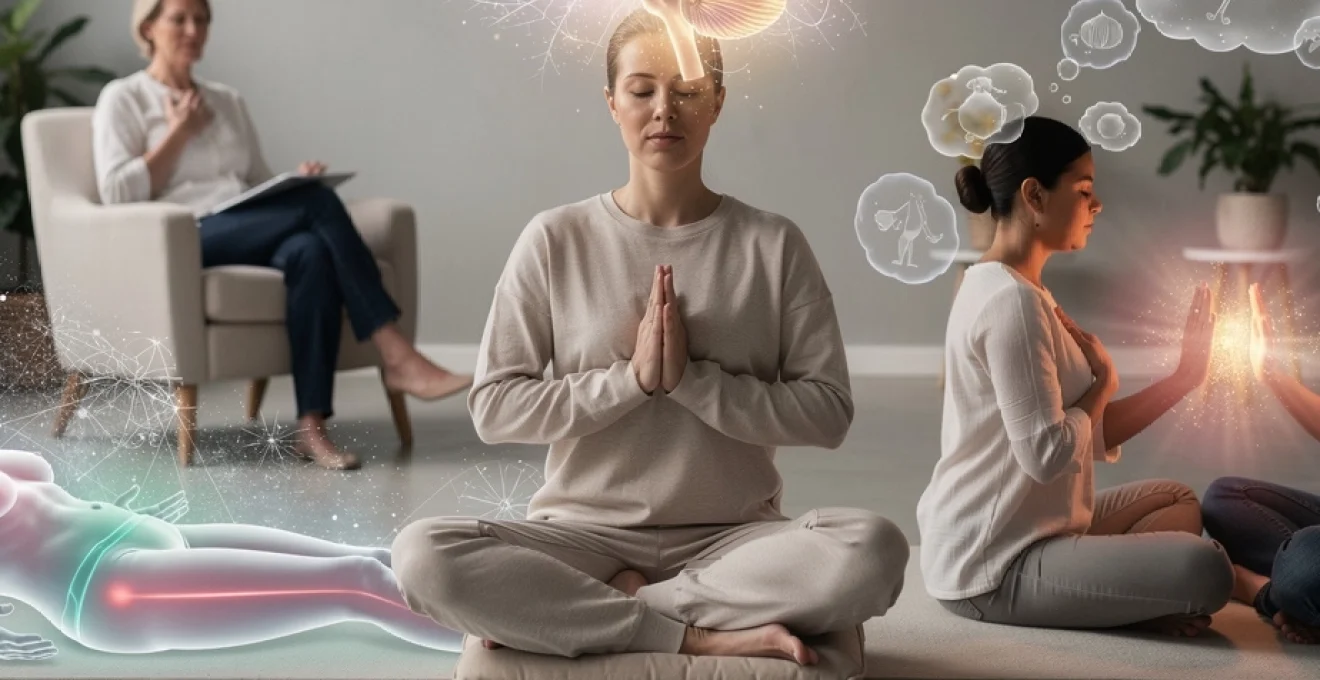
Modern neuroscience has revealed something remarkable: the human brain possesses an extraordinary capacity for change throughout life. This neuroplasticity means that your emotional landscape isn’t fixed—it can be reshaped through intentional practice. Mindfulness, once confined to spiritual traditions, now stands at the intersection of ancient wisdom and contemporary science. Research demonstrates that regular contemplative practice doesn’t merely provide temporary relief from stress; it fundamentally alters brain structure and function, creating lasting improvements in emotional regulation, resilience, and psychological wellbeing. Whether you’re navigating workplace pressures, relationship challenges, or simply seeking greater inner peace, understanding how mindfulness works at a neurological level can transform your approach to mental health.
Neuroscientific foundations of mindfulness and emotional regulation
The relationship between mindfulness and emotional stability isn’t mystical—it’s measurable. Over the past two decades, neuroimaging technology has allowed researchers to observe exactly what happens in the brain during meditation. These findings have revolutionised our understanding of how contemplative practices influence emotional processing, stress responses, and overall mental health. The evidence reveals specific neural pathways that become strengthened or diminished through consistent practice, offering you a roadmap for targeted emotional development.
Prefrontal cortex activation through focused attention meditation
Your prefrontal cortex serves as the brain’s executive control centre, responsible for decision-making, emotional regulation, and rational thought. Focused attention meditation—where you concentrate on a single object such as the breath—consistently activates this crucial region. Studies using functional magnetic resonance imaging (fMRI) show increased blood flow and metabolic activity in the dorsolateral prefrontal cortex during meditation sessions. This activation strengthens your capacity for cognitive control, allowing you to respond thoughtfully rather than react impulsively to emotional triggers. The practice essentially trains your brain to maintain focus despite distractions, a skill that translates directly into emotional stability during challenging situations.
Amygdala deactivation and stress response modulation
The amygdala, often called the brain’s alarm system, triggers your fight-or-flight response when perceiving threats. For individuals experiencing chronic stress or anxiety, this structure becomes hyperactive, leading to exaggerated emotional reactions. Remarkably, regular mindfulness practice reduces both the size and reactivity of the amygdala. Research from Massachusetts General Hospital demonstrated that after just eight weeks of mindfulness training, participants showed decreased amygdala density and reported lower stress levels. This physiological change means you become less reactive to stressors, experiencing greater emotional equilibrium even in genuinely challenging circumstances.
Default mode network disruption in contemplative practice
The default mode network (DMN) activates when your mind wanders, engaging in self-referential thinking and rumination. Whilst this network serves important functions, overactivity correlates with depression, anxiety, and excessive worry. Mindfulness meditation temporarily suppresses DMN activity, reducing the mental chatter that often fuels emotional instability. Advanced practitioners show decreased connectivity within this network even outside meditation, suggesting lasting changes in thought patterns. By disrupting habitual rumination cycles, you create space for healthier emotional processing and reduced preoccupation with past regrets or future anxieties.
Neuroplasticity and grey matter density changes in Long-Term practitioners
Perhaps the most compelling evidence for mindfulness comes from structural brain studies. Long-term meditators exhibit increased grey matter density in regions associated with emotional regulation, self-awareness, and perspective-taking. The hippocampus, crucial for memory and emotional learning, shows particularly notable growth. Conversely, areas associated with stress and anxiety display reduced volume. These aren’t temporary states but permanent structural modifications, demonstrating that your brain physically reorganises itself in response to consistent practice. Research indicates that even modest daily practice—as little as 15-20 minutes—can produce measurable changes within weeks.
Body scan meditation techniques for somatic emotional processing
Emotions don’t exist solely in the mind; they manifest throughout your body as physical sensations. Tightness in the chest, butterflies in the stomach, tension in the shoulders—these somatic expressions carry valuable information
about your internal state. Body scan meditation harnesses this mind–body connection, allowing you to process emotions somatically rather than only cognitively. By systematically moving attention through different regions, you learn to detect subtle cues of stress and emotional activation long before they escalate into overwhelm. Over time, this mindful presence in the body increases emotional stability by giving you earlier warning signs and more options for regulation.
Jon Kabat-Zinn’s progressive awareness protocol
Jon Kabat-Zinn popularised the body scan as a core component of Mindfulness-Based Stress Reduction (MBSR), framing it as a disciplined yet gentle training in awareness. In his progressive awareness protocol, you typically begin at the toes and move upward, or start at the head and move down, resting attention on each region for several breaths. The invitation is not to change sensations but to notice them with curiosity: warmth, pulsing, numbness, tightness, or even the absence of sensation. When the mind wanders—as it inevitably will—you simply acknowledge that and return to the body part you were exploring, reinforcing non-judgmental awareness.
Practically, you can follow a guided recording for 20–45 minutes, especially when starting out, to help maintain a steady rhythm of attention. Kabat-Zinn emphasises adopting an attitude of kindness and patience, as though you were listening carefully to a good friend rather than scanning for problems. This prevents the body scan from becoming a perfectionistic “symptom check” and instead anchors it in present-moment acceptance. Regular practice, even a 10–15 minute shortened version, builds a foundation for better emotional regulation during daily life.
Interoceptive sensitivity enhancement through sequential scanning
At its core, body scan meditation trains interoception—your ability to sense internal bodily states like heartbeat, breath, muscle tone, and visceral sensations. Enhanced interoceptive sensitivity has been linked in research to improved emotional awareness and better decision-making under stress. When you move attention sequentially from one region to another, you gradually fine-tune this internal “radar,” noticing subtle shifts such as the jaw relaxing, the belly softening, or the heart rate slowing. This is similar to upgrading a blurry camera to high definition: the picture of your emotional experience becomes clearer and more nuanced.
You might begin by spending 30–60 seconds on each area—feet, calves, thighs, abdomen, chest, hands, arms, shoulders, neck, face—simply registering whatever you feel. If some parts feel blank, that is information too; numbness can be a common response to chronic tension or unresolved emotion. Over time, you will likely discover consistent patterns, such as tightness before difficult conversations or a fluttering stomach when you feel anxious. Recognising these early signals gives you a valuable window to apply other mindfulness practices—like breathing or grounding—before emotions spiral out of control.
Parasympathetic nervous system activation via diaphragmatic focus
One of the most direct routes to emotional stability is activating the parasympathetic nervous system—the “rest and digest” counterpart of the stress-driven sympathetic system. During a body scan, shifting particular attention to the diaphragm and abdominal region can powerfully support this shift. By gently observing the rise and fall of the belly and allowing the breath to deepen naturally, you stimulate the vagus nerve, which in turn slows heart rate and lowers blood pressure. Studies have shown that even a few minutes of diaphragmatic breathing can reduce cortisol levels and subjective anxiety.
To integrate this into your practice, linger at the abdomen and solar plexus area during the scan. Notice how the breath subtly massages the organs with each inhale and exhale, much like waves repeatedly smoothing sand on a shoreline. You do not need to force deep breathing; instead, you allow the body to find a calmer rhythm as you rest attention there. This parasympathetic activation provides a physiological foundation for emotional balance, making it easier to respond with clarity rather than from a place of panic or urgency.
Tension release mapping for emotional trauma storage areas
Many people discover that certain body regions consistently hold tension that correlates with emotional history—tight hips after years of holding back anger, a constricted throat linked to unspoken words, or a heavy chest associated with grief. Through repeated body scans, you can create an informal “tension map” of where stress and trauma tend to accumulate. This is not about forcing release but about bringing gentle, sustained awareness to these zones, which can gradually soften defensive patterns. Neuroscience suggests that when you pair attention with safety and non-judgment, the nervous system can update old threat responses.
When you encounter an area that feels especially constricted, you might quietly note, “tightness in the chest” or “burning in the stomach,” without adding a story about why it is there. This distinction—describing sensation rather than narrative—prevents re-traumatisation while still allowing processing. Over time, many practitioners report that previously rigid areas begin to feel more spacious, and associated emotions feel less overwhelming. If intense memories or sensations arise, working with a trauma-informed therapist while using body scan techniques can provide additional safety and guidance.
Vipassana and insight meditation for meta-cognitive awareness
While body-focused practices build somatic awareness, Vipassana—or insight meditation—cultivates meta-cognitive awareness: the capacity to observe thoughts and emotions as transient mental events. This shift from “I am my thoughts” to “I am aware of my thoughts” dramatically enhances emotional stability. Instead of being swept away by anger, fear, or sadness, you learn to watch these states arise, unfold, and pass, much like clouds drifting across the sky. Contemporary research shows that this style of open monitoring meditation reduces rumination, improves attentional control, and supports more balanced mood over time.
S.N. goenka’s ten-day intensive retreat methodology
S.N. Goenka played a key role in bringing traditional Vipassana meditation to a global audience through his ten-day residential retreats. These programmes are rigorous: participants follow a structured schedule of around ten hours of meditation per day, maintain silence, and abstain from digital devices and reading. The first days focus on stabilising attention through breathing practices, after which students are guided into systematic observation of bodily sensations and mental states. The intensity creates a kind of “mind laboratory” where patterns that usually remain unconscious become starkly visible.
While such retreats are not feasible for everyone, understanding their methodology can inform home practice. Goenka emphasised direct experiential learning: rather than analysing emotions intellectually, you repeatedly observe their sensory imprint and natural impermanence. This immersion accelerates insight into how craving, aversion, and ignorance fuel suffering, and how mindful observation loosens their grip. Even shorter, self-directed retreats—such as a weekend with reduced external stimulation and increased meditation time—can offer a taste of this deep reset for emotional regulation.
Noting practice and labelling techniques for thought observation
One of the most accessible insight tools is “noting,” a simple labelling technique where you silently name categories of experience as they arise—“thinking,” “hearing,” “planning,” “sadness,” “worrying.” This practice acts like a soft mental tap on the shoulder, reminding you that you are the observer rather than the content of your mind. Studies on open monitoring meditation suggest that this kind of meta-labeling reduces automatic identification with thoughts and lowers emotional reactivity. In everyday terms, it is the difference between being lost in a movie and remembering you are sitting in the cinema watching a screen.
You can start with just five to ten minutes a day, sitting quietly and noticing whatever comes up. When a thought appears—about work, relationships, or even the meditation itself—you gently apply a brief label and return to bare awareness. There is no need to get the label “right”; its function is to create psychological distance. Over weeks, you may notice that repetitive thought loops lose some of their intensity, making it easier to step back from anxiety spirals or self-critical narratives before they dominate your mood.
Impermanence recognition through anicca contemplation
A core insight in Vipassana is Anicca, the recognition that all conditioned phenomena—sensations, thoughts, emotions—are impermanent. From an emotional stability perspective, this realisation is profoundly liberating. When you see, firsthand, that even intense anger or deep sadness naturally changes, it becomes easier to ride out difficult states without panic. You begin to trust that “this, too, shall pass” is not just a comforting phrase but a direct description of how your nervous system operates.
In practice, Anicca contemplation involves closely tracking the arising and fading of experiences in real time. You might notice a wave of frustration as heat in the face and pressure in the chest, watch it swell, peak, and then gradually dissipate. This process is akin to watching a storm roll through and clear the sky, rather than assuming bad weather will last forever. Over time, the insight into impermanence erodes the tendency to cling to pleasant states or resist unpleasant ones, both of which fuel emotional turbulence.
Equanimity development using non-reactive witnessing
Equanimity—calm, balanced presence amid changing conditions—is one of the most valuable outcomes of insight meditation for emotional stability. It does not mean indifference or suppression; rather, it is the capacity to allow experiences to unfold without compulsive interference. In Vipassana, you cultivate equanimity by repeatedly practising non-reactive witnessing: observing pleasant, unpleasant, and neutral sensations with the same open curiosity. Each time you refrain from automatically grasping or pushing away, you strengthen neural pathways associated with regulation and resilience.
Think of equanimity as the deep ocean beneath surface waves. Storms may whip up choppy water above, but the depths remain relatively undisturbed. Through consistent practice, you begin to experience yourself more as that depth than as the surface turbulence. This inner stability does not eliminate emotional waves, but it transforms your relationship to them—you can feel fully, yet remain grounded. Over months and years, this becomes a powerful buffer against anxiety, mood swings, and reactivity in relationships.
Loving-kindness meditation and compassion-focused practices
Where insight practices emphasise clarity and non-attachment, loving-kindness and compassion meditations focus on warmth, connection, and goodwill—qualities strongly linked to emotional resilience. Research indicates that compassion-focused practices can increase positive affect, reduce self-criticism, and enhance social connectedness, all of which support better emotional stability. By intentionally generating kind wishes for yourself and others, you counterbalance the brain’s negativity bias and create a more supportive inner dialogue.
Metta bhavana four-stage progression for self-compassion
Metta Bhavana, or the cultivation of loving-kindness, is often taught in progressive stages. A common four-stage structure begins with directing kind wishes toward yourself, then toward a loved one, then toward a neutral person, and finally toward a difficult person or broader groups of beings. This gradual widening of the circle mirrors how emotional stability grows: you first establish a base of self-compassion, then extend steadiness into increasingly challenging relational contexts. Without that initial foundation, it is easy to slip into burnout or resentment when caring for others.
During practice, you silently repeat phrases such as “May I be safe; may I be healthy; may I be at ease,” gently synchronising them with the breath. At first, these words may feel mechanical or even uncomfortable, especially if you are used to a harsh inner critic. Over time, however, they begin to shape your emotional landscape, much like regular watering nourishes a plant. As self-directed hostility softens, you may notice less shame, more emotional flexibility, and a greater capacity to recover from setbacks.
Tonglen breathing exercises for emotional transmutation
Tonglen, a Tibetan compassion practice, offers a strikingly different approach to difficult emotions: instead of pushing away pain—your own or others’—you symbolically breathe it in and send out relief. On the in-breath, you imagine taking in suffering as dark, heavy energy; on the out-breath, you visualize exhaling light, ease, or kindness. At first glance, this may sound counterintuitive—why invite suffering in? Psychologically, however, Tonglen reverses the instinctive contraction around pain and replaces it with openness and courage.
From an emotional stability perspective, Tonglen can be profoundly empowering. Rather than feeling helpless in the face of your own anxiety or others’ distress, you engage with it creatively and compassionately. You might, for example, breathe in your own fear about a difficult conversation and breathe out clarity and strength for yourself and anyone in a similar situation. This alchemical framing—turning “lead” into “gold”—can transform how you relate to challenging states, reducing avoidance and building emotional bravery.
Oxytocin release and social connection enhancement
Compassion-focused meditations are not only psychologically soothing; they also have measurable physiological effects. Studies suggest that practices like loving-kindness can increase levels of oxytocin, sometimes called the “bonding hormone,” which supports feelings of trust and social safety. Elevated oxytocin, in turn, is associated with lower stress reactivity and improved cardiovascular function, both of which contribute to emotional balance. In simple terms, cultivating goodwill in your mind can literally change your body chemistry in ways that make connection and calm more accessible.
Moreover, these practices subtly shift how you perceive others in daily life. You may find yourself less quick to judge and more inclined to interpret behaviours through a lens of shared humanity rather than personal attack. This reduces interpersonal friction—one of the major sources of emotional instability for many people. Over time, a virtuous cycle emerges: greater inner kindness leads to smoother relationships, which further supports emotional wellbeing.
Sharon salzberg’s guided phrases for difficult emotions
Teacher Sharon Salzberg has popularised user-friendly, secular versions of loving-kindness meditation, with particular attention to working with difficult emotions. She often suggests adapting classic Metta phrases to address what you are going through right now. For instance, if you are feeling overwhelmed, you might use, “May I feel supported; may I feel strong enough to face what arises; may I hold this with kindness.” These targeted phrases act like emotional first aid, offering a container of compassion when you most need it.
Salzberg also emphasises that loving-kindness is not about forcing yourself to feel a certain way but about planting seeds of intention. On days when tenderness feels inaccessible, you are simply rehearsing the wish for wellbeing, which in itself can reduce self-blame. Over weeks and months, these repeated intentions start to reshape habitual patterns of criticism and defensiveness. The result is a more stable baseline of warmth toward yourself and others, which cushions the impact of life’s inevitable challenges.
Mindful movement practices for embodied emotional integration
Sitting meditation is powerful, but for many people, incorporating mindful movement practices provides an essential bridge between inner awareness and daily functioning. Techniques like yoga, Qigong, and Tai Chi integrate breath, posture, and attention, promoting both physical health and emotional regulation. Movement-based mindfulness is especially helpful if you feel restless, dissociated from the body, or find it difficult to sit still for long periods. By engaging muscles and joints while maintaining present-moment awareness, you literally “work” emotional insight into the fabric of your nervous system.
Hatha yoga asanas for vagal tone improvement
Hatha yoga, with its focus on postures (asanas) and breath control, has been extensively studied for its effects on the autonomic nervous system. Certain poses—such as gentle twists, forward folds, and supported backbends—are thought to stimulate the vagus nerve and improve vagal tone, a key marker of stress resilience. Higher vagal tone is associated with quicker recovery from stress, greater heart rate variability, and more adaptive emotional responses. In practice, this means you can return to baseline more quickly after upsetting events.
A simple sequence for emotional stability might include cat-cow pose to mobilise the spine, child’s pose for grounding, and legs-up-the-wall for relaxation. Throughout, you maintain mindful awareness of sensations and breath, noticing how each posture affects your internal state. Rather than treating yoga as purely physical exercise, you approach it as a moving meditation, using each inhale and exhale to anchor attention. Over time, this combination of muscular engagement and parasympathetic activation can significantly enhance your capacity to self-soothe.
Qigong energy circulation for emotional blockage release
Qigong, a traditional Chinese practice, views emotional disturbance as closely linked to disruptions in the flow of qi or life energy. From a modern perspective, Qigong’s slow, rhythmic movements, coordinated with breath and focused attention, promote relaxation, balance, and body awareness. Many practitioners report that regular Qigong helps dissolve feelings of stagnation or emotional “stuckness,” especially around the chest and abdomen. You might think of it as gently shaking a snow globe; as the flakes resettle, the scene becomes clearer and more harmonious.
Common Qigong sequences for emotional balance include exercises like “Opening the Chest,” “Lifting the Sky,” or “Washing the Heart,” each designed to circulate energy through specific meridians associated with mood regulation. Whether or not you subscribe to the traditional energy model, the combination of deep breathing, intentional movement, and focused awareness clearly benefits the nervous system. Clinical studies have found Qigong can reduce symptoms of anxiety and depression, making it a valuable complement to more cognitive mindfulness practices.
Tai chi slow-motion sequences for anxiety reduction
Tai Chi, sometimes described as “meditation in motion,” features continuous, flowing sequences performed at a slow, deliberate pace. This style of movement demands sustained attention to posture, weight shifts, and breath, naturally quieting mental chatter. Research indicates that regular Tai Chi practice can significantly reduce anxiety, improve sleep quality, and enhance overall wellbeing, particularly in older adults and individuals with chronic health conditions. The slow tempo acts like a counterweight to the speed and fragmentation of modern life.
As you move through a sequence—stepping, turning, extending the arms—you are invited to feel the contact of your feet with the ground and the subtle adjustments of balance. Anxiety often pulls awareness into the future, but Tai Chi repeatedly returns you to the exact coordination required in this moment. Over time, this embodied presence can translate into daily life: when stress spikes, you may find it easier to slow down internally, breathe, and respond from a centred place rather than reacting impulsively.
Clinical applications and evidence-based mindfulness interventions
Beyond individual practice, mindfulness has been systematically integrated into clinical psychology and psychiatry over the last three decades. Evidence-based interventions now form a bridge between contemplative traditions and modern therapy, offering structured pathways to improve emotional regulation, reduce relapse, and enhance quality of life. These programmes are typically manualised, time-limited, and supported by robust research, making them accessible options if you prefer guided support or are dealing with significant mental health challenges.
Mindfulness-based stress reduction eight-week protocol outcomes
Mindfulness-Based Stress Reduction (MBSR), developed by Jon Kabat-Zinn in the late 1970s, is one of the most studied mindfulness programmes worldwide. The standard eight-week protocol includes weekly group sessions, daily home practice of meditation and yoga, and a one-day retreat. Numerous clinical trials have shown that MBSR can reduce perceived stress, anxiety, depressive symptoms, and even physical pain. Importantly for emotional stability, participants often report greater self-awareness, improved coping strategies, and a more balanced relationship with difficult emotions.
From a practical standpoint, the structured nature of MBSR can help you build a sustainable habit: you commit to a clear schedule, receive guidance from a trained instructor, and benefit from group support. If you struggle to maintain consistency on your own, enrolling in such a programme can create accountability and momentum. While outcomes vary, meta-analyses suggest moderate effect sizes across a range of conditions, making MBSR a solid, evidence-backed starting point for integrating mindfulness into mental health treatment.
Dialectical behaviour therapy mindfulness module integration
Dialectical Behaviour Therapy (DBT), originally developed for individuals with borderline personality disorder and chronic suicidality, places mindfulness at the core of its skills training. The DBT mindfulness module teaches specific practices such as “observing,” “describing,” and “participating” in the present moment, along with the “what” and “how” skills of non-judgmental awareness. These tools are designed to stabilise intense emotions, reduce impulsive behaviours, and enhance interpersonal effectiveness. For people who experience emotions like emotional “whiplash,” this structure can be life-changing.
DBT’s approach is highly pragmatic: mindfulness exercises are brief, concrete, and closely tied to real-world scenarios. For example, you might learn to ground yourself with five senses awareness during a conflict, or to “ride the wave” of a craving without acting on it. The combination of mindfulness with behavioural strategies, distress tolerance, and emotion regulation skills makes DBT particularly effective for complex emotional dysregulation. Even if you do not participate in full DBT, borrowing its mindfulness tools can provide a practical framework for everyday stability.
Acceptance and commitment therapy psychological flexibility training
Acceptance and Commitment Therapy (ACT) integrates mindfulness with values-based action to cultivate psychological flexibility—the ability to stay present, open up to experience, and take meaningful action even when emotions are challenging. Rather than trying to eliminate distressing thoughts or feelings, ACT helps you change your relationship to them through defusion techniques, acceptance practices, and self-as-context exercises. Research indicates that higher psychological flexibility is strongly associated with better mental health and lower emotional volatility.
In ACT, mindfulness shows up in everyday, accessible forms: noticing thoughts as passing words or images; feeling anxiety as physical sensations while still moving toward what matters; observing yourself as the “container” of experiences rather than being defined by them. This approach is especially helpful if you tend to get stuck in avoidance—putting off important conversations, numbing out, or shrinking your life to manage fear. By practising acceptance and mindful presence, you build the resilience to feel fully and still choose actions aligned with your deeper values.
Mindfulness-based cognitive therapy for depression relapse prevention
Mindfulness-Based Cognitive Therapy (MBCT) was specifically designed to prevent relapse in individuals with recurrent major depression. It combines elements of cognitive therapy—such as recognising negative thought patterns—with mindfulness practices that cultivate a decentered stance toward those thoughts. Large-scale studies have shown that MBCT can reduce the risk of depressive relapse by up to 43% for people with multiple prior episodes, particularly when they continue to use the skills after the programme ends. The key mechanism is learning to see early warning signs of low mood and respond skilfully before a full episode takes hold.
In MBCT, you practise short meditations, body scans, and mindful movement while also examining how certain thinking styles—like catastrophising or overgeneralisation—feed into depressive spirals. Instead of trying to dispute every negative thought, you learn to acknowledge them as mental events that do not require automatic belief or action. This shift from “I am a failure” to “I am noticing the thought that I am a failure” may sound subtle, but it significantly reduces the emotional impact of such cognitions. Over time, this mindful distance supports a more stable mood and greater confidence in your ability to navigate emotional ups and downs.