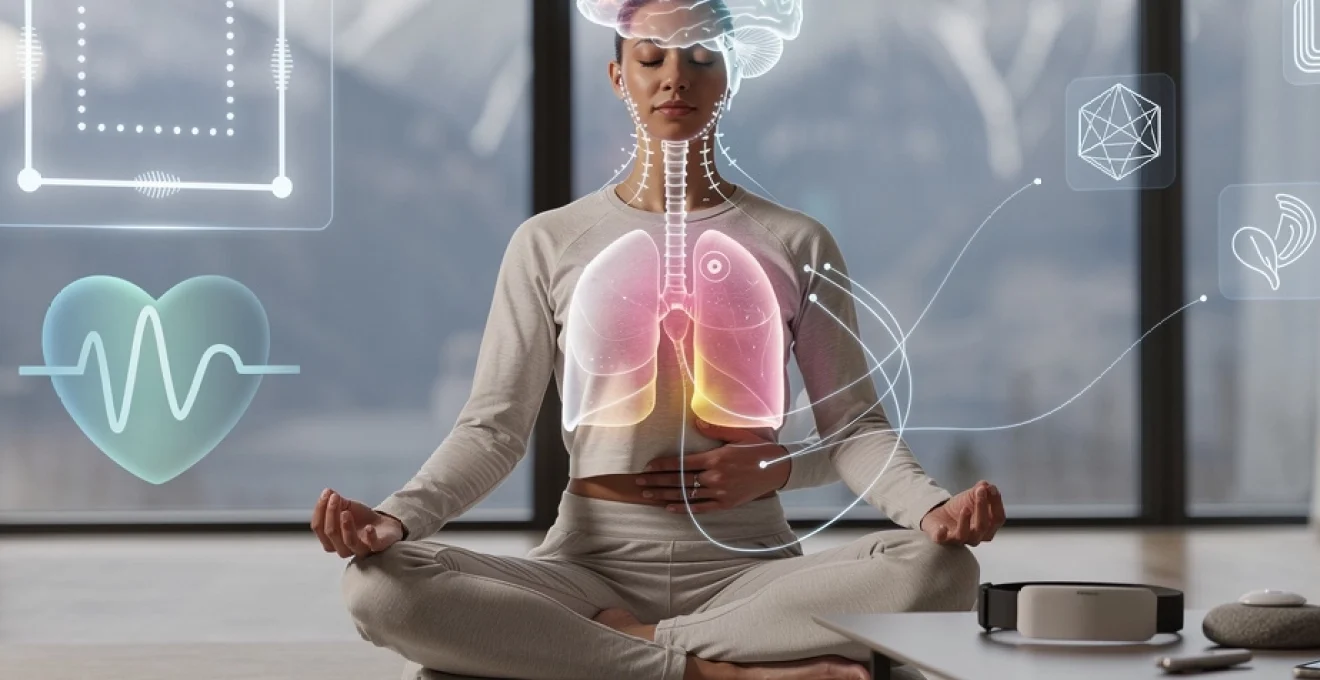
Modern life presents unprecedented challenges to our mental and physical well-being, with stress levels reaching alarming heights across all demographics. The ancient practice of controlled breathing offers a scientifically-backed solution that requires no equipment, costs nothing, and can be implemented anywhere at any time. Research consistently demonstrates that specific breathing techniques can dramatically alter physiological states, reduce cortisol production, and enhance cognitive performance within minutes of application.
The autonomic nervous system governs our body’s involuntary functions, including heart rate, blood pressure, and respiratory patterns. Through deliberate manipulation of breathing patterns, you can directly influence this system, shifting from sympathetic dominance (fight-or-flight) to parasympathetic activation (rest-and-digest). This physiological transformation creates profound effects on stress reduction, mental clarity, and overall health outcomes.
Diaphragmatic breathing mechanics and physiological foundations
Diaphragmatic breathing represents the foundation of all effective breathing practices, yet most individuals breathe inefficiently using only their chest muscles. The diaphragm, a dome-shaped muscle located beneath the lungs, should perform approximately 80% of breathing work during normal respiration. When functioning optimally, this muscle creates a bellows-like action that maximises lung capacity and promotes efficient oxygen exchange.
Proper diaphragmatic breathing involves the expansion of the abdomen during inhalation, followed by gentle contraction during exhalation. This mechanical process creates negative pressure within the thoracic cavity, drawing air deep into the lower lobes of the lungs where gas exchange occurs most efficiently. The lower lung regions contain the highest concentration of blood vessels, making deep abdominal breathing significantly more effective than shallow chest breathing.
Parasympathetic nervous system activation through vagal stimulation
The vagus nerve, the longest cranial nerve in the body, plays a crucial role in parasympathetic nervous system activation. Controlled breathing patterns stimulate vagal tone, triggering a cascade of physiological responses that promote relaxation and reduce stress hormone production. Enhanced vagal tone correlates with improved heart rate variability, better emotional regulation, and increased resilience to stressors.
Research indicates that slow, rhythmic breathing at rates between 4-6 breaths per minute optimally stimulates the vagus nerve. This breathing frequency synchronises with natural heart rate variability patterns, creating a state known as coherence. Regular vagal stimulation through breathing exercises can lead to long-term improvements in autonomic function and stress resilience.
Respiratory rate optimisation for heart rate variability enhancement
Heart rate variability (HRV) represents the variation in time intervals between successive heartbeats, serving as a key indicator of autonomic nervous system balance and overall health. Higher HRV correlates with better stress resilience, improved cognitive function, and enhanced emotional regulation. Breathing techniques directly influence HRV patterns through respiratory sinus arrhythmia, the natural variation in heart rate that occurs during breathing cycles.
Optimal breathing rates for HRV enhancement typically range from 4.5 to 6.5 breaths per minute, depending on individual physiology. This frequency range maximises the amplitude of heart rate oscillations, creating coherent patterns between heart rate, blood pressure, and respiratory rhythms. Consistent practice at these frequencies can retrain the autonomic nervous system to maintain healthier baseline patterns.
Intercostal muscle coordination and thoracic expansion patterns
The intercostal muscles, located between the ribs, work in coordination with the diaphragm to facilitate optimal breathing mechanics. During inspiration, external intercostal muscles contract to lift and expand the rib cage, creating additional space for lung expansion. Internal intercostal muscles assist during forced expiration by pulling the ribs downward and inward.
Dysfunction in intercostal muscle coordination often results from chronic stress, poor posture, or respiratory muscle fatigue. This dysfunction leads to compensatory breathing patterns using accessory muscles in the neck and shoulders, creating tension and reducing breathing efficiency. Targeted breathing exercises can restore proper intercostal function and improve overall respiratory mechanics.
Oxygen saturation levels and cellular metabolic efficiency
Optimal breathing techniques enhance oxygen saturation while simultaneously improving carbon dioxide
Optimal breathing techniques enhance oxygen saturation while simultaneously improving carbon dioxide retention within healthy ranges, which is essential for cellular metabolic efficiency. Contrary to popular belief, over-breathing or chronic hyperventilation can actually reduce oxygen delivery to tissues through the Bohr effect, where low carbon dioxide levels cause haemoglobin to hold on to oxygen more tightly. Diaphragmatic breathing encourages slower, more efficient respiratory patterns that stabilise carbon dioxide levels and optimise the release of oxygen where it is needed most. Over time, this balanced gas exchange supports mitochondrial function, improves energy production, and can reduce sensations of fatigue and brain fog. By cultivating awareness of your breath and avoiding habitual rapid, shallow breathing, you create a biochemical environment that supports both calm and sustained focus.
Ancient pranayama techniques for cognitive performance enhancement
Beyond basic diaphragmatic breathing, ancient pranayama techniques offer targeted methods to enhance focus, memory, and mental clarity. These breathing practices were refined over centuries in yoga and meditation traditions and are now being examined through the lens of neuroscience and psychophysiology. While the names may sound exotic, the underlying principles are straightforward: alter the rhythm, depth, or pathway of the breath to shift brain states. You can think of each pranayama as a different “dial” on your nervous system, allowing you to tune into relaxation, alertness, or balanced concentration. When practised consistently, these techniques can become powerful tools for improving cognitive performance in demanding modern environments.
Ujjayi breathing protocol for sustained attention and mental clarity
Ujjayi breathing, often called “ocean breath,” involves slightly constricting the back of the throat to create a soft, audible sound on both the inhale and exhale. This gentle constriction increases airway resistance, slowing the breath and lengthening each respiratory cycle. The result is a smooth, steady flow of air that can anchor your attention and reduce mind wandering during tasks that require sustained focus. Many practitioners describe Ujjayi as a built-in metronome, providing a rhythmic cue that keeps them present in the moment.
To practise Ujjayi breathing for mental clarity, sit upright with a neutral spine and begin with a few diaphragmatic breaths. On your next inhale, slightly narrow the glottis (the opening in the throat) as if you were fogging a mirror with your mouth closed, creating a soft “h” sound. Maintain this gentle resistance as you exhale, again producing a quiet ocean-like sound, and keep the breath flowing through your nose. Aim for a comfortable pattern such as a 4-count inhale and 6-count exhale, continuing for 5–10 minutes while you observe the sound and sensation of the breath. This deliberate, textured breathing increases vagal tone, promotes alpha brainwave activity, and can be especially helpful before deep work sessions or intensive study.
Alternate nostril breathing (nadi shodhana) for hemispheric brain balance
Alternate nostril breathing, or Nadi Shodhana, is traditionally described as a method to balance the body’s energy channels, but contemporary interpretations suggest it may also influence hemispheric brain activity. Early EEG research indicates that nasal dominance—the side through which you breathe more freely—may be linked to lateralised brain function, with shifts in airflow correlating to changes in cognitive performance. By deliberately alternating airflow between nostrils, Nadi Shodhana may help harmonise activity between the left and right hemispheres, supporting more integrated thinking and emotional balance.
To perform Nadi Shodhana, sit comfortably with your spine tall and shoulders relaxed. Using your right hand, fold the index and middle fingers toward the palm, leaving the thumb and ring finger free. Gently close your right nostril with your thumb and inhale through the left nostril for a count of four. At the top of the inhale, close the left nostril with your ring finger, release the thumb, and exhale through the right nostril for a count of four. Inhale through the right nostril, then switch again and exhale through the left—this completes one cycle. Continue for 5–10 minutes at a slow, even pace. Many people find that this alternate nostril technique produces a sense of calm alertness, making it an ideal breathing technique for relaxation and focus before presentations, exams, or creative work.
Kapalabhati rapid breathing for prefrontal cortex activation
Kapalabhati, often translated as “shining skull breath,” is a more stimulating pranayama that uses rapid, forceful exhalations to energise the nervous system. Rather than a passive inhale and active exhale, Kapalabhati emphasises quick, abdominally driven out-breaths with relaxed in-breaths that follow naturally. This pattern increases ventilation, briefly elevates carbon dioxide clearance, and produces a noticeable surge in alertness. Emerging research suggests that such activating breathing exercises may influence prefrontal cortex function, which underpins executive skills like planning, decision-making, and working memory.
Because of its intensity, Kapalabhati should be approached with respect and avoided by individuals with cardiovascular disease, uncontrolled hypertension, pregnancy, or certain respiratory conditions. To try a gentle version, sit upright and take a few slow, diaphragmatic breaths. Then begin a series of short, sharp exhalations through the nose, powered by a quick contraction of the lower abdomen, allowing the inhale to rebound automatically. Start with 20 pulses, rest with normal breathing for 30–60 seconds, and repeat for 2–3 rounds if you feel comfortable. Used sparingly, this rapid breathing technique can serve as a natural alternative to a second cup of coffee when you need a burst of focus, but it is not designed as a relaxation method.
Bhramari humming breath for default mode network regulation
Bhramari, or humming bee breath, incorporates a prolonged humming sound on the exhale that produces vibration in the skull and facial bones. This vibration stimulates branches of the vagus nerve as well as the parasympathetic fibres in the face and ears. Studies on humming have shown significant increases in nasal nitric oxide production and reductions in heart rate and blood pressure, markers associated with a shift into a relaxed physiological state. From a neuroscience perspective, the monotone sound and focused attention can also reduce activity in the default mode network (DMN), the brain system linked to rumination and self-referential thinking.
To practise Bhramari, sit comfortably, close your eyes, and take a few deep breaths through the nose. On your next exhale, keep your lips gently closed and produce a steady, low-pitched “mmmm” sound, feeling the vibration in your cheeks, lips, and skull. You can optionally place your index fingers on the cartilage in front of your ear canals to gently reduce external noise and enhance internal resonance. Inhale normally through the nose and repeat the humming exhale for 6–10 cycles. Many people notice that anxious or repetitive thoughts quieten after just a few minutes of this humming breath, making Bhramari a valuable breathing technique for sleep preparation or winding down after intense mental effort.
Box breathing and Military-Grade stress management applications
Box breathing, also known as four-square breathing, has been adopted by military personnel, first responders, and high-performance athletes as a rapid method for regaining control under pressure. The technique divides the breath into four equal phases—inhalation, breath retention, exhalation, and a second retention—each typically lasting four seconds. This simple structure creates a predictable rhythm that counteracts the chaotic physiological patterns associated with acute stress. By deliberately slowing and equalising each phase of the breath, you send a powerful signal to the nervous system that the immediate threat has passed.
In operational settings, such as special forces training or emergency medicine, practitioners report using box breathing before entering high-risk situations or immediately after a surge of adrenaline. You can integrate this breathing technique for stress relief into your own life whenever you feel overwhelmed—before a difficult conversation, while stuck in traffic, or after receiving challenging news. To practise, inhale through the nose for a count of four, hold the breath for four, exhale gently through the mouth for four, and pause with empty lungs for four before beginning the next cycle. Even 2–3 minutes of this structured breathing can reduce heart rate, improve reaction times, and restore cognitive flexibility, allowing you to respond rather than react.
Wim hof method cold exposure integration with controlled hyperventilation
The Wim Hof Method combines deliberate hyperventilation, breath retention, and cold exposure to induce profound shifts in autonomic function and perceived stress. During the controlled breathing phase, you perform 30–40 deep, rapid breaths, followed by a prolonged exhale and breath hold. This sequence acutely lowers carbon dioxide levels and increases blood alkalinity, sensations often described as lightness, tingling, or altered bodily awareness. When followed by cold immersion or cold showers, practitioners report heightened alertness, improved mood, and increased tolerance to physical and psychological stressors.
Scientific studies on the Wim Hof Method have shown intriguing effects on immune response and inflammatory markers, suggesting that trained individuals can voluntarily influence aspects of the autonomic nervous system once thought to be automatic. However, because this method involves controlled hyperventilation and breath retention, there are important safety considerations. It should never be practised in or near water, while driving, or in situations where a loss of consciousness would be dangerous. If you are curious about using this breathing technique to enhance focus and resilience, start under qualified guidance, listen closely to your body, and consult a healthcare professional if you have cardiovascular, neurological, or respiratory conditions. For many, a milder adaptation—slower deep breathing followed by a short cool shower—provides a safer way to access some of the energising benefits.
Biofeedback technology integration for breath pattern optimisation
While traditional approaches rely on internal awareness, modern biofeedback technologies allow you to see how breathing techniques affect your physiology in real time. Devices that track heart rate variability, respiratory rate, and even brainwave patterns can accelerate your learning curve by providing immediate, objective feedback. Instead of guessing whether your breathing technique for relaxation is working, you can observe tangible changes on a screen or in an app. This combination of ancient breathwork and contemporary sensors creates a powerful loop: you adjust your breathing, watch your metrics respond, and refine your technique for maximum effect.
Heartmath coherence training devices for Real-Time HRV monitoring
HeartMath devices, such as the Inner Balance sensor, measure heart rate variability and translate it into a simple coherence score. When you breathe at your individual “resonance frequency”—often around 5–6 breaths per minute—your heart rhythm forms a smooth, sine-wave pattern associated with emotional stability and cognitive flexibility. The HeartMath system guides you toward this pattern with visual or auditory cues, helping you synchronise your breathing, heart, and emotions. Over time, users often report improved stress management, better sleep, and enhanced performance under pressure.
To use HeartMath for breathing pattern optimisation, you typically clip a sensor to your ear or finger and open a companion app. The app provides immediate feedback as you practise slow, diaphragmatic breathing, showing when you enter a state of “coherence.” This can be especially motivating if you enjoy measurable progress and want to track the impact of your daily breathing practice. Instead of relying solely on how you feel, you can see objective improvements in HRV, giving you confidence that your breathing routine is strengthening your nervous system’s capacity to handle stress.
Spire stone wearable technology for respiratory pattern analysis
The Spire Stone and similar wearables focus primarily on respiratory patterns, monitoring how fast and how deeply you breathe throughout the day. Worn at the waistband or clipped to clothing, these devices use accelerometers and other sensors to detect subtle movements of the torso associated with inhalation and exhalation. When your breathing becomes rapid or irregular—a common sign of rising stress—they can send gentle vibrations or notifications, prompting you to pause and reset with a calming breathing technique. This real-time nudge helps you catch stress patterns earlier, before they escalate into full-blown anxiety or fatigue.
Reviewing your respiratory data over time can reveal surprising insights. You might notice, for example, that your breathing becomes shallow during long video calls, intense email sessions, or late-night screen time. Armed with this awareness, you can plan short breaks for diaphragmatic breathing or box breathing at predictable stress points in your schedule. In this way, technology turns your everyday life into an ongoing laboratory for breath awareness, supporting a more consistent and effective relaxation and focus routine.
Muse headband EEG feedback during meditation breathing sessions
The Muse headband measures brain activity via EEG sensors and translates it into simple audio feedback that reflects your mental state. When your brain is busy and distracted, you might hear stormy sounds; as your mind quiets, the audio shifts to calmer weather. Combining Muse with structured breathing techniques—such as Ujjayi, Nadi Shodhana, or resonant breathing—allows you to see how specific patterns of breath influence your brain’s transition from beta (active thinking) to alpha and theta (relaxed, meditative states). This makes the invisible process of mental settling more concrete and trainable.
For example, you might begin a Muse session with a few minutes of fast, shallow breathing and notice a noisy, agitated soundscape. Then, by shifting to slow, diaphragmatic breaths at six breaths per minute, you may watch (and hear) the environment gradually calm as your brain activity changes. Over repeated sessions, you learn which breathing techniques most reliably move you into a state of focused relaxation. This data-driven approach can be particularly appealing if you find traditional meditation challenging, as it offers a clear, external indicator that your efforts are working.
Breathwrk app Algorithm-Based personalised breathing programme development
Apps such as Breathwrk use algorithms and user feedback to create personalised breathing programmes tailored to your goals—whether that’s better sleep, reduced anxiety, or sharper concentration. After answering a few questions about your stress levels, energy patterns, and health status, you receive curated sessions that guide you through specific techniques like box breathing, 4-7-8 breathing, or energising breath holds. Visual timers, animations, and sound cues make it easy to follow along, even if you are new to breathwork. Over time, the app can adapt based on your usage and ratings, suggesting new breathing exercises as your tolerance and skill improve.
One practical way to use such an app is to schedule short breathing “micro-sessions” throughout the day, such as a 3-minute focus protocol before work, a 5-minute stress relief session after lunch, and a calming technique before bed. This structured approach helps embed breathing techniques into your daily routine, transforming them from occasional tools into a consistent wellness practice. By tracking streaks and session durations, the app also leverages behavioural psychology principles—such as habit formation and reward—to keep you engaged for the long term.
Buteyko method carbon dioxide tolerance training for respiratory efficiency
The Buteyko Method takes a different perspective on breathing by emphasising reduced breathing volume and increased carbon dioxide tolerance. Developed by Ukrainian physician Konstantin Buteyko in the mid-20th century, the method is based on the idea that chronic over-breathing contributes to a wide range of symptoms, from anxiety to asthma. By training yourself to breathe more quietly, lightly, and predominantly through the nose, you gradually increase your comfort with higher carbon dioxide levels in the blood. This, in turn, improves oxygen delivery to tissues via the Bohr effect and can lead to a calmer, more stable nervous system.
Typical Buteyko exercises include nasal breathing during rest and low-intensity activity, brief breath holds after exhalation, and conscious reduction of breath volume while maintaining comfort. A common assessment tool in this method is the “control pause,” where you exhale normally, pinch your nose, and hold your breath until you feel the first clear urge to breathe. Over weeks or months of training, many practitioners see this interval increase, suggesting greater carbon dioxide tolerance and more efficient breathing. Because reduced breathing and breath holds can be challenging for some individuals, especially those with cardiovascular or respiratory conditions, it is advisable to work with a qualified Buteyko practitioner or consult your healthcare provider before undertaking intensive practice.
Incorporating elements of the Buteyko Method into your daily life can be as simple as closing your mouth during gentle exercise, avoiding heavy sighing and mouth breathing at rest, and taking short “mini pauses” after exhalation a few times per day. These subtle shifts encourage a quieter, more economical breathing pattern that supports both relaxation and focus. Over time, you may notice that you feel less breathless during exertion, sleep more soundly, and experience fewer episodes of anxiety or panic linked to rapid, shallow breathing. By learning to do more with less air, you enhance the overall efficiency of your respiratory system and create a stable foundation for all other breathing techniques you choose to explore.