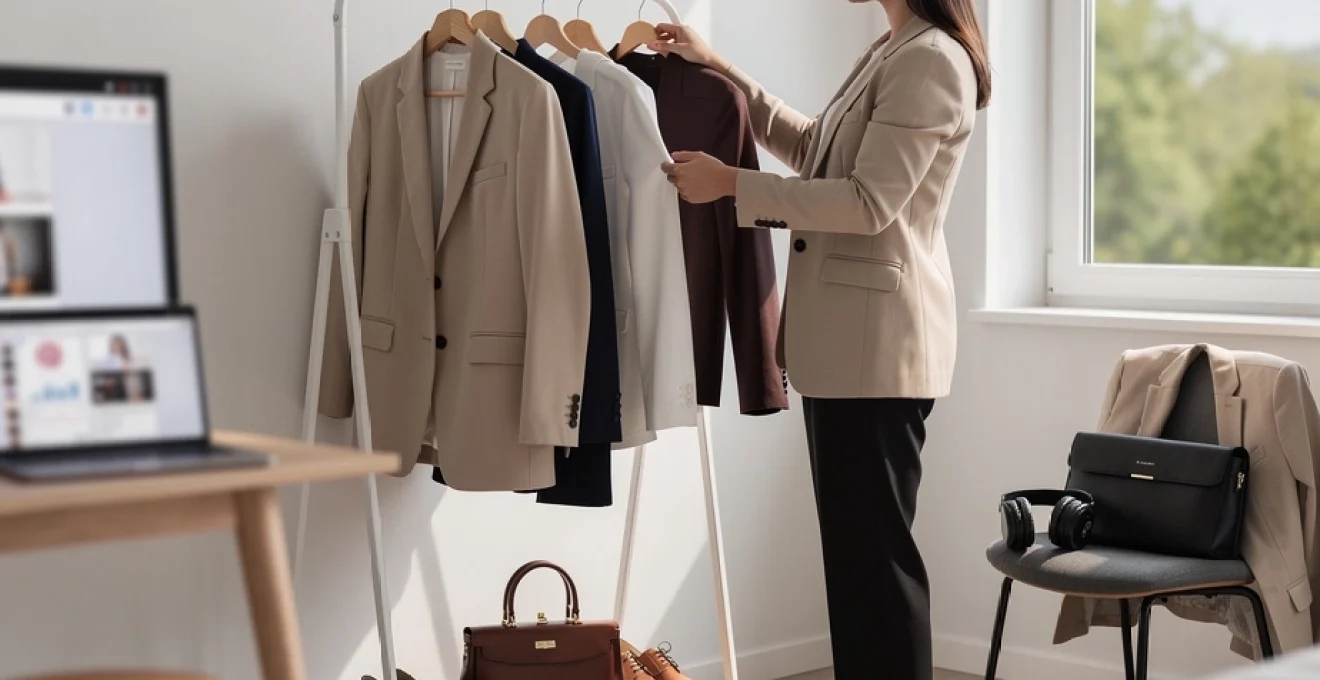
The fashion landscape is experiencing a profound transformation as consumers increasingly embrace the concept of capsule wardrobes. This shift represents more than just a temporary trend; it reflects a fundamental change in how people approach clothing consumption, personal style, and lifestyle choices. The concept, which involves curating a small collection of versatile, high-quality garments that can be mixed and matched effortlessly, has gained remarkable traction across demographics and socioeconomic groups. From busy professionals seeking efficiency in their daily routines to environmentally conscious consumers prioritising sustainability, capsule wardrobes offer a compelling solution to modern wardrobe challenges. This growing popularity stems from various interconnected factors, including economic pressures, psychological benefits, digital influence, and heightened environmental awareness that collectively drive this fashion revolution.
Psychological drivers behind capsule wardrobe adoption
The human brain processes thousands of decisions daily, creating what psychologists term “decision fatigue” – a phenomenon that significantly impacts our cognitive resources and overall well-being. When faced with overstuffed wardrobes containing numerous options, individuals often experience overwhelming choice paralysis that can transform the simple act of getting dressed into a stressful ordeal. Research indicates that the average person spends approximately 14 minutes each morning deciding what to wear, time that could be redirected towards more meaningful activities or self-care routines.
Decision fatigue reduction through limited clothing options
Capsule wardrobes directly address decision fatigue by providing a curated selection of garments that eliminate the overwhelming nature of choice abundance. When every piece in your wardrobe coordinates seamlessly with others, the mental energy required for outfit selection decreases dramatically. This streamlined approach allows individuals to maintain their cognitive resources for more important decisions throughout the day, leading to improved productivity and reduced morning stress levels.
The psychological relief experienced through simplified choices extends beyond mere convenience. Many capsule wardrobe adopters report feeling more confident in their appearance because they know every item has been carefully selected to flatter their body type and reflect their personal aesthetic. This confidence boost creates a positive feedback loop, reinforcing the decision to maintain a minimalist approach to clothing.
Marie kondo’s KonMari method impact on wardrobe curation
The global popularity of Marie Kondo’s organising philosophy has significantly influenced how people approach their clothing collections. The KonMari Method encourages individuals to keep only items that “spark joy,” a concept that translates perfectly to capsule wardrobe principles. This approach emphasises emotional connection with possessions rather than quantity, leading many to discover that they feel happier with fewer, more meaningful clothing pieces.
The method’s emphasis on gratitude and intentional living resonates particularly strongly with millennials and Generation Z consumers, who increasingly value experiences and personal fulfilment over material accumulation. By applying KonMari principles to wardrobe curation, individuals often find themselves naturally gravitating towards capsule wardrobe concepts without initially intending to adopt this approach.
Minimalist lifestyle movement and conscious consumption patterns
The broader minimalist movement has created cultural conditions that favour capsule wardrobe adoption. As people seek to reduce clutter and simplify their lives, clothing represents one of the most visible and impactful areas for minimalist intervention. The philosophy of “less is more” appeals to individuals overwhelmed by consumer culture and seeking authentic self-expression through thoughtful curation rather than endless acquisition.
Conscious consumption has evolved from a niche concept to a mainstream lifestyle choice, with consumers increasingly questioning whether each purchase aligns with their values and long-term goals. This shift encourages deeper consideration of clothing purchases, naturally leading towards capsule wardrobe principles that prioritise quality, versatility, and longevity over trend-driven impulse buying.
Cognitive load theory applications in daily dressing routines
Cognitive Load Theory, originally developed for educational psychology, provides valuable insights into why capsule wardrobes prove so psychologically beneficial. The theory suggests that human working memory has limited capacity, and reducing extraneous cognitive load allows for better processing of essential information. Applied to daily dressing routines, this means that simplifying wardrobe choices frees mental resources for more complex daily tasks.
Professional environments particularly benefit from this cognitive efficiency. When individuals know their clothing
Professional environments particularly benefit from this cognitive efficiency. When individuals know their clothing will work together and align with expected dress codes, they eliminate countless micro-decisions each week. This reduction in mental clutter can feel similar to clearing unnecessary tabs on a browser: the system runs smoother, and you can focus on the tasks that truly matter. Over time, this consistent simplification can contribute to lower stress levels, more reliable routines, and a stronger sense of control over daily life.
For many people, adopting a capsule wardrobe becomes a practical application of behavioural design. By structuring your environment so that every piece in your closet is a good option, you remove the friction that often leads to rushed, unsatisfying outfit choices. In this way, capsule wardrobes transform getting dressed from a mentally draining obligation into an almost automatic habit that supports your broader goals and wellbeing.
Economic factors fuelling capsule wardrobe growth
Beyond the psychological appeal, the rise of capsule wardrobes is closely tied to changing economic realities. As living costs increase in many regions and wage growth remains sluggish, consumers are scrutinising how and where they spend their money. Apparel, once considered a relatively low-stakes purchase, is now evaluated through a more strategic financial lens. Capsule wardrobes align with this more intentional approach by reframing clothing as a long-term investment rather than a disposable commodity.
This financial reorientation is especially evident among younger consumers, who are facing higher levels of student debt, housing costs, and economic uncertainty than previous generations. In this context, the promise of a wardrobe that is both versatile and durable becomes extremely attractive. Rather than chasing every new trend, many people are choosing to build a core set of reliable pieces that offer clear economic value over time.
Cost-per-wear analysis and return on investment calculations
One of the key concepts supporting capsule wardrobe adoption is cost-per-wear analysis. Instead of focusing solely on the initial price tag, consumers increasingly ask: “How many times will I realistically wear this?” A blazer that costs £150 but is worn twice a week for three years may actually be far cheaper per wear than a £30 trend piece worn only twice. This shift from upfront cost to long-term value underpins the financial logic of capsule wardrobes.
When you approach your closet like a portfolio of assets, the idea of return on investment becomes easier to understand. Each garment is expected to deliver comfort, style, and durability across many occasions. People start to favour fabrics that resist pilling, silhouettes that do not date quickly, and neutral colours that match with existing items. Over time, this cost-per-wear mindset not only saves money but also reduces the frustration of owning clothes that never quite work in real life.
Fast fashion industry backlash and quality investment shifts
The growing backlash against fast fashion has also accelerated the shift towards capsule wardrobes. Frequent scandals related to poor labour conditions, environmental harm, and overproduction have led many consumers to question the true cost of very cheap clothing. As awareness spreads through documentaries, social media, and investigative reporting, the appeal of buying “more for less” is being replaced by a desire to buy “less but better.”
Capsule wardrobes fit seamlessly into this emerging ethos. By focusing on quality investment pieces, consumers reduce their dependence on constant newness and impulsive purchases. This does not mean that every item must be luxury-priced; instead, it reflects a willingness to choose better fabrics, more ethical brands, and timeless designs whenever possible. For brands, this shift encourages a move away from ultra-fast production cycles towards more considered, seasonless collections centered on wardrobe essentials.
Rental fashion platforms integration with capsule concepts
At first glance, rental fashion platforms might seem at odds with minimalist dressing, but they actually integrate well with capsule concepts. Many capsule wardrobe enthusiasts use clothing rental services for special occasions or to experiment with bolder styles without committing to ownership. This approach allows the core wardrobe to remain streamlined and cohesive, while rentals add variety for weddings, events, or seasonal trends.
From an economic standpoint, renting can be more efficient than purchasing items that will only be worn once or twice. Instead of buying a sequinned dress or statement coat that will gather dust after a single event, you can borrow it for a fraction of the purchase price. For people committed to a small, functional wardrobe, rentals act like a temporary extension of their closet, offering flexibility without undermining the long-term benefits of a capsule wardrobe.
Sustainable fashion economics and long-term value propositions
As sustainability moves from a niche concern to a mainstream purchasing criterion, the economic case for capsule wardrobes strengthens further. Sustainable and ethically made garments often come with higher upfront prices due to fair wages, better materials, and lower-impact production methods. On a purely short-term basis, this can make them harder to justify, especially when compared to ultra-cheap alternatives. However, over the longer term, their durability and timelessness often result in a lower overall spend.
When consumers adopt a capsule mindset, they are more likely to plan purchases, save for key pieces, and care for garments properly to extend their lifespan. This reduces the frequency of replacement and the hidden costs of constant decluttering. In effect, capsule wardrobes function as a bridge between personal finance goals and sustainable fashion economics, allowing people to align their budget, values, and style in a coherent strategy.
Digital influence and social media proliferation
The digital ecosystem has played a decisive role in popularising capsule wardrobes and spreading minimalist fashion ideas. Social media platforms have transformed what was once a niche styling philosophy into a global conversation, complete with tutorials, challenges, and community support. Visual platforms in particular have made it easy to demonstrate how a small collection of items can generate dozens of cohesive outfits.
As algorithms increasingly surface content that encourages simplicity, intentional living, and slow fashion, more people are exposed to capsule wardrobe principles without actively seeking them out. This subtle but constant visibility normalises the idea that repeating outfits and owning fewer clothes can be aspirational rather than limiting. In essence, digital spaces have become both the classroom and the showroom for capsule wardrobe advocates.
Pinterest algorithm optimisation for capsule wardrobe content
Pinterest has emerged as a key discovery tool for anyone curious about building a capsule wardrobe. Its search and recommendation algorithms tend to favour evergreen, helpful content—exactly the type of guides and checklists that capsule wardrobe creators produce. When users save pins related to “minimalist style,” “wardrobe basics,” or “how to build a capsule wardrobe,” the platform quickly fills their feed with visually coherent boards showcasing streamlined closets.
This creates a powerful visual narrative: neat clothing rails, neutral colour palettes, and clearly labelled outfit formulas. For many users, seeing this consistency repeatedly makes the concept feel achievable and desirable. Because Pinterest operates like a visual search engine rather than a traditional social network, it also supports long-term learning. Users can return to saved boards when they are ready to declutter, shop, or refine their personal style.
Instagram influencer marketing through outfit repetition strategies
Instagram has also played a crucial role, particularly through influencers who openly repeat outfits and document their capsule wardrobe journeys. This marks a significant cultural shift from earlier eras of social media, when wearing the same look twice was seen as a faux pas. Today, many creators deliberately show how they style the same blazer, jeans, or dress in multiple ways across weeks or even seasons.
By normalising outfit repetition, these influencers provide both inspiration and permission. Followers can see in real time how a small set of pieces can work across different contexts—work, weekends, and social events. Brands have started to respond, too, by collaborating with creators who specialise in “wardrobe builders” and classic essentials rather than fast-moving trends. This type of marketing reinforces the message that longevity and versatility are modern markers of style.
Youtube channel analytics for capsule wardrobe content creators
YouTube offers a different, more in-depth dimension to the conversation. Long-form video content allows creators to walk viewers through step-by-step decluttering processes, seasonal edits, and cost-per-wear breakdowns. Analytics often show that videos titled along the lines of “30-piece autumn capsule wardrobe” or “how I reduced my closet by 70%” attract strong watch times and repeat views, indicating sustained interest.
Because YouTube content is searchable and long-lived, these videos continue to reach new audiences months or even years after publication. Viewers often return to the same guides when they are ready to overhaul their wardrobe, treating channels as reference libraries. This cyclical engagement reinforces capsule wardrobe practices over time, turning a one-off experiment into a lifestyle shift supported by ongoing education and community feedback in the comments.
Tiktok viral trends and minimalist fashion challenges
TikTok has introduced a more playful, experimental side to capsule wardrobe culture through viral trends and challenges. Short-form videos like “3-3-3 capsule wardrobe,” “10×10 outfit challenge,” or “one blazer, seven days” encourage users to test minimalist fashion in manageable bursts. Because the content is fast-paced and highly visual, it quickly demonstrates how much variety can come from a few well-chosen pieces.
These challenges function like real-time experiments: you get to see what works for your lifestyle without committing to a permanent overhaul. The algorithm’s ability to surface niche content to wide audiences means that even casual scrollers can stumble upon capsule wardrobe ideas. For many, this is the first step towards deeper research on other platforms and, eventually, practical changes in their own closets.
Sustainability consciousness and environmental impact awareness
Rising awareness of fashion’s environmental footprint is another major driver behind the popularity of capsule wardrobes. Reports from organisations such as the Ellen MacArthur Foundation highlight how garment production has doubled in the last 15 years, while clothing utilisation has dropped dramatically. In other words, we are buying more and wearing less—an equation that contributes heavily to carbon emissions, water usage, and textile waste.
For consumers who want to reduce their personal impact without sacrificing style, a capsule wardrobe offers a pragmatic solution. By committing to fewer, better pieces and maximising wears per item, you naturally slow down your consumption rate. This approach aligns with broader sustainability frameworks like the circular economy, which prioritise longevity, repair, and reuse over constant production. Even small shifts—such as mending a favourite shirt or resoleing boots—become more appealing when each item in your closet feels genuinely valuable.
There is also a growing recognition that sustainable fashion is not only about the label on the tag but also about how often an item is worn. A responsibly produced garment that sits unworn in a closet is still a wasted resource. Capsule wardrobes tackle this head-on by making it more likely that every piece earns its place through frequent use. As more people connect these dots, the link between minimalist dressing and environmental responsibility becomes stronger and more intuitive.
Professional wardrobe optimisation in remote work culture
The shift towards remote and hybrid work has transformed dress codes and further boosted interest in capsule wardrobes. When offices closed and daily commutes vanished, many people realised that their existing clothes did not match their new routines. Formal suits and rarely worn heels suddenly felt out of step with home-based work, yet pure loungewear did not always provide the structure or confidence needed for video calls and virtual meetings.
In response, professionals across industries began to curate smaller, more versatile work-from-home wardrobes. The goal was simple: a handful of comfortable but polished pieces that look good on camera, layer easily, and transition from desk to dinner without fuss. For example, a knit blazer, high-quality T-shirt, tailored joggers, and straight-leg jeans can cover most remote work scenarios. This “business casual capsule wardrobe” reduces the gap between off-duty and on-duty dressing, making it easier to feel put together without overthinking what to wear each day.
Remote work has also blurred the boundaries between personal and professional spaces, making clutter more mentally and visually intrusive. A crowded wardrobe visible behind you on a video call can feel distracting, whereas a streamlined rail of coordinated pieces looks calm and intentional. In this way, capsule wardrobes support not only personal efficiency but also the professional image you project online—an increasingly important factor in a world where many first impressions happen through a screen.
Technology-enabled wardrobe management solutions
Finally, advances in technology are making it easier than ever to design, maintain, and enjoy a capsule wardrobe. Wardrobe management apps allow you to digitise your closet, track how often you wear certain pieces, and experiment with outfit combinations without pulling everything out. Some tools even generate look suggestions based on weather forecasts, calendar events, or colour preferences, turning your phone into a personal stylist.
These digital solutions can be particularly helpful if you are transitioning from a large wardrobe to a curated one. By visualising your clothing in a grid or calendar, you can quickly spot redundancies—three similar black dresses, for example—or identify gaps, such as the absence of a waterproof coat. Over time, data about cost-per-wear and usage patterns offer objective insights that support more mindful shopping decisions. Instead of guessing what you “need,” you can see which categories truly earn their place in your life.
Looking ahead, we are likely to see further integration between wardrobe apps, resale platforms, and rental services. Imagine being able to identify underused pieces in your digital closet and list them for resale with a single tap, or receiving suggestions for rental items that complement your existing capsule. As these ecosystems mature, technology will continue to reinforce the core promise of capsule wardrobes: fewer, better choices that align your style, values, and daily reality.