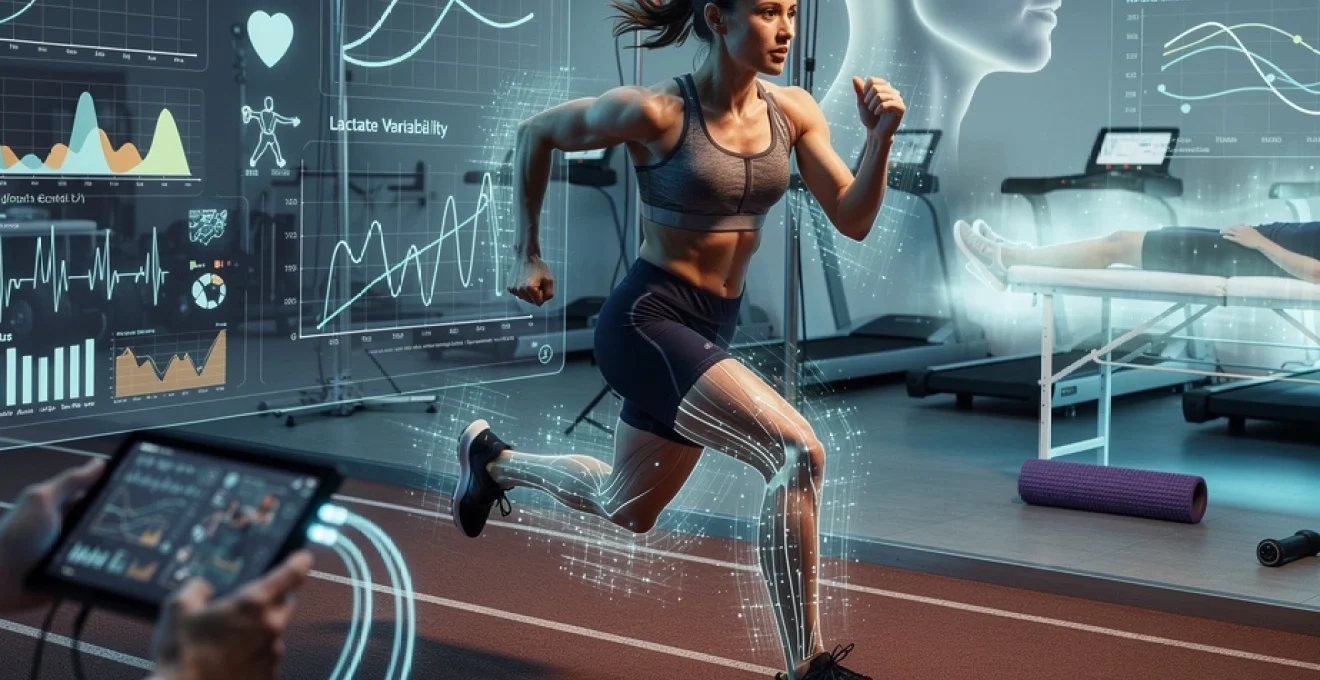
Elite athletes consistently demonstrate extraordinary capabilities that distinguish them from recreational competitors, yet the precise mechanisms underlying peak performance remain complex and multifaceted. Understanding what defines peak performance in high-level competition requires examining the intricate interplay between physiological adaptations, psychological frameworks, technical mastery, and recovery protocols that enable athletes to consistently operate at the highest levels of human capability.
Peak performance represents more than isolated moments of excellence—it encompasses the ability to consistently deliver exceptional results under pressure whilst maintaining the physical and mental resources necessary for sustained competition. Elite athletes develop sophisticated systems that optimise every aspect of their performance, from cellular energy production to cognitive processing under stress. These systems create the foundation for achieving what sport scientists term “championship-level consistency”—the hallmark of true peak performance.
The modern understanding of peak performance has evolved significantly with advances in sports science and technology. Contemporary athletes benefit from data-driven insights that reveal the precise physiological and psychological markers associated with optimal performance. This scientific approach has transformed how coaches and athletes approach training, competition preparation, and performance optimisation.
Physiological markers and biometric thresholds in elite athletic performance
Elite athletic performance is fundamentally underpinned by specific physiological markers that distinguish championship-level competitors from recreational athletes. These measurable parameters provide objective benchmarks for assessing an athlete’s capacity to perform at the highest levels of competition. Understanding these markers enables coaches and athletes to develop targeted training protocols that optimise performance potential.
The physiological foundation of peak performance encompasses cardiovascular efficiency, neuromuscular coordination, metabolic flexibility, and recovery capacity. Elite athletes typically demonstrate superior adaptations across multiple physiological systems, creating synergistic effects that enhance overall performance capability. These adaptations result from years of systematic training that progressively challenges the body’s adaptive mechanisms.
VO2 max optimisation and lactate threshold analysis in Olympic-Level athletes
Maximal oxygen uptake (VO2 max) represents the gold standard for measuring aerobic capacity in elite athletes. Olympic-level endurance athletes typically demonstrate VO2 max values between 70-85 ml/kg/min, significantly higher than the general population’s average of 35-40 ml/kg/min. However, VO2 max alone does not determine competitive success—the ability to sustain high percentages of VO2 max proves equally crucial for peak performance.
Lactate threshold analysis provides deeper insights into metabolic efficiency during sustained exercise. Elite athletes typically maintain their lactate threshold at 75-85% of their VO2 max, compared to 50-60% in untrained individuals. This enhanced metabolic efficiency allows championship-level athletes to sustain higher intensities for extended periods without accumulating performance-limiting lactate.
Modern lactate testing protocols employ incremental exercise tests that map the relationship between exercise intensity and blood lactate concentrations. These profiles enable coaches to identify optimal training zones and competition pacing strategies that maximise performance whilst avoiding premature fatigue.
Heart rate variability and autonomic nervous system adaptation protocols
Heart rate variability (HRV) serves as a sophisticated indicator of autonomic nervous system function and recovery status in elite athletes. Higher HRV typically correlates with enhanced parasympathetic nervous system activity, indicating superior recovery capacity and stress resilience. Elite athletes often demonstrate HRV values 20-40% higher than sedentary individuals, reflecting their enhanced autonomic adaptations.
Daily HRV monitoring enables athletes and coaches to adjust training loads based on physiological readiness. Decreased HRV may indicate incomplete recovery, accumulated stress, or increased susceptibility to illness or injury. This biometric feedback allows for real-time training modifications that optimise adaptation whilst minimising overtraining risk.
Advanced HRV analysis examines frequency domain parameters that provide insights into specific autonomic functions. Low-frequency power reflects sympathetic nervous system activity, whilst high-frequency power indicates parasympathetic function. The ratio between these parameters helps assess autonomic balance and training adaptation status.
Power-to-weight ratio calculations and body composition metrics for Sport-Specific excellence
Power-to-weight ratio represents a critical performance determinant in weight-bearing sports, particularly cycling, running, and climbing disciplines. Elite cyclists typically generate power outputs exceeding
6.5–7.0 W/kg during short climbs, with Grand Tour contenders often sustaining 5.8–6.2 W/kg for 20–40 minutes during decisive mountain stages. In distance running, world-class marathoners may sustain paces equivalent to 4.5–5.0 W/kg across the race duration. These power-to-weight benchmarks illustrate why small improvements in body composition can translate into significant gains in race performance for elite competitors.
Body composition metrics further refine our understanding of sport-specific peak performance. Elite endurance athletes commonly present with body fat percentages in the 5–10% range for males and 10–16% for females, whereas strength and power athletes may operate optimally with slightly higher body fat to support hormonal balance and force production. Rather than chasing arbitrary leanness, high-level competitors focus on optimising fat-free mass (muscle, bone, connective tissue) relative to their performance demands. Dual-energy X-ray absorptiometry (DEXA) scans, skinfold assessments, and bioimpedance analyses are frequently used to track these variables across training cycles.
Crucially, sport-specific excellence requires aligning power-to-weight ratio targets with positional and tactical roles. For example, a rugby forward, Olympic rower, or American football lineman may prioritise absolute power and collision tolerance over maximal lightness, whereas a climber, distance runner, or road cyclist must balance sufficient muscle mass with low inert mass. Peak performers treat body composition as a moving target, adjusting their physique strategically across the season rather than pursuing a single “ideal” number year-round.
Neuromuscular efficiency and motor unit recruitment patterns in professional competition
Neuromuscular efficiency describes how effectively the nervous system can recruit and coordinate muscle fibres to produce force. At the elite level, two athletes with similar muscle mass may display vastly different performance outcomes because one can activate a higher proportion of high-threshold motor units, more rapidly and with greater coordination. This is why neuromuscular training is often the hidden differentiator in high-level competition.
Professional athletes demonstrate superior rate of force development (RFD), reflecting their ability to produce high levels of force in very short time windows—often under 200 milliseconds in explosive sports. This rapid force expression is underpinned by adaptations such as increased motor unit firing frequency, improved synchronisation of motor unit recruitment, and refined intermuscular coordination between agonist, antagonist, and stabiliser muscles. In practical terms, this allows a sprinter to react faster from the blocks, a basketball player to explode higher for a rebound, or a footballer to change direction with minimal deceleration.
Targeted strength and conditioning programmes focus on enhancing these neuromuscular characteristics through heavy strength work, plyometrics, contrast training, and velocity-based lifting. Electromyography (EMG) and force plate testing are increasingly used to assess neuromuscular efficiency by quantifying variables such as impulse, ground contact time, and asymmetries between limbs. For athletes and coaches, the key question becomes: how can we train the nervous system to produce more output with less energetic cost, thereby preserving precious resources during competition?
Another critical aspect of neuromuscular efficiency is movement pattern robustness under fatigue and pressure. Elite athletes not only execute technically sound patterns in training but also maintain those patterns in the final quarter, final set, or final round when physiological and psychological stressors are highest. This robustness reflects deeply ingrained motor programmes, refined through years of deliberate practice and feedback rather than mere repetition.
Psychological resilience frameworks and mental performance architecture
Physiological capacity sets the stage for high-level performance, but psychological resilience often determines how much of that capacity is expressed in competition. The mental performance architecture of elite athletes is built around robust coping mechanisms, attentional control, and the ability to regulate emotional and physiological arousal under pressure. In many ways, the mind becomes the “governor” that either unlocks or restricts access to physical potential.
Psychological resilience in high-level competition is not simply about toughness or motivation; it is a structured system of beliefs, routines, and mental skills that support consistent execution. Athletes who repeatedly perform at their peak tend to share common traits: a clear sense of purpose, an internal locus of control, and the ability to reframe setbacks as data rather than personal defeats. They also deliberately train these skills, much like they train speed or strength.
Flow state activation techniques and csikszentmihalyi’s peak experience model
The concept of “flow,” articulated by psychologist Mihaly Csikszentmihalyi, describes a state of complete immersion in an activity where action and awareness merge, time perception shifts, and performance feels both effortless and highly effective. Many athletes refer to this as being “in the zone.” Peak performance in high-level competition frequently corresponds with entry into this flow state, where execution is automatic and self-conscious thought recedes.
According to Csikszentmihalyi’s model, flow emerges when there is a close match between perceived challenge and perceived skill. If the challenge is too low, athletes experience boredom; if too high, they experience anxiety. High-level competitors and their coaches therefore design training and competition simulations that continually nudge the athlete into this optimal challenge-skill corridor. For example, sparring with slightly superior partners, progressive overload of tactical complexity, or time-constrained decision-making drills all serve to cultivate flow.
Practical flow activation techniques often include pre-performance routines, breathwork, and visualisation sequences that prime the brain for focused engagement. Some athletes use music, specific cue words, or brief mindfulness practices to transition from distraction to presence. Others rely on embodied anchors, such as bouncing the ball a set number of times before serving or taking a consistent number of breaths before a race start. While individual methods vary, the underlying principle is consistent: create predictable cues that signal the nervous system it is time to shift into a high-focus, low-friction performance mode.
Cognitive load management and attention control strategies under pressure
In elite sport, physical fatigue is often mirrored by cognitive fatigue. Decision quality, reaction time, and situational awareness can all deteriorate when the brain is overloaded with information or distractions. Cognitive load management, therefore, becomes a critical component of peak performance—especially in team sports and combat sports where athletes must process complex, rapidly changing environments.
High-level athletes train their attentional systems to toggle between narrow and broad focus depending on the demands of the moment. For instance, a quarterback must switch from a broad scan of the defence pre-snap to a narrow focus on a specific receiver route post-snap. Cognitive drills, such as dual-task training, visual scanning exercises, and scenario-based video analysis, help athletes handle greater information density without becoming overwhelmed.
Under pressure, attention tends to collapse inward, often fixating on outcomes (“What if I miss?”) or self-evaluation (“Everyone is watching me”). To counter this, performance psychologists teach strategies such as external cueing (focusing on ball trajectory, opponent position, or a specific tactical trigger) and process-focused self-instructions. By anchoring attention to controllable elements of execution, athletes reduce the impact of anxiety and maintain higher levels of decision accuracy when it matters most.
Self-talk protocols and internal dialogue optimisation for competition readiness
Internal dialogue—or self-talk—acts as a continuous soundtrack that shapes how athletes interpret events, regulate emotions, and select actions. In high-level competition, unmanaged self-talk can quickly erode confidence and disrupt timing, whereas structured self-talk protocols can enhance focus, resilience, and execution quality. You can think of self-talk as the operating system running in the background of every performance.
Elite performers often use three primary categories of self-talk: instructional, motivational, and neutralising. Instructional self-talk focuses on task-relevant cues (“Drive through the hips,” “High elbow catch”), helping to refine technique under pressure. Motivational self-talk emphasises effort and persistence (“Stay in it,” “One more rep”), particularly useful in fatigue-heavy contexts. Neutralising self-talk is designed to interrupt negative spirals (“Reset,” “Next play”) and prevent a single error from contaminating the rest of a performance.
Developing effective self-talk protocols involves deliberate scripting and rehearsal, not just hoping helpful phrases appear in the moment. Athletes may work with psychologists or coaches to identify typical pressure points—penalty kicks, final lifts, match point situations—and then create short, repeatable phrases that direct their attention and attitude. Over time, these phrases become automatic, transforming the internal environment from a critic into a coach.
Stress inoculation training and psychological periodisation methods
Stress inoculation training (SIT) is a structured approach to building psychological resilience by gradually exposing athletes to controlled doses of competitive stress. Much like a vaccine introduces a weakened pathogen to build immunity, SIT introduces challenging scenarios—hostile crowds, biased officiating simulations, time-pressure drills—so that athletes can practice coping strategies before facing similar situations in real competition.
SIT typically unfolds in three phases: conceptualisation (understanding personal stress responses), skills acquisition (learning tools such as breathing, reframing, and self-talk), and application (practising those tools in progressively more demanding environments). When combined with video debriefs and biometric feedback (e.g., heart rate or HRV during stress drills), athletes can see in real time how their regulation strategies modulate physiological arousal.
Psychological periodisation parallels physical periodisation by aligning mental training focus with different phases of the season. Pre-season may emphasise confidence building and goal clarity; in-season periods might prioritise recovery, refocusing between contests, and managing travel stress; championship phases often centre on pressure simulations and sharpening pre-performance routines. By treating mental skills as cyclical and adaptable rather than static, athletes can arrive at key competitions with their psychological systems peaking in sync with their physical readiness.
Technical skill mastery and movement pattern refinement systems
Technical skill mastery is the visible expression of years of deliberate practice, feedback, and refinement. At the highest levels of competition, technical margins are razor-thin: a marginally more efficient stroke, stride, or swing can be the difference between podium and obscurity. Peak performance, therefore, relies not only on what the athlete can do physically but also on how precisely they can execute sport-specific skills under variable conditions.
Elite technical training increasingly integrates three pillars: biomechanics, motor learning science, and contextual interference. Biomechanical analysis, often supported by motion capture, force plates, and high-speed video, helps identify inefficiencies and asymmetries in movement patterns. Rather than chasing aesthetic “perfection,” coaches aim to optimise each athlete’s technique for power transfer, injury reduction, and repeatability. For example, a swimmer might refine their catch angle to increase propulsion without compromising shoulder health.
Motor learning principles emphasise variability, feedback, and autonomy. Instead of rote repetition, high-level programmes use variable practice—slightly altering distances, tempos, or constraints—to build adaptable skills that hold up under pressure. This is similar to learning a language by conversing in noisy, real-world settings instead of only in a quiet classroom. Athletes also benefit from a mix of immediate feedback (verbal cues, video replay) and delayed feedback (post-session analysis), allowing them to develop intrinsic feel rather than becoming over-reliant on external input.
Contextual interference, the practice of mixing skills and scenarios rather than training them in isolation, further enhances transfer to competition. A footballer, for instance, might work on first touch, scanning, and finishing within the same small-sided game instead of drilling each skill separately. This creates a more chaotic, game-like environment that challenges perception, decision-making, and execution simultaneously—exactly what high-level competition demands.
Recovery science and adaptation response optimisation
Recovery is no longer viewed as passive downtime but as an active, strategic component of peak performance. The objective is not simply to feel rested but to optimise the body’s adaptation response—how it repairs tissue, restores energy systems, recalibrates the nervous system, and consolidates technical and tactical learning. In practice, this means aligning recovery interventions with training loads, competition schedules, and individual athlete profiles.
Elite environments now use a blend of subjective measures (wellness questionnaires, mood tracking) and objective markers (HRV, sleep data, biochemical panels) to monitor recovery status. The guiding principle is straightforward: training imposes stress, recovery enables adaptation, and performance emerges from this balance. When recovery is consistently insufficient, athletes hover in a state of “grey zone” fatigue—never fully overtrained, but never fully capable of expressing their peak potential either.
Sleep architecture analysis and circadian rhythm synchronisation for performance
Sleep is arguably the single most powerful legal performance enhancer available to elite athletes. It is during sleep that growth hormone release peaks, tissue repair accelerates, and memories—including motor patterns and tactical schemas—are consolidated. Yet many high-level competitors still under-prioritise sleep quantity and quality, especially during congested competition calendars and extensive travel.
Sleep architecture refers to the cyclical progression through non-REM and REM stages across the night. Deep non-REM sleep (stages 3–4) is particularly important for physical recovery, while REM sleep supports neural and emotional processing. Wearable technology and polysomnography studies have shown that elite athletes often experience fragmented sleep after evening competitions, delayed sleep onset due to heightened arousal, and disrupted circadian rhythms during long-haul travel. These disturbances can impair reaction time, decision-making, and mood—critical variables in high-level competition.
Optimising sleep for peak performance involves both behavioural and environmental strategies: consistent bed and wake times, pre-sleep routines that reduce cognitive arousal, dark and cool sleep environments, and strategic napping when night-time sleep is compromised. Circadian rhythm synchronisation becomes especially important in sports that require international travel. Light exposure management, time-zone-specific sleep timing, and careful caffeine use can all help accelerate adaptation to new time zones and maintain performance during global competition circuits.
Active recovery protocols and parasympathetic nervous system restoration
Active recovery protocols are designed to facilitate circulation, reduce residual muscle tension, and accelerate the clearance of metabolic by-products without adding significant additional stress. Low-intensity aerobic work, mobility circuits, and technique-focused sessions are common tools, particularly on the days following high-load training or competition. Rather than complete rest, these sessions help maintain movement quality and joint range of motion while supporting the recovery process.
At a nervous system level, the goal of recovery is often to shift dominance from the sympathetic “fight-or-flight” state towards parasympathetic “rest-and-digest” activity. Techniques such as controlled breathing (e.g., 4–6 breaths per minute), non-sleep deep rest protocols, and mindfulness practices have been shown to increase heart rate variability and subjective feelings of calm. You can think of these interventions as tapping the brakes on a car that has been driving at high speed all day—essential to avoid overheating the engine.
Other modalities—such as contrast water therapy, compression garments, and soft-tissue work—may offer additional benefits when integrated intelligently. The key is not to chase every new recovery device but to build a simple, consistent recovery framework that aligns with the athlete’s physiology and preferences. Monitoring how different strategies impact next-day readiness helps refine this framework over time.
Nutritional periodisation and macronutrient timing for competition phases
Nutritional periodisation recognises that an athlete’s energy and substrate needs change across training phases and competition demands. Rather than following a static diet, elite performers adjust total energy intake, macronutrient distribution, and timing in line with training load, body composition goals, and event characteristics. This approach supports both long-term adaptation and acute performance.
Carbohydrate availability is especially important in high-intensity and endurance sports, where muscle glycogen is a primary fuel source. On heavy training days and in competition phases, athletes may implement “carbohydrate loading” or targeted pre-session fuelling to ensure adequate stores. Conversely, certain low-intensity sessions may be performed with reduced carbohydrate availability to enhance metabolic flexibility and fat oxidation. Protein intake, typically in the range of 1.6–2.2 g/kg/day for elite athletes, is distributed across the day to support muscle repair and adaptation.
Macronutrient timing can further refine performance outcomes. Pre-event meals focus on easily digestible carbohydrates, moderate protein, and low fat and fibre to minimise gastrointestinal distress. During events lasting longer than 60–90 minutes, carbohydrate intake of 30–90 g per hour (depending on intensity and duration) can sustain performance. Post-event nutrition prioritises glycogen repletion and protein ingestion (around 20–40 g high-quality protein) within a practical window to kick-start recovery. Hydration strategies—tailored to individual sweat rates and electrolyte losses—round out this performance nutrition system.
Performance analytics and data-driven training methodologies
The rise of performance analytics has transformed how coaches and athletes understand, design, and refine training in pursuit of peak performance. Wearable sensors, GPS tracking, inertial measurement units, and advanced video analysis now generate rich datasets describing everything from external load (distance, velocity, impacts) to internal load (heart rate, RPE, biochemical markers). The challenge is no longer acquiring data but interpreting it intelligently.
Data-driven training methodologies aim to align training stimuli precisely with desired adaptations while managing injury risk. For example, acute:chronic workload ratios can help identify when an athlete’s recent load has spiked beyond their established capacity, flagging an elevated injury risk window. Similarly, longitudinal tracking of key performance indicators—such as sprint times, jump heights, or critical power—allows coaches to assess whether an athlete is trending towards, at, or away from their peak performance window.
Machine learning and predictive analytics are beginning to play a role in high-performance environments, offering probabilistic insights into factors such as injury risk, optimal taper durations, and ideal competition schedules. However, the most effective systems integrate quantitative data with qualitative context—athlete self-reports, coach observations, and medical input. Data provides the map, but human expertise still drives navigation.
Crucially, elite performers use analytics not only for retrospective evaluation but also for real-time decision-making. In-race power data informs pacing strategies; live GPS feeds guide tactical choices in team sports; ongoing HRV and wellness scores shape day-to-day training adjustments. When used well, performance analytics help answer the central question of peak performance: how can we consistently get the right work, at the right intensity, at the right time, for this specific athlete?