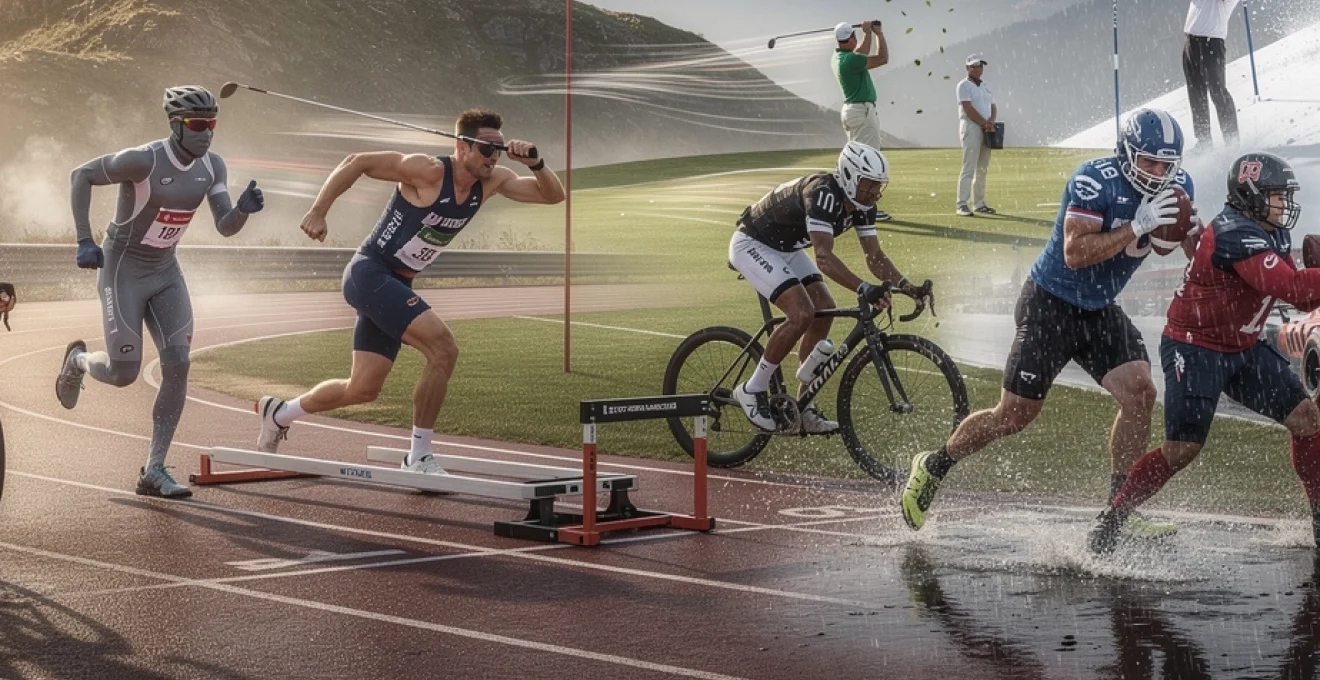
Weather conditions exert a profound influence on athletic performance, creating variables that can transform a world-record attempt into a merely good performance or turn a routine training session into a dangerous encounter. From the searing heat of desert marathons to the bone-chilling winds of alpine skiing venues, climate factors represent some of the most significant uncontrollable variables that athletes must navigate. The relationship between environmental conditions and athletic output extends far beyond simple discomfort, affecting everything from cardiovascular efficiency to biomechanical precision. As climate change intensifies extreme weather patterns globally, understanding these environmental impacts becomes increasingly critical for athletes, coaches, and sports organisations seeking to optimise performance whilst maintaining safety standards.
The complexity of climate-performance interactions varies dramatically across different sporting disciplines. Track and field events must contend with wind speed regulations that can invalidate record attempts, whilst endurance sports face the dual challenge of heat stress and dehydration. Winter sports confront shrinking seasons and unpredictable snow conditions, and precision sports like archery must account for minute atmospheric pressure variations that affect projectile trajectory. This intricate web of environmental factors creates a fascinating study in human physiological adaptation and the limits of athletic achievement.
Thermodynamic factors and athletic performance in outdoor environments
Temperature represents perhaps the most fundamental environmental variable affecting outdoor athletic performance, with both extreme heat and cold presenting unique physiological challenges. The human body’s thermoregulatory system works within narrow parameters, and when environmental temperatures push beyond these boundaries, performance degradation becomes inevitable. Modern sports science recognises that optimal athletic performance occurs within a surprisingly small temperature window, typically between 10-15°C for most endurance activities, with significant performance decrements observed as temperatures rise above 25°C or fall below 0°C.
Heat index impact on VO2 maximum and cardiovascular efficiency
High temperatures fundamentally alter cardiovascular function during exercise, creating a cascade of physiological adaptations that ultimately compromise performance. When ambient temperatures exceed 25°C, the body diverts increasing volumes of blood flow to the skin for cooling purposes, reducing the oxygen-rich blood available to working muscles. This redistribution can decrease VO2 maximum by 15-20% in temperatures above 30°C, representing a substantial performance penalty for endurance athletes. The cardiovascular system faces the dual burden of maintaining exercise intensity whilst simultaneously managing thermoregulation, leading to elevated heart rates and reduced cardiac efficiency.
The heat index, which combines temperature and humidity measurements, provides a more accurate assessment of thermal stress than temperature alone. When humidity levels exceed 70%, sweat evaporation becomes severely compromised, essentially disabling the body’s primary cooling mechanism. Elite endurance athletes can lose 2-3 litres of fluid per hour in hot, humid conditions, with each 2% of body weight lost through dehydration resulting in a 6-8% decrease in performance capacity. This relationship explains why marathon times consistently slow during summer months, with winning times often 5-10 minutes slower in hot conditions compared to cool weather events.
Cold weather effects on muscle contraction velocity and power output
Cold environmental conditions present equally significant challenges for athletic performance, though the mechanisms differ substantially from heat stress. When muscle temperature drops below optimal levels (typically 38-39°C), contractile velocity decreases dramatically due to reduced enzyme activity and altered calcium ion dynamics within muscle fibres. Power output can decline by 3-5% for every degree Celsius that muscle temperature drops below normal, creating particular challenges for explosive sports requiring maximum power generation.
Cold air also affects respiratory function, with dry, frigid air causing bronchial constriction and increased ventilation requirements. Athletes performing in sub-zero conditions often experience a 10-15% increase in oxygen consumption compared to temperate conditions, essentially forcing the cardiovascular system to work harder to deliver the same performance output. The risk of exercise-induced asthma increases significantly in cold weather, with studies showing that up to 50% of winter endurance athletes experience some degree of bronchial reactivity during intense cold-weather training.
Altitude-induced hypoxia and aerobic capacity degradation
Elevation changes represent one of the most predictable yet challenging environmental variables affecting athletic performance. As altitude increases, atmospheric pressure decreases proportionally, reducing the partial pressure of oxygen available for gas exchange in the lungs. At 1,500
metres above sea level, maximal oxygen uptake may fall by around 5%, with reductions approaching 10-15% at 2,500–3,000 metres for unacclimatised athletes. This altitude-induced hypoxia reduces arterial oxygen saturation, forcing the cardiovascular system to increase heart rate and cardiac output simply to maintain submaximal workloads. Endurance athletes often report higher perceived exertion at given paces, with performance decrements of 1-3% per 300 metres of elevation gain above 1,500 metres in events such as marathon running and road cycling.
Despite these challenges, altitude exposure can also be harnessed as a performance-enhancing tool when managed correctly. The widely used “live high, train low” model allows athletes to stimulate red blood cell production through chronic hypoxic exposure while maintaining high-intensity training at lower elevations. However, adaptation timelines vary: most athletes require 10-21 days to achieve meaningful physiological adjustment, and some individuals are “non-responders” who gain little benefit. Poorly planned altitude camps, inadequate iron status, or insufficient recovery can leave athletes more fatigued and underperforming once they return to sea level.
Humidity levels and sweat rate regulation during endurance events
Humidity is a critical but sometimes overlooked climate variable that profoundly shapes outdoor sports performance, particularly in endurance events. As relative humidity rises above 60–70%, the air’s capacity to accept additional moisture declines, which severely limits sweat evaporation. Since evaporation is the body’s main cooling mechanism during exercise, high humidity effectively traps heat, driving up core temperature and heart rate even at moderate intensities. Athletes often feel as if they are “working twice as hard for the same pace” in humid conditions.
Sweat rates in elite endurance athletes can exceed 2 litres per hour in hot, humid races such as tropical marathons or late-summer football fixtures. When fluid and electrolyte losses are not adequately replaced, athletes face a double threat: dehydration, which reduces plasma volume and cardiac output, and hyponatremia, caused by overconsuming plain water without sufficient sodium. Practically, this means athletes must individualise their hydration strategies through sweat testing, adjust pacing expectations in high humidity, and prioritise pre-cooling strategies such as ice vests or cold drinks before competition. You can think of humidity as adding “hidden weight” to the environment—everything feels heavier, and smart pacing becomes non-negotiable.
Wind dynamics and biomechanical performance variables
Wind is one of the most immediately noticeable climate factors in outdoor sport, yet its impact extends far beyond simple annoyance. From a physics perspective, wind alters the relative air speed experienced by an athlete or projectile, changing drag forces and energy expenditure. In some contexts—like sprinting with a legal tailwind—this can create a measurable performance advantage; in others, such as cycling into a headwind, it dramatically increases the power required to maintain a given speed. Understanding wind dynamics allows athletes and coaches to adjust tactics, technique, and equipment to minimise energy loss and optimise biomechanical efficiency.
Headwind resistance in cycling time trials and marathon running
Headwinds represent one of the most punishing environmental challenges in outdoor endurance sports. Because aerodynamic drag increases with the square of relative air speed, even a modest headwind can drastically raise the power needed to hold race pace. In cycling time trials, a 10 km/h headwind can require 20–30% more power output to sustain the same speed, forcing athletes to either accept slower times or risk early fatigue by pushing too hard. This is why pacing strategies become crucial on out-and-back courses where riders face alternating headwind and tailwind segments.
Marathon runners are similarly affected, though the mechanics differ due to lower velocities and a more upright posture. Studies have shown that strong headwinds can slow marathon times by several minutes, particularly on exposed sections of road or coastal routes. Smart athletes use the “drafting” effect by running behind others to reduce air resistance—akin to how birds fly in formation to save energy. Coaches often advise athletes to adjust their pacing to perceived effort rather than target splits on windy days, accepting slower times but preserving physiological reserves for the latter stages of the race.
Crosswind effects on ball trajectory in golf and tennis competitions
Crosswinds introduce a complex layer of uncertainty in ball sports such as golf and tennis, where trajectory and spin determine outcome. In golf, a lateral wind can exaggerate the curvature of a shot, turning a slight fade into a severe slice or pushing a draw well off line. The Magnus effect, which describes how spin interacts with airflow, becomes more pronounced in stronger winds, forcing players to adjust club selection, aim point, and shot shape. Elite golfers may alter their ball flight to be lower and more penetrating in crosswinds, reducing the time the ball spends exposed to lateral forces.
In tennis, crosswinds can shift the ball’s path after it leaves the racket, altering bounce location and height. This can be especially disruptive on high-toss serves or loopy topspin groundstrokes, where the ball is in the air longer. Players often respond by shortening their ball toss, flattening trajectories, and targeting larger margins inside the lines to avoid unforced errors. For both sports, learning to “read” the wind—watching flags, trees, and even dust patterns—becomes as important as technical skill, especially in high-stakes outdoor competitions.
Tailwind advantages in track and field sprint events
Tailwinds can produce some of the most spectacular performances in outdoor athletics, particularly in short sprint and horizontal jump events. By reducing the relative air speed faced by the athlete, a tailwind decreases aerodynamic drag and allows a greater proportion of muscular power to translate directly into forward motion. In the 100 metres, for example, a tailwind of +2.0 m/s (the legal limit for record ratification) can improve times by 0.10–0.12 seconds—a decisive margin at the elite level. In long jump, favourable winds can add several centimetres to performance.
Because wind can so strongly influence outcomes, World Athletics rules stipulate that records are only valid if the assisting wind does not exceed +2.0 m/s. This means that a personal best achieved with excessive tailwind may be celebrated on the day but will not enter the official record books. Strategically, meet organisers sometimes schedule sprint finals for times of day when prevailing winds are more likely to be favourable yet within legal limits. For athletes, this underscores a broader truth about climate conditions: sometimes the environment is a silent partner in success, amplifying biomechanical output beyond what training alone can achieve.
Wind chill factor impact on fine motor skills in archery and shooting sports
In precision sports such as archery and shooting, the wind’s impact is not limited to projectile trajectory; it also affects the athlete’s neuromuscular control. Wind chill—the perceived decrease in temperature due to air movement—can significantly lower skin and hand temperature, even when ambient temperatures are modest. As the fingers cool, nerve conduction slows and fine motor control deteriorates, making it harder to execute smooth trigger pulls or consistent releases. Small tremors or delayed responses can mean the difference between hitting the centre and dropping valuable points.
Moreover, gusty conditions introduce anticipatory stress as athletes must decide whether to release during a lull or hold their shot longer, increasing muscular fatigue. Managing this combination of environmental and psychological pressure requires specific preparation: using wind-resistant clothing that preserves dexterity, practising in variable conditions, and developing pre-shot routines that incorporate wind assessment. You might think of these athletes as “human weather stations”, constantly integrating subtle climate cues into micro-adjustments of technique.
Barometric pressure variations and athletic output
Barometric pressure, while less visible than temperature or wind, subtly influences outdoor sports performance through its effects on air density and gas exchange. Lower atmospheric pressure at altitude reduces the partial pressure of oxygen, as discussed earlier, but even modest day-to-day pressure changes at sea level can alter the resistance experienced by moving bodies and projectiles. In sports like cycling or speed skating, reduced air density under low-pressure systems can slightly decrease aerodynamic drag, contributing to marginal gains in speed at a given power output. Though the absolute differences are small, at elite levels fractions of a second can separate podium positions.
Barometric pressure also affects ball flight and projectile behaviour. In lower-pressure conditions, air is less dense, so balls in sports such as baseball, cricket, and golf may travel marginally farther for the same impact force. Conversely, higher-pressure systems increase drag and can slightly shorten distances. For precision sports like archery, shooters and coaches sometimes monitor pressure trends alongside wind speed and direction to anticipate changes in sight settings. While recreational athletes rarely need to account for these nuances, performance analysts and sports scientists increasingly integrate barometric data into predictive models, recognising that climate conditions collectively shape the “performance envelope” available on any given day.
Precipitation effects on surface conditions and athletic performance
Precipitation transforms the physical properties of playing surfaces, often more dramatically than any other single climate factor. Rain, snow, and sleet alter friction, traction, and stability, forcing athletes to adapt technique, equipment, and tactics in real time. In some cases, such as wet clay in tennis or softened turf in rugby, precipitation slows the game and favours endurance and physicality. In others, like icy ski slopes or standing water on racing circuits, it can push safety margins to their limits. Understanding how moisture interacts with different surfaces is essential for both performance optimisation and injury prevention in outdoor sports.
Rain impact on grip mechanics in rugby and american football
In collision sports such as rugby and American football, heavy rain complicates grip mechanics for both ball-handlers and tacklers. A waterlogged ball becomes heavier and more slippery, reducing friction between the surface and players’ hands. This increases fumble rates, alters passing trajectories, and often forces teams to simplify their attacking patterns—favouring shorter passes, more conservative play-calling, and a greater emphasis on running plays rather than expansive kicking or long passing strategies. Coaches sometimes describe “wet weather football” as a different game altogether, with possession and territory gaining even greater tactical importance.
Footing also changes as grass or hybrid turf surfaces become slick, increasing the risk of slips during cutting movements and scrummaging. Players respond by selecting longer studs for improved traction and shortening their stride length to maintain stability. Training in wet conditions can help athletes refine these adjustments, learning how much force they can safely apply without losing balance. From a performance standpoint, teams that adapt quickly to rain-affected grip mechanics often gain a significant competitive edge, especially in leagues or tournaments where climate conditions vary widely week to week.
Snow conditions and ski racing performance at alpine world cup events
Snow quality is one of the most critical climate-dependent variables in alpine ski racing, profoundly affecting speed, edge grip, and control. World Cup events are highly sensitive to temperature fluctuations that determine whether the snow is dry and powdery, compact and icy, or wet and slushy. Cold, dense, machine-groomed snow typically produces the fastest courses, allowing skis to glide efficiently over a consistent surface. In contrast, soft, wet snow increases friction and creates ruts that deepen with each racer, disadvantaging later starters who must navigate increasingly irregular terrain.
Wind, sun exposure, and overnight refreezing all interact to shape race-day snow conditions. Course workers may inject water and allow it to freeze to create an icy, more uniform surface, but unexpected snowfall or warming temperatures can undo hours of preparation. Ski technicians adjust wax chemistry and edge tuning based on anticipated conditions, sometimes making last-minute changes in the start area as weather shifts. For athletes, reading the snow and trusting equipment choices is essential; a misjudged line on a rutted section or an overly aggressive edge angle on icy patches can result in catastrophic time losses—or high-speed crashes.
Wet track surfaces and tire performance in formula one racing
In motorsport, and particularly Formula One, precipitation converts a high-grip racing circuit into a dynamic, low-friction environment that demands entirely different driving techniques and strategic choices. As rain begins, standing water accumulates on the track surface, leading to a phenomenon known as aquaplaning, where tyres lose contact with the asphalt and ride on a thin film of water. To counter this, teams switch from slick tyres to intermediate or full wet compounds designed with grooves that channel water away from the contact patch, restoring some level of grip. However, even with wet tyres, available traction can be reduced by 30–50% compared to dry conditions.
Drivers must adjust braking points, cornering speeds, and throttle application with extreme precision, often using different lines that avoid heavily rubbered-in, more slippery sections of the track. Visibility also deteriorates as spray from leading cars obscures sightlines, increasing cognitive load and reaction time demands. From a performance analytics perspective, lap-time variability increases significantly in the wet, and races become more unpredictable, with driver skill in low-grip conditions playing a disproportionately large role. In this way, climate conditions can dramatically reshape competitive hierarchies, rewarding those who can best “dance on ice” at 300 km/h.
Solar radiation and UV index considerations for outdoor athletes
Solar radiation and UV exposure represent a slower, less immediately obvious component of climate impact on outdoor sports performance, but their cumulative effects on health and fatigue are substantial. High levels of solar radiation increase mean radiant temperature, intensifying heat stress even when ambient temperatures are moderate. Athletes competing under direct sun—such as tennis players on hard courts or marathoners on exposed roadways—often experience higher core temperatures and perceived exertion than those performing in shaded or overcast conditions at the same air temperature. The UV index, which reflects the strength of sunburn-producing ultraviolet radiation, also carries long-term skin cancer and eye damage risks for athletes with frequent outdoor exposure.
From a performance standpoint, direct sun can accelerate dehydration and lead to earlier onset of heat-related fatigue, especially when combined with high humidity or low wind speeds. Practical countermeasures include scheduling training and competition during cooler, lower-radiation hours; wearing light-coloured, UV-protective clothing; using broad-spectrum sunscreen; and incorporating shaded recovery areas into event design. Some endurance athletes utilise cooling accessories such as reflective caps or ice-filled bandanas to mitigate the additional heat load from solar radiation. While we often think of “hot days” purely in terms of air temperature, considering solar exposure helps explain why two days with identical thermometer readings can feel—and perform—very differently.
Climate adaptation strategies for elite athletic performance
As climate variability and extremes become more common, systematic climate adaptation strategies are moving from optional to essential in elite sport. Rather than reacting to weather conditions on race day, high-performance programmes increasingly integrate environmental modelling into annual planning. This includes selecting training venues that mimic expected competition climates, using environmental chambers to simulate heat, humidity, or altitude, and employing wearable sensors to monitor core temperature, heart rate, and sweat rate in real time. The goal is to build “climate resilience”—the capacity to maintain high performance across a wide range of environmental stressors.
Effective adaptation blends physiological, tactical, and logistical measures. Heat acclimation protocols, for example, progressively expose athletes to hotter environments over 7–14 days, triggering adaptations such as expanded plasma volume, earlier onset of sweating, and reduced heart rate at given workloads. In cold climates, athletes may focus on layering strategies, warming protocols that elevate muscle temperature before explosive efforts, and equipment choices that preserve dexterity without compromising insulation. Altitude preparation often follows a carefully periodised plan, balancing hypoxic exposure with adequate recovery and iron support to maximise red blood cell production.
Organisations and event organisers also play a crucial role in climate adaptation. Implementing heat policies that mandate cooling breaks, adjusting start times to avoid peak temperatures or radiation, and providing adequate shade, hydration, and medical support can all reduce risk while preserving competitive integrity. Data-driven decision-making—such as using wet-bulb globe temperature indices to guide event modifications—helps ensure athlete safety without unnecessarily cancelling competitions. Ultimately, as climate conditions continue to shape the landscape of outdoor sports performance, those athletes and teams who proactively adapt will not only perform better but also extend their careers and safeguard their long-term health.