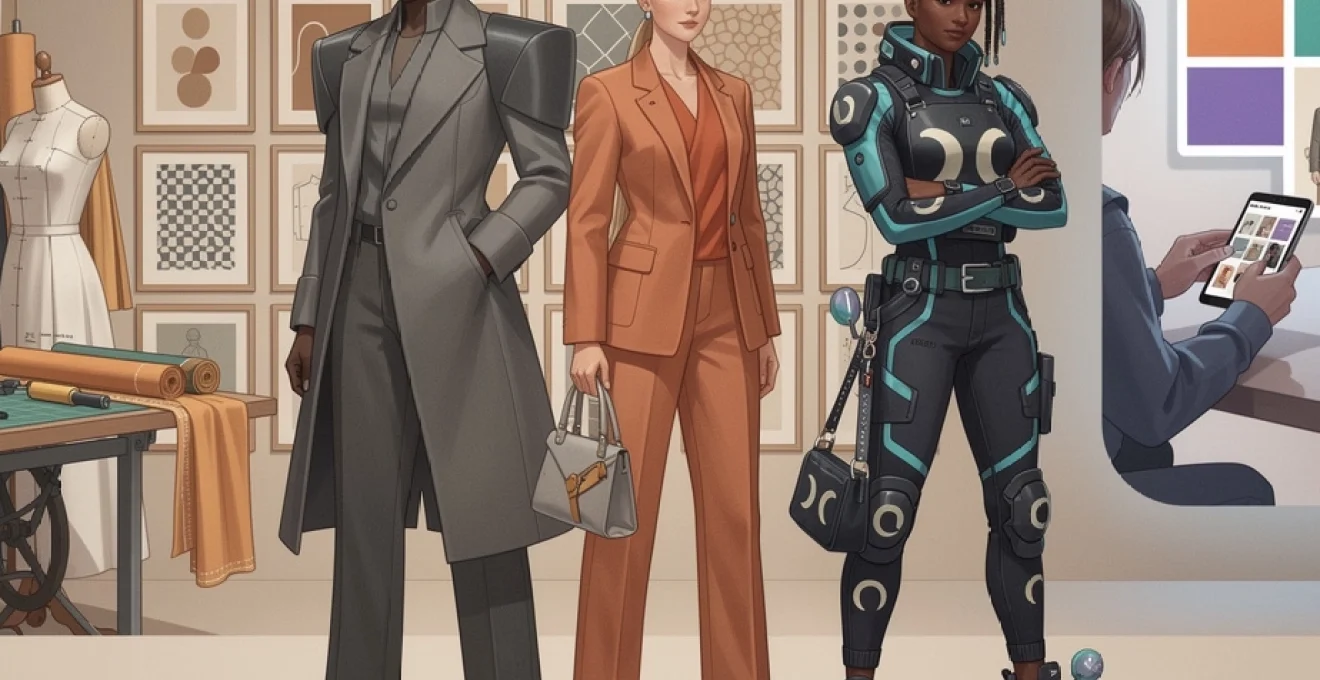
The concept of signature style has undergone a radical transformation in today’s hyperconnected fashion ecosystem. Where once distinctive aesthetic languages emerged from decades of artistic evolution within the confines of traditional ateliers, contemporary designers now navigate an accelerated landscape where visual identity must crystallise within months, not years. The digital revolution has fundamentally altered how signature styles develop, disseminate, and endure in our collective fashion consciousness.
Modern signature style transcends simple aesthetic preferences, functioning as a complex communication system that bridges cultural zeitgeist with commercial viability. Today’s most successful fashion voices understand that authenticity and recognisability must coexist within an increasingly crowded marketplace. The challenge lies not merely in creating beautiful garments, but in establishing a coherent visual vocabulary that resonates across multiple platforms and consumer touchpoints simultaneously.
This evolution has democratised fashion influence whilst simultaneously raising the bar for creative innovation. The traditional gatekeepers of style have been joined by digital natives who build entire aesthetic movements through carefully curated online presence and strategic brand partnerships.
Aesthetic DNA: core elements that define contemporary signature style
Contemporary signature style operates as a sophisticated coding system where multiple design elements converge to create immediately recognisable aesthetic fingerprints. This visual DNA encompasses far more than surface-level preferences, delving into the psychological and cultural underpinnings that drive creative expression. The most enduring signature styles establish clear hierarchies among these elements whilst maintaining flexibility for seasonal evolution and market adaptation.
Silhouette architecture and proportional language
Silhouette serves as the foundation upon which all other design elements build their narrative strength. Modern designers approach proportion as an architectural discipline, understanding that the relationship between volume, line, and negative space creates the primary recognition factor for their work. The most successful contemporary signatures establish consistent proportional relationships that remain identifiable regardless of seasonal colour variations or textile choices.
Consider how proportional language functions as a designer’s primary communication tool with their audience. A signature approach to waistline placement, shoulder width, or hem length becomes an immediately recognisable signature across collections. These proportional choices reflect deeper philosophical approaches to the human form and how clothing should interact with movement, comfort, and visual impact. The architecture of a garment speaks before fabric, colour, or embellishment ever enters the conversation.
Colour palette psychology and chromatic consistency
Colour psychology within signature style development operates on both conscious and subconscious levels, establishing emotional connections that transcend seasonal trends. Contemporary designers increasingly understand colour as a strategic business tool rather than merely an aesthetic choice. Consistent chromatic languages create brand recognition across diverse product categories whilst allowing for seasonal interpretation and market adaptation.
The psychological impact of colour choice extends beyond consumer preference, influencing production costs, market positioning, and retail presentation opportunities. Designers who establish clear colour hierarchies within their signature vocabulary create more efficient design processes whilst building stronger brand recognition. Chromatic consistency becomes particularly crucial in digital environments where colour reproduction variations can dilute brand recognition across different screens and platforms.
Textile selection and fabrication methodology
Fabric selection represents one of the most technically complex aspects of signature style development, requiring deep understanding of textile behaviour, production capabilities, and market positioning. Contemporary designers increasingly view textile innovation as a competitive advantage, developing exclusive fabrications that become synonymous with their aesthetic vision. This approach transforms fabric from a functional necessity into a distinctive brand element.
The methodology behind textile selection reveals the sophisticated technical knowledge underlying successful signature styles. Designers must balance aesthetic preferences with practical considerations including drape, durability, care requirements, and production scalability.
The most recognisable contemporary signatures often emerge from unexpected fabric applications that challenge conventional garment categories.
This technical innovation creates barriers to imitation whilst establishing clear market differentiation.
Pattern integration and print philosophy
Pattern and print development within signature style creation requires sophisticated understanding of visual rhythm, scale relationships, and cultural symbolism. Contemporary designers approach print as a proprietary language system, developing motifs that function across multiple product categories whilst maintaining coherent aesthetic messaging. The integration of pattern into overall design philosophy separates superficial trend adoption from genuine signature development.
Modern print philosophy extends beyond traditional surface pattern, incorporating structural pattern through construction techniques, texture
texture mapping, and engineered placement that interacts deliberately with the body’s movement. In this context, print becomes less about decorative surface and more about directing attention, shaping perception, and reinforcing a recognisable design code.
Designers with a strong signature style often develop a clear print philosophy: a limited family of motifs, repeats, and scales that can be reconfigured season after season without losing their core identity. The repetition of a crescent moon, distorted check, or abstract floral across categories—from ready-to-wear to accessories and packaging—creates a feedback loop of visual recognition. When pattern integration is handled with this level of intentionality, a simple glimpse of fabric from several metres away can be enough for a fashion-literate viewer to identify the creator.
Designer case studies: analysing signature style evolution in modern fashion
Understanding what defines a signature style in today’s fashion world becomes clearer when we examine how leading designers construct and refine their visual language over time. These case studies demonstrate that signature style is neither static nor accidental; it is the result of deliberate experimentation, strategic repetition, and adaptive evolution. Each designer translates their personal and cultural references into a coherent system of silhouettes, colours, textiles, and motifs that can survive trend cycles and platform shifts.
While their aesthetics differ dramatically, contemporary designers who achieve true recognisability share common strategic approaches. They identify a few non-negotiable pillars—perhaps a specific cut, a recurring graphic device, or a consistent fabrication—and then iterate around those constants. The following examples highlight how this process unfolds in real time, offering insight into how you might analyse or build your own signature codes within a rapidly changing fashion landscape.
Virgil abloh’s quotation marks and Off-White aesthetic language
Virgil Abloh’s work at Off-White offers one of the clearest examples of how conceptual devices can crystallise into a signature style. His repeated use of quotation marks around functional words—”SHOELACES”, “SCULPTURE”, “TOTE BAG”—became more than a graphic joke; it served as a commentary on branding, authenticity, and the blurred boundaries between streetwear and luxury. This typographic strategy created an instantly recognisable marker that translated seamlessly across footwear, apparel, accessories, and collaborations.
Beyond the quotation marks, Abloh built a consistent visual language through diagonal stripes, hazard tape references, industrial buckles, and engineered text placement. He fused the visual codes of construction sites, airport signage, and youth subcultures into a coherent aesthetic that felt both raw and meticulously orchestrated. By combining recognisable utility garments with luxury fabrication and conceptual messaging, he defined a new model for signature style in the era of hype-driven drops and digital virality.
Jacquemus’s minimalist mediterranean modernism
Simon Porte Jacquemus demonstrates how a deeply personal visual universe can become a powerful commercial signature. His collections consistently evoke a sun-drenched Mediterranean world built on sculpted yet relaxed silhouettes, warm neutral palettes, and playful proportions. Micro bags, oversized straw hats, and asymmetric draping are not random novelties but recurring symbols in his aesthetic vocabulary.
What makes Jacquemus’s minimalist Mediterranean modernism such an effective contemporary signature style is its emotional clarity. The clothes, casting, locations, and campaign imagery all reinforce the same narrative of sensual ease and poetic rural life. This cohesion across product and imagery means that even when silhouettes evolve or colour stories shift, the underlying mood remains unmistakable. For emerging designers and independent labels, his work illustrates how tightly curated references and consistent storytelling can build a recognisable identity without visual overload.
Jonathan anderson’s surrealist functionality at loewe
Jonathan Anderson’s tenure at Loewe showcases a different route to signature style: the integration of surrealist elements into rigorously constructed, functional garments. His collections often feature unexpected distortions—trompe-l’œil tops, puzzle-like leather constructions, or accessories that twist familiar objects into luxurious oddities. These interventions are balanced by precise tailoring and sophisticated material development, preventing the work from slipping into mere novelty.
Anderson’s signature at Loewe is anchored less in a single motif and more in a consistent tension between the practical and the uncanny. Everyday items are transformed into high-fashion artefacts, while artisanal techniques are pushed into experimental territory. This approach aligns perfectly with today’s fashion world, where consumers seek both wearability and Instagram-ready visual impact. By using surrealist details as a conceptual thread rather than a one-off stunt, Anderson builds a long-term stylistic identity that can absorb new ideas without losing coherence.
Marine serre’s futuristic upcycling philosophy
Marine Serre’s signature style demonstrates how sustainability and resourcefulness can themselves become defining aesthetic traits. Her now-iconic crescent moon print operates as an immediate brand identifier, but it is her commitment to upcycling—reworking deadstock, household linens, and sportswear remnants into futuristic garments—that truly sets her apart. This fusion of resource-conscious fabrication with dystopian sportswear silhouettes creates a unique proposition within luxury fashion.
Serre’s collections articulate a clear speculative vision of the future, in which climate crisis, migration, and technology reshape how we dress. The repetition of protective hoods, layered bodysuits, and modular garments forms a visual armour for an unstable world, turning ecological anxiety into a coherent design direction. Her work exemplifies how a rigorous ethical stance, when integrated into silhouette, material choice, and branding, can produce a signature style that feels urgent, recognisable, and culturally relevant.
Digital identity formation: social media’s role in contemporary style development
In today’s fashion ecosystem, signature style no longer emerges solely from runway collections or editorial spreads. Digital platforms shape how designers, influencers, and everyday consumers build and broadcast their visual identities. Social media does not simply showcase existing aesthetics; it actively conditions which stylistic codes gain traction, how quickly they evolve, and how recognisable they become across global audiences.
This shift has profound implications for anyone seeking to establish a distinct fashion signature. Instead of relying on a single seasonal show, designers must consider how their aesthetic reads as a thumbnail, a short-form video, or a mood board pin. Consistency across these digital touchpoints often determines whether a style becomes part of the broader visual culture or disappears in the algorithmic noise.
Instagram aesthetic curation and visual consistency
Instagram remains a primary arena for visual identity building, especially for brands and creators focused on a coherent fashion signature. Grid curation, colour harmony, and recurring styling tropes create a sense of continuity that helps followers recognise a specific aesthetic within seconds. In this context, signature style is not only what you design or wear, but also how you frame, light, and sequence your visual output.
For designers and stylists, Instagram functions as an ongoing portfolio where each post must both stand alone and contribute to an overarching narrative. Strategic repetition of certain silhouettes, editing styles, or brand markers trains your audience to associate particular visual cues with your name. When used deliberately, tools like saved highlights, carousel storytelling, and behind-the-scenes reels can reinforce the depth behind a signature look rather than flattening it into a single viral image.
Tiktok micro-trends and rapid style evolution
TikTok has accelerated the tempo at which fashion trends emerge, peak, and dissolve, creating a volatile environment for developing a stable signature style. Micro-trends such as “blokecore”, “coastal cowgirl”, or “clean girl aesthetic” can dominate feeds for weeks before being replaced by the next viral concept. This constant churn poses a strategic question: how can you build a recognisable visual identity without being swept away by short-lived aesthetics?
One effective approach is to treat TikTok trends as testing grounds rather than identities. By selectively engaging with trends that align with your core design codes—whether that means silhouette preferences, colour palettes, or styling details—you can ride the wave of visibility without diluting your brand language. In practice, this might look like reinterpreting a trending sound or challenge through your own proportions, textiles, or signature accessory rather than mimicking the dominant look wholesale.
Pinterest mood boarding and style documentation
Pinterest operates as a slower, more archival counterpart to Instagram and TikTok, making it a powerful tool for clarifying signature style over time. Instead of chasing immediacy, users build layered boards that aggregate references across decades, cultures, and product categories. This process of visual research often reveals patterns you might not notice in day-to-day dressing or posting: recurring necklines, habitual colour choices, or consistent textures.
For both professionals and consumers, creating long-tail keyword-optimised boards—such as “minimalist Mediterranean summer wardrobe” or “futuristic upcycled streetwear looks”—can support clearer aesthetic direction. As you pin runway images, vintage editorials, and real-life outfits, the strongest motifs rise to the surface, forming a blueprint for your evolving fashion signature. Over months and years, these digital archives double as documentation of how your style adapts while retaining its core DNA.
Influencer collaboration and brand partnership dynamics
Influencer collaborations and brand partnerships have become central mechanisms through which signature styles diffuse across audiences. When a label with a distinct aesthetic language pairs with an influencer whose personal style resonates with that language, both parties reinforce each other’s visual identity. The result is a feedback loop where followers begin to associate specific garments, styling tricks, or motifs with both the influencer and the brand.
However, this strategy requires careful alignment to avoid brand dilution. If a designer with a precise avant-garde signature repeatedly partners with influencers known for trend surfing and rapid aesthetic turnover, the core message can become muddled. The most effective collaborations emphasise shared values—such as sustainability, craftsmanship, or playful minimalism—so that each campaign becomes an extension of pre-existing signature codes rather than a temporary costume. For emerging designers, selectively choosing a small group of consistent collaborators can be more beneficial than one-off viral spikes with misaligned partners.
Technical construction methods behind signature aesthetic expression
Behind every coherent signature style lies a set of technical construction choices that quietly but powerfully shape the final visual outcome. Pattern cutting, seam placement, internal structuring, and finishing techniques all influence how a garment moves, photographs, and ages. In many cases, what we perceive as a designer’s “look” is inseparable from the specific methods used to engineer fabric around the body.
Consider how an exaggerated shoulder line can be achieved: through heavy padding, sculpted interfacing, or intricate dart manipulation. Each method yields a slightly different result, and when repeated across collections, it becomes part of the brand’s tactile identity. Designers who invest in proprietary construction innovations—such as bonded seams that create ultra-clean lines or modular fastening systems that allow garments to transform—create additional layers of recognisability that are difficult for competitors to replicate accurately.
Market positioning through distinctive visual language
In a saturated global market, signature style operates as both artistic statement and strategic positioning tool. A distinctive visual language helps a brand claim specific territory in the consumer’s mental map: the go-to destination for sculptural tailoring, eco-futurist streetwear, or romantic minimalism. This clarity simplifies decision-making for buyers, editors, and end customers, which in turn supports stronger sell-through and more coherent merchandising.
From a commercial standpoint, defining a signature style involves deliberate choices about price architecture, distribution channels, and communication tone that align with the visual identity. A label known for conceptual, museum-worthy silhouettes might prioritise limited editions and gallery-like retail spaces, while a brand specialising in everyday uniform dressing will focus on consistency, replenishment, and subtle seasonal evolution. In both cases, the visual language—runway styling, lookbooks, store design, and digital content—must reinforce the intended market position rather than sending mixed signals.
Cultural appropriation versus inspiration: navigating signature style ethics
As designers draw from an increasingly global pool of references, the ethical dimension of signature style becomes impossible to ignore. The line between respectful inspiration and cultural appropriation is often contested, yet the reputational and emotional stakes are high. A signature motif, silhouette, or textile can quickly become problematic if it relies on sacred symbols, traditional craftsmanship, or marginalised identities without meaningful credit or collaboration.
Navigating this terrain demands more than surface-level acknowledgements. Designers and brands must engage in informed research, build direct relationships with source communities, and fairly compensate artisans whose work underpins their visual signatures. Transparent storytelling—through collection notes, campaigns, and educational content—helps audiences understand where elements originate and how they are being reinterpreted. In a fashion world where cultural narratives travel as fast as product drops, an ethical, well-documented approach to inspiration is not only a moral imperative but also a long-term safeguard for any evolving signature style.