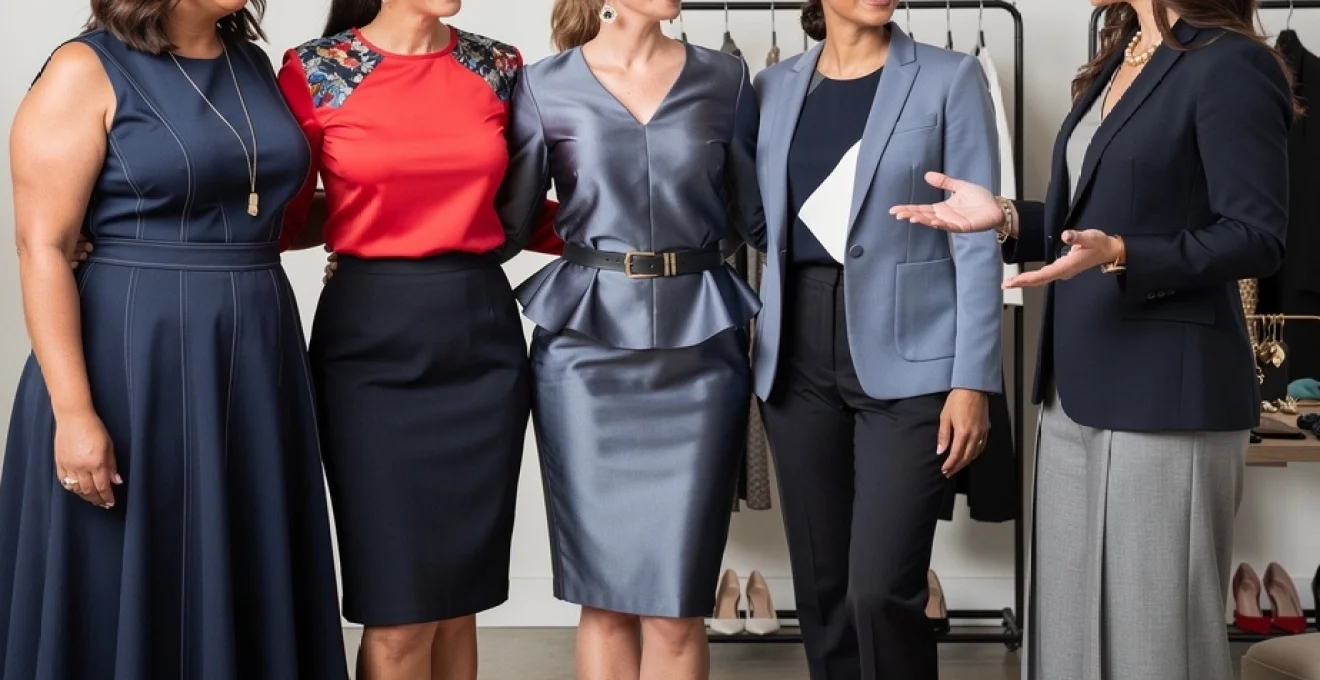
Fashion confidence begins with understanding your unique proportions and selecting garments that enhance your natural silhouette. Many individuals struggle with finding clothing that flatters their figure, often falling into the trap of following generic style advice that doesn’t account for individual body characteristics. The key to developing a confident personal style lies in recognising your body’s proportions and learning how strategic garment selection can create visual harmony and balance. When you understand how different cuts, colours, and styling techniques work with your specific measurements, getting dressed becomes an empowering daily ritual rather than a source of frustration.
Understanding body shape classifications and proportion analysis
Body shape analysis forms the foundation of effective personal styling, focusing on the relationship between your shoulders, bust, waist, and hip measurements rather than your size or weight. Professional stylists use proportion analysis to determine how different garment silhouettes will interact with your natural frame, creating either visual balance or disruption depending on the chosen styles.
The science behind body shape classification relies on mathematical ratios between key measurement points. When your shoulder and hip measurements are within two inches of each other, you possess balanced proportions that can support various styling approaches. However, when there’s a significant difference between these measurements, strategic styling becomes essential for creating visual equilibrium.
Apple body type characteristics and measurement ratios
Apple body configurations typically feature broader shoulders and fuller midsections compared to hip measurements. This body type often carries weight around the torso while maintaining slimmer legs and arms. The shoulder-to-hip ratio usually favours the upper body, with bust measurements often exceeding hip measurements by three inches or more.
Identifying apple proportions involves examining where your body naturally stores weight and how your ribcage relates to your hip bones. Apple shapes frequently have less defined waistlines, with the widest part of their torso occurring at or above the natural waist. Understanding these proportions helps determine which styling techniques will create the most flattering silhouette.
Pear body shape proportions and Hip-to-Waist guidelines
Pear body shapes demonstrate the opposite proportion relationship, with hip measurements exceeding shoulder measurements by at least two inches. This configuration creates a triangular silhouette that’s wider at the bottom than the top. Pear shapes typically have well-defined waists and carry most of their weight in the hip and thigh areas.
The mathematical relationship in pear proportions shows hip measurements that are 5-10% larger than bust measurements. Waist definition remains prominent, creating an hourglass-like curve from waist to hip. These proportions require different styling strategies compared to apple configurations, focusing on upper body enhancement rather than midsection camouflage.
Hourglass figure symmetry and balanced silhouette principles
Hourglass proportions represent balanced shoulder and hip measurements with a significantly smaller waist measurement. The ideal hourglass ratio shows waist measurements that are 25-30% smaller than both bust and hip measurements. This creates the classic curved silhouette that many consider the conventional beauty standard.
True hourglass figures maintain proportion balance regardless of size, whether the measurements are 34-26-34 or 44-36-44. The key characteristic lies in the proportional relationship rather than absolute measurements. This body type can support fitted styling that emphasises natural curves without requiring significant proportion adjustments.
Rectangle body type and creating visual curves through strategic styling
Rectangle body configurations show minimal variation between bust, waist, and hip measurements, typically within 1-2 inches of each other. This creates a straight silhouette that lacks natural curve definition. Rectangle shapes often have athletic builds with relatively flat bottoms and minimal waist indentation.
The styling challenge for rectangle proportions involves creating visual interest and curve illusion through strategic garment selection. Since the natural silhouette provides a blank canvas, rectangle shapes can experiment with various styling techniques to add dimension and shape where desired.
Inverted triangle physique and Shoulder-to-Hip balance techniques
Inverted triangle body types feature shoulder measurements that significantly exceed hip measurements, often by 3-5 inches or more. This configuration frequently results from
broader bone structure, athletic training, or simply your natural frame. The waist may be moderately defined or fairly straight, but the upper body is always the visually dominant area. Recognising an inverted triangle shape is crucial because it informs how you use garments to redistribute visual weight and create a more balanced overall silhouette.
From a proportion perspective, the goal for inverted triangle physiques is to visually minimise width across the shoulders and upper torso while adding subtle volume and interest to the hips and legs. This balance can be achieved through careful neckline selection, shoulder seam placement, and choosing bottoms that introduce shape and width at the lower half. When executed well, these styling techniques help you appear more proportionate without restricting your personal style preferences.
Strategic garment selection for apple body configurations
Apple body types benefit most from outfit formulas that skim rather than cling, using clothing to create length through the torso and highlight the legs, bust, or neckline. When you understand how each garment contributes to your overall proportions, you can build a capsule of reliable, confidence-boosting looks instead of relying on trial and error in the fitting room. The objective is not to hide your body, but to guide the eye along vertical lines and away from areas where you feel less confident.
Professional stylists often approach apple body styling by prioritising three elements: vertical emphasis, soft structure, and strategic waist placement. Vertical lines visually lengthen the body, soft yet supportive fabrics prevent clinging at the midsection, and well-chosen seam placement or waistlines create the illusion of definition without discomfort. By combining these principles, you can dress an apple shape with confidence across casual, work, and occasion wear.
Empire waistlines and a-line silhouettes for midsection camouflage
Empire waistlines are particularly effective for apple body types because they reposition the visual “waist” higher, just under the bust, where many apples are relatively slimmer. This cut allows fabric to fall gently over the midsection, creating a smooth line rather than cutting across the widest part of the torso. When paired with an A-line skirt or dress shape, you gain both midsection camouflage and balanced movement through the lower body.
A-line silhouettes, whether in dresses, skirts, or tunics, widen gradually from the waist or high waist, offering ease around the tummy and hips without adding bulk. For everyday outfits, an empire-line blouse with subtle A-line flare over straight-leg jeans can feel more polished than an oversized T-shirt while offering similar comfort. Think of empire and A-line designs as architectural tools: they reframe the “centre of gravity” of your outfit so attention sits on your face, bust, and legs instead of the midsection.
V-neckline variations and vertical line creation methods
V-necklines are a powerful styling tool for apple body types because they create an immediate vertical line down the centre of the body. This vertical direction draws the eye up and down rather than side to side, visually lengthening the neck and torso. Whether you prefer a subtle V, a wrap-style crossover, or a deeper V layered over a camisole, these necklines add openness without sacrificing coverage.
Beyond necklines, you can build verticality into your outfits through longline cardigans, unbuttoned blazers, or open shirt jackets that create parallel lines along your body. Even details like vertical seams, narrow plackets, and centre-front zips contribute to this elongating effect. When you combine a V-neck with a long pendant necklace or scarf worn in a loose vertical drape, you reinforce these lines, making your overall silhouette appear slimmer and more balanced.
Structured blazers and jacket styling for torso definition
Many apple-shaped individuals avoid blazers, assuming the extra layer will add bulk. In reality, a well-cut, lightly structured blazer can provide much-needed framework around the midsection. Look for single-breasted jackets that gently nip in under the bust or at a slightly raised waistline, with darts or princess seams to create shape without tightness. Avoid overly boxy or double-breasted styles that add width through the front.
Length is also important: blazers that finish just below the fullest part of your tummy or at the upper thigh generally work best, creating a continuous vertical line. Wearing your blazer open forms two long panels that skim past the midsection, visually narrowing the torso. Soft tailoring in fabrics such as ponte, crepe, or stretch suiting offers structure without rigidity, helping you feel supported and comfortable throughout the day.
High-waisted bottoms and leg lengthening optical illusions
Because many apple body types have proportionally slimmer legs, highlighting the lower half is an effective way to create balance and confidence. High-waisted or mid-high rise trousers and skirts that sit comfortably at or just above your natural waist help contain the tummy area while making the legs appear longer. The key is a smooth front—flat-front trousers, minimal pockets, and wide waistbands reduce bulk and avoid unnecessary focus on the midsection.
To enhance the illusion of length, choose bottoms in darker solid colours paired with tops that skim over, rather than tuck into, the waistband (unless the fabric is very forgiving and you enjoy a partial tuck). Straight-leg, bootcut, or slight flare styles worn with a low-contrast shoe will visually extend your leg line from hip to toe. This technique acts like a visual elevator for your lower body, shifting attention toward one of your natural assets while keeping the overall silhouette harmonious.
Pear shape dressing strategies and upper body enhancement
Pear body shapes, with their fuller hips and thighs, benefit from styling that celebrates curves while ensuring the upper body holds equal visual presence. The goal is not to minimise your lower half, but to create proportion by drawing the eye upward and outward across the shoulders and bust. When you enhance your upper body with clever cuts and details, your natural waist and hip curves look intentional and balanced.
Start by treating your shoulders and neckline as the focal point of your outfits. Tops with statement sleeves, subtle shoulder padding, boat necks, or square necklines all create horizontal emphasis that balances wider hips. Light or bright colours, textured fabrics, and decorative elements such as ruffles, lace inserts, or embellishment across the chest further strengthen this effect. Meanwhile, keeping your lower half more streamlined—think darker shades, minimal pocket detail, and clean lines—prevents the hips from visually dominating.
Skirt and trouser selection also plays a crucial role for pear body types. A-line skirts that skim over the hips, wide-leg trousers in drapey fabrics, and gently bootcut jeans are ideal for smoothing the hip area while maintaining movement. If you enjoy skinny or slim-fit styles, balance them with a top that has volume at the shoulders or an eye-catching neckline. Belts can be very flattering for pears, as they emphasise the naturally defined waist, but choose medium widths and wear them slightly above the widest part of your hips to maintain balance.
Hourglass figure accentuation through fitted garment construction
Hourglass body types already possess balanced shoulders and hips with a defined waist, so the primary styling objective is preservation rather than correction. Clothes that follow your natural lines, rather than fighting them, will always be the most flattering. Fitted does not mean tight; think of garments that gently trace your shape, allowing you to move comfortably while still showing the curves that define the hourglass silhouette.
Garment construction details make a noticeable difference for hourglass figures. Look for pieces with waist seams, princess seams, or subtle darting that bring fabric inward at the midsection. Wrap dresses, tailored sheath dresses, and tops with built-in waist shaping are especially effective. Avoid excessively boxy cuts and oversized garments that obscure your waist, as they can make you appear larger overall and remove the natural visual rhythm of your silhouette.
Bottoms for hourglass bodies should echo your curves rather than flatten them. Mid- to high-rise jeans and trousers that fit smoothly across the hips and seat without gaping at the waist are ideal. Straight, slim, and bootcut shapes work well, provided the fabric has enough stretch to accommodate curves without pulling. When you add a belt—particularly in a colour that contrasts gently with your outfit—you further highlight your narrowest point, reinforcing the hourglass effect.
Colour theory application and pattern placement for body contouring
Beyond cut and construction, colour and pattern are powerful tools for contouring the body and directing attention. Strategic use of light and dark tones, prints, and fabric finishes can subtly reshape the way your proportions are perceived, much like stage lighting changes how a set appears on camera. You do not need to abandon your favourite colours to dress for your body type; instead, learn where to place them for maximum flattery.
In styling, darker shades tend to recede, making areas appear slimmer or less prominent, while lighter and brighter colours advance, drawing the eye. Bold patterns, shine, and high-contrast combinations also attract attention, whereas matte, solid fabrics create a quieter visual effect. By combining these principles with your knowledge of body shape—whether apple, pear, rectangle, hourglass, or inverted triangle—you can use colour theory to support your confidence rather than relying solely on garment silhouettes.
Monochromatic dressing and vertical line extension techniques
Monochromatic dressing—wearing a single colour or very similar tones from head to toe—is one of the most effective ways to create a long, uninterrupted visual line. This approach is particularly advantageous if you want to appear taller or slimmer, or if you’re working with a body type that benefits from vertical emphasis, such as apple or petite pear shapes. By keeping colour contrast low between your top, bottom, and even your shoes, you prevent the eye from stopping at horizontal “breaks” across your body.
Monochrome does not have to mean wearing all black (though black is a classic option). Soft neutrals like camel, navy, charcoal, or deep olive can be equally elongating and often more forgiving in bright light. To avoid looking flat or uniform, vary textures and subtle tone differences within the same colour family—for example, pairing a matte knit with a slightly glossy satin skirt in similar shades. The result is a streamlined, lengthened silhouette that still feels rich and intentional.
Strategic print positioning and visual weight distribution
Prints and patterns naturally carry more visual weight than solids, which means their placement has a direct impact on how your body is perceived. If you wish to highlight your upper body—for instance, as a pear shape wanting to draw attention away from the hips—choose tops with bold prints and keep your bottoms in darker, quieter tones. Conversely, if you’re an inverted triangle aiming to balance broader shoulders, printed skirts or trousers can help distribute visual interest downward.
Scale matters too: larger prints tend to enlarge the area they cover, while smaller, more delicate motifs are less dominant. As a rule of thumb, match print scale to your overall frame—taller or fuller figures can carry bolder patterns, while petite or very slim frames may prefer subtler designs. If you’re mixing prints, maintain cohesion by sticking to one focal pattern and one secondary, more understated print, ensuring they share at least one common colour. This prevents your outfit from feeling chaotic while still offering personality and style.
Colour blocking methods for proportional balance
Colour blocking—combining solid blocks of contrasting colours within a single outfit or garment—is a precise way to sculpt your silhouette. By placing darker panels at areas you want to downplay and lighter or brighter blocks where you want emphasis, you effectively redraw your outline. Many contemporary dresses and tops already incorporate contouring colour-block designs, with darker side panels and lighter centres that create the illusion of a narrower waist and more defined curves.
For separates, you can apply the same logic: an inverted triangle may opt for a darker, simple top with a lighter, more saturated skirt or trousers to add visual weight to the lower half. A pear shape might do the opposite, selecting a rich or light-coloured top with detailing and pairing it with deep, solid-toned bottoms. Think of colour blocking as painting your own proportions—each block of colour is a brushstroke that influences how the viewer’s eye travels across your body.
Texture contrast and fabric weight selection for shape enhancement
Texture and fabric weight are often overlooked, yet they significantly influence body contouring. Thicker, stiffer fabrics such as denim, brocade, or heavy tweed hold their shape and can add structure where you need it, which is ideal for rectangles wanting more definition or inverted triangles seeking sharp tailoring. On the other hand, fluid materials like jersey, viscose, silk, and fine knits drape and move with the body, softening lines and preventing unnecessary bulk—beneficial for full hourglass and apple body types.
Texture contrast allows you to create focal points without relying solely on colour. A matte knit top with a glossy leather skirt, for example, will naturally pull the eye toward the shinier surface. If you’d prefer to highlight your upper body, choose a textured blouse (lace, embroidery, ribbing) with smoother trousers; if you want to celebrate your legs, reverse the formula. By deliberately pairing structured with soft, matte with shine, and smooth with textured, you can refine your silhouette in a subtle yet highly effective way.
Professional styling techniques and confidence-building wardrobe curation
Building a wardrobe that truly supports your body type and lifestyle is less about owning more clothes and more about making intentional, informed choices. Professional stylists often start with a core selection of versatile, well-fitting pieces that work hard across multiple outfits. These foundational items—such as a flattering pair of jeans, a tailored blazer, a go-to dress shape, and a high-quality basic top—form the framework around which you can add personality, colour, and trend-led pieces.
A helpful approach is to view your wardrobe as a working toolkit rather than a museum of past purchases. Regularly assess each garment with two questions: does it fit your current body comfortably, and does it support the silhouette and proportions you want to create? If the answer is no, consider tailoring, repurposing, or releasing that item. This process not only improves your daily outfit options but also reduces the decision fatigue that often undermines style confidence.
Confidence-building styling also involves planning for your “real life” rather than an idealised version of it. If you spend most of your time in casual environments, prioritise elevated everyday pieces that flatter your body type—structured knitwear instead of old hoodies, well-fitting jeans instead of sagging ones, supportive yet stylish footwear. Reserve a smaller portion of your budget for occasion wear and trend experiments. Over time, you’ll notice that dressing well becomes less about forcing yourself into certain looks and more about consistently having options that work for you as you are now.
Finally, remember that dressing for different body types is not about restriction; it is about information. Once you understand your proportions and the tools available—cut, colour, pattern, texture—you can choose which guidelines to follow and which to break with intention. Some days you may want to highlight your waist; others, you may prefer a relaxed, flowing silhouette. The true marker of successful styling is not adherence to rules, but how confidently you step out the door in what you’re wearing.