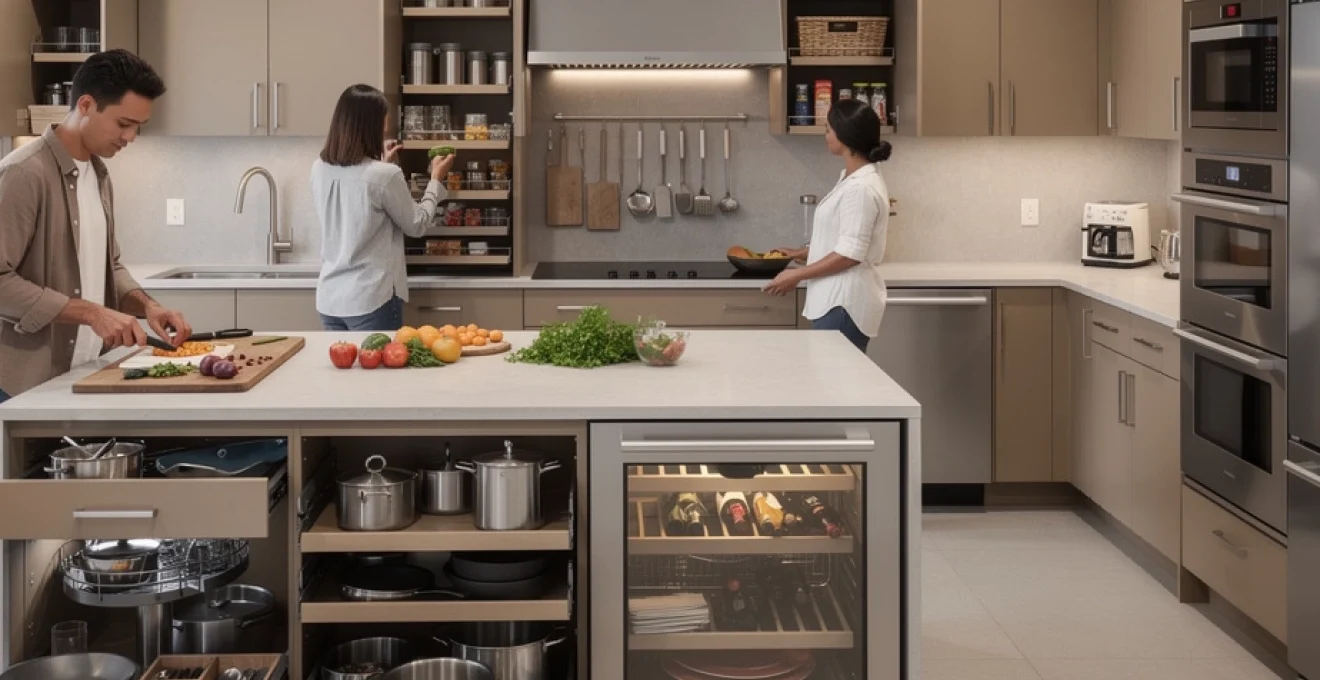
Kitchen functionality extends far beyond aesthetic appeal, fundamentally transforming how households operate on a daily basis. The modern kitchen serves as the central hub for meal preparation, storage organisation, and family interaction, making its design critical to overall household efficiency. When homeowners invest in strategic kitchen remodeling, they’re not merely updating surfaces or replacing appliances—they’re reimagining the very foundation of their daily routines. A well-planned kitchen renovation addresses workflow inefficiencies, storage challenges, and accessibility concerns that may have developed over years of use. Through thoughtful design choices and modern technologies, kitchen remodeling creates spaces that actively support smoother daily operations whilst reducing the time and effort required for everyday tasks.
Ergonomic workflow design through strategic kitchen layout planning
The foundation of kitchen functionality rests upon ergonomic workflow design that considers human movement patterns and task efficiency. Strategic layout planning transforms kitchens from collections of appliances and storage into cohesive work environments that support natural cooking processes. Modern kitchen design principles recognise that effective layouts reduce physical strain, minimise unnecessary movement, and create logical sequences for food preparation activities.
Work triangle optimisation for reduced movement between sink, hob, and refrigerator
The classic work triangle concept remains fundamental to efficient kitchen design, positioning the three primary work centres—sink, cooking surface, and refrigerator—in optimal relationship to one another. Research indicates that the most efficient work triangles measure between 3.6 and 8.2 metres in total perimeter, with no single leg exceeding 2.7 metres. This configuration reduces the number of steps required during typical cooking sequences by approximately 40% compared to poorly planned layouts.
Contemporary interpretations of the work triangle accommodate modern cooking habits and larger appliance selections. Islands and peninsula configurations can incorporate secondary sinks or preparation areas, creating multiple work triangles that support collaborative cooking or entertaining scenarios. When planning triangle optimisation, consider the frequency of movement between zones and position the most commonly accessed elements—typically the sink and refrigerator—closest together.
Counter height standardisation and accessible storage solutions
Standard counter heights of 91 centimetres serve most adults adequately, yet customised heights can dramatically improve comfort and reduce physical strain for primary kitchen users. Kitchen remodeling offers opportunities to incorporate varied counter heights that accommodate different tasks and user preferences. Baking stations benefit from lower surfaces around 86 centimetres, whilst breakfast bars typically require heights of 107 centimetres for comfortable standing interaction.
Accessible storage solutions extend beyond mere compliance with disability guidelines to create universally comfortable kitchens. Pull-down shelving systems bring upper cabinet contents within easy reach, whilst drawer-style base cabinets eliminate the need to bend and reach into deep spaces. These modifications prove particularly valuable as households age in place, maintaining kitchen independence and safety over time.
Traffic flow management in galley versus L-Shaped kitchen configurations
Kitchen configuration significantly impacts traffic flow patterns and overall functionality. Galley kitchens, with their parallel counter arrangement, excel in compact spaces by maintaining the work triangle within a linear progression. However, these layouts can create bottlenecks when multiple users attempt to navigate the space simultaneously. Optimal galley width ranges from 1.2 to 1.5 metres, providing sufficient passage whilst maintaining efficient access to both sides.
L-shaped configurations offer superior traffic management by concentrating work areas within the corner whilst leaving open pathways for circulation. This layout naturally separates kitchen activities from household traffic, reducing interruptions during food preparation. The corner junction in L-shaped kitchens requires careful planning to avoid creating awkward storage areas or inefficient work sequences.
Zoning strategies for food preparation, cooking, and cleaning areas
Effective kitchen zoning organises activities into dedicated areas that support logical workflow sequences. The preparation zone typically centres around the primary sink and includes ample counter space for chopping, mixing, and ingredient assembly. Positioning this zone between the refrigerator and cooking area creates natural progression from ingredient retrieval to preparation to cooking.
Cleaning zones extend beyond the primary sink to include dishwasher placement, waste management, and storage for cleaning supplies. Strategic positioning of the dishwasher adjacent to the sink, with opening clearance that doesn’t
interfere with cabinet doors or walkways ensures that loading and unloading become single-step actions instead of awkward manoeuvres. Similarly, positioning bins and recycling within arm’s reach of the sink and prep areas streamlines waste disposal, helping you keep worksurfaces clear while you cook. Thoughtful zoning during kitchen remodeling prevents task overlap—so one person can plate up while another stacks the dishwasher—without collisions or backtracking.
Smart storage integration and space maximisation techniques
Once the basic layout is resolved, smart storage integration becomes the key driver of everyday functionality. Even the most spacious kitchen can feel cramped if storage is poorly planned, while a compact space can work beautifully if every centimetre is optimised. Modern kitchen remodeling focuses on tailored storage solutions that match your habits, cookware, and shopping patterns, reducing clutter and making it easier to find exactly what you need when you need it.
Pull-out drawer systems and soft-close mechanisms for base cabinets
Traditional hinged-door base cabinets force you to crouch or kneel to reach items at the back, often leading to underused or forgotten storage space. Converting these areas into full-extension drawer systems transforms accessibility, allowing you to see and reach the entire contents in one smooth movement. Studies in ergonomic kitchen design suggest that drawers can improve retrieval efficiency by up to 30%, especially in busy family households where multiple people share storage.
Soft-close mechanisms further enhance everyday usability by preventing slamming, reducing noise, and protecting cabinetry from long-term wear. When you remodel, consider specifying heavy-duty runners that support the weight of pots, pans, and small appliances so drawers glide smoothly even when fully loaded. Grouping drawers by function—for example, one stack for cookware, another for utensils and prep tools—helps you establish logical, repeatable routines that make cooking faster and less stressful.
Corner cabinet solutions including lazy susans and magic corner units
Corner cabinets are notorious dead zones in many kitchens, swallowing bulky items that are difficult to retrieve. Contemporary kitchen remodeling solutions such as rotating lazy Susans, magic corner pull-outs, and Le Mans shelves convert these awkward areas into high-performance storage. These mechanisms bring items out to you rather than forcing you to reach into dark recesses, which is especially beneficial in smaller kitchens where every storage opportunity matters.
When selecting a corner solution, think about what you plan to store there on a daily basis. Lazy Susans are ideal for frequently used pantry items, oils, and condiments, keeping them visible and easy to grab. Magic corner units, by contrast, work well for heavier cookware or small appliances that you use weekly rather than hourly. By matching the hardware to your real-life needs, you avoid the common trap of installing clever-looking gadgets that don’t actually support your everyday cooking habits.
Vertical storage optimisation with tall pantry units and wall-mounted systems
In many homes, underused vertical space is the hidden asset that can dramatically improve kitchen functionality. Tall pantry units reaching close to ceiling height provide generous storage without increasing the footprint of the room. Internal pull-out larders, adjustable shelves, and integrated door racks allow you to separate bulk ingredients from everyday essentials, making weekly shopping and meal planning more efficient.
Wall-mounted systems such as open shelves, rail systems with hooks, and magnetic knife strips also help free up valuable worktop and drawer space. By hanging mugs, utensils, or spice racks, you keep frequently used items within arm’s reach yet off the main preparation surface. For smaller kitchens in particular, using the wall plane intelligently can feel like adding an extra cupboard without the visual bulk, especially when you balance open storage with closed cabinetry to maintain a tidy, streamlined look.
Under-cabinet lighting and hidden storage for small appliance organisation
Small appliances—kettles, toasters, coffee machines, blenders—are essential to modern life but can easily overwhelm worktops. Kitchen remodeling provides the perfect opportunity to design hidden storage solutions such as appliance garages, lift-up doors, and deep drawers with integrated power. These allow you to keep appliances plugged in and ready to use, but out of sight when not needed, preserving a calm, uncluttered appearance that also simplifies cleaning.
Under-cabinet lighting plays a dual role here, improving both visibility and usability across the full depth of the worktop. LED strips or puck lights installed beneath wall cabinets or open shelves illuminate prep zones directly where you chop, mix, and serve. When linked to separate switches or dimmers, these task lights can function independently from main ceiling fixtures, giving you flexible lighting levels throughout the day—bright for focused cooking, softer for evening relaxation.
Modern appliance integration for enhanced culinary efficiency
Appliances form the working engine of your kitchen, and their selection and placement have a profound impact on everyday functionality. Rather than treating appliances as isolated purchases, effective kitchen remodeling treats them as integrated components of a broader workflow. This approach helps you cook faster, clean more efficiently, and use energy more responsibly, all while maintaining a streamlined, cohesive aesthetic.
Built-in combination steam ovens and microwave placement considerations
As home cooking trends evolve, built-in combination steam ovens and compact microwaves are increasingly central to efficient kitchen design. A combi-steam oven allows you to cook healthier meals more quickly, retaining moisture and nutrients while reducing the need for added fats. Many models also function as conventional ovens, freeing you from the need to dedicate space to multiple large appliances and supporting more flexible meal preparation.
Microwave placement is another subtle but critical decision for everyday functionality. Installing a microwave at eye or chest level in a tall unit reduces bending and makes it easier to monitor food without spills or burns. In smaller kitchens, a compact built-in microwave above a single oven or within a tall cabinet stack can reclaim valuable worktop space. When planning, ensure that door swings and clearances don’t clash with adjacent units or walkways, and consider child safety if younger family members regularly use the appliance.
Induction hob technology and integrated downdraft extraction systems
Induction hobs have become a cornerstone of modern kitchen remodeling thanks to their speed, precision, and safety benefits. Because induction directly heats the pan rather than the glass surface, water can boil up to 50% faster than on some traditional electric hobs, cutting down on everyday cooking time. The surface around the pan also stays cooler, reducing the risk of burns and making post-cooking cleaning as simple as wiping up spills before they have time to bake on.
Integrated downdraft extraction systems further enhance functionality, particularly in open-plan spaces or kitchens without external walls for traditional hoods. These extractors draw steam and odours downwards at the source, often built into the hob itself or rising discreetly from the worktop when needed. For homeowners who value clear sightlines and flexible layout options—such as an island hob without a bulky overhead canopy—downdraft solutions provide effective ventilation without dominating the room design.
Multi-zone refrigeration including wine coolers and drawer freezers
Refrigeration needs have diversified significantly, and kitchen remodeling now frequently incorporates multi-zone solutions tailored to different types of food and drink. In addition to a primary fridge-freezer, many households opt for under-counter wine coolers or beverage centres, which maintain precise temperatures for drinks while freeing up space in the main refrigerator. This is especially practical if you entertain often or have teenagers who access cold drinks throughout the day.
Drawer freezers and fridge drawers offer another layer of flexibility, allowing you to position cold storage exactly where you most often need it. For example, freezer drawers near the cooking zone streamline access to frozen vegetables and ingredients, while fridge drawers close to a breakfast bar or island can hold snacks and dairy for quick family access. By separating high-frequency items into dedicated zones, you reduce door opening time on your main appliance, improving energy efficiency and speeding up daily routines.
Integrated dishwasher positioning for optimal workflow connectivity
The dishwasher sits at the heart of the kitchen’s cleaning cycle, and its placement can either simplify or complicate your everyday workflow. Positioning the dishwasher directly adjacent to the sink, with a short, unobstructed stretch of worktop between them, makes it easy to scrape, rinse, and load dishes in a single smooth sequence. Ideally, this zone should also be close to storage for plates, glasses, and cutlery, so unloading becomes a minimal-effort task.
When planning, consider how the open dishwasher door intersects with circulation routes and cabinet access. In a well-designed kitchen, you can load and unload the dishwasher without blocking access to the bin, the fridge, or the primary cooking area. For households that run multiple cycles per day, some designers even specify two smaller integrated dishwashers instead of one large unit, allowing you to dedicate one to clean dishes and the other to dirty—much like professional kitchens manage continuous service.
Material selection and surface technology for maintenance efficiency
The materials you choose during kitchen remodeling have a direct and lasting effect on everyday maintenance. Surfaces that resist stains, scratches, and heat not only look better for longer but also reduce the time you spend cleaning and repairing. By prioritising durable, low-maintenance finishes, you create a kitchen that supports your lifestyle instead of demanding constant attention.
Engineered quartz worktops, for example, offer a non-porous surface that is highly resistant to staining from common kitchen substances such as wine, coffee, and citrus. Unlike some natural stones, quartz requires no periodic sealing, making it particularly attractive for busy households seeking long-term ease of care. Similarly, high-pressure laminates and compact laminates have evolved significantly, offering convincingly realistic stone or timber looks with excellent impact resistance at a more accessible price point.
For cabinetry, modern lacquered finishes, high-pressure laminates, and textured melamines can all withstand daily knocks and frequent cleaning far better than older vinyl wraps. Selecting darker, slightly textured finishes for high-touch zones—such as lower cabinets and handleless channels—helps disguise fingerprints and minor scuffs. On the floor, luxury vinyl tile, porcelain tile, and engineered wood balance durability with comfort underfoot, and many options are compatible with underfloor heating for added everyday comfort.
Advances in surface technology also extend to splashbacks and sinks. Large-format porcelain slabs or back-painted glass splashbacks minimise grout lines, reducing places where grease and grime can accumulate. In sinks, composite materials offer excellent resistance to scratches and heat, while undermount installation allows you to sweep crumbs and spills straight from the worktop into the basin. Together, these choices reduce daily cleaning effort so you can focus more on cooking and enjoying the space.
Lighting design and electrical infrastructure for task performance
Lighting and electrical planning are often underestimated aspects of kitchen remodeling, yet they have a profound impact on functionality. Good lighting design layers ambient, task, and accent lighting to ensure that every activity—from fine chopping to relaxed dining—is properly supported. At the same time, a robust electrical infrastructure with sufficient sockets and dedicated circuits ensures that modern appliances operate safely and conveniently.
Ambient lighting usually comes from ceiling fixtures such as recessed downlights or central pendants, providing overall illumination. However, relying solely on ceiling lighting can leave worktops in shadow, especially when wall cabinets block the light. That’s why task lighting—under-cabinet LEDs, shelf lighting, and focused pendants over islands—is so critical for safe, efficient food preparation. Many designers now recommend separate circuits and dimmers so you can adjust brightness independently in different zones, tailoring the atmosphere to the time of day and activity.
Electrical planning should anticipate both current and future needs. Strategically placed double sockets above worktops accommodate everyday appliances, while pop-up or flush-mounted sockets in islands provide flexible power for mixers, laptops, or homework sessions. Inside larders and deep drawers, integrated lighting and concealed sockets can transform these spaces into fully functional breakfast stations or appliance garages. Given the increasing popularity of smart home technologies, allowing for hard-wired connections for smart ovens, induction hobs, and connected extraction systems can future-proof your kitchen for years to come.
Safety is another crucial dimension of electrical and lighting design. Ensuring that circuits comply with current regulations, particularly around wet areas and high-load appliances, reduces the risk of tripping breakers or overloading sockets. Motion-activated plinth or pathway lights can make night-time kitchen visits safer, especially for children or older adults. By thinking of your lighting and electrical layout as the nervous system of the kitchen, you create an environment that responds intuitively to how you actually live and work every day.
Universal design principles for long-term accessibility and usability
Universal design aims to make spaces usable by as many people as possible, regardless of age, height, or physical ability. When applied to kitchen remodeling, these principles ensure that your kitchen remains functional and welcoming as your household changes over time. Rather than being an afterthought, accessibility becomes a built-in strength that enhances convenience for everyone, from young children to older relatives and guests.
One key principle is providing varied worktop heights and accessible storage. Lower sections of counter can support seated food prep or baking, while higher breakfast bars accommodate standing social interaction. Generous knee space beneath some areas—such as a section of the island or a pull-out work surface—allows wheelchair users or those with limited mobility to participate comfortably in cooking and conversation. Wide walkways, ideally 1–1.2 metres in main circulation zones, make it easier for two people to pass and for mobility aids to navigate without obstruction.
Hardware choices also influence accessibility in subtle but important ways. D-shaped handles, push-to-open mechanisms, and pull-out drawers are typically easier to operate than small knobs or deep shelves, particularly for users with reduced grip strength. Lever-style taps, pull-out spray faucets, and single-handle controls simplify tasks like rinsing vegetables or filling pots. Induction hobs with clear visual controls and automatic pan detection add another layer of safety, as do ovens with side-opening doors or slide-and-hide mechanisms that reduce the need to lean over a hot door.
Lighting and contrast further support universal usability. Ensuring that worktops, cabinet fronts, and floors have sufficient tonal contrast helps users with reduced vision distinguish edges and avoid trip hazards. Well-lit controls on appliances and clearly visible power switches make it easier for all users to operate equipment confidently. Finally, incorporating features such as non-slip flooring, rounded worktop edges, and secure handholds near steps or level changes can prevent accidents before they happen.
By embedding universal design principles into your kitchen remodeling project, you’re not just creating an accessible kitchen—you’re creating a more forgiving, intuitive, and enjoyable environment for everyone who uses it. The result is a space that adapts gracefully to life’s changes, supporting everyday functionality today while remaining practical and safe well into the future.