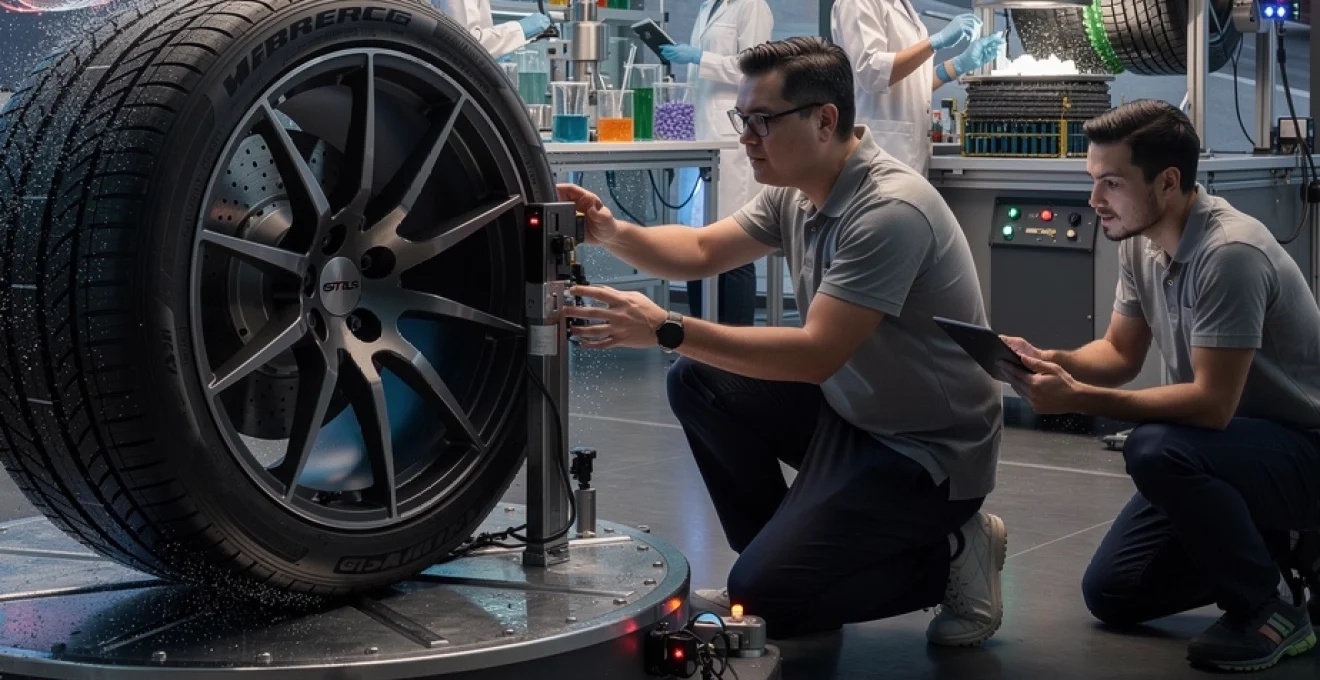
The relentless pursuit of automotive excellence has propelled tire technology into an era of unprecedented innovation. Modern vehicle demands require tires that can deliver superior grip across diverse road conditions whilst maintaining exceptional durability throughout their operational lifespan. This technological evolution isn’t merely about meeting current performance standards—it’s about anticipating future automotive needs and environmental challenges. From Formula One circuits to everyday commuting routes, the fundamental principles governing tire performance continue to be redefined through cutting-edge materials science, advanced manufacturing processes, and sophisticated design methodologies.
Advanced rubber compound engineering and Silica-Enhanced formulations
The foundation of modern tire performance lies in revolutionary rubber compound engineering that transforms raw materials into sophisticated polymer networks. Contemporary tire manufacturers have moved far beyond traditional rubber formulations, embracing complex chemical architectures that respond dynamically to varying road conditions and temperatures. These advanced compounds incorporate multiple polymer chains working in harmony, creating tire structures that maintain optimal flexibility in cold weather whilst providing exceptional stability during high-temperature operations. The integration of these sophisticated compounds represents a quantum leap from conventional rubber technology, offering drivers unprecedented levels of performance consistency across diverse driving scenarios.
Silica nanoparticle integration in modern tyre compounds
Silica nanoparticles have revolutionised tire compound chemistry by providing enhanced wet-weather performance without compromising rolling resistance. These microscopic particles, typically measuring between 10-50 nanometres, create intricate networks within the rubber matrix that improve traction whilst reducing energy loss during tire deformation. The surface chemistry of silica particles enables superior bonding with polymer chains, resulting in compounds that maintain grip even when conventional rubber formulations begin to lose effectiveness. This technology has become particularly crucial for meeting stringent EU tire labelling requirements for wet grip performance.
Multi-polymer blend technologies for enhanced wet weather performance
Contemporary tire formulations employ sophisticated multi-polymer blend technologies that combine different rubber types to optimise performance across varying conditions. These blends typically incorporate natural rubber for flexibility, synthetic rubber for durability, and specialised polymers for specific performance characteristics. The precise ratios and mixing methodologies create compounds that excel in wet conditions by maintaining molecular flexibility that enhances road contact. Advanced mixing techniques ensure homogeneous distribution of polymer phases, preventing performance inconsistencies that could compromise safety during critical driving situations.
Carbon black replacement strategies in High-Performance applications
The traditional reliance on carbon black as the primary reinforcing agent is being challenged by innovative alternatives that offer superior performance characteristics. Silica-based reinforcement systems have demonstrated remarkable improvements in rolling resistance whilst maintaining the structural integrity required for high-performance applications. These alternative reinforcement strategies involve careful consideration of particle size distribution, surface area, and chemical bonding characteristics. The transition away from carbon black represents a significant shift in tire manufacturing philosophy, prioritising environmental considerations alongside performance enhancements.
Temperature-responsive polymer chemistry in continental and michelin formulations
Leading tire manufacturers have developed temperature-responsive polymer chemistry that adapts tire characteristics based on ambient and operational temperatures. These intelligent compounds utilise molecular structures that modify their behaviour as temperatures fluctuate, ensuring optimal performance whether driving through winter conditions or summer heat. The polymer chains incorporate thermally-sensitive segments that alter their configuration in response to temperature changes, maintaining grip and durability across extreme temperature ranges. This adaptive chemistry represents a fundamental advancement in tire technology, moving beyond static compound formulations towards dynamic performance optimization.
Tread pattern optimisation through computational fluid dynamics
Modern tread pattern development has transformed from empirical trial-and-error approaches to sophisticated computer-aided design processes utilising computational fluid dynamics (CFD) analysis. These advanced simulation techniques enable engineers to visualise water flow patterns, air circulation dynamics, and contact pressure distributions before physical prototypes are manufactured. CFD modelling reveals how tread geometry influences hydroplaning resistance, noise generation, and wear patterns under various operating conditions. The integration of multiple simulation parameters allows designers to optimise tread patterns for specific performance criteria whilst maintaining manufacturing feasibility. This technological approach has reduced development timeframes whilst significantly improving final product performance characteristics.
Asymmetric directional patterns for aquaplaning resistance
Asymmetric directional tread patterns represent a sophisticated approach to aquaplaning resistance through optimised water evacuation channels. These
channels direct surface water away from the contact patch, allowing the rubber to maintain effective road contact even at higher speeds. Engineers use CFD models to fine-tune the angle, width, and depth of these grooves, ensuring that water is expelled laterally and longitudinally with minimal turbulence. This approach improves straight-line stability in heavy rain whilst preserving lateral grip during cornering, helping drivers maintain control when sudden storms or standing water appear. For performance vehicles and premium touring cars, asymmetric directional designs offer a balanced compromise between wet grip, dry handling, and even tire wear throughout the tire’s lifespan.
In everyday driving, the benefits of these optimised patterns become most noticeable during emergency manoeuvres or sudden braking on wet asphalt. Rather than relying on trial-and-error test tracks alone, manufacturers can simulate extreme rainfall scenarios and varying road textures long before the first prototype is produced. This virtual development stage reduces costly physical testing while delivering tread patterns that align with strict regulatory demands on aquaplaning resistance. As a result, modern tire designs help reduce braking distances in wet conditions and provide drivers with more predictable handling, even as tread depth decreases over time.
Variable pitch sequencing for noise reduction in premium tyres
Variable pitch sequencing is a sophisticated acoustic optimisation technique used in premium tires to reduce pattern noise without sacrificing grip and durability. In simple terms, it involves arranging tread blocks of different sizes and shapes in a deliberate sequence so that the sound waves they generate do not align and amplify. When you drive at motorway speeds, each tread block hitting the road creates a small noise pulse; variable pitch sequencing ensures these pulses cancel each other out as much as possible. The result is a quieter cabin environment, which is particularly important for electric vehicles where tire noise is more noticeable due to the absence of engine sound.
Using CFD and vibro-acoustic modelling, tire engineers can simulate how different tread layouts interact with air and road surfaces to create or dampen sound. They optimise the sequence of short and long tread blocks, along with the spacing between them, to disperse noise frequencies across a broader spectrum. This is similar to how a well-tuned orchestra avoids harsh resonance by balancing different instruments; in a tire, the “instruments” are the individual tread elements. By lowering exterior rolling noise, manufacturers help vehicles comply with regulations such as ECE R117, while improving long-distance comfort for drivers and passengers.
Siping technology advancements in bridgestone blizzak series
Siping refers to the thin slits cut into tread blocks that open and close as the tire rolls, increasing the number of biting edges on snow and ice. Bridgestone’s Blizzak series has long been a benchmark in winter tire technology, largely due to advanced 3D siping designs that lock together under load. Traditional 2D sipes can cause tread blocks to become too flexible, reducing stability on dry or wet roads, but 3D sipes interlock like tiny puzzle pieces to maintain block rigidity. This allows Blizzak tires to deliver high levels of snow traction without sacrificing steering precision or braking performance on cleared winter roads.
Modern Blizzak formulations also incorporate multi-layer compounds, with a high-traction top layer designed to maximise grip on ice and a more durable base layer to improve tire longevity. As the tire wears, new siping edges are progressively exposed, helping to maintain grip over a larger portion of the tire’s life. For drivers in Nordic or alpine regions, this means more consistent winter performance from the first snow of the season until the final thaw. By combining innovative siping geometries with cold-optimised rubber compounds, Bridgestone has demonstrated how detailed tread engineering can directly translate into safer real-world winter driving.
3D groove geometry optimisation using FEA modelling
Finite Element Analysis (FEA) has become an essential tool for optimising 3D groove geometry in modern tire treads. Instead of only considering how grooves evacuate water, engineers now study how the entire tread block deforms under braking, cornering, and acceleration. Using FEA, they can observe stress concentrations, block stiffness variations, and microscopic slip at the contact patch, then adjust groove angles, chamfers, and sipe layouts to balance grip and wear. Think of the tread as a complex spring system; FEA helps designers tune each “spring” to respond correctly under different loads and temperatures.
By simulating thousands of loading cycles, manufacturers can predict how changes in groove shape will influence irregular wear, such as heel-and-toe wear or cupping. This predictive capability leads to tread patterns that maintain consistent grip and contact pressure over a longer service life, contributing to both safety and sustainability. It also enables faster development of tyres tailored to specific applications, whether ultra-high-performance summer tyres or long-haul truck tyres focused on durability. Ultimately, 3D groove optimisation supported by FEA ensures that the tire’s physical structure and rubber chemistry work together as an integrated system.
Reinforcement structure innovation and steel belt engineering
Beneath the tread surface, the reinforcement structure and steel belt package play a decisive role in how a tire grips the road and resists wear. Modern radial tyres typically employ multiple steel belt layers combined with textile or aramid reinforcements to control deformation at high speeds and under heavy loads. By carefully selecting cord angles, tension levels, and belt materials, engineers can tune the contact patch shape and stiffness profile. A wider, more stable contact patch provides dependable grip and more even wear, while optimised belt tension helps reduce rolling resistance and heat build-up.
Recent innovations include the use of high-tensile steel cords with ultra-fine filaments, which increase strength without adding excessive weight. Some manufacturers are also incorporating hybrid belt packages that combine steel with aramid or nylon overlay plies to improve high-speed stability and impact resistance. These reinforcement solutions are particularly important in low-profile high-performance tyres, where sidewalls must remain relatively stiff to preserve steering accuracy. By controlling how the carcass and belts flex under dynamic loads, engineers can deliver tyres that feel responsive yet comfortable, and that maintain structural integrity over tens of thousands of kilometres.
Digital manufacturing processes and quality control systems
The digitalisation of tire manufacturing has transformed how consistently grip and durability can be delivered from one tire to the next. Where earlier processes depended heavily on manual inspection and operator experience, today’s plants rely on advanced automation, real-time data capture, and predictive analytics. Digital twins of tire designs, combined with tightly controlled mixing and curing stages, ensure that each batch of compound and each reinforcement layer matches its specification. This level of process stability is crucial when producing modern silica-rich compounds and complex tread patterns that demand precise tolerances.
Automated tyre building machine precision in goodyear facilities
In Goodyear facilities and other leading plants worldwide, automated tire building machines (TBMs) assemble components with a level of precision that manual methods simply cannot match. These TBMs apply inner liners, body plies, belts, beads, and tread strips with micrometre-level accuracy, ensuring consistent geometry from tire to tire. Why does this matter for everyday drivers? Because small variations in layer alignment or thickness can translate into vibrations, uneven wear, and reduced grip under demanding conditions.
Modern TBMs are guided by programmable logic controllers and vision systems that verify component placement in real time. If any deviation is detected, the machine can self-correct or halt production before a defect progresses further along the line. This automation reduces human error and improves repeatability, which in turn supports higher-speed ratings, better balance characteristics, and longer-lasting tread blocks. For performance-focused products, such as ultra-high-performance summer tyres, the precise alignment of belts and tread is a key factor in achieving crisp steering feedback and predictable cornering.
Real-time compound monitoring through IoT sensor networks
The integration of IoT sensor networks into mixing and curing operations allows tire manufacturers to monitor compound properties in real time. Sensors track temperature, pressure, viscosity, and curing time at multiple stages, feeding data into central control systems that can adjust process parameters on the fly. This is especially important for advanced silica and multi-polymer compounds, where minor deviations in mixing energy or curing temperature can alter the final balance between grip and rolling resistance. Think of it as cooking with a smart oven that constantly measures and corrects to ensure the perfect result every time.
By logging and analysing this process data, manufacturers build robust traceability for each tire produced, connecting performance outcomes with specific production conditions. If a batch shows unexpected test results, engineers can quickly identify root causes and implement corrective actions across global plants. For you as a driver, this translates into greater consistency: a set of tyres bought today should behave almost identically to a set from the same line produced months later. Over time, accumulated IoT data also supports continuous improvement, enabling compound recipes and curing cycles to be refined for even better durability and fuel efficiency.
Machine learning applications in defect detection systems
Machine learning has rapidly become a cornerstone of modern tire quality control, particularly in non-destructive inspection systems. High-resolution X-ray, shearography, and visual imaging tools generate vast amounts of data for each tire passing through final inspection. Traditionally, human inspectors would review these images, but subtle defects can be difficult to detect consistently. Machine learning models trained on thousands of labelled examples can identify anomalies in cord alignment, belt overlaps, or internal voids with remarkable accuracy.
These AI-driven systems do not replace human expertise; instead, they augment it by flagging suspect areas for closer review. Over time, the algorithms learn from both confirmed defects and false positives, becoming more precise with each production cycle. This approach not only reduces the likelihood of defective tyres reaching the market, it also highlights recurring process issues that may need engineering intervention upstream. As a result, modern tyres benefit from both improved initial quality and a feedback loop that steadily enhances process robustness, supporting the long-term grip and durability drivers expect.
Sustainable material development and bio-based alternatives
As the automotive industry accelerates towards lower emissions and circular economy principles, tire manufacturers are investing heavily in sustainable materials and bio-based alternatives. Traditional tire production relies on petroleum-derived synthetic rubbers and fossil-based process oils, as well as carbon black derived from heavy oils. Today, major brands are incorporating natural rubber from sustainably managed plantations, bio-based polymers, and renewable fillers such as silica derived from rice husk ash. These innovations aim to reduce the overall carbon footprint of tire production while maintaining, or even improving, grip and durability.
One of the key challenges is ensuring that eco-friendly materials deliver comparable performance in demanding real-world conditions. For instance, bio-based plasticisers and resins must withstand repeated thermal cycles and mechanical stresses without degrading prematurely. Manufacturers are addressing this through intensive lab testing and field trials, optimising formulations to match specific applications such as all-season, touring, or high-performance tyres. In parallel, recycled materials like devulcanised rubber and reclaimed carbon black are being incorporated into sidewalls and sub-tread layers, where performance requirements are slightly less critical than in the contact patch.
Efforts in sustainable tire technology go beyond raw materials, extending into end-of-life strategies and circular design thinking. Some companies are developing tyres that are easier to recycle or retread, using modular structures and compatible compound families that can be efficiently processed at the end of service. For fleet operators and environmentally conscious drivers, choosing tyres with higher renewable and recycled content is becoming a practical way to support sustainability without compromising safety. As regulatory pressures tighten and consumer expectations evolve, the proportion of bio-based materials in mainstream tire lines is expected to grow significantly over the next decade.
Performance testing methodologies and industry standards
No matter how advanced a tire’s design and materials may be, its real-world value is only proven through rigorous performance testing and compliance with industry standards. Manufacturers subject new tyre models to an extensive array of lab-based and on-track tests measuring grip, braking distance, rolling resistance, noise, wear, and high-speed durability. These evaluations are aligned with regulations such as ISO, ECE, and regional winter tyre standards to ensure that products can be sold across global markets. For drivers, these standards act as a quality benchmark, offering a degree of confidence that tyres meet minimum safety and efficiency criteria.
ISO 28580 rolling resistance coefficient measurement protocols
ISO 28580 defines standardised methods for measuring the rolling resistance coefficient of passenger car and truck tyres. Rolling resistance is a key factor in vehicle fuel consumption and CO2 emissions, as it quantifies the energy lost when a tyre deforms and recovers while rolling. Under this protocol, tyres are tested on drum machines at specified loads, speeds, and inflation pressures to ensure comparable results between different brands and models. For manufacturers, achieving a low rolling resistance coefficient without sacrificing wet grip is a central engineering challenge.
The data generated under ISO 28580 is often used for tyre labelling schemes, particularly in the EU, where consumers can compare fuel efficiency ratings at a glance. You might wonder: does choosing a low rolling resistance tyre really make a difference? Studies suggest that optimised tyres can reduce fuel consumption by 3–5%, which becomes significant over the life of a vehicle, particularly for high-mileage drivers and commercial fleets. As electric vehicles become more widespread, low rolling resistance becomes even more critical for maximising driving range per charge.
ECE R117 tyre rolling sound emission testing requirements
ECE R117 is a United Nations regulation that sets requirements for tyre rolling sound emissions, as well as wet grip and rolling resistance for certain categories. For noise measurement, tyres are fitted on a reference vehicle and driven past calibrated microphones at defined speeds and track conditions. The aim is to limit external noise pollution from road traffic, which has become a major environmental and public health concern in densely populated regions. Tyres that fail to meet these sound emission thresholds cannot be sold in many markets, particularly in Europe.
To comply with ECE R117, tyre designers implement technologies such as variable pitch tread sequencing, optimised groove shapes, and noise-dampening cavity foams for certain premium models. These measures help to break up tonal peaks and reduce the “whine” often associated with aggressive tread patterns. For drivers, lower external noise levels contribute to a more refined driving experience and reduced noise fatigue on long journeys. For city planners and regulators, quieter tyres are one of several tools used to manage overall urban noise levels alongside road surface treatments and traffic management strategies.
Pirelli P zero corsa track performance validation procedures
High-performance tyres like the Pirelli P Zero Corsa undergo specialised validation procedures tailored to track-focused use. Unlike standard touring tyres, these products must deliver exceptional grip, heat resistance, and structural stability under repeated high-speed cornering and heavy braking. Pirelli collaborates closely with sports car manufacturers and race teams, conducting joint test sessions at circuits such as Nürburgring, Monza, or Spa-Francorchamps. During these sessions, engineers gather telemetry data on lap times, lateral and longitudinal G-forces, tread temperature distribution, and wear patterns.
The insights gained from track testing are used to refine tread compounds, belt packages, and carcass constructions to achieve the desired balance between peak grip and usable operating window. For example, compounds are tuned to reach their optimal temperature quickly yet resist overheating over multiple laps, similar to how athletic footwear balances cushioning with responsiveness. Drivers who participate in track days or high-performance driving events benefit from tyres that maintain consistent handling characteristics, giving them confidence as they explore the limits of their vehicles. These rigorous validation processes ensure that performance-labelled tyres deliver on their promises beyond marketing claims.
Winter tyre certification under nordic approval standards
In regions with severe winter conditions, such as Scandinavia, standard European winter tyre regulations are often supplemented by stricter Nordic approval standards. These certifications focus heavily on ice and packed snow performance, including braking, acceleration, and lateral grip on low-friction surfaces. Test facilities typically use specially prepared ice tracks and controlled snow conditions to provide repeatable measurements across different tyre models. To earn Nordic approval, a tyre must demonstrate superior traction and control in these demanding environments, often exceeding the requirements of broader European regulations.
Manufacturers striving for Nordic certification invest in specialised winter compounds rich in silica and softening resins, combined with aggressive siping and tread block designs optimised for biting into ice and snow. For drivers in northern climates, selecting tyres carrying Nordic symbols and approvals is a practical way to ensure adequate winter safety. It also reflects how regional standards push tire technology further, leading to advancements that eventually trickle down into mainstream winter product lines worldwide. As climate patterns evolve and extreme weather events become more common, such dedicated performance testing frameworks will remain crucial in guiding the next generation of winter tyre innovations.