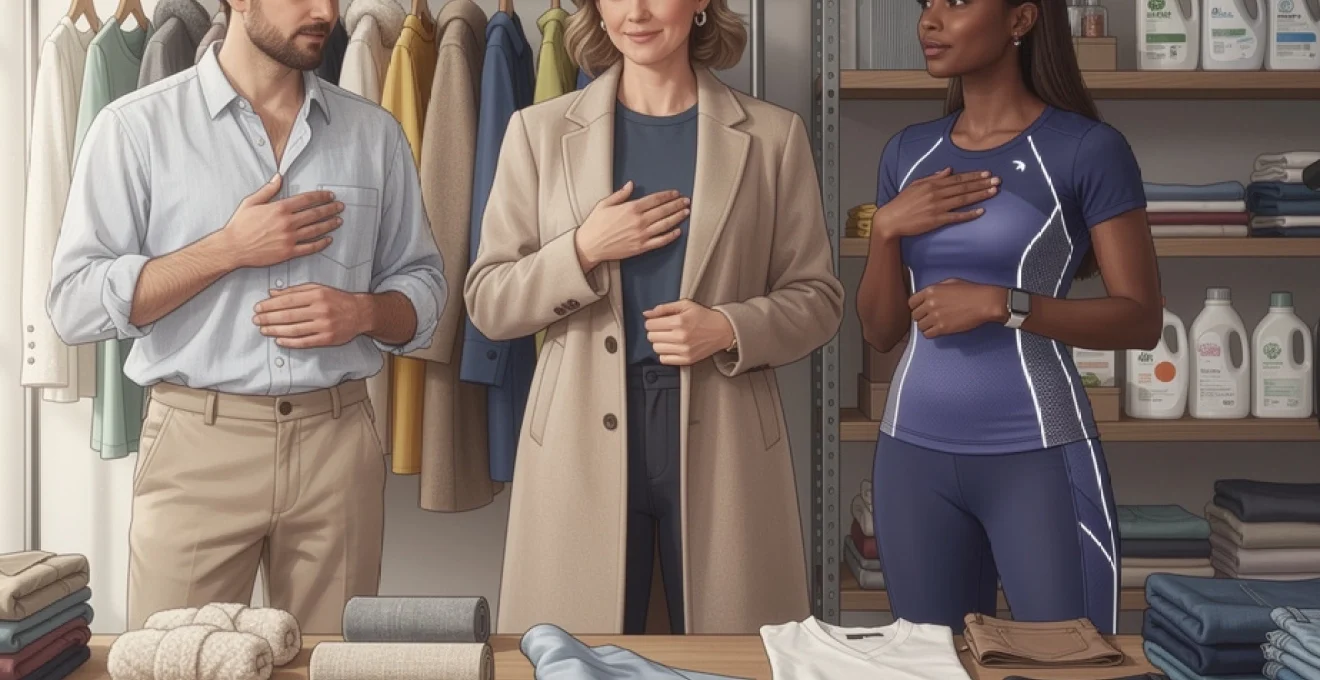
The fabric beneath your skin serves as the invisible foundation that determines whether you feel confident and comfortable throughout the day or find yourself constantly adjusting and fidgeting. Beyond mere aesthetics, fabric selection represents a sophisticated interplay of textile science, material engineering, and human physiology. Modern consumers increasingly demand garments that deliver both exceptional comfort and striking visual appeal, driving innovations in fibre technology and fabric construction methods.
Understanding the intricate relationship between fabric properties and garment performance has become essential for fashion designers, manufacturers, and discerning consumers alike. The molecular structure of fibres influences everything from moisture management to thermal regulation, whilst weave patterns and fabric weight determine drape, durability, and tactile sensation. This comprehensive understanding enables informed decisions that balance aesthetic desires with functional requirements.
Textile fibre properties and their impact on garment performance
The fundamental characteristics of textile fibres establish the baseline for all subsequent garment properties. Each fibre type possesses unique molecular structures that determine its behaviour under various conditions, from environmental stresses to mechanical forces. Understanding these properties allows designers and manufacturers to predict how finished garments will perform in real-world applications.
Modern textile science has revealed that fibre properties extend far beyond simple strength and durability. Moisture absorption rates, thermal conductivity, elasticity recovery, and surface texture all contribute to the overall performance profile of finished fabrics. These characteristics interact with fabric construction techniques to create complex performance matrices that influence comfort, durability, and aesthetic appeal simultaneously.
Natural fibre characteristics: cotton, wool, and linen breathability factors
Cotton fibres possess a unique hollow structure that facilitates exceptional moisture absorption, allowing the material to absorb up to 27% of its weight in water whilst maintaining structural integrity. This natural moisture-wicking capability makes cotton particularly suitable for warm-weather garments and undergarments where comfort against the skin remains paramount. The fibre’s smooth surface and natural twist contribute to its soft hand feel and excellent dyeability.
Wool fibres demonstrate remarkable thermal regulation properties due to their crimped structure and protein-based composition. The natural scales on wool fibres create microscopic air pockets that provide insulation whilst allowing moisture vapour to escape. Merino wool, in particular, offers superior breathability with moisture transfer rates exceeding 35% relative humidity, making it suitable for both cold-weather insulation and active wear applications.
Linen fibres, derived from flax plants, exhibit the highest tensile strength among natural fibres whilst maintaining exceptional breathability. The hollow core structure of linen fibres allows rapid moisture evaporation, creating a cooling effect that makes linen garments particularly comfortable in hot, humid conditions. Research indicates that linen fabrics can reduce skin temperature by up to 3°C compared to cotton equivalents under similar conditions.
Synthetic fibre engineering: polyester, nylon, and spandex elasticity metrics
Polyester fibres engineered through advanced polymerisation processes offer exceptional dimensional stability and colour retention properties. Modern polyester variants can achieve elasticity recovery rates exceeding 95% after 5% extension, making them ideal for garments requiring shape retention. The hydrophobic nature of polyester enables rapid moisture evaporation from the fabric surface, though it requires specialised treatments to achieve skin-friendly moisture management.
Nylon fibres demonstrate superior abrasion resistance, with laboratory testing showing wear resistance up to five times greater than natural fibres under similar conditions. The thermoplastic properties of nylon allow for heat-setting processes that create permanent pleats and shape retention. Advanced nylon variants incorporate modified polymer chains that enhance moisture transmission whilst maintaining the material’s inherent strength and elasticity.
Spandex fibres revolutionised garment design by providing elasticity levels previously unachievable in textile applications. These segmented polyurethane fibres can stretch up to 600% of their original length whilst recovering completely, enabling form-fitting garments that maintain comfort during movement. The incorporation of just 2-5% spandex in fabric blends can dramatically improve garment fit and wearer comfort without compromising other fabric properties.
Blended fabric technologies: Cotton-Polyester and Wool-Cashmere performance analysis</h
Blended fabric technologies: Cotton-Polyester and Wool-Cashmere performance analysis
Blended fabrics combine the strengths of different fibre types to achieve a more balanced performance profile than any single fibre can offer. Cotton-polyester blends, for instance, harness cotton’s softness and breathability alongside polyester’s strength, wrinkle resistance, and rapid drying. Typical 60/40 or 65/35 cotton-polyester compositions demonstrate improved dimensional stability and reduced shrinkage, whilst maintaining a comfortable hand feel suitable for everyday clothing.
Performance testing indicates that cotton-polyester blends exhibit higher tensile strength and better colourfastness than pure cotton under repeated laundering. These properties translate into garments that retain their shape, colour, and smooth appearance over a longer service life, enhancing both comfort and long-term style retention. At the same time, appropriate finishing and yarn engineering can mitigate polyester’s tendency to trap odours, creating fabrics that are both practical and pleasant to wear.
Wool-cashmere blends illustrate another strategic use of blended fabric technologies in comfort and style selection. Cashmere fibres provide an exceptionally soft hand and luxurious drape, but on their own can be delicate and prone to pilling. When combined with finer-grade wool, cashmere gains structural support and durability, whilst wool benefits from enhanced softness and improved thermal comfort at lower fibre weights. Premium 70/30 or 80/20 wool-cashmere blends often deliver warmth-to-weight ratios superior to pure wool fabrics.
From a style perspective, these blends allow designers to create tailored coats, knitwear, and suiting that feel indulgent against the skin yet withstand regular wear. Consumers benefit from garments that look refined, resist deformation at stress points such as elbows and knees, and maintain a smooth, elegant surface. By understanding the performance characteristics of blended fabrics, you can better evaluate whether a garment will serve as a long-term wardrobe staple or a short-lived indulgence.
Microfibre innovation and moisture-wicking capabilities in athletic wear
Microfibre technology has transformed the way we think about comfort and style in performance apparel. Microfibres are extremely fine synthetic filaments—often less than 1 denier per filament—engineered to create a high surface area and complex capillary networks within the fabric. This structure promotes rapid moisture transport away from the skin, dispersing sweat over a larger area so it can evaporate more quickly and keep the wearer dry.
In athletic wear, microfibre polyester and nylon are often combined with engineered yarn cross-sections, such as multi-channel or wedge-shaped fibres, to enhance moisture-wicking capabilities. Laboratory tests show that these fabrics can reduce drying times by up to 50% compared to conventional knits, significantly improving comfort during high-intensity activity. This moisture management is not only about feeling dry; it also helps regulate body temperature and reduce the risk of chafing.
Many high-performance sports garments also incorporate spandex into microfibre constructions to provide four-way stretch and superior elasticity recovery. This ensures that compression garments, leggings, and fitted tops move with the body without causing restriction or losing their shape over time. For activities where microclimate control is critical—running, cycling, or gym training—these moisture-wicking properties can directly influence endurance and perceived exertion.
For everyday consumers, understanding microfibre innovation helps differentiate between garments that merely feel smooth and those that truly manage sweat and heat effectively. When shopping for athletic wear or athleisure pieces, looking for descriptors such as “moisture-wicking fabric”, “quick-dry microfibre knit”, or “engineered capillary yarns” can guide you toward textiles designed for real performance rather than just marketing appeal. In this way, fabric choice becomes a practical tool for aligning your clothing with your activity level and comfort expectations.
Fabric construction techniques influencing comfort parameters
Whilst fibre type sets the foundation for garment performance, fabric construction determines how those fibres interact with the body and the surrounding environment. The way yarns are interlaced or interlooped affects drape, stretch, air permeability, and tactile sensation. Two fabrics made from identical fibres can feel entirely different on the skin simply because of their weave or knit structure.
Designers therefore pay close attention to construction techniques when optimising comfort and style selection. Weave type, knit architecture, thread count, and fabric weight all contribute to how a garment moves, breathes, and responds to wear. Appreciating these construction variables allows you to look beyond the fibre content label and better predict how a fabric will behave in daily use.
Weave structure analysis: plain, twill, and satin impact on drape and flexibility
Woven fabrics are created by interlacing warp and weft yarns in systematic patterns, with plain, twill, and satin weaves forming the three fundamental structures. Plain weave, found in staples like poplin and broadcloth, uses a simple over-under pattern that produces a stable, balanced fabric with relatively low drape. This structure offers good durability and resistance to snagging, making it suitable for shirts, uniforms, and everyday garments that require consistent shape and crisp appearance.
Twill weaves, recognizable by their diagonal ridges, arrange yarns in a staggered pattern that allows for greater flexibility and improved drape compared to plain weave. Denim, gabardine, and chino cloth are classic examples where the twill structure enhances comfort by allowing the fabric to mould more easily to the body whilst retaining substantial strength. Twill fabrics often feel softer in movement, making them ideal where a blend of structure and mobility is required.
Satin weaves, characterised by long floating yarns on the surface, create fabrics with exceptional lustre and a smooth, fluid drape. This construction reduces interlacing points, which enhances flexibility and allows the fabric to glide over the skin, a key factor in evening wear and lingerie comfort. However, the same float yarns that provide luxurious drape can increase snagging risk and require more delicate care, illustrating the constant trade-off between aesthetics, comfort, and durability.
From a practical standpoint, considering weave structure helps you choose garments that match your comfort and style priorities. Need a crisp office shirt that holds its shape? A tightly woven plain weave cotton might be ideal. Prefer trousers that break in and move with you over time? A soft twill will likely offer a more comfortable, lived-in feel while maintaining a refined appearance.
Knit fabric architecture: jersey, rib, and interlock stretch recovery properties
Knit fabrics are constructed by interlooping yarns, creating structures that are inherently more elastic and flexible than wovens. Single jersey, one of the most widespread knit constructions, features a smooth face and a slightly textured back. Its looped architecture naturally provides crosswise stretch, contributing to the comfort of t-shirts, base layers, and casual dresses. The degree of stretch recovery, however, depends on both yarn composition and loop configuration.
Rib knits, formed by alternating knit and purl stitches in vertical columns, exhibit excellent elasticity and recovery, especially in the horizontal direction. This makes rib structures ideal for cuffs, waistbands, and garments designed to hug the body without losing shape. Because rib knits can expand and contract efficiently, they provide a snug yet comfortable fit, crucial for layering pieces that must adapt to movement without causing pressure points.
Interlock knits, essentially two jerseys knitted together, deliver a smoother, more stable fabric with improved opacity and dimensional stability. These fabrics often feel denser and more supportive whilst retaining good stretch and recovery, making them suitable for premium t-shirts, activewear, and children’s clothing where both comfort and coverage are important. Interlock’s balanced structure also reduces twisting and distortion in garments, contributing to long-term fit retention.
For comfort-conscious consumers, understanding knit architecture can be as important as recognising fibre types. When you want maximum stretch and body-conforming fit, rib or high-spandex jersey fabrics are often the best choice. When you prioritise a polished look with moderate stretch and excellent coverage, interlock knits offer a compelling balance between comfort, structure, and style.
Thread count and fabric density correlation with tactile sensation
Thread count and fabric density are critical yet often misunderstood aspects of textile comfort. In woven fabrics, thread count refers to the number of warp and weft threads per square inch, while density considers both yarn fineness and packing. Higher thread counts can produce smoother, more tightly constructed fabrics, but only when paired with high-quality, fine yarns. Excessively high counts achieved through multi-ply, low-grade yarns may actually reduce breathability and increase stiffness.
From a tactile perspective, moderate-to-high density fabrics with refined yarns typically feel softer and more luxurious against the skin. For example, a 200–300 thread count cotton poplin can provide an excellent balance of smoothness, breathability, and durability for shirts and dresses. In contrast, overly dense constructions may restrict air flow and trap heat, reducing comfort—especially in warm climates or during physical activity.
Knit fabrics rely more on loop density than thread count, with tighter knits offering greater opacity and support but potentially less air permeability. Athletic wear often strikes a careful balance, using engineered densities that provide adequate coverage and compression while maintaining ventilation zones where heat and moisture build up most. This nuanced control of density allows manufacturers to fine-tune comfort parameters for specific end uses.
When you evaluate fabric for comfort, it helps to think of thread count and density as you would traffic on a busy street: enough cars (threads) to keep everything moving smoothly, but not so many that the road becomes gridlocked and air cannot circulate. Feeling the fabric in your hands and holding it up to the light can give quick clues about its density and likely performance on your body.
Fabric weight classifications: lightweight chiffon to heavy denim comfort profiles
Fabric weight, typically measured in grams per square metre (GSM), has a direct impact on thermal comfort, drape, and perceived quality. Lightweight fabrics such as chiffon, georgette, and lightweight voile (often under 100 GSM) provide airy, fluid drape and a barely-there sensation against the skin. These textiles work particularly well for summer dresses, blouses, and layered pieces where breathability and movement are paramount.
Medium-weight fabrics in the 150–250 GSM range—such as standard shirting cotton, light suiting wool, and many jerseys—offer greater structure while remaining versatile across seasons. They tend to strike a comfortable balance between coverage, durability, and drape, making them suitable for workwear, casual trousers, and everyday tops. For many wardrobes, this weight category forms the backbone of functional, wearable style.
Heavy fabrics like denim, canvas, melton wool, and heavy twills can exceed 300 GSM, providing robust durability, strong visual structure, and significant thermal insulation. However, if not carefully engineered, their weight can restrict movement and cause overheating in mild conditions. Modern denim and outerwear textiles increasingly use fibre blends, refined yarns, and enzyme washes to soften the hand and improve initial comfort without sacrificing strength.
When selecting garments, considering fabric weight alongside fibre content helps ensure you feel as good as you look. Do you run warm or frequently move between indoor and outdoor environments? Lighter or mid-weight textiles may offer more consistent comfort. Live in a cooler climate or seek a structured silhouette with strong style presence? Heavier fabrics, used selectively, can deliver both warmth and sculpted lines that complement your personal aesthetic.
Aesthetic appeal through fabric texture and visual properties
Beyond pure function, fabric plays a decisive role in how garments communicate style, personality, and mood. Texture, sheen, and surface structure can dramatically alter the perception of a design, even when the pattern and silhouette remain unchanged. A simple shift from matte cotton to lustrous satin, for instance, can turn a basic slip dress into a statement piece suitable for evening wear.
Texture arises from a combination of fibre type, yarn structure, and fabric construction. Smooth, tightly woven fabrics like sateen and silk charmeuse glide over the skin and reflect light evenly, creating an elegant, refined aesthetic. In contrast, slubbed linen, brushed flannel, and boucle knits introduce visual and tactile irregularities that signal ease, warmth, or rustic sophistication. These characteristics influence not only how a garment looks but how it feels to wear throughout the day.
Visual properties such as sheen and opacity also shape style perception. High-sheen fabrics like silk, satin, and some synthetics emphasize body contours and catch the light, often associated with luxury and occasion dressing. Matte fabrics, including many cottons, wools, and technical knits, absorb light and soften outlines, lending themselves to understated, everyday elegance. Strategic use of transparency in chiffons, organza, and mesh can add depth and layering effects without adding bulk.
For consumers, recognising how texture and visual properties interact with body shape and personal style can make clothing selection more intentional. If you prefer a streamlined, minimal wardrobe, you might gravitate towards smooth, medium-sheen fabrics that transition easily from day to night. If you enjoy tactile richness and visual complexity, mixing knits, tweeds, and textured weaves can add interest even in a neutral colour palette. In every case, fabric choice becomes a powerful design tool that bridges comfort and aesthetic expression.
Seasonal fabric selection strategies for optimal thermal regulation
Thermal comfort is one of the most tangible ways in which fabric impacts daily life, and seasonal selection strategies are key to staying comfortable year-round. Different fibres and constructions manage heat and moisture in distinct ways, influencing how warm or cool you feel in varying conditions. By understanding these dynamics, you can build a wardrobe that adapts intelligently to seasonal shifts rather than relying on guesswork.
For warm-weather dressing, breathable fabrics with high moisture absorption and rapid evaporation rates are essential. Lightweight cotton, linen, and blends with cellulosic fibres such as modal or Tencel excel at transporting sweat away from the body and allowing air to circulate. Open weaves, gauzy constructions, and lighter weights further enhance ventilation, preventing the clammy feeling that comes with trapped humidity. In humid climates, looser silhouettes made from these fabrics can significantly improve comfort.
Cooler seasons call for textiles that trap warm air while still allowing some moisture vapour to escape. Wool, cashmere, and modern performance fleeces achieve this through complex fibre structures that create insulating air pockets without excessive bulk. Layering becomes a central strategy: a moisture-wicking base layer, a breathable insulating mid-layer, and a wind-resistant shell can be combined or separated as temperatures fluctuate. Each layer’s fabric should be chosen for its specific role in thermal regulation.
Transitional periods—spring and autumn—often present the greatest challenge, as temperatures and activity levels vary widely across a single day. Here, versatile mid-weight fabrics and smart blends come to the fore. Cotton-wool or cotton-polyester knits, lightweight brushed flannels, and stretch twills can provide enough warmth for cool mornings whilst remaining breathable in the afternoon. Choosing garments that are easy to layer, such as cardigans, overshirts, and lightweight scarves, lets you fine-tune comfort without compromising style.
Ultimately, effective seasonal fabric selection hinges on tuning into your own thermal preferences as much as local climate. If you tend to feel cold, investing in high-quality wool base layers and insulated outerwear can transform your winter experience. If you overheat easily, prioritising breathable natural fibres and technical moisture-wicking textiles for summer can make your wardrobe function more like a personalised climate-control system than a collection of random pieces.
High-performance fabric technologies in contemporary fashion
As everyday life becomes more dynamic, high-performance fabric technologies are increasingly crossing over from specialised sports and outdoor gear into mainstream fashion. Consumers now expect garments that manage moisture, resist stains, block UV radiation, and stretch with the body—all whilst looking polished enough for work or social settings. This fusion of technical function and refined aesthetics has driven rapid innovation in textile finishing and fibre engineering.
Moisture-wicking and quick-dry technologies are among the most visible advances. Through hydrophilic and hydrophobic finishes, bi-component yarns, and engineered knits, fabrics can draw sweat away from the skin and disperse it across the outer surface to speed evaporation. Many office-ready polo shirts, chinos, and dresses now integrate these treatments, allowing you to move from commute to meeting to after-work activities without feeling damp or overheated.
Other performance features include stain resistance, odour control, and UV protection. Durable water repellent (DWR) finishes, for instance, cause liquid spills to bead and roll off the fabric surface, prolonging garment cleanliness and reducing washing frequency. Antimicrobial finishes based on silver ions or other agents help control odour-causing bacteria, particularly valuable in shoes, socks, and close-fitting tops. UV-blocking textiles, achieved through tight weaves, special fibre types, or chemical treatments, contribute to skin protection in sunny environments.
Stretch and recovery enhancements are another cornerstone of contemporary comfort and style selection. By integrating elastane, mechanical stretch yarns, or advanced knit structures, designers can create jeans, suiting, and dresses that move fluidly with the body while maintaining tailored silhouettes. This shift has reshaped expectations: many people now regard stretch denim or flexible work trousers as non-negotiable for all-day comfort.
For the style-conscious consumer, the key is to look for high-performance features that align with your lifestyle rather than chasing every technical claim. Do you travel often? Wrinkle-resistant, quick-dry fabrics that pack light and wash easily may offer the greatest benefit. Spend long hours outdoors? UV-protective and moisture-wicking textiles can significantly improve wearability. By treating performance fabrics as tools, you can build a wardrobe that supports your activities while still expressing your personal aesthetic.
Care instructions and fabric longevity impact on style retention
Even the most advanced fabric technologies cannot deliver lasting comfort and style if garments are not cared for correctly. Care instructions are more than afterthoughts on a label; they reflect how fibres, dyes, and finishes respond to heat, water, and mechanical action. Ignoring these guidelines can lead to shrinkage, colour fading, pilling, or loss of shape—all of which undermine both comfort and the visual impact of your clothing.
Different fibre types and constructions have distinct care requirements. Natural fibres like cotton and linen generally tolerate regular washing but may shrink if exposed to high temperatures, while wool and silk often require gentler handling or specialised detergents. Synthetic fibres, including polyester and nylon, typically resist wrinkling and dry quickly but can be sensitive to high heat, which may damage elastic components or compromise performance finishes.
Understanding the relationship between care and fabric longevity helps protect your wardrobe investment. Simple habits—washing garments inside out, using mild detergents, choosing lower-temperature cycles, and air drying when possible—can dramatically extend fabric life and preserve colour vibrancy. For stretch garments, such as leggings and fitted jeans, avoiding high-heat tumble drying reduces the risk of elastane degradation and maintains elasticity over time.
Style retention is closely linked to how well a fabric maintains its original properties through repeated wear and cleaning. High-quality fibres, balanced blends, and robust constructions will only realise their full potential if maintained conscientiously. When evaluating a new garment, it can be useful to ask yourself: “Am I willing to follow the care routine this fabric demands?” If the answer is no, opting for a more low-maintenance textile may ultimately deliver better comfort and appearance in the long run.
By aligning fabric choice with your lifestyle, climate, and willingness to care for your garments, you create a wardrobe where comfort and style selection work together rather than at odds. In this sense, fabric is not merely a passive backdrop to fashion; it is an active partner in how you feel, move, and present yourself every day.