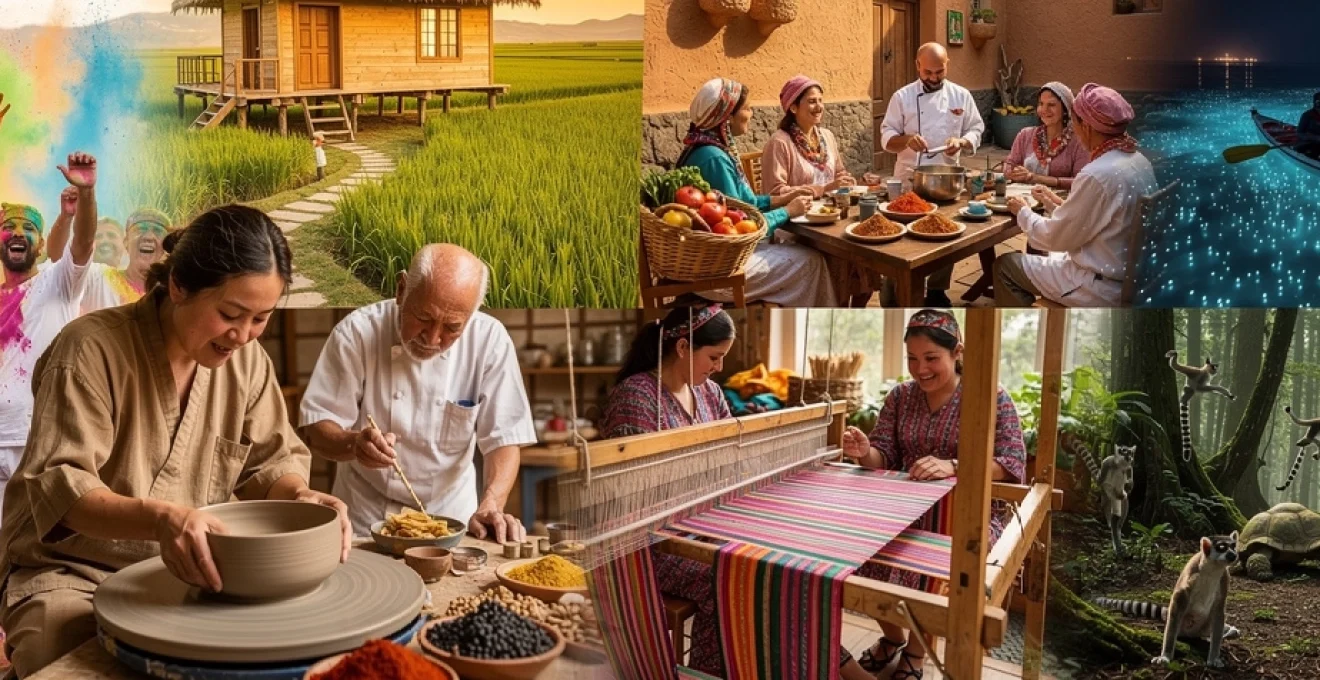
Standing at the edge of a volcanic caldera or wandering through centuries-old temples, travelers often find themselves wondering what transforms an ordinary trip into an extraordinary memory. The answer lies not in a single element but in a complex interplay of emotional connections, sensory experiences, and personal transformation. Research suggests that emotional intensity significantly outweighs visual beauty when it comes to lasting memories—your mind retains how a place made you feel far longer than the specific landmarks you photographed. Understanding the components that create these profound travel experiences can help you seek out destinations that promise genuine impact rather than mere Instagram moments.
The most memorable destinations share common characteristics: they engage multiple senses simultaneously, offer opportunities for authentic cultural exchange, and provide moments of genuine surprise or discovery. Whether it’s the smell of spices in a Moroccan souk, the sound of traditional music echoing through ancient streets, or an unexpected conversation with a local artisan, these multifaceted experiences create neural pathways that preserve memories for decades. The hospitality industry has gradually shifted focus from purely aesthetic attractions toward creating transformative experiences that resonate on a deeper emotional level.
Emotional resonance through authentic cultural immersion experiences
Cultural immersion creates the strongest emotional bonds between travelers and destinations. When you actively participate in local traditions rather than simply observing from a distance, you establish personal connections that transcend typical tourism. This engagement activates memory centers in the brain more effectively than passive sightseeing, resulting in experiences that remain vivid for years. The most profound cultural encounters often happen spontaneously—a shared meal with strangers, an impromptu invitation to a family celebration, or learning a traditional craft from someone who has practiced it for generations.
Authenticity serves as the cornerstone of memorable cultural experiences. Travelers increasingly seek opportunities to step beyond tourist facades and interact with communities on genuine terms. This shift has driven the growth of community-based tourism models that prioritize meaningful exchange over commercialized entertainment. When local communities maintain control over tourism activities, visitors gain access to unfiltered cultural expressions while supporting sustainable economic development. The emotional impact of these authentic encounters frequently surpasses that of famous landmarks or luxury accommodations.
Participation in traditional ceremonies and festivals: holi in rajasthan and carnival in rio de janeiro
Traditional festivals offer immersive windows into cultural identity and collective joy. Participating in Holi celebrations in Rajasthan transforms travelers from spectators into active participants in a centuries-old tradition. The explosion of colored powders, the infectious energy of crowds, and the temporary dissolution of social hierarchies create a sensory overload that embeds itself in memory. Similarly, experiencing Carnival in Rio de Janeiro goes beyond watching parades—it involves understanding the year-round preparation, the neighborhood pride, and the complex cultural fusion that defines Brazilian identity. These festivals engage all senses simultaneously: the visual spectacle, rhythmic music, aromatic street food, and physical movement create a holistic experience that photographs simply cannot capture.
The emotional resonance of festival participation stems from shared joy and collective effervescence. When you dance alongside locals during Carnival or throw colored powder during Holi, you briefly become part of a community united by tradition and celebration. This sense of belonging, however temporary, creates powerful emotional memories. Anthropological studies indicate that participation in ritual celebrations triggers oxytocin release, strengthening social bonds and emotional recall. The key distinction between attending as a tourist and participating as a cultural explorer lies in your willingness to fully engage rather than maintain observer distance.
Homestay programmes and Community-Based tourism in rural thailand and morocco
Homestay experiences eliminate the barriers between travelers and local life, offering unfiltered insights into daily routines, family dynamics, and community values. In rural Thailand, staying with families in rice-farming villages provides intimate access to agricultural traditions, Buddhist practices, and regional culinary techniques that hotels cannot replicate. You might wake before dawn to help with harvests, learn to cook regional specialties using ingredients from family gardens, or participate in temple ceremonies alongside your hosts. These ordinary moments—sharing breakfast, helping with chores, or simply sitting together in the evening—create profound connections that luxury accommodations cannot match.
Moroccan homestays in Berber villages offer similarly transformative experiences. The architecture itself tells stories of adaptation and community, with families opening their homes
Moroccan homestays in Berber villages offer similarly transformative experiences. The architecture itself tells stories of adaptation and community, with families opening their homes built from earth, stone, and timber that mirror the surrounding Atlas Mountains. Guests might join in baking bread in communal ovens, accompany shepherds into terraced fields, or share mint tea while listening to ancestral stories passed down orally. These encounters move beyond curated performances; they reveal how people actually live, love, work, and celebrate in a specific place. For many travelers, the memory of waking to the call to prayer echoing through a valley or sharing a tagine around a low table stays long after the exact itinerary has faded.
Ethical considerations are crucial when choosing community-based tourism that promises authentic cultural immersion. Responsible operators ensure that income flows directly to host families, that expectations around privacy are clear on both sides, and that cultural norms—such as dress codes or gender roles—are respected. You can significantly increase the positive impact of your stay by learning a few basic phrases in the local language, asking permission before photographing people or homes, and approaching the experience with humility rather than entitlement. When done well, homestays become mutually enriching: communities gain sustainable livelihoods and visitors gain unforgettable, human-centered memories.
Apprenticeship experiences with local artisans: pottery in kyoto and weaving in guatemala
Learning directly from local artisans turns cultural immersion into a deeply tactile and emotional experience. In Kyoto, short-term pottery apprenticeships invite travelers into studios where techniques have been refined over centuries. You do not just watch a demonstration; you sit at the wheel, feel the resistance of the clay, and struggle to center it under the guidance of a master potter. The smell of wet earth, the sound of the spinning wheel, and the quiet concentration in the workshop all combine to imprint the moment in your memory in a way that a simple souvenir purchase never could.
Weaving workshops in Guatemala offer a similar bridge between traveler and tradition. In highland villages around Lake Atitlán, Mayan weavers teach visitors backstrap loom techniques that encode stories of identity, cosmology, and community. As you thread vibrant yarns through patiently set warps, you begin to understand that each textile is not just a product but a narrative. This kind of hands-on cultural exchange is like learning a new language through conversation instead of a textbook: slower, more demanding, but infinitely more memorable. Many travelers find that every time they later wear or see the piece they created, it triggers a flood of sensory and emotional recall.
For destinations, apprenticeship-style tourism can help safeguard intangible cultural heritage that might otherwise decline. UNESCO estimates that a significant portion of traditional crafts worldwide are at risk as younger generations move toward urban, service-based work. When you invest time and money in learning from artisans, you are not only gaining an unforgettable experience; you are supporting the continuity of skills, stories, and identities. The key is to choose programs that respect local rhythms, pay fair wages, and avoid reducing complex traditions to quick “craft-and-go” activities designed solely for social media.
Gastronomic heritage through market tours and cooking classes in oaxaca and bologna
Few elements make a destination as unforgettable as its food culture. Market tours and cooking classes transform everyday eating into a journey through history, geography, and identity. In Oaxaca, often called the culinary capital of Mexico, guided market visits reveal the complexity behind staples like mole, tlayudas, and mezcal. As you walk between stalls piled with chilies, herbs, cacao, and insects, vendors explain seasonal variations, indigenous influences, and family recipes. You are not simply shopping; you are decoding the region’s relationship to land, climate, and tradition.
Cooking classes extend this immersion by turning you from observer into participant. Under the guidance of Oaxacan cooks, you might grind corn on a metate, roast chilies on a comal, and learn how each ingredient contributes to balance and symbolism in local cuisine. Bologna offers a European counterpart, where market tours through the Quadrilatero district introduce travelers to Parmigiano Reggiano, handmade tortellini, and aged balsamic vinegar. When you later knead pasta dough by hand or roll out tagliatelle, you experience firsthand the patience and precision that define Emilia-Romagna’s gastronomic heritage.
Because taste and smell are strongly linked to the brain’s memory centers, culinary experiences often become the most vivid part of an unforgettable journey. Years after a trip, the scent of toasted sesame or simmering ragu can instantly transport you back to a specific kitchen or marketplace. To deepen this connection, many travelers now collect recipes rather than souvenirs, recreating dishes at home to relive the emotional texture of their journeys. In this sense, learning to cook local specialties offers a long-tail travel experience: every meal becomes a gateway back to the destination.
Distinctive natural landscapes and geological phenomena
While emotional resonance often begins with human connection, distinctive natural landscapes shape how a destination feels at the most fundamental level. Geology, climate, and biodiversity create the stage on which our travel stories unfold. Standing on the rim of a caldera, kayaking through a bioluminescent bay, or hiking among otherworldly rock formations engages both awe and curiosity—two emotions strongly associated with lasting memory. Scientific research into “awe experiences” suggests that encounters with vast or unusual natural environments can alter our sense of time, reduce stress, and even increase prosocial behavior.
What distinguishes an unforgettable natural destination from a merely beautiful one is often its uniqueness. Landscapes shaped by rare geological processes, extreme topographical contrasts, or endemic wildlife offer experiences that cannot simply be replicated elsewhere. These places also tend to carry strong conservation narratives: travelers become witnesses not only to beauty but to fragility. As climate change and overtourism threaten many iconic sites, visiting with respect and intention becomes part of what makes the experience meaningful.
Volcanic formations: santorini caldera and iceland’s þingvellir national park
Volcanic landscapes have a way of reminding us that the Earth is alive beneath our feet. Santorini’s caldera, formed by one of the most powerful eruptions in recorded history, wraps visitors in a natural amphitheater of cliffs, whitewashed villages, and shimmering sea. When you walk along the caldera rim at sunset, the layers of volcanic rock beneath the pastel facades tell a story of destruction, resilience, and reinvention. This fusion of geological drama and human adaptation creates a powerful emotional narrative that simple coastal views cannot match.
Iceland’s Þingvellir National Park offers a different but equally compelling encounter with the planet’s inner workings. Here, you can literally walk between tectonic plates, following fissures where the North American and Eurasian plates slowly drift apart. The landscape—rugged lava fields, clear rift lakes, and moss-covered rocks—feels almost extraterrestrial. Knowing that this is also the site of one of the world’s oldest parliaments adds another layer of significance; it becomes a place where natural history and human history intersect. For many travelers, the memory of standing in that rift, buffeted by cold wind and silence, becomes a defining image of their journey.
Volcanic destinations also invite a more reflective style of travel planning. Because conditions can change rapidly—whether due to weather, seismic activity, or conservation measures—it pays to build flexibility into your itinerary. This “flow, not friction” approach allows you to respond to the landscape rather than forcing it into a rigid schedule. When you accept that a closed hiking trail or sudden fog is part of the volcanic personality of the place, even disruptions can become part of what makes the experience unforgettable.
Bioluminescent ecosystems: mosquito bay in vieques and gippsland lakes in australia
Bioluminescent bays are among the most magical natural phenomena a traveler can encounter. Mosquito Bay in Vieques, Puerto Rico, often cited as one of the brightest in the world, surrounds nighttime kayakers with swirling constellations of blue-green light. Every paddle stroke disturbs microscopic dinoflagellates that emit light in self-defense, turning the water into a living galaxy. It is an experience that no photograph quite captures—part science, part surreal dream—which is precisely why it lingers so powerfully in memory.
Australia’s Gippsland Lakes offer a similarly otherworldly encounter when conditions are right. Here, bioluminescent blooms can transform shorelines into glowing ribbons under the stars. Because these events are influenced by temperature, nutrients, and moon cycles, sightings are never guaranteed. This inherent unpredictability adds a layer of meaning: when you do witness the phenomenon, it feels less like consuming a product and more like being granted a fleeting privilege. The combination of darkness, silence, and sudden light etches itself into your sensory memory with unusual intensity.
However, the delicate nature of bioluminescent ecosystems highlights the importance of sustainable travel behavior. Excessive boat traffic, chemical sunscreens, and noise pollution can all diminish the brightness of the glow over time. Choosing non-motorized tours, following local guidelines about touching the water, and traveling with operators committed to conservation help ensure that these rare experiences remain available for future visitors. In this way, your decision to travel responsibly becomes part of the story you remember and retell.
Extreme topographical contrasts: norwegian fjords and cappadocia’s fairy chimneys
Destinations with dramatic topographical contrasts tend to imprint themselves strongly on our imagination. The Norwegian fjords, with their sheer cliffs plunging into deep, narrow inlets, create a powerful visual metaphor for scale and depth. Cruising through Geirangerfjord or hiking above Nærøyfjord, you are constantly aware of verticality—mountains soaring above, water stretching far below. Mist, waterfalls, and shifting light add a dynamic, almost cinematic atmosphere that changes from hour to hour. The memory of standing on a lookout point, wind in your face, gazing across that sculpted landscape often becomes a defining anchor for the entire trip.
Cappadocia in Turkey offers a contrasting but equally unforgettable terrain. Here, soft volcanic rock has been eroded into whimsical “fairy chimneys,” caves, and canyons that look like something from a storybook. Traditional cave houses and rock-hewn churches add human layers to this geological fantasy. Floating above the region in a hot air balloon at sunrise—watching hundreds of other balloons drift between spires and valleys—creates a multi-sensory spectacle: the hiss of burners, the chill of dawn air, and the slow, dreamlike motion of flight. It is the kind of experience where, years later, a single photograph can reactivate the entire emotional atmosphere of that morning.
What ties these contrasting landscapes together is the feeling of being placed inside a three-dimensional postcard. Extreme topography shifts your sense of proportion and, by extension, your sense of self. You might feel smaller, more contemplative, or more adventurous. These emotional shifts are what elevate a destination from scenic to unforgettable. To fully absorb them, it helps to balance iconic viewpoints with quieter, less-visited trails or villages, giving you space to process rather than simply collect images.
Endemic biodiversity hotspots: galápagos islands and madagascar’s rainforests
Places with high levels of endemic biodiversity—species found nowhere else on Earth—offer travelers a rare chance to witness evolution in real time. The Galápagos Islands, which inspired Charles Darwin’s theory of natural selection, remain one of the most emblematic examples. Walking among unconcerned blue-footed boobies, marine iguanas, and giant tortoises, you experience a level of proximity to wildlife that is almost disorienting. Because many animals evolved without land predators, they often show little fear, allowing for intimate observations that feel like a privilege rather than a right.
Madagascar’s rainforests present a different but equally extraordinary biodiversity narrative. Over 80% of its plant and animal species are endemic, including iconic lemurs, baobabs, and chameleons. Trekking through these forests, you are surrounded by unfamiliar sounds, shapes, and colors: the call of an indri at dawn, the spiral of a fern uncurling, the flash of a tiny, neon-bright frog. Each encounter underscores how unique and fragile this ecosystem is, especially given the pressures of deforestation and climate change. For many visitors, witnessing this richness firsthand sparks a more personal commitment to environmental protection.
Traveling to biodiversity hotspots also highlights the ethical dimension of what makes a destination unforgettable. Strict visitor limits, guided-only access, and higher permit fees can initially feel restrictive, but they are part of safeguarding the very qualities that drew you there. By choosing operators who follow conservation guidelines, respecting wildlife viewing distances, and supporting local conservation projects, you help ensure that future travelers can experience the same sense of wonder. In this way, your role shifts from passive observer to active steward, deepening the emotional resonance of the journey.
Architectural heritage and urban morphology
Cities and settlements become unforgettable not only because of individual buildings but because of how those buildings relate to one another and to daily life. This is the domain of urban morphology—the study of street patterns, block structures, public spaces, and the way people move through them. Think of how different it feels to wander through a dense medieval center, a perfectly gridded modernist district, or a repurposed industrial waterfront. Each layout shapes your experience of time, distance, and discovery, much like the rules of a board game shape how you play.
Architectural heritage adds another layer of meaning by connecting you to specific historical periods, belief systems, and design philosophies. From ancient temple complexes to adaptive reuse projects, built environments embody collective memory in stone, brick, and glass. When you walk through these spaces, you are not simply looking at static objects; you are participating in a living narrative where past and present coexist. This spatial storytelling is a key reason why certain cities leave such a strong imprint on our minds and emotions.
UNESCO world heritage sites: angkor wat temple complex and petra’s nabataean architecture
UNESCO World Heritage Sites often become emblematic images of a destination, but their impact goes far beyond postcard views. Angkor Wat in Cambodia, part of a vast archaeological park with hundreds of temples, is a powerful example. Arriving at dawn, you might watch the silhouette of lotus-topped towers emerge against a slowly brightening sky, reflected in surrounding pools. As you explore bas-reliefs depicting epic battles and celestial dancers, the scale and detail of the complex gradually reveal themselves. The experience is less like visiting a single monument and more like entering an entire cosmological system carved in stone.
Petra in Jordan offers a different but equally immersive encounter with ancient architecture. The approach itself—walking through the narrow Siq canyon, its high walls glowing in shades of rose and gold—builds anticipation. When the Treasury finally appears at the canyon’s end, it feels almost theatrical, a gradual reveal designed to impress and humble. Yet Petra extends far beyond that first iconic façade, with tombs, temples, and a hilltop monastery scattered across a rugged desert landscape. Climbing to lookouts, tracing carved stairways, and pausing in shaded caves all contribute to a sense of discovery that makes the site unforgettable.
What unites these UNESCO destinations is their ability to compress vast spans of time into a single visit. You find yourself walking the same routes, touching the same stones, and gazing at the same horizons that people did centuries or even millennia ago. This temporal layering creates a powerful emotional resonance: you are both tourist and time traveler. To deepen this effect, it helps to balance guided tours—which provide essential context—with unstructured moments of quiet exploration where you can absorb the atmosphere at your own pace.
Modernist urban planning: barcelona’s eixample district and brasília’s pilot plan
Not all unforgettable urban experiences are ancient. Modernist planning experiments have created some of the world’s most distinctive cityscapes, reshaping how residents and visitors move, meet, and imagine the future. Barcelona’s Eixample district, designed in the 19th century by Ildefons Cerdà, is instantly recognizable from above: a grid of octagonal blocks with chamfered corners and regular internal courtyards. At street level, this pattern creates wide intersections flooded with light, tree-lined avenues, and generous sidewalks that encourage walking and social life. The interplay between Cerdà’s rational grid and Antoni Gaudí’s organic, almost whimsical architecture makes Eixample a compelling case study in how structure and creativity can coexist.
Brasília, Brazil’s purpose-built capital, represents a more radical modernist vision. Laid out by urbanist Lúcio Costa and architect Oscar Niemeyer in the mid-20th century, its “Pilot Plan” resembles an airplane or bird from above, with distinct zones for government, housing, and commerce. Monumental axes, sweeping plazas, and sculptural civic buildings were designed to embody national progress and optimism. Walking through Brasília, you become acutely aware of scale and symbolism: the vast Esplanade of Ministries, the hovering curves of the National Congress, the futuristic Cathedral. For some visitors, this abstraction feels alienating; for others, it is awe-inspiring. Either way, it is hard to forget.
These modernist districts highlight how urban form influences emotional experience. In Eixample, the fine-grained mix of shops, homes, and public spaces creates a sense of livability and serendipity—turn any corner, and you might stumble upon a café terrace or modernist façade. In Brasília, the grand spatial gestures invite reflection on power, identity, and the role of public space in democracy. Experiencing both can sharpen your awareness of how cities you know well—perhaps your own—have been shaped by invisible planning decisions. That shift in perspective becomes part of the transformation you carry home.
Adaptive reuse projects: london’s tate modern and new york’s high line park
Adaptive reuse—transforming old industrial or infrastructural sites into new cultural spaces—has become a powerful tool for making cities both more sustainable and more memorable. London’s Tate Modern, housed in the former Bankside Power Station, is a flagship example. Its massive Turbine Hall, once home to generators, now hosts large-scale art installations that play with volume, light, and sound. Standing in that cavernous space, you are simultaneously aware of the building’s industrial past and its present role as a global cultural hub. This juxtaposition of old and new creates a layered experience that tends to stick in memory.
New York City’s High Line Park offers a more linear but equally transformative reuse story. Built on an abandoned elevated railway, the park weaves through Manhattan’s West Side, combining wild-inspired plantings with urban views. As you walk along its paths, you glide above traffic, passing between warehouses, galleries, and new residential towers. Benches, lookout points, and art interventions encourage you to slow down and notice details you might otherwise miss at street level. For many visitors, the High Line embodies a new type of urban experience: part promenade, part garden, part open-air museum.
Adaptive reuse projects resonate because they embody the idea that places can evolve without erasing their history. They demonstrate that cities are not static collections of buildings but living organisms capable of regeneration. When you visit such spaces, you are participating in a story of environmental responsibility, cultural creativity, and community advocacy. The memory of walking through a former factory turned museum or a rail line turned park often carries a subtle but powerful lesson: that even in familiar urban environments, new kinds of beauty and meaning can emerge.
Narrative construction through storytelling and historical significance
Every unforgettable destination offers more than things to see; it offers stories to inhabit. Narrative construction—the way we frame, interpret, and retell our experiences—plays a decisive role in how strongly a place stays with us. Two travelers can visit the same city and come home with entirely different memories, simply because they paid attention to different stories. One might focus on political history, another on family connections, a third on personal milestones reached during the trip.
Local storytelling traditions and historical interpretation shape these narratives from the moment you arrive. Guided walks, museum exhibits, community theater, and even casual conversations with taxi drivers all contribute to the mental “travelogue” you build. When a destination’s stories resonate with your own values or questions—about identity, justice, faith, or change—the connection deepens. The place stops being a backdrop and becomes a character in your personal journey.
This narrative dimension also explains why travel can shift your worldview. Learning about the resilience of communities after conflict, the layered histories of contested borders, or the hidden contributions of marginalized groups can challenge assumptions you did not know you held. In effect, the destination becomes a living classroom. The memories that endure are not only of what you saw but of what you came to understand—and how that understanding altered your sense of self and the wider world.
Sensory distinctiveness and atmospheric qualities
Unforgettable destinations engage the full spectrum of your senses, creating an atmosphere that is difficult to describe yet instantly recognizable once experienced. Think about how quickly you can tell you have arrived somewhere new just by the smell of the air, the texture of the light, or the background soundscape. These sensory signatures function like a kind of emotional shorthand: a few notes of traditional music, a distinctive spice blend, or the feel of humid night air can summon an entire city back into your mind.
Visual elements such as color palettes and lighting conditions play a central role. The pastel façades of Caribbean towns, the blue-and-white schemes of Cycladic islands, or the neon glow of East Asian metropolises each create a distinct visual imprint. Add to this the “golden hour” effect—those early morning and late afternoon moments when light softens and shadows lengthen—and even familiar scenes can take on an almost cinematic quality. Many travelers unconsciously plan their days around these atmospheric windows, seeking out viewpoints and waterfronts where the interplay of light, water, and stone is most striking.
Sound and scent, though less photographed, often prove even more durable in memory. The call to prayer echoing across an old quarter, the chorus of cicadas in a Mediterranean village, the layered aromas of street food and incense in a night market—all contribute to what psychologists call “context-dependent memory.” When you later encounter a similar sound or smell at home, it can instantly transport you back, sometimes more powerfully than any image. Being intentional about noticing these details—pausing to listen, to breathe in, to touch local materials—can turn an ordinary walk through a city into a rich, multi-sensory experience.
Transformative personal development opportunities through adventure tourism
Adventure tourism adds another dimension to what makes a destination unforgettable by intertwining place with personal challenge. Activities such as trekking, diving, rock climbing, or multi-day cycling trips push you beyond routine comfort zones, creating intense moments of focus and emotion. It is not just the mountain, the reef, or the trail that you remember; it is the version of yourself that showed up there—tired, exhilarated, maybe a little scared, but fully present. This combination of physical exertion, risk management, and natural beauty is a powerful recipe for long-lasting memories.
Research on experiential travel suggests that people derive more lasting satisfaction from challenging experiences than from passive consumption. Completing a high-altitude hike in the Andes, learning to surf on a wild coastline, or navigating a multi-day kayak expedition demands planning, resilience, and teamwork. When you succeed—or even when plans change and you have to adapt—you gain a sense of competence that often carries over into everyday life. The destination becomes a reference point: “If I could handle that storm on the fjord or that steep pass, I can probably handle this work crisis.”
Of course, adventure tourism also raises important considerations around safety and sustainability. Choosing certified guides, respecting local regulations, and understanding your own limits are essential to ensuring that transformative experiences do not become traumatic ones. Many destinations now promote “soft adventure” options—such as guided day hikes, beginner canyoning, or introductory dives—that offer a taste of challenge without requiring extreme fitness or technical skills. When approached thoughtfully, adventure travel becomes less about adrenaline for its own sake and more about intentional growth, weaving the landscape, your emotions, and your evolving capabilities into a story you will retell for years.