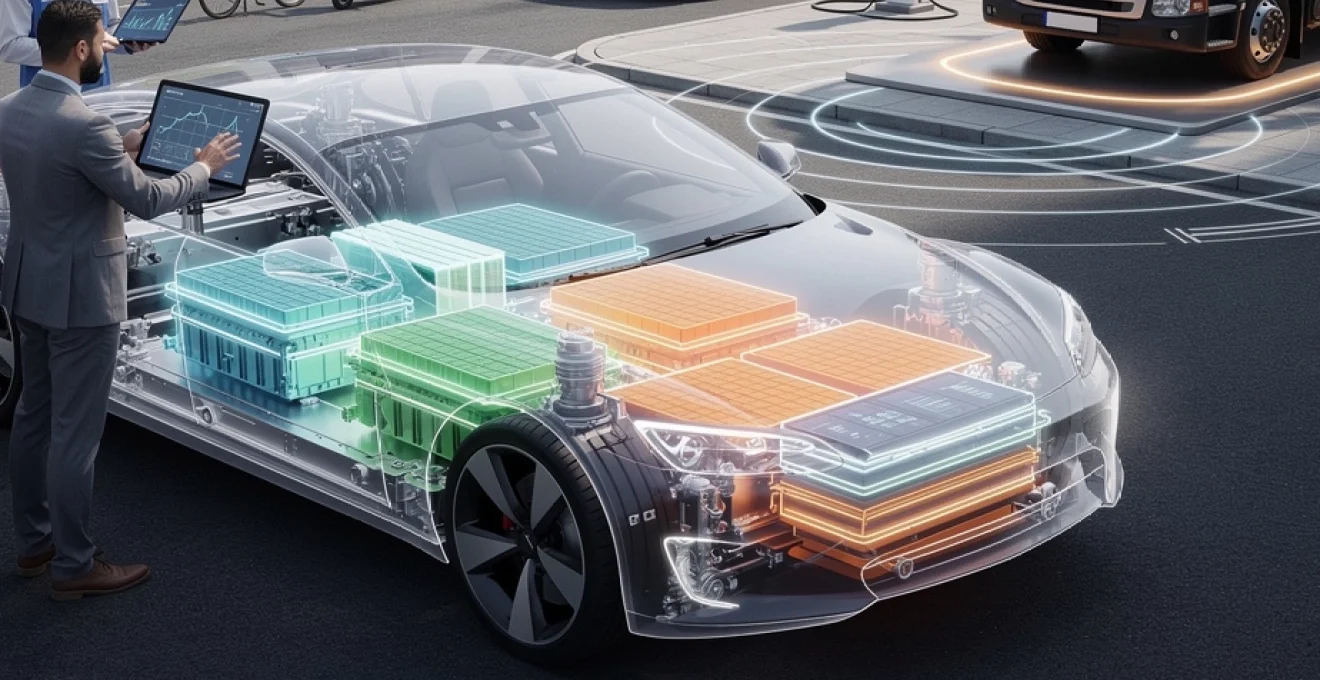
The global transportation landscape stands at a pivotal moment, where battery technology has emerged as the cornerstone of sustainable mobility solutions. Electric vehicle adoption has accelerated dramatically, with global EV sales reaching over 10 million units in 2022, representing a 55% increase from the previous year. This transformation extends far beyond passenger cars, encompassing commercial vehicles, public transport, maritime vessels, and even aviation applications. The sophistication of modern battery systems has fundamentally altered the economics of electric mobility, making it increasingly competitive with traditional internal combustion engines whilst delivering superior environmental benefits.
Battery technology serves as the enabling force that bridges the gap between environmental necessity and practical mobility solutions. As governments worldwide implement increasingly stringent emissions regulations and cities introduce low-emission zones, the pressure to develop more efficient, longer-lasting, and faster-charging battery systems intensifies. The role of batteries in future mobility extends beyond simple energy storage; they represent the foundation for smart grid integration, autonomous vehicle systems, and innovative business models such as battery-as-a-service platforms.
Lithium-ion battery technology evolution in electric vehicle applications
The evolution of lithium-ion battery technology has been nothing short of revolutionary, transforming from experimental laboratory concepts to the backbone of modern electric mobility. Current lithium-ion systems deliver energy densities exceeding 250 Wh/kg, with the most advanced cells approaching 300 Wh/kg. This represents a dramatic improvement from early lithium-ion batteries that struggled to achieve 100 Wh/kg. The advancement in energy density directly correlates to extended driving ranges, with premium electric vehicles now routinely achieving over 400 miles on a single charge.
Manufacturing innovations have simultaneously driven down costs whilst improving performance metrics. Industry analysis indicates that lithium-ion battery pack costs have declined from over $1,200/kWh in 2010 to approximately $132/kWh in 2023. This cost reduction trajectory positions electric vehicles to achieve purchase price parity with conventional vehicles by the mid-2020s. The technological maturity of lithium-ion systems has reached a point where incremental improvements yield substantial real-world benefits, particularly in thermal management, charging speeds, and cycle life durability.
Tesla 4680 cell architecture and energy density improvements
Tesla’s 4680 cell architecture represents a paradigm shift in battery design philosophy, emphasising structural integration and thermal efficiency. The larger cylindrical format delivers approximately five times the energy capacity of previous 2170 cells whilst maintaining superior thermal characteristics. This design incorporates a tabless electrode configuration that reduces internal resistance and heat generation, enabling faster charging rates and improved power delivery. The structural battery pack concept allows the cells to serve as load-bearing components, reducing overall vehicle weight and manufacturing complexity.
BYD blade battery safety standards and thermal management
BYD’s Blade Battery technology prioritises safety through innovative lithium iron phosphate chemistry and unique cell geometry. The elongated cell design improves thermal dissipation and reduces the likelihood of thermal runaway propagation. Rigorous testing demonstrates the technology’s resilience, including nail penetration tests that fail to trigger thermal runaway events. The CTP (Cell-to-Pack) architecture eliminates traditional modules, increasing volumetric efficiency whilst maintaining exceptional safety standards. This approach has gained significant traction in commercial vehicle applications where safety and longevity take precedence over maximum energy density.
CATL qilin battery Fast-Charging capabilities and Cell-to-Pack integration
CATL’s Qilin battery technology achieves remarkable fast-charging performance through advanced thermal management and cell chemistry optimisation. The system enables 10-80% charging in approximately 10 minutes, addressing one of the primary barriers to mass EV adoption. The third-generation CTP technology maximises space utilisation, achieving 72% volume efficiency compared to traditional pack designs. Sophisticated cooling systems maintain optimal operating temperatures across the entire pack, ensuring consistent performance and extended cycle life even under extreme charging conditions.
Solid-state battery development by QuantumScape and toyota
Solid-state battery development represents the next frontier in energy storage technology, promising significant improvements in energy density, safety,
and cycle life by replacing flammable liquid electrolytes with solid, non-volatile materials. Companies such as QuantumScape are developing lithium-metal solid-state cells that target energy densities above 400 Wh/kg, with the potential to deliver 50–80% more range for electric vehicles compared to today’s lithium-ion packs. Early test data suggests that these cells can support rapid charge rates while maintaining over 800 cycles at high depth of discharge, a critical requirement for long-range passenger vehicles.
Toyota, meanwhile, is pursuing solid-state battery development with a strong focus on manufacturability and automotive-grade reliability. The company has announced plans to showcase solid-state prototypes in the second half of the 2020s, aiming to combine high energy density with shorter charging times and improved low-temperature performance. Solid electrolytes also mitigate dendrite formation, one of the main causes of short circuits in conventional lithium-metal designs. While significant challenges remain in scaling production and reducing costs, solid-state batteries are widely regarded as a foundational technology for the next generation of electric mobility.
Battery chemistry innovations transforming transportation sectors
The future of mobility will not be driven by a single “perfect” battery chemistry but by a portfolio of optimised solutions tailored to specific use cases. Different transportation segments—urban micromobility, long-haul freight, public transit, and premium passenger cars—have distinct requirements in terms of energy density, safety, cost, and cycle life. As a result, we see a diversification of battery chemistries, each carving out its own niche within the broader electric mobility ecosystem. Understanding these chemistries helps fleet operators, policymakers, and consumers make informed decisions about which technologies best suit their needs.
From lithium iron phosphate systems powering city buses to advanced NMC cells enabling long-range passenger vehicles, chemistry innovation underpins the rapid shift away from fossil fuels. Emerging alternatives such as sodium-ion and silicon-enhanced anodes promise to further expand design options, especially where raw material availability or cost is a constraint. In many ways, the mobility sector is becoming a rolling laboratory, where new chemistries are validated at scale and then refined for even broader deployment.
Lithium iron phosphate (LFP) adoption in commercial fleet operations
Lithium iron phosphate (LFP) batteries have gained substantial traction in commercial fleet operations thanks to their excellent safety profile and long cycle life. Although LFP typically offers lower energy density than NMC or NCA chemistries, its robust thermal stability makes it particularly attractive for buses, delivery vans, and urban trucks that operate in demanding duty cycles. Many fleets can accommodate the slightly larger pack size required by LFP because their routes are predictable and daily mileage is constrained, reducing the need for extreme range.
Another major advantage of LFP for commercial fleets is its lower cost and reduced reliance on critical materials such as nickel and cobalt. This not only improves the total cost of ownership for operators but also helps mitigate supply chain risk. We are already seeing large-scale deployments of LFP-powered buses in China and Europe, where operators report hundreds of thousands of kilometres of operation with minimal degradation. For fleets that prioritise durability, uptime, and predictable operating costs over maximum range, LFP has become a compelling baseline chemistry.
Nickel manganese cobalt (NMC) chemistry for long-range passenger vehicles
Nickel manganese cobalt (NMC) batteries dominate the long-range passenger EV segment due to their high energy density and balanced performance characteristics. By adjusting the ratio of nickel, manganese, and cobalt, manufacturers can tune NMC chemistries to prioritise either energy or power. High-nickel variants such as NMC 811 deliver particularly high specific energy, enabling ranges well above 400 miles in premium electric vehicles without compromising interior space or payload.
However, higher nickel content introduces new challenges in terms of stability and thermal management, demanding sophisticated battery management systems and robust pack-level safety strategies. Automakers have responded by investing heavily in improved cathode coatings, advanced electrolytes, and smarter thermal designs. As recycling processes for nickel and cobalt mature, NMC-based platforms can also become more sustainable over their full lifecycle. For drivers seeking long-range capability and strong acceleration in a single package, NMC remains one of the most effective battery chemistries available today.
Sodium-ion battery technology for urban mobility solutions
Sodium-ion batteries are emerging as a promising alternative for cost-sensitive urban mobility solutions such as shared scooters, e-bikes, and compact city cars. Unlike lithium, sodium is abundant and widely distributed, which can significantly reduce raw material constraints and geopolitical risks. While sodium-ion cells currently offer lower energy density than mainstream lithium-ion chemistries, they provide adequate range for short-distance, low-speed applications where compactness is less critical.
Another advantage of sodium-ion technology is its strong performance at low temperatures and its potential for reduced material costs, including the use of aluminium current collectors on both electrodes. Manufacturers such as CATL have already announced sodium-ion cell designs targeting mass production for small vehicles and stationary storage. If you consider the sheer scale of two- and three-wheeler markets in Asia and emerging economies, sodium-ion batteries could play a pivotal role in electrifying mobility where affordability is the primary driver.
Silicon nanowire anode integration for enhanced capacity
Silicon nanowire anodes represent a major advance in efforts to boost the capacity of lithium-ion batteries without sacrificing cycle life. Silicon can theoretically store up to ten times more lithium than graphite, but it expands significantly during charging, which has historically led to mechanical degradation and rapid performance loss. Nanostructuring the silicon into wires or porous frameworks helps accommodate this expansion, maintaining structural integrity over hundreds or even thousands of cycles.
Integrating silicon nanowire anodes into commercial cells enables higher energy density at the cell level, which translates directly into longer range or smaller, lighter battery packs for electric vehicles. Several battery suppliers and automakers are beginning to introduce silicon-blended anodes that incrementally increase capacity while staying within established manufacturing processes. For drivers, the benefit is simple: more miles per charge or smaller packs that free up weight and space. As the technology matures, we can expect silicon-rich anodes to become a standard feature in high-performance EV batteries.
Graphene-enhanced electrodes for rapid charge cycles
Graphene-enhanced electrodes are another innovation aimed at improving power density and rapid-charging capabilities. Thanks to its exceptional electrical conductivity and large surface area, graphene can facilitate faster electron and ion transport within the electrode. When used as an additive in cathodes or anodes, it helps reduce internal resistance, allowing batteries to accept higher charge currents with less heat generation.
For electric mobility, this means shorter charging times and improved performance under high-load conditions such as highway acceleration or towing. Some manufacturers are already marketing “graphene-enhanced” lithium-ion cells for two-wheelers and premium passenger cars that can charge to 80% in under 15 minutes when paired with suitable infrastructure. While graphene alone is not a silver bullet, its integration into electrode architectures is an important step towards making fast, convenient charging feel as natural as refuelling conventional vehicles today.
Energy storage infrastructure requirements for electric mobility
As electric vehicles proliferate, it becomes clear that batteries are not only inside vehicles but also embedded throughout the energy system that supports them. Charging millions of EVs is equivalent to adding a new, dynamic layer to national power grids, one that must be carefully managed to avoid bottlenecks and instability. This is where energy storage infrastructure plays a critical role, smoothing peaks in demand, integrating renewable energy, and ensuring that charging remains reliable and affordable.
Without coordinated planning, high-power charging hubs for buses, trucks, and passenger vehicles can strain local distribution networks. Conversely, with the right combination of grid-scale storage, smart charging algorithms, and vehicle-to-grid services, EVs can become an asset rather than a liability for power systems. In practice, the future of mobility and the future of electricity are becoming deeply intertwined, with batteries acting as the connective tissue between them.
Grid-scale battery storage integration with EV charging networks
Grid-scale battery storage systems are increasingly being co-located with EV charging networks to buffer demand and support grid stability. These large battery installations can store energy during periods of low demand or high renewable generation and discharge it when EV charging peaks, such as in the early evening. By acting like a shock absorber for the grid, they help utilities avoid costly upgrades to transformers and distribution lines while maintaining power quality.
For charging network operators, integrated storage also enables more flexible energy procurement and tariff optimisation. Energy can be purchased when wholesale prices are low, stored, and then used to serve fast-charging customers at times when grid electricity is more expensive. This strategy reduces operating costs and can make high-power charging more economically viable in regions with volatile electricity markets. In this way, grid-scale batteries underpin the reliability and scalability of future EV charging infrastructure.
Vehicle-to-grid (V2G) bidirectional power flow systems
Vehicle-to-grid (V2G) technology allows electric vehicles to act as mobile energy storage assets, feeding electricity back into the grid or local buildings when needed. With bidirectional power electronics and smart control systems, parked EVs can help balance supply and demand, support frequency regulation, and provide backup power during outages. Imagine a neighbourhood where dozens of EVs collectively stabilise the local grid during a heatwave—this is the kind of scenario V2G aims to enable.
From a driver’s perspective, V2G can create new revenue streams or reduce energy bills by participating in demand response programmes. Fleet operators, in particular, stand to benefit from monetising parked vehicles during off-duty hours. However, successful deployment requires clear regulatory frameworks, interoperable communication standards, and careful management of battery degradation. When implemented thoughtfully, V2G turns batteries into active participants in the energy ecosystem rather than passive consumers of electricity.
Megawatt charging system (MCS) standards for heavy-duty transport
Heavy-duty transport, including long-haul trucks and intercity coaches, demands charging power far beyond conventional DC fast-charging levels. The emerging Megawatt Charging System (MCS) standard addresses this need by specifying connectors and protocols capable of delivering up to 3.75 MW of power. At such power levels, a heavy-duty electric truck can add hundreds of kilometres of range during a mandated driver rest break, making battery-electric freight a realistic alternative to diesel.
Developing MCS infrastructure requires close coordination between vehicle manufacturers, charging hardware providers, and grid operators. High-power sites may need dedicated medium-voltage connections, on-site energy storage, and sophisticated load management to avoid overloading local networks. Nevertheless, as logistics companies set ambitious decarbonisation targets, MCS-enabled corridors along major highways are expected to become a critical component of the zero-emission freight ecosystem.
Wireless power transfer technology for dynamic EV charging
Wireless power transfer (WPT) for electric vehicles offers the intriguing possibility of charging without cables, either while parked or even while driving. Static wireless charging pads embedded in parking spaces can automatically top up vehicles as they wait, reducing range anxiety and making EV ownership more convenient. Dynamic wireless charging, where coils are integrated into roadways to deliver power to moving vehicles, could one day allow buses or trucks to operate with much smaller onboard batteries.
Although dynamic WPT is still in early pilot stages, it illustrates how future mobility may blur the lines between driving and charging. By spreading energy transfer over longer periods and larger areas, WPT can reduce peak loads on the grid and improve asset utilisation. Challenges remain in terms of infrastructure costs, standardisation, and efficiency, but the technology showcases how creative use of batteries and inductive systems can reshape our notion of refuelling altogether.
Battery manufacturing scalability and supply chain dynamics
Scaling battery manufacturing to meet global mobility demands is a monumental industrial challenge. Analysts project that annual lithium-ion battery demand could exceed 9,000 GWh by 2030, driven primarily by electric vehicles and grid storage. To meet this demand, dozens of gigafactories are under construction across North America, Europe, and Asia, each requiring significant capital investment, skilled labour, and secure access to raw materials. The ability to produce batteries at scale, consistently, and at competitive cost will be a key differentiator among automakers and cell suppliers.
Supply chain dynamics are equally critical. Lithium, nickel, cobalt, graphite, and other materials must be sourced responsibly to avoid environmental damage and social conflict. As you might expect, this has spurred a surge of activity in battery recycling, where valuable metals are recovered from end-of-life packs and reintroduced into the manufacturing loop. At the same time, chemistries that reduce or eliminate cobalt are gaining favour, both to cut costs and to enhance supply security. In essence, the future of mobility depends as much on mining, refining, and logistics as it does on electrochemistry.
Second-life battery applications in stationary energy storage
As electric vehicles age, their batteries eventually lose a portion of their original capacity—typically dropping to around 70–80% after many years of use. While this level may be suboptimal for demanding automotive applications, it is often more than adequate for stationary energy storage. Second-life battery programmes repurpose used EV packs for applications such as behind-the-meter storage, solar self-consumption, and backup power for commercial facilities. This approach extends the useful life of battery materials, improving the overall sustainability of the mobility ecosystem.
Several automakers and energy companies are already operating pilot projects where retired EV batteries are aggregated into containerised storage systems. These systems can support grid services, reduce peak demand charges, and provide resilience during power interruptions. By treating batteries as multi-phase assets—first in vehicles, then in stationary systems—we create a more circular economy for critical materials. In practice, second-life applications help reduce the environmental footprint of electric mobility while unlocking additional value from each battery pack.
Economic viability and total cost of ownership models for battery-powered transport
The economic case for battery-powered transport hinges not only on purchase price but also on total cost of ownership (TCO) over the vehicle’s lifetime. While electric vehicles can still carry a price premium in some segments, they typically offer lower operating costs thanks to higher energy efficiency and reduced maintenance requirements. Electricity is often cheaper and less volatile in price than diesel or petrol, and EV drivetrains contain fewer moving parts, leading to lower servicing costs. When you spread these savings over hundreds of thousands of kilometres, the TCO for many electric vehicles is already competitive—or even superior—to internal combustion alternatives.
For fleet operators, detailed TCO models incorporate battery degradation, residual value, charging infrastructure costs, and potential revenues from services such as V2G. Government incentives, carbon pricing, and low-emission zone regulations further tilt the economics in favour of electrification. As battery prices continue to decline and cycle life improves, the financial argument for electric mobility will only strengthen. Ultimately, batteries are not just enabling cleaner transport; they are reshaping the economic logic of how we move people and goods in a low-carbon world.