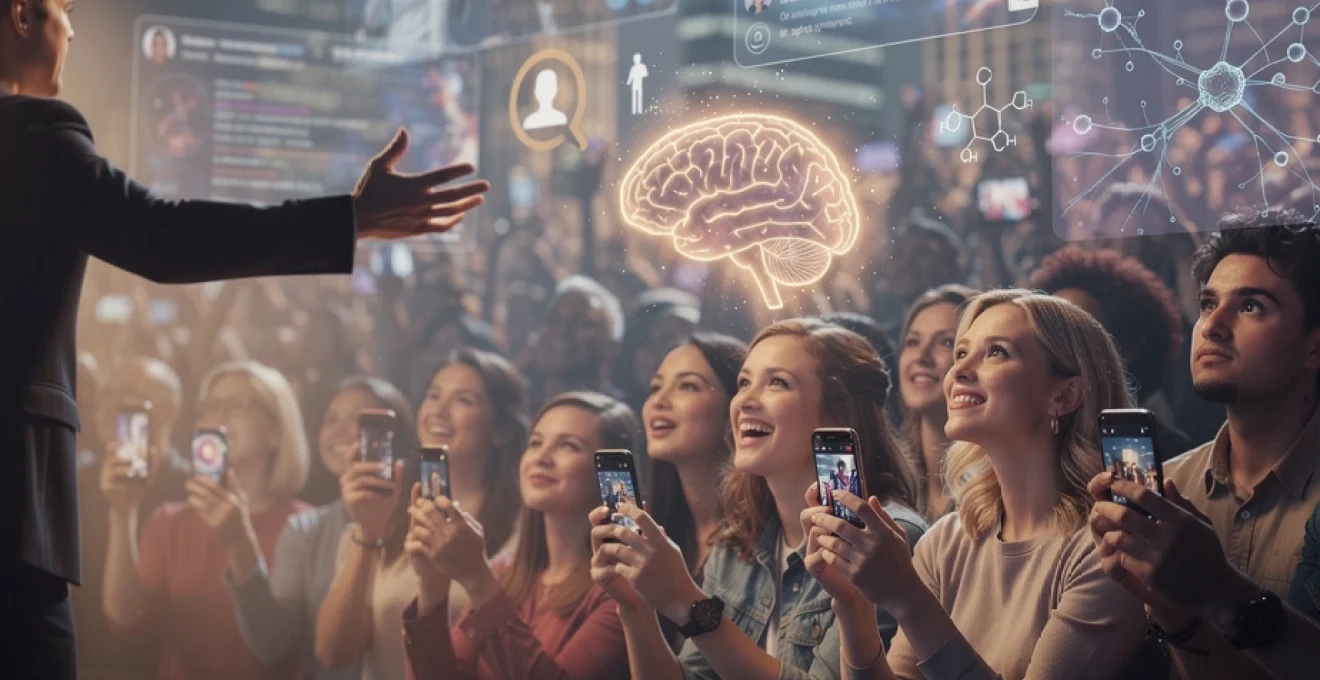
The phenomenon of celebrity attachment transcends cultural boundaries and generational divides, creating profound psychological connections that shape modern entertainment consumption patterns. From Taylor Swift’s devoted Swifties to the enduring fascination with classic Hollywood icons, millions of people worldwide maintain intense emotional bonds with public figures they’ve never personally met. This intricate web of one-sided relationships, known as parasocial connections, represents far more than casual fandom – it reflects fundamental human needs for belonging, identity formation, and emotional security.
Contemporary research reveals that celebrity attachment operates through sophisticated neurobiological and psychological mechanisms that mirror genuine interpersonal relationships. These connections satisfy essential social needs whilst providing a safe space for emotional exploration without the risks associated with traditional social interactions. Understanding the science behind celebrity devotion illuminates not only entertainment industry dynamics but also broader patterns of human behaviour in an increasingly digital world.
Psychological mechanisms behind celebrity attachment and parasocial relationships
Parasocial relationships form through complex psychological processes that engage multiple cognitive and emotional systems simultaneously. These one-sided connections allow individuals to extend emotional energy, interest, and time toward media personalities who remain completely unaware of their existence. The psychological appeal lies in the relationship’s unique characteristics: it provides companionship without demanding reciprocity, offers emotional support without fear of rejection, and enables identity exploration through safe identification with admired figures.
Dopamine release patterns in celebrity content consumption
Neuroscience research demonstrates that celebrity content consumption triggers consistent dopamine release patterns similar to those observed in addiction behaviours. Each new social media post, interview, or public appearance from a beloved celebrity activates reward pathways in the brain, creating what psychologists term “happy hormone” cycles. This neurochemical response explains why fans eagerly anticipate new content and experience genuine excitement when their favourite celebrities share personal updates.
The dopamine system’s role extends beyond simple pleasure responses. Celebrity managers and marketing teams deliberately exploit these neurochemical patterns by maintaining regular posting schedules and creating anticipation through strategic content releases. This “dopamine drip” approach ensures sustained fan engagement by preventing the natural decline in neurotransmitter levels that occurs during content gaps. The result is a carefully orchestrated cycle of anticipation, reward, and renewed craving that keeps audiences consistently engaged.
Mirror neuron activation during performance viewing
Mirror neurons, which fire both when performing an action and observing others perform the same action, play a crucial role in celebrity attachment formation. When audiences watch their favourite performers, these specialised brain cells create a sense of shared experience and emotional resonance. This neurological mirroring effect helps explain why concert-goers often feel personally connected to artists during live performances and why certain celebrities seem particularly “relatable” to their audiences.
The activation of mirror neuron systems during celebrity content consumption creates powerful empathetic responses that strengthen parasocial bonds. Fans literally experience neurological synchronisation with their favourite celebrities, leading to feelings of understanding, connection, and shared emotional states. This biological mechanism underlies the intense loyalty and protective feelings that characterise devoted fan communities.
Attachment theory applications in Fan-Celebrity dynamics
Attachment theory provides valuable insights into why certain individuals develop stronger parasocial relationships than others. Research indicates that people with anxious attachment styles – characterised by a need for security and comfort – are significantly more likely to form intense celebrity connections. These individuals often seek from media figures the emotional stability and unconditional positive regard they may have lacked in early caregiver relationships.
The attachment system’s influence manifests differently across various attachment styles. Securely attached individuals tend to engage with celebrities in healthy, balanced ways that enhance rather than replace real-world relationships. Conversely, those with insecure attachment patterns may rely more heavily on parasocial connections to fulfil unmet emotional needs, potentially leading to more intense or problematic celebrity worship behaviours.
Cognitive dissonance reduction through celebrity loyalty
Cognitive dissonance theory explains why fans often maintain loyalty to celebrities despite contradictory information or disappointing behaviour. When favourite celebrities face scandals or make decisions that conflict with fans’ values, devoted followers experience psychological discomfort. To resolve this dissonance, fans frequently engage in mental gymnastics to justify their continued support, reinterpret negative information, or dismiss criticism as unfounded.
<p
This process of dissonance reduction reinforces long-term celebrity loyalty, even when objective evidence might suggest distancing. Over time, fans may selectively consume information that confirms their positive view while avoiding critical perspectives, creating an echo chamber around their favourite singers, actors, and influencers. In extreme cases, this loyalty can lead to hostile responses toward critics or other fans who question the celebrity, further solidifying in-group bonds and making it even harder for individuals to reassess their attachment.
Social identity theory and celebrity affiliation behaviours
Social identity theory helps explain why fan communities feel more like families than casual interest groups. When we align ourselves with a particular celebrity, we are not only appreciating their work; we are adopting a social identity anchored in shared tastes, values, and narratives. This social identity becomes a lens through which we interpret the world, shaping how we dress, speak, and even which moral stances we publicly endorse.
Celebrity attachment therefore functions as a powerful shortcut to belonging. In a fragmented digital landscape, identifying as a “Swiftie,” “ARMY,” or “Marvel fan” provides an immediate sense of community. For many people, especially adolescents and young adults, these identities help fill the gap left by weakened traditional institutions such as neighbourhood communities, religious groups, or long-term workplaces.
In-group formation through shared celebrity fandom
Shared celebrity fandom behaves much like a traditional tribe or club, creating a clear sense of “us” versus “them.” Fans develop insider language, recurring jokes, and shared rituals such as streaming parties, concert queues, or coordinated online voting campaigns. These group practices transform individual celebrity attachment into a collective experience, amplifying emotional intensity and loyalty.
Research on fan cultures shows that in-group dynamics increase prosocial behaviours within the community, including mutual support, information sharing, and even financial help for members in need. At the same time, in-group boundaries can generate hostility toward outsiders or rival fandoms, mirroring patterns found in sports rivalries and political partisanship. This in-group formation is a key reason audiences stay attached for years: leaving the celebrity often means leaving the community that surrounds them.
Social comparison theory in celebrity worship contexts
Social comparison theory suggests that we evaluate ourselves by comparing our lives, achievements, and appearance with others. Celebrities provide a highly visible benchmark for these comparisons, especially in the age of curated Instagram feeds and behind-the-scenes vlogs. Upward comparisons, in which fans compare themselves to more successful or attractive celebrities, can motivate self-improvement but also generate envy, low self-esteem, and dissatisfaction.
Why do fans continue engaging even when these comparisons hurt? For many, the perceived benefits outweigh the costs: inspiration, escapism, and the hope that they can someday mirror aspects of their idol’s success. Fans may also engage in downward comparison by focusing on celebrities’ public struggles or scandals, reassuring themselves that fame does not guarantee happiness. This constant oscillation between admiration and comparison forms a psychological loop that keeps audiences returning to celebrity content.
Collective identity construction via celebrity brand association
Modern celebrities function as living brands, carefully managed and strategically positioned across media platforms. When fans align with a celebrity, they also align with that brand’s values, aesthetics, and lifestyle messages. Wearing a singer’s merchandise, using a beauty line created by an actor, or adopting a fitness routine promoted by an influencer allows fans to signal their identity to others in a highly visible way.
This process of collective identity construction operates much like choosing a political party or sports team, but often feels more playful and flexible. Yet the psychological stakes can be high. If a celebrity publicly champions social causes, fans may adopt similar positions to maintain consistency with the identity they have built around that figure. Over time, celebrity brand association can shape not only consumer choices but also ethical stances, relationship expectations, and career aspirations.
Symbolic interactionism in fan community participation
Symbolic interactionism emphasises how people create meaning through social interaction and shared symbols. In celebrity fandoms, symbols abound: album eras, movie franchises, lightsticks, emojis, and hashtags all become shorthand for shared experiences and emotions. Through daily interactions on social media, forums, and at live events, fans negotiate what these symbols mean and how “true fans” should behave.
Consider how a simple lyric, speech quote, or outfit can become a symbol of resilience, heartbreak, or empowerment within a fan community. As we repeatedly interpret and discuss these symbols, we co-create a social reality in which the celebrity serves as a focal point for meaning-making in our own lives. This symbolic work explains why you might feel that a singer’s new album “understands” your breakup or that an actor’s character arc mirrors your personal growth, even though the content was never created specifically for you.
Neurobiological foundations of celebrity attachment disorders
While most celebrity attachments remain within healthy bounds, some evolve into more intense patterns often described as celebrity worship syndrome or obsessive-addictive relationships. These patterns are not officially codified in diagnostic manuals, but emerging research highlights distinct neurobiological signatures. Understanding these brain-based mechanisms helps explain why certain fans struggle to disengage, even when their devotion begins to disrupt work, relationships, or mental health.
At the core of these attachment disorders lies a delicate balance between multiple neurochemical systems: dopamine, oxytocin, serotonin, and stress-related hormones. When exposure to celebrity content persistently overstimulates these circuits, the brain can begin to treat the parasocial bond as if it were a crucial real-life relationship. In this state, limiting content consumption or accepting the celebrity’s flaws may trigger genuine withdrawal-like symptoms, much like reducing an addictive substance.
Oxytocin production during celebrity content exposure
Oxytocin, often called the “cuddle hormone,” plays a central role in bonding, trust, and feelings of safety. Although we typically associate oxytocin with close physical relationships, studies show that emotionally charged media can also stimulate oxytocin release. Heartfelt interviews, vulnerable livestreams, and intimate documentary footage can therefore create a biochemical sense of closeness between audience and celebrity.
In healthy doses, this oxytocin surge can provide comfort and reduce loneliness, particularly for viewers who lack supportive relationships offline. However, when fans rely heavily on these hormonal boosts from parasocial interactions, they may start to prefer one-sided celebrity connections over complex real-world bonds. This reliance can be especially strong among individuals with anxious or avoidant attachment styles, who may find the predictable warmth of celebrity content safer than the unpredictability of everyday relationships.
Prefrontal cortex activity in celebrity recognition tasks
The prefrontal cortex, responsible for decision-making, self-control, and social judgment, shows distinct patterns of activity when we recognise familiar faces. Brain-imaging research indicates that highly recognisable celebrity faces activate regions involved in both memory and emotional evaluation, sometimes more strongly than familiar non-famous individuals. In other words, your brain may process a beloved singer’s face as deeply familiar, even if you have never met them.
In cases of intense celebrity attachment, the prefrontal cortex may become biased toward processing celebrity-related information as especially important or rewarding. This bias can skew attention and decision-making: fans may prioritise buying concert tickets over essential expenses or rearrange schedules around livestream events. When the regulatory functions of the prefrontal cortex are overridden by reward circuits, it becomes harder for individuals to exercise balanced judgment about how much time and money to invest in fandom.
Amygdala response patterns to Celebrity-Related stimuli
The amygdala, a key structure in emotional processing and threat detection, also plays a role in celebrity devotion. Emotional stimuli linked to a favourite actor or musician—such as surprise announcements, romantic rumours, or health scares—can trigger heightened amygdala activation. This response translates into strong emotional reactions: joy, fear, anger, or protectiveness, often far exceeding what the situation objectively warrants.
Have you ever felt an intense rush of anger when your favourite star was publicly criticised, as if a close friend had been attacked? That reaction likely reflects amygdala engagement coupled with established attachment circuits. Over time, repeated strong emotional responses to celebrity news can condition the brain to treat updates about that person as urgent, high-stakes information, making it even harder to disengage from celebrity-related media cycles.
Serotonin regulation through celebrity engagement behaviours
Serotonin helps regulate mood, impulse control, and overall emotional stability. Disruptions in serotonin signalling are associated with depression, anxiety, and obsessive-compulsive symptoms. While research is still developing, some studies suggest that repetitive, compulsive engagement with celebrity content—constant refreshing of social feeds, late-night rabbit holes of interviews, or endless forum debates—may interact with serotonin regulation, particularly in individuals already vulnerable to mood disorders.
In mild forms, following celebrity updates can provide temporary mood elevation or distraction from stress. Yet if fans use this behaviour as their primary coping mechanism, they may inadvertently reinforce cycles of low mood followed by intense consumption spikes. This pattern can resemble other behavioural addictions, where brief mood improvements are followed by emotional crashes and guilt. Over time, reliance on celebrity engagement for emotional regulation may mask deeper issues such as social anxiety, loneliness, or unresolved trauma.
Digital ecosystem amplification of celebrity devotion
The modern digital ecosystem supercharges every psychological and neurobiological mechanism we have discussed so far. Social media platforms, streaming services, recommendation algorithms, and fan forums create a 24/7 environment in which celebrity content is always available, always new, and always optimised for engagement. For audiences, this means that the dopamine rewards, oxytocin warmth, and identity validation linked to celebrity attachment are only a tap away.
Algorithms play an especially powerful role in sustaining and intensifying devotion. Once you engage with a particular singer, actor, or influencer, recommendation systems flood your feeds with similar content: reaction videos, fan edits, analysis threads, and endless commentary. This creates a feedback loop in which partial interest can quickly escalate into full-blown fixation. It also normalises high levels of engagement, as users see other fans dedicating significant time and emotional energy to the same celebrity.
Livestreams, Q&A sessions, and interactive features blur the line between parasocial and reciprocal relationships. When a celebrity “likes” a comment, reads a fan’s username aloud, or responds to a tweet, it can feel like a deeply personal connection, even though the interaction is brief and one-sided in the long term. This perceived intimacy strengthens the illusion of friendship and increases the emotional stakes for fans, who may feel rejected or overlooked when their messages go unanswered.
At the same time, the digital ecosystem lowers entry barriers for fan communities. Anyone with an internet connection can join group chats, Discord servers, subreddit communities, or global streaming parties. These spaces provide real emotional support and friendship, but they can also encourage competitive behaviour—who streams more, spends more, or travels farther for concerts—subtly pressuring members to prove their devotion. For some, this pressure becomes a pathway from healthy enthusiasm to unhealthy obsession.
Celebrity marketing psychology and consumer loyalty mechanisms
From a marketing perspective, celebrity attachment is a goldmine. Brands and management teams leverage our psychological wiring to transform admiration into long-term consumer loyalty. They craft narratives, visual identities, and product partnerships designed to align with fans’ values and aspirations, turning emotional connection into predictable purchasing behaviour. Understanding these tactics allows us to appreciate the artistry behind celebrity branding while staying aware of how our choices are being shaped.
One core strategy involves storytelling. Instead of simply promoting talent, marketers present celebrities as characters in an ongoing narrative—overcoming hardship, advocating for causes, evolving from one “era” to another. Fans who emotionally invest in these stories become more likely to support related products, from albums and movie tickets to fashion lines and fragrances. The purchase becomes symbolic: you are not just buying a hoodie; you are affirming your place in the story.
Scarcity and exclusivity also drive loyalty. Limited-edition drops, presale codes, VIP packages, and signed items tap into our fear of missing out and our desire for status within the fan community. Owning rare merchandise or early tickets can feel like proof of “real” devotion, reinforcing a loyalist consumer identity. Brands exploit this by creating carefully timed cycles of anticipation and release that mirror the dopamine patterns seen in other reward-based behaviours.
Personalisation further deepens consumer attachment. Targeted ads, curated playlists, and personalised messages (“Hey, it’s your favourite artist…”) make it feel as if the celebrity and brand understand you individually. Even though these communications are often automated and mass-produced, they exploit our tendency to anthropomorphise media personas and marketing systems. As a result, we may interpret commercial outreach as genuine care, making us more receptive to future campaigns and collaborations.
Pathological celebrity worship syndrome manifestations
While the majority of fans maintain balanced, enjoyable relationships with their favourite celebrities, a subset experiences patterns that align with what researchers call celebrity worship syndrome (CWS) or celebrity obsession disorder (COD). These manifestations exist along a spectrum. At the mild end, fans simply enjoy talking about and following celebrity news; at the extreme end, individuals develop compulsive, intrusive thoughts and behaviours that significantly disrupt daily functioning.
Researchers often describe three broad levels of celebrity worship. The entertainment-social level involves using celebrity news and content as a way to connect with others and add excitement to daily life. The intense-personal level is marked by strong emotional identification, such as feeling that you and the celebrity are soulmates or destined to meet. The borderline-pathological level includes obsessive thinking, stalking tendencies, and an inability to set boundaries around time, money, or behaviour related to the celebrity.
Warning signs that celebrity attachment may be crossing into problematic territory include persistent preoccupation with the celebrity at the expense of school, work, or relationships; compulsive checking of social media; extreme distress when unable to access new content; and strong belief that the celebrity is secretly communicating with you. In some cases, individuals may neglect basic self-care, go into debt for tickets or merchandise, or sabotage real-life relationships that appear to threaten their parasocial bond.
If you recognise some of these patterns in yourself or someone close to you, it does not automatically mean a clinical disorder is present. However, it is a prompt to reflect on underlying needs: Are you using celebrity content to avoid dealing with loneliness, trauma, or social anxiety? Are you replacing real-world opportunities for connection with a one-sided relationship? Psychotherapeutic approaches, particularly cognitive-behavioural therapy and exposure and response prevention, can help individuals rebuild healthier coping strategies and rebalance their emotional investments.
Importantly, addressing pathological worship does not require abandoning all enjoyment of celebrities. The goal is to shift from compulsive, identity-consuming devotion to conscious, flexible appreciation. By understanding the psychological and neurobiological forces at play, we can continue to enjoy our favourite singers, actors, and influencers while protecting our autonomy, mental health, and capacity for rich, reciprocal relationships in the offline world.