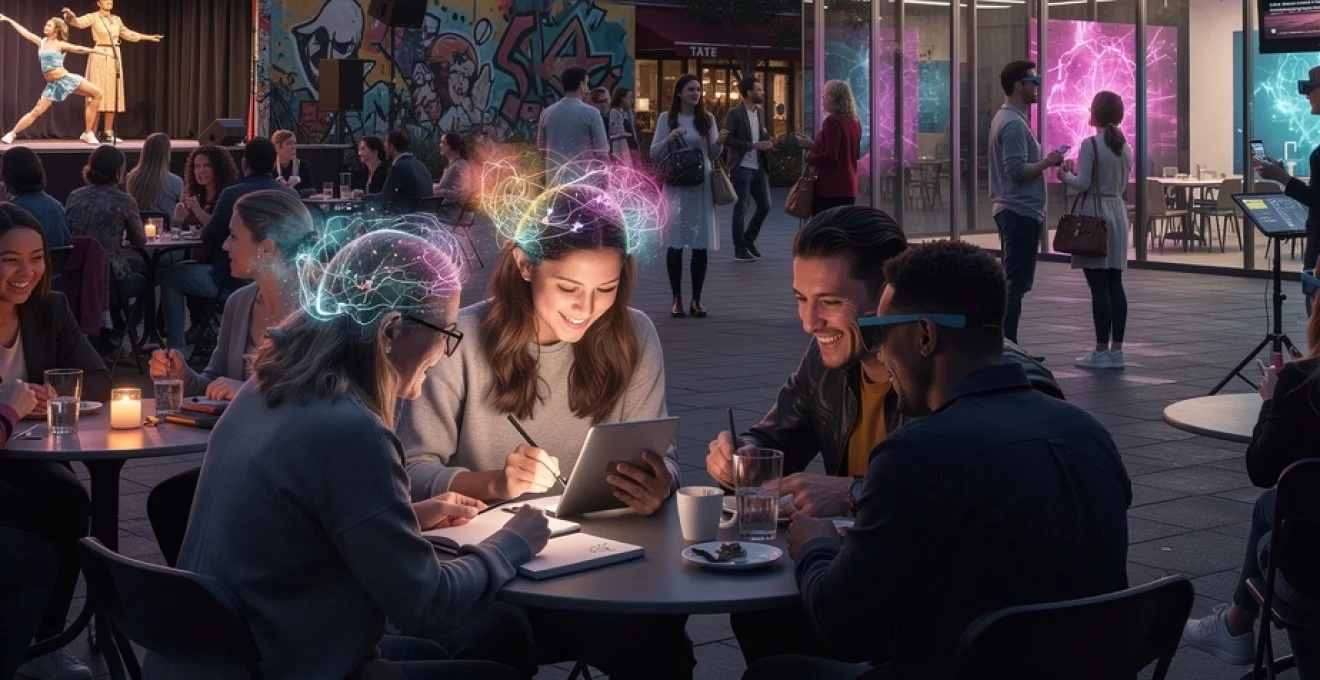
Cultural events have emerged as pivotal moments in contemporary society, serving as dynamic spaces where communities converge, creativity flourishes, and social bonds strengthen. From intimate gallery openings to sprawling international festivals, these gatherings do far more than entertain—they fundamentally reshape how individuals connect with one another and unlock innovative thinking. Research from the British Council indicates that 73% of people who regularly attend cultural events report higher levels of social satisfaction and community belonging. Whether you’re drawn to theatrical performances, music festivals, or visual art exhibitions, the impact of cultural programming extends deep into the neurological, psychological, and economic fabric of our lives. The capacity of these events to simultaneously reinforce individual identity whilst fostering collective experience makes them indispensable to thriving urban environments.
Psychological and sociological mechanisms behind community cohesion through cultural programming
Cultural events operate as powerful mechanisms for building community cohesion through multiple psychological and sociological pathways. When individuals gather to experience shared artistic expressions, they participate in a form of collective meaning-making that transcends everyday interactions. This phenomenon isn’t merely anecdotal—studies from the University of Oxford demonstrate that communities with robust cultural programming report 42% higher levels of social trust compared to those with limited cultural offerings. The shared emotional experiences at festivals, concerts, and exhibitions create what social scientists call “social glue,” binding diverse individuals through common aesthetic encounters and collective memories.
The intimacy of cultural events encourages vulnerability and openness in ways that traditional social structures often cannot. Unlike transactional or professional gatherings, cultural spaces invite participants to explore emotions, challenge perspectives, and engage with unfamiliar narratives. You might find yourself moved to tears at a theatrical performance alongside complete strangers, creating an instantaneous bond through shared emotional resonance. This unique quality of cultural events makes them particularly effective at bridging social divides and reducing prejudice. Research from the Social Research Institute shows that individuals who attend culturally diverse events demonstrate 38% greater empathy towards different ethnic groups compared to non-attendees.
Social capital formation at edinburgh fringe festival and similar Large-Scale events
Large-scale cultural gatherings such as the Edinburgh Fringe Festival exemplify how cultural programming generates substantial social capital—the networks of relationships that enable societies to function effectively. During the Fringe’s three-week run, Edinburgh transforms into a bustling laboratory of human connection, with over 3 million attendees creating an estimated 12 million social interactions. These encounters range from fleeting conversations with fellow audience members to sustained collaborations between artists from different continents. The density and diversity of social interactions at such events create what sociologists term “weak ties”—casual connections that paradoxically prove crucial for information flow, opportunity access, and community resilience.
What makes festivals particularly powerful for social capital formation is their temporary nature. The time-limited environment creates urgency and permission for social risk-taking. You’re more likely to strike up conversations with strangers, attend experimental performances, or join impromptu gatherings when operating within festival temporality. Research from the University of Edinburgh found that 61% of Fringe attendees reported forming new friendships during the festival, with 28% maintaining these connections throughout the year. This pattern repeats at events from Glastonbury to South by Southwest, demonstrating how cultural programming serves as incubators for relationship formation that extends far beyond event boundaries.
Durkheim’s collective effervescence theory applied to contemporary cultural gatherings
Émile Durkheim’s concept of collective effervescence—the sense of energy and harmony that emerges when people gather for shared purposes—provides a robust theoretical framework for understanding the power of cultural events. Durkheim observed that when individuals participate in collective rituals, they experience heightened emotional states that reinforce social bonds and shared values. Contemporary cultural events from music festivals to gallery openings function as modern iterations of these rituals, generating the same transcendent qualities that Durkheim identified in religious ceremonies. When you witness a standing ovation ripple through a theatre or feel the synchronized energy of thousands dancing to the same beat, you’re experiencing collective effervescence in action.
This phenomenon has measurable neurological correlates. Studies using mobile EEG technology at live concerts have revealed that audience members’ brainwaves synchronise during peak emotional moments, creating what researchers call “neural coupling.” This biological alignment underlies the feeling of unity and connection that distinguishes live cultural experiences from
recorded media. Rather than simply enjoying the show, your brain is literally tuning in to a shared frequency, reinforcing a sense of belonging and amplifying the emotional power of the event. Over time, repeated exposure to this kind of collective effervescence at cultural events can strengthen community cohesion, as individuals come to associate public spaces and diverse audiences with safety, joy, and shared purpose rather than division.
Bridging and bonding social networks through participatory arts initiatives
While large festivals generate impressive moments of collective effervescence, smaller participatory arts initiatives are often where the most durable social networks are built. Sociologists distinguish between “bonding” capital (strong ties within a close group) and “bridging” capital (weaker ties that connect different groups). Participatory programmes—such as community choirs, open-mic nights, co-created murals, or neighbourhood theatre—tend to nurture both. You bond with regular participants through shared practice and rehearsal, while also building bridges to new audiences, collaborators, and local organisations.
For instance, community arts projects in cities like Bristol, Rotterdam, and Montreal have shown that when residents collectively design and paint murals, rates of reported neighbourhood pride increase by up to 25%, while feelings of isolation decrease. These projects often bring together people who would rarely interact: long-time residents, recent migrants, students, and local business owners. The act of co-creating something visible and lasting transforms public space into shared territory, making it easier to strike up conversations later in a café or at the bus stop. In this way, participatory arts serve as a social “bridge-building kit,” giving people a reason and a structure to meet across lines of age, class, and ethnicity.
For cultural programmers, the implication is clear: if you want your events to genuinely strengthen community cohesion, design formats that invite participation rather than passive consumption. Workshops, collaborative installations, community casting, and open rehearsals all lower the barrier to entry and encourage people to move from spectator to co-creator. You do not need a large budget to achieve this; even small-scale initiatives, such as a shared sketchbook table at a local fair or an open rehearsal of a dance piece in a public square, can catalyse new relationships and build trust across social groups.
Cultural identity reinforcement in multicultural urban environments
In multicultural cities, cultural events also play a crucial role in reinforcing and negotiating cultural identity. For minority communities, festivals and performances provide visible platforms to affirm traditions, languages, and rituals that might otherwise be marginalised in dominant narratives. Studies in London, Toronto, and Sydney show that participation in heritage-focused cultural events significantly boosts feelings of cultural pride and belonging among second-generation migrants, who often navigate hybrid identities. When you see your food, music, and stories presented in a central public space—not hidden or exoticised—you receive a powerful message: your culture matters here.
At the same time, multicultural festivals offer majority populations the chance to engage with unfamiliar practices in a celebratory, low-pressure environment. Rather than learning about diversity solely through policy documents or news headlines, attendees encounter it through dance, costume, storytelling, and shared meals. This “embodied education” can disrupt stereotypes and foster curiosity. However, cultural identity reinforcement must be handled with care; programming that treats communities as static or one-dimensional risks reinforcing clichés. The most impactful events are co-designed with community members, allowing them to present their cultures on their own terms, including contemporary, experimental, and hybrid forms.
Urban planners are increasingly recognising that cultural identity is not just a soft factor but a key ingredient of social resilience. Neighbourhoods with regular cultural programming that reflects their demographics tend to show higher levels of civic participation and lower levels of social tension. If you are involved in shaping cultural life in a city—whether as a policymaker, curator, or community organiser—prioritising platforms where different cultural identities can be visible, honoured, and evolving is one of the most effective ways to support long-term cohesion.
Neurological and cognitive pathways activated during artistic experience and cultural participation
Beyond the social mechanisms of cohesion, cultural events also exert a profound influence on our brains. Advances in neuroscience over the past two decades have revealed that engaging with art and culture activates complex neural networks linked to emotion regulation, memory, creativity, and social cognition. In other words, when you attend a concert, explore an exhibition, or join a dance workshop, you are not just being entertained; you are exercising your brain in ways that can enhance creative problem-solving and mental wellbeing. This helps explain why regular cultural engagement is increasingly recommended as part of holistic health and personal development strategies.
Default mode network disruption and creative problem-solving enhancement
The brain’s default mode network (DMN) is a set of interconnected regions that becomes active when our minds wander, ruminate, or drift into self-referential thought. While the DMN is essential for introspection, over-activation is associated with anxiety, repetitive thinking, and creative blocks. Immersive cultural experiences can disrupt this network in productive ways. Functional MRI studies show that listening to unfamiliar music, viewing abstract art, or engaging with complex narratives decreases DMN activity while increasing activation in networks related to attention, sensory processing, and cognitive flexibility.
Put simply, a powerful performance or artwork shakes your brain out of its usual grooves, like lifting a stylus from a record that has been stuck in the same groove for too long. This disruption creates space for new associations and insights to form, which is central to creative thinking. A 2020 study from the University of Toronto found that participants who visited an art museum and reflected on the works showed a 15–20% improvement on subsequent divergent thinking tasks compared to a control group. If you are seeking fresh ideas or solutions, scheduling cultural activities into your week may be as important as traditional brainstorming sessions.
Organisers can design cultural events to maximise this DMN “reset” effect. Curatorial strategies that juxtapose unexpected art forms, cross-cultural collaborations, or non-linear storytelling encourage audiences to question assumptions and entertain multiple interpretations. For participants, a simple habit—such as taking a short reflective walk or journaling after an event—helps consolidate these neural shifts into more durable creative habits.
Dopaminergic reward systems triggered by live performance attendance
Another key neurological pathway activated during cultural participation involves the brain’s dopaminergic reward system. Dopamine is often associated with pleasure, motivation, and learning. Live performances—particularly music, theatre, and dance—are potent dopamine triggers because they combine anticipation, surprise, and emotional intensity. Studies using PET scans and fMRI have shown that listening to music you love can increase dopamine release in the striatum by up to 9%, with peaks occurring just before and during emotionally charged moments.
Why does this matter for social life and creativity? When your reward circuits are activated in a shared public setting, you associate positive feelings not only with the art form but also with the people and place around you. That is one reason audiences often report feeling more optimistic and open to new experiences after a memorable concert or play. Over time, repeated exposure to these rewarding cultural experiences can reinforce habits of attendance, curiosity, and experimentation—habits that are closely linked to creative careers and vibrant civic life.
For event producers, understanding dopaminergic dynamics suggests practical design choices. Building in elements of suspense, dynamic pacing, and emotional arcs keeps audiences engaged and primed for reward. Offering post-show interactions—such as Q&As with artists, informal meetups, or themed social spaces—extends the dopamine “afterglow” into conversations and connections, turning individual pleasure into collective engagement.
Mirror neuron activation during theatrical and dance performances
Mirror neurons—brain cells that fire both when we perform an action and when we observe someone else performing it—play a crucial role in empathy and social understanding. Theatrical and dance performances are particularly powerful triggers for mirror neuron activation because they present embodied actions, gestures, and emotions in concentrated form. When you watch a dancer leap or an actor convey grief, your brain partially simulates the movement and feeling, creating an internal echo of their experience.
Neuroscientific studies using EEG and fMRI have shown heightened mirror system activation in audiences watching live dance compared to recorded versions, suggesting that physical co-presence intensifies this empathic simulation. This helps explain why live theatre and performance can feel so emotionally immersive, and why we may leave a show with a deeper understanding of experiences far from our own. In multicultural urban environments, this embodied empathy is a vital ingredient in reducing prejudice and fostering solidarity.
Cultural organisations can harness mirror neuron dynamics by programming work that foregrounds diverse bodies and stories, as well as offering participatory workshops where audiences try movement or acting exercises themselves. Even small gestures—such as inviting audiences to stand, clap in rhythm, or sing during a performance—can strengthen this embodied connection. Over time, repeated exposure to such empathetic simulations may contribute to more compassionate social norms, as people become habituated to “feeling with” others different from themselves.
Neuroplasticity and cognitive flexibility through regular cultural engagement
Neuroplasticity—the brain’s ability to reorganise itself by forming new neural connections—is not limited to childhood. Adults continue to reshape their brains in response to novel experiences and learning. Regular engagement with diverse cultural events offers a rich stream of such stimuli. Whether you are learning basic phrases in a new language at a festival, decoding symbolism in contemporary art, or adapting to unfamiliar rhythms in a world music concert, you are challenging your brain to recognise new patterns and adjust to different frameworks.
Longitudinal research from Scotland’s “Growing Up in Scotland” study and similar European projects indicates that adults who maintain high levels of cultural participation show better performance on measures of cognitive flexibility and working memory, even after controlling for education and income. For older adults, attending concerts, museums, and community arts activities is associated with slower cognitive decline and reduced risk of dementia. In this sense, cultural events function like a mental gym, offering varied “workouts” for attention, memory, and interpretive skills.
If you want to harness these neuroplastic benefits, consistency matters more than intensity. Attending a range of small, local events across the year can be just as impactful as occasional large festivals. For programmers and policymakers, this underscores the importance of accessible, year-round cultural infrastructure rather than relying solely on flagship events. Ensuring affordable tickets, diverse programming, and inclusive venues makes it easier for residents to build cultural participation into their everyday routines, supporting both brain health and social cohesion.
Cross-pollination of disciplines: how burning man and venice biennale foster innovation
Some cultural events stand out not only for their artistic quality but also for their ability to spark cross-disciplinary innovation. Burning Man, in Nevada’s Black Rock Desert, and the Venice Biennale, one of the world’s oldest and most influential art exhibitions, exemplify how intentionally designed cultural environments can function as innovation laboratories. Both events bring together artists, architects, technologists, designers, and thinkers from around the globe, creating dense networks of exchange where ideas migrate between fields.
At Burning Man, the temporary city structure, radical self-expression ethos, and gift economy encourage participants to experiment with large-scale installations, interactive environments, and alternative social systems. Many of these projects require collaboration between engineers, coders, artists, and community organisers, blurring traditional disciplinary boundaries. Similarly, the Venice Biennale’s pavilions and collateral events often feature collaborations between visual artists, urbanists, sound designers, and social researchers, who address global issues through immersive installations and speculative architectures.
Why are these events such fertile ground for innovation? First, they cultivate what researchers call “serendipitous collision”—the chance encounters between people and ideas that might never meet in conventional office or academic settings. Second, they normalise risk-taking and prototyping in public, lowering the fear of failure. Third, they offer extended time frames—days or weeks—during which participants can immerse themselves in a creative ecosystem, much like a residency or hackathon at city scale. It is no coincidence that concepts first tested at these events, such as interactive light art, participatory design methods, and sustainable pop-up infrastructure, often later appear in commercial products, urban planning projects, and digital platforms.
If you are designing cultural programming and aim to stimulate innovation, there are lessons to borrow from Burning Man and the Venice Biennale without replicating their exact formats. Curate diverse disciplines side by side, provide shared making spaces, schedule unconference-style sessions, and encourage open-source documentation of projects. Treat your event as an ecosystem rather than a series of isolated shows; the informal conversations in cafés, workshops, and queue lines may generate as much value as the headline performances.
Economic multiplier effects and creative cluster development in cultural districts
Cultural events and districts are not just social and cognitive catalysts; they are also powerful economic drivers. When a neighbourhood becomes known for its galleries, theatres, music venues, or festivals, it often attracts a critical mass of creative professionals, visitors, and complementary businesses. Economists describe this as an “economic multiplier effect”: money spent on tickets, food, accommodations, and transport circulates through the local economy, supporting jobs and tax revenues well beyond the cultural sector itself.
Over time, these dynamics can lead to the emergence of creative clusters—geographic concentrations of artists, designers, media companies, and cultural institutions that feed off one another’s presence. Areas like Shoreditch in London, Williamsburg in New York, or Kreuzberg in Berlin illustrate how cultural vibrancy and creative entrepreneurship can transform formerly industrial or neglected districts into global reference points for innovation and lifestyle. However, these transformations also bring risks, particularly around rising rents and displacement, which require thoughtful strategies to balance growth with community preservation.
Richard florida’s creative class theory manifested in shoreditch and williamsburg
Urban theorist Richard Florida popularised the idea of the “creative class”—a demographic of knowledge workers, artists, and professionals whose presence correlates with economic dynamism in cities. According to Florida, places that attract and retain creative people tend to score high on what he calls the “3 Ts”: talent, technology, and tolerance. Cultural events and districts are crucial in signalling and sustaining these qualities. Shoreditch and Williamsburg are textbook examples of his theory in action.
In the 1990s and early 2000s, both neighbourhoods began to attract artists and musicians drawn by low rents and industrial spaces suitable for studios and venues. Pop-up exhibitions, underground parties, and grassroots festivals created a perception of authenticity and experimentation. As creative professionals moved in, so did design agencies, tech startups, and boutique hospitality businesses, seeking proximity to both talent and trendsetting audiences. A 2018 report by the Brookings Institution noted that creative industries in these districts grew at nearly twice the rate of the broader urban economy over a decade.
However, the success of creative class clusters also highlights the need for proactive policy. As property values rise, the very artists and small organisations that generated the area’s cultural capital can be priced out. Cities that wish to benefit from creative clustering without erasing its origins are experimenting with tools such as cultural zoning, affordable workspace protections, and community land trusts. For local stakeholders, the challenge is to ensure that “creative class” development does not become synonymous with cultural displacement.
Spillover innovation from arts festivals to technology and business sectors
The economic impact of cultural events extends far beyond ticket sales and tourism. Arts festivals often serve as testbeds for new technologies, business models, and collaborative practices that later spread into other sectors. South by Southwest (SXSW) in Austin is a prominent example: originally a music festival, it has evolved into a convergence zone where film, interactive media, and tech startups intersect. Many now-notable companies and ideas—such as Twitter’s early public adoption—gained momentum through festival showcases and informal networking at SXSW.
Similar spillover effects are evident in smaller festivals and cultural labs around the world. Projection mapping techniques pioneered for avant-garde theatre are now standard tools in retail and architecture. Interactive storytelling methods developed in museums inform user experience design in apps and learning platforms. Even logistical innovations—from crowd management systems to sustainable temporary structures—often originate in the festival environment before being adapted for conferences, public transport, or disaster relief.
For business leaders and policymakers, engaging with arts festivals as partners rather than mere entertainment providers can unlock valuable innovation opportunities. Sponsorship models that include co-creation labs, hackathons, or artist-in-residence programmes for tech firms encourage cross-pollination. Likewise, festival directors can strategically invite entrepreneurs, researchers, and social innovators into their ecosystems, framing cultural events as platforms where creative prototypes meet real-world feedback.
Gentrification dynamics and authentic community preservation strategies
Despite their benefits, successful cultural districts can become victims of their own appeal. As areas gain prestige, property speculation and rising rents can push out long-standing residents and grassroots organisations. Gentrification is not an inevitable outcome, but it is a common pattern when cultural value is converted into real estate value without protective measures. The result can be a hollowed-out “cultural shell” where venues remain but the diversity and community ties that made the district vibrant are eroded.
To preserve authenticity, cities and cultural stakeholders are experimenting with innovative strategies. Some municipalities designate “cultural conservation zones” where planning rules prioritise arts uses and limit speculative conversions. Others support cooperative ownership models, enabling artists and local residents to collectively own buildings and land. In Lisbon and Montreal, for example, cultural hubs have been established in former industrial complexes under long-term, favourable leases that protect them from sudden rent spikes.
At the programming level, involving local communities in decision-making is crucial. Advisory boards that include residents, small business owners, and youth groups can help ensure that events reflect local histories and needs rather than catering solely to tourists or external investors. If you are planning a cultural event in a rapidly changing neighbourhood, asking early and often, “Who benefits, who might be displaced, and how can we share governance?” is essential to aligning creative development with social justice.
Digital transformation of cultural access: streaming platforms and hybrid event models
The last decade—and particularly the COVID-19 pandemic—has accelerated a digital transformation in how we access and experience cultural events. Streaming platforms, virtual tours, and hybrid formats have expanded audiences far beyond the physical capacity of venues, creating new opportunities and challenges for cultural organisations. On one hand, a performance can now reach thousands of viewers across continents in real time; on the other, competition for attention is fiercer, and questions arise about how to preserve the depth of live experience through screens.
Hybrid event models, which combine in-person attendance with digital participation, are emerging as a promising middle ground. A theatre performance might host a live audience while simultaneously streaming to remote viewers with added interactive features such as chat-based Q&As or behind-the-scenes content. Museums are layering augmented reality experiences onto physical visits while also offering virtual exhibitions. As audiences increasingly expect flexible options, cultural organisations that embrace digital tools strategically are better positioned to maintain relevance and resilience.
National theatre live and metropolitan opera HD as democratisation tools
Two flagship initiatives illustrate the democratizing potential of digital cultural access: National Theatre Live in the UK and the Metropolitan Opera’s HD broadcasts from New York. Both programmes capture live performances with high-quality audio and multi-camera setups, then transmit them to cinemas and, increasingly, home streaming platforms worldwide. This model allows audiences who might never travel to London or New York to experience top-tier productions at a fraction of the cost of a live ticket.
Evaluations of National Theatre Live conducted by Nesta and Arts Council England indicate that these broadcasts do not significantly cannibalise local theatre attendance; instead, they often act as a gateway, sparking interest in live performance more broadly. Similarly, surveys of Met Opera HD audiences show that many viewers attend in small towns or regions without access to major opera houses. For students and early-career artists, these broadcasts function as masterclasses in staging, interpretation, and performance.
However, digital access is only truly democratic if issues of affordability, language, and technological infrastructure are addressed. Subtitling, flexible pricing, partnerships with schools and libraries, and investment in broadband access all play a role. Cultural organisations considering similar models should ask: how can we design digital offerings that expand, rather than replicate, existing inequalities in cultural participation?
Augmented reality integration at tate modern and museum of modern art
Augmented reality (AR) has opened new possibilities for layered, interactive cultural experiences. Institutions like Tate Modern in London and the Museum of Modern Art (MoMA) in New York have piloted AR projects that superimpose digital information, animations, or alternative artworks onto physical spaces when viewed through smartphones or dedicated devices. Visitors might see an artist’s sketches appear alongside a finished painting, watch a sculpture “come to life,” or access oral histories linked to specific objects in a gallery.
These AR interventions can enrich understanding and engagement, especially for younger audiences accustomed to digital interactivity. They also allow institutions to present multiple curatorial narratives simultaneously—such as feminist, decolonial, or environmental perspectives—without physically reconfiguring the exhibition. In some cases, artists have used AR to stage “invisible exhibitions” that challenge institutional power structures, visible only to those with the app installed.
Yet AR integration is not without challenges. There is a risk that screens will distract from direct, unmediated encounters with artworks or that experiences will skew towards those with newer devices and digital literacy. Thoughtful design is key: AR should be an option, not an obligation, and should enhance rather than replace contemplation. When used judiciously, AR can turn museums into flexible, multi-layered learning environments, extending the creative possibilities of cultural spaces.
Algorithmic curation versus human-centred cultural programming
As streaming platforms and digital archives proliferate, algorithms increasingly shape what cultural content we encounter. Recommendation systems on music and video platforms analyse our past behaviour to suggest new works, creating personalised but often narrow pathways through vast catalogues. While algorithmic curation can be convenient and occasionally serendipitous, it also risks reinforcing filter bubbles, where we see only what resembles what we already know.
Human-centred cultural programming offers a critical counterbalance. Curators, festival directors, and community programmers bring contextual knowledge, ethical judgement, and a capacity for intentional risk-taking that algorithms currently lack. They can foreground marginalised voices, juxtapose challenging works, and respond to local needs in ways that purely data-driven systems do not. A playlist generated by an algorithm might approximate your taste; a live festival curated around a social theme can challenge, surprise, and connect you to other people in meaningful ways.
The future of cultural access is likely to involve a negotiation between algorithmic and human curation rather than a victory of one over the other. Cultural organisations can use data insights to understand audience behaviours while maintaining human oversight of core programming choices. For individual users, a practical approach is to treat algorithmic recommendations as starting points, then actively seek out curated lists, festival line-ups, and critics’ selections that push beyond comfort zones. Asking yourself, “When was the last time I saw or heard something completely unfamiliar?” is a simple way to resist over-personalisation and keep your cultural diet diverse.
Measuring cultural impact: quantitative and qualitative assessment frameworks
As cultural events become more central to urban development, health policy, and education, stakeholders increasingly ask: how do we know if they are working? Measuring the impact of cultural programming is complex because benefits are often intangible, long-term, and multi-layered. Nevertheless, robust assessment frameworks are emerging that combine quantitative data—such as attendance figures, economic indicators, and demographic reach—with qualitative insights into lived experience, identity, and wellbeing.
Effective evaluation serves multiple purposes. It helps funders and policymakers allocate resources wisely, supports organisations in refining their programmes, and provides evidence to advocate for culture as an essential, not optional, component of social infrastructure. The most sophisticated approaches recognise that numbers alone cannot capture the full value of cultural participation; stories, reflective testimonies, and ethnographic observations are equally important in understanding how events enrich social life and inspire creativity.
Arts council england’s cultural value framework implementation
Arts Council England (ACE) has been at the forefront of developing tools to assess cultural value beyond box office returns. Its cultural value framework encourages organisations to track outcomes across several dimensions, including personal development, community cohesion, health and wellbeing, and economic impact. Practical tools such as the “Quality Metrics” and “Impact & Insight Toolkit” invite audiences, peers, and artists to rate and reflect on aspects of artistic quality, relevance, and resonance.
Implementation of this framework has revealed some important lessons. First, asking audiences about their experiences in structured ways—through short surveys, digital prompts, or facilitated discussions—can yield nuanced insights into how events shift perceptions or inspire action. Second, comparative data across organisations allows for sector-level learning; for example, ACE has identified correlations between co-created projects and higher scores on community relevance and empowerment. Third, qualitative feedback often highlights unexpected impacts, such as increased confidence among volunteers or new cross-generational friendships formed through participation.
For cultural practitioners, adopting such frameworks does not mean turning art into a checklist. Instead, it offers a language and evidence base to articulate what many have long known intuitively: that cultural events contribute to flourishing lives and resilient communities. The key is to integrate evaluation into the creative process from the outset, rather than bolting it on as an afterthought.
Social return on investment methodologies for festival programming
Social Return on Investment (SROI) is a methodology that seeks to quantify the broader social, environmental, and economic value created by a project relative to the resources invested. In the context of festival programming, SROI analyses might consider outcomes such as improved mental health, increased volunteering, skills development, or reduced social isolation among attendees and participants. These outcomes are then assigned financial proxies based on comparable services or societal costs, producing a ratio (for example, £4 of social value generated for every £1 invested).
Several European and Australian festivals have piloted SROI studies, with results indicating substantial returns. One mid-sized community arts festival in the UK, for instance, reported an SROI ratio of 1:5, driven largely by improvements in participant confidence and employability. While such figures should be interpreted with caution—they are estimates, not precise measurements—they provide a powerful narrative tool when advocating for public or philanthropic support.
Implementing SROI requires careful stakeholder engagement and data collection, including baseline measures before events and follow-up surveys or interviews afterwards. Festival organisers interested in this approach should collaborate with researchers or impact specialists to ensure methodological rigour. Even if a full SROI calculation is not feasible, adopting its mindset—asking who benefits, how, and at what scale—can sharpen strategic thinking and help align programming with community priorities.
Longitudinal studies on creative participation and wellbeing outcomes
Finally, some of the most compelling evidence for the value of cultural events comes from longitudinal studies that track individuals and communities over time. Projects like the UK’s “Understanding Society” survey, Australia’s “HILDA” study, and various Nordic research initiatives have incorporated questions on arts attendance and creative participation alongside health, employment, and social variables. Analyses consistently find that regular cultural engagement is associated with higher life satisfaction, lower levels of loneliness, and better self-reported health, even after controlling for income, education, and other factors.
One often-cited study from University College London followed over 6,000 adults for 10 years and found that those who attended cultural events at least once a month had a significantly lower risk of developing depression than those who rarely or never attended. Another study in Norway linked frequent cultural participation with increased probability of reporting “good” or “very good” health, independent of physical activity levels. While correlation does not prove causation, the consistency of these findings across countries suggests that cultural participation plays a meaningful role in sustaining wellbeing.
For policymakers and practitioners, the message is both encouraging and challenging. Encouraging, because relatively modest investments in accessible cultural programming can yield long-term health and social benefits; challenging, because realising these benefits requires continuity, equity of access, and sustained commitment rather than one-off events. As more longitudinal data accumulates, we can refine our understanding of which forms of participation are most impactful for whom and under what conditions. In the meantime, prioritising opportunities for people to gather, create, and experience culture together remains one of the most promising strategies for enriching social life and inspiring creativity in the 21st century.