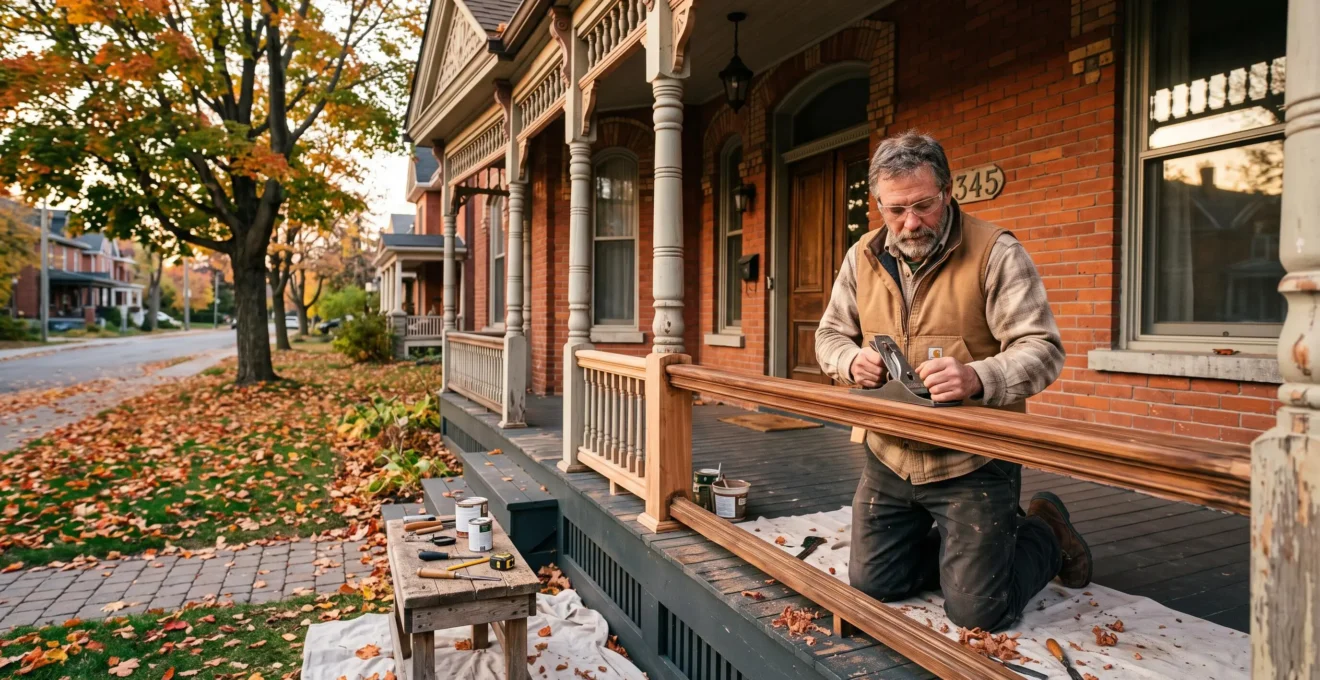
Owning a heritage home in Ottawa is a privilege that comes with real constraints. A kitchen update, a window replacement or a porch repair can trigger municipal approvals, material restrictions and specialized trades that a standard renovation never involves. For homeowners, the hardest part is often not the work itself but finding a contractor who truly understands how to intervene on a designated property without damaging its character or breaching the Ontario Heritage Act.
This guide walks you through the specific rules that apply in Ottawa, the criteria for identifying a genuinely qualified contractor, the permit and budget planning you should expect, and the daily practices that protect both your home and your investment during the project.
Direct answer: To renovate a heritage home in Ottawa, hire a contractor with documented experience on designated properties, proper Ontario licensing and insurance, and fluency with City of Ottawa heritage permits. Expect to apply for consent under the Ontario Heritage Act before any alteration likely to affect the home’s heritage attributes.
What Makes Heritage Home Renovation in Ottawa Different?
A heritage renovation is not a standard renovation with a prettier facade. In Ottawa, when a property is formally designated under the Ontario Heritage Act, the law restricts what the owner can modify and requires municipal consent before most alterations that affect its heritage character. This changes the entire logic of the project, from the choice of a renovation contractor to the materials delivered on site.
Designated properties and the Ontario Heritage Act
The City of Ottawa designates individual properties under Part IV (section 29) of the Ontario Heritage Act and entire districts under Part V. According to the Ontario guide to conserving designated heritage properties, the owner of a property designated under section 29 must apply to the municipal council for consent before carrying out alterations likely to affect the property’s heritage attributes. The council has 60 days from the application date to serve notice regarding completeness, and in most cases the council makes the final decision unless the municipality has delegated it to staff.
In practical terms, this means that even work you might consider routine, such as changing a window, altering a cornice or replacing cladding, is likely to require a heritage permit if those elements contribute to the designation. Working with a general contractor who treats the home as an ordinary property can quickly place you in breach of the designation by-law.
Why materials and craftsmanship matter more
Heritage attributes often include original masonry, wood windows, slate or metal roofing, decorative trim and specific proportions. Replacing a wood sash window with a vinyl unit of the same opening is a standard job for most renovators. On a designated facade, the same intervention can be refused or ordered reversed because it alters a protected attribute. The contractor must therefore understand the difference between a visually similar substitute and a conservation-grade replacement.
This is where a true heritage specialist diverges from a general renovation contractor: they know how to source matching wood species, specify lime-based mortars, repair rather than replace original elements and document each decision for the City. That expertise is what keeps a project both compliant and historically coherent.
How to Choose a Qualified Renovation Contractor for a Heritage Property?
Choosing the right contractor is the single most influential decision in a heritage project. The goal is not to find the lowest bidder, but to confirm that whoever you hire has the licenses, the insurance and the demonstrable track record to work on a protected building without surprises.
Licensing, insurance and legal basics in Ontario
Before discussing heritage experience, verify the basics. A credible contractor in Ontario should hold a current business registration, carry commercial general liability insurance with coverage adapted to the project value, and provide proof of WSIB (Workplace Safety and Insurance Board) coverage for any workers on site. If the project includes an addition or structural changes, the designer or engineer involved must be qualified under the Ontario Building Code.
Ask for copies of these documents, not just verbal assurances. A contractor who hesitates to share proof of insurance or WSIB status is a serious warning sign on any job, and even more so on a heritage property where mistakes are costly to undo.
Proven heritage experience
Licensing is necessary but not sufficient. On a designated home, you want a contractor who has already delivered comparable work. The Canadian Association of Heritage Professionals defines a heritage professional as someone with specialized knowledge, supported by formal training or work experience, in heritage conservation. Not every tradesperson needs that formal status, but the lead contractor should either hold it, work routinely with such professionals, or demonstrate equivalent project experience.
Concrete evidence includes photographs of completed heritage projects, references from owners of designated homes, examples of past heritage permit applications, and the names of masons, carpenters or window restorers they regularly subcontract. If a contractor cannot name a single previous heritage project in Ottawa or the surrounding region, treat that as a disqualifying signal.
Questions to ask before signing a contract
Screening questions for a heritage renovation contractor
- Is my property designated under Part IV or Part V of the Ontario Heritage Act, and how does that shape your scope of work?
- Can you share two or three completed projects on designated Ottawa properties, with owner references?
- Who will prepare and submit the heritage permit application, and is that cost included?
- Which specialized subtrades (masonry, wood windows, roofing) will you use, and what are their qualifications?
- How do you document and price unforeseen conditions discovered inside old walls, floors or roofs?
The quality of the answers often matters more than the answers themselves. A specialist will explain trade-offs, mention the City of Ottawa heritage staff by role, and describe how they handle disagreements with municipal reviewers. A generalist will usually downplay the regulatory process or promise speed in a way that is incompatible with heritage approvals.
Planning the Project: Permits, Budget and Timelines
Even with the right contractor on board, the project cannot start until the City of Ottawa has reviewed and approved the proposed work. Treat permits, budget and schedule as a single planning exercise, because they influence each other directly.
Heritage permits with the City of Ottawa
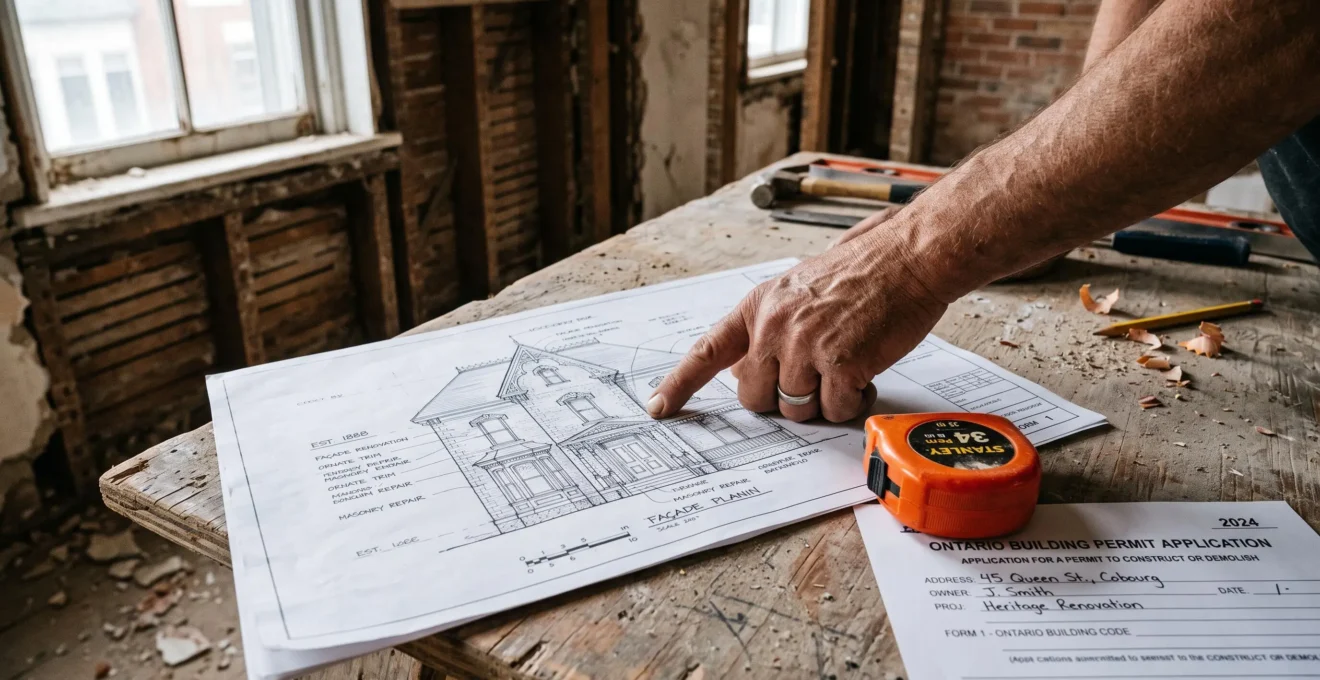
Alterations, additions and demolitions on designated properties generally require a heritage permit from the City of Ottawa, in addition to any standard building permit. The City of Ottawa heritage permit application page sets out the application process and lists the fees. According to that schedule, which takes effect January 1, 2026, fees range from $309 for alterations to $927 for additions, $2,799 for minor alterations, $10,093 for major alterations, and $15,655 for the demolition of a Part IV, Grade 1 or contributing property.
Responsibility for preparing and submitting the application is a point to clarify in writing. Many owners assume the contractor will handle it; many contractors assume the owner or their architect will. A good practice is to assign the lead role to whoever will produce the drawings and specifications, and to confirm it in the contract.
Building a realistic budget
A heritage budget should include line items that rarely appear in a standard renovation: custom-milled wood, salvaged or reproduction hardware, lime mortar, specialized masons or window restorers, documentation for the heritage permit, and professional fees for architects or heritage consultants. These items usually cost more than their modern equivalents and require longer lead times.
Set aside a contingency reserve dedicated to the age of the structure. Hidden rot behind original siding, undersized framing, outdated wiring or deteriorated chimneys are common on older Ottawa homes and only reveal themselves once work begins. Agreeing in advance with the contractor on how such discoveries will be priced and approved prevents disputes once the walls are open.
Watch out for underestimated timelines: heritage permit review, specialized subtrade availability and material lead times routinely extend schedules beyond what a general renovation would require. Build this reality into your planning rather than treating delays as exceptions.
Working with Your Contractor Day to Day
Once the permits are in hand and the work has started, the quality of the collaboration between owner and contractor becomes the main factor behind a smooth project. Clear routines prevent most of the misunderstandings that lead to cost overruns and strained relationships.
Communication and documentation
Agree from the outset on a weekly site meeting with a short written summary: work completed, work planned for the next week, decisions needed from the owner, and any issue affecting cost or schedule. This simple discipline keeps both parties aligned and creates a paper trail that is invaluable if a disagreement arises later.
Document every change in scope through a signed change order that specifies the work, the cost and the schedule impact. On a heritage project, some changes may also require amending the heritage permit, so the contractor should flag any modification that touches a protected attribute before executing it.

Handling unforeseen conditions
Hypothetical case
An owner in a Part V heritage district plans to refresh a second-floor bedroom. Once the plaster is removed, the contractor discovers water damage behind the exterior wall and a section of structural framing weakened by old leaks. The original quote did not cover structural repairs. Because the owner and contractor had agreed in writing on a change-order process and a 15% contingency reserve, they are able to price the repair, confirm whether it affects any heritage attribute, submit an amendment to the City if required, and resume work with a clear financial picture rather than a dispute.
The lesson is less about the specific damage than about the method. On an older structure, surprises are the rule rather than the exception. The contract and the day-to-day communication protocols are what turn a potential crisis into a manageable adjustment.
Key Takeaways for a Successful Heritage Renovation
A successful heritage renovation in Ottawa rests on three pillars: a contractor whose licensing, insurance and heritage experience you have verified in writing; a permit strategy that respects the Ontario Heritage Act and the City’s fee schedule; and a budget and schedule that acknowledge the realities of working on an older structure.
Before signing anything, confirm that your property’s designation is understood by every party, that responsibilities for permits and drawings are explicitly assigned, and that the contingency reserve matches the age and condition of the home. The City of Ottawa’s heritage planning staff and the published fee schedule are the authoritative starting points; the Ontario government guide on conserving designated properties explains the broader legal framework you will be working within.
If you want a structured method to translate these principles into a project plan, this detailed walk-through on planning a home renovation from start to finish complements the heritage-specific considerations covered above and can help you sequence decisions in the right order.
Who is responsible for obtaining heritage permits when renovating in Ottawa?
The property owner is legally responsible for ensuring that any alteration to a designated heritage property has the required municipal consent under the Ontario Heritage Act. In practice, the application is often prepared by the architect, heritage consultant or contractor leading the project, but the contract should state clearly who files it and whose fees cover the work.
What questions should I ask before signing a contract with a heritage renovation contractor in Ottawa?
Ask about the property’s designation and its implications, previous heritage projects with references, which specialized subtrades will be used, who prepares the heritage permit application, how change orders and unforeseen conditions are priced, and what proof of licensing, insurance and WSIB coverage the contractor can provide.
How do I set a realistic budget for renovating a heritage-designated home?
Include heritage-specific items such as custom materials, specialized craftsmanship, documentation and permit fees, and professional fees for architects or heritage consultants. Add a contingency reserve dedicated to hidden conditions in the existing structure, and treat the City of Ottawa heritage permit fee schedule as a known cost rather than an optional one.
What makes renovating a designated heritage property in Ottawa different from a standard renovation?
Designated properties are protected under the Ontario Heritage Act. Alterations likely to affect their heritage attributes require consent from the City of Ottawa, specific materials and techniques may be required, and the choice of contractor is constrained by the need for proven heritage experience in addition to standard licensing and insurance.