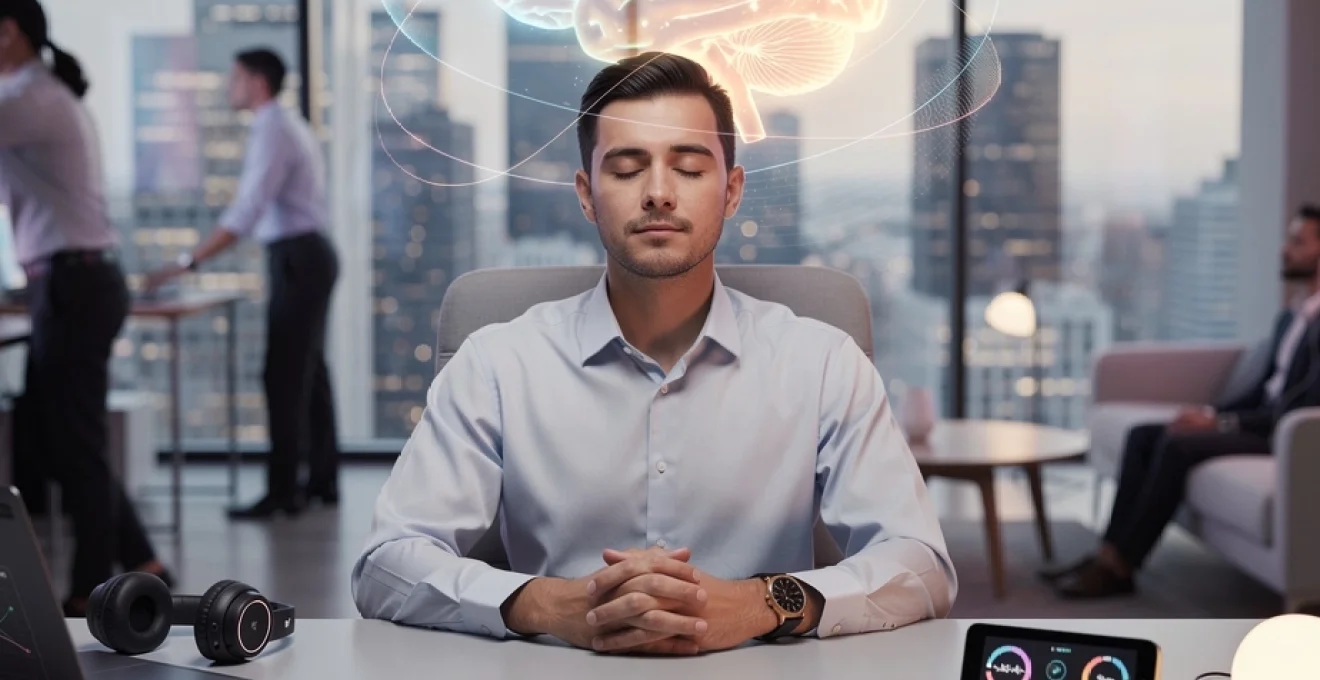
In today’s relentlessly fast-paced world, the concept of pausing has evolved from a luxury into a necessity for maintaining optimal cognitive function and emotional well-being. Modern professionals face an unprecedented barrage of digital stimuli, with the average knowledge worker checking email every 6 minutes and receiving over 120 notifications daily. This constant stream of interruptions creates a state of chronic stress that fundamentally alters brain chemistry and impairs decision-making capabilities. Mindful pausing represents a scientifically-backed intervention that can restore balance, enhance productivity, and improve overall quality of life. Research from Harvard Medical School demonstrates that individuals who incorporate structured pause practices into their daily routines experience a 23% reduction in stress-related cortisol levels and show measurable improvements in cognitive flexibility within just eight weeks of consistent practice.
Neurobiological mechanisms behind mindful pause practice
The human brain operates through intricate networks that require periodic rest to maintain peak performance. Understanding the neurobiological foundations of mindful pausing reveals why these practices produce such profound effects on mental clarity and emotional regulation. When you engage in deliberate pause practices, specific neural pathways activate whilst others deactivate, creating an optimal state for cognitive restoration and insight generation.
Default mode network deactivation during conscious breathing
The Default Mode Network (DMN) encompasses brain regions that remain active during rest periods, often contributing to rumination and self-referential thinking. Studies using functional magnetic resonance imaging reveal that conscious breathing exercises significantly reduce DMN activity, particularly in the posterior cingulate cortex and medial prefrontal cortex. This deactivation correlates with decreased anxiety levels and improved present-moment awareness. Professional athletes have long recognised this phenomenon, with Olympic-level performers utilising specific breathing protocols to achieve peak performance states.
Cortisol regulation through parasympathetic nervous system activation
Mindful pause practices trigger the parasympathetic nervous system, initiating the body’s natural relaxation response. This activation leads to measurable reductions in cortisol production, with research indicating up to 35% decreases in stress hormone levels following a single 10-minute mindfulness session. The vagus nerve plays a crucial role in this process, transmitting calming signals from the brain to major organ systems. Heart rate variability improves significantly during these states, indicating enhanced autonomic nervous system balance.
Prefrontal cortex strengthening via Mindfulness-Based stress reduction
Regular pause practices literally reshape brain structure through neuroplasticity mechanisms. The prefrontal cortex, responsible for executive functions such as planning and emotional regulation, shows increased grey matter density in practitioners who maintain consistent mindfulness routines. This structural enhancement translates into improved cognitive control and reduced reactivity to stressful stimuli. Neuroimaging studies reveal that even brief pause practices can strengthen connections between the prefrontal cortex and emotional centres, leading to more balanced responses to challenging situations.
Gamma wave production in contemplative Micro-Meditation states
Advanced practitioners of mindful pausing demonstrate unique brainwave patterns, particularly increased gamma wave activity associated with heightened awareness and cognitive processing. These high-frequency brainwaves (40-100 Hz) facilitate enhanced pattern recognition and creative problem-solving abilities. Research conducted at the University of Wisconsin-Madison shows that individuals who engage in regular micro-meditation sessions exhibit gamma wave synchronisation across multiple brain regions, suggesting improved neural coordination and information processing efficiency.
Strategic pause implementation frameworks for High-Performance professionals
Modern productivity methodologies can be significantly enhanced through the integration of structured pause practices. Leading performance experts have developed sophisticated frameworks that combine traditional time management techniques with mindfulness-based interventions to optimise both efficiency and well-being. These approaches recognise that sustainable high performance requires deliberate recovery periods built into the work schedule.
Pomodoro technique integration with mindful transition protocols
The classic Pomodoro Technique gains exponential effectiveness when combined with mindful transition protocols. Rather than using breaks for additional stimulation, practitioners engage in specific pause practices during the five-minute intervals between work sessions. This
might include three slow, diaphragmatic breaths, a brief body scan, or simply noticing five sensory details in your environment. Over the course of a working day, these micro-pauses help prevent cognitive fatigue and sustain deep focus for each 25-minute work sprint. Many high-performance professionals report that, when they treat the break as a “reset ritual” rather than a distraction, their ability to re-enter deep concentration improves dramatically.
To implement this in a busy lifestyle, you can design a simple protocol: when the timer rings, close your laptop, place both feet on the floor, inhale for four counts, hold for two, and exhale for six. During this time, resist the urge to check messages or scroll on your phone. You are teaching your nervous system that breaks are for recovery, not more stimulation. Over time, this conscious breathing and sensory awareness between tasks can reduce stress, support better time management, and make each Pomodoro cycle feel more sustainable.
Cal newport’s deep work method enhanced by reflective intervals
Cal Newport’s Deep Work methodology emphasises long, uninterrupted blocks of focused effort on cognitively demanding tasks. However, many professionals overlook the value of inserting short reflective intervals before and after these deep work blocks. These reflective pauses act as mental bookends, enabling you to clarify your intention beforehand and consolidate learning and insights afterwards. Neurocognitively, this mirrors the way athletes cool down after intensive training to aid recovery and integration.
Before entering a deep work session, a two-minute reflective pause can include defining a clear objective, visualising the desired outcome, and noting any potential distractions. After the session, another brief pause allows you to review progress, capture key ideas, and assess emotional state. This simple framework not only reinforces the habit of deep work but also trains metacognition—the ability to think about your own thinking. As a result, you become more aware of when your attention drifts and more capable of bringing it back deliberately.
Tony schwartz’s ultradian rhythm optimisation for energy management
Tony Schwartz popularised the concept that human beings operate in 90–120-minute ultradian rhythms, cycles during which energy builds and then naturally declines. Ignoring these biological rhythms and forcing continuous work through dips in energy leads to diminished performance and higher stress levels. Integrating structured pauses at the end of each ultradian cycle aligns work patterns with the body’s innate recovery systems. In practical terms, this means working intensively for 90 minutes, followed by a 10–20 minute deliberate pause.
During these recovery windows, high-performance professionals should avoid cognitively demanding tasks and instead engage in restorative activities: short walks, stretching, hydration, or brief mindfulness practices. Think of these breaks as refuelling stops on a long journey—without them, even the most powerful engine will overheat. Studies on ultradian rhythm optimisation show that individuals who honour these cycles report increased sustained attention, better emotional regulation, and reduced burnout over time. For busy executives, this approach transforms pauses from perceived inefficiencies into strategic investments in energy management.
Getting things done (GTD) system with contemplative review sessions
David Allen’s Getting Things Done (GTD) framework focuses on capturing, clarifying, organising, reflecting, and engaging with tasks. While many professionals adopt the capture and organise components, fewer leverage the reflective dimension as an opportunity for mindful pausing. Contemplative review sessions add a layer of awareness to the standard GTD weekly review, turning it into both a planning and grounding practice. Rather than racing through lists, you intentionally slow down to observe your reactions to each commitment.
During a contemplative review, you might notice where your body tightens when you look at certain projects or where excitement arises when you consider new opportunities. This somatic feedback provides valuable information for priority setting and stress reduction. You can also integrate short breathing exercises between reviewing different life domains—work, personal growth, relationships, health—to reset your nervous system. By blending GTD with mindful pausing, your task management system evolves from a mechanical checklist into a self-awareness practice that supports a balanced, productive lifestyle.
Digital detox strategies and Technology-Mediated pause solutions
In a hyperconnected environment, moments of pause are often sabotaged by constant digital interruptions. Ironically, technology can both undermine and support mindful pausing, depending on how intentionally it is used. Strategic digital detox practices help you reclaim mental space, while carefully chosen apps and tools can guide structured breaks. The key is to use technology as a scaffold for healthier habits rather than as another source of distraction.
Forest app and freedom software for intentional digital disconnection
Tools like the Forest app and Freedom software provide practical frameworks for intentional digital disconnection. Forest gamifies focused work by rewarding you with a growing virtual tree when you stay off your phone, while Freedom blocks distracting websites and apps across your devices. Together, they create digital boundaries that make it easier to protect your pauses. Instead of relying on willpower alone, you outsource part of the responsibility to well-designed systems.
For example, you might schedule Freedom sessions during your lunch break and evening wind-down, ensuring that these natural pause points are not hijacked by social media or email. Meanwhile, Forest can be used during micro-meditation intervals to reinforce the habit of staying present. Over time, these digital detox strategies reduce the baseline level of cognitive noise in your day. Have you ever noticed how different your mind feels after 30 minutes away from notifications compared to constant checking? That contrast is the lived experience of reduced cognitive load.
Insight timer and headspace pro for workplace mindfulness sessions
On the positive side of technology-mediated pauses, apps such as Insight Timer and Headspace Pro offer guided mindfulness sessions specifically designed for busy professionals. These platforms provide short practices ranging from one to 15 minutes, making them ideal for integrating into meeting breaks or transition moments between tasks. Many organisations now encourage employees to use such tools as part of their workplace wellness programmes, normalising the act of pausing during the workday.
By scheduling a 5-minute guided breathing session after a high-stakes presentation or before a complex negotiation, you give your nervous system an opportunity to reset. Over weeks and months, these micro-meditations build the mental muscle of attention in the same way repeated gym sessions build physical strength. The guidance also removes the guesswork, which is especially valuable if you are new to mindfulness. Instead of wondering “What should I do during a pause?”, you simply press play and follow the instructions.
Blue light filtering technology during evening reflection periods
Evening reflection periods are critical moments of pause that set the tone for sleep quality and next-day performance. However, exposure to blue light from screens suppresses melatonin production and disrupts circadian rhythms, making it harder to unwind. Blue light filtering technologies—such as software-based filters, device night modes, or dedicated glasses—reduce this impact, allowing you to engage with digital journals or reflection apps without overstimulating your brain. The result is a more physiologically friendly environment for end-of-day contemplation.
Think of blue light filters as dimming the stage lights before the final act of the day; they signal to your body that it is time to transition from performance to recovery. Combining this technology with a brief gratitude practice, written reflection, or breathwork sequence creates a powerful “shutdown ritual”. This ritual not only supports deeper sleep but also closes cognitive loops, reducing the tendency to ruminate about unresolved tasks. In a busy lifestyle, protecting the quality of your evening pause may be one of the most impactful productivity strategies you can adopt.
Notification batching systems for reduced cognitive load
Constant alerts fragment attention and erode the potential benefits of even the best-designed pauses. Notification batching offers a practical solution: rather than receiving messages in real time, you schedule specific windows—perhaps once every 60 or 90 minutes—during which notifications are delivered and processed. This shift reduces context switching and preserves uninterrupted stretches for both deep work and genuine rest. Many email and messaging platforms now support scheduled delivery and focus modes to facilitate this approach.
By aligning notification batches with your existing pause framework—such as after a Pomodoro cycle or ultradian block—you create predictable rhythms of connection and disconnection. Your brain learns that not every ping requires an immediate response, which can dramatically lower background anxiety. Over time, this helps restore a sense of agency over your attention. Instead of being pulled by external demands, you decide when and how to engage, making each moment of pause more restorative and intentional.
Corporate wellness integration through structured pause programmes
At the organisational level, integrating structured pause programmes into corporate wellness strategies can transform workplace culture. Instead of glorifying constant busyness, companies begin to value sustainable performance and psychological safety. Structured pause programmes may include scheduled mindfulness sessions, quiet rooms, guided breathing breaks before major meetings, or “no-meeting” blocks to protect focused work. These initiatives signal that taking a moment of pause is not only acceptable but actively encouraged.
Forward-thinking organisations also train leaders to model pause behaviours, such as opening meetings with a 60-second grounding exercise or closing with a brief reflection. This normalises the practice and reduces any stigma employees may feel about stepping away briefly to reset. Some companies track relevant metrics—such as stress levels, burnout risk, and employee engagement—before and after implementing structured pauses, often finding improvements in well-being and retention. In competitive industries, a culture that supports mindful pausing can become a strategic advantage, attracting talent that values both performance and health.
Physiological markers and biometric monitoring of pause effectiveness
As wearable technology becomes more sophisticated, professionals can now measure the physiological impact of their pause practices in real time. Biometric markers such as heart rate variability (HRV), resting heart rate, skin conductance, and sleep quality provide objective feedback on nervous system balance and recovery. When you engage in effective mindful pauses, HRV tends to increase, indicating greater parasympathetic activation and resilience to stress. Conversely, consistently low HRV may signal that your current pause strategies are insufficient for your workload.
Smartwatches and wellness rings can prompt you to take breaths when stress indicators spike or suggest wind-down routines when sleep readiness is low. This creates a biofeedback loop: you experiment with different types of pauses—breathing exercises, short walks, body scans—and observe how your metrics respond. Over time, you curate a personalised toolkit of pause practices that reliably shift your physiology toward calm and balance. In this way, data becomes not a source of additional pressure but a supportive guide, helping you align your busy lifestyle with your body’s genuine needs.
Cultural perspectives on contemplative practice across global business environments
Contemplative practices and moments of pause are interpreted differently across global business cultures, yet the underlying need for restoration is universal. In Japan, the concept of ma highlights the importance of space and pauses in both art and communication, reflecting an appreciation for silence as a meaningful element rather than a void. In many Scandinavian countries, regular breaks and protected leisure time are embedded into work norms, supporting balanced lifestyles and high levels of employee satisfaction. These cultural models remind us that productivity and pausing can coexist harmoniously.
By contrast, in some high-intensity corporate environments, long hours and constant availability are still seen as indicators of commitment. Introducing mindful pause practices in such contexts requires sensitive framing—positioning them as performance-enhancing tools rather than purely wellness initiatives. Cross-cultural teams can benefit from open dialogue about expectations around response times, meeting density, and availability, creating shared agreements that respect different norms. Ultimately, regardless of geography, organisations that embrace culturally informed pause practices are better equipped to navigate the complexities of modern business while safeguarding human well-being.