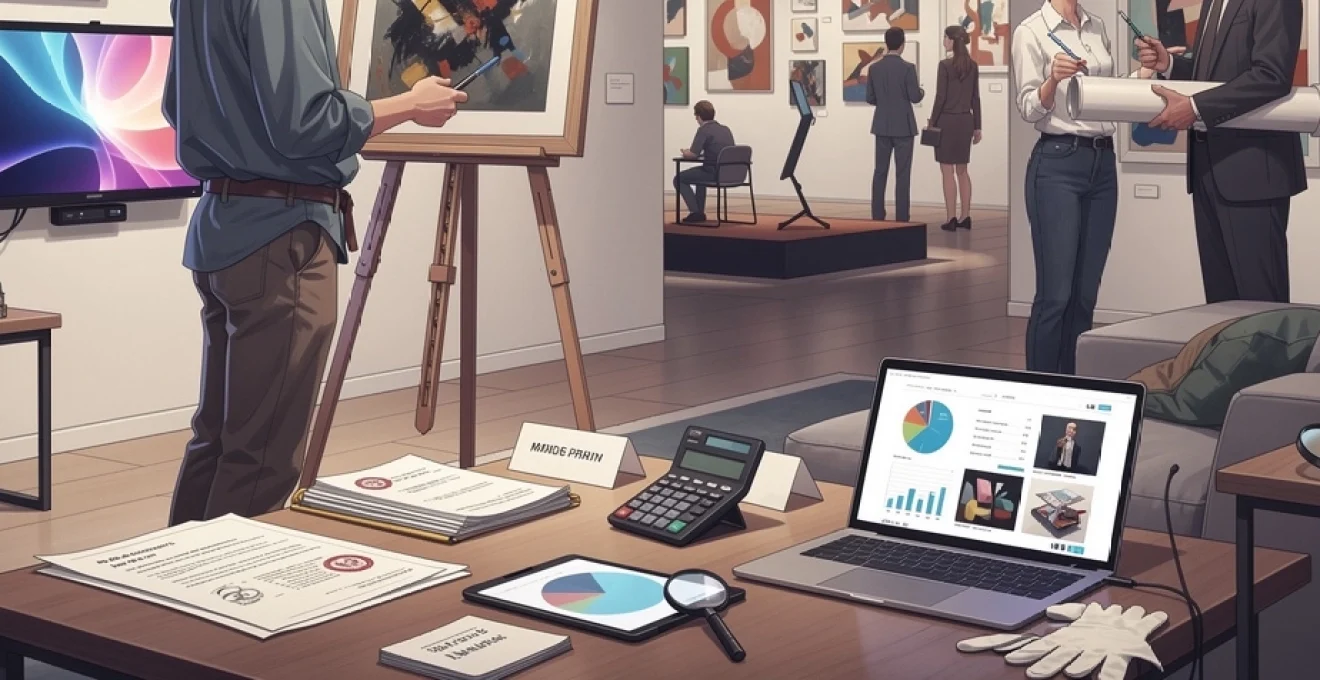
Starting an art collection might seem like an exclusive pursuit reserved for wealthy connoisseurs with decades of expertise, but this perception couldn’t be further from reality. Today’s art market offers numerous entry points for collectors at every level, from university students to young professionals seeking to cultivate their first meaningful collection. The key lies not in having encyclopaedic knowledge or unlimited funds, but rather in developing a systematic approach that balances personal passion with informed decision-making.
The contemporary art landscape has evolved significantly, with digital platforms, emerging artist programmes, and accessible financing options democratising what was once an intimidating marketplace. Whether you’re drawn to contemporary photography, abstract paintings, or sculptural works, understanding fundamental market principles and establishing clear collecting parameters will enable you to build a cohesive collection that grows in both value and personal significance over time.
Understanding art market fundamentals and investment terminology
Before making your first acquisition, grasping essential art market terminology and mechanisms will dramatically improve your confidence and decision-making capabilities. The art market operates differently from traditional financial markets, with unique characteristics that influence pricing, availability, and long-term value appreciation.
Primary market vs secondary market dynamics in contemporary art sales
The primary market represents the initial sale of artworks directly from artists or their representing galleries. These sales typically occur through gallery exhibitions, art fairs, or studio visits, with pricing established by the artist and gallery partnership. Primary market purchases often provide collectors with exclusive access to emerging talent and the opportunity to build relationships with artists early in their careers.
Secondary market transactions involve the resale of previously owned artworks through auction houses, secondary galleries, or private dealers. Prices in this market segment are determined by factors including the artist’s current market standing, historical sale records, and the specific work’s provenance and condition. Understanding these dynamics helps collectors identify optimal timing for acquisitions and potential future value appreciation.
Provenance documentation and certificate of authenticity requirements
Provenance documentation forms the backbone of legitimate art transactions, providing a complete ownership history from the artist’s studio to the current moment. This documentation typically includes exhibition catalogues, previous sale records, insurance appraisals, and any conservation reports. Maintaining comprehensive provenance records becomes increasingly crucial as artwork values appreciate and authentication questions arise.
Certificates of Authenticity serve as formal verification that an artwork is genuine and created by the attributed artist. These documents should include detailed descriptions of the work, creation dates, medium specifications, and official signatures from recognised authorities such as the artist, estate representatives, or established authentication boards.
Edition numbers, artist proofs, and print classification systems
Understanding print classifications enables collectors to make informed decisions about edition-based artworks. Limited edition prints are numbered sequentially, typically expressed as fractions such as “25/100,” indicating the twenty-fifth print in a total edition of one hundred. Lower edition numbers and smaller total edition sizes generally command higher prices due to increased scarcity.
Artist Proofs, marked “AP” or “A/P,” represent prints pulled for the artist’s personal use, typically comprising 10-15% of the total edition size. These proofs often carry premium value due to their special status and potential variations from the standard edition. Printer’s proofs and trial proofs may also appear in the market, each carrying distinct characteristics and value propositions.
Gallery commission structures and auction house premium calculations
Gallery commission structures typically range from 40-60% of the sale price, with established galleries commanding higher percentages due to their marketing capabilities and collector relationships. Understanding these structures helps collectors appreciate the true cost basis for artists and the economic pressures influencing pricing decisions.
Auction houses charge buyer’s premiums on top of hammer prices, typically ranging from 12-25% depending on the sale price tier. Additional costs may include sales tax, shipping, insurance, and condition reporting fees. Calculating total acquisition costs including all premiums and fees prevents budget surprises and enables accurate investment tracking.
Establishing collection parameters and aesthetic framework
Successful art collecting requires establishing clear parameters that guide acquisition decisions while remaining flexible enough to accommodate evolving tastes and opportunities. These parameters should encompass medium preferences, geographic and temporal focus areas, and budget
allocation. Rather than acquiring works impulsively, you are effectively creating a roadmap for your art collection that keeps your purchases coherent and aligned with your long‑term goals.
Medium-specific focus: oil paintings vs mixed media vs digital art
One of the first practical choices you will make as a new collector is which mediums to prioritise. Oil paintings have traditionally been considered the backbone of many collections due to their durability, rich surface quality, and strong market history. They often command higher prices but also tend to be more stable in value over the long term, particularly for established artists.
Mixed media works, including collage, assemblage, and works that combine painting with photography or found objects, can offer more experimental aesthetics at accessible price points. These pieces frequently appeal to collectors who want something textural and contemporary, but they may require more careful conservation planning because of their varied materials. Digital art, including video works and NFTs, represents a rapidly growing segment of the market and can be an effective way to start an art collection without being an expert, provided you understand the technical requirements for storage, display, and authentication.
To decide which mediums to focus on, consider both your living space and your appetite for experimentation. Do you have wall space for large canvases, or are you better suited to smaller works on paper and digital screens? Are you comfortable dealing with file formats, digital wallets, and smart contracts, or do you prefer tangible objects? Treat this as a practical filter rather than a rigid rule; you can always expand into new mediums as your confidence increases.
Geographic art movement selection: abstract expressionism vs Neo-Impressionism
Beyond medium, many collectors choose to focus on specific art movements or historical periods. While few beginners will start by buying blue-chip Abstract Expressionist or Neo-Impressionist masterpieces, understanding these movements can guide your taste and help you identify contemporary artists working in related traditions. Abstract Expressionism, for example, emphasises gesture, spontaneity, and emotional intensity, with figures like Jackson Pollock and Mark Rothko forming the historical core. Neo-Impressionism, associated with artists such as Georges Seurat and Paul Signac, focuses on optical colour mixing, pointillism, and rigorous compositional structure.
Why does this matter for someone building a modest, contemporary collection? Because many current painters and digital artists draw directly from these vocabularies. By learning to recognise visual lineages—large gestural fields of colour versus carefully modulated dots and grids—you can select works that plug into broader art-historical conversations. This provides your collection with a conceptual thread and may also support long‑term value, as artists who intelligently reinterpret major movements tend to attract curatorial and critical attention.
Another practical advantage of defining a movement or two that resonates with you is that it narrows your search in galleries, on online platforms, and at fairs. Instead of feeling overwhelmed by thousands of works, you can ask targeted questions: Which artists here work in a contemporary Abstract Expressionist mode? Are there younger painters exploring pointillist or optical effects? This approach turns vague preference into an actionable collecting strategy.
Emerging artist identification through graduate shows and residency programmes
Identifying promising emerging artists is one of the most rewarding aspects of starting an art collection without an expert background. Graduate shows at major art schools, such as the Royal College of Art, Central Saint Martins, or comparable institutions in your region, showcase artists who are often at the start of their professional journeys. Prices tend to be accessible, and you gain the opportunity to follow an artist’s development from the very beginning, which can be both intellectually satisfying and financially rewarding if their career progresses.
Residency programmes—where artists receive studio space, mentoring, and exhibition opportunities—are another reliable signal of potential. When you see that an artist has participated in respected residencies, it suggests that curators and selection panels already recognise their promise. Many residency organisations host open studios or end-of-programme exhibitions where collectors can purchase work directly from artists, often at lower prices than in commercial galleries.
How can you, as a non-expert, evaluate emerging artists? Look for consistency of vision across multiple works, evidence of critical engagement (such as inclusion in curated shows or small grants), and clarity in how the artist speaks about their practice. Think of it as assessing a start-up: you are looking for a strong concept, early signs of traction, and the discipline to keep producing high-quality work over time.
Budget allocation strategies: 70-20-10 rule for established, mid-career, and emerging artists
Establishing a structured budget is crucial if you want to build a sustainable collection rather than a series of impulsive purchases. One practical framework is the 70‑20‑10 allocation model. In this approach, roughly 70% of your annual art budget is dedicated to established artists whose markets are relatively stable, 20% to mid-career artists with growing reputations, and 10% to riskier but potentially high‑growth emerging artists. You can adjust these ratios depending on your risk tolerance, but the logic remains the same: balance security with discovery.
For a collector with a modest budget, “established” may not mean museum superstars but rather artists with consistent gallery representation, auction records, or inclusion in institutional collections. Mid‑career artists might be those with several solo exhibitions and some critical recognition but still‑approachable price points. Emerging artists, including recent graduates and residency participants, often require lower upfront investment but carry a wider range of possible outcomes.
Why use such a structure instead of simply buying what you like whenever you see it? Because an intentional allocation keeps you from overexposing yourself to speculative purchases while still leaving room for intuition. It is similar to diversifying a financial portfolio: you want a mix of stable “blue-chip” holdings, growth positions, and higher‑risk early bets, all aligned with your personal taste and long‑term collecting vision.
Sourcing artwork through professional networks and platforms
Once you have defined your collecting parameters, the next step is to decide where and how to source works. The contemporary art ecosystem now encompasses blue-chip galleries, online marketplaces, art fairs, artist-run spaces, and direct studio sales. Each channel has distinct advantages, pricing structures, and degrees of risk. Understanding these options will help you allocate your time and budget efficiently, rather than drifting between platforms without a strategy.
Gallery relationships: hauser & wirth, gagosian, and white cube partnership benefits
Working with galleries remains one of the most reliable ways to acquire vetted artworks and receive guidance as a new collector. Major international galleries such as Hauser & Wirth, Gagosian, and White Cube represent some of the world’s most sought‑after artists, but they also mount exhibitions of mid‑career and emerging talents. While prices at these spaces are often higher than at smaller galleries or studios, you are paying for curatorial expertise, due diligence, and established provenance.
Building a relationship with gallery staff can open up opportunities that casual visitors may not access. Over time, you may be offered pre‑sale previews, access to waiting lists for in‑demand artists, or recommendations tailored to your collecting focus. Think of this as similar to cultivating a relationship with a financial adviser: you provide honest information about your budget, aesthetic preferences, and risk profile, and in return you gain personalised, professional support.
That said, you do not need to start with the most prestigious galleries. Regional spaces, project rooms, and artist‑run initiatives can be equally valuable, especially when you are still forming your taste. The key is to be consistent—attend openings, ask questions, follow up on artists who interest you, and make it clear that you are serious about learning, even if your initial budget is modest.
Online marketplaces: artsy, saatchi art, and 1stdibs authentication processes
Online platforms have transformed how collectors discover and purchase work, making it easier than ever to start an art collection without being an expert. Marketplaces such as Artsy, Saatchi Art, and 1stDibs aggregate artworks from galleries, dealers, and sometimes directly from artists. This provides you with a broad overview of price ranges, styles, and movements, and allows you to compare similar works side by side without geographical constraints.
However, the convenience of online art buying makes due diligence even more important. Reputable platforms implement authentication and vetting processes—Artsy primarily works with established galleries, 1stDibs screens dealers and often requires documentation, while Saatchi Art provides curatorial oversight and return policies. Before purchasing, always request high‑resolution images, condition reports for higher‑value works, and copies of certificates of authenticity or provenance documentation. If a listing appears underpriced for the artist’s market, ask yourself why; in art as in finance, anomalies warrant extra scrutiny.
Many collectors use online platforms as a research tool even when they ultimately buy in person. You can track price ranges, follow artists over time, and set alerts for new works that match your criteria. This hybrid approach—online research combined with offline viewing whenever possible—offers the best of both worlds: broad market insight and first‑hand experience of the artworks you are considering.
Art fair navigation: frieze london, art basel, and TEFAF acquisition strategies
Art fairs such as Frieze London, Art Basel, and TEFAF (The European Fine Art Fair) bring together leading galleries and thousands of artworks under one roof, compressing a global art tour into a few days. For new collectors, this can be both exhilarating and overwhelming. The key to navigating fairs effectively is preparation: study the exhibitor list in advance, identify which galleries align with your collecting interests, and prioritise a manageable number of booths to visit on your first pass.
At large fairs, prime works often sell quickly to existing clients, but this should not discourage you. Instead, use the opportunity to see a wide spectrum of quality in person, refine your tastes, and start conversations with gallery staff. Ask about price ranges, artist backgrounds, and availability of works not currently on display. If you find a piece you are considering, it can be helpful to step away for an hour, review your collecting parameters and budget, and then return if you still feel strongly about it—this pause can prevent impulsive fair purchases driven by fear of missing out.
Smaller satellite fairs and specialised events, such as works‑on‑paper or photography fairs, can be especially fruitful for collectors with focused interests or tighter budgets. Prices are often lower than at flagship events, and the atmosphere can be less intimidating, making it easier to ask questions and build relationships. Think of major fairs as the “international conferences” of the art world and smaller fairs as targeted workshops; both play a role in expanding your knowledge and your network.
Artist studio visits and direct commission negotiations
Visiting artists in their studios offers a unique window into their creative process and can be one of the most enjoyable ways to deepen your understanding of art. Studio visits allow you to see works in progress, understand material choices, and discuss conceptual frameworks directly with the creator. For many collectors, this context transforms an artwork from a decorative object into a meaningful, ongoing dialogue.
Purchasing directly from an artist, whether during an open studio event or through a private visit, can sometimes yield more favourable pricing than gallery acquisitions, as there may be no intermediary commission. However, it is important to approach these interactions professionally. Clarify prices upfront, ask about any existing gallery representation (to avoid conflicts), and request a formal invoice and certificate of authenticity for every purchase. When in doubt, a simple written agreement outlining price, description, and delivery terms can prevent misunderstandings later.
Commissions—where you ask an artist to create a work specifically for you—require particularly clear communication. Discuss size, medium, timeline, budget, and the degree of artistic freedom you are granting. A good analogy is commissioning architecture or design: you provide a brief, but you also respect the professional’s vision. Document these parameters in writing and agree on a payment schedule, often with a deposit upfront and the balance upon completion and approval.
Due diligence protocols and authentication verification
Regardless of where you buy, robust due diligence is essential if you want your art collection to be both enjoyable and defensible as an investment. At a minimum, you should confirm the identity of the seller, verify the authenticity of the work, and ensure that the person you are buying from has legal title to sell. In practice, this means requesting provenance documentation, certificates of authenticity, and, for higher‑value works, independent condition reports or expert opinions.
For artworks above a certain price threshold—often around the level where you would feel uncomfortable losing the entire amount—it can be sensible to consult a professional advisor or appraiser. These specialists can cross‑check auction records, exhibition histories, and catalogues raisonnés (scholarly listings of an artist’s oeuvre) to confirm that the work you are considering aligns with known examples. While this may seem excessive for modest acquisitions, it becomes increasingly important as your collection grows in scale and significance.
Think of authentication like inspecting the foundation of a house before purchase: it is not the most glamorous part of the process, but it underpins everything else. If something feels inconsistent—gaps in provenance, unusual signatures, or sellers unwilling to provide documentation—pause and investigate further. It is almost always better to walk away from a questionable opportunity than to inherit a problem that could undermine the integrity of your entire collection.
Conservation management and collection documentation systems
Once artworks enter your collection, your responsibility shifts from acquisition to stewardship. Proper conservation management ensures that pieces remain stable and presentable, preserving both their aesthetic qualities and their market value. Basic precautions include avoiding direct sunlight for works on paper and textiles, maintaining stable temperature and humidity levels, and using archival materials for framing and storage. Even small adjustments—such as moving a work away from a radiator or using UV‑filtering glazing—can significantly extend an artwork’s lifespan.
As your collection grows, keeping accurate records becomes just as important as physical care. A simple spreadsheet or specialised collection management software can track key information: artist names, titles, dimensions, mediums, purchase prices, dates of acquisition, seller details, and locations within your home or storage. You should also attach digital copies of invoices, certificates of authenticity, condition reports, and correspondence with galleries or artists.
Why invest time in documentation when you could be focused on discovering new works? Because comprehensive records function like a well‑organised archive for your own cultural investments. If you ever wish to lend pieces to exhibitions, refinance insurance, or sell works in the secondary market, having complete, accessible information will streamline the process and reassure counterparties. In many ways, documentation is the invisible infrastructure that supports a serious collection, even if it begins on a very modest scale.
Insurance valuation and legal ownership transfer procedures
Finally, protecting your art collection through appropriate insurance and clear legal ownership procedures is a critical, if often overlooked, component of responsible collecting. Standard home insurance policies may provide limited coverage for artworks, but they often impose caps on individual items or require additional riders for higher‑value pieces. As soon as any single artwork exceeds the threshold you could comfortably replace out of pocket, it is worth discussing specialist fine art insurance with your broker or insurer.
Accurate valuation underpins effective insurance. This may involve initial purchase documentation, updated appraisals for significant works, and periodic reviews as markets change. Many insurers recommend reassessment every few years for active artists whose markets are evolving quickly. Keep in mind that insurance value is often based on current replacement cost rather than original purchase price, which means that a well‑chosen piece can require higher coverage over time.
When buying or selling artworks, ensure that ownership transfer is clearly documented. For primary market purchases, this typically involves an invoice from the gallery or artist listing your name as the buyer, along with any associated certificates. For secondary market transactions, particularly private sales, a simple contract of sale can outline the work’s details, price, condition, and transfer date. This may feel formal, but it protects both parties and helps maintain a clean provenance trail.
As your collection matures, you may also wish to consider estate planning or long‑term placement options, such as donations to institutions or structured loans to museums. Even at the early stages, thinking ahead about how your artworks will be catalogued, insured, and legally secured will support a collection that not only reflects your taste but also stands up to professional scrutiny if needed.