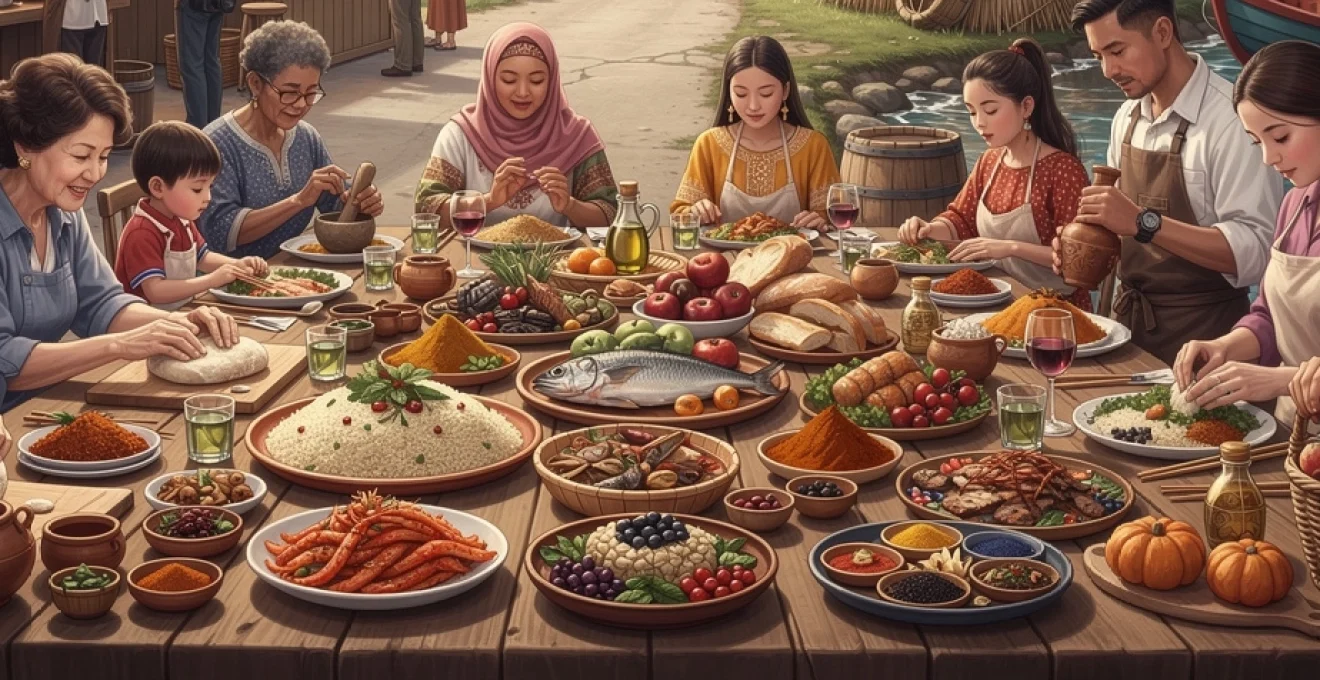
Food transcends mere sustenance to become a profound lens through which we can examine the intricate tapestry of human culture. Every dish tells a story, carrying within its ingredients and preparation methods centuries of tradition, migration patterns, social structures, and environmental adaptations. From the spice-laden curries of South Asia that speak to ancient trade routes, to the fermented foods of Eastern Europe that reveal survival strategies through harsh winters, local cuisine serves as an archaeological record of human experience. The way communities approach food—how they grow it, prepare it, share it, and celebrate with it—provides invaluable insights into their values, beliefs, and social organisation. Understanding culture through culinary traditions offers a more intimate and immediate connection than studying historical documents or observing ceremonial practices alone.
Culinary anthropology: decoding cultural identity through traditional food systems
Traditional food systems represent complex networks of knowledge, practice, and meaning that have evolved over millennia. These systems encompass not merely what people eat, but how they produce, process, distribute, and consume food within specific cultural contexts. Culinary anthropology reveals that food choices are never arbitrary; they reflect deep-seated cultural values, environmental constraints, and social structures that define communities across the globe.
Ethnographic food mapping and regional identity markers
Regional cuisines function as edible maps, documenting the geographical and cultural boundaries that shape human settlements. The Mediterranean diet, for instance, reflects not only the climatic conditions conducive to olive cultivation and seafaring traditions, but also the cultural values of communal dining and leisurely meals that characterise societies around the Mediterranean basin. Similarly, the prevalence of rice-based dishes across East and Southeast Asia speaks to sophisticated irrigation systems, collective agricultural practices, and philosophical approaches to harmony between humans and nature.
Food mapping exercises conducted by ethnographers reveal how specific dishes can serve as cultural markers that distinguish one community from another, even within relatively small geographical areas. The variations in bread-making techniques across European regions demonstrate how seemingly simple foods can encode complex cultural information about everything from religious practices to economic conditions and social hierarchies.
Sacred ingredients and their Socio-Religious significance
Many cultures designate certain ingredients as sacred, imbuing them with spiritual and social significance that extends far beyond their nutritional value. Corn holds sacred status among many indigenous American communities, representing not just agricultural abundance but cosmic order and ancestral connection. The reverence for rice in many Asian cultures similarly reflects beliefs about fertility, prosperity, and the relationship between earthly sustenance and spiritual wellbeing.
These sacred ingredients often play central roles in religious ceremonies, seasonal celebrations, and life-cycle events. The bread and wine of Christian communion, the unleavened matzah of Jewish Passover, and the prasadam offered in Hindu temples all demonstrate how food serves as a bridge between the material and spiritual worlds, reinforcing cultural identity through shared consumption practices.
Generational knowledge transfer in traditional cooking techniques
Traditional cooking methods serve as vehicles for transmitting cultural knowledge across generations. The precise hand movements required to make perfect pasta in Italy, the timing and temperature control necessary for proper bread fermentation, or the complex spice-balancing techniques essential to authentic Indian cuisine all represent embodied knowledge that cannot be easily codified in written recipes. This knowledge transfer typically occurs through intimate family relationships, creating powerful bonds between generations while ensuring cultural continuity.
The mise en place philosophy that governs professional French kitchens, for example, reflects broader cultural values about organisation, respect for ingredients, and the pursuit of excellence that characterise French approaches to craftsmanship across multiple domains. These cooking techniques become repositories of cultural wisdom, preserving not just culinary skills but entire worldviews about work, family, and social responsibility.
Seasonal food cycles and agricultural heritage preservation
Traditional food systems are intimately connected to seasonal cycles and agricultural rhythms that reflect centuries of environmental adaptation. The preservation techniques developed by different cultures—from Scandinavian fermentation methods to Mediterranean salt-curing traditions—reveal sophisticated understanding of food science that predates modern refrigeration by thousands of years. These techniques also reflect cultural attitudes toward waste, sustainability, and long-term planning that offer valuable lessons for contemporary food security challenges.
Seasonal food festivals and celebrations mark important transitions in agricultural calendars while reinforcing
community values around gratitude, abundance, and reciprocity. Harvest festivals, New Year feasts, and spring planting rituals all use seasonal dishes to honour the land and those who work it. By observing what appears on the table at different times of year, you can often trace a culture’s agricultural heritage and understand which crops or animals have historically sustained that society.
Gastronomic heritage as living cultural documentation
Gastronomic heritage functions like an ever-evolving archive, documenting how communities adapt while holding onto core elements of identity. Unlike static museum exhibits, food traditions are “performed” daily in home kitchens, markets, and street stalls, allowing us to witness cultural continuity and change in real time. Recipes, table manners, and meal structures capture political history, economic shifts, and environmental pressures as clearly as any legal document or census record.
As globalisation accelerates cultural exchange, the concept of gastronomic heritage has become more important for communities seeking to protect distinctive foodways from homogenisation. Preserving local cuisine as cultural documentation does not mean freezing it in time; rather, it involves recognising how each generation interprets tradition in light of new realities. In this sense, local cuisine is both a record of the past and a laboratory for future cultural possibilities.
UNESCO intangible cultural heritage food traditions: kimchi, couscous, and mediterranean diet
UNESCO’s Intangible Cultural Heritage list highlights how seriously many societies regard their traditional foodways. When practices such as kimjang (the collective making and sharing of kimchi in Korea), couscous preparation in North Africa, or the Mediterranean diet are inscribed, it signals that these food traditions are understood as vital carriers of cultural memory and social cohesion. They are not just recipes; they are systems of knowledge involving agriculture, preservation, social organisation, and ritual.
The kimjang tradition, for example, embodies community cooperation, seasonal planning, and the importance of fermentation knowledge in Korean culture. Similarly, couscous reflects shared culinary practices across Algeria, Mauritania, Morocco, and Tunisia, revealing deep historical connections that transcend modern borders. The Mediterranean diet, recognised not as a strict menu but as a cultural model, underscores how daily food habits—using olive oil, fresh produce, and shared meals—encode values of moderation, conviviality, and respect for the environment.
Indigenous food sovereignty movements and cultural resistance
Across the globe, Indigenous food sovereignty movements illustrate how cuisine can become a form of cultural resistance and self-determination. Colonisation often targeted local food systems, replacing native crops with export-oriented agriculture and disrupting traditional hunting, fishing, and gathering practices. Reclaiming ancestral foods—such as wild rice among Anishinaabe communities, maize varieties in Mesoamerica, or traditional Pacific Island root crops—represents a powerful effort to restore health, language, and spiritual relationships with the land.
These movements are not merely about what appears on the plate; they challenge political and economic structures that marginalise Indigenous knowledge. Community gardens, seed banks, and land-based education programmes serve as living classrooms where elders pass on ecological wisdom and cultural protocols to younger generations. When you participate in an Indigenous-led meal or foraging walk, you are not just tasting local ingredients—you are witnessing an ongoing struggle for cultural survival and ecological justice.
Oral history preservation through recipe documentation
In many cultures, recipes have long been transmitted orally, embedded in stories, songs, and everyday conversation rather than written cookbooks. As older generations pass away and younger people migrate to cities or abroad, documenting these recipes has become a vital form of oral history preservation. A family’s dumpling filling ratio, spice blend for curry, or preferred method of grilling fish often encodes memories of migration, war, celebration, and hardship.
Community cookbooks, digital storytelling projects, and food-focused archives transform these ephemeral instructions into enduring records. When someone interviews a grandparent about how to make a particular stew, they usually uncover far more than cooking tips; they hear about lost homelands, economic struggles, or changing gender roles. In this way, local cuisine becomes an accessible archive through which younger generations can access family and community history without needing to be professional historians.
Migration patterns reflected in fusion cuisine evolution
Fusion cuisine is often presented as a contemporary trend, but culinary blending has always mirrored patterns of human migration and cultural contact. Dishes like Japanese curry, Peruvian Nikkei cuisine, or Indo-Chinese street food testify to centuries of movement, trade, and adaptation. When communities relocate, they bring seeds, techniques, and plant-based culinary traditions, then negotiate these with what is locally available in their new homes.
Over time, these hybrid dishes become new “local cuisines” in their own right, telling layered stories of diaspora and belonging. Consider how Vietnamese baguette sandwiches (bánh mì) reflect French colonial influence harnessed to local herbs, pickles, and pâtés. Or how Caribbean curry goat reveals Indian labour migration and African cooking methods intertwined with island spices. By paying attention to such combinations, you can almost “read” historical migration routes straight from the plate.
Socioeconomic class structures revealed through culinary hierarchies
Culinary hierarchies—distinctions between “high” and “low” cuisine, or between prestigious and stigmatised ingredients—offer a revealing lens on class structures. Foods once associated with poverty, such as lobster in 19th-century New England or offal in many European cities, have in some contexts become delicacies for affluent diners. This inversion highlights how economic shifts, scarcity, and changing tastes constantly renegotiate the status of specific dishes and ingredients.
Access to certain foods often functions as a social signifier. Expensive cuts of meat, rare wines, or elaborate tasting menus can signal wealth and cultural capital, while convenience foods may be associated (sometimes unfairly) with lower social status. Sociologists have shown that what people eat, how they talk about food, and where they dine are powerful markers of class identity. When you observe which foods are celebrated in glossy magazines versus which are dismissed as “junk,” you are effectively looking at a map of social inequality.
At the same time, local cuisine can reveal strategies of resilience among working-class and marginalised communities. One-pot dishes that stretch modest ingredients to feed many people, such as Brazilian feijoada or Italian cucina povera, demonstrate culinary ingenuity in the face of constraint. Understanding these hierarchies helps us see that taste is not purely individual; it is shaped by education, income, and access, and by the power to define what counts as “good” food in the first place.
Regional terroir and geographical influence on cultural food identity
Terroir—a term popularised by French wine producers—refers to how climate, soil, topography, and local ecosystems shape the flavour and character of food. When extended beyond vineyards, terroir helps explain why local cuisine differs so dramatically from region to region, even within the same country. Mountain communities, river valleys, coastal plains, and desert oases each generate distinct culinary repertoires based on what the land can reliably provide.
Understanding terroir is like understanding a region’s culinary “accent.” Just as spoken language reveals where a person comes from, flavours rooted in particular landscapes indicate long-standing relationships between communities and their environments. When you taste smoky cheeses from alpine regions, citrus-forward dishes from sun-soaked coasts, or spice-heavy stews from colder climates, you are experiencing geography translated into taste.
Climate-driven ingredient availability and cultural adaptation
Climate is one of the most fundamental forces shaping local cuisine. In tropical regions, abundant fresh fruits, herbs, and spices encourage vibrant, quickly cooked dishes that suit hot weather and reduce spoilage risk. In contrast, colder climates historically relied on preservation techniques such as smoking, pickling, and fermenting to ensure year-round food supplies. These climatic pressures do more than dictate ingredients; they influence meal timing, portion sizes, and even social customs around eating.
As climate change alters rainfall patterns, temperature ranges, and growing seasons, many traditional food systems are under strain. Wine regions are shifting northward, staple crops face new pests, and small-scale farmers must adapt age-old practices. Observing how communities modify their recipes—substituting grains, adjusting preservation methods, or introducing drought-resistant crops—provides insight into how cultures respond creatively to environmental disruption. In this sense, local cuisine acts like a barometer of climate resilience.
Trade route history: silk road spice integration and cultural exchange
Historical trade routes, from the Silk Road to maritime spice networks, have infused local cuisines with ingredients and techniques from faraway lands. Black pepper, cinnamon, and cloves, once worth their weight in gold, transformed European and Middle Eastern dishes when they arrived from South and Southeast Asia. Likewise, tomatoes, potatoes, and chillies—New World crops—dramatically reshaped the cuisines of Italy, India, and China after the Columbian Exchange.
When you encounter a “signature” national dish based on an imported ingredient, you are seeing evidence of centuries of cultural exchange. Consider how chillies, native to the Americas, have become central to Thai, Korean, and Mexican cuisines, each adapting the ingredient to local tastes and agricultural conditions. Studying these culinary adoptions is like tracing the map of ancient trade and empire: spices, grains, and cooking vessels all bear witness to routes of commerce, conquest, and collaboration.
Coastal versus inland protein sources and cultural development
Whether a community is based near the sea or inland has profound implications for local cuisine and cultural development. Coastal societies often build their identities around fishing, shellfish harvesting, and seaweed gathering, with preservation methods like drying, salting, and fermenting enabling long-distance trade. Inland communities, by contrast, may focus more on pastoralism, hunting, or riverine fishing, shaping different kinds of dishes and culinary myths.
These protein sources become intertwined with ritual and symbolism. In Japan, for example, coastal access helped embed seafood into religious offerings and everyday cuisine, while in Central Asian steppe cultures, fermented mare’s milk and mutton signal nomadic heritage. The contrast between sushi and dried meat stews is not just about taste; it reflects divergent relationships to mobility, land tenure, and ecological constraints. When you compare a coastal fish market with an inland livestock bazaar, you are effectively comparing two distinct cultural ecosystems.
Ritual food practices and ceremonial gastronomy in cultural context
Ritual foods—those prepared for weddings, funerals, religious holidays, and rites of passage—offer some of the clearest insights into how a culture understands life’s major transitions. These dishes are often more elaborate, symbolically charged, or resource-intensive than everyday meals, indicating that the occasion is set apart from normal time. Think of the meticulously layered wedding cakes in many Western countries, the carefully folded dumplings for Lunar New Year, or the specific sweets associated with Eid, Diwali, or Christmas.
Ceremonial gastronomy encodes cultural narratives about purity, sharing, sacrifice, and rebirth. In some societies, specific foods must be eaten in a particular sequence to ensure good fortune; in others, fasting and abstention from certain ingredients mark sacred periods. Observing who is allowed to prepare these ritual dishes, who is served first, and what is done with leftovers can reveal much about gender roles, age hierarchies, and beliefs about the sacred. By participating respectfully in these food rituals as a guest, you gain access to layers of meaning that might otherwise remain invisible.
Contemporary food tourism as cultural immersion methodology
Food tourism has emerged as one of the most effective ways for travellers to engage with local culture beyond surface-level sightseeing. Rather than treating meals as mere refuelling stops between attractions, intentional culinary travel positions local cuisine as the primary lens for understanding a place. Market visits, street food tours, farm stays, and cooking classes transform trips into immersive learning experiences where you engage directly with producers, vendors, and home cooks.
However, using food tourism as a cultural immersion methodology also requires critical awareness. Who benefits from your culinary spending? Are you supporting small-scale local businesses, or primarily global chains and speculative restaurant ventures? By choosing experiences that centre community voices and respect local food systems, you can ensure that your curiosity about culture through cuisine has a positive impact on the host community as well as on your own understanding.
Authenticity versus commercialisation in culinary tourism
The quest for “authentic food experiences” is a defining feature of modern culinary tourism, but authenticity is more complex than it first appears. Dishes served to visitors are often adjusted for perceived tastes, health regulations, or Instagram appeal, blurring the line between genuine tradition and curated performance. In some destinations, popular markets and neighbourhood restaurants have transformed almost entirely to cater to tourists, raising questions about what is being preserved and what is being reinvented.
Instead of chasing a rigid notion of authenticity—imagining a pure, unchanging cuisine—it can be more helpful to ask: authentic for whom, and in what context? Local cuisine is always evolving, and commercialisation is one of many forces shaping that evolution. As a traveller, you can seek places where locals themselves choose to eat, ask vendors how dishes have changed over time, and remain open to the idea that a “tourist version” of a dish also tells a story about globalisation, aspiration, and cultural negotiation.
Local market exploration and vendor interaction protocols
Visiting local markets is one of the richest ways to understand a culture through food, but it comes with its own etiquette. Markets are not theme parks; they are workplaces and community hubs. Moving slowly, observing before photographing, and asking permission before handling produce or taking close-up shots of people are simple ways to show respect. Learning a few phrases in the local language—greetings, basic numbers, and “thank you”—often transforms interactions with vendors from transactional to conversational.
Engaging vendors in brief, polite conversations about ingredients, seasonality, or cooking methods can yield insights no guidebook offers. What fish is only available after certain storms? Which vegetable is essential for wedding stews? When you ask these questions with genuine curiosity, you invite stories about migration, climate, and family tradition. In turn, your willingness to listen and purchase modest amounts helps sustain the small-scale producers and traders who keep local food systems alive.
Cooking class participation and hands-on cultural learning
Participating in a cooking class in situ—learning pasta in Italy, tagine in Morocco, or dumplings in China—offers a uniquely hands-on form of cultural learning. These experiences move you from passive consumer to active co-creator, allowing you to feel the textures, smell the spices, and grapple with techniques that locals may have practiced since childhood. Like a language lesson where you must speak rather than just listen, a cooking class forces you to engage with local cuisine at a deeper, embodied level.
Well-designed classes often take place in home kitchens or small community spaces, contextualising recipes within broader stories about family life, gender norms, and regional history. As you chop, knead, and stir, you can ask your host about feast days, childhood food memories, or how ingredients have changed over time. The result is not only a new dish in your repertoire, but a more nuanced understanding of how food structures daily life in that culture.
Street food culture as socioeconomic microcosm analysis
Street food scenes offer a condensed snapshot of a society’s economic realities, regulatory environment, and social dynamics. In many cities, street vendors operate in informal economies, navigating precarious licensing systems while providing affordable meals to workers, students, and low-income residents. The kinds of dishes sold, the hours of operation, and the demographics of both vendors and customers reveal much about urban labour patterns and class divides.
At the same time, street food culture is often where culinary innovation flourishes. New fusion dishes, playful reinterpretations of tradition, and hyper-local specialities frequently emerge from carts and stalls before being adopted by formal restaurants. Observing who eats standing up versus seated, how queues are organised, and how disputes or scarcity are handled can feel like watching a live case study in social norms. When you choose to explore a city through its street food, you are not only tasting bold flavours—you are stepping into a living microcosm of its cultural, economic, and political life.