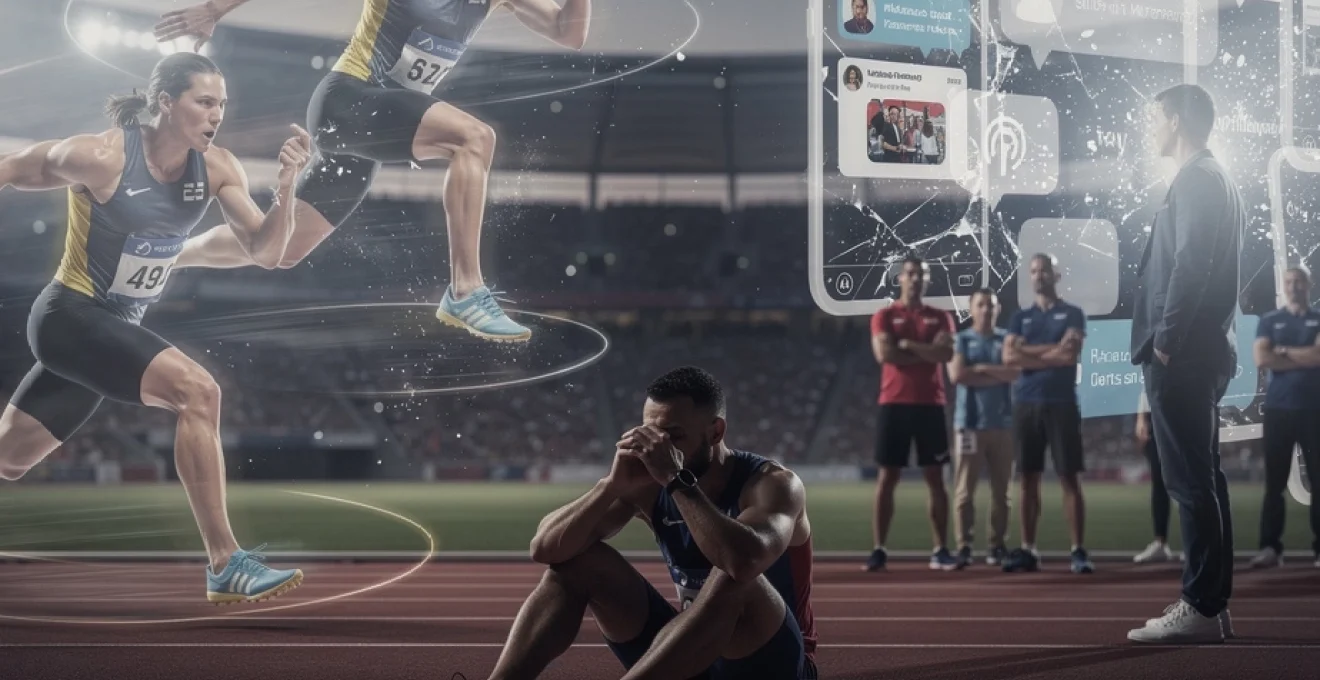
Elite athletes operate in a unique psychological landscape where the margin between triumph and failure is measured in fractions of seconds, millimetres, or points. Behind the spectacle of world-class performance lies a complex web of mental challenges that can profoundly impact both athletic achievement and personal wellbeing. Research indicates that between 5% and 35% of elite athletes experience mental health disorders, with rates climbing even higher among collegiate competitors. These psychological hurdles extend far beyond simple pre-competition nerves, encompassing everything from performance anxiety and identity crises to the relentless pressure of social media scrutiny. Understanding these challenges is crucial not only for optimising athletic performance but for safeguarding the long-term mental health of those who dedicate their lives to sporting excellence.
Performance anxiety and choking under pressure in competitive sport
Performance anxiety represents one of the most pervasive psychological challenges confronting elite athletes, manifesting as an intricate interplay of physiological arousal, cognitive disruption, and behavioural dysfunction. This phenomenon extends far beyond typical nervousness, often resulting in catastrophic performance breakdowns precisely when athletes need to perform at their peak. The stakes inherent in elite competition create a perfect storm for anxiety-related performance decrements, where years of training can be undermined by psychological factors in critical moments.
Yerkes-dodson law and optimal arousal states in elite competition
The Yerkes-Dodson Law provides a fundamental framework for understanding how arousal levels impact athletic performance, establishing that there exists an optimal zone of psychological activation for peak performance. This principle reveals that whilst moderate arousal enhances focus and energy, excessive anxiety can push athletes beyond their optimal arousal state, leading to performance deterioration. Elite athletes must navigate this delicate balance consistently, often under extraordinary pressure where the difference between optimal and detrimental arousal levels becomes razor-thin.
Research demonstrates that this optimal arousal zone varies significantly between individuals and sports. For instance, a golfer requiring precise motor control may perform best at lower arousal levels, whilst a rugby player might benefit from higher activation states. The challenge for elite athletes lies in consistently accessing this optimal performance zone, particularly when external pressures threaten to dysregulate their arousal systems.
Attentional control theory and processing efficiency deficits
Attentional Control Theory offers crucial insights into how anxiety disrupts athletic performance through compromised cognitive processing. When athletes experience heightened anxiety, their attentional resources become divided between task-relevant information and worry-based cognitions, significantly reducing processing efficiency. This cognitive interference manifests as decreased concentration on technical execution, strategic decision-making, and environmental awareness.
Elite athletes often report experiencing tunnel vision or cognitive overwhelm during high-pressure situations, where their ability to process multiple streams of information becomes severely compromised. This attentional narrowing can be particularly detrimental in sports requiring complex decision-making or environmental adaptation, where athletes must simultaneously monitor opponents, teammates, and changing tactical situations.
Catastrophe model applications in High-Stakes athletic performance
The Catastrophe Model provides a sophisticated understanding of performance breakdown under extreme pressure, explaining how small increases in anxiety can lead to dramatic performance collapses. Unlike the gradual performance decline suggested by the Yerkes-Dodson Law, this model demonstrates how athletes can experience sudden, catastrophic drops in performance when anxiety levels exceed critical thresholds.
This phenomenon is particularly evident in choking episodes during major competitions, where athletes who have performed consistently at high levels suddenly experience complete performance breakdown. The model suggests that once this catastrophic decline occurs, athletes cannot simply reduce anxiety to restore performance; instead, they must significantly decrease arousal levels before gradually rebuilding performance capacity.
Implicit monitoring and reinvestment theory in motor skills execution
Reinvestment Theory explains how conscious monitoring of automated motor skills can disrupt performance, particularly under pressure. Elite athletes develop highly automated movement patterns through extensive practice, allowing for efficient execution without conscious control. However, anxiety often triggers increased conscious monitoring of these automatic processes, leading to paralysis by analysis and subsequent performance degradation.
This phenomenon is commonly observed in sports requiring precise motor
This phenomenon is commonly observed in sports requiring precise motor control, such as gymnastics, diving, or golf putting, where athletes suddenly begin to overthink movements that were previously automatic. Under intense scrutiny, they may consciously attempt to “guide” each segment of a skill, disrupting the fluid coordination built over thousands of repetitions. Reinvestment Theory suggests that effective pressure management requires maintaining trust in well-learned motor programs, using pre-performance routines and cue words to keep attention external and task-focused rather than internally fixated on movement mechanics. For elite athletes, learning when not to think can be just as important as learning complex tactics or strategies.
Identity foreclosure and athletic identity crisis phenomena
Beyond performance anxiety, elite athletes frequently grapple with deep-seated questions of who they are outside their sport. When an individual’s sense of self becomes heavily or exclusively tied to athletic success, they are at heightened risk for identity foreclosure and subsequent identity crises, especially during injury, non-selection, or retirement. Elite pathways often encourage early specialisation, intensive training loads, and sacrifices in education or social life, all of which can narrow the athlete’s self-concept. When sport is going well, this strong athletic identity can feel empowering; when results decline or careers end abruptly, it can create a profound sense of loss, confusion, and psychological distress. Understanding how identity develops in athletes helps explain why transitions can be so destabilising.
Marcia’s identity development framework in professional athletes
Psychologist James Marcia proposed an influential framework for identity development based on two key processes: exploration and commitment. Applied to professional athletes, this model helps explain why some competitors adapt flexibly to change while others struggle intensely when their sporting role is threatened. Many elite performers demonstrate high commitment to their athletic role but relatively low exploration of alternative identities, placing them in the “foreclosed” status. They have adopted a ready-made identity as an athlete—often encouraged by parents, coaches, or systems—without fully examining other life paths or values.
In contrast, athletes who have engaged in broader exploration—through education, diverse interests, or non-sport social roles—are more likely to occupy “achieved” or “moratorium” identity statuses. These athletes may still be deeply dedicated to performance, but they possess a more nuanced and flexible sense of self. When injury, deselection, or retirement occurs, they typically have more psychological resources and alternative roles to fall back on. For support teams and performance staff, Marcia’s framework offers a useful lens for identifying athletes who may be psychologically vulnerable during key career transitions.
Athletic identity measurement scale and exclusivity patterns
The Athletic Identity Measurement Scale (AIMS) is one of the most widely used tools to assess how strongly individuals identify with the athlete role. It captures dimensions such as social identity (“I consider myself an athlete”), exclusivity (the extent to which sport dominates one’s life), and negative affect related to poor performance. High AIMS scores are common among elite athletes and can correlate with beneficial outcomes such as persistence, resilience, and motivation. However, research also shows that extremely high and exclusive athletic identity is linked to greater risk of emotional disturbance following injury, deselection, or performance decline.
In practical terms, exclusivity patterns emerge when athletes describe themselves almost entirely in sport terms—“I am a swimmer,” “I am a footballer”—with little reference to other roles such as student, friend, sibling, or community member. While this singular focus may seem advantageous for short-term performance, it reduces psychological flexibility and increases vulnerability to anxiety, depression, and low self-worth when sport-related feedback is negative. Monitoring AIMS scores over time, alongside conversations about life goals and values, can help practitioners spot when a once adaptive athletic identity is becoming rigid and potentially harmful.
Career transition challenges and identity reconstruction processes
Retirement, chronic injury, or deselection from elite squads can trigger an intense identity transition that some athletes describe as “starting life over again.” The sudden loss of structure, status, and daily training routines creates a void that is not easily filled. Without proactive planning, athletes may experience grief-like reactions, including denial, anger, low mood, and social withdrawal. The question “Who am I if I’m not an athlete?” can become a central psychological struggle, particularly for those who entered elite pathways at a young age and had little opportunity to build other aspects of self.
Identity reconstruction involves gradually integrating new roles and meanings into one’s life narrative, rather than simply replacing “athlete” with a new label. This might include careers in coaching, business, education, or entirely non-sport fields, alongside roles as partners, parents, or community members. Effective transition support programs encourage athletes to explore strengths that transfer beyond sport—discipline, teamwork, goal-setting—and to experiment with new activities before retirement occurs. From a psychological perspective, the goal is to help athletes move from a singular identity centred on performance to a multifaceted identity that remains coherent even as competitive involvement changes.
Brewer and petitpas athletic identity model applications
Brewer and Petitpas extended the concept of athletic identity by highlighting how it interacts with coping, career transition, and mental health outcomes. Their model suggests that the strength and exclusivity of athletic identity can either facilitate or hinder adaptation, depending on contextual factors and available support. For instance, a strong but flexible athletic identity may fuel commitment and resilience during setbacks, whereas a rigid, all-encompassing identity can intensify distress when athletes face involuntary retirement or prolonged injury.
Applied in elite environments, this model encourages support staff to view athletic identity not as inherently positive or negative, but as a dynamic construct that requires ongoing monitoring. Interventions might include narrative work where athletes reflect on their broader life story, career planning workshops that broaden future possibilities, and psychological counselling that challenges the belief that personal worth is solely determined by results. By integrating the Brewer and Petitpas framework into talent development and high-performance programs, organisations can reduce the likelihood of identity crises and support healthier, more sustainable athletic careers.
Perfectionism typology and maladaptive achievement patterns
Perfectionism is a double-edged sword in elite sport. On one side, high personal standards, meticulous preparation, and a relentless drive for improvement can fuel extraordinary achievement. On the other, harsh self-criticism, fear of mistakes, and perceived pressure from coaches or parents can erode confidence and wellbeing. Contemporary research distinguishes between adaptive perfectionism (high standards combined with flexibility and self-compassion) and maladaptive perfectionism (high standards alongside excessive concern over mistakes and external evaluation). Elite athletes often display both tendencies to varying degrees.
Maladaptive perfectionism is particularly problematic because it ties self-worth to flawless execution and uncontrollable outcomes, such as selection decisions or judging scores. After a minor error, perfectionistic athletes may ruminate intensely, replaying the mistake in their minds and interpreting it as evidence of personal failure. Over time, this pattern can contribute to chronic stress, performance anxiety, disordered eating, and burnout. It is akin to running with a heavy backpack: the same drive that propels the athlete forward also weighs them down psychologically.
Addressing maladaptive perfectionism involves reshaping how athletes define success and failure. Instead of evaluating every performance as either “perfect” or “disastrous,” athletes can learn to adopt more nuanced appraisals that emphasise process goals, learning, and incremental progress. Cognitive-behavioural techniques, such as challenging all-or-nothing thinking and practising self-compassion after errors, can reduce the emotional intensity of perceived failures. Coaches also play a pivotal role: by reinforcing effort, strategy execution, and resilience rather than solely outcomes, they can help perfectionistic athletes channel their high standards in a healthier direction.
Social media scrutiny and digital age psychological stressors
In the digital era, elite athletes compete not only on the field but also in a 24/7 online arena where every performance, comment, or gesture can be instantly broadcast, scrutinised, and archived. Social media platforms provide unprecedented opportunities for brand-building, fan engagement, and sponsorship, yet they also expose athletes to constant evaluation and, at times, extreme criticism. Anonymous trolling, abusive messages, and unrealistic comparisons with curated images of others can exacerbate anxiety, body image concerns, and self-doubt. For many athletes, the mental load of managing their online presence rivals the pressure of competition itself.
One of the most insidious psychological stressors in this context is the loss of a clear boundary between personal and professional life. Negative comments following a poor performance can follow an athlete into their home, their rest days, and even the night via notifications and direct messages. The brain’s threat system responds to online attacks in a similar way to in-person rejection, triggering stress responses that can impair sleep, concentration, and mood. Over time, this digital hyper-visibility may contribute to emotional exhaustion, avoidance behaviours (such as shutting down accounts abruptly), or unhealthy compulsive checking of online feedback.
What can athletes and support teams do in the face of such pervasive scrutiny? Practical strategies include setting clear rules for social media use—such as switching off notifications before major competitions, delegating account management to trusted staff, or designating specific “offline” periods. Media training can help athletes respond constructively to both praise and criticism, while psychological skills training can address the core beliefs that make negative comments so emotionally charged. Ultimately, fostering a sense of self that is not wholly dependent on online validation is crucial for sustaining mental health in the digital performance environment.
Burnout syndrome and overtraining psychological manifestations
Burnout and overtraining represent critical psychological challenges that often emerge insidiously in high-performance sport. Characterised by emotional and physical exhaustion, reduced sense of accomplishment, and sport devaluation, burnout can cause once passionate athletes to feel detached and indifferent toward their sport. Overtraining, meanwhile, involves a maladaptive response to excessive training loads and insufficient recovery, leading to persistent fatigue, performance decline, and mood disturbances. Although the two constructs are distinct, they frequently overlap, with chronic overtraining acting as a key risk factor for burnout development.
From a psychological standpoint, burnout reflects not only training volume but also the meaning athletes attach to their efforts and results. Environments that emphasise relentless productivity, win-at-all-costs cultures, and limited autonomy can exacerbate feelings of helplessness and emotional exhaustion. If athletes feel they have little say in their training schedule or competition planning, they may experience a sense of entrapment—continuing to participate not out of enjoyment, but because they fear disappointing others or losing their identity. Recognising early warning signs, such as irritability, apathy, or declining motivation, is essential for preventing more severe mental health problems.
Maslach burnout inventory adapted for athletic populations
The Maslach Burnout Inventory (MBI) is a widely used tool for assessing burnout in occupational settings, and adapted versions have been developed for athletic populations. These adaptations typically measure three core dimensions: emotional exhaustion (feeling drained by training and competition), reduced personal accomplishment (perceiving decreased competence and success), and sport devaluation (developing a cynical or indifferent attitude toward sport participation). Among elite athletes, elevated scores in these areas are associated with increased risk of depression, dropout, and impaired performance.
Using MBI-style assessments periodically throughout a season can help coaches and sport psychologists track changes in athletes’ psychological wellbeing, much like monitoring physical markers such as heart rate variability or training load. When signs of burnout emerge, interventions may include adjusting training volume, enhancing recovery strategies, providing greater autonomy in decision-making, or offering confidential psychological support. Importantly, normalising discussions around burnout—as a common, understandable reaction to chronic strain rather than a personal weakness—can reduce stigma and encourage athletes to seek help earlier.
Silva’s training stress syndrome and psychological markers
Silva’s Training Stress Syndrome model conceptualises overtraining as a continuum, ranging from normal training fatigue to full-blown overtraining syndrome. In the early stages, increased training load may produce short-term performance dips and tiredness that resolve with adequate rest. However, when high loads are sustained without sufficient recovery, athletes may move toward a maladaptive state marked by persistent fatigue, irritability, sleep disruption, and decreased motivation. Psychologically, they might report feeling “flat,” disengaged, or uncharacteristically negative about training sessions they previously enjoyed.
Key psychological markers within this framework include mood disturbances, increased perceived effort for the same training tasks, and a loss of enthusiasm for competition. Monitoring tools such as daily wellness questionnaires, mood scales, and simple self-report check-ins can provide vital early warning signals. For example, an athlete consistently rating their mood and motivation as low over several weeks, despite unchanged training plans, may be entering a risky zone on the training stress continuum. Recognising this pattern allows coaches and support staff to adjust workloads and implement recovery strategies before more serious overtraining or burnout develops.
Cytokine hypothesis and mood disturbances in overtrained athletes
The cytokine hypothesis offers a biological explanation for some of the mood changes observed in overtrained athletes. Intense, prolonged training with inadequate recovery can lead to chronic, low-grade inflammation and elevated levels of pro-inflammatory cytokines in the body. These immune system molecules can influence brain function and neurotransmitter systems, contributing to symptoms such as fatigue, low mood, anhedonia (loss of pleasure), and cognitive fog. In many ways, the psychological experience of an overtrained athlete can resemble a mild depressive episode, even when no major life stressors are present.
Understanding this mind–body interaction underscores why rest and recovery are not merely physical necessities but core components of mental health management in elite sport. Nutrition, sleep hygiene, and periodised training plans all help regulate inflammatory responses and protect mood stability. When athletes report persistent sadness, irritability, or emotional volatility during heavy training phases, it is crucial that practitioners consider both psychological and physiological contributors. In some cases, a reduction in training load and targeted recovery interventions can significantly improve mood without the need for more intensive psychological treatment.
Staleness syndrome differentiation from clinical depression
Staleness syndrome is often described as a chronic, unrelieved state of training fatigue accompanied by performance decline and mood disturbance. While its symptoms may overlap with those of clinical depression—such as low energy, reduced interest in usual activities, and irritability—there are important distinctions. Staleness is typically tightly linked to training load and improves when training is reduced or modified, whereas clinical depression is more pervasive, often affecting multiple life domains and persisting beyond changes in sport involvement. Misinterpreting one condition for the other can lead to inadequate or inappropriate treatment.
For practitioners, the challenge lies in carefully assessing the duration, severity, and context of an athlete’s symptoms. Does mood improve significantly during extended rest periods? Are there non-sport stressors, such as relationship difficulties or financial worries, contributing to distress? Is the athlete experiencing classic depressive features such as pervasive hopelessness or suicidal thoughts? Collaborating with clinical psychologists or psychiatrists when red flags emerge ensures that athletes receive appropriate support. By differentiating staleness from clinical depression, we can tailor interventions more precisely—whether that involves altering training programs, offering psychological skills training, or initiating clinical treatment pathways.
Mental health stigmatisation within elite athletic cultures
Despite growing awareness, stigma surrounding mental health remains a significant barrier for many elite athletes. Sporting culture has long valorised toughness, resilience, and the ability to “push through” adversity, which can inadvertently discourage open discussions about psychological pain. Athletes may fear being perceived as weak, losing selection opportunities, or damaging their reputation if they disclose struggles with anxiety, depression, or other mental health concerns. As a result, many suffer in silence, seeking help only when symptoms become severe and performance has already deteriorated.
This stigma is often reinforced by subtle messages within teams and organisations. Comments such as “just toughen up,” “everyone’s stressed, get on with it,” or comparisons to injured teammates who have returned quickly can discourage athletes from acknowledging their own limits. In some environments, mental health support is framed purely as a performance optimisation tool, which, while useful, may overlook the intrinsic value of wellbeing beyond results. When athletes feel that their worth is conditional on constant high performance, they may interpret any sign of psychological vulnerability as a threat to their identity and career.
Reducing mental health stigmatisation in elite sport requires a cultural shift as much as individual interventions. Leaders—coaches, performance directors, senior athletes—play a pivotal role by modelling openness, sharing their own experiences where appropriate, and responding supportively when others disclose difficulties. Education programs that normalise mental health challenges, explain common symptoms, and clarify available support pathways can also reduce fear and misinformation. Encouraging athletes to view psychological services as comparable to physiotherapy or strength and conditioning—an integral part of high-performance preparation—helps reframe help-seeking as a sign of professionalism rather than weakness.
Ultimately, creating psychologically safe environments means ensuring that athletes can speak up about mental strain without fearing punitive consequences. Regular, confidential check-ins with qualified mental health professionals; clear protocols for managing crises; and integration of mental health metrics into overall wellbeing monitoring are practical steps in this direction. When we treat mental health with the same seriousness and nuance as physical health, athletes are more likely to thrive not only in their competitive careers but also in their lives beyond sport.