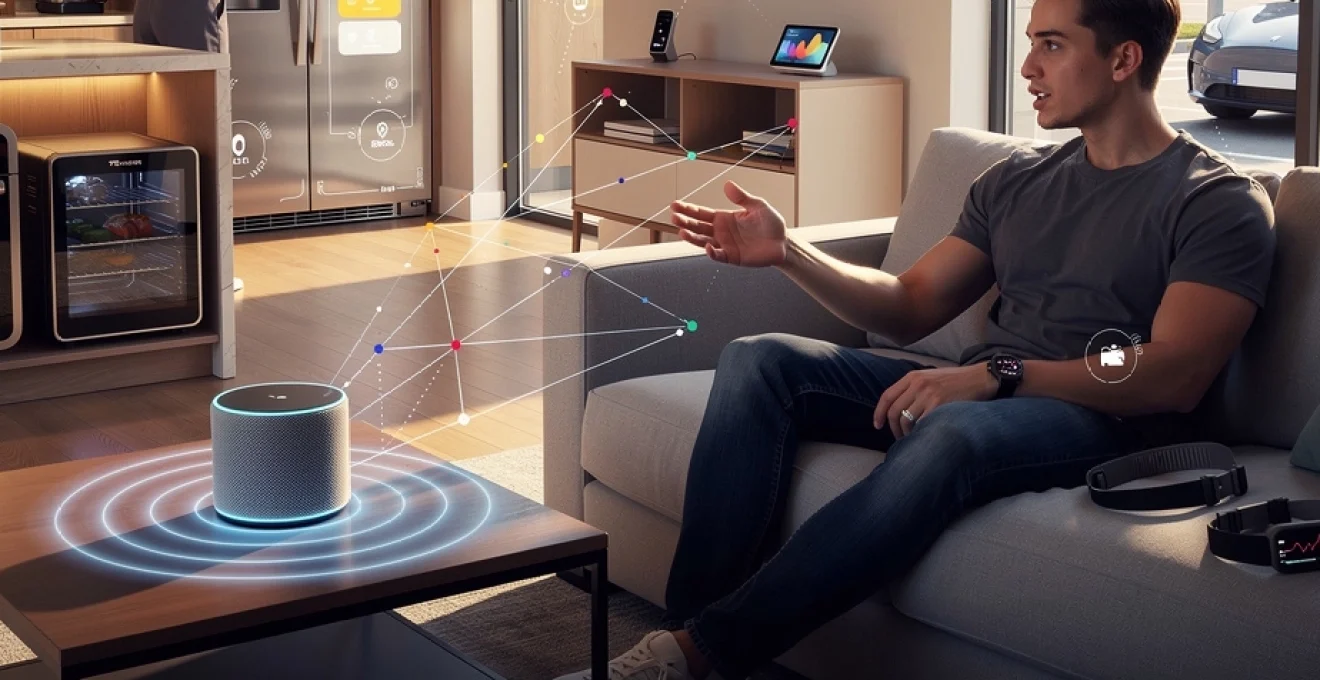
The digital transformation of domestic life has accelerated dramatically over recent years, with connected objects weaving themselves seamlessly into the fabric of daily existence. What once seemed like futuristic convenience has become an essential infrastructure supporting how people manage their homes, monitor their health, prepare meals, and navigate their daily commutes. The Internet of Things (IoT) ecosystem now encompasses billions of devices worldwide, creating an interconnected web of sensors, processors, and communication protocols that operate largely invisibly, yet profoundly shape modern routines. From the moment your smart alarm clock gently wakes you based on sleep cycle analysis, through your morning coffee brewed automatically at precisely the right temperature, to the evening when your home adjusts lighting and climate as you approach—connected devices have transformed mundane tasks into orchestrated experiences that adapt to individual preferences and behaviours.
Iot protocol standards enabling seamless device integration in smart homes
The foundation of any truly functional smart home rests upon robust communication protocols that allow disparate devices from different manufacturers to exchange information reliably. Without standardised communication frameworks, the promise of interconnected living spaces would remain fragmented across incompatible ecosystems. Today’s IoT landscape has coalesced around several key protocol standards, each addressing specific technical requirements whilst balancing power consumption, range, bandwidth, and interoperability considerations. Understanding these underlying technologies reveals why certain devices work together effortlessly whilst others require complex bridge solutions or remain isolated islands of functionality.
Zigbee and Z-Wave mesh network architectures for Low-Power communication
Zigbee and Z-Wave represent two pioneering wireless protocols specifically designed for smart home applications where low power consumption and reliable mesh networking capabilities take precedence over high-speed data transmission. Both technologies create self-healing mesh networks where each device acts as a relay point, extending range and improving reliability throughout the home. Zigbee operates on the 2.4 GHz frequency band globally, allowing manufacturers to produce devices that work internationally without frequency modifications. The protocol supports thousands of devices on a single network, making it particularly suitable for large installations or commercial applications. Z-Wave, conversely, uses sub-1 GHz frequencies that vary by region (868 MHz in Europe, 908 MHz in North America), which reduces interference from Wi-Fi networks and other 2.4 GHz devices whilst providing superior wall penetration in typical residential construction.
The mesh architecture employed by both protocols offers significant advantages over traditional star network topologies. When you install a new compatible device, it automatically discovers neighbouring nodes and integrates into the network, creating multiple redundant communication paths. Should one device fail or move out of range, messages intelligently reroute through alternative paths, maintaining network integrity. This self-organising capability makes these protocols exceptionally resilient for critical applications like security systems or environmental monitoring where reliability cannot be compromised. Battery-powered sensors using these protocols can operate for years on a single charge thanks to sophisticated sleep modes and efficient communication cycles that only transmit when necessary.
Matter protocol: apple HomeKit, google home, and amazon alexa interoperability
Matter represents perhaps the most significant development in smart home standardisation since the inception of the IoT concept itself. Launched collaboratively by Apple, Google, Amazon, Samsung, and hundreds of other industry participants through the Connectivity Standards Alliance, Matter addresses the fragmentation that has plagued the smart home market for over a decade. The protocol establishes a unified application layer that runs atop existing network technologies including Wi-Fi, Ethernet, and Thread (a low-power mesh networking protocol), ensuring that certified devices work seamlessly across all major smart home platforms without requiring separate versions or complex configuration procedures.
What makes Matter particularly transformative is its approach to local processing and privacy-conscious architecture. Rather than routing every command through manufacturer cloud services, Matter-certified devices can communicate directly within the local network, reducing latency, improving reliability, and minimising privacy concerns associated with constant cloud connectivity. When you issue a voice command to turn off your lights, that instruction travels locally from your smartphone or voice assistant to the light bulb without necessarily traversing external servers. This architectural philosophy not only enhances response times but also ensures continued functionality during internet outages—a critical consideration for essential systems like door locks or environmental controls.
Bluetooth low energy (BLE) 5.0+ Proximity-Based device pairing
BLE 5.0 and later versions underpin many of the most seamless connected object experiences, from unlocking smart locks as you approach the door to syncing fitness trackers with your phone in seconds. Unlike classic Bluetooth, which was designed primarily for continuous audio streaming, Bluetooth Low Energy optimises for short bursts of data with extremely low power draw, making it ideal for wearables, beacons, and battery-powered sensors. Proximity-based pairing allows devices to discover each other when they are physically close, often using mechanisms like QR code scanning, NFC tap-to-pair, or simply being within a defined signal strength threshold. In practice, this means you can add a new smart bulb, thermostat, or health tracker to your ecosystem in under a minute, without navigating complex network settings. BLE’s support for advanced encryption and authenticated pairing also helps protect against spoofing or unauthorised access, which is critical as more of your everyday routines depend on wireless connectivity.
As BLE 5.0+ continues to evolve, features like extended range, improved throughput, and direction finding (for more precise location tracking) are unlocking new use cases for connected objects in the home and beyond. For example, indoor positioning beacons can help you locate misplaced items, while asset tags can monitor the movement of high-value equipment or even pets. These capabilities blend into daily routines almost invisibly—for instance, your phone can silently adjust notification behaviour based on whether it detects your smartwatch nearby, inferring whether you are at your desk, in transit, or sleeping. The end result is an environment where proximity-based intelligence quietly shapes how devices respond to you throughout the day, reducing friction and manual configuration.
Wi-fi 6E infrastructure requirements for high-bandwidth IoT ecosystems
While low-power protocols excel at sensor data and control signals, many connected objects rely on high-bandwidth, low-latency connectivity that only Wi-Fi can provide. Wi-Fi 6 and Wi-Fi 6E introduce significant improvements in speed, capacity, and efficiency, making them well-suited for dense smart homes where dozens of devices compete for airtime. Operating in the newly opened 6 GHz band, Wi-Fi 6E offers wider channels and far less interference than the crowded 2.4 GHz and 5 GHz spectrum, which is particularly beneficial for 4K security cameras, smart TVs, and cloud-connected hubs. For households streaming multiple video feeds, running video calls, and syncing cloud backups, upgrading to a Wi-Fi 6E router can be the difference between smooth automation and frustrating lag.
However, realising the full benefits of a high-bandwidth IoT ecosystem requires more than just a new router. You need a well-planned network layout that considers access point placement, backhaul capacity, and device segmentation for security. Mesh Wi-Fi systems, for instance, can ensure consistent coverage so that outdoor cameras, smart doorbells, and garden sensors remain reliably connected. It is also good practice to create separate SSIDs or VLANs for IoT devices, limiting the impact of any single device compromise and making it easier to manage firmware updates. As more connected objects handle sensitive data—think smart locks, voice assistants, and baby monitors—a robust Wi-Fi 6E backbone becomes a critical foundation for both performance and safety in everyday routines.
Voice-activated smart assistants orchestrating multi-device workflows
Once devices can talk to each other, the next step is orchestrating them in a way that feels natural and intuitive. This is where voice-activated smart assistants such as Amazon Alexa, Google Assistant, Apple Siri, and Samsung Bixby move from novelty to genuine utility. Instead of opening multiple apps or flicking several switches, you can trigger complex, multi-device workflows with a single spoken phrase. Over time, these assistants become the “conductors” of your digital orchestra, coordinating lighting, climate, entertainment, and security systems in response to your commands, routines, and even inferred context. The result is a shift from isolated interactions (“turn on this light”) to holistic experiences (“good night” triggering a cascade of actions around the home).
Amazon alexa routines: conditional triggers and sequential device actions
Alexa Routines exemplify how conditional logic can make smart homes truly feel smart. With a routine, you can define a trigger—such as a voice command, a schedule, a sensor event, or even your location—and then chain together multiple actions across different devices and services. For instance, saying “Alexa, I’m home” might switch on entryway lights, adjust the thermostat, start a favourite playlist, and notify family members that you’ve arrived. Conditional routines can even respond differently based on the time of day or whether specific devices are already on, helping avoid redundant or conflicting actions.
From a practical standpoint, this orchestration has a direct impact on how you structure your day. Morning routines can gradually raise the blinds, start a coffee machine, and read out a traffic briefing, while evening routines can dim lights, lock doors, and arm security systems without you touching a single device. More advanced users can integrate Alexa with third-party automation platforms to incorporate weather conditions, calendar events, or energy tariff data into decision-making. As routines become more sophisticated, they effectively encode your household habits into repeatable, automated workflows, freeing mental bandwidth for more meaningful tasks.
Google assistant continued conversation and context-aware command processing
Google Assistant takes a slightly different approach by emphasising conversational context and the ability to handle follow-up queries without repeating wake words. Continued Conversation mode allows you to issue a series of related commands—such as adjusting multiple lights or asking for additional details about your commute—within a single interaction. This reduces friction and makes speaking to your home feel more like a natural dialogue than a series of discrete commands. Combined with Google’s strengths in search and knowledge graphs, the assistant can blend general information with control over your connected objects in a single, fluid exchange.
Context awareness extends beyond language. Google Assistant can factor in your location, calendar, commute patterns, and even your typical media preferences when deciding how to respond. Ask “What’s the traffic like?” in the morning and it will likely assume you mean the route to work, adjusting recommendations based on real-time conditions. When integrated with compatible smart home devices, this intelligence can trigger suggestions like “It looks like you’re away—do you want to turn off the lights you left on?” Over time, this kind of proactive assistance gently reshapes your routines, nudging you towards energy efficiency, better time management, and smoother daily transitions.
Apple siri shortcuts integration with HomeKit-enabled accessories
In the Apple ecosystem, Siri Shortcuts and HomeKit provide a powerful combination for automating everyday flows while keeping privacy at the forefront. Shortcuts allow you to build custom, multi-step actions that can be triggered by voice, widgets, automation schedules, or specific events such as connecting to your car’s Bluetooth. When tied into HomeKit, these shortcuts can control lights, locks, thermostats, and other accessories in tightly coordinated ways. For example, a “Heading to the gym” shortcut could lock the front door, lower the heating, start a workout playlist on your AirPods, and send a message to a family member—all from a single command.
Because much of the processing for Siri and HomeKit occurs on-device, many of these automations continue to function even when your internet connection is unreliable. This local-first design is particularly important for security-sensitive actions like unlocking doors or opening garage doors. From a routine perspective, Apple users often experience their devices as a unified environment rather than a collection of separate apps; Shortcuts simply extend this cohesion to physical spaces. As you refine and expand your shortcuts, your daily patterns become more streamlined, with your phone, watch, and home accessories acting in concert around your intentions.
Samsung bixby scene automation for SmartThings connected appliances
Samsung’s Bixby and SmartThings ecosystem place a special emphasis on connected appliances, reflecting Samsung’s deep presence in TVs, refrigerators, washers, and other household devices. Scene automation in SmartThings enables you to group multiple device states into a single “scene” that can be triggered via Bixby, schedules, or sensor inputs. A “Movie Night” scene, for example, might turn on the TV, dim compatible lights, close smart blinds, and adjust the air conditioning to your preferred temperature. Because many of these appliances are already present in Samsung-centric homes, integrating them into automated scenes can quickly transform the feel of day-to-day living.
Bixby’s strength lies in its ability to interpret natural language commands and map them to complex device interactions, especially on Samsung smartphones and TVs. When combined with geofencing or occupancy detection, SmartThings scenes can prepare your home before you arrive or switch modes when everyone has left. What happens when your washing machine can notify the TV that a cycle is complete, or your fridge can suggest recipes and then trigger cooking modes on a connected oven? These cross-appliance workflows illustrate how connected objects are gradually shifting from isolated conveniences to a coordinated support system woven into every domestic routine.
Wearable health monitoring devices in preventative healthcare regimens
Beyond the home, connected objects are increasingly worn on our bodies, turning everyday movements into valuable health data. Wearable health monitoring devices have moved from niche gadgets to mainstream tools that support preventative healthcare and lifestyle optimisation. According to recent estimates, more than one in four adults in many developed countries now uses some form of wearable device, from smartwatches to fitness bands and smart rings. These devices continuously capture metrics such as heart rate, activity levels, sleep quality, and in some cases blood oxygen or ECG readings, providing an ongoing picture of wellbeing rather than occasional snapshots during clinic visits.
This shift from episodic to continuous monitoring is reshaping how we think about health routines. Instead of reacting only when something goes wrong, you can spot trends—like declining sleep quality or rising resting heart rate—that may signal stress, illness, or overtraining. Many platforms now integrate directly with healthcare providers or specialised apps, enabling more personalised advice and early interventions. In effect, wearables act as an always-on sensor layer for your body, much like environmental sensors do for your home, turning invisible physiological signals into actionable insights.
Apple watch ECG and blood oxygen sensors for cardiac event detection
The Apple Watch is perhaps the most visible example of a consumer wearable blurring the line between lifestyle gadget and medical screening tool. Select models include an ECG app capable of generating a single-lead electrocardiogram, which can help detect signs of atrial fibrillation (AFib), a common form of irregular heart rhythm associated with increased stroke risk. While not a replacement for clinical ECGs, these readings provide valuable early warnings; in some documented cases, watch alerts have prompted users to seek medical attention that ultimately proved life-saving. Blood oxygen sensors further extend this monitoring by tracking SpO2 levels during sleep and workouts, offering clues about respiratory or circulatory issues.
From a routine standpoint, the key is that these checks integrate seamlessly into daily life. You might perform an ECG in 30 seconds when you notice palpitations, or review blood oxygen trends alongside sleep data each morning. Notifications about unusually high or low heart rates can appear during ordinary activities, prompting you to pause, hydrate, or consult a professional if anomalies persist. As more people adopt these practices, preventative cardiac care becomes something we engage with casually, in the course of wearing a watch we already rely on for messages, payments, and navigation.
Fitbit continuous glucose monitoring integration with diabetes management apps
For individuals living with diabetes, continuous glucose monitoring (CGM) systems are transforming management from manual finger-prick measurements to real-time, data-driven decision-making. While Fitbit devices do not measure glucose directly, they increasingly integrate with CGM sensors and diabetes management apps, creating a unified dashboard that links glucose readings with activity, sleep, and nutrition. This holistic view helps users understand how their daily routines—meals, exercise, stress—affect blood sugar patterns, allowing for more precise insulin dosing and lifestyle adjustments.
Imagine receiving a subtle vibration on your wrist when glucose begins trending low during a workout, or seeing a post-meal spike correlated with a specific food in your log. Over time, such feedback can inform habit changes, like adjusting meal timing before exercise or tweaking bedtime snacks to improve overnight stability. For caregivers and healthcare providers, shared dashboards and alerts create new opportunities for remote support. In this way, connected wearables move beyond step counts to become integral companions in chronic disease management, embedding preventative healthcare actions into everyday choices.
Oura ring sleep architecture analysis and circadian rhythm tracking
The Oura Ring focuses primarily on sleep and recovery, using a combination of heart rate variability (HRV), body temperature, movement, and respiratory rate to analyse sleep stages and overall readiness. Because it is small and unobtrusive, many users wear it 24/7, enabling highly granular tracking of circadian rhythms and responses to lifestyle factors such as late caffeine, alcohol, or travel. Each morning, the companion app provides a “Readiness Score” and detailed breakdown of sleep architecture—deep, light, and REM sleep—alongside practical suggestions for the day ahead.
This kind of insight can significantly influence daily routines. If your readiness score is low due to poor recovery, you might choose a lighter workout, prioritise hydration, or schedule demanding mental tasks for another day. Over weeks and months, patterns emerge: perhaps you discover that late-night screen time consistently reduces deep sleep, or that evening walks improve overall rest quality. The ring thus acts as a quiet coach, turning your body’s subtle signals into clear guidance. By aligning activities with your natural rhythms, you can improve both performance and long-term wellbeing in a way that feels informed rather than restrictive.
Whoop strap HRV metrics for athletic recovery optimisation
Targeted more at athletes and high performers, the Whoop Strap provides continuous HRV, strain, and recovery metrics to guide training intensity. HRV, a measure of variation between heartbeats, is a sensitive indicator of autonomic nervous system balance and overall recovery status. When HRV drops and resting heart rate increases, it may signal fatigue, illness, or insufficient sleep—conditions in which pushing hard can increase injury risk. Whoop translates these complex physiological markers into simple daily recommendations: how much strain your body is ready to handle, and when to prioritise rest.
Integrating these insights into routines can dramatically change how you structure workouts, workdays, and even social plans. Instead of following a rigid schedule, you adapt based on objective readiness scores, much like a smart thermostat adapts heating based on occupancy and weather. This responsive approach can lead to better performance gains with fewer setbacks, as you avoid the common trap of overtraining. For many users, checking their recovery score becomes as habitual as checking the time, reinforcing a proactive mindset towards health and performance.
Connected kitchen appliances automating meal planning and preparation
The kitchen is another space where connected objects are quietly transforming everyday routines. Smart appliances are moving beyond simple remote control to offer guided cooking, automated inventory management, and data-driven meal planning. For busy households, this can reduce decision fatigue (“What should we eat tonight?”), cut food waste, and support healthier habits by making it easier to prepare fresh meals. The kitchen becomes more than a place where you cook; it turns into a semi-automated workspace where recipes, timing, and device coordination are handled by intelligent systems.
Thermomix guided cooking algorithms with integrated weight sensors
The Thermomix is a prime example of a connected multi-cooker that leverages embedded sensors and software to simplify complex recipes. Integrated weight sensors allow the device to guide you step by step, telling you exactly how much of each ingredient to add and adjusting instructions in real time. The companion app can suggest recipes based on dietary preferences and available ingredients, then send precise settings—time, temperature, speed—to the appliance. For users, this feels akin to having a professional chef standing at your side, prompting each move and ensuring consistent results.
From a routine perspective, guided cooking reduces both cognitive load and the risk of mistakes. You can attempt dishes that previously seemed too technical, secure in the knowledge that the device will manage temperatures and timings with far more precision than manual stovetop methods. Over time, families may find themselves cooking at home more often, experimenting with healthier options, or batch-preparing meals for the week with less effort. The Thermomix doesn’t just automate tasks; it reshapes the entire experience of meal preparation, turning it into a smoother, more predictable part of the day.
June oven computer vision food recognition and precision temperature control
The June Oven takes a different but complementary approach by using computer vision to identify foods placed inside and automatically select appropriate cooking programs. Built-in cameras and AI models can distinguish between, for example, salmon fillets, chicken breasts, or frozen pizza, then adjust temperature, heating modes, and cook time accordingly. Sensors monitor internal conditions and progress, shutting off heat when optimal doneness is reached. This “set it and forget it” functionality dramatically reduces the need for constant checking, flipping, or adjusting—particularly valuable on hectic evenings.
In practice, this means you can place a tray of vegetables or a piece of fish in the oven, accept the suggested program, and turn your attention to other tasks, confident that you will receive a notification when everything is ready. Overcooked meals and inconsistent results become rarer, making home-cooked food more appealing and reliable. As computer vision models improve, they will recognise more foods and cooking preferences, learning your household’s tastes in much the same way streaming services learn your viewing habits. The oven thus becomes a smart collaborator in your daily routine, not just a passive appliance.
Samsung family hub refrigerator inventory tracking and expiry notifications
At the centre of many connected kitchens sits the refrigerator, which Samsung has reimagined with its Family Hub models. Equipped with internal cameras, touchscreens, and connectivity, these fridges can track what’s inside, help manage shopping lists, and even suggest recipes based on ingredients nearing expiry. When paired with mobile apps, you can check the contents of your fridge from the supermarket, reducing duplicate purchases and impulse buys. Expiry notifications and usage suggestions turn what used to be guesswork into a more data-informed process, cutting down on food waste.
Beyond inventory, the Family Hub can integrate with calendars, music streaming, and smart home controls, effectively acting as a central information centre in the kitchen. Morning briefings can display family schedules, weather updates, and meal suggestions as everyone grabs breakfast. Over time, the fridge becomes a subtle organising force in household routines, aligning shopping, meal planning, and social coordination. By embedding intelligence into such a central appliance, connected objects demonstrate how deeply they can influence the rhythms of everyday life without feeling intrusive.
Automotive IoT ecosystems transforming daily commuting patterns
The impact of connected objects extends well beyond the home and body into the vehicles that carry us through our days. Modern cars are packed with sensors, connectivity modules, and software platforms that blur the line between transport and mobile computing. Automotive IoT ecosystems connect vehicles to smartphones, cloud services, and even city infrastructure, optimising routes, updating features over the air, and personalising in-car experiences. As a result, daily commutes—once static, repetitive journeys—are becoming more adaptive, efficient, and in some cases partially automated.
Tesla over-the-air software updates and autopilot feature enhancement
Tesla has become synonymous with the idea that cars can improve over time, thanks to over-the-air (OTA) software updates. Instead of waiting years for a new model, owners receive new features, UI refinements, and performance optimisations while their vehicle sits parked overnight. This might include enhanced Autopilot capabilities, better energy management, or new entertainment options, all delivered via a secure internet connection. The car thus behaves more like a smartphone than a traditional appliance, with software shaping as much of the experience as hardware.
For daily routines, OTA updates can subtly change how you drive, charge, and plan trips. Improved driver-assistance features can reduce fatigue on long commutes by handling lane-keeping and adaptive cruise control, while smarter range predictions and route planning help you integrate charging stops into your schedule with minimal disruption. Safety improvements—like refined collision avoidance algorithms—are also rolled out continuously, meaning your vehicle’s protective capabilities can strengthen without a visit to the dealer. This dynamic evolution of features is redefining expectations across the automotive industry.
Apple CarPlay and android auto smartphone mirroring interfaces
For many drivers, the most tangible expression of automotive connectivity is the integration between their smartphone and car infotainment system via Apple CarPlay or Android Auto. These platforms mirror key apps—navigation, music, messaging, calls—onto the car’s display with interfaces optimised for driving. Voice control via Siri or Google Assistant further reduces distraction, allowing you to dictate messages, adjust routes, or change playlists without taking your hands off the wheel. In essence, your phone becomes the brain, while the car provides a safer, context-aware interface.
This tight integration streamlines daily commuting patterns. Your preferred navigation app can automatically pull appointments from your calendar, suggest departure times based on traffic, and hand off directions from your phone to the car as you step inside. Podcasts or audiobooks pick up where you left off at home, turning travel time into an extension of your digital environment. For frequent drivers, this consistency reduces friction: you no longer juggle multiple mapping systems or media controls; everything flows through the same familiar apps that already anchor your routines.
Connected car insurance telematics: progressive snapshot and root insurance models
Another, less visible, dimension of automotive IoT lies in telematics-based insurance programs such as Progressive Snapshot or Root Insurance. These models use data from dedicated dongles or smartphone apps to track driving behaviour—speed, braking patterns, time of day, and mileage—to calculate personalised premiums. Drivers who adopt safer habits can receive significant discounts, while risky patterns may lead to higher rates. In effect, your daily driving routine becomes both the input and the output of a feedback loop that can directly affect your finances.
The behavioural impact can be substantial. Knowing that hard braking, late-night trips, or frequent speeding will be reflected in your insurance cost encourages more mindful driving, which in turn can improve safety for everyone on the road. Telematics data may also provide insights into fuel efficiency and route optimisation, nudging you towards smoother, more economical commutes. As more insurers adopt usage-based models, connected cars will play an even larger role in shaping not only how we drive but also how we think about the costs and risks associated with mobility.
Edge computing and AI processing in real-time IoT decision making
As the number of connected objects in our lives grows, sending every data point to the cloud for processing becomes impractical and, in many cases, unnecessary. Edge computing addresses this challenge by moving computation closer to where data is generated—on devices themselves or on local gateways. Combined with lightweight AI models, edge processing enables real-time decision making with reduced latency, lower bandwidth usage, and improved privacy. For everyday routines, this means devices can respond instantly and intelligently, even when internet connectivity is weak or unavailable.
You can think of edge AI as giving each device a small “brain” that handles common tasks locally, only calling on the “big brain” in the cloud when needed for complex analysis or synchronisation. A smart display can recognise familiar faces without streaming video offsite; a doorbell can decide whether to send you a notification based on what it sees; a city traffic sensor can adjust signals autonomously. This distributed intelligence makes connected environments more resilient and responsive, reinforcing our reliance on them throughout the day.
Google nest hub local face recognition without cloud data transmission
The second-generation Google Nest Hub illustrates how on-device AI can enhance user experience while protecting privacy. Using a feature known as Face Match, the device can recognise individual household members and display personalised information—calendars, commute times, reminders—when they approach. Crucially, the facial recognition models run locally on the device’s chip, and enrolled face data is stored and processed on-device rather than in Google’s cloud. This reduces the risk associated with transmitting and storing biometric data externally.
In daily use, this means that each person in the home can walk up to the Nest Hub and instantly see information tailored to them, without logging in or issuing explicit commands. Over time, such subtle personalisation becomes part of the ambient fabric of life: your morning briefing appears as you enter the kitchen, evening routines surface as you wind down. Because processing is local, responses are fast and continue to work even if your internet connection flickers, reinforcing trust in the device as a reliable helper.
Ring video doorbell on-device person detection algorithms
Ring Video Doorbells and similar devices have also begun shifting key analytics from the cloud to the edge, particularly around motion and person detection. Instead of sending every frame of video to remote servers for classification, on-device AI models can distinguish between people, animals, cars, and general motion. This allows the system to trigger alerts only when relevant events occur—such as a person approaching your door—dramatically reducing notification fatigue and unnecessary data transmission.
For your daily routines, this refinement matters more than it might first appear. When you receive fewer, more accurate alerts, you are more likely to pay attention to them and less likely to disable notifications entirely. The doorbell becomes a trusted sentinel rather than a source of noise. On-device processing also improves responsiveness; you see who is at the door in near real time, whether it’s a delivery driver, neighbour, or unexpected visitor. As these algorithms improve, they may even recognise familiar faces or delivery patterns, further tailoring responses to your household’s specific rhythms.
Nvidia jetson edge AI platforms for smart city sensor networks
At a larger scale, platforms such as Nvidia Jetson bring edge AI capabilities to smart city deployments, industrial sites, and complex sensor networks. These compact, powerful modules can run advanced computer vision, traffic analysis, environmental monitoring, and anomaly detection algorithms directly at the network edge. For example, a Jetson-powered traffic camera can count vehicles, detect congestion, and adjust signal timing autonomously, feeding only aggregated data or exceptions back to central systems. This reduces both latency and bandwidth requirements, enabling faster responses to real-world conditions.
While citizens may never see the hardware itself, they certainly experience its effects in everyday routines: smoother traffic flows, better-managed public transport, smarter street lighting, and more responsive emergency services. Edge AI can also support pedestrian safety by detecting near-miss events at crossings or dynamically adjusting lighting in high-footfall areas. In many ways, these systems function like a city-wide analogue to the smart home, with distributed sensors and processors working in the background to make urban life safer and more efficient. As edge computing continues to mature, we can expect more of the intelligence that shapes our routines—at home, on the road, and in public spaces—to operate close to where life actually happens, rather than in distant data centres.