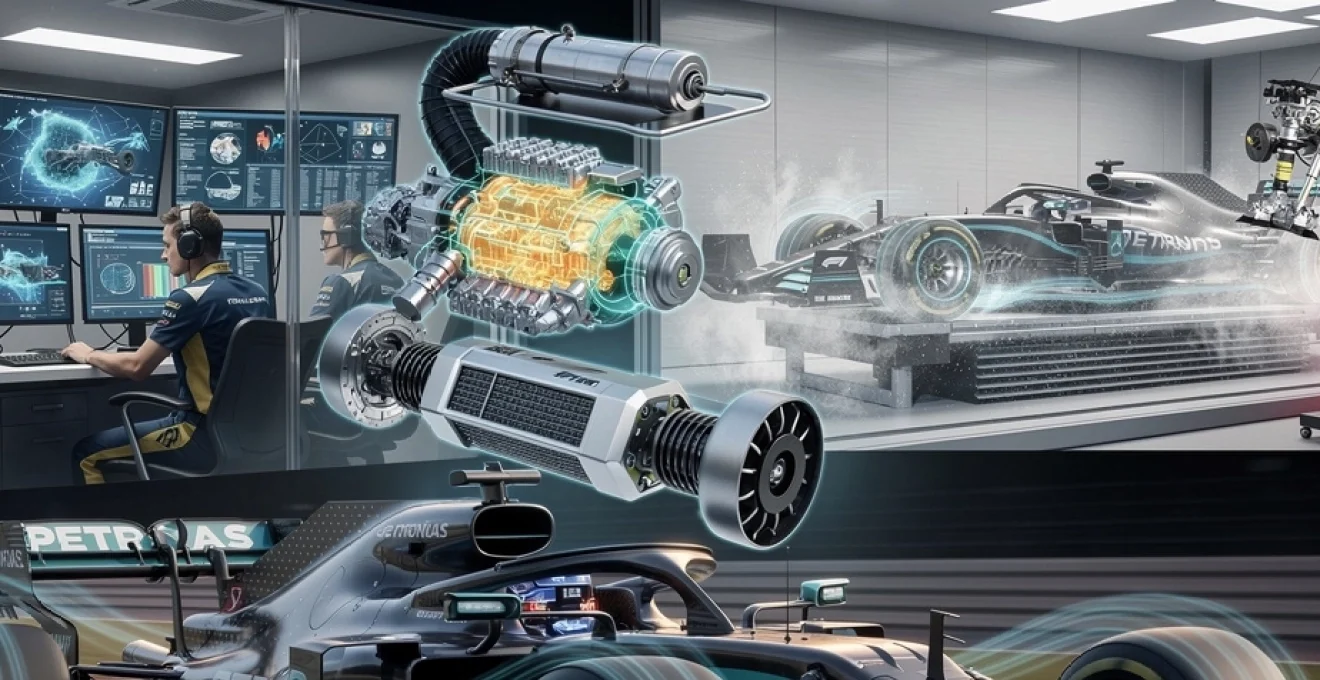
Formula 1 stands as motorsport’s ultimate technological laboratory, where cutting-edge engineering meets extreme performance demands. The sport’s relentless pursuit of speed and efficiency has consistently pushed the boundaries of automotive innovation for over seven decades. From revolutionary aerodynamic concepts to hybrid power units achieving unprecedented thermal efficiency, F1 continues to serve as a proving ground for technologies that eventually find their way into road cars. The FIA’s commitment to maintaining Formula 1 as the pinnacle of motor sport technology ensures that manufacturers invest billions in research and development, creating solutions that benefit both racing and everyday transportation.
Advanced aerodynamics and computational fluid dynamics in formula 1 design
Formula 1 aerodynamics represents the most sophisticated application of fluid dynamics in motorsport, where teams manipulate airflow with extraordinary precision to generate downforce and reduce drag. Modern F1 cars produce downforce levels exceeding twice their weight at racing speeds, effectively pressing them to the track with forces that would allow them to drive upside down through tunnels. This remarkable achievement stems from decades of aerodynamic refinement, combining theoretical knowledge with practical engineering excellence.
The aerodynamic development process in Formula 1 relies heavily on Computational Fluid Dynamics (CFD) simulation, which allows engineers to test millions of design iterations virtually before committing to expensive wind tunnel testing. Teams employ supercomputers capable of processing trillions of calculations per second, modelling airflow around every component of the car with extraordinary detail. These simulations can predict how microscopic changes to wing angles or body surfaces will affect overall performance, enabling engineers to optimise designs with remarkable precision.
Ground effect venturi tunnels and diffuser optimisation
The reintroduction of ground effect technology in modern Formula 1 represents a return to one of the most elegant aerodynamic concepts in motorsport. Venturi tunnels beneath the car create low-pressure zones that literally suck the vehicle to the track surface, generating substantial downforce without the drag penalties associated with conventional wings. This technology requires precise management of airflow underneath the chassis, where even minor disruptions can cause significant performance losses.
Teams spend countless hours optimising diffuser designs, the critical rear sections where ground effect airflow exits the car. The diffuser’s angle, length, and internal geometry must work in perfect harmony with the Venturi tunnels to maintain consistent downforce levels across varying track conditions. Engineers use advanced flow visualisation techniques, including particle image velocimetry, to understand how air behaves in these complex three-dimensional spaces.
Active aerodynamics systems and DRS implementation
The Drag Reduction System (DRS) demonstrates Formula 1’s innovative approach to balancing performance with competitive racing. This active aerodynamics system allows drivers to reduce rear wing angle on designated track sections, decreasing drag for improved straight-line speed while maintaining cornering performance elsewhere. The system’s implementation required sophisticated control mechanisms that can operate reliably at speeds exceeding 300 kilometres per hour.
Beyond DRS, teams continuously explore passive aerodynamic devices that adapt to changing conditions automatically. Flexible wing elements, when permitted by regulations, can optimise their shape based on airflow pressure, providing ideal performance across different speed ranges. These innovations showcase how Formula 1 pushes the boundaries of what’s possible in aerodynamic design.
Wind tunnel testing protocols and CFD simulation accuracy
Formula 1 teams operate some of the world’s most advanced wind tunnels, capable of reproducing track conditions with extraordinary accuracy. These facilities can simulate ground effect, rotating wheels, and moving road surfaces while maintaining precise temperature and pressure control. Scale models, typically built at 60% of full size, undergo thousands of hours of testing annually, with teams measuring minute aerodynamic changes using force sensors accurate to fractions of a Newton.
The correlation between CFD simulation and wind tunnel results represents a critical aspect of aerodynamic development. Teams continuously refine their computational models to match real-world performance, achieving correlation levels exceeding 95% accuracy. This precision allows engineers to predict how design changes will perform on track before expensive prototype construction, significantly accelerating the development process.
Front wing endplate vortex generation and flow control
Front wing endplates
endplates play a crucial role in managing how air flows around the front tyres and along the car’s body. By deliberately generating controlled vortices, engineers can guide turbulent airflow away from sensitive regions, improving both downforce and drag characteristics. These swirling air structures, often referred to as Y250 vortices in previous regulations, help seal the floor, energise the airflow along the sidepods, and stabilise the wake heading toward the rear of the car.
Designing these endplates is a delicate balance between regulatory constraints and aerodynamic creativity. Tiny changes in slot gaps, edge radii, or winglet positioning can dramatically alter vortex strength and position, sometimes yielding tenths of a second per lap. Modern regulations have simplified front wings to improve wheel-to-wheel racing, yet teams still exploit every millimetre of allowable geometry to sculpt the airflow. This level of aerodynamic detail is one reason why Formula 1 front wings are considered masterpieces of applied fluid dynamics.
Hybrid power unit technology and energy recovery systems
While aerodynamics dominates the visual identity of a Formula 1 car, the hybrid power unit defines its technical soul. Since 2014, Formula 1 has used 1.6-litre V6 turbo hybrid engines that combine an internal combustion engine with advanced energy recovery systems. These power units deliver over 1000 horsepower while using up to 35% less fuel than the previous V8 era, showcasing why F1 is regarded as the pinnacle of motorsport innovation. For manufacturers, this hybrid architecture doubles as a live test bench for high-efficiency technologies destined for road cars.
The hybrid system centres around two main motor generator units – the MGU-H and MGU-K – plus an advanced lithium-ion energy store. Together they recover braking and heat energy that would otherwise be wasted, then redeploy it for additional power. In race trim, drivers can access around 160 extra horsepower from the hybrid system for limited periods each lap, transforming how races are managed and how strategies are executed. This complex power delivery demands highly sophisticated control software and seamless integration between every component.
MGU-H turbocharger integration and heat energy harvesting
The MGU-H (Motor Generator Unit – Heat) is connected directly to the turbocharger shaft, sitting at the very heart of the power unit. Under acceleration, the exhaust gases spin the turbine, which in turn drives the compressor to force more air into the engine, increasing power. The MGU-H harvests energy from this spinning shaft, turning waste heat into electrical energy that can be stored in the battery or sent directly to the MGU-K. When needed, it can also act as a motor, spinning the turbo to eliminate lag and ensure instant throttle response.
Integrating the MGU-H with the turbo requires exceptional thermal management and mechanical precision. Components routinely operate at temperatures exceeding 1000°C in the exhaust stream, so materials and cooling pathways must be carefully engineered to survive full race distances. The fine control offered by the MGU-H enables engineers to shape the engine’s torque curve with remarkable accuracy, which is crucial for drivability and tyre management. Although future regulations may phase out the MGU-H, the lessons learned in high-speed electrical machines and heat recovery are already influencing next-generation road car powertrains.
MGU-K kinetic energy recovery and deployment strategies
The MGU-K (Motor Generator Unit – Kinetic) functions as both an electric motor and a generator connected to the crankshaft via the drivetrain. During braking, it recovers kinetic energy and converts it into electrical energy that is stored in the energy store. Under acceleration, it deploys that stored energy back to the rear wheels, providing up to 120 kW (approximately 160 horsepower) of additional power. This creates a hybrid power delivery profile that blends combustion and electric torque in ways you would normally associate with cutting-edge hypercars.
How and when this electric boost is deployed forms a critical element of Formula 1 race strategy. Drivers and engineers work together to create deployment maps that optimise energy use for overtaking, defending, or achieving the fastest qualifying lap. For example, teams might prioritise battery use on long straights at circuits like Monza, while adopting more conservative strategies on twisty tracks such as Monaco. These sophisticated energy deployment strategies mirror the intelligent energy management systems now emerging in plug-in hybrids and performance EVs on the road.
Thermal efficiency optimisation in internal combustion engines
Perhaps the most impressive achievement of modern Formula 1 power units is their thermal efficiency – the percentage of fuel energy converted into useful work at the crankshaft. Current F1 engines have surpassed 50% thermal efficiency, far higher than most road-going petrol engines that typically operate in the 30–40% range. Achieving such numbers requires relentless optimisation of combustion chamber design, fuel injection, ignition timing, and turbocharging. It also demands advanced fuels developed specifically to burn cleaner and more efficiently under extreme cylinder pressures.
Manufacturers use single-cylinder research engines, optical combustion analysis, and sophisticated simulation tools to refine every aspect of the combustion process. Tiny gains of 0.1% in efficiency can translate into crucial on-track performance through improved fuel economy or extra power. Why does this matter for everyday drivers? Because the same research into fuel atomisation, knock resistance, and turbocharging strategies feeds directly into cleaner, more efficient road car engines. F1 therefore acts as a high-speed laboratory for sustainable performance technology.
Energy store battery management and lithium-ion cell technology
The energy store in a modern Formula 1 car is far more than a simple battery pack; it is a carefully managed system of high-performance lithium-ion cells. These cells must deliver very high power output for short bursts while also accepting rapid charge during braking and heat recovery. The battery management system (BMS) controls cell temperatures, state of charge, and energy flow to maximise performance and ensure safety throughout a race distance. Any imbalance or overheating can drastically reduce performance or even force a retirement.
Teams and suppliers experiment with cell chemistries, cooling architectures, and packaging solutions that can withstand the extreme vibrations and temperature swings of a Grand Prix. Insights from this work are invaluable for the broader automotive industry, where energy density, fast charging, and battery longevity remain major challenges. As you look at the latest electric vehicles claiming higher range and improved durability, it is worth remembering that Formula 1’s intense development race has helped accelerate many of those breakthroughs.
Advanced materials science and carbon fibre construction methods
Beyond engines and aerodynamics, Formula 1’s reputation as the pinnacle of motorsport innovation is also built on its use of advanced materials. Teams operate at the cutting edge of composites, metals, and hybrid structures to deliver chassis that are both incredibly light and remarkably strong. The typical F1 car weighs just over 800 kilograms including the driver, yet it can withstand crash forces that would destroy ordinary road vehicles. This impressive combination of low weight and high safety is largely due to carbon fibre and related materials science developments.
F1’s materials engineers work much like aerospace specialists, designing components to meet stringent weight targets, stiffness requirements, and safety regulations. From the survival cell to the suspension wishbones, every part is optimised for the best strength-to-weight ratio possible under the rules. The techniques refined in the paddock often trickle down to high-performance road cars, bicycles, and even medical equipment. In many ways, Formula 1 acts as a real-world test chamber for the future of structural engineering.
Prepreg carbon fibre layup techniques and autoclave curing
The core of every modern Formula 1 chassis is a carbon fibre monocoque constructed using prepreg (pre-impregnated) carbon fibre sheets. These sheets are layered by hand onto complex moulds in carefully controlled orientations to achieve the desired stiffness and strength. Each layer’s fibre direction is chosen to resist specific loads, much like the grain in wood, but with far more precision and consistency. The result is a tailored composite structure that can withstand enormous forces while remaining exceptionally light.
Once the layup is complete, the entire assembly is cured in an autoclave under high temperature and pressure. This process removes voids, ensures complete resin flow, and locks the fibres into a rigid matrix. Engineers often compare the autoclave to an industrial-sized pressure cooker where a car’s survival cell is “baked” into existence. For you as a driver, the same expertise appears in carbon fibre tubs in supercars and even in carbon-intensive components in premium EVs, where weight saving is key to extending range.
Titanium alloy applications in suspension and drivetrain components
In areas where metal is still required, Formula 1 commonly turns to titanium alloys to achieve the optimum balance of strength, stiffness, and weight. Suspension components such as uprights, fasteners, and certain wishbone inserts often use titanium because it is about 40% lighter than steel while maintaining comparable strength. In the drivetrain, titanium is used in critical fasteners, gear components, and structural elements where every gram saved contributes directly to lap time. These parts must endure huge loads during braking, cornering, and kerb strikes without deforming or failing.
Producing such components calls for advanced machining techniques, including multi-axis CNC milling and additive manufacturing for some complex shapes. The cost is high, but so is the performance payoff in the hyper-competitive environment of Formula 1. Over time, this experience with titanium has filtered into aerospace and premium automotive applications, from connecting rods in high-end engines to lightweight exhaust systems. When we talk about F1 driving materials innovation, titanium usage is a prime example of that process in action.
Nomex honeycomb core structures and crash safety standards
Crash safety is one area where Formula 1’s technology genuinely saves lives, both in racing and on public roads. Underneath the carbon fibre skins of many F1 components lies a Nomex honeycomb core – a lightweight, fire-resistant material that looks like a beehive when viewed in cross-section. This core is sandwiched between composite layers to form panels that are extremely stiff in bending yet capable of absorbing large amounts of impact energy. It is used extensively in monocoque structures, floors, and impact protection zones.
The sport’s governing body imposes rigorous crash tests on every chassis, including frontal, side, rear, and roll-over impacts, plus steering column and fuel cell integrity tests. Cars must survive these tests with minimal deformation around the driver’s survival cell, ensuring space remains for the driver even in severe accidents. Many of these testing methodologies and structural philosophies influence road car crash structures, where honeycomb and multi-layered deformation zones are increasingly common. In a sense, every time a Formula 1 car passes a crash test, we learn how to build safer vehicles for everyday use.
Ceramic matrix composites in brake disc manufacturing
Formula 1 braking performance is legendary, with drivers routinely decelerating from over 300 km/h to tight corners in just a few dozen metres. This extraordinary capability relies on brake discs and pads made from high-tech carbon-carbon and ceramic matrix composites. These materials can operate at temperatures exceeding 1000°C without losing structural integrity, while providing consistent friction under repeated heavy use. Unlike traditional steel brakes, they are light, strong, and highly resistant to fade.
Manufacturing these composite brake discs involves complex processes of layering carbon fibres, impregnating them with resins, and subjecting them to high-temperature treatments in inert atmospheres. While you will not find full Formula 1-spec brakes on road cars, the same underlying technologies have led to carbon-ceramic brakes on many high-performance vehicles. These offer improved stopping power, reduced unsprung mass, and exceptional durability. Once again, F1’s quest for performance has accelerated the adoption of advanced materials in mainstream automotive engineering.
Electronic control units and real-time telemetry systems
Modern Formula 1 cars are as much data platforms as they are racing machines. At the core of this digital ecosystem sits a highly sophisticated Electronic Control Unit (ECU), effectively the car’s central nervous system. The ECU manages engine parameters, hybrid deployment, gearbox shifts, differential settings, and countless other variables in real time. It must do all this reliably while enduring intense vibrations, temperature swings, and electromagnetic interference throughout a two-hour Grand Prix.
Real-time telemetry systems stream data from hundreds of sensors on the car back to the pits at rates that can exceed one million data points per lap. Teams analyse this information live, adjusting strategies, advising drivers, and diagnosing emerging issues before they become race-ending failures. Many of the techniques used here – from predictive analytics to remote diagnostics – are now mirrored in connected road cars, fleet management systems, and even motorsport-inspired consumer apps. If you have ever used a vehicle health report from your car’s infotainment system, you are already seeing a diluted form of F1 telemetry in action.
Tyre compound chemistry and pirelli’s thermal management solutions
Tyres are the only part of a Formula 1 car that actually touch the track, so their design and behaviour largely define how fast a car can corner, brake, and accelerate. Pirelli, Formula 1’s sole tyre supplier, develops a range of compounds with different levels of grip, durability, and operating temperature windows. Each tyre is a carefully engineered blend of polymers, fillers, oils, and curing agents that must deliver consistent performance across a race distance. The chemistry behind these compounds is a complex science that balances raw speed with safety and sustainability.
Thermal management is at the heart of Formula 1 tyre performance. Drivers and engineers talk constantly about getting the tyres “in the window” – the narrow temperature range where grip is maximised and wear is controlled. Push too hard and the tyres overheat, leading to blistering and rapid degradation; drive too gently and they never warm up enough to generate peak grip. This delicate balance requires precise suspension tuning, brake migration settings, and even driving style adaptations. For road cars, learnings from F1 in compound behaviour, rolling resistance, and wet-weather performance feed back into safer and more efficient everyday tyres.
Mercedes-amg petronas and red bull racing technology transfer to road cars
Two of the most successful modern Formula 1 teams, Mercedes-AMG Petronas and Red Bull Racing, provide clear case studies of how F1 technology transfers to road cars. Mercedes has used the hybrid power unit era as a direct development path for its high-performance road division. The Mercedes-AMG ONE hypercar, for example, uses a derived version of the brand’s championship-winning F1 power unit, adapted for road use with a 1.6-litre V6 turbo hybrid and advanced energy recovery systems. This is as close as you can get to driving a Formula 1 powertrain on public roads.
Red Bull Racing has followed a slightly different route, leveraging its aerodynamic expertise and partnerships to influence road car design. The Aston Martin Valkyrie, co-developed with Red Bull Advanced Technologies, features extreme downforce-generating bodywork inspired by F1 ground effect philosophy, along with lightweight carbon fibre structures. Both teams actively share methodologies in simulation, materials selection, and systems integration with their automotive partners. From high-efficiency hybrid systems to active aerodynamics and digital control strategies, the line between Formula 1 and cutting-edge road cars grows thinner every year, reaffirming F1’s status as the true pinnacle of motorsport innovation.