Rugby union stands apart in the sporting world as a uniquely punishing test of human physiology. Across 80 minutes of match play, athletes endure repeated high-velocity collisions, explosive sprints, technical lifting manoeuvres, and continuous positional transitions—all without the protective equipment worn in similar contact sports. The professionalization of rugby in 1995 transformed not only the economic landscape of the game but fundamentally altered the physical demands placed upon players. Modern rugby athletes operate at the intersection of power, endurance, and resilience, where success depends on simultaneously expressing contradictory physiological qualities: the explosive strength of a powerlifter combined with the aerobic capacity of a middle-distance runner, all while absorbing impacts that would sideline athletes in most other disciplines.
Physiological energy systems under extreme match intensity
Understanding rugby’s physical demands begins with examining how the body produces energy during match play. Unlike purely aerobic sports such as marathon running or predominantly anaerobic activities like 100-metre sprinting, rugby requires sophisticated interplay between all three energy systems. The intermittent nature of the game—characterized by brief, explosive efforts followed by incomplete recovery periods—creates a metabolic challenge rarely encountered in other team sports. Research analyzing international rugby union matches reveals that the ball remains in play for approximately 29 minutes during the scheduled 80-minute duration, yet this statistic dramatically understates the physiological stress experienced by players.
The work-to-rest ratios documented in elite competition average around 1:1 to 1:1.9, with work periods lasting approximately 19 seconds. This density of effort prevents complete phosphocreatine resynthesis between bouts, forcing players to rely increasingly on anaerobic glycolysis as matches progress. Blood lactate measurements taken from first-class players throughout matches have recorded peak individual values ranging from 5.8 to 9.8 millimoles per litre—concentrations indicating substantial anaerobic glycolytic contribution. These lactate levels, while lower than those seen in pure sprint events, remain elevated throughout match play, creating an acidic intramuscular environment that impairs contractile function and accelerates central and peripheral fatigue.
Anaerobic alactic phosphocreatine depletion during scrums and mauls
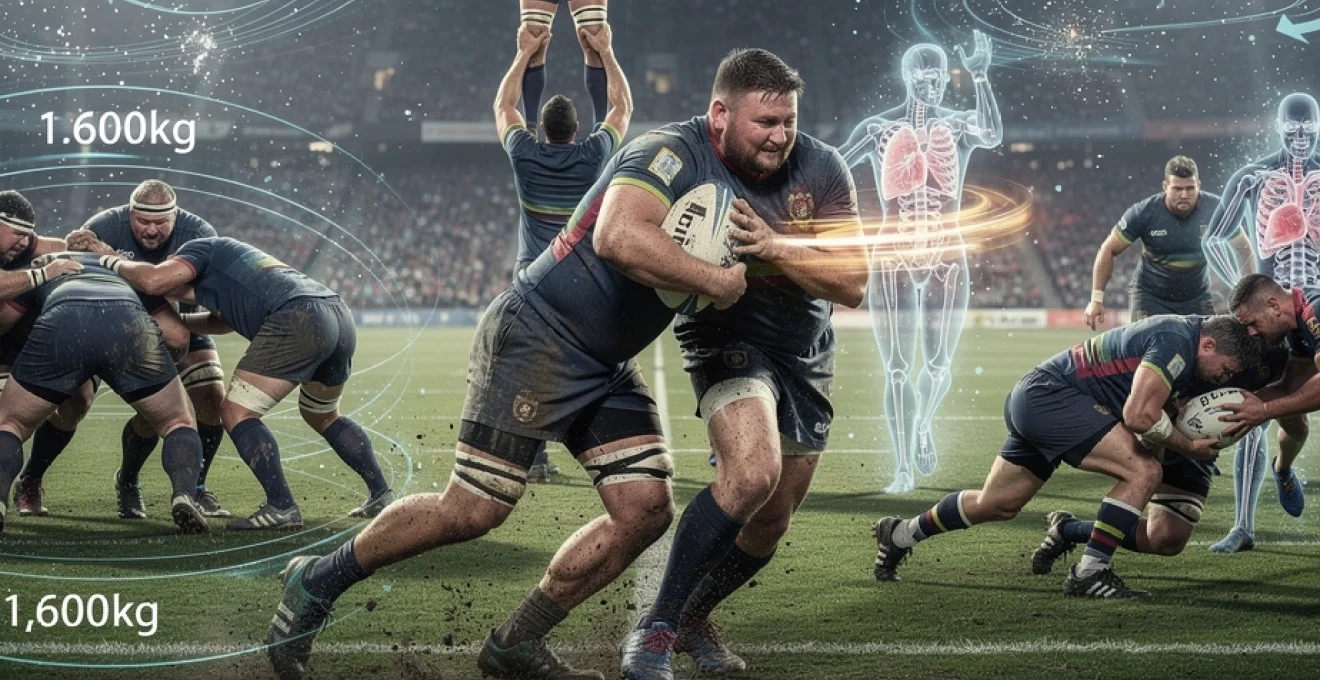
Scrums and mauls represent the most intense anaerobic alactic demands in rugby. During scrums, forward packs generate forces exceeding 1,600 kilograms in international-level competition, sustained for 5-8 seconds of maximal isometric and concentric effort. This explosive power output depletes intramuscular phosphocreatine stores rapidly, as the phosphagen system can only fuel maximal efforts for approximately 10 seconds before requiring alternative energy pathways. With scrums, lineouts, rucks, or mauls occurring on average every 33 seconds during open play, you can appreciate how insufficient recovery time prevents complete phosphocreatine restoration between efforts.
The physiological consequence becomes a progressive shift toward anaerobic glycolysis to support repeated high-intensity efforts. As phosphocreatine availability diminishes, power output necessarily decreases unless glycolytic metabolism compensates—a trade-off that produces lactate accumulation and accelerates fatigue onset. Elite players demonstrate superior phosphocreatine resynthesis rates compared to amateur athletes, partially explaining performance differences between competition levels. Training adaptations that enhance creatine kinase activity and improve buffering capacity become essential for maintaining power output throughout an 80-minute contest.
Lactate threshold breaches in repeated High-Intensity efforts
Rugby’s intermittent high-intensity nature consistently pushes players above their lactate threshold—the exercise intensity where lactate production exceeds clearance capacity. During sustained defensive sequences or extended attacking phases, players may perform multiple maximal efforts with minimal recovery, driving lactate accumulation to levels that significantly impair muscle contractility. The resulting intracellular acidosis interferes with calcium release from the sarcoplasmic reticulum and reduces the force-generating capacity of myosin cross-bridges, manifesting as reduced sprint speed, diminished tackle effectiveness, and compromised decision-making as the brain receives insufficient glucose.
What distinguishes rugby from interval-based training is the unpredictable nature
of these efforts: players cannot predict when a defensive set will turn into a multi-phase stand on their own goal line, or when a turnover will trigger a 60-metre counterattack. Unlike structured interval sessions where work and recovery are pre-programmed, match play forces athletes to operate repeatedly above lactate threshold with recovery windows that are dictated by tactical situations rather than physiology. This mismatch between metabolic demand and recovery opportunity is a core reason why rugby is considered one of the most physically demanding team sports.
To cope with this, elite teams prioritise conditioning that raises lactate threshold and improves lactate clearance. High-intensity interval training, repeated sprint training with limited rest, and game-based conditioning drills all help players tolerate higher blood lactate concentrations while maintaining technical skills. In practice, that means being able to execute a dominant tackle or accurate pass even when the legs are burning and breathing is laboured. For you as a player or coach, the key takeaway is simple: if training intensity never pushes you near or above your lactate threshold, you are not truly preparing for the metabolic chaos of real match play.
Aerobic capacity requirements across 80-minute match duration
While rugby is dominated by brief bursts of high-intensity work, underlying aerobic capacity remains crucial for sustaining performance over the full 80-minute match duration. The aerobic system acts as the “engine idle,” continuously supplying energy during lower-intensity activities such as jogging between phases, repositioning in the defensive line, and walking to set pieces. More importantly, a robust aerobic system accelerates recovery between repeated high-intensity efforts, allowing players to restore phosphocreatine, clear lactate, and re-oxygenate working muscles more efficiently.
Time–motion analyses of professional rugby union show that players can cover between 5 and 7 kilometres in a match, depending on position and level, with a significant proportion of that distance performed at low to moderate intensities. However, these seemingly “easy” movements are interspersed with hundreds of accelerations, decelerations, and collisions, making the cardiovascular load far from trivial. Average heart rates during elite matches often sit between 80 and 90 percent of maximum, reflecting continuous aerobic strain layered with frequent anaerobic spikes. If an athlete’s aerobic base is underdeveloped, we see a pronounced drop-off in work rate during the final quarter, often when matches are decided.
From a training perspective, this means that long slow distance running alone is not sufficient to build rugby-specific aerobic capacity. Instead, coaches increasingly use small-sided games, tempo runs, and mixed-modal conditioning that mirror the intermittent nature of competition. These methods maintain heart rate in the target aerobic zone while integrating skills under fatigue. For developing players, gradually increasing total weekly running volume and including at least one focused aerobic conditioning session helps ensure that late-game performance does not collapse when fatigue sets in.
VO2 max demands in forward vs back positions
Although all rugby players require high aerobic fitness, VO2 max demands differ subtly between forward and back positions due to their distinct movement and collision profiles. Forwards, particularly front-row and second-row players, perform more scrums, mauls, and short-distance collisions, resulting in a higher proportion of high-force, low-velocity work. Backs, especially wings and fullbacks, cover greater high-speed running distances and perform more maximal sprints in open space. These positional differences shape how VO2 max values translate into on-field demands.
Studies of elite rugby union squads typically report VO2 max values in the range of 50–60 ml·kg⁻¹·min⁻¹ for forwards and slightly higher averages of 55–65 ml·kg⁻¹·min⁻¹ for backs. While these numbers are lower than those of elite endurance runners, they are impressive considering the players’ high body mass and the repeated collision loads they endure. In practice, a back with superior VO2 max can repeat sprints with less performance decay, while a forward with strong aerobic capacity can hit more rucks and scrums without experiencing a steep drop in work rate. Think of VO2 max as the “size of the fuel tank,” while tactical demands determine how quickly that fuel is burned.
For position-specific conditioning, we often see backs performing more repeated sprint and high-speed running intervals, while forwards utilise more contact-based conditioning blocks interspersed with short runs or shuttles. However, both groups benefit from periodic assessment of VO2 max or field-based proxies such as the Yo-Yo Intermittent Recovery Test. If you notice disproportionate fatigue in the closing stages of matches—whether that appears as slower line speed in defence or reduced support lines in attack—it is usually a sign that aerobic capacity, not just toughness, needs focused development.
Biomechanical forces and collision impact loads
Beyond energy systems, rugby’s reputation as one of the most physically demanding team sports is rooted in the sheer magnitude of biomechanical forces involved. Every tackle, scrum, and ruck imposes substantial impact loads on bones, joints, and connective tissues. These are not occasional events but repeated mechanical shocks layered across the entire 80 minutes, demanding robust structural strength and excellent technique. If we visualise each collision as a mini car crash, it becomes easier to appreciate why chronic overload and acute injuries are constant risks at higher levels of play.
Modern technology has allowed researchers to quantify these forces with increasing precision using instrumented mouthguards, GPS units, and accelerometers. What the data reveals is stark: professional rugby players routinely experience impact magnitudes that would be considered extreme in most other sports. To withstand these loads, athletes require not only muscle strength and power but also joint stability, core stiffness, and refined body positioning to dissipate forces safely. In essence, rugby demands a body that is both a shock absorber and a battering ram.
Tackling g-force measurements in professional rugby union
Instrumented mouthguards and wearable sensors have transformed our understanding of tackle impact in professional rugby union. Measurements from elite competitions have reported head accelerations frequently exceeding 10–15 g, with some heavy collisions peaking above 20 g. To put that into perspective, these loads are similar to those experienced in minor car accidents, yet players may sustain dozens of such impacts in a single match. Body-level accelerations during tackles can climb even higher when accounting for torso and limb deceleration on contact.
These tackling G-force measurements highlight why technique and timing are so critical for both performance and safety. A well-executed shoulder tackle, with correct head placement and active leg drive, spreads impact forces through the larger muscle groups of the hips and trunk, reducing peak loads on vulnerable structures like the neck and brain. Conversely, poor posture or compromised tackle height can focus forces onto smaller joints or the cervical spine, increasing injury risk. For coaches and players, prioritising tackle technique under fatigue is not simply about winning collisions—it is a non-negotiable part of long-term player welfare.
Scrum force generation exceeding 1,600kg in international packs
Few set pieces in sport rival the scrum for raw collective force generation. Biomechanical studies of international-level packs have documented combined horizontal forces exceeding 1,600 kilograms at the point of engagement, with some analyses reporting transient peaks above 2,000 kilograms in optimal conditions. These forces, delivered over a small contact area and supported by relatively narrow bases of support, place immense compression and shear loads on players’ cervical, thoracic, and lumbar spine segments.
To manage these loads, front-row players in particular require exceptional neck strength, spinal stability, and lower-body power. The scrum is essentially a coordinated, multi-segment isometric and concentric effort, where any technical breakdown—such as a dropped hip or misaligned shoulder—can shift force vectors dangerously. This is why modern scrum training emphasises posture, binding mechanics, and progressive exposure to live scrummaging rather than simply pushing as hard as possible. When you consider that elite forwards may engage in a dozen or more scrums per match, often under conditions of extreme fatigue, the cumulative structural stress becomes clear.
Ruck clearout impact velocities and musculoskeletal stress
Ruck clearouts add another layer of biomechanical challenge, combining sprint acceleration, deceleration, and collision in a confined space. Players often enter rucks from short approach distances, reaching moderate to high velocities before abruptly lowering their centre of mass and colliding into opponents or bodies on the ground. Peak approach speeds in elite rugby union have been recorded in the 5–7 m·s⁻¹ range, which, when combined with player mass, results in substantial momentum at the point of contact.
This combination of speed and body mass translates into high musculoskeletal stress, particularly on the shoulders, hips, and knees. Rapid deceleration and directional changes also load the quadriceps, hamstrings, and calf musculature eccentrically, increasing the risk of strains if underlying strength is insufficient. From a training standpoint, this is where specific contact conditioning and robust lower-limb strength become essential. Drills that simulate realistic entry angles, body height, and cleanout techniques allow players to rehearse safe movement patterns at game-like speeds, reducing the chance that poor mechanics under fatigue will lead to joint overload or soft tissue injury.
Lineout lifting mechanics and core stability requirements
While less obviously violent than tackles and scrums, lineout lifting imposes unique biomechanical demands on both jumpers and lifters. Lifters must generate rapid vertical force to propel a teammate upwards, often from a semi-squat position and under the pressure of contesting opponents. This dynamic effort requires a mix of lower-body power and upper-body strength, as arms and hands guide and stabilise the jumper throughout the airborne phase. For the jumper, strong hip and trunk control are crucial to maintaining body alignment and securing the ball at full stretch.
Core stability plays a central role in safe and effective lineout execution. The lifters’ trunks act as the structural bridge transmitting force from the legs into the jumper, while also resisting lateral perturbations from opposition contact. Insufficient core stiffness can result in energy leaks, reduced lift height, and increased risk of lumbar strain. In practical terms, targeted exercises such as loaded carries, anti-rotation drills, and integrated Olympic lifting derivatives help develop the strength and stability required for this set piece. When we view lineout mechanics through this lens, they resemble a complex, synchronised weightlifting movement performed in an unpredictable environment.
Neuromuscular fatigue accumulation and recovery deficits
All of these mechanical and metabolic demands converge to create significant neuromuscular fatigue by the end of a rugby match. Neuromuscular fatigue encompasses both central components—originating in the brain and spinal cord—and peripheral components within the muscles themselves. The repeated combination of high-force contractions, eccentric loading, and metabolic stress disrupts normal nervous system signalling and muscle contractile function. Unlike simple “tiredness,” this fatigue can persist for days, altering movement patterns and increasing injury risk if players return to heavy training or competition too soon.
Monitoring and managing this neuromuscular load has become a cornerstone of modern high-performance rugby programmes. Teams use a combination of subjective wellness questionnaires, objective jump tests, heart rate variability, and GPS metrics to gauge recovery status. The aim is to strike a balance: training hard enough to stimulate adaptation, but not so hard that cumulative fatigue outpaces recovery capacity. When this balance is lost, we see declines in sprint speed, tackle dominance, and decision-making sharpness, even if the athlete feels mentally ready to play.
Central nervous system fatigue in match-day performance decline
Central nervous system (CNS) fatigue refers to a reduction in the ability of the brain and spinal cord to drive muscles at full capacity. In rugby, CNS fatigue can develop progressively across a match due to sustained high effort, psychological stress, and repeated collisions. As central drive diminishes, players may struggle to recruit high-threshold motor units, leading to slower reaction times, reduced explosiveness, and impaired coordination. You may notice this as missed tackles in the final minutes or sluggish responses to quick taps and line breaks.
Psychological load contributes significantly to CNS fatigue as well. Constantly scanning for threats, making rapid tactical decisions, and managing pain and discomfort all tax cognitive resources. Over the course of an intense match or congested fixture schedule, this mental strain can compound physical fatigue, blunting performance even if traditional fitness markers seem adequate. Strategies such as structured recovery days, sleep optimisation, and mental skills training help protect CNS function, ensuring that athletes can repeatedly access their full physical capacity when it matters most.
Countermovement jump height reduction post-match indicators
One of the most widely used tools to assess acute neuromuscular fatigue in rugby is the countermovement jump (CMJ). By measuring jump height or force-time characteristics before and after matches, practitioners gain insight into how much power output has been compromised. Research frequently reports CMJ height reductions of 5–15 percent in the 24–48 hours following elite rugby matches, with larger drops often seen in forwards due to their higher collision involvement. These decrements reflect both peripheral muscle fatigue and central changes in motor unit recruitment.
Tracking CMJ performance over time allows staff to individualise recovery and training loads. If a player shows an unusually large or prolonged drop in jump height after a match, it may signal inadequate recovery capacity or underlying musculoskeletal issues. Conversely, small, consistent reductions followed by rapid return to baseline suggest that current conditioning and recovery strategies are appropriately matched to competition demands. For players and coaches, CMJ testing offers a simple yet powerful window into the invisible toll that repeated matches and heavy contact take on the neuromuscular system.
Delayed onset muscle soreness severity in forward packs
Delayed onset muscle soreness (DOMS) is another clear indicator of rugby’s neuromuscular toll, particularly in forward packs. The repeated eccentric loading experienced during scrums, tackles, ruck clearouts, and mauls creates microscopic damage within muscle fibres, triggering inflammation and soreness that typically peaks 24–72 hours post-match. Forwards, who engage in more frequent and higher-force collisions, generally report greater DOMS severity than backs, especially in the neck, shoulders, lower back, and thighs.
While some level of DOMS is an inevitable by-product of intense contact, excessive soreness can limit subsequent training quality and alter movement mechanics, potentially increasing injury risk. Effective management blends proactive strategies—such as robust strength training, gradual exposure to contact, and good technical skills—with recovery interventions like sleep, nutrition, active recovery, and, where appropriate, compression or hydrotherapy. If you routinely feel incapacitated for several days after matches, it may signal that your current strength levels and contact tolerance are not yet aligned with the demands of your playing level.
Body composition demands across positional requirements
Body composition is another area where rugby’s physical demands stand out. Compared to athletes in many other team sports, rugby players carry greater overall body mass and, in many cases, higher body fat percentages. This is not simply a by-product of size for its own sake; mass contributes directly to momentum in collisions, scrum force generation, and tackle dominance. At the same time, excessive non-functional mass can impair speed, agility, and endurance, so the challenge is to find an optimal balance for each position.
Position-specific profiles illustrate this trade-off. International-level forwards often weigh between 105 and 125 kilograms, with substantial lean mass to drive scrummaging, mauling, and close-quarter collisions. Backs tend to be lighter, in the 85–105 kilogram range, but still carry significantly more muscle than athletes in sports like soccer or basketball. Within these broad ranges, wings and fullbacks typically prioritise lower body fat levels to maximise sprint speed, while tight-five forwards may tolerate slightly higher fat percentages because sheer mass aids stability in the scrum. Effective conditioning programmes therefore integrate not only strength and power training but also nutrition and body composition monitoring to ensure players fit optimal ranges for their positional roles.
Contact training load monitoring and injury epidemiology
Given rugby’s status as one of the most physically demanding and high-impact team sports, monitoring contact training load and understanding injury epidemiology are critical for player welfare. Modern professional environments treat external load (distance, speed, collisions) and internal load (heart rate, perceived exertion) as dynamic variables that must be managed strategically across a season. The aim is to expose players to enough contact and intensity to build resilience, while avoiding the excessive spikes in load that research consistently links to higher injury risk.
Epidemiological studies across youth, academy, and professional rugby have shed light on where and when injuries are most likely to occur. Match injury rates are substantially higher than training injury rates, and contact events such as tackles and rucks account for the majority of serious injuries. Armed with this knowledge, coaches can manipulate training design—reducing unnecessary full-contact drills, controlling collision intensity, and using non-contact conditioning to maintain fitness without compounding tissue stress. For you as a player, awareness of these patterns can inform smarter conversations with coaches and medical staff about workload and recovery.
GPS tracking data: PlayerLoad metrics in premiership rugby
Global Positioning System (GPS) technology has become central to quantifying the physical load of professional rugby. In Premiership Rugby and other elite competitions, players wear GPS units that capture distance, speed, accelerations, decelerations, and, in some systems, collision counts. One common composite measure is “PlayerLoad,” an accelerometer-derived metric that reflects the cumulative mechanical stress experienced during a session or match. Higher PlayerLoad values indicate greater overall movement and impact volume.
Analyses of Premiership Rugby matches have reported PlayerLoad totals that rival or exceed those seen in many other collision sports, especially for back-row forwards and midfield backs who are heavily involved in both running and contact. Coaches use these data to compare match demands with training sessions, ensuring that weekly loads progress logically rather than spiking unpredictably. For instance, if a match produces a PlayerLoad of 800–900 arbitrary units for a given player, midweek training may be calibrated to deliver a controlled percentage of that figure, adjusting for recovery status and upcoming fixtures. This data-informed approach helps explain how modern rugby players can repeatedly perform at high levels despite the sport’s punishing physical demands.
Concussion incidence rates compared to NFL and ice hockey
Concussion risk is a prominent concern in any contact sport, and rugby union is no exception. Comparative studies suggest that concussion incidence in elite rugby is similar to, and in some cases higher than, that observed in the NFL and ice hockey when expressed per 1,000 player-hours. The absence of hard helmets in rugby may reduce some types of head-to-head impacts, but frequent high-speed tackles and ruck collisions still expose players to considerable rotational and linear head accelerations.
In response, governing bodies and professional clubs have intensified efforts to mitigate concussion risk. These include stricter enforcement of high-tackle laws, head injury assessment protocols, graduated return-to-play guidelines, and education programmes focusing on safe tackle technique. Instrumented mouthguards and advanced video review systems are also being trialled to identify dangerous impact patterns more accurately. For players, understanding that concussions are brain injuries—not just “getting your bell rung”—is essential. Reporting symptoms promptly and adhering to medical advice can protect long-term neurological health in a sport where the competitive drive to play on is understandably strong.
Soft tissue injury prevalence in super rugby competition
Soft tissue injuries—such as hamstring strains, calf tears, and groin issues—are highly prevalent in elite competitions like Super Rugby. The combination of high-speed running, rapid changes of direction, and heavy contact places repeated stress on muscles and tendons, particularly during congested fixture periods or travel-heavy phases of the season. Epidemiological reports from Super Rugby have highlighted lower-limb soft tissue injuries as a leading cause of time lost from training and matches, often peaking during pre-season and early competition rounds when loads increase rapidly.
To tackle this, high-performance staff integrate targeted eccentric strength work, sprint mechanics training, and load management strategies into weekly plans. Regular screening—using strength assessments, flexibility measures, and previous injury history—helps identify athletes at elevated risk. For example, a player with a past hamstring strain and reduced eccentric strength may have their sprint volume or high-speed exposure adjusted while they build resilience. When we consider that even a minor soft tissue injury can sideline a player for several weeks, the link between intelligent load planning and preserving availability becomes obvious.
Accelerometer analysis of high-speed running distance per match
Accelerometer and GPS data have also illuminated the high-speed running demands of rugby, especially for backs and mobile forwards. In professional competitions, outside backs may cover 800–1,200 metres of high-speed running (often defined as >5.5 m·s⁻¹) per match, with multiple sprints exceeding 20 metres. Even forwards, traditionally viewed as purely collision-focused, now accumulate significant high-speed distances due to modern attacking structures that require them to run wider support and decoy lines.
This high-speed running, layered on top of contact loads, contributes heavily to overall fatigue and soft tissue injury risk. Conditioning programmes therefore aim to progressively build sprint volume and intensity, ensuring players’ tissues are prepared for worst-case match scenarios. For example, a winger might perform repeated sprint training that meets or exceeds the maximum sprint count recorded in recent matches, interspersed with agility and evasion drills. By aligning training exposures with data from accelerometer analyses, teams help players not only survive the physical demands of rugby but also exploit them—maintaining speed and power deep into the second half when defences tire.
Psychological resilience under physical duress
No discussion of what makes rugby one of the most physically demanding team sports is complete without addressing psychological resilience. The mental challenge of rugby extends far beyond pre-match nerves or tactical decision-making. Players must repeatedly confront pain, fatigue, and physical threat, all while maintaining composure, discipline, and trust in their teammates. When your lungs are burning, your shoulders are bruised, and you’ve just picked yourself up from a heavy tackle, choosing to sprint back into the defensive line again and again is as much a psychological act as a physical one.
This resilience is not purely innate; it can be trained and strengthened over time. Exposure to controlled discomfort in training—such as conditioning blocks at the end of practice, contact drills under fatigue, and scenario-based scrimmages—helps players rehearse performing skills while under stress. Mental skills techniques including goal setting, self-talk, breathing strategies, and visualisation can also improve an athlete’s ability to stay focused when the game becomes chaotic. Ultimately, the players who thrive in rugby are those who can align body and mind under extreme load, turning the sport’s relentless physical demands into a competitive advantage rather than a limiting factor.