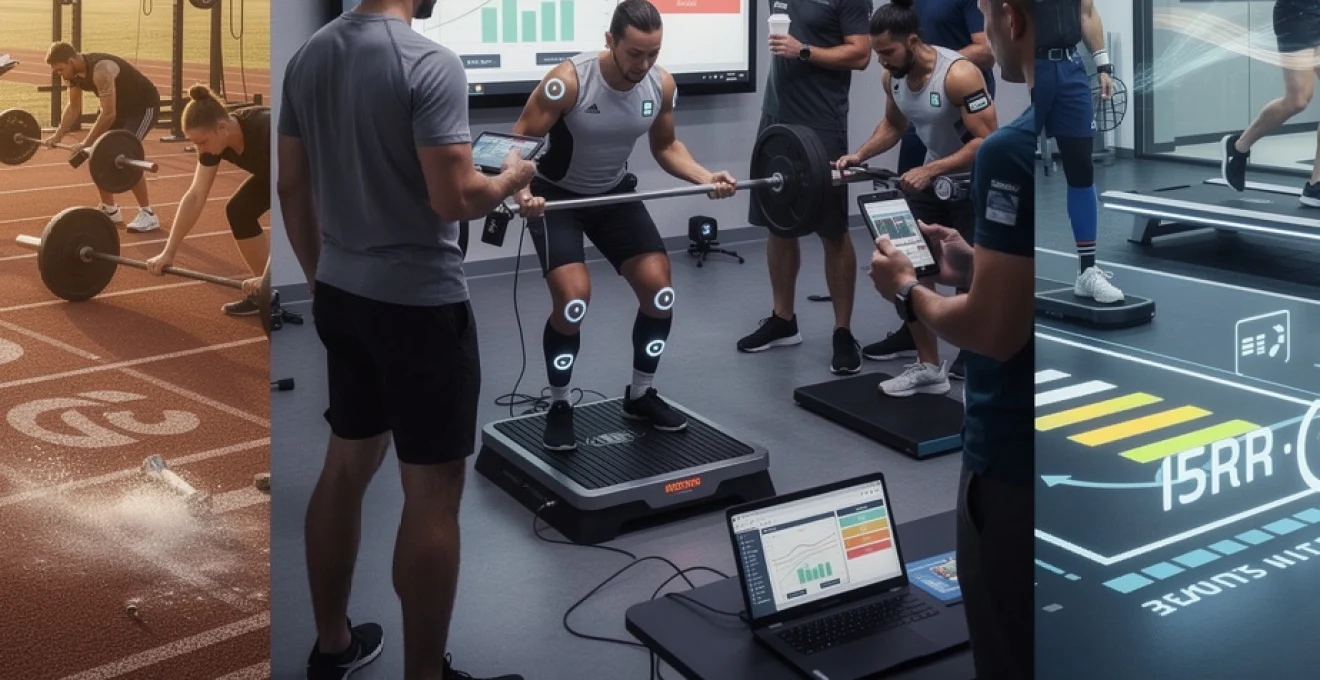
The landscape of professional sports training has undergone a remarkable transformation over the past century. What began with rudimentary approaches based largely on intuition and anecdotal evidence has evolved into a sophisticated, data-driven science that integrates biomechanics, physiology, neuroscience, and cutting-edge technology. Modern athletes benefit from training methodologies that would have seemed like science fiction to their predecessors, yet the fundamental principles of progressive overload, recovery, and adaptation remain as relevant today as they were decades ago. This evolution reflects not just technological advancement, but a deeper understanding of human performance at the cellular and neurological levels.
Today’s elite sports programmes bear little resemblance to those of even twenty years ago. The integration of real-time biometric monitoring, force measurement systems, and cognitive training protocols has created a holistic approach to athletic development. Yet this progress hasn’t been linear—it’s been marked by cyclical trends, paradigm shifts, and the occasional rediscovery of principles that were perhaps ahead of their time when first introduced. Understanding this evolution provides valuable context for appreciating where sports science stands today and where it might be heading tomorrow.
Periodisation models: from linear to block training systems
The concept of periodisation—the systematic planning of athletic training—represents one of the most significant theoretical advances in sports science. Rather than training at constant intensity year-round, periodisation divides the training calendar into distinct phases, each with specific objectives that build upon one another. This approach recognises that the human body adapts best to varied stimuli and requires planned recovery to avoid overtraining and achieve peak performance at predetermined times.
Matveyev’s classical linear periodisation in soviet athletics
Lev Matveyev, a Soviet sports scientist, developed what became known as classical or linear periodisation in the 1960s. His model divided the training year into preparatory, competitive, and transition phases, with volume and intensity following predictable inverse relationships. During the preparatory phase, athletes would accumulate high training volumes at relatively low intensities, building an aerobic foundation and general conditioning. As competition approached, volume would decrease whilst intensity increased, allowing for greater specificity and recovery before major events.
This approach proved remarkably effective for sports with a single competitive peak during the year, such as Olympic athletics or rowing. The Soviet Union’s dominance in Olympic sports during this era provided compelling evidence for the model’s efficacy. However, Matveyev’s system showed limitations when applied to sports requiring multiple peaks throughout a season, such as professional football or tennis, where athletes must maintain high performance levels across extended periods.
Block periodisation: vladimir issurin’s concentrated training loads
Vladimir Issurin introduced block periodisation in the 1980s as a response to the limitations of linear models for modern competitive calendars. Rather than gradually transitioning between phases, block periodisation employs concentrated training loads targeting specific adaptations within relatively short mesocycles of 2-4 weeks. Each block focuses on a limited number of training objectives—typically no more than two or three—allowing for deeper adaptations before moving to the next block.
The typical sequence involves accumulation blocks (developing general capacities like endurance and strength), transmutation blocks (converting general qualities into sport-specific abilities), and realisation blocks (maximising competition readiness). This model acknowledges that training effects have different residual durations; for instance, aerobic capacity declines more slowly than maximal strength when training stimulus is removed, allowing strategic sequencing of adaptations.
Block periodisation has become particularly popular in endurance sports and combat sports, where athletes must peak multiple times throughout the competitive calendar. The concentrated nature of training loads within blocks, however, demands careful monitoring to prevent overtraining and requires athletes to possess a solid training foundation before implementation.
Undulating periodisation and daily undulating programming (DUP)
Whilst block periodisation sequences different training emphases across weeks, undulating periodisation varies training stress within much shorter timeframes—sometimes daily or weekly. Daily Undulating Programming (DUP) has gained considerable traction in strength and conditioning, particularly for resistance training. Rather than spending weeks focused on a single repetition range or intensity, DUP alternates between different loading parameters throughout the week.
For example, a footballer might perform heavy strength work (3–5 reps), power-focused lifts (2–3 reps with lighter loads moved explosively), and hypertrophy sessions (8–12 reps) all within the same week. This frequent variation appears to improve strength and power while reducing psychological monotony. In team sports with congested calendars, undulating periodisation allows coaches to modulate stress around fixtures, keeping players prepared without relying on long, rigid blocks. The challenge, of course, is ensuring that such variation is planned rather than random, so that loads accumulate in a strategic way rather than simply creating noise.
Conjugate method: louie simmons’ westside barbell approach
The conjugate method, popularised in the strength world by Louie Simmons and Westside Barbell, offers another evolution in periodisation thinking. Rather than isolating a single quality for weeks at a time, the conjugate approach trains multiple physical qualities concurrently using distinct methods. Typically, this includes a max effort day to develop absolute strength, a dynamic effort day to train rate of force development and bar speed, and a repetition effort method to build muscle and address weak points.
Professional sports teams have adapted conjugate-inspired systems to develop robust, powerful athletes who can tolerate high competition demands. In rugby or American football, for instance, players might rotate exercises weekly while keeping the underlying methods consistent, allowing constant exposure to heavy loads and high velocities without overtaxing specific joints. The conjugate method’s emphasis on rotating exercises and managing training stress provides a flexible framework for long seasons where athletes cannot afford prolonged performance dips.
However, transferring a powerlifting-centric system into field sports requires nuance. The original Westside model was built around the needs of geared powerlifters, not multi-directional athletes with high running volumes. Modern strength and conditioning coaches therefore borrow the principles—concurrent development of strength and power, strategic variation, and targeted accessory work—while adjusting exercise selection, volume, and frequency to match the specific demands of their sport.
Biomechanical analysis technologies in modern training
As training philosophies have evolved, so too have the tools available to measure their effects. Biomechanical analysis technologies now allow coaches to quantify how athletes move, not just how much work they do. Where earlier generations relied on stopwatches and subjective observation, today’s practitioners routinely use force plates, motion capture, GPS tracking, and high-speed video to dissect performance with remarkable precision.
These systems help answer practical questions: Is a sprinter producing enough horizontal force out of the blocks? Is a basketball player loading one leg more than the other after an ACL reconstruction? Is a midfielder accumulating excessive high-speed running during training relative to matches? By integrating these data streams, professional clubs can fine-tune training loads, refine technique, and reduce injury risk in ways that were unimaginable even a decade ago.
Force plate systems: hawkin dynamics and vald performance
Force plate systems from companies like Hawkin Dynamics and VALD Performance have become staples in high-performance environments. These devices measure ground reaction forces in multiple directions, capturing how an athlete produces and absorbs force during movements such as countermovement jumps, isometric pulls, and change-of-direction tasks. The resulting metrics—peak force, impulse, rate of force development, and asymmetry indices—provide a detailed snapshot of neuromuscular function.
In practice, a strength coach might use a simple jump test at the start of each session as a readiness assessment, flagging significant drops in performance that may indicate fatigue or elevated injury risk. Over longer timeframes, trends in force plate data can reveal whether a rehabilitation programme is restoring symmetry, or whether a new plyometric progression is actually improving explosive power. Because force plates are highly sensitive, they often pick up subtle changes before they become obvious to the naked eye.
The key, however, is interpretation. Without context, a decrease in jump height or rate of force development could reflect normal day-to-day fluctuation rather than a problem. Many teams therefore combine force plate outputs with other monitoring tools—such as wellness questionnaires and GPS data—to make informed decisions rather than reacting to a single metric in isolation.
Motion capture integration: vicon and optitrack in football academies
Three-dimensional motion capture systems, such as Vicon and OptiTrack, bring laboratory-level analysis into elite training environments. Using multiple high-speed cameras and reflective markers, these systems reconstruct precise joint angles and segment velocities throughout complex movements. In football academies and national training centres, motion capture is increasingly used to study sprint mechanics, kicking technique, and cutting manoeuvres.
Why does this matter in real-world performance? Small deviations in hip rotation or knee alignment during high-speed actions can accumulate over thousands of repetitions, predisposing athletes to overuse injuries. Motion capture allows practitioners to quantify these patterns and design targeted interventions—such as specific strength exercises or technical drills—to correct them. For example, if analysis shows an athlete consistently lands with excessive valgus at the knee during side-steps, coaches can cue better landing mechanics and strengthen the surrounding musculature.
While full motion capture remains relatively time-consuming and expensive, many clubs now use it periodically for deep-dive assessments rather than daily monitoring. The insights gained then inform simpler field-based tests and coaching cues. In this way, high-end biomechanical analysis shapes everyday training in a practical, scalable manner.
Wearable IMU sensors: catapult and STATsports GPS tracking
Wearable inertial measurement units (IMUs) and GPS systems, such as those from Catapult and STATSports, have revolutionised external load monitoring in team sports. These small devices, typically worn between the shoulder blades in a fitted vest, track total distance, high-speed running, accelerations, decelerations, and even impacts. In some cases, they also estimate internal load using heart rate and derived metrics.
For coaches managing congested fixture lists, this information is invaluable. You can, for instance, compare a training session’s physical demands to those of a competitive match and adjust accordingly. If a winger accumulates more sprint volume in training than in competition, it might be time to dial back to prevent overuse injuries. Conversely, if substitutes consistently underload during the week, you can design top-up sessions to maintain their readiness.
Wearable GPS and IMU tracking also facilitate long-term development. Over a season, practitioners can map an athlete’s tolerance to high-intensity efforts and plan progressive increases—a practical example of how data supports modern periodisation in professional sports. The main challenge lies not in collecting data, but in filtering and visualising it in a way that supports clear decision-making for coaches and medical staff.
High-speed video analysis: dartfish and siliconcoach software
High-speed video analysis remains one of the most accessible yet powerful tools in modern training. Software platforms such as Dartfish and Siliconcoach allow practitioners to capture movements at high frame rates, then replay, annotate, and compare them in detail. Unlike some laboratory technologies, high-speed video can be deployed on the pitch, in the gym, or courtside with minimal disruption.
In professional sport, coaches use high-speed video to refine sprint technique, throwing mechanics, and skill execution under fatigue. A pitching coach, for instance, might overlay current and historical footage to identify subtle changes in arm path that could explain a drop in velocity or onset of shoulder discomfort. Because athletes can see their movement patterns, video often accelerates the learning process compared to verbal feedback alone.
When combined with other biomechanical data, video analysis provides both depth and relatability. Force plate outputs or joint angle graphs can be difficult for athletes to interpret, but a side-by-side clip showing improved posture or foot strike offers immediate clarity. In this sense, video acts as the bridge between complex data streams and real-world technical change.
Neuromuscular training and rate of force development
As professional sport has become faster and more explosive, neuromuscular training has taken centre stage. It is no longer enough to be strong in a slow, controlled environment; athletes must generate force rapidly and repeatedly in chaotic, game-specific contexts. Rate of force development (RFD) has emerged as a crucial performance variable, particularly in sports where milliseconds separate success from failure.
To develop this quality, strength and conditioning programmes incorporate plyometrics, velocity-based training, and targeted potentiation protocols. These methods aim to enhance the efficiency of the stretch–shortening cycle, improve motor unit recruitment, and condition tendons to store and release elastic energy. The challenge is to push neuromuscular performance without exceeding the body’s capacity to recover—a balancing act that again highlights the importance of intelligent periodisation.
Plyometric progressions: depth jumps and reactive strength index
Plyometric training, which leverages rapid stretch–shortening actions, is a cornerstone of neuromuscular development. Exercises range from low-intensity hops and skips to high-intensity depth jumps and bounding. In professional environments, these drills are rarely thrown in at random; instead, they follow structured progressions based on the athlete’s strength levels, injury history, and technical proficiency.
A key metric in advanced plyometric programmes is the Reactive Strength Index (RSI), typically calculated as jump height divided by ground contact time. Using force plates or contact mats, coaches can differentiate between athletes who jump high by spending a long time on the ground and those who achieve similar heights with rapid, spring-like contacts. The latter profile is particularly desirable in sports requiring quick changes of direction and rapid decelerations.
By monitoring RSI over time, practitioners can determine whether a plyometric progression is genuinely improving explosive qualities or simply adding fatigue. For example, if depth jump RSI declines after introducing a higher box, it may indicate that the athlete is not yet ready for that intensity. In this way, objective data helps to individualise what was once a one-size-fits-all component of training.
Velocity-based training: gymaware and enode pro monitoring
Velocity-based training (VBT) has changed how many professional teams approach resistance work. Rather than prescribing loads solely as percentages of one-repetition maximum, coaches use devices like GymAware and Enode Pro to measure bar speed in real time. Each repetition becomes a data point, indicating not only how heavy the load is relative to the athlete’s capacity on that day, but also how much power they are producing.
In practice, you might set a target velocity range for a given exercise—say, 0.8–1.0 m/s for a power-focused back squat—and adjust the load until the athlete’s bar speed sits within that window. If velocity drops below a predetermined threshold during a set, the session can be curtailed to avoid unnecessary fatigue. This auto-regulation ensures that athletes train with the right stimulus even as their readiness fluctuates due to travel, fixtures, or minor knocks.
Moreover, long-term tracking of velocity at submaximal loads provides a non-invasive estimate of strength changes. If an athlete can move 80 kg faster than before, it likely reflects improved neuromuscular performance without the need for frequent maximal testing. For teams managing large squads, VBT thus offers an efficient, performance-focused way to individualise strength training in professional sport.
Post-activation potentiation protocols in olympic weightlifting
Post-activation potentiation (PAP) refers to the temporary enhancement of muscle performance following a heavy or high-intensity conditioning activity. Olympic weightlifters have intuitively exploited this effect for decades, often performing heavy singles or doubles before speed-focused lifts or jumps. In recent years, PAP protocols have been deliberately integrated into broader sports performance settings.
A typical PAP complex might pair a heavy back squat (at 85–90% of one-repetition maximum) with a set of maximal vertical jumps performed after a short rest period. The heavy lift increases nervous system activation and phosphorylation of myosin regulatory light chains, potentially allowing greater force output in the subsequent explosive movement. When implemented correctly, this can translate into improved sprint times, jump height, or throwing velocity during key sessions.
However, PAP is highly individual. The optimal load, exercise pairing, and rest interval vary from athlete to athlete, and the line between potentiation and fatigue can be thin. Professional programmes therefore experiment in controlled settings—often using force plates or timing gates to quantify responses—before deploying PAP complexes in competition preparation. When dialled in, these protocols provide a potent, short-term performance boost without the need for exhaustive warm-ups.
Data-driven recovery and adaptation monitoring
As training loads and competitive demands have escalated, so has the emphasis on recovery and adaptation monitoring. It is no longer sufficient to design the “perfect” workout; coaches must also understand how each athlete responds to that stimulus over time. Data-driven recovery tools—ranging from heart rate variability sensors to sleep trackers—offer a window into the autonomic, neuromuscular, and psychological states that underpin performance.
The overarching goal is simple: to keep athletes in the sweet spot where training stress drives adaptation without tipping into maladaptation or injury. Yet the process is complex. No single metric can capture the full picture, which is why high-performance departments increasingly combine physiological data, performance tests, and subjective feedback in integrated dashboards. When interpreted wisely, these systems help practitioners answer a crucial question: “Can we push today, or should we pull back?”
Heart rate variability analysis: WHOOP and firstbeat analytics
Heart rate variability (HRV)—the variation in time between successive heartbeats—has emerged as a key indicator of autonomic nervous system balance. Generally, higher HRV reflects a more adaptable, parasympathetically dominant state, whereas chronically suppressed HRV may signal stress or insufficient recovery. Wearable technologies like WHOOP and Firstbeat Analytics make continuous HRV monitoring feasible in real-world settings.
In professional sport, HRV trends are monitored over weeks rather than interpreted on a single-day basis. For example, if an athlete’s baseline HRV declines steadily over several days alongside increased resting heart rate and poor sleep, it may prompt adjustments to training volume or intensity. Conversely, stable or improving HRV during heavy blocks can reassure coaches that the athlete is coping well with the load.
However, HRV is sensitive to many factors—hydration, travel, psychological stress—so context is essential. Many organisations therefore use HRV not as a standalone decision-maker, but as one component of a broader recovery profile. When combined with performance tests and wellness data, it can help prevent both overreaction and complacency.
Countermovement jump testing for readiness assessment
The countermovement jump (CMJ) has become a gold-standard field test for neuromuscular readiness in professional sports. Using force plates or portable jump mats, practitioners measure variables such as jump height, peak power, and flight time. Because the test is quick, non-invasive, and familiar to athletes, it can be performed frequently—sometimes daily—without disrupting training.
What makes CMJ particularly valuable is its sensitivity to fatigue. Research shows that decrements in jump performance often precede declines in sport-specific metrics, acting as an early warning system for accumulated stress. For instance, a significant drop in jump height and power output after a series of congested matches might prompt a coach to implement a lighter session or additional recovery modalities.
Of course, small fluctuations are normal, and not every dip warrants intervention. High-performance staff typically establish individual baselines and “normal” variability ranges, then flag only meaningful deviations. By pairing CMJ data with HRV, GPS loads, and subjective measures, teams can make more nuanced decisions about when to push and when to prioritise recovery.
Subjective wellness questionnaires: TQR and RPE scales
Amid the rise of sophisticated technology, simple subjective tools remain surprisingly powerful. Total Quality Recovery (TQR) scales, session Rating of Perceived Exertion (sRPE), and brief wellness questionnaires capture how athletes feel—information that physiology alone cannot provide. These measures are inexpensive, quick to administer, and, when used consistently, highly informative.
A typical daily questionnaire might ask athletes to rate sleep quality, muscle soreness, mood, and perceived fatigue on a 1–10 scale. Over time, patterns emerge: some players may be more resilient to high-speed running loads, while others show clear dips in mood and soreness when volumes increase. Session RPE, multiplied by session duration, provides an estimate of internal training load that can be compared with external load measures from GPS or power meters.
The crucial step is fostering honesty and trust. If athletes believe that reporting high fatigue will lead to unfair consequences, they will underreport symptoms. When integrated into a supportive performance culture, however, subjective wellness data becomes an invaluable counterpart to objective metrics, helping to personalise training loads and recovery strategies.
Sleep architecture monitoring: oura ring in NBA performance centres
Sleep is arguably the most powerful legal performance enhancer available, yet it is often compromised by travel, late games, and media commitments—particularly in leagues like the NBA. Devices such as the Oura Ring provide detailed insights into sleep duration, efficiency, and architecture (including time spent in REM and deep sleep). Many performance centres now use these tools to quantify the impact of schedule demands and recovery interventions.
For example, if data reveal that back-to-back games significantly reduce deep sleep, teams might adjust travel plans, provide sleep hygiene education, or schedule lighter shoot-arounds the following day. Over a full season, even small improvements in average sleep duration—say, an extra 20–30 minutes per night—can translate into better cognitive function, reduced injury risk, and more consistent on-court performance.
As with all wearables, accuracy and adherence are key considerations. Not every sleep tracker is validated to the same standard, and not every athlete wants to wear a device 24/7. The most effective programmes therefore focus less on granular numbers and more on using sleep data to start meaningful conversations about habits, routines, and environmental factors that influence recovery.
Altitude training methodologies and hypoxic conditioning
Altitude training has long held a near-mythical status in endurance sport, but its application has broadened as our understanding of hypoxic conditioning has matured. The core principle remains consistent: by exposing athletes to reduced oxygen availability, we can stimulate haematological and muscular adaptations that enhance performance at sea level. Yet the ways in which teams implement this principle—live high, train low, intermittent hypoxic exposure, simulated altitude tents—have diversified.
Traditional altitude camps, often conducted at 1,800–2,500 metres above sea level, aim to increase red blood cell mass and haemoglobin concentration, thereby improving oxygen transport. Endurance athletes may spend several weeks “living high” while performing key training sessions at slightly lower altitudes to maintain intensity. In professional team sports, where prolonged relocation is less practical, clubs often opt for shorter camps in pre-season, using them as both a physiological stimulus and a team-building opportunity.
Simulated altitude technologies—hypoxic chambers, masks, and tents—offer more flexible solutions. Athletes can sleep in altitude tents to mimic living at elevation while continuing to train near sea level, or they can perform high-intensity intervals in hypoxic rooms to challenge their buffering capacity and ventilatory responses. These methods allow for precise control of exposure time and intensity, though they require careful monitoring to avoid excessive fatigue or maladaptation.
Importantly, not all athletes respond equally to altitude training. Genetics, iron status, and previous exposure all influence outcomes. Some may experience significant performance gains, while others see little benefit or even temporary declines. Modern programmes therefore incorporate pre- and post-camp testing—such as haemoglobin mass, VO2max, and time-trial performance—to evaluate individual responses and adjust future strategies. In this way, altitude training has evolved from a blunt instrument into a more targeted, data-informed tool within the broader evolution of professional sports training methods.
Cognitive training integration: NeuroTracker and strobe glasses
As physical preparation has become more sophisticated, cognitive training has emerged as the next frontier in professional sports. Decision-making speed, visual processing, and attentional control often distinguish elite performers from their peers. Recognising this, teams are increasingly integrating tools such as NeuroTracker and stroboscopic glasses into their performance programmes to train the “brain side” of the game.
NeuroTracker, a 3D multiple-object tracking system, challenges athletes to follow several moving targets simultaneously in a virtual space. Over repeated sessions, difficulty scales as performance improves, much like progressive overload in the weight room. Research suggests that such training can enhance peripheral awareness, working memory, and cognitive resilience under pressure—qualities directly transferable to chaotic environments like a fast break in basketball or a counter-attack in football.
Strobe glasses, on the other hand, intermittently block visual information, forcing athletes to anticipate movement and rely on more efficient processing. When used during ball-handling drills, shooting practice, or reaction exercises, they increase the cognitive load without adding physical stress. Once the glasses are removed, the “normal” visual environment feels easier, analogous to sprinting without a weighted sled after weeks of resisted runs.
The integration of cognitive training is not without challenges. Time is limited in professional schedules, and every additional component must justify its inclusion. The most successful programmes therefore embed cognitive drills within existing technical and tactical sessions rather than treating them as isolated add-ons. For example, a hockey team might run small-sided games with strobe glasses or incorporate NeuroTracker sessions into recovery days when physical load is lower.
Ultimately, the evolution of training methods in professional sports is moving toward truly holistic preparation—where physical, technical, tactical, and cognitive elements are developed in concert. As technology advances and our understanding deepens, the gap between “training the body” and “training the brain” continues to narrow, offering exciting possibilities for the next generation of high-performance athletes.