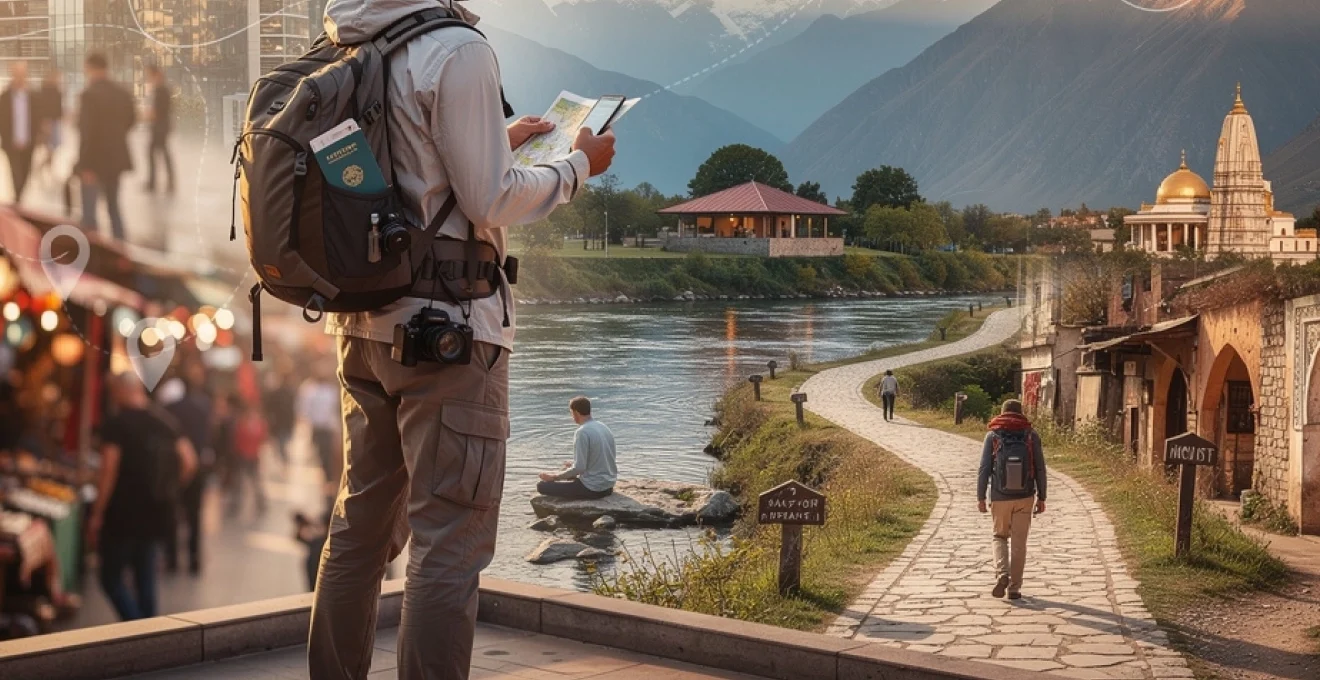
The contemporary travel landscape reveals a profound shift towards independent exploration, with solo travel experiencing unprecedented growth across all demographics. Recent data indicates that solo travellers now constitute 11% of the overall travel market, whilst 84% of solo adventurers identify as women, challenging traditional perceptions of who embarks on independent journeys. This transformation reflects broader societal changes that have liberated individuals from conventional travel patterns, enabling them to pursue deeply personal experiences that foster self-discovery, resilience, and cultural understanding. The psychological, cultural, and practical benefits of solo travel extend far beyond mere tourism, creating lasting impacts on personal development and worldview expansion.
Psychological resilience development through independent travel methodology
Independent travel serves as a powerful catalyst for psychological resilience, fundamentally altering how individuals perceive their capabilities and respond to uncertainty. The absence of familiar support systems forces travellers to develop internal resources, creating a foundation for long-term emotional stability and confidence. This process begins the moment you step outside your comfort zone, whether navigating foreign transportation systems or communicating in unfamiliar languages.
Research demonstrates that solo travel significantly reduces anxiety levels over time, as individuals learn to trust their instincts and problem-solving abilities. When faced with unexpected challenges—from missed connections to language barriers—solo travellers develop adaptive coping mechanisms that translate directly to everyday life situations. The repeated experience of successfully managing uncertainty builds what psychologists term “mastery experiences,” which form the cornerstone of self-efficacy and emotional resilience.
Cognitive flexibility enhancement via cultural immersion techniques
Cultural immersion during solo travel creates unique opportunities for cognitive flexibility development, as you encounter perspectives and practices that challenge preconceived notions. Without the buffer of travelling companions, direct exposure to alternative worldviews becomes inevitable, forcing mental adaptations that enhance creative problem-solving abilities. This cognitive restructuring occurs naturally through daily interactions with locals, participation in cultural traditions, and navigation of unfamiliar social norms.
The neuroplasticity benefits of cultural immersion are particularly pronounced when travelling alone, as the brain must constantly process new information without relying on familiar interpretive frameworks provided by companions. This heightened cognitive demand strengthens neural pathways associated with adaptability, perspective-taking, and innovative thinking. Many solo travellers report enhanced creativity and improved decision-making capabilities long after returning home, suggesting lasting neurological changes from their independent adventures.
Self-efficacy building through navigation challenges in bangkok’s khao san road
Bangkok’s bustling Khao San Road exemplifies how navigation challenges in complex urban environments build practical self-efficacy. The sensory overload of vendor calls, motorbike traffic, and multilingual signage requires solo travellers to develop heightened situational awareness and rapid decision-making skills. Successfully navigating such environments without external guidance creates profound confidence in one’s ability to handle complexity and ambiguity.
The specific challenges of areas like Khao San Road—from negotiating fair prices to finding authentic local experiences amidst tourist traps—require solo travellers to develop sophisticated judgement skills. These experiences teach the subtle art of reading non-verbal cues, assessing trustworthiness, and making quick risk assessments. The confidence gained from successfully managing such scenarios extends beyond travel, influencing professional negotiations, social interactions, and general life management skills.
Mindfulness practice integration during solitary meditation retreats in rishikesh
Rishikesh’s spiritual atmosphere provides an ideal setting for solo travellers to develop mindfulness practices that enhance psychological resilience. The absence of social obligations during solo retreat experiences allows for deeper introspection and more authentic engagement with meditation techniques. Without the distraction of companion conversations or group dynamics, you can fully immerse yourself in present-moment awareness practices that have lasting mental health benefits.
The solitary nature of meditation retreats in spiritual destinations amplifies their psychological benefits, as practitioners confront internal resistance and emotional patterns without external buffers. This intensive self-examination process, supported by ancient mindfulness traditions, creates lasting changes in stress response patterns and emotional regulation capabilities. Many solo retreat participants report significant improvements in anxiety management, focus, and overall life satisfaction months after their experiences.
Emotional regulation mastery through solo hiking the camino de santiago
The Camino de Santiago offers a unique laboratory for emotional regulation development,
as pilgrims repeatedly encounter physical fatigue, shifting weather, and logistical uncertainties. Walking alone for hours each day naturally brings difficult emotions to the surface—frustration, boredom, fear, and sometimes grief. Without the immediate distraction of conversation, you learn to observe these emotional waves, rather than react impulsively to them, cultivating a form of emotional regulation that is highly transferable to everyday stressors.
Over time, many solo hikers on the Camino discover that their emotional landscape becomes more predictable and manageable. You begin to recognise early signs of overwhelm, adjust your pace, take intentional breaks, or use breathing techniques to reset your nervous system. This process mirrors evidence-based approaches in clinical psychology, where repeated exposure to manageable stress combined with reflective practice leads to greater emotional stability. By the time you reach Santiago, the real achievement is often less about distance covered and more about the emotional mastery you have quietly built step by step.
Cultural intelligence acquisition strategies for independent travellers
Solo travel offers a unique environment for cultivating cultural intelligence—the ability to interpret unfamiliar behaviours, adapt to new social norms, and communicate effectively across cultures. Without the protective bubble of a familiar group, you are more exposed to subtle cultural cues that might otherwise go unnoticed. This heightened sensitivity encourages you to move beyond stereotypes and towards a nuanced understanding of how people live, work, and relate in different parts of the world.
Cultural intelligence is not a fixed trait; it is a skill set that can be deliberately developed through intentional strategies while travelling alone. By combining structured approaches—such as language learning and etiquette research—with spontaneous interactions in everyday settings, solo travellers can build a robust “cultural toolkit.” This toolkit supports more respectful interactions abroad and also enhances your ability to navigate diversity back home, whether in multicultural workplaces or global collaborations.
Language learning acceleration methods in immersive environments
Immersive environments provide one of the most effective accelerators for language learning, especially for solo travellers who cannot default to a companion’s fluency. When you are the only person responsible for ordering food, buying tickets, or asking for directions, practice stops being optional and becomes a daily necessity. This repeated, real-world exposure to a foreign language creates what linguists call “high-stakes learning contexts,” which significantly enhance memory retention and pronunciation accuracy.
To maximise this acceleration, you can combine simple structures with organic practice. For example, setting a daily goal—such as learning five new phrases from locals or conducting one entire interaction without switching back to English—creates manageable challenges that compound over time. Many travellers also find that journalling new words each evening, using spaced-repetition apps, and deliberately shopping at the same café or market stall help reinforce progress. Think of it like building muscle in a gym: consistent, small repetitions in authentic situations are more powerful than occasional, intense study sessions.
Non-verbal communication decoding in tokyo’s business districts
Tokyo’s business districts offer a rich context for understanding the importance of non-verbal communication in solo travel. In environments where language barriers are significant, subtle cues such as eye contact, personal space, body posture, and tone of voice become critical sources of information. As you navigate crowded trains, busy intersections, and formal office buildings, you quickly learn to “read the room” without relying on words.
Solo travellers who pay close attention to these signals often become adept at decoding social expectations—when to bow, when to step aside, how loudly to speak, and how to signal appreciation or apology. This ability to interpret non-verbal communication functions like learning a second, silent language and greatly reduces the risk of unintentional offence. Over time, you start to notice similar patterns in other countries as well, which strengthens your overall cultural intelligence and helps you feel more grounded in unfamiliar social settings.
Local etiquette adaptation protocols for sacred sites in varanasi
Varanasi’s sacred ghats along the Ganges illustrate how solo travellers must adapt quickly to local etiquette, especially in deeply spiritual environments. Here, photography rules, clothing expectations, and behavioural norms can be very different from those in secular tourist sites. Taking time to observe before acting—watching how locals move, where they sit, and what they avoid—becomes a practical protocol for respectful participation.
Simple steps, such as dressing modestly, asking permission before taking photos, and keeping a quiet, observant presence during ceremonies, signal cultural humility. Many solo travellers find that asking a local guide or guesthouse host about do’s and don’ts provides clarity and helps prevent misunderstandings. By consciously following these etiquette protocols, you not only protect yourself from potential conflict but also gain deeper access to authentic cultural experiences that are often closed to less considerate visitors.
Cross-cultural negotiation skills development in marrakech’s souks
Marrakech’s souks offer an intensive workshop in cross-cultural negotiation for independent travellers. Here, bargaining is not just a transaction; it is a social ritual that reflects local values around relationship-building, humour, and mutual respect. As a solo traveller, you must quickly learn how to balance assertiveness with politeness, how to read a vendor’s signals, and when to walk away from a deal that does not feel right.
Through repeated interactions, you begin to refine strategies such as anchoring (starting with a lower offer), using silence effectively, or framing your counteroffers with a smile rather than confrontation. These micro-negotiations build confidence and hone your ability to advocate for yourself, skills that easily translate into salary discussions, contract negotiations, and everyday boundary-setting. In this sense, every successful purchase at the market becomes a small but meaningful exercise in personal empowerment.
Decision-making autonomy enhancement through solo adventure planning
Planning a solo adventure—from choosing destinations to booking accommodation and activities—provides a powerful training ground for autonomous decision-making. You are solely responsible for weighing safety, budget, timing, and personal preferences, which means you cannot outsource difficult choices to friends, partners, or group consensus. This can feel intimidating at first, but it quickly becomes liberating as you realise you are capable of designing an experience that truly reflects your values.
Over time, solo travellers often notice a shift from indecision to clarity. You learn to distinguish between fears that keep you safe and fears that unnecessarily limit you, and you practice making “good enough” decisions rather than endlessly chasing the perfect option. This decision-making autonomy extends far beyond travel; it can influence how you choose career paths, relationships, and lifestyle changes. When you have already booked a one-way ticket on your own, negotiating a new role at work or moving to a new city begins to feel more manageable.
Social connection building methodologies for independent wanderers
Contrary to the myth that solo travel is inherently isolating, many independent wanderers report richer and more varied social connections on the road than in their daily lives. The key difference is intentionality: when you travel alone, you must consciously decide when and how to connect with others. This prompts you to experiment with different methodologies for meeting people and building relationships that match your social comfort level.
Common strategies include staying in social accommodations such as hostels or co-living spaces, joining themed walking tours, or participating in local classes—from cooking workshops to yoga sessions. Digital tools also play a role, as community platforms and interest-based groups make it easier to find like-minded travellers and locals. By alternating between periods of solitude and intentional social engagement, you gradually learn what type of connection nourishes you most, an insight that can profoundly reshape how you relate to people once you return home.
Personal safety risk management frameworks for solo travellers
Effective solo travel is not about denying risk but about managing it through thoughtful frameworks and practical systems. Rather than relying on companions for safety, independent travellers learn to conduct their own risk assessments, adopt preventative measures, and prepare contingency plans. This proactive approach not only reduces vulnerability but also contributes to a greater sense of control and calm, even in unfamiliar environments.
Developing a safety framework starts with research—understanding local norms, legal considerations, and common scams—then moves into the creation of simple routines, such as checking in regularly with a trusted contact or sharing itineraries before remote excursions. Over time, these practices become second nature, much like fastening a seatbelt when you get into a car. The goal is not to eliminate spontaneity but to create a stable foundation from which you can explore confidently.
Threat assessment protocols in urban environments like istanbul’s grand bazaar
Urban spaces such as Istanbul’s Grand Bazaar highlight the importance of dynamic threat assessment for solo travellers. The sheer volume of people, noise, and visual stimuli can feel overwhelming, making it essential to develop quick methods for scanning your surroundings. This might include noting the location of exits, identifying well-lit main routes, and observing where locals tend to congregate, as these areas are often safer than isolated side streets.
Practical protocols can be surprisingly simple yet effective: carrying your bag in front of you, avoiding displaying high-value items, and trusting your instincts if a situation feels “off.” Pausing in a café or shop to reassess rather than pushing through discomfort can prevent many minor incidents from escalating. Over time, this repeated practice of assessing and adjusting builds a quiet confidence—you know you can enjoy vibrant spaces like the Grand Bazaar while still prioritising your safety.
Emergency response planning for remote destinations in patagonia
Remote regions such as Patagonia require a different layer of preparation, as access to medical facilities, mobile networks, and public transport can be limited. Here, emergency response planning becomes a core component of responsible solo travel. Before setting out on hikes or long bus journeys, it is wise to share your route with someone you trust, check local weather patterns, and understand where the nearest medical or rescue services are located.
You might also consider carrying a basic first-aid kit, downloading offline maps, or using a satellite communication device in particularly remote areas. These steps may sound technical, but they function like a safety net, allowing you to fully experience the awe of glaciers and mountain ranges without being paralysed by “what ifs.” Approaching remote travel with this level of intentionality reinforces the message that your wellbeing is worth planning for, a mindset that supports healthier risk-taking in all areas of life.
Digital security measures for solo female travellers in southeast asia
For solo female travellers in regions like Southeast Asia, digital security is increasingly as important as physical safety. Public Wi‑Fi networks, ride-hailing apps, and social media check-ins create digital footprints that can either enhance or undermine your security. Adopting simple measures—such as using a virtual private network (VPN), limiting geotagged posts in real time, and storing copies of important documents in encrypted cloud folders—significantly reduces vulnerability to fraud or identity theft.
It is also helpful to review privacy settings on messaging and location-sharing apps, ensuring that only trusted contacts can see your movements. When booking accommodation or transport, prioritising platforms with verified reviews and secure payment systems adds another layer of protection. Far from being paranoid, these digital habits allow you to enjoy the benefits of technology—navigation, communication, community—while maintaining control over who has access to your personal information.
Health insurance navigation systems for long-term nomadic lifestyles
For long-term solo travellers and digital nomads, navigating health insurance can feel as complex as planning an entire itinerary. Yet having adequate coverage is a crucial component of any personal safety framework. International health or travel insurance policies that cover emergency medical care, evacuation, and in some cases routine check-ups, provide a buffer against financial and logistical crises that could otherwise cut a trip short.
Developing a simple system can make this process more manageable. This might include keeping a digital folder with your policy documents, emergency numbers, and a brief summary of what is and is not covered. Some travellers also maintain a personal health file with key medical information and prescriptions to streamline care if they need to see a doctor abroad. By addressing these logistical details proactively, you free up mental space to focus on the actual experience of travel, rather than worrying about worst-case scenarios.
Financial independence development through budget travel techniques
Budget-conscious solo travel can act as a practical training ground for financial independence. When you are solely responsible for funding your journey, you quickly become more aware of how daily choices—where you stay, what you eat, how you move between places—affect your overall resources. This awareness often leads to more deliberate spending, clearer priorities, and improved money management skills that carry over into your non-travel life.
Techniques such as tracking expenses in a simple app, setting daily or weekly spending limits, and differentiating between non-negotiable costs and optional treats help create structure without removing joy. Many solo travellers discover creative ways to stretch their budget, from slow travel (spending longer in fewer places) to combining paid work with exploration. Over time, these strategies not only make independent travel more sustainable but also support a broader sense of autonomy—you learn that you can design a life that balances financial responsibility with meaningful experiences.