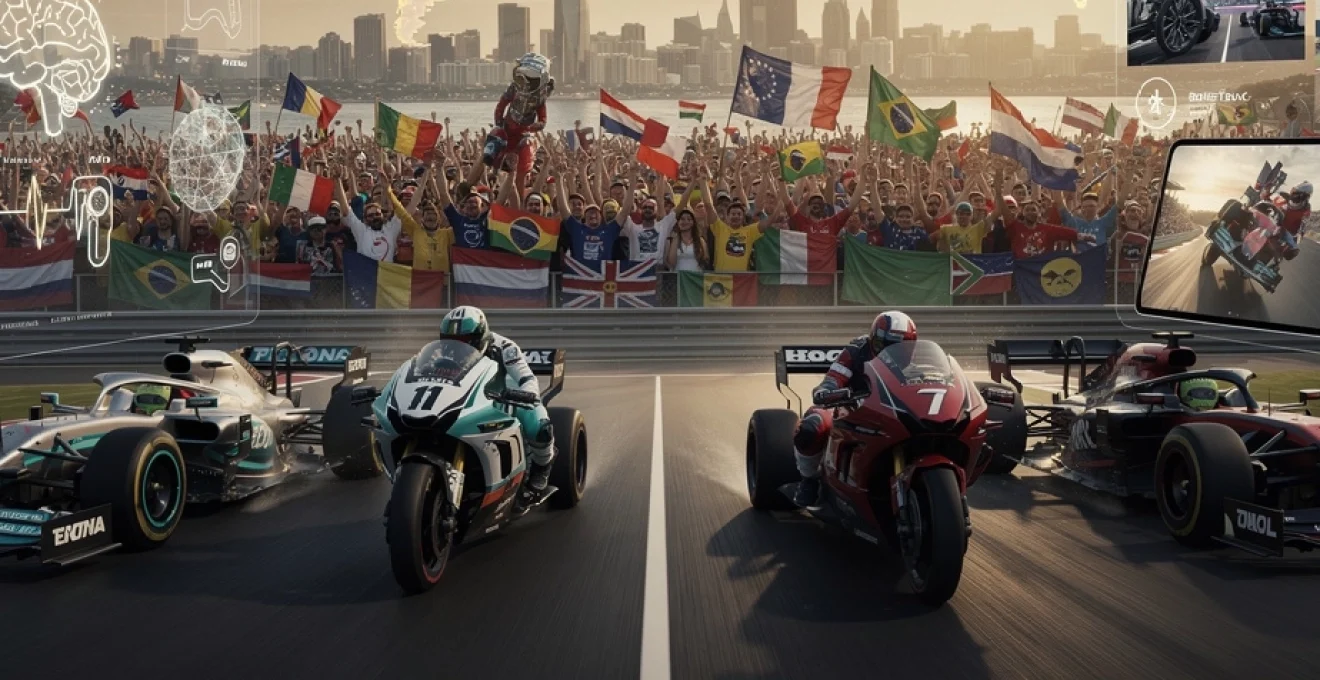
The roar of engines at Silverstone Circuit, the precision of overtaking manoeuvres at Monaco, and the tribal passion surrounding Formula 1 teams have created a global phenomenon that transcends traditional sporting boundaries. Motorsport championships have evolved into sophisticated entertainment ecosystems that captivate audiences through psychological engagement, cutting-edge broadcasting technologies, and culturally adaptive strategies. What drives millions of fans to wake at dawn to watch races halfway across the world? The answer lies in a complex interplay of neuroscientific responses, digital innovation, and carefully crafted community-building initiatives that transform casual viewers into lifelong devotees.
Modern motorsport’s ability to attract and retain loyal audiences represents one of the most successful examples of global sports marketing in action. From the parasocial relationships fans develop with drivers like Lewis Hamilton and Max Verstappen to the sophisticated data analytics that personalise content delivery, championships have mastered the art of creating emotional investment that extends far beyond the track. This transformation has elevated motorsport from a niche interest to a mainstream cultural force that influences fashion, technology, and social media trends worldwide.
Psychological engagement mechanisms in formula 1 and MotoGP fan retention
The psychological foundation of motorsport fandom operates on multiple interconnected levels that create profound emotional connections between audiences and the sport. Research indicates that motorsport fans demonstrate significantly higher levels of psychological investment compared to followers of traditional field sports, with 73% of Formula 1 enthusiasts reporting that race outcomes directly impact their mood for several days. This emotional intensity stems from the unique combination of human drama, technological marvel, and the ever-present element of danger that characterises high-speed racing.
The concept of vicarious achievement plays a crucial role in fan psychology, where supporters experience genuine emotional highs and lows based on their chosen driver or team’s performance. This phenomenon is amplified in motorsport due to the individual nature of driver performance within a team context, creating dual layers of identification. Fans simultaneously connect with the human element of their favourite driver whilst also aligning themselves with the broader team identity and its associated values.
Parasocial relationships with lewis hamilton and max verstappen driver personalities
The development of parasocial relationships—one-sided emotional connections that fans form with media personalities—reaches extraordinary depths in motorsport. Lewis Hamilton’s social media following of over 37 million across platforms demonstrates how drivers have transcended their sporting roles to become global cultural influencers. Fans invest emotionally in Hamilton’s journey not merely as a racing driver but as an activist, fashion icon, and lifestyle brand, creating multiple touchpoints for ongoing engagement throughout the year.
Max Verstappen’s meteoric rise has similarly captured global imagination, with his authentic, unfiltered personality resonating particularly strongly with younger demographics. Studies show that 68% of Generation Z motorsport fans cite driver personality as the primary factor in their championship allegiance, rather than team affiliation or national identity. This shift represents a fundamental change in fan engagement patterns, where personal connection supersedes traditional tribal loyalties.
Tribal identity formation through Mercedes-AMG and red bull racing team allegiances
Team allegiances in motorsport function as modern tribal identities, complete with rituals, symbols, and shared belief systems that create powerful in-group dynamics. Mercedes-AMG Petronas Formula One Team’s dominance during the hybrid era (2014-2020) created a global community of supporters who identified with the team’s engineering excellence and methodical approach to racing. These fans didn’t merely support a team; they embraced an identity centred around precision, innovation, and relentless pursuit of perfection.
Red Bull Racing’s brand identity operates differently, attracting fans through its association with extreme sports culture, youthful energy, and rebellious spirit. The team’s marketing extends beyond traditional motorsport boundaries to encompass music festivals, extreme sports events, and lifestyle content that maintains year-round engagement. This multi-dimensional approach ensures that team loyalty transcends racing seasons, creating sustained commercial value and emotional investment.
Neuroscientific response patterns to High-Speed monaco grand prix racing scenarios
Neuroscientific research has revealed fascinating insights into how the human brain responds to high-speed racing scenarios, particularly during prestigious events like the Monaco Grand Prix. Brain imaging studies show that viewers experience elevated activity
in brain regions associated with reward anticipation, motor simulation, and threat detection. In practical terms, viewers are not just watching Monaco’s narrow streets and unforgiving barriers; their brains are mentally driving the car, predicting outcomes and preparing for potential crashes in microseconds. This blend of reward (overtakes, perfect laps) and perceived risk (near-misses, wall contacts) triggers heightened arousal that keeps attention locked to the screen far more effectively than most traditional sports broadcasts.
What makes street circuits like Monaco particularly powerful motorsport fan retention tools is the continuous low-level tension. Neuroscientists sometimes describe this as a “sustained vigilance state”, where viewers hold a high level of focus for extended periods, primed for sudden events. Compared to field sports, where action ebbs and flows, Formula 1 at Monaco compresses drama into every corner. Over time, the brain starts to associate this unique pattern of arousal with specific championships and venues, reinforcing habitual viewing. When fans recall the Monaco Grand Prix, they are not only remembering key overtakes; they are reactivating that distinctive neural “signature” of excitement, risk, and prestige.
Dopamine release cycles during silverstone circuit overtaking sequences
If Monaco is about sustained tension, circuits like Silverstone are about rhythmic dopamine spikes. High-speed sweeps such as Maggotts–Becketts and multiple overtaking zones along the Wellington and Hangar straights create recurring episodes of anticipation and reward. Each DRS activation, late-braking attempt, or side‑by‑side sequence triggers a classic “prediction–resolution” loop in the brain: fans anticipate a move, mentally simulate the outcome, and then experience a dopamine release when the move either succeeds or fails dramatically.
From a fan retention perspective, these dopamine cycles function like a carefully structured narrative, with mini-cliffhangers every few laps. Instead of one single climax, Silverstone delivers numerous micro‑payoffs that condition viewers to expect frequent emotional rewards. Over multiple seasons, this pattern builds a powerful behavioural habit: fans learn that tuning into British Grand Prix coverage or MotoGP at Silverstone almost guarantees a series of exhilarating battles. The result is not only higher live-viewing figures, but also greater consumption of highlights, replays, and analysis content that revisit those same dopamine-charged moments.
Digital broadcasting technologies enhancing global motorsport accessibility
While psychological mechanisms create the desire to watch, it is digital broadcasting technologies that make global motorsport accessible at scale. Over the past decade, Formula 1, MotoGP, NASCAR, IndyCar, and endurance series like WEC have transformed their media products from simple race broadcasts into multi-layered, on-demand ecosystems. These platforms allow fans to customise how they experience each race, from camera angles and data overlays to language options and second-screen interactions, significantly increasing both viewing time and loyalty.
Unlike traditional sports that often rely on a single domestic broadcaster, leading motorsport championships operate global distribution models that combine pay-TV, free-to-air, and direct-to-consumer streaming. This hybrid approach ensures that a young fan discovering Formula 1 via a short clip on social media can seamlessly graduate to full-race live streams, advanced telemetry dashboards, and exclusive documentaries. The more granular and interactive the viewing options become, the easier it is to serve different fan segments—from hardcore engineers at heart to casual Netflix viewers—without diluting the core product.
Sky sports F1 multi-camera feed systems and viewer engagement metrics
Sky Sports F1 has become a benchmark for how multi-camera systems can deepen engagement in premium motorsport broadcasting. A single race weekend can involve more than 100 cameras, including trackside, onboard, pit lane, and aerial feeds, all stitched together into a dynamic world feed plus additional selectable perspectives. For subscribers using digital platforms, this means the ability to choose dedicated onboard channels, data screens, or pit lane views that complement the main race broadcast and extend average watch time.
From a data perspective, Sky and Formula One Management (FOM) track detailed engagement metrics: session duration, camera selection patterns, time spent in picture‑in‑picture modes, and even interaction with interactive graphics. These insights feed back into editorial decisions, ensuring that high-value moments—such as battles in the midfield or strategy-defining pit stops—are surfaced prominently. The result is a virtuous cycle: the more precisely broadcasters understand what fans watch, the more they can tailor their output, which in turn makes the product harder to resist week after week.
Onboard telemetry data streaming through FOM world feed integration
One of the most distinctive features of modern motorsport coverage is live telemetry integration. Speed, gear selection, throttle and brake application, energy deployment and tyre life estimates are now routinely embedded into the FOM world feed, transforming passive viewing into an interactive, semi-analytical experience. For many fans, especially technically inclined viewers, this data-driven storytelling is the hook that keeps them watching entire race distances rather than just highlights.
By streaming telemetry in real time, championships effectively invite fans into the strategy room. You can watch how Max Verstappen manages battery deployment on a qualifying lap, or how a MotoGP rider modulates throttle out of a wet corner. This transparency not only educates viewers but also builds trust in the sporting narrative: when you can see the numbers behind an undercut or a fuel‑saving phase, race outcomes feel earned rather than arbitrary. Over time, fans who become fluent in interpreting telemetry are more likely to develop a deep, long-term relationship with the championship, because they have invested cognitive effort into understanding its nuances.
Virtual reality applications in NASCAR cup series and IndyCar championship coverage
Virtual reality (VR) is still a developing layer in motorsport broadcasting, but early experiments in the NASCAR Cup Series and IndyCar Championship point to powerful future applications. Selected events now offer 360‑degree cameras in key locations—such as start/finish lines, pit boxes, or even on-board—allowing fans with compatible headsets to “sit” trackside or inside the car. The psychological impact of this immersion is significant: when you can glance left to see a rival drawing alongside or look down pit lane during a yellow flag, your sense of presence dramatically increases.
From a loyalty standpoint, VR can function like a digital grandstand ticket. Not every fan can travel to Daytona or Indianapolis, but a well-produced VR experience can approximate the sensory overload of being there: the crowd, the banking, the pack of cars thundering past. As headset adoption rises and 5G networks reduce latency, we can expect more championships to offer premium VR race passes, combining live feeds, spatial audio, and interactive overlays. For rights holders, this is not just a novelty; it is an additional tier in the fandom ladder that keeps highly engaged viewers inside the ecosystem between seasons.
Social media algorithm optimisation for WEC le mans 24 hours content distribution
Long-form endurance events such as the WEC Le Mans 24 Hours face a unique challenge: how do you keep global audiences engaged over a full day of racing? The answer increasingly lies in algorithm‑friendly social media strategies that repurpose the marathon into digestible, highly shareable micro‑moments. The WEC digital team segments the race into highlight clusters—night‑time stints, sunrise onboard laps, late‑race drama—and tailors each clip to platform-specific formats on YouTube, Instagram, X, and TikTok.
By optimising thumbnails, subtitles, and posting times based on previous performance data, Le Mans content is pushed more favourably by recommendation algorithms, reaching casual audiences who might never sit down for a full 24‑hour broadcast. Once hooked by a spectacular hypercar overtake or a behind-the-scenes pit stop clip, users are funnelled towards longer recap videos, live timing pages, or subscription-based streaming platforms. In effect, social media acts as a dynamic “top of the funnel” that feeds new viewers into the deeper layers of the WEC ecosystem, gradually transforming one-time scrollers into annual Le Mans loyalists.
Cultural adaptation strategies across regional motorsport markets
Global reach alone does not guarantee loyal audiences; championships must also adapt to regional cultures without diluting their core identity. Motorsport series that thrive on multiple continents tend to follow a common playbook: localise the narrative, elevate regional heroes, and respect existing motorsport traditions. You can think of this as translating the same “language of speed” into different cultural dialects, allowing fans in Japan, Brazil, Germany, or Australia to feel that the championship is partly theirs.
This cultural adaptation goes beyond simple language translation or local commentators. It includes tailored sponsorship portfolios, community outreach, and race weekend formats that align with local holiday calendars or viewing habits. When executed well, these strategies create a powerful blend of global prestige and local familiarity. Fans are not just watching a foreign series that visits their country once a year; they are participating in a story that recognises and reflects their regional values and motorsport heritage.
Japanese super GT championship localisation for asian audience demographics
Super GT provides a compelling case study in how to build a championship that feels deeply rooted in local culture while still attracting international attention. The series emphasises Japanese manufacturers—Toyota, Honda, Nissan—whose road cars already have strong emotional resonance across Asia. Races are held at iconic domestic circuits like Suzuka and Fuji, and events frequently integrate elements of Japanese pop culture, from anime collaborations to music performances, creating a festival-like atmosphere that appeals to families and younger demographics.
In media terms, Super GT leans heavily on local language commentary, driver interviews, and social content tailored to Japanese and wider Asian audiences. Storylines highlight regional rivalries and manufacturer pride rather than purely international comparisons. For overseas viewers discovering Super GT through streaming platforms, this authentic localisation becomes part of the attraction. Instead of a generic global product, they encounter a distinct motorsport culture—one that feels vibrant, unique, and worth following beyond a single viral clip.
Brazilian stock car pro series community building through cultural resonance
In Brazil, the Stock Car Pro Series has successfully tapped into the country’s rich motorsport legacy by positioning itself as both a national pride project and a community platform. Events often double as social gatherings, with music, food, and fan-friendly paddock access that reflect Brazilian hospitality and love of celebration. Local heroes play a central role: commentary, social content, and broadcast packages are built around familiar driver personalities and family racing dynasties, reinforcing a sense of continuity for fans who grew up watching earlier generations.
Community programmes further deepen this bond. Grassroots initiatives, driver appearances at schools, and partnerships with local charities turn the championship into a visible force within everyday Brazilian life, not just a weekend spectacle. For sponsors, this high level of cultural integration offers an attractive way to reach diverse demographics in a credible, emotionally resonant setting. For fans, it means that following Stock Car is not just about lap times; it is about belonging to a community that mirrors their own values and social rhythms.
German DTM championship integration with european broadcasting networks
The German DTM Championship has long understood that European success depends on more than domestic dominance; it requires smart integration with continental broadcasting networks. Historically anchored by German manufacturers like Audi, BMW, and Mercedes, DTM has leveraged pan-European broadcasters and streaming partners to position itself as a premier touring car product across multiple markets. Race timings are chosen to fit weekend viewing windows in Central Europe, and commentary is offered in several languages to minimise barriers for neighbouring countries.
In parallel, DTM tailors its media narrative for different regions: in Germany, the focus may be on national pride and automotive engineering heritage, while in Italy or the UK, promotional material might highlight specific guest drivers, iconic circuits, or familiar brand names. This flexible packaging helps the series maintain a consistent sporting product while allowing each market’s broadcasters to present the championship in a way that resonates with their own audiences. Over time, such integration strengthens brand recognition and encourages fans to follow the series beyond the one or two local rounds they can attend in person.
Australian supercars championship regional identity preservation techniques
The Australian Supercars Championship offers a textbook example of preserving regional identity while embracing global exposure. The series celebrates the country’s unique automotive culture—V8 engines, close-contact racing, and legendary circuits like Bathurst’s Mount Panorama—without attempting to imitate Formula 1 or NASCAR. Commentary is steeped in local slang and humour, and broadcasts frequently showcase Australian landscapes and lifestyle, effectively turning each race into a subtle tourism campaign.
Supercars has also been careful to maintain technical regulations and race formats that produce the door‑to‑door battles Australian fans expect. Even as the championship expands its digital output and experiments with international rounds, the core experience remains unmistakably “Aussie”. For global viewers discovering Supercars on streaming platforms, this authenticity is a major selling point: you are not just watching another touring car series, you are visiting a distinct motorsport world with its own rituals, rivalries, and legends. This strong sense of identity is a powerful driver of long-term loyalty.
Economic fan investment models driving long-term championship loyalty
Beyond psychology and culture, economic structures play a pivotal role in how motorsport championships cultivate loyal audiences. Every ticket purchased, streaming subscription activated, or piece of team merchandise worn represents a form of economic co‑ownership in the sport’s ecosystem. The more financially invested fans become, the more likely they are to follow a championship through competitive slumps, rule changes, or broadcasting reshuffles, much like shareholders who stay engaged with a company through market cycles.
Modern championships have diversified these investment models to suit different budgets and commitment levels. At the entry level, microtransactions such as race‑day passes for official apps, single‑event streaming, or limited‑edition digital collectibles (including NFTs in some experiments) allow casual viewers to take a small but meaningful step beyond free highlights. At the upper end, premium hospitality, paddock club memberships, and season-long passes create high‑value tiers for super‑fans and corporate clients. Each rung on this ladder deepens both financial and emotional commitment, turning spectators into stakeholders who return year after year.
Sponsorship ecosystem integration creating sustained audience attachment
Motorsport sponsorship has evolved far beyond simple logo placement on cars and overalls. Today’s ecosystem is an intricate web of brand experiences, content collaborations, and technology partnerships that shape how fans interact with championships on a daily basis. When done well, these sponsorships enhance rather than interrupt the viewing experience, offering added value that strengthens audience attachment instead of feeling like intrusive advertising.
Consider how title partners like energy drink brands, financial institutions, or technology companies integrate across an entire season. They appear on trackside boards and car liveries, but also in fan competitions, data‑driven graphics, exclusive documentaries, and race‑weekend activations. In Formula 1, for instance, cloud providers and analytics partners power on-screen statistics that fans rely on to understand strategy. In MotoGP, long-standing fuel and lubricant sponsors become part of the sport’s mythology, their colours instantly evoking iconic eras and rivalries. Because these brands help unlock richer experiences—rather than simply shouting for attention—fans develop positive associations that outlast individual campaigns.
Data analytics applications for motorsport audience segmentation and retention
Underpinning many of these strategies is a sophisticated layer of data analytics. Championships and broadcasters now collect vast amounts of information about how, when, and where fans engage with content: streaming behaviour, social media interactions, ticket purchases, merchandise preferences, even response rates to push notifications. When analysed responsibly and ethically, this data allows motorsport organisations to segment their audiences and deliver tailored experiences that feel personal rather than generic.
For example, a fan who primarily watches qualifying sessions and engages with technical explainer videos can be profiled as a “tech‑driven enthusiast” and targeted with in‑depth engineering content, long‑form podcasts, or detailed race debriefs. Someone who only interacts with short highlight reels and lifestyle posts may instead receive curated social clips, behind‑the‑scenes content, and simplified race summaries. By aligning content formats with individual preferences, championships reduce the risk of disengagement. In a world where every platform is fighting for attention, this data‑driven precision is crucial to ensuring that fans keep choosing motorsport on race day—and every day in between.