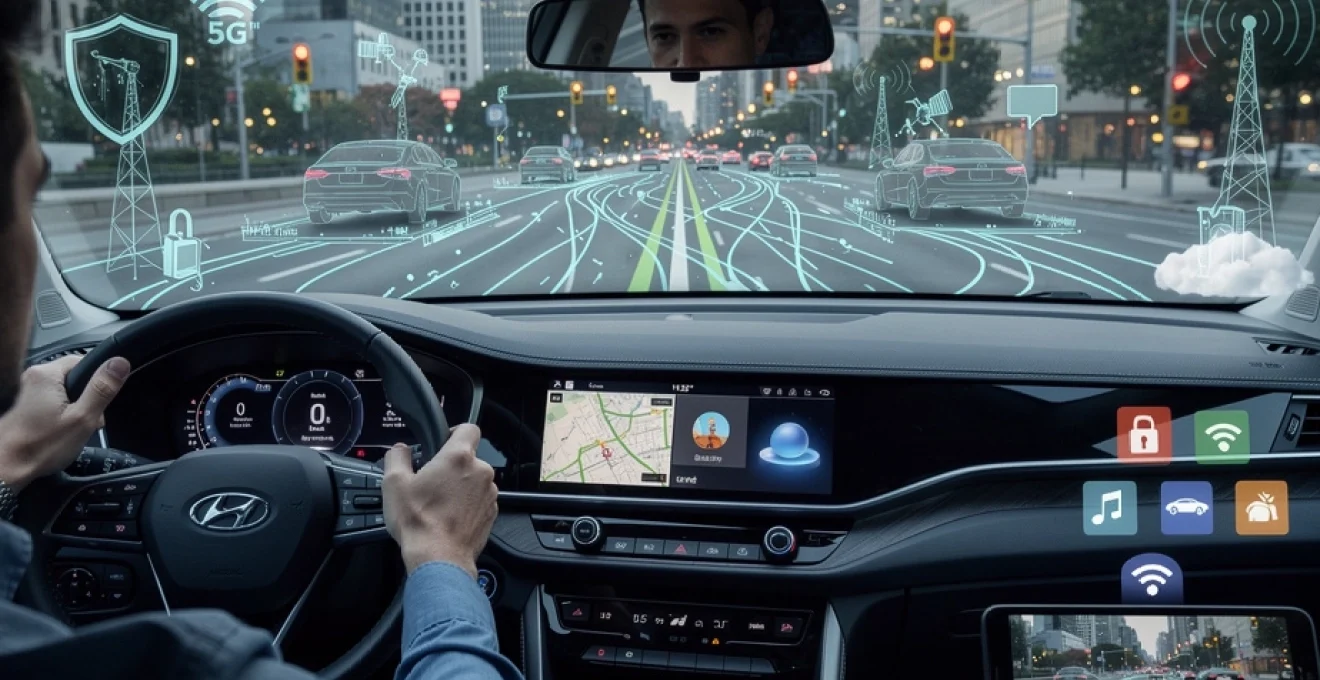
# Why in-car connectivity is becoming a standard feature in modern vehicles
The automotive industry is experiencing a transformative shift as connectivity evolves from a premium luxury to an essential component of modern vehicle design. Today’s cars are no longer isolated mechanical devices; they’re sophisticated data hubs that communicate continuously with external networks, infrastructure, and other vehicles. This evolution is driven by consumer expectations for seamless digital experiences, regulatory requirements for enhanced safety, and manufacturers’ pursuit of new revenue streams through connected services. As 5G networks expand globally and vehicle-to-everything communication protocols mature, connectivity has become deeply embedded in the fundamental architecture of contemporary automobiles.
Market research indicates that by 2030, approximately 95% of new vehicles sold will feature some form of internet connectivity, up from roughly 50% in 2023. This rapid adoption reflects both technological advancement and changing consumer preferences, particularly among younger demographics who expect their vehicles to offer the same level of connectivity as their smartphones. The integration of embedded SIM technology, cloud-based platforms, and advanced cybersecurity frameworks has made always-on connectivity not just desirable but practically inevitable for automakers competing in today’s market.
5G telematics and Vehicle-to-Everything (V2X) communication protocols
The deployment of 5G networks represents a watershed moment for automotive connectivity, offering the ultra-low latency and high bandwidth essential for real-time vehicle communication. Unlike previous generations of cellular technology, 5G can support latency as low as one millisecond, enabling split-second data exchange between vehicles and their surrounding environment. This capability is fundamentally transforming how vehicles perceive and respond to road conditions, traffic patterns, and potential hazards. The technology creates an invisible network where cars constantly share information about speed, direction, braking status, and road conditions with nearby vehicles and infrastructure.
Vehicle-to-everything communication encompasses multiple interconnected protocols, including vehicle-to-vehicle, vehicle-to-infrastructure, vehicle-to-pedestrian, and vehicle-to-cloud systems. Each protocol serves a specific function within the broader connectivity ecosystem, creating redundant safety mechanisms and enhanced situational awareness. When a connected vehicle detects sudden braking ahead, for instance, it can transmit this information to following vehicles within milliseconds, allowing them to respond before the driver even perceives the hazard. This networked approach to road safety has the potential to reduce collision rates by up to 80% according to some industry estimates.
Cellular V2X (C-V2X) implementation in production models
Cellular vehicle-to-everything technology leverages existing cellular infrastructure while adding direct communication capabilities between nearby vehicles. Major automotive manufacturers including Volkswagen, Ford, and General Motors have committed to C-V2X deployment across their fleets, recognising its compatibility with evolving 5G networks. The technology operates on the dedicated 5.9 GHz spectrum band, allowing direct communication without cellular network mediation for time-critical safety applications. This dual-mode operation means vehicles can communicate directly with each other while simultaneously accessing cloud-based services through traditional cellular networks.
Production implementation of C-V2X involves integrating specialised chipsets and antennas into vehicle electronic control units, creating what industry experts call the “intelligent antenna module.” This module serves as the primary interface between the vehicle’s internal systems and the external communication network. Current generation systems can support data exchange with up to 1,000 nearby devices simultaneously, processing information about traffic signal status, pedestrian locations, and road surface conditions in real time. The technology’s backward compatibility with 4G LTE networks ensures functionality even in areas where 5G coverage remains limited.
Dedicated Short-Range communications (DSRC) integration standards
While cellular V2X gains momentum globally, dedicated short-range communications technology continues to play a significant role, particularly in markets where substantial infrastructure investment has already occurred. DSRC operates as a Wi-Fi-based protocol specifically designed for automotive applications, offering reliable communication within approximately 300 metres of the transmitting vehicle. The technology has been deployed extensively in Japan and certain regions of the United States, where roadside units transmit real-time traffic, weather, and hazard information to equipped vehicles.
The ongoing debate between DSRC and C-V2X implementation reflects broader questions about standardisation in the connected vehicle ecosystem. Some manufacturers advocate for a hybrid approach that incorporates both technologies, ensuring maximum compatibility across different markets
The hybrid model allows vehicles to fall back on DSRC in areas with established roadside units while taking advantage of broader C-V2X coverage in urban and highway environments. For drivers, this means that connected safety features such as red-light warnings, work zone alerts, and curve speed assistance continue to function regardless of which back-end protocol is active. From an engineering perspective, DSRC integration standards have pushed the industry towards interoperable message formats and security frameworks, which now underpin many V2X communication stacks. As 5G densification continues, we are likely to see DSRC gradually coexist with, and in some cases yield to, cellular-based solutions, but the lessons learned from early DSRC deployments will continue to shape connected vehicle design.
Low-latency data exchange for advanced Driver-Assistance systems (ADAS)
Low-latency data exchange is the cornerstone of next-generation ADAS performance. Features such as adaptive cruise control, lane-keeping assistance, and automated emergency braking increasingly depend on sensor fusion that combines on-board cameras, radar, and LiDAR with external data from V2X networks. When a vehicle receives a hazard alert from several hundred metres away, the ADAS controller can pre-condition brakes, adjust following distances, or limit acceleration even before local sensors detect the issue. This proactive behaviour reduces reaction times and helps prevent chain-reaction collisions in dense traffic.
To achieve this, modern telematics control units are built around high-performance processors capable of handling gigabits of data per second with prioritised quality-of-service rules. Safety-critical messages are tagged and processed ahead of non-essential data such as infotainment content, ensuring that collision warnings are never delayed by a music stream or map update. Automakers are also adopting edge-computing architectures, placing computation closer to the vehicle on roadside servers or micro data centres. This approach shortens round-trip communication paths and supports use cases like cooperative adaptive cruise control, where groups of vehicles coordinate acceleration and braking in near real time.
Over-the-air (OTA) software updates and remote diagnostics capabilities
Beyond safety, in-car connectivity is reshaping how vehicles are maintained and improved over their lifecycle. Over-the-air software updates allow manufacturers to patch vulnerabilities, refine powertrain calibrations, and introduce new convenience features without requiring a dealership visit. Tesla famously pioneered large-scale OTA campaigns, but traditional OEMs such as BMW, Ford, Hyundai, and Volkswagen now routinely deploy firmware and feature updates across their connected fleets. For drivers, this means that a car can get better over time, much like a smartphone receiving a major operating system upgrade.
Remote diagnostics build on the same connectivity backbone. Telematics systems continuously monitor key parameters such as battery health, tyre pressure, and engine fault codes, transmitting anonymised data to cloud platforms for analysis. When a potential issue is detected, the system can notify the driver, suggest a nearby service centre, or even pre-order replacement parts to minimise downtime. Fleet operators benefit from this capability by scheduling preventative maintenance based on real usage patterns rather than fixed mileage intervals. In an era where uptime and total cost of ownership are critical buying factors, OTA and remote diagnostics are key reasons why in-car connectivity is becoming a standard feature in modern vehicles.
Embedded SIM (eSIM) technology and multi-network connectivity architecture
At the heart of always-on connectivity sits embedded SIM technology, which replaces traditional, removable SIM cards with soldered, programmable modules. An eSIM gives automakers and mobility providers the flexibility to switch network operators remotely, negotiate local data plans, and ensure reliable service across borders. For drivers, this eliminates the friction of choosing a mobile carrier or swapping SIM cards when travelling. The vehicle simply connects to the best available network in the background, maintaining consistent access to navigation, emergency services, and cloud-based infotainment.
Multi-network connectivity architecture builds on eSIM by allowing vehicles to use multiple radio interfaces simultaneously. A modern connectivity module may support 4G, 5G, Wi-Fi, and even satellite links, intelligently routing traffic based on latency, cost, and availability. Safety-critical services such as eCall and ADAS messaging are prioritised on the most reliable, lowest-latency channel, while non-urgent updates may be queued for transmission when the vehicle is parked on a home Wi-Fi network. This layered approach enhances resilience and ensures that connected car features remain available in a wide range of real-world conditions.
Global eSIM standards for cross-border roaming functionality
Global eSIM standards, defined by organisations such as the GSMA, are crucial for cross-border roaming in connected cars. These standards specify how vehicle eSIM profiles are provisioned, updated, and managed remotely over secure channels. When you drive from one country to another, your car can seamlessly switch to a local operator with better coverage or more favourable data rates, all without interrupting active services like live traffic routing or streaming media. For international fleets and rental companies, this level of flexibility dramatically simplifies connectivity management and billing.
As regulations evolve, particularly around emergency services access and lawful interception, global eSIM frameworks also make it easier for automakers to comply with different national requirements through software rather than hardware changes. Instead of producing region-specific variants with locked-in SIMs, manufacturers can deploy a single, global hardware configuration and adapt connectivity profiles remotely. This reduces production complexity and accelerates the rollout of new connected features across multiple markets, which in turn accelerates the adoption of in-car connectivity as a standard expectation.
Redundant network failover systems in tesla and Mercedes-Benz platforms
High levels of automation and connectivity demand robust failover mechanisms, and leading manufacturers such as Tesla and Mercedes-Benz have invested heavily in redundant network architectures. In practice, this means vehicles can automatically switch between cellular carriers, frequency bands, or even connectivity types if the primary link deteriorates. For instance, a Tesla may fall back from 5G to 4G or switch to a secondary carrier if coverage becomes patchy, ensuring that navigation, over-the-air updates, and remote control via the mobile app remain available.
Mercedes-Benz follows a similar philosophy in its latest MBUX and Mercedes me platforms, using dual-modem configurations and sophisticated network management software. These systems constantly monitor signal strength, latency, and packet loss, making dynamic decisions to preserve service quality. From the driver’s perspective, this redundancy is invisible—but it underpins critical features such as automatic emergency calling and remote diagnostics. As more vehicles rely on cloud services to support real-time functions, redundant network failover will become a fundamental part of connected vehicle design rather than a luxury differentiator.
Integration with apple CarPlay and android auto ecosystems
While deep, vehicle-native connectivity is essential, many drivers still see their smartphones as the primary interface to the digital world. This is why tight integration with Apple CarPlay and Android Auto has become a de facto requirement in new vehicle launches. These platforms mirror key smartphone apps onto the vehicle’s infotainment screen, using either wired or wireless connections, and leverage the car’s microphones and controls for safer interaction. When combined with embedded connectivity, they create a seamless experience where navigation, messaging, and streaming services remain available even if the phone itself has poor reception.
Automakers are increasingly blending native infotainment platforms with CarPlay and Android Auto rather than treating them as separate silos. For example, cloud-based vehicle navigation can share traffic and range data with smartphone apps, while remote start or climate control functions are accessible both through OEM apps and third-party assistants like Siri or Google Assistant. This convergence reinforces the expectation that in-car connectivity should simply “work” with whatever devices you already use, driving customer satisfaction and influencing purchasing decisions.
Cloud-based infotainment systems and edge computing infrastructure
As vehicles evolve into rolling computers, much of the intelligence that powers in-car connectivity has migrated to the cloud. Cloud-based infotainment systems handle everything from map rendering and route calculation to content recommendations and software distribution. By offloading heavy processing tasks to scalable data centres, automakers can deliver richer experiences without dramatically increasing the cost or complexity of in-vehicle hardware. At the same time, edge computing infrastructure—small, geographically distributed data centres—brings critical services closer to the vehicle to minimise latency.
This hybrid architecture mirrors the evolution we’ve seen in smartphones and other connected devices. Your car may cache frequently used data locally, such as favourite routes or playlists, while relying on the cloud for real-time traffic intelligence, voice processing, and security updates. As a result, in-car connectivity can support increasingly sophisticated features, from personalised content and in-car commerce to predictive maintenance alerts, all while keeping response times comfortable and intuitive for drivers and passengers.
AWS automotive and microsoft connected vehicle platform partnerships
To avoid reinventing the wheel, many automakers are partnering with established cloud providers such as Amazon Web Services (AWS) and Microsoft Azure. AWS Automotive and the Microsoft Connected Vehicle Platform (MCVP) offer modular building blocks for telematics, data analytics, digital twins, and over-the-air update orchestration. Brands including BMW, Toyota, Volkswagen Group, and Renault have announced collaborations with these platforms to accelerate their connected car roadmaps. By leveraging mature cloud services, they can focus on differentiating user experiences instead of core infrastructure.
These partnerships also open the door to cross-brand innovations. For instance, cloud-based data lakes can aggregate anonymised information from millions of vehicles to identify hazardous road segments, optimise charging infrastructure placement, or refine ADAS algorithms. When combined with strict data privacy controls, this large-scale analytics capability becomes a powerful driver for continuous improvement. For you as a driver, it means that your navigation system, route planning, and safety features quietly evolve based on the collective experience of an entire fleet, not just your own journeys.
Real-time traffic data processing through HERE technologies and TomTom APIs
Real-time traffic data is one of the most visible benefits of in-car connectivity, and companies like HERE Technologies and TomTom sit at the centre of this ecosystem. Their APIs ingest data from numerous sources—connected vehicles, mobile devices, roadside sensors, and public agencies—to build a constantly updated picture of road conditions. Your car’s navigation system taps into these feeds to reroute around congestion, accidents, or adverse weather, often saving valuable time and reducing fuel consumption.
The sophistication of these services has increased rapidly in recent years. Instead of simply flagging red and green lines on a map, connected navigation can estimate arrival times with remarkable accuracy, suggest optimal departure windows, and even inform ADAS systems of upcoming speed limit changes or sharp curves. In dense urban environments, real-time data can also support connected parking solutions, guiding drivers directly to available spaces and reducing the circulation that contributes to traffic and emissions. As more vehicles share data back into these platforms, the accuracy and value of real-time traffic intelligence will continue to improve.
Voice-activated AI assistants: amazon alexa and google assistant integration
Hands-free interaction is critical for safety, and voice-activated AI assistants have become a natural extension of in-car connectivity. Many manufacturers now offer native integration with Amazon Alexa and Google Assistant, allowing drivers to control both vehicle functions and smart home devices using natural language. You can ask your car to adjust the cabin temperature, play a specific playlist, or check whether you remembered to close the garage door—all without taking your eyes off the road.
These assistants rely heavily on cloud computing for speech recognition and intent processing. Audio snippets are encrypted and transmitted to cloud servers, where powerful machine learning models interpret your request and send back an appropriate response or action. Edge caching and wake-word detection ensure that the system feels responsive, even when network connectivity fluctuates. For automakers, voice assistants provide a flexible way to introduce new features over time; as the AI models improve, so does the in-car experience, reinforcing the perception that connected vehicles remain up to date long after purchase.
Streaming services architecture for spotify and YouTube music in-vehicle access
Entertainment may not be as mission-critical as safety, but it plays a significant role in how drivers perceive value in connected cars. Native integration of streaming services such as Spotify and YouTube Music has become commonplace, allowing passengers to access personalised libraries, playlists, and recommendations directly through the vehicle’s infotainment system. Some platforms cache tracks locally to ensure smooth playback when signal strength drops, while others adjust audio quality dynamically based on available bandwidth.
Behind the scenes, these integrations depend on secure APIs, token-based authentication, and bandwidth management policies. The vehicle’s connectivity module may prioritise safety-related traffic over streaming data, temporarily reducing bitrate if the network becomes congested. From a user perspective, however, the experience is designed to feel as effortless as using a smartphone—log in once, sync your preferences, and enjoy. This alignment with familiar digital ecosystems is a key reason why consumers now view in-car connectivity not as an optional extra, but as a baseline requirement when shopping for a new vehicle.
Cybersecurity frameworks for connected vehicle networks
As vehicles become more connected, the cybersecurity stakes rise accordingly. A modern car can have over 100 electronic control units and dozens of wireless interfaces, creating a broad attack surface for potential threats. Protecting these systems requires a multi-layered approach that spans hardware, software, and organisational processes. Automakers, suppliers, and regulators have recognised that robust cybersecurity is not merely a technical concern but a prerequisite for consumer trust in connected and autonomous vehicles.
In practice, this means embedding security considerations throughout the vehicle lifecycle—from design and development to production, operation, and decommissioning. Threat modelling, penetration testing, and continuous monitoring are now standard practices for leading manufacturers. While no system can be made perfectly secure, the goal is to make successful attacks highly unlikely and to ensure that, if a breach does occur, it is contained and remediated quickly through over-the-air patches and incident response procedures.
ISO/SAE 21434 automotive cybersecurity standards compliance
To bring consistency to these efforts, the automotive industry has adopted ISO/SAE 21434, a comprehensive standard that defines cybersecurity engineering requirements for road vehicles. This standard covers everything from organisational governance to technical controls, requiring manufacturers to demonstrate that cybersecurity risks have been systematically identified, assessed, and mitigated. Compliance is increasingly linked to regulatory approval and type-approval processes, meaning connected cars must meet defined security benchmarks before they can be sold in many markets.
For drivers, ISO/SAE 21434 compliance may not be visible, but it underpins many of the protections built into connected vehicles. Secure software development practices reduce the likelihood of exploitable bugs, while structured incident response plans ensure rapid action if a vulnerability is discovered. As regulators push for greater transparency around software bills of materials and update policies, you can expect cybersecurity assurances to become part of the marketing narrative for connected vehicles, much like crash-test ratings are today.
Intrusion detection systems (IDS) and firewall implementation
On the technical front, in-vehicle Intrusion Detection Systems and firewalls serve as critical lines of defence. IDS solutions monitor network traffic on the vehicle’s internal communication buses and external interfaces, looking for anomalous patterns that might indicate an attack. If suspicious activity is detected—such as unexpected commands to critical ECUs or unusual data flows—the system can log the event, alert a backend security operations centre, or even isolate affected components.
Firewalls complement IDS by controlling which messages and connections are allowed to traverse different network zones within the vehicle. Just as your home router blocks unsolicited traffic from the internet, automotive firewalls enforce policies that prevent external interfaces, such as the infotainment system or telematics unit, from directly accessing safety-critical domains like braking or steering. This segmentation ensures that even if a non-critical component is compromised, attackers face significant hurdles before they can affect core driving functions.
Secure gateway controllers and hardware security modules (HSM)
Secure gateway controllers act as traffic cops inside the connected car, managing communication between various domains and enforcing security policies. These gateways authenticate messages, verify integrity, and translate protocols while maintaining strict separation between infotainment, telematics, and powertrain networks. By centralising control, they simplify the implementation of cybersecurity rules and make it easier to deploy updates as threats evolve.
Hardware Security Modules add another layer of protection by providing a tamper-resistant environment for storing cryptographic keys and performing sensitive operations. HSMs are used to authenticate software updates, establish encrypted communication channels, and verify the legitimacy of connected services. If you think of a connected car as a small data centre on wheels, HSMs are the digital vaults that protect its most valuable secrets. Their presence helps prevent spoofing, man-in-the-middle attacks, and unauthorised control commands, making them a cornerstone of trustworthy in-car connectivity.
Regulatory mandates and government-driven connectivity requirements
Government policy has played a significant role in accelerating the adoption of in-car connectivity, particularly where safety and emergency response are concerned. Regulators worldwide recognise that connected vehicles can help reduce fatalities, improve traffic management, and support broader smart city initiatives. As a result, many jurisdictions now mandate specific connected features, effectively turning them from optional extras into standard equipment.
These mandates intersect with other regulatory frameworks around emissions, data privacy, and product liability. For automakers, the challenge is to harmonise compliance across markets while still delivering a consistent user experience. For drivers, the outcome is often positive: life-saving technologies become universally available rather than reserved for top trims or premium brands. In the long run, we can expect regulatory requirements to expand as connectivity becomes more deeply woven into national transportation strategies.
Ecall emergency response system legislation in european union markets
One of the most notable examples of mandated connectivity is the EU’s eCall system, which has been compulsory for new passenger cars and light commercial vehicles since April 2018. eCall automatically contacts emergency services in the event of a serious collision, transmitting the vehicle’s location, time of incident, and other basic details even if occupants are unable to speak. This can significantly reduce response times, particularly in rural areas or in crashes where vehicles leave the roadway.
eCall requirements pushed manufacturers to integrate GPS, cellular connectivity, and dedicated emergency hardware across their European line-ups. Once these components were in place, it became easier and more cost-effective to layer additional connected services on top, from concierge assistance to remote vehicle monitoring. In other words, a safety-driven regulatory mandate helped create the infrastructure that now supports a wide range of convenience and infotainment features—illustrating how public policy can catalyse broader innovation in in-car connectivity.
Connected vehicle pilot deployment programme in united states transport policy
In the United States, the federal government has approached connected vehicles through pilot programmes and research initiatives rather than blanket mandates. The Connected Vehicle Pilot Deployment Programme, led by the U.S. Department of Transportation, has funded large-scale trials in cities such as New York, Tampa, and Wyoming. These pilots explore how V2V and V2I communication can reduce crashes, improve freight efficiency, and enhance traveller information in real-world conditions.
The lessons learned from these deployments are informing future regulations and standards, including potential requirements for V2X capabilities in new vehicles or infrastructure investments in smart intersections and corridors. For automakers selling into the U.S. market, participation in such programmes provides valuable feedback on system performance and user acceptance. For drivers, the near-term impact may be subtle—smarter traffic signals here, more accurate hazard alerts there—but these projects lay the groundwork for a more connected, coordinated transportation network over the coming decade.
Data privacy compliance under GDPR for vehicle telemetry collection
As vehicles collect and transmit more data, privacy concerns have moved to the forefront of regulatory agendas. In Europe, the General Data Protection Regulation (GDPR) sets strict rules for how personal data, including location and driving behaviour, can be processed and stored. Connected car manufacturers must obtain clear consent for data collection, provide transparent explanations of how information will be used, and offer mechanisms for users to access or delete their data.
Complying with GDPR and similar laws elsewhere has driven the development of privacy-by-design approaches in connected vehicle platforms. Data minimisation, pseudonymisation, and robust access controls are now standard features, and many OEMs give drivers granular control over which services they enable. While this adds complexity to system design, it also strengthens consumer trust—a critical factor when asking users to embrace vehicles that continuously communicate with the cloud and surrounding infrastructure.
Revenue models and subscription-based connected services monetisation
Beyond safety, efficiency, and convenience, in-car connectivity is reshaping the automotive business model itself. Historically, revenue was realised at the point of sale, with occasional service visits and parts replacement providing additional income. Connected vehicles, by contrast, enable ongoing, subscription-based relationships between automakers and customers. Features such as advanced navigation, premium connectivity, remote start, and even enhanced performance modes can be packaged as paid services that generate recurring revenue.
Several manufacturers already offer tiered connectivity plans, not unlike mobile phone contracts. Basic safety and emergency services may be included for the life of the vehicle, while higher tiers unlock live traffic data, streaming media, in-car Wi-Fi, and concierge functions. Some brands experiment with “features on demand,” allowing owners to activate heated seats, driver-assistance packages, or increased power output through software unlocks. This approach not only diversifies income streams but also gives buyers more flexibility to tailor their vehicles over time.
However, subscription-based monetisation also raises important questions. How do you balance ongoing fees with customer expectations that certain features should be standard? What happens to functionality when a subscription lapses, and how does that affect residual values in the used car market? Automakers that succeed in this space will likely be those that provide clear value, transparent pricing, and the option to bundle connected services with financing or leasing plans. As consumers grow accustomed to paying monthly for digital services in other areas of life, connected car subscriptions are poised to become another routine line item—further cementing in-car connectivity as a standard, indispensable element of modern vehicles.