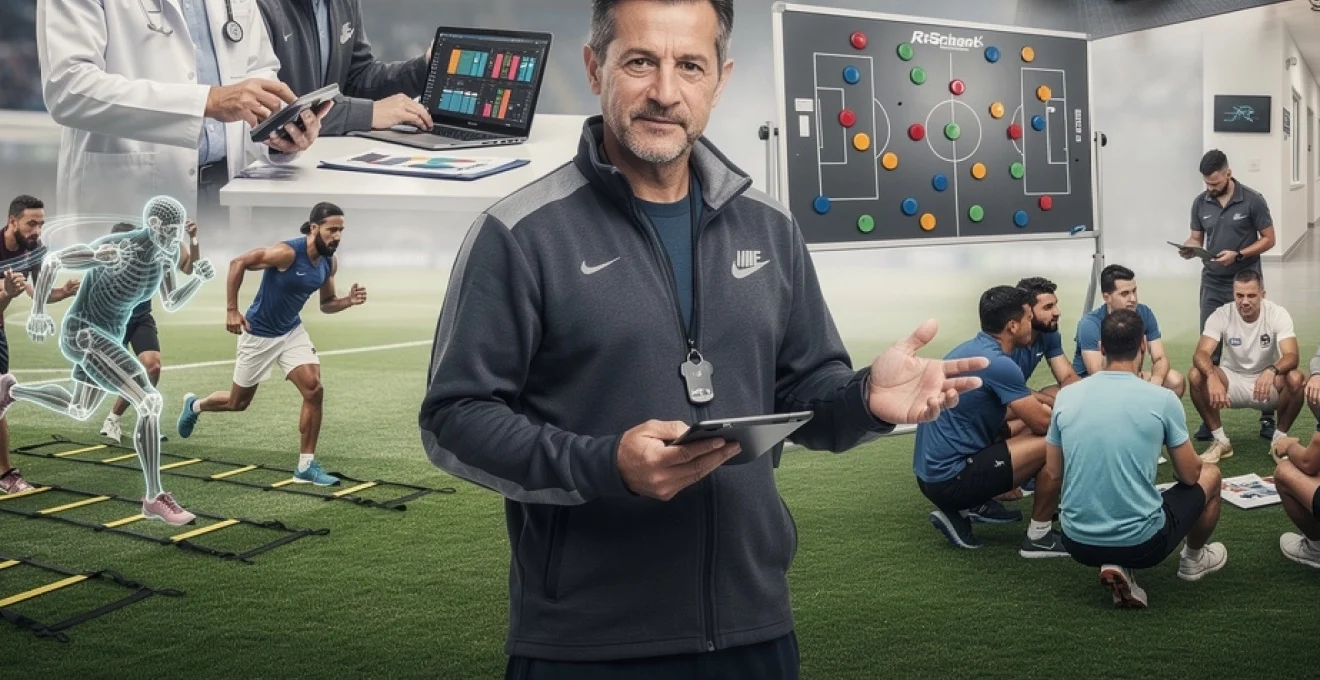
The landscape of modern sports coaching has evolved dramatically from the traditional approach of purely instructional leadership to a sophisticated blend of scientific methodology, psychological insight, and technological integration. Today’s elite coaches must navigate complex performance ecosystems where marginal gains often determine championship outcomes. The difference between good coaches and exceptional ones lies not just in their understanding of sport-specific techniques, but in their ability to synthesise cutting-edge sports science, data analytics, and human psychology into cohesive performance strategies.
Modern coaching excellence demands a multifaceted skill set that extends far beyond tactical knowledge and motivational speeches. The contemporary coach operates as part scientist, part psychologist, part data analyst, and part mentor, orchestrating intricate performance programmes that account for biomechanical efficiency, mental resilience, recovery protocols, and tactical innovation. This evolution reflects the increasingly competitive nature of elite sport, where athletes and teams seek every possible advantage through evidence-based training methodologies and personalised performance optimisation.
Technical competency and Sport-Specific expertise in elite coaching
The foundation of exceptional coaching rests upon deep technical knowledge and sport-specific expertise that transcends basic understanding of rules and techniques. Elite coaches possess comprehensive knowledge of their sport’s physiological demands, technical requirements, and tactical complexities. This expertise enables them to identify subtle performance deficiencies and implement targeted interventions that yield measurable improvements. The modern coach must understand not only what should be done, but precisely how and why specific training adaptations occur at cellular and systemic levels.
Biomechanical analysis and movement pattern optimisation
Contemporary coaching excellence requires sophisticated understanding of human biomechanics and movement efficiency. Elite coaches utilise motion analysis software and three-dimensional movement assessment tools to identify inefficient movement patterns that may limit performance or increase injury risk. This technical competency extends beyond visual observation to include quantitative analysis of force production, joint angles, and temporal sequences that determine optimal performance outcomes.
Biomechanical expertise enables coaches to prescribe corrective exercises and technique modifications with precision. Rather than relying on generalised coaching cues, the technically proficient coach can identify specific kinetic chain dysfunctions and implement targeted interventions. This approach transforms coaching from an art form into a science-based practice where technique improvements are measurable and reproducible.
Data analytics integration: catapult sports and performance monitoring systems
Modern coaching has embraced the data revolution, with elite coaches now integrating sophisticated performance monitoring systems into their daily practice. GPS tracking technology, heart rate variability analysis, and load monitoring platforms provide unprecedented insight into athlete preparation and performance. The exceptional coach must possess both technical competency to interpret this data and practical wisdom to translate metrics into actionable training modifications.
Performance data analytics extends beyond simple metrics collection to include predictive modelling and trend analysis. Coaches who excel in this domain can identify emerging performance patterns, predict optimal training loads, and prevent overreaching syndromes before they manifest. This technical sophistication requires continuous professional development and collaboration with sports science specialists to ensure data interpretation accuracy and practical application effectiveness.
Periodisation models: bompa’s training theory and block periodisation
Technical coaching competency demands comprehensive understanding of periodisation theory and its practical application across different sports and competition phases. Elite coaches must master various periodisation models, from traditional linear approaches to contemporary block periodisation and undulating patterns. This knowledge enables strategic planning of training cycles that optimise performance peaks while minimising injury risk and psychological burnout.
The sophisticated coach understands that periodisation extends beyond physical training to encompass technical, tactical, and psychological preparation phases. Integration of these elements requires detailed knowledge of adaptation timelines, recovery requirements, and individual response variations. Successful periodisation implementation demonstrates the coach’s ability to think strategically while maintaining flexibility to adjust plans based on athlete responses and competition demands.
Video analysis technology: hudl sportscode and tactical breakdowns
Video analysis has become an indispensable tool for elite coaching, requiring technical proficiency in various software platforms and analytical frameworks. Modern coaches must efficiently capture, code, and analyse performance footage to identify tactical patterns, technical deficiencies, and opponent tendencies. This technical skill extends beyond simple observation to include statistical analysis of performance metrics and predictive modelling of opponent strategies.
The exceptional coach transforms video analysis from a passive review process into an active learning environment. Through sophisticated
use of tagging, playlists, and customised edits, coaches can deliver concise, athlete-specific clips that accelerate learning and tactical understanding. Modern sport-specific expertise includes knowing how to translate complex video insights into simple, actionable cues that athletes can execute under pressure. In many elite environments, video sessions are now collaborative, with athletes encouraged to offer their own interpretations, reinforcing tactical autonomy and game intelligence.
Psychological mastery and mental performance frameworks
Technical excellence alone no longer guarantees success in modern sports. Great coaches also function as applied performance psychologists, whether or not they hold a formal psychology qualification. They understand how mindset, confidence, focus, and emotional regulation influence every technical action on the field of play. Psychological mastery in coaching means embedding evidence-based mental frameworks into daily training, rather than treating mental skills as an optional extra before major competitions.
Elite coaches build performance environments that support resilience, intrinsic motivation, and sustained engagement. They engage with sports psychologists, but they also learn core principles themselves so they can reinforce key messages in their own language. The best coaches recognise that every athlete processes stress and feedback differently, and they adapt their mental performance strategies accordingly. This holistic approach enables athletes to perform close to their training potential when it matters most, rather than underperforming due to unmanaged psychological pressures.
Cognitive behavioural coaching techniques for performance anxiety
Cognitive Behavioural Coaching (CBC) applies the principles of Cognitive Behavioural Therapy to performance contexts, helping athletes reframe unhelpful thoughts that fuel anxiety. Instead of allowing catastrophising beliefs such as “If I make one mistake, I’ve failed”, great coaches guide athletes to adopt more balanced, task-focused thoughts. They teach simple frameworks like identifying the situation, noticing the automatic thought, evaluating its accuracy, and replacing it with a constructive alternative. This process helps athletes reduce the intensity of performance anxiety while maintaining healthy arousal levels.
In practical terms, coaches can integrate CBC by using structured reflection after training and competition. For example, they might ask athletes to write down three negative thoughts experienced under pressure and collaboratively challenge their validity. Over time, this “mental reps” approach becomes as routine as physical drills. When combined with breathing protocols and pre-performance routines, cognitive behavioural coaching reduces fear of failure and supports more consistent execution in high-stakes moments.
Motivational climate theory: mastery vs performance goal orientations
Motivational Climate Theory distinguishes between mastery-oriented environments, where emphasis is on learning and improvement, and performance-oriented climates, where comparison and outcomes dominate. Great coaches in modern sports deliberately cultivate a mastery climate, especially in training, because it supports long-term development, creativity, and psychological safety. Athletes in mastery climates focus on controllable processes like effort, technique, and tactical understanding, which are more stable under pressure than external outcomes.
This does not mean winning is ignored; rather, competition results are framed as information, not identity. Coaches can shape a mastery climate through the language they use, the behaviours they reward, and the way they structure drills. For instance, they might praise smart decisions and resilience more than spectacular plays, or design small-sided games where success is measured by tactical execution rather than the scoreboard. In elite environments, a subtle shift towards performance goals may occur near major events, but the backbone of the culture remains mastery-based to protect athlete well-being.
Stress inoculation training and pressure simulation protocols
Stress Inoculation Training (SIT) is a structured method for preparing athletes to handle pressure by exposing them to stress in controlled, progressively challenging conditions. Just as vaccines introduce a weakened form of a virus to build immunity, stress inoculation introduces manageable levels of psychological stress to build coping capacity. High-performance coaches incorporate pressure simulation drills where noise, time constraints, consequences, or public evaluation mimic competition intensity. These sessions are not random; they are carefully planned and debriefed to ensure learning rather than trauma.
Effective pressure protocols often combine physiological stressors (e.g., fatigue) with cognitive demands (e.g., decision-making under time limits). For example, a basketball coach might require free throws after intense conditioning while teammates create crowd noise and simulate hostile environments. Crucially, coaches help athletes process these experiences, highlighting what strategies worked and where mental skills like self-talk, breathing, or focus cues need refinement. Over time, athletes develop a sense of familiarity with pressure, reducing the likelihood of choking when real stakes are highest.
Individual difference psychology: Myers-Briggs applications in team dynamics
Modern coaches also leverage individual difference psychology to tailor their communication and leadership style. While tools like the Myers-Briggs Type Indicator (MBTI) should not be treated as rigid labels, they can provide a useful starting point for understanding preferences in communication, decision-making, and information processing. For instance, some athletes may prefer detailed tactical explanations and data, while others respond better to big-picture vision and emotional energy. Recognising these preferences helps coaches personalise their approach without compromising team cohesion.
In team dynamics, awareness of personality differences can prevent unnecessary conflict and enhance collaboration. Coaches can use workshop-style sessions to help athletes understand their own tendencies and those of their teammates, framing diversity as a performance asset. When a squad appreciates why one player needs time to reflect while another thinks aloud, misunderstandings decrease and mutual respect increases. The great coach integrates these insights subtly into daily practice, aligning roles, leadership groups, and communication channels with the psychological make-up of the team.
Communication strategies and leadership philosophy execution
At the heart of great coaching is the ability to communicate a clear leadership philosophy in a way that athletes actually feel and enact. Modern sports environments are noisy, with input from analysts, medical staff, agents, and media. The elite coach serves as a filter and amplifier, ensuring that the core message remains coherent and aligned with the team’s identity. This requires deliberate communication strategies that connect long-term vision to daily behaviours, making abstract values like “work ethic” or “accountability” concrete and observable.
Effective coaching communication operates on multiple levels: one-to-one conversations, small group meetings, and full-team briefings. Great coaches calibrate their tone and timing, knowing when an athlete needs direct feedback, when they need empathy, and when they need space. They use simple, consistent language to anchor complex tactical systems—for example, using memorable phrases or metaphors to describe pressing triggers or transition principles. Importantly, they listen as much as they speak, inviting feedback and co-creating solutions so athletes feel genuine ownership of the performance process.
Leadership philosophy execution also depends on transparency and consistency. Athletes quickly detect gaps between what a coach says and what they actually do. When selection criteria, discipline standards, and role expectations are clearly articulated and applied fairly, trust grows. In contrast, inconsistent messaging erodes psychological safety and undermines buy-in, no matter how sophisticated the tactical plan may be. Great coaches therefore invest time in aligning staff, ensuring that assistant coaches, analysts, and support personnel reinforce the same standards and communication cues.
Adaptive training methodologies and injury prevention protocols
In high-performance sport, availability is often the ultimate competitive advantage. Even the most talented athlete cannot contribute if they are sidelined by avoidable injuries or chronic overload. Modern coaches must therefore integrate adaptive training methodologies and robust injury prevention protocols into their daily practice. Rather than adhering rigidly to pre-planned sessions, they continuously adjust training based on objective monitoring and subjective feedback, balancing stress and recovery to optimise adaptation.
Adaptive coaching means treating the training plan as a living document, informed by real-time data from GPS, heart rate monitors, and wellness questionnaires. Great coaches collaborate closely with physiotherapists, strength and conditioning staff, and sports physicians to design integrated programmes that address both performance and health. They recognise early warning signs of overtraining, such as mood changes, persistent fatigue, or declining performance metrics, and are willing to scale back when necessary. This long-term perspective can be challenging in results-driven environments, but it is essential for sustainable success.
Functional movement screen implementation and corrective exercise prescription
The Functional Movement Screen (FMS) and similar assessment tools have become key components of modern injury prevention strategies. By systematically evaluating fundamental movement patterns—such as squatting, lunging, and reaching—coaches and performance staff can identify asymmetries, mobility restrictions, and stability deficits that may predispose athletes to injury. A great coach does not need to perform every assessment personally, but they must understand the implications of FMS findings for training design.
Once movement limitations are identified, corrective exercise prescription becomes part of the daily routine rather than an occasional add-on. Short, targeted blocks of mobility, activation, and stability work can be integrated into warm-ups, recovery sessions, or individual pre-hab programmes. For example, an athlete with poor single-leg stability might complete specific hip and core activation drills before field-based training. Over time, these micro-adjustments enhance movement quality, which in turn supports both performance efficiency and resilience under load.
Load management strategies: RPE monitoring and training stress balance
Load management sits at the intersection of art and science. Tools such as session Rating of Perceived Exertion (RPE), acute:chronic workload ratios, and Training Stress Balance (TSB) scores provide quantitative insights into how hard athletes are working and recovering. However, numbers alone are not enough; coaches must interpret them in context, considering factors such as travel, sleep, psychological stress, and playing surface. Great coaches use RPE monitoring not as a blunt instrument to limit effort, but as a feedback mechanism to fine-tune training intensity and volume.
One effective strategy is to triangulate internal load (RPE, heart rate) with external load (GPS metrics like total distance, high-speed running, accelerations). When internal load spikes without a corresponding increase in external output, it may signal fatigue, illness, or psychological strain. In such cases, smart coaches adjust upcoming sessions by reducing volume, modifying drill design, or shifting emphasis towards technical and tactical learning. This dynamic approach to training stress balance helps athletes arrive at key competitions fresh, rather than carrying the invisible cost of accumulated micro-fatigue.
Recovery modalities integration: cryotherapy, compression and sleep optimisation
Recovery is now recognised as a performance variable in its own right, not just a passive aftermath of training. Elite coaches ensure that recovery modalities such as cryotherapy, compression garments, hydrotherapy, and massage are integrated systematically rather than used reactively after problems arise. While research findings can be mixed on some modalities, there is strong consensus on the critical role of sleep, nutrition, and psychological decompression in sustaining high performance. Great coaches, therefore, prioritise education on sleep hygiene, pre-sleep routines, and workload scheduling that respects circadian rhythms where possible.
Recovery strategy integration often requires cultural change. Athletes may initially see sleep tracking, nutrition monitoring, or scheduled relaxation techniques as intrusive or unnecessary. Coaches who communicate the “why” behind these tools—framing them as competitive advantages rather than surveillance—are more likely to gain buy-in. Simple but consistent habits, such as post-training protein intake, standardised cool-downs, and individualised recovery menus based on game minutes, can compound into significant long-term benefits. In this sense, recovery planning becomes another dimension of strategic coaching, much like periodisation.
Return-to-play protocols and graduated exposure programming
Return-to-play (RTP) decisions are among the most complex and high-stakes responsibilities in modern coaching. Rushing an athlete back too soon can lead to re-injury and long-term consequences, while being overly cautious may cost crucial performance opportunities. Great coaches follow structured RTP protocols developed with medical staff, incorporating objective criteria such as strength benchmarks, range-of-motion targets, and functional tests. These protocols are complemented by graduated exposure programming, where athletes progress through controlled stages of training that mimic sport-specific demands.
Graduated exposure might start with low-intensity, linear movements, advance to multi-directional drills, and finally include full-contact or high-speed scenarios under monitoring. At each stage, both physical and psychological readiness are assessed. Many athletes experience fear of re-injury, even when the tissue has healed, so coaches must address confidence as well as capacity. Open communication, transparent criteria, and collaborative decision-making help ensure that RTP choices are based on evidence rather than emotion or external pressure.
Tactical innovation and game strategy development
Ultimately, the visible measure of a great coach in modern sports is often tactical innovation and game strategy execution. However, genuine tactical sophistication goes beyond drawing clever shapes on a whiteboard. It involves deep understanding of game models, principles of play, and opposition tendencies, as well as the ability to translate complex frameworks into simple roles that athletes can execute at full speed. The most effective tacticians blend data, video analysis, and on-field experimentation to evolve their strategies over time, rather than clinging to a rigid system regardless of context.
Tactical innovation often emerges from asking better questions: What spaces does the opponent habitually leave unprotected? Where can we create numerical or qualitative superiority? How do we design training games that bring our intended style of play to life? Great coaches use constraints-led coaching, manipulating pitch size, player numbers, and rules to encourage specific behaviours. For instance, if a team wants to improve its counter-pressing, the coach might create small-sided games where losing possession immediately triggers bonus points for regaining the ball within a set time window. In this way, tactics are encoded through experience, not just explanation.
Modern game strategy development also requires humility and adaptability. Opponents analyse tendencies in detail using the same technology and analytics that coaches rely on internally. As a result, the half-life of a tactical innovation is shorter than ever. The best coaches therefore build flexible frameworks with clear principles that can be expressed in multiple formations or structures. They prepare alternative game plans and in-game adjustment triggers, empowering leaders on the field to recognise patterns and switch strategies autonomously. Over a season, this capacity for tactical evolution can be the difference between predictable stagnation and sustained competitive advantage.