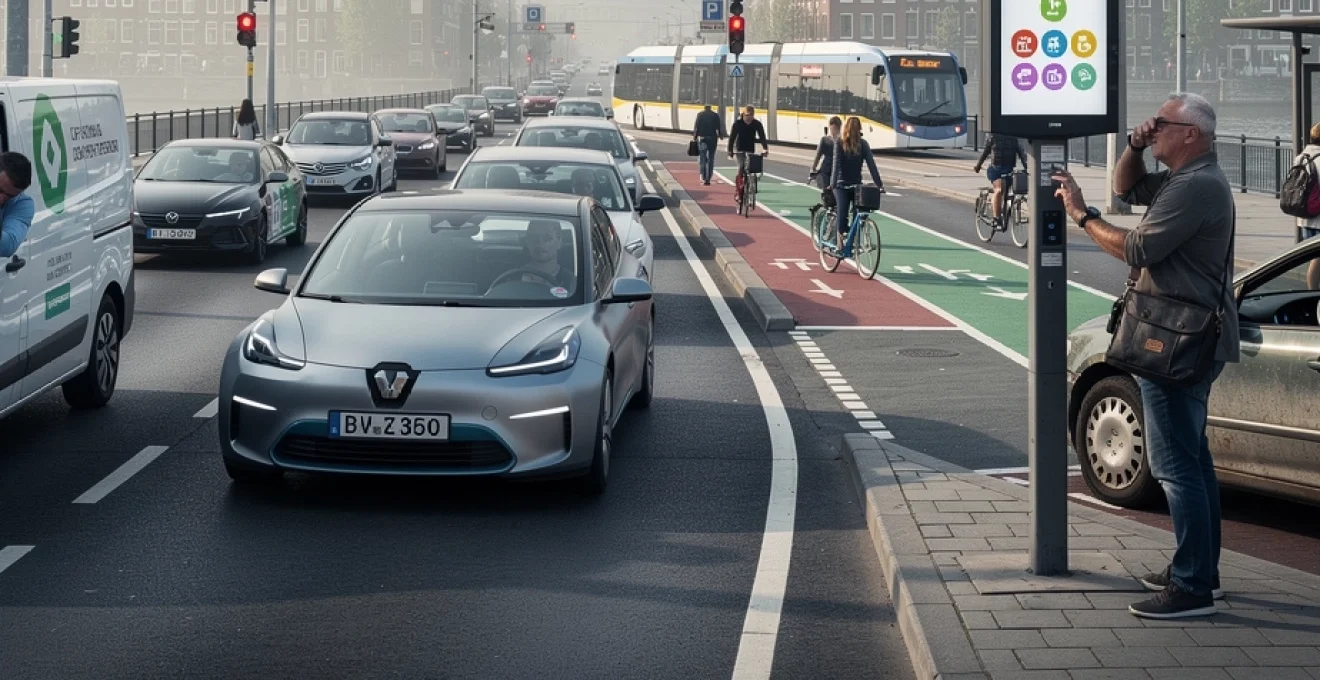
Urban motorists across Europe face an increasingly complex landscape as cities implement stringent low-emission zones to combat air pollution and improve public health outcomes. These designated areas, where access is restricted or regulated based on vehicle emission standards, fundamentally alter how drivers navigate city centres and plan their journeys. The transformation extends beyond simple route adjustments, influencing vehicle purchasing decisions, daily commuting patterns, and the broader economic considerations that shape urban mobility choices.
The implementation of these environmental traffic restrictions represents one of the most significant policy interventions affecting urban drivers in recent decades. Research indicates that the impact of low-emission zones depends not only on operational rules but also on driver behaviour patterns, creating a complex interplay between policy design and real-world outcomes. Understanding these effects becomes crucial as more cities adopt similar measures to address climate targets and air quality standards.
Low emission zone implementation models across european cities
European cities have adopted diverse approaches to implementing low-emission zones, each reflecting local traffic patterns, political priorities, and environmental challenges. These variations in design and enforcement create significantly different experiences for drivers, from gradual transitions to immediate restrictions that reshape urban mobility patterns overnight.
London’s ultra low emission zone (ULEZ) expansion and euro 6 standards
London’s Ultra Low Emission Zone represents one of the most comprehensive and economically impactful implementations affecting urban drivers. The zone requires vehicles to meet Euro 6 standards for diesel vehicles and Euro 4 standards for petrol vehicles, with non-compliant vehicles facing a daily charge of £12.50. The 2023 expansion to cover all London boroughs created a charging area affecting approximately 9 million residents, fundamentally altering driving patterns across the capital.
The economic implications for drivers prove substantial, with older vehicle owners facing difficult decisions between paying daily charges, upgrading their vehicles, or abandoning car travel entirely. Many drivers report switching to public transport or carpooling arrangements to avoid the financial burden, whilst others have invested in compliant vehicles despite significant upfront costs.
Berlin environmental zone class 4 diesel restrictions
Berlin’s environmental zone operates through a green sticker system, restricting access to vehicles that don’t meet Euro 4 standards for diesel vehicles. This approach creates a binary compliance framework where vehicles either gain unrestricted access or face complete exclusion from the central zone covering approximately 88 square kilometres.
The German model emphasises long-term planning, providing drivers with clear upgrade pathways and extended transition periods. However, enforcement challenges remain significant, with some studies indicating non-compliance rates of up to 15% during peak hours, suggesting that the honour system approach may not achieve optimal environmental outcomes.
Paris ZFE-m progressive vehicle ban timeline
Paris implements a progressive restriction system through its Zone à Faibles Émissions mobilité (ZFE-m), gradually tightening vehicle standards according to a predetermined timeline. The system uses colour-coded Crit’Air stickers that classify vehicles based on emission levels, with restrictions becoming more stringent each year until only zero-emission vehicles will be permitted by 2030.
This progressive approach allows drivers to plan vehicle replacement cycles, but creates ongoing uncertainty about future mobility costs. The predictable tightening of standards influences vehicle purchasing decisions years in advance, as drivers weigh current vehicle utility against future compliance requirements.
Amsterdam zero emission zone diesel Phase-Out strategy
Amsterdam’s zero-emission zone strategy focuses on complete diesel elimination by 2030, starting with commercial vehicles and gradually extending to private cars. The Dutch approach emphasises infrastructure development alongside restrictions, investing heavily in charging networks and public transport capacity to provide viable alternatives for affected drivers.
The comprehensive nature of Amsterdam’s strategy addresses the broader mobility ecosystem, recognising that effective low-emission zones require coordinated investment in alternative transport options. This holistic approach appears to generate greater driver acceptance, though implementation costs prove significantly higher than restriction-only models.
Vehicle compliance assessment and euro emission standards framework
Understanding vehicle compliance requirements represents a critical challenge for drivers navigating low-emission zones, as the technical specifications underlying these systems often prove complex and constantly evolving. The Euro emission standards framework provides the foundation for most European low-emission zones,
defining which vehicles may enter or must pay to access specific urban areas. For drivers, this translates into a need to understand not only their car’s fuel type and age, but also its precise Euro standard rating, which is usually recorded on the registration document or provided by the manufacturer.
In practice, most low-emission zones use Euro 4 as a cut-off for petrol vehicles and Euro 6 for diesel vehicles, with many cities moving towards stricter criteria over time. This tiered framework allows policymakers to link access rights and daily charges directly to measurable emission limits, rather than to broad categories like “old” or “new” vehicles. For urban motorists, knowing where their vehicle sits in this hierarchy becomes essential for planning daily travel, avoiding penalties, and making informed decisions about future vehicle purchases.
Euro 6d-TEMP real driving emissions (RDE) testing requirements
One of the most significant evolutions affecting urban drivers is the shift from laboratory-only testing to Real Driving Emissions (RDE) requirements under Euro 6d-TEMP. Earlier Euro standards were largely based on controlled test cycles that did not always reflect real-world city driving, especially in congested stop-start conditions. Euro 6d-TEMP and subsequent 6d standards introduced on-road testing using Portable Emissions Measurement Systems (PEMS), capturing emissions during typical journeys with variable speeds, gradients, and temperatures.
For drivers, this technical change means that vehicles marketed as “clean” must now perform under realistic conditions similar to everyday urban mobility. Diesel cars, in particular, face tighter scrutiny on nitrogen oxides (NOx) emissions, which are often higher in dense city traffic. While many motorists may never read an RDE report, they feel the effects when only Euro 6d-TEMP compliant vehicles receive favourable access to low-emission zones or avoid daily charges. In short, the move to real driving emissions testing closes the gap between brochure promises and roadside reality.
Particulate matter and NOx threshold measurements
Low-emission zones focus heavily on two main pollutants from road traffic: particulate matter (PM) and nitrogen oxides (NOx). Particulate matter, especially fine particles such as PM2.5, can penetrate deep into the lungs and bloodstream, contributing to respiratory and cardiovascular diseases. NOx emissions, which include nitrogen dioxide (NO₂), exacerbate asthma and are linked to premature mortality in urban areas, leading the World Health Organization to tighten guideline values in recent years.
Euro emission standards set specific threshold values for these pollutants, expressed in milligrams per kilometre. For example, the Euro 6 limit for diesel NOx is 80 mg/km in laboratory tests, while particulate matter limits are supported by particle number (PN) caps. When cities calibrate their low-emission zone rules, they are effectively deciding where along this spectrum of thresholds they will draw the line for access. For drivers, this means that a car registered only a few years earlier might already fall behind today’s threshold expectations, transforming what felt like a long-term investment into a vehicle facing entry restrictions or daily charges.
Retrofit technology solutions for Non-Compliant vehicles
Not every driver or fleet operator can immediately replace a non-compliant vehicle with a new Euro 6d or electric model. In response, several markets have developed retrofit technologies designed to bring older vehicles closer to current emission standards. These include diesel particulate filters (DPF) for soot reduction, selective catalytic reduction (SCR) systems using AdBlue for NOx control, and engine management software updates that optimise combustion.
Retrofits can be likened to renovating an older home with modern insulation and double glazing: the structure remains the same, but its environmental performance improves substantially. However, not all retrofit solutions are officially recognised by city authorities, and certification procedures can be complex. Urban drivers considering retrofit options should verify whether their city’s low-emission zone accepts specific systems and whether the upgrade will be reflected in the vehicle’s registration data. For commercial fleets, especially delivery vans and minibuses, certified retrofits can provide a cost-effective bridge strategy, avoiding immediate large-scale replacement while still maintaining access to central urban areas.
Electric vehicle exemption categories and hybrid classifications
Most European low-emission zones grant full exemptions or significant advantages to zero-emission vehicles, particularly battery electric vehicles (BEVs). These cars produce no tailpipe emissions, allowing them to enter even the strictest zones without charges. Some cities also extend favourable treatment to plug-in hybrid electric vehicles (PHEVs), provided they meet Euro 6 standards and, in some cases, minimum electric-only range requirements. For urban drivers, this creates a strong incentive to consider electrified powertrains when replacing older vehicles.
However, not all hybrids are treated equally. Conventional (non-plug-in) hybrids still rely on internal combustion engines for much of their operation, meaning they may be subject to the same restrictions as standard petrol or diesel cars if they fail to meet the relevant Euro threshold. As policies evolve, we increasingly see cities moving from broad “low-emission” categories to a sharper focus on “zero-emission” access. Drivers looking to future-proof their mobility in cities like Amsterdam or Paris need to pay close attention to how local rules define exemptions, rather than assuming any hybrid vehicle will remain compliant over the long term.
Economic impact analysis on urban motorists and commercial fleet operators
The financial implications of low-emission zones for urban drivers extend far beyond daily charge payments. For private motorists, there are three main cost vectors: ongoing access fees for non-compliant vehicles, the capital expense of upgrading to a compliant or electric car, and indirect costs like parking, insurance, and potential loss of vehicle resale value. Studies from London and Milan suggest that households with older vehicles, often on lower incomes, feel these pressures most acutely, raising concerns about social equity and transport affordability.
Commercial fleet operators face an even more complex economic calculus. Last-mile delivery companies, taxis, ride-hailing fleets, and service providers must decide whether to accelerate vehicle renewal cycles, invest in retrofits, or reroute operations around restricted zones. In London, for example, Transport for London reported that van and heavy goods vehicle compliance rates exceeded 90% within a few years of ULEZ introduction, indicating substantial investment by businesses. Yet this transition comes with upfront capital outlays, training requirements for electric vehicle operation, and potential downtime during fleet upgrades.
For both private and commercial users, low-emission zones can also produce hidden savings. As drivers switch to more efficient or electric vehicles, fuel and maintenance costs often decrease, partially offsetting the purchase price over time. In addition, businesses that adopt cleaner fleets may benefit from improved brand perception and eligibility for green logistics contracts. The key challenge, however, lies in bridging the short-term funding gap. Grants, scrappage schemes, and tax incentives play a critical role in smoothing this transition, and cities that combine restrictions with financial support generally experience higher acceptance among urban drivers.
Traffic pattern modifications and modal shift consequences
Beyond direct economic effects, low-emission zones reshape how, when, and why people move through cities. When access for high-emitting vehicles is restricted or priced, some drivers alter their routes, others change travel times, and many reconsider whether they need to drive at all. This dynamic interplay, often described in behavioural operations research, can produce both intended and unintended consequences. For instance, a central zone may see fewer cars and improved air quality, while surrounding ring roads experience higher traffic as drivers bypass the restricted area.
The overall urban mobility picture therefore depends not just on the strictness of the rules, but on how drivers and businesses adapt. Do commuters switch to metro, bus, or cycling? Do delivery companies consolidate trips or adopt cargo bikes? Or do drivers simply travel further to skirt the boundary, potentially increasing emissions outside the zone? To understand how low-emission zones truly impact urban drivers, we need to examine changes in journey times, public transport usage, and congestion patterns in detail.
Journey time variations in central london Post-ULEZ implementation
London provides one of the most closely studied examples of how low-emission zones influence journey times. Following the introduction of the ULEZ in 2019 and its expansion in 2021 and 2023, central London recorded a decline in older, more polluting vehicles entering the zone. This reduction in traffic volume, particularly of heavy diesel vehicles, has contributed to more predictable travel times on many key routes, even if average speeds remain constrained by urban design and safety measures.
For compliant drivers, fewer high-emission vehicles can mean less stop-start congestion at peak times, especially around major junctions. However, journey time gains are not uniform. Road space reallocation to bus lanes, cycle tracks, and pedestrian areas—often implemented alongside low-emission policies—can reduce lane capacity for private cars. In practice, this means some drivers perceive little change in absolute travel time, even as the nature of the traffic around them shifts. What has changed more clearly is the cost calculus: taking a non-compliant vehicle into central London has become both more expensive and, in many cases, less necessary, as alternative modes improve.
Public transport capacity strain from displaced car users
As low-emission zones make driving older vehicles into city centres less attractive, some drivers naturally migrate to public transport. This modal shift is one of the explicit aims of many schemes, contributing to lower emissions and improved air quality. Yet it can also create capacity challenges, particularly on already busy metro, tram, and bus networks. In Paris and London, for example, authorities have reported increased demand on radial routes serving the low-emission areas, particularly during peak commuting periods.
For urban drivers considering leaving the car at home, overcrowded trains or buses can be a deterrent, especially if comfort and reliability fall short of expectations. Cities that anticipate this surge and invest in extra rolling stock, higher service frequencies, and improved station facilities are better positioned to manage the transition. From a driver’s perspective, a well-functioning public transport network can transform low-emission zones from a punitive measure into a genuine opportunity to reduce the stress and unpredictability of urban driving. The reverse is also true: if capacity is not increased, low-emission policies risk being perceived as disruptive without providing a credible alternative.
Peripheral route congestion and traffic displacement effects
One of the most commonly voiced concerns about low-emission zones is the risk of traffic displacement. If high-emitting vehicles are diverted away from central areas, do they simply cause more congestion and pollution on peripheral routes, particularly ring roads and boundary corridors? Evidence from cities such as Berlin, London, and Antwerp indicates that some displacement does occur, especially shortly after implementation, as drivers experiment with new routes to avoid charges or entry bans.
However, the long-term picture is more nuanced. As drivers adapt by upgrading vehicles, switching modes, or altering trip frequency, overall traffic volumes can stabilise or even decline. The key question for urban policymakers—and for the drivers who use these routes daily—is whether the net effect is positive when considering the entire metropolitan area. Monitoring data suggests that while some boundary roads experience increased flows, the aggregate health and air quality benefits in densely populated central districts can outweigh these localised impacts. For drivers regularly using peripheral routes, though, the experience may be mixed: reduced access costs if they avoid the zone, but potentially longer and more congested journeys at peak times.
Air quality monitoring data and particulate reduction metrics
To understand whether low-emission zones deliver on their promise, we must look at air quality monitoring data rather than assumptions or perceptions. Cities across Europe have invested in dense networks of fixed and mobile monitoring stations, often complemented by roadside sensors and satellite data. In London, independent assessments found roadside nitrogen dioxide concentrations to be around 26% lower in central areas within a few years of ULEZ introduction compared with a no-ULEZ scenario. Similarly, German environmental agencies have reported reductions in NO₂ exceedances at key measuring stations within environmental zones.
Particulate matter reductions are generally more modest, as PM originates from multiple sources beyond exhaust emissions, including tyre wear, brake dust, and non-traffic sources. Nonetheless, targeted restrictions on older diesel vehicles with high soot output have contributed to measurable declines in PM10 and PM2.5 levels at specific urban hot spots. For drivers, these improvements may not be immediately visible, but they translate into tangible health benefits over time: fewer asthma attacks, reduced cardiovascular risks, and lower healthcare costs. When considering the real impact of low-emission zones on urban drivers, it is worth asking not only “How much does this cost me today?” but also “What is the value of breathing cleaner air for years to come?”
Air quality data also help refine policy design. If monitoring shows that bypass routes suffer from increased pollution, cities can adjust zone boundaries, introduce complementary measures like speed reductions, or promote alternative freight corridors. This feedback loop resembles adjusting a thermostat based on room temperature: policies are fine-tuned in response to real-world measurements rather than theoretical models alone. For drivers, transparent publication of air quality metrics provides reassurance that the restrictions they face are delivering measurable public health gains, rather than existing as an abstract or purely symbolic intervention.
Enforcement technology systems and automatic number plate recognition (ANPR)
Effective enforcement is essential for low-emission zones to influence driver behaviour and achieve air quality goals. Many European cities rely on Automatic Number Plate Recognition (ANPR) systems, using camera networks to capture vehicle registration plates as they enter or circulate within restricted areas. These plates are then cross-checked against national or local databases to determine vehicle emission standards, compliance status, and whether charges or penalties apply. For drivers, this means that enforcement is largely automated and does not depend on roadside checks by police or inspectors.
ANPR-based systems bring several advantages: they allow continuous monitoring, generate detailed data on traffic flows, and reduce opportunities for evasion compared with sticker-only schemes. However, they also raise important questions about data privacy, accuracy, and fairness. What happens if a plate is misread, or if a vehicle’s details are incorrectly recorded in the database? Most cities operate appeal mechanisms, but drivers must remain vigilant, checking their statements and challenging errors where necessary. In addition, visitors from other countries may be unfamiliar with local enforcement practices, leading to unexpected fines.
Some cities complement ANPR with physical identifiers such as window stickers or digital permits, helping wardens and residents quickly identify compliant vehicles. Others are moving towards fully digital systems that integrate with parking apps, congestion charging, and even residential access schemes. From the driver’s perspective, the ideal experience is seamless: clear signage at zone boundaries, accessible online tools to check vehicle status, and straightforward payment or exemption processes. As enforcement technology evolves, we can expect low-emission zones to become more precise and adaptive, potentially varying charges based on real-time congestion or pollution levels—further changing how urban drivers plan and value every trip they make.