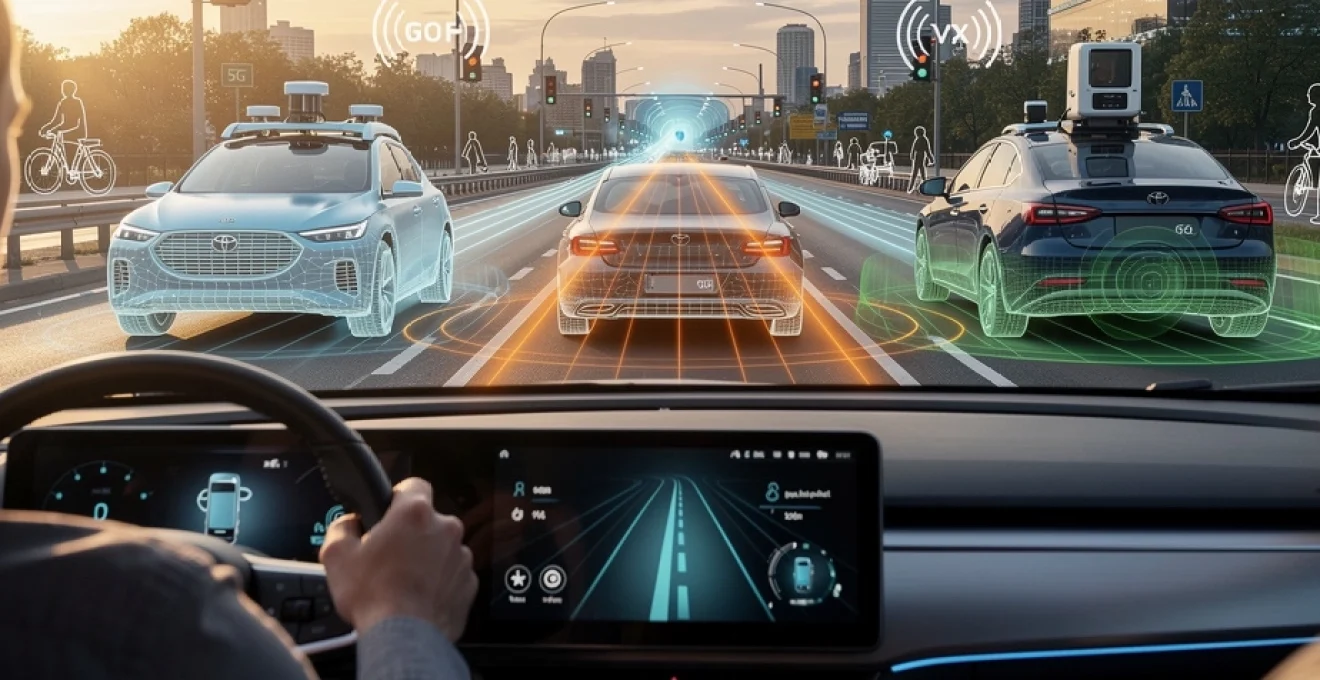
The automotive landscape is experiencing a revolutionary transformation as autonomous driving technologies rapidly advance from science fiction to everyday reality. These sophisticated systems represent a convergence of artificial intelligence, advanced sensors, and cutting-edge computing power that promises to reshape how we interact with vehicles and navigate our roads. Understanding the intricacies of these technologies has become essential for drivers, fleet operators, and anyone involved in the automotive ecosystem.
Modern vehicles already incorporate numerous automated features that many drivers use daily without fully comprehending their underlying complexity. From adaptive cruise control to emergency braking systems, these technologies serve as stepping stones toward fully autonomous vehicles. The progression from basic driver assistance to complete automation involves multiple levels of sophistication, each presenting unique capabilities and limitations that drivers must understand to use these systems safely and effectively.
The implications of autonomous driving extend far beyond mere convenience, touching upon critical aspects of road safety, regulatory compliance, cybersecurity, and infrastructure development. As these technologies become more prevalent, drivers need comprehensive knowledge about how they function, their current limitations, and the evolving regulatory landscape that governs their deployment.
Levels of autonomous vehicle technology according to SAE J3016 standards
The Society of Automotive Engineers (SAE) has established a comprehensive framework known as J3016 that categorises autonomous driving capabilities into six distinct levels, from Level 0 to Level 5. This standardisation helps manufacturers, regulators, and consumers understand exactly what capabilities each autonomous system offers and what responsibilities remain with human drivers.
Level 0 to level 2: driver assistance systems in current vehicles
Level 0 represents vehicles with no automated driving features, where human drivers maintain complete control over all vehicle operations. However, even these vehicles may include warning systems and momentary interventions that don’t constitute automated driving according to SAE standards. Electronic Stability Control and Anti-lock Braking Systems fall into this category, as they provide safety interventions without taking sustained control of vehicle operations.
Level 1 automation introduces driver assistance features that can control either steering or acceleration and deceleration, but not both simultaneously. Adaptive cruise control exemplifies this level, maintaining a set speed and following distance while requiring the driver to handle all steering responsibilities. Lane-keeping assistance systems also represent Level 1 automation, providing steering corrections to maintain lane position while leaving speed control entirely to the driver.
Level 2 represents the most advanced automation currently available in consumer vehicles, combining longitudinal and lateral control capabilities. Tesla’s Autopilot, General Motors’ Super Cruise, and similar systems can simultaneously manage steering, acceleration, and braking under specific conditions. However, these systems require constant driver supervision and readiness to take immediate control when situations exceed the system’s capabilities or when prompted by the vehicle.
Level 3 conditional automation: tesla autopilot and mercedes drive pilot analysis
Level 3 automation marks a significant leap in autonomous capability, allowing drivers to disengage from active monitoring under specific conditions while remaining available to resume control when requested. Mercedes-Benz’s Drive Pilot system, approved for highway use in Germany at speeds up to 60 kilometres per hour, represents the first commercially available Level 3 system for passenger vehicles.
The distinction between Level 2 and Level 3 lies primarily in the driver’s role and legal responsibility. In Level 3 systems, the vehicle assumes responsibility for monitoring the driving environment during automated operation, allowing drivers to engage in secondary activities such as reading or using mobile devices. However, drivers must respond to takeover requests within a specified timeframe, typically 8-10 seconds for current systems.
Tesla’s Full Self-Driving (FSD) beta programme represents an interesting case study in autonomous development, operating primarily at Level 2 with aspirations toward higher levels. Despite its name, FSD requires constant driver attention and intervention, particularly in complex urban environments where construction zones, emergency vehicles, and unpredictable pedestrian behaviour challenge even the most sophisticated automated systems.
Level 4 high automation: waymo’s phoenix operations and cruise’s san francisco testing
Level 4 automation enables fully autonomous operation within defined geographical and operational parameters, eliminating the need for human drivers to monitor the system or take control during normal operations. Waymo’s commercial robotaxi service in Phoenix, Arizona, demonstrates Level 4 capabilities across hundreds of square miles of
the metro area, but always within a carefully mapped and geo-fenced zone. Within this area, Waymo vehicles operate without a safety driver on board, relying on a combination of LiDAR, radar, cameras, and high-definition maps to interpret complex urban scenarios such as unprotected left turns, cyclists, and pedestrians. Riders summon these robotaxis using an app, and during normal service the vehicle manages all aspects of driving, from route selection to responding to traffic lights and temporary road works.
General Motors’ subsidiary Cruise has conducted similar Level 4 testing in San Francisco, one of the most challenging urban environments in the world. Cruise vehicles have operated at night and, more recently, during daytime hours, dealing with steep hills, dense traffic, and unpredictable behaviour from other road users. These operations highlight both the promise and the current challenges of high automation: while crash rates per mile can be lower than human drivers in some contexts, there have been high-profile incidents that led regulators to temporarily restrict operations, underscoring that even advanced autonomous systems are still maturing.
From a driver’s perspective, Level 4 services change the role of “driver” into that of a passenger or system user. You may never touch a steering wheel, but you still need to understand how to interact with the vehicle, how to signal an emergency stop, and what to do if the system encounters a situation it cannot handle and safely pulls over. For fleet operators and cities, Level 4 robotaxis and shuttles offer potential benefits in terms of mobility and reduced congestion, but they also raise new questions about liability, data sharing, and integration with public transport.
Level 5 full automation: theoretical capabilities and current limitations
Level 5 automation describes a vehicle that can perform the entire driving task under all conditions that a human driver could handle, without any expectation of human intervention. In a true Level 5 self-driving car there would be no need for a steering wheel, pedals, or even conventional driver controls. The vehicle could drive itself anywhere, from congested city centres in heavy rain to unmarked rural roads in fog, making its own route choices and responding to unforeseen events in real time.
In practice, no commercially available system comes close to genuine Level 5 autonomy today. The real world is messy and unpredictable, and autonomous driving technologies still struggle with rare “edge cases” such as unusual road works, uncooperative human drivers, or inconsistent signage and lane markings. Adverse weather like heavy snow can obscure lane lines and sensor inputs, while complex ethical and legal questions about decision-making in unavoidable crash scenarios remain unresolved. Even the most advanced robotaxi services operate within narrow operational design domains—restricted to particular cities, speeds, and weather conditions.
For drivers and consumers, the key takeaway is that any system you encounter in the near to medium term will be below Level 5 and will have defined limitations. Marketing language can be confusing, but if a vehicle still has conventional controls and expects a human to be present, you should assume that you will be responsible for driving at least some of the time. Understanding these limits helps you use autonomous driving technologies as powerful tools, rather than over-trusting them as fully independent drivers.
Advanced driver assistance systems (ADAS) technologies in modern vehicles
Even if fully autonomous cars are still emerging, advanced driver assistance systems are already widespread in new vehicles. These ADAS technologies bridge the gap between traditional driving and higher levels of autonomy by helping you avoid collisions, maintain safe distances, and stay within your lane. Under the skin, they rely on a sophisticated combination of sensors, processors, and software that work together in real time, often hundreds of times per second. Knowing how these systems perceive the world can help you understand both their strengths and their blind spots.
Lidar vs camera-based perception systems: velodyne and mobileye approaches
LiDAR (Light Detection and Ranging) and cameras are two of the most important sensing technologies in autonomous driving and ADAS. LiDAR units, such as those developed by Velodyne, emit laser pulses and measure the time it takes for the light to bounce back, building a detailed 3D map of the surrounding environment. This enables precise distance measurements and object shapes, even in low-light conditions, making LiDAR particularly valuable for high-resolution perception in complex urban environments and for high automation testing.
Camera-based systems, such as those from Mobileye, rely on multiple optical cameras positioned around the vehicle to capture images that are then processed by computer vision algorithms. These systems analyse lane markings, traffic signs, vehicles, and vulnerable road users such as cyclists and pedestrians. Cameras are relatively inexpensive and provide rich semantic information—such as recognising a stop sign or a pedestrian crossing signal—but they can struggle in poor lighting, glare, or heavy rain and snow. To compensate, vendors invest heavily in robust software and machine learning models trained on millions of real-world images.
The current industry trend is not a simple “LiDAR versus cameras” debate but rather a question of how to best combine them for safe autonomous driving. Some companies, like Tesla, pursue a camera-only approach, arguing that vision plus AI can eventually match or exceed human perception. Others, including many robotaxi operators, combine LiDAR, radar, and cameras to build redundancy, much like having multiple senses working together. As a driver, you should be aware that your vehicle’s capabilities—and its limitations in poor weather or at night—depend heavily on which sensing strategy the manufacturer has adopted.
Radar technology integration: continental ARS540 and bosch MRR systems
Radar (Radio Detection and Ranging) plays a critical role in many ADAS features, particularly those related to collision avoidance and adaptive cruise control. Systems like Continental’s ARS540 and Bosch’s Medium Range Radar (MRR) transmit radio waves and measure their reflections to detect objects and calculate their relative speed and distance. Because radar waves are less affected by rain, fog, and darkness than visible light, radar provides reliable detection where cameras might fail, especially for vehicles and large obstacles.
The Continental ARS540 is an example of a high-resolution “4D” radar that can detect objects at long ranges and with fine angular resolution, supporting advanced functions such as highway pilot and automated lane changes. Bosch’s MRR focuses on medium-range coverage, making it ideal for adaptive cruise control and automatic emergency braking in everyday driving scenarios. Together, these radar systems help your vehicle maintain safe following distances, warn of impending collisions, and support features like cross-traffic alerts when reversing out of a parking space.
However, radar is not a complete solution by itself. It typically struggles to distinguish between different object types (for example, a metal guardrail versus a parked car) and to read road signs or lane markings. That is why modern autonomous driving technologies rarely rely on a single sensor type. Instead, radar is integrated with cameras and, in some cases, LiDAR, contributing its strengths—especially in measuring relative speed—while other sensors provide additional detail and context.
Sensor fusion algorithms: NVIDIA drive platform and qualcomm snapdragon ride
To create a coherent understanding of the driving environment, autonomous vehicles use sensor fusion algorithms that merge data from multiple sources. Platforms like NVIDIA Drive and Qualcomm Snapdragon Ride are designed specifically to handle this demanding computational workload. They ingest data streams from cameras, radar, LiDAR, and ultrasonic sensors, then run complex algorithms and neural networks to identify objects, predict their movements, and decide how the vehicle should respond in fractions of a second.
NVIDIA Drive, for instance, offers high-performance GPUs and dedicated AI accelerators that support deep learning models for perception, path planning, and driver monitoring. This platform is used by several automakers and autonomous driving startups to prototype and deploy Level 2+ and Level 3 systems. Qualcomm Snapdragon Ride, by contrast, focuses on energy-efficient processing suitable for mass-market vehicles, integrating AI, CPU, and GPU cores to deliver scalable ADAS and automation from basic lane keeping to more advanced highway pilots.
For you as a driver, sensor fusion is largely invisible, but it is central to how your vehicle decides whether that object ahead is a plastic bag or a solid obstacle, or whether a cyclist is about to move into your lane. Effective fusion reduces false alarms that might annoy you and increases the reliability of genuine warnings and interventions. When you see marketing claims about “next-generation ADAS” or “enhanced highway assist,” they often reflect improvements in these underlying sensor fusion algorithms and computing platforms.
Vehicle-to-everything (V2X) communication protocols and 5G integration
Beyond onboard sensors, autonomous driving technologies increasingly rely on connectivity to other vehicles and infrastructure through Vehicle-to-Everything (V2X) communication. V2X includes Vehicle-to-Vehicle (V2V) and Vehicle-to-Infrastructure (V2I) links, enabling cars to share information about hazards, traffic conditions, and signal timings. Using protocols based on Dedicated Short-Range Communications (DSRC) or Cellular V2X (C-V2X), vehicles can “see” around corners by receiving warnings from other road users or smart traffic lights long before sensors detect a problem.
The rollout of 5G networks further enhances V2X capabilities by providing higher bandwidth and lower latency, crucial for time-sensitive safety messages. For example, a connected vehicle could receive an alert that a car several vehicles ahead has performed an emergency stop, giving your car precious extra seconds to slow down smoothly and avoid a chain-reaction collision. Similarly, V2I communication with smart traffic signals can support eco-driving strategies, such as adjusting speed to catch a “green wave” and reduce fuel consumption or battery usage.
While most current vehicles on the road are not yet fully V2X-enabled, pilot projects in Europe, the United States, and Asia are already demonstrating the safety and efficiency benefits of connected autonomous vehicles. As these technologies spread, drivers will increasingly interact with a broader digital ecosystem where your car not only reacts to what it can directly sense but also anticipates events based on shared network information. Understanding that your future vehicle may depend on both local sensors and remote data helps explain why reliable connectivity is becoming as important as traditional mechanical components.
Machine learning and artificial intelligence in autonomous vehicle decision-making
At the heart of autonomous driving technologies lies machine learning and artificial intelligence, which transform raw sensor data into actionable driving decisions. Instead of relying solely on hand-written rules, modern systems learn from vast datasets collected from millions of kilometres of driving. This learning-based approach allows autonomous vehicles to recognise complex patterns, adapt to new situations, and improve over time. For drivers, it means your vehicle’s assistance features may become smarter and more refined via software updates, long after you drive it off the lot.
Deep neural networks for object detection and classification
Deep neural networks (DNNs) are a class of AI models particularly effective at analysing images and sensor data, making them essential for object detection and classification in autonomous driving. These networks take camera feeds, LiDAR point clouds, or radar reflections and identify vehicles, pedestrians, cyclists, traffic signs, and road markings. Popular architectures such as convolutional neural networks (CNNs) are trained on millions of labelled images and sensor snapshots, enabling the system to recognise objects from different angles, in different lighting, and in partially obstructed views.
In practice, a DNN runs continuously while you drive, updating its understanding of the scene frame by frame. It may detect a pedestrian about to step off the curb, classify a sign as a temporary road work warning, or recognise a motorbike filtering between lanes. This information then feeds into other modules that decide whether to brake, steer, or sound a warning. Although these networks are powerful, they are not infallible: research has shown that performance can vary across demographic groups and environmental conditions, which is why regulators and safety advocates push for rigorous testing to ensure fair and reliable detection for all road users.
For drivers, it helps to think of these neural networks as the “eyes and basic recognition” of an autonomous system. Just as you might occasionally misinterpret what you see in your mirrors at night, AI-based perception can sometimes misclassify objects or fail to detect them altogether. This is why most current systems still treat you as the ultimate fallback, expecting you to stay alert and ready to override automated decisions when something does not look or feel right.
Reinforcement learning algorithms in path planning and navigation
Once an autonomous vehicle understands what is around it, the next challenge is deciding what to do next—how to steer, accelerate, or brake to reach its destination safely and comfortably. Reinforcement learning (RL) algorithms are increasingly used for this decision-making and path planning. In RL, an AI agent learns by trial and error in simulated environments, receiving rewards for good behaviour (like maintaining safe distances and smooth driving) and penalties for risky or uncomfortable actions.
Developers often train these algorithms in large-scale virtual worlds that model traffic rules, human driver behaviour, and road layouts. Think of it as a highly advanced driving video game where the AI practices millions of scenarios—from merging into heavy traffic to navigating four-way stops—before ever being deployed in a real car. This pre-training helps the system develop intuitive strategies, such as when to yield, when to overtake, and how to handle rare but critical edge cases more gracefully than a simple rules-based system might.
When you engage an advanced highway assist or automated lane-changing feature, RL-inspired modules may be deciding whether it is safe and efficient to move into the next lane, much as you would weigh speed, distance, and courtesy to other drivers. Understanding that these decisions are probabilistic and learned, not magically perfect, is important: the vehicle is optimising for safety and comfort based on past experience, but there will always be situations where human judgment and local knowledge are still valuable.
Computer vision processing: OpenCV and TensorFlow implementation
Computer vision libraries and frameworks provide the building blocks for processing visual data in autonomous driving systems. Open-source tools like OpenCV offer efficient implementations of classic image processing tasks—edge detection, feature tracking, and geometric transformations—that help clean and pre-process camera inputs before AI models analyse them. These basic steps are similar to adjusting contrast or sharpening an image on your phone, but performed automatically and in real time so that downstream algorithms receive high-quality data.
On top of these foundations, machine learning frameworks such as TensorFlow and PyTorch are used to design, train, and deploy deep learning models for tasks like lane detection, traffic sign recognition, and free-space estimation. Automakers and suppliers often start by prototyping models on powerful cloud servers, then optimise them for execution on in-vehicle hardware with tight power and latency constraints. This pipeline—from cloud training to edge deployment—allows continuous improvement: new data from real-world driving feeds back into the training process, leading to more capable models that can be rolled out through software updates.
For drivers, you may never directly interact with OpenCV or TensorFlow, but you will experience their results whenever your car accurately reads a speed limit sign or correctly identifies a faded lane on a wet motorway. If you notice your vehicle’s lane-keeping performance improving after a software update, it’s often because engineers have refined the underlying computer vision models and retrained them with more diverse data.
Edge computing solutions: intel mobileye EyeQ5 and tesla FSD chip architecture
Running advanced AI models inside a moving vehicle requires powerful yet energy-efficient edge computing hardware. Platforms such as Intel Mobileye’s EyeQ5 and Tesla’s Full Self-Driving (FSD) chip are purpose-built to handle the intense workloads of perception and planning without relying on constant cloud connectivity. These chips integrate specialised accelerators that can perform trillions of operations per second while keeping heat and power consumption within automotive limits.
Mobileye’s EyeQ5, used by multiple automakers, supports features from basic ADAS to more advanced automation by hosting neural networks for camera-only perception and sensor fusion. It is designed to meet strict automotive safety standards, with redundant processing paths and fail-safe mechanisms. Tesla’s in-house FSD chip, deployed in its newer vehicles, is optimised for the company’s vision-based approach. Each vehicle hosts two independent FSD computers running the same neural networks, allowing cross-checking of results and providing redundancy in case of hardware faults.
From a driver’s standpoint, these edge computing solutions mean that your car can make split-second decisions even if mobile data coverage drops out. It also explains why some features are only available on newer models: older hardware may simply lack the processing capacity for the latest AI-based features. When considering a vehicle with autonomous driving capabilities, it is worth asking not only what the system can do today, but also whether the onboard computing platform is powerful enough to support future software upgrades.
Regulatory landscape and safety standards for autonomous vehicles
As autonomous driving technologies advance, regulators around the world are racing to create frameworks that balance innovation with safety and accountability. In Europe, the United Nations Economic Commission for Europe (UNECE) sets many of the technical regulations that govern advanced driver assistance systems, such as automated lane keeping and automatic emergency braking. These rules specify performance criteria, testing procedures, and safety redundancies that vehicles must meet before they are approved for public roads.
In the United Kingdom, the Automated Vehicles Act 2024 establishes a legal foundation for deploying self-driving vehicles, defining concepts such as “user-in-charge” and setting out who is responsible in the event of a crash involving an automated system. Similar efforts are underway in the United States, where federal agencies like the National Highway Traffic Safety Administration (NHTSA) issue guidance, while individual states authorise specific pilots and operations. Across jurisdictions, a common theme is that autonomous vehicles must demonstrate safety at least equivalent to, and ideally better than, careful and competent human drivers.
Safety standards go beyond basic crash avoidance to include functional safety (ISO 26262), which addresses how electronic systems should behave in the presence of faults, and emerging standards such as ISO 21448 (SOTIF) that focus on the safety of the intended function—ensuring systems behave safely even when working “as designed” in unusual scenarios. For drivers, this evolving regulatory landscape means that not every autonomous feature is available in every market and that some functions may be limited or disabled until local authorities are satisfied they meet required safety benchmarks.
Cybersecurity protocols and data privacy in connected autonomous vehicles
Connected and autonomous vehicles are effectively rolling computers linked to wider digital networks, which makes cybersecurity and data privacy critical concerns. A modern car can have dozens of electronic control units and hundreds of millions of lines of code, all of which must be protected against malicious attacks that could compromise safety or privacy. Industry standards such as ISO/SAE 21434 define processes for managing cybersecurity risks throughout a vehicle’s lifecycle, from design and production to software updates and end-of-life disposal.
Manufacturers are implementing multiple layers of defence, including secure boot mechanisms, encrypted communication between components, intrusion detection systems on in-vehicle networks, and rigorous over-the-air (OTA) update procedures. These measures aim to prevent unauthorised access to critical systems such as steering and braking, as well as to protect sensitive data such as location history and driver profiles. Yet, as with any connected device, no system is entirely immune to vulnerabilities, which is why continuous monitoring and rapid patching are essential.
For drivers, understanding how your vehicle handles data can help you make informed choices. Many autonomous driving technologies rely on collecting and sometimes uploading information about your journeys to improve map accuracy and train AI models. You should review privacy settings and consent forms just as you would for a smartphone app, paying attention to what data is stored, how long it is kept, and with whom it is shared. Asking your dealer or manufacturer about their cybersecurity practices and update policies is also a practical step in ensuring your connected vehicle remains secure throughout its service life.
Infrastructure requirements and smart city integration for autonomous driving
While autonomous driving technologies focus heavily on what happens inside the vehicle, the surrounding infrastructure plays an equally important role in enabling safe and efficient operations. Well-maintained road markings, clear signage, and consistent traffic signal design help both human and AI drivers interpret the environment correctly. In contrast, faded lane lines, obscured signs, and irregular road layouts can confuse not only you but also your car’s perception systems, increasing the risk of disengagements or incorrect decisions.
Smart city initiatives aim to upgrade this infrastructure with digital capabilities that support connected and autonomous vehicles. Examples include traffic lights that broadcast their signal phase and timing to nearby vehicles, dynamic speed limits and lane control on smart motorways, and dedicated pick-up and drop-off zones for robotaxis. In some pilot projects, roadside units equipped with sensors and V2X communication act as additional “eyes” for vehicles, spotting hazards such as pedestrians stepping into the road from behind parked cars and relaying warnings to approaching autonomous vehicles.
As more cities plan for autonomous mobility, you may notice subtle changes such as improved road markings, new signage indicating automated vehicle test zones, or localised restrictions where only authorised autonomous shuttles are allowed. Over time, these infrastructure upgrades could lead to smoother traffic flow, reduced congestion, and safer roads for all users. However, achieving this vision requires close coordination between vehicle manufacturers, technology providers, road authorities, and urban planners, ensuring that the physical and digital infrastructure evolves in step with the capabilities of autonomous driving technologies.