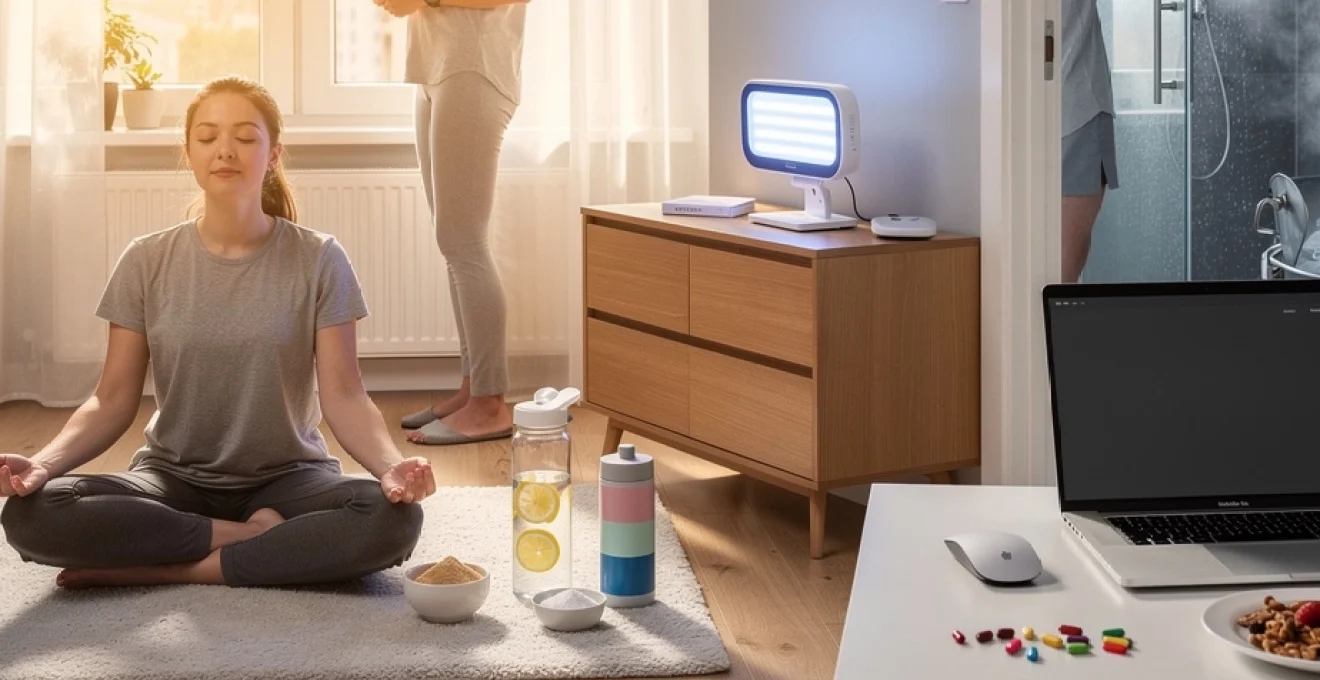
The pursuit of daily improvement often leads people down predictable paths: conventional exercise routines, standard meditation practices, and typical productivity hacks. However, the most transformative habits frequently emerge from unexpected sources, combining ancient wisdom with cutting-edge scientific understanding. These lesser-known practices leverage neuroplasticity, circadian biology, and hormetic stress responses to create profound shifts in cognitive performance, emotional resilience, and overall well-being.
Modern neuroscience reveals that small, consistent interventions can trigger significant adaptations in brain function and physiological processes. Rather than requiring major lifestyle overhauls, these evidence-based approaches work through precise timing, specific protocols, and strategic implementation. The key lies not in the magnitude of effort but in understanding how to activate the body’s natural optimisation mechanisms through targeted stimulation.
What distinguishes these habits from mainstream wellness advice is their foundation in emerging research fields such as chronobiology, psychoneuroimmunology, and environmental psychology. Each practice represents a convergence of traditional techniques with contemporary scientific validation, offering practical applications that extend far beyond their surface-level simplicity.
Morning neuroplasticity activation through Micro-Meditation techniques
The first twenty minutes after awakening present a unique neurological window for cognitive enhancement. During this period, brain wave patterns transition from theta and delta states into alpha frequencies, creating optimal conditions for neuroplastic adaptation. Traditional meditation requires extensive time commitments, but micro-meditation techniques leverage this natural transition to deliver comparable benefits in concentrated timeframes.
Vipassana-inspired breath awareness for cognitive enhancement
Vipassana meditation traditionally involves extended silent retreats, but its core mechanism—mindful observation of breath sensations—can be distilled into a five-minute morning protocol. This approach focuses on detecting subtle changes in airflow temperature, rhythm variations, and the pause between inhalation and exhalation. Research demonstrates that even brief breath awareness sessions increase activity in the prefrontal cortex while reducing amygdala reactivity.
The technique involves sitting comfortably and directing attention to the nostrils’ rim, observing the raw sensations of breathing without attempting to control the process. When the mind wanders, practitioners simply acknowledge the distraction and return focus to breath sensations. This process strengthens attention networks while developing meta-cognitive awareness—the ability to observe one’s own thinking patterns.
Box breathing protocol implementation in daily routines
Box breathing, utilised by elite military units and emergency responders, follows a precise four-count pattern: inhale for four counts, hold for four, exhale for four, hold empty for four. This symmetrical breathing pattern activates the parasympathetic nervous system while maintaining alertness, creating what researchers term relaxed vigilance. The protocol requires exactly four minutes to complete sixteen cycles.
Morning implementation begins immediately upon awakening, before engaging with devices or external stimuli. The structured counting provides an anchor for attention while the regulated breathing pattern optimises heart rate variability. Studies indicate that consistent practice improves decision-making under pressure and enhances cognitive flexibility throughout the day.
Mindfulness-based stress reduction (MBSR) Micro-Sessions
Traditional MBSR programmes span eight weeks with lengthy daily practices, but research reveals that concentrated micro-sessions can activate similar neurological pathways. These abbreviated sessions focus on body scanning, starting from the crown of the head and systematically directing attention through each body region. The process requires approximately six minutes and emphasises non-judgmental awareness of physical sensations.
Practitioners begin by noticing areas of tension, warmth, or numbness without attempting to change anything. This approach develops interoceptive awareness—the ability to perceive internal bodily signals—which correlates strongly with emotional regulation and stress resilience. The practice concludes with three deep breaths while maintaining full-body awareness.
Transcendental meditation adaptations for Time-Constrained schedules
Transcendental Meditation typically requires twenty-minute sessions twice daily, but its core principle—effortless thinking of a specific mantra—can be adapted for shorter periods. The adapted protocol uses a personally meaningful word or phrase, repeated silently for seven minutes while maintaining a relaxed
posture. When distracting thoughts arise, they are not resisted but simply allowed to pass, with attention returning gently to the mantra. Neuroimaging studies suggest that this style of effortless attention decreases activity in the brain’s default mode network, the system associated with rumination and self-referential thinking. For time-constrained schedules, anchoring this seven-minute session to an existing habit—such as after brushing your teeth or while your coffee brews—significantly improves adherence.
To maximise the impact of this micro-meditation on neuroplasticity, consistency matters more than duration. Performing the practice at the same time each morning conditions the brain to associate that period with calm focus and reduced cognitive noise. Over several weeks, many people report enhanced creative problem-solving and a more stable mood baseline throughout the day. In this way, transcendental meditation adaptations become a subtle but powerful tool for daily cognitive enhancement without requiring extensive lifestyle changes.
Circadian rhythm optimisation through strategic light exposure
Circadian rhythm optimisation is one of the most underrated habits for improving daily performance, yet it underpins energy, mood, and sleep quality. Your internal clock is governed by specialised light-sensitive cells in the retina that communicate directly with the brain’s suprachiasmatic nucleus, the master circadian pacemaker. By manipulating the timing and type of light you receive, you can influence cortisol release, melatonin production, and even metabolic function. Strategic light exposure functions like an invisible schedule for your biology, quietly aligning your body with the external day-night cycle.
Blue light therapy applications using philips goLITE BLU devices
Targeted blue light therapy has been extensively studied for seasonal affective disorder, but its benefits extend to general circadian rhythm support and mood regulation. Devices such as the Philips goLITE BLU emit a specific wavelength of blue-enriched light that stimulates melanopsin-containing retinal cells, signalling “daytime” to the brain. Short sessions of 20–30 minutes in the morning have been shown to improve alertness, reaction time, and subjective well-being, particularly in individuals who wake before sunrise or work in dim environments.
Practical implementation is straightforward: position the device slightly off to the side, at or above eye level, while you work, read, or eat breakfast. Direct staring into the light is unnecessary; peripheral exposure is sufficient to trigger circadian effects. For most healthy adults, using blue light therapy within two hours of waking helps consolidate the sleep-wake cycle and reduce mid-afternoon energy slumps. However, using these devices late in the evening can delay melatonin release and disrupt sleep, so timing remains critical.
Natural sunlight exposure timing for cortisol regulation
While light therapy devices are useful, natural sunlight exposure remains the most potent circadian rhythm optimiser. Morning light—especially within the first 60–90 minutes after waking—triggers a healthy cortisol pulse that sets the clock for your entire day. This initial cortisol rise is not the “stress hormone spike” many people fear; instead, it is a beneficial alerting signal that supports focus, motivation, and stable energy. Studies show that people who consistently obtain morning sunlight display better sleep quality and reduced depressive symptoms.
In practice, aiming for 10–20 minutes of outdoor exposure, without sunglasses if comfortable, is enough on most days. On overcast mornings, you may need a slightly longer duration, as cloud cover reduces intensity but not the circadian-relevant wavelengths. Think of this habit as “setting your internal watch”: by stepping outside with your coffee or taking a short walk, you are aligning your biology with the actual day rather than indoor lighting schedules. Over time, this predictable light timing helps regulate cortisol release so that it peaks earlier and declines smoothly by evening.
SAD light box integration in winter wellness protocols
During winter months at higher latitudes, natural daylight may be insufficient to maintain robust circadian entrainment and mood stability. This is where SAD (seasonal affective disorder) light boxes become a strategic tool within broader winter wellness protocols. These devices typically emit 10,000 lux of broad-spectrum, white light filtered to remove most UV, replicating outdoor brightness on a cloudy day. Clinical trials indicate that daily morning use for 20–40 minutes can significantly reduce seasonal mood disturbances and daytime lethargy.
To use a SAD light box effectively, consistency and timing again play a decisive role. Position the box at roughly arm’s length, angled slightly to the side, while you perform other morning tasks such as reading emails or planning your day. Starting in early autumn—before symptoms fully develop—can act as a preventive measure, much like strengthening your immune system before flu season. Combined with brief outdoor walks and reduced evening screen time, SAD light box integration can transform your winter experience from survival to sustainable productivity.
Melanopsin-targeted illumination strategies for sleep-wake cycles
Not all light impacts your circadian system equally. Melanopsin-containing retinal cells are particularly sensitive to blue-enriched light in the 460–480 nm range, making this spectrum powerful during the morning but disruptive late at night. Melanopsin-targeted illumination strategies involve leveraging this sensitivity during the day while shielding yourself from excessive blue light in the evening. You can think of it as using a dimmer switch for your brain: bright, blue-rich light to “switch on” and warm, low-intensity light to “wind down.”
Daytime strategies include working near windows, using full-spectrum bulbs in your primary workspace, or intentionally scheduling outdoor tasks earlier in the day. In the evening, shifting to warm-toned lamps, enabling night-mode settings on screens, or wearing blue-light-filtering glasses two hours before bed reduces melanopsin activation and supports natural melatonin secretion. This simple shift in your light environment often leads to faster sleep onset and fewer nighttime awakenings, without changing your total time in bed. For those who struggle with irregular sleep-wake cycles, light-based interventions can be as impactful as many pharmacological approaches.
Biohacking hydration protocols with electrolyte periodisation
Hydration is often framed as a simplistic “drink eight glasses of water” rule, but optimal fluid balance is more nuanced. Biohacking hydration protocols recognise that water needs vary with activity, temperature, and individual physiology, and that electrolytes—sodium, potassium, magnesium—play a central role in how effectively that water is utilised. Rather than constant, unstructured sipping, electrolyte periodisation applies different hydration strategies to distinct phases of your day and workload. The goal is not just to avoid thirst, but to stabilise energy, cognitive performance, and mood.
A practical approach involves three phases. In the morning, a glass of water with a pinch of high-quality salt or an electrolyte tablet can offset overnight fluid loss and support blood pressure regulation when you first stand. During cognitively demanding periods, pairing steady water intake with small amounts of electrolytes helps maintain mental clarity, as even mild dehydration (1–2% body weight) can impair attention and working memory. After intense exercise or heavy sweating, a slightly higher electrolyte concentration aids faster rehydration and reduces the risk of headaches or “brain fog.”
Electrolyte periodisation does not require complex calculations. A simple guideline is to increase electrolyte support when you are sweating more, working under time pressure, or consuming large amounts of caffeine, which has a mild diuretic effect. Conversely, if you have hypertension or kidney issues, you should consult a healthcare professional before significantly altering sodium intake. Many people find that structured hydration—such as keeping a measured bottle on their desk and refilling it two to three times per day—reduces afternoon slumps more effectively than additional coffee. In this context, hydration becomes a deliberate performance tool rather than an afterthought.
Cold thermogenesis applications through wim hof method techniques
Cold thermogenesis—the practice of using controlled cold exposure to stimulate beneficial physiological adaptations—has gained popularity through methods such as the Wim Hof Method. While cold immersion may sound extreme, its underlying mechanism is a hormetic stress response: a small, controlled stressor that strengthens the system over time, similar to how weight training strengthens muscles. When applied thoughtfully, cold exposure can enhance mood, increase metabolic activity, and improve resilience to everyday stress.
Controlled hypothermic conditioning for brown adipose tissue activation
One of the most intriguing effects of regular cold exposure is the activation of brown adipose tissue (BAT), a type of metabolically active fat that generates heat by burning calories. Controlled hypothermic conditioning—brief, repeated exposure to mild cold—has been associated with increased BAT activity and improved insulin sensitivity in several studies. Rather than chasing extreme temperatures, the emphasis is on consistent, manageable discomfort that your body can adapt to safely.
In practice, this might involve spending 10–15 minutes in a cool environment (around 16–19°C / 60–66°F) wearing lighter clothing, or finishing a walk without a heavy jacket. Initially, you may feel a strong urge to seek warmth, but over time your body becomes more efficient at producing heat, and the discomfort diminishes. For individuals aiming to support metabolic health and weight management, this form of controlled hypothermic conditioning can be a complementary tool alongside nutrition and movement. As always, those with cardiovascular or thyroid conditions should seek medical advice before experimenting with more intense cold exposure.
Ice bath protocols for norepinephrine release optimisation
More intense cold thermogenesis practices, such as ice baths, are known to trigger substantial increases in norepinephrine, a neurotransmitter involved in focus, alertness, and mood regulation. Research suggests that even short immersions—2 to 3 minutes in 10–15°C (50–59°F) water—can elevate norepinephrine levels for several hours. This surge can feel like a powerful, clean form of stimulation, distinct from the jittery effect of high caffeine intake.
Safe ice bath protocols prioritise gradual progression. Beginners might start with cooler-than-usual baths at home, slowly lowering the temperature over several sessions before adding ice. Entering the water calmly, focusing on slow nasal breathing, and setting a firm time limit reduce the risk of hyperventilation or panic. It is essential to exit the bath if you experience numbness, chest pain, or uncontrollable shivering. When performed once or twice per week, under appropriate guidance, ice baths can become a potent yet time-efficient way to boost mental clarity and emotional resilience.
Cold shower therapy integration in morning routines
For most people, cold shower therapy offers a more accessible entry point into cold thermogenesis. Integrating 30–90 seconds of cold water at the end of a standard warm shower can provide many of the same benefits—improved circulation, increased alertness, and a sense of accomplishment—without requiring specialised equipment. Large observational studies have linked regular cold shower use with reduced self-reported sick days, suggesting a possible positive effect on immune function.
A simple integration strategy is the “contrast shower”: begin with comfortable warm water, then switch to cold for 30 seconds, back to warm for 30 seconds, and finish with another cold interval. This alternating pattern may feel less shocking while still providing a strong physiological stimulus. Over time, you can lengthen the final cold segment as your tolerance improves. Many people find that pairing cold shower therapy with breath awareness—such as box breathing—helps them stay calm under discomfort, a skill that transfers directly to high-pressure situations in daily life.
Cryotherapy alternatives for domestic implementation
Not everyone has access to commercial cryotherapy chambers, but domestic alternatives can still deliver meaningful cold exposure. Simple practices such as placing cold packs on the upper back and neck, briefly immersing the face in a bowl of cool water, or stepping outside lightly dressed for a few minutes in cold weather all stimulate the body’s thermoregulatory systems. These mini-exposures can be particularly useful for people who are curious about cold thermogenesis but hesitant to attempt full-body immersion.
For desk-based workers, a practical habit might involve a five-minute “cool break” on a balcony or in the garden, combined with light movement and deep breathing. Another option is a partial cold shower focusing on the legs and arms, which can be less intense than full-body exposure yet still invigorating. The key principle is to treat cold as a training stimulus: start with mild, manageable doses, notice how your body responds, and increase gradually as adaptation occurs. In doing so, you transform everyday environments into opportunities for subtle physiological training.
Cognitive load management through digital minimalism practices
In an always-on digital environment, our cognitive load is often consumed not by deep work but by constant context switching, notifications, and low-value information. Digital minimalism offers a counter-strategy: intentionally reducing digital clutter to reclaim attention, mental energy, and emotional bandwidth. Rather than rejecting technology altogether, this approach focuses on aligning your devices with your priorities, so that they amplify rather than fragment your productivity.
A foundational practice is the deliberate design of notification settings. Turning off non-essential alerts—such as social media likes, promotional emails, and app badges—reduces the number of times your attention is involuntarily hijacked each day. Another effective technique is batching: allocating specific time blocks for email, messaging, and news instead of checking them continuously. This single change can dramatically lower cognitive load and increase the quality of your focus, particularly for complex problem-solving tasks.
We can also think of our digital environment like a mental workspace: the more cluttered it is, the harder it becomes to find what matters. Periodically decluttering your home screen, unsubscribing from low-value content sources, and consolidating similar tools (for example, using one note-taking app instead of four) all contribute to a cleaner cognitive field. Many people find that implementing “one-tab work”—keeping only one primary browser tab open for the task at hand—sharply reveals how often they would otherwise distract themselves. Over time, these digital minimalism practices help restore a sense of agency over your attention, which is arguably your most valuable daily resource.
Micronutrient timing strategies for enhanced cognitive performance
While macronutrients like protein, fats, and carbohydrates receive most of the attention, micronutrients—vitamins, minerals, and trace elements—play a decisive yet often invisible role in brain function. Micronutrient timing strategies recognise that when you consume certain nutrients can influence their impact on cognitive performance and mood. Just as athletes time carbohydrate intake around training, knowledge workers can time key micronutrients around periods of intense mental effort.
For example, B vitamins, magnesium, and omega-3 fatty acids are all involved in energy metabolism and neurotransmitter synthesis. Taking a B-complex supplement or magnesium-rich foods (such as leafy greens and nuts) with breakfast or lunch may support sustained focus and reduce mid-afternoon fatigue. Conversely, magnesium taken in the evening has been associated with improved relaxation and sleep quality, due to its role in regulating NMDA receptors and GABA activity. Similarly, caffeine consumed alongside L-theanine—naturally found in green tea—can produce a smoother, more focused alertness than caffeine alone.
Iron, zinc, and iodine also deserve attention, particularly for individuals following restrictive diets. Insufficient iron can impair oxygen delivery to the brain, while low zinc or iodine may affect cognitive speed and mood. Testing and professional guidance are advisable before supplementing these minerals, as both deficiency and excess carry risks. On a practical level, structuring meals to include a variety of colourful vegetables, high-quality proteins, and healthy fats across the day remains the most robust foundation for micronutrient sufficiency. When timed thoughtfully, these nutrients act like high-precision tools for mental performance, supporting everything from working memory to emotional balance.