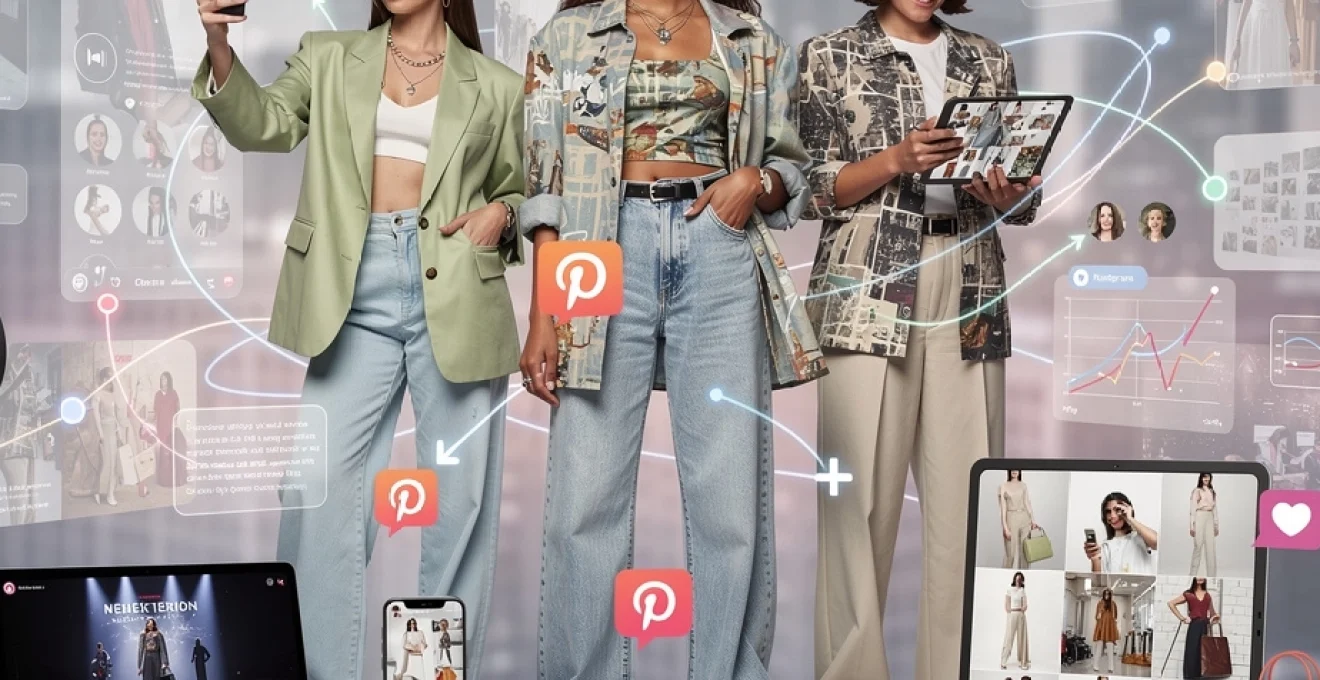
Social media has fundamentally transformed the fashion landscape, creating an ecosystem where trends emerge, evolve, and spread with unprecedented speed. What once required months of runway shows, magazine features, and retail distribution now happens in mere hours through carefully crafted posts and viral content. This digital revolution has democratised fashion influence, allowing everyday users to become trendsetters whilst enabling brands to respond to consumer preferences in real-time. The traditional gatekeepers of style—fashion editors and celebrity stylists—now share their influence with millions of content creators who shape what we wear through strategic algorithm engagement and authentic storytelling.
The shift towards social media-driven fashion trends has created a complex interplay between technology, consumer behaviour, and brand strategy. Platforms have become sophisticated trend prediction tools, utilising artificial intelligence and machine learning to identify emerging patterns before they reach mainstream consciousness. This technological advancement has profound implications for fashion brands, retailers, and consumers alike, fundamentally altering how we discover, validate, and adopt new styles.
Instagram’s algorithm impact on fashion discovery and trend amplification
Instagram’s sophisticated algorithm has become the invisible curator of fashion discovery for over one billion users worldwide. The platform’s machine learning systems analyse countless data points—from user engagement patterns to seasonal shopping behaviours—to determine which fashion content receives maximum visibility. Recent algorithm updates prioritise authentic engagement over follower count, meaning that genuine interaction with fashion content now carries more weight than superficial metrics. This shift has particularly benefited emerging designers and niche fashion brands that might have struggled to gain visibility through traditional channels.
The algorithm’s influence extends beyond simple content visibility to shape actual purchasing decisions. Studies indicate that 72% of Instagram users have made fashion purchases directly influenced by content they discovered through the platform’s recommendation system. The algorithm creates fashion echo chambers, reinforcing user preferences whilst simultaneously introducing subtle variations that gradually expand style boundaries. This creates a delicate balance between personalisation and discovery that keeps users engaged whilst exposing them to new trends.
Hashtag strategy analysis for fashion brand visibility
Strategic hashtag implementation has evolved into a sophisticated science that directly impacts fashion brand visibility and trend propagation. Research shows that posts using 9-11 hashtags receive optimal engagement, with fashion brands achieving 12.6% higher reach when combining trending tags with brand-specific hashtags. The most effective fashion hashtag strategies blend broad appeal tags like #ootd with niche identifiers such as #sustainablefashion or #vintagestyling. This approach ensures content reaches both general fashion audiences and targeted communities likely to engage meaningfully with specific aesthetic movements.
Hashtag performance varies significantly across different fashion categories, with luxury brands benefiting from exclusive, limited-use tags that create perceived scarcity. Fast fashion brands, conversely, achieve better results with high-volume hashtags that maximise immediate exposure. The timing of hashtag deployment also influences success, with fashion content posted during peak engagement hours (7-9 PM local time) receiving 23% more interaction when using trending hashtags compared to off-peak posting.
Instagram stories and reels: driving Micro-Trend virality
Instagram Stories and Reels have emerged as the primary vehicles for micro-trend creation and rapid fashion cycle acceleration. The ephemeral nature of Stories creates urgency that drives immediate engagement, whilst Reels benefit from Instagram’s aggressive promotion of video content. Fashion micro-trends—such as specific styling techniques or accessory combinations—can achieve global recognition within 48 hours through strategic Reels deployment. The format’s vertical video orientation perfectly suits fashion content, allowing creators to showcase outfit details and styling processes in engaging, easy-to-consume formats.
Reels featuring fashion transformations consistently outperform static posts by 67%, with outfit change videos generating the highest engagement rates across all fashion content categories. The platform’s audio-visual synchronisation capabilities enable fashion creators to link specific songs or sounds with particular styles, creating audio-fashion associations that strengthen trend memory and recognition. This sonic branding of fashion trends represents a sophisticated evolution in how style movements gain cultural traction.
Fashion week live streaming and Real-Time trend propagation
Instagram’s live streaming capabilities have revolutionised Fashion Week accessibility, transforming exclusive industry events into global, real-time fashion experiences. Live streaming allows immediate trend identification and rapid consumer response, compressing traditional fashion cycles from seasons to hours
. Viewers can screenshot looks, save livestreams, and immediately search for similar items through in-app shopping tags or external search, turning what was once a front-row privilege into a mass-market style prompt. For brands, this means that runway pieces can be discussed, remixed, and even counterfeited before the models have left the catwalk. As a result, many labels now design shows with the algorithm in mind—building in “Instagram moments” like dramatic capes, bold colour blocks, or unexpected collaborations that they know will circulate across Stories, Reels, and Explore pages within minutes.
Real-time engagement data from Fashion Week live streams—such as spikes in comments when a particular silhouette appears—helps marketing and merchandising teams refine which pieces to push in upcoming campaigns. Some luxury brands even A/B test looks by releasing teaser images on Instagram before the show to gauge sentiment, then prioritise the garments that receive the most saves and shares. This creates a feedback loop where consumers indirectly co-curate the final commercial assortment, further blurring the line between fashion spectator and fashion decision-maker.
User-generated content algorithms in fashion product validation
User-generated content (UGC) has become a powerful validation tool for fashion products, with Instagram’s algorithm frequently prioritising posts that feature real customers over highly polished brand campaigns. When the algorithm detects high engagement around tagged photos, try-on Reels, or unboxing Stories, it infers social proof and surfaces this content more widely. This phenomenon makes UGC a form of “algorithmic word-of-mouth”, where the number of organic outfit posts around a product directly influences its discovery and desirability.
For fashion brands, encouraging customers to post outfits and tag products is now a core part of launch strategy. Capsule collections and limited drops often include incentives such as repost features, discount codes, or entry into giveaways in exchange for UGC. By monitoring which items generate the most organic posts, comments, and saves, teams can rapidly identify breakout pieces and adjust inventory or paid promotion accordingly. In practice, a dress that appears in hundreds of tagged photos within a week is a stronger indicator of future sales than any single campaign image, effectively turning the algorithm into a real-time product testing lab.
Tiktok’s role in democratising fashion trend creation
If Instagram refines and amplifies fashion trends, TikTok is where many of those trends now originate. The platform’s “For You Page” algorithm surfaces content based on interest rather than follower count, allowing a creator with a few hundred followers to spark a global fashion movement overnight. This democratisation of reach has shifted power away from traditional fashion gatekeepers towards Gen Z creators, thrift enthusiasts, and everyday users experimenting in their bedrooms.
TikTok’s short-form, music-driven format favours quick outfit reveals, styling hacks, and transformation videos that condense the fashion discovery journey into 15–30 seconds. Instead of passively consuming runway looks, users participate in challenges, duets, and remixes that invite them to put their own spin on trends. The result is a highly participatory ecosystem where styles like “cottagecore”, “clean girl”, or “blokecore” spread less like top-down directives and more like viral memes, constantly evolving as new creators reinterpret them.
Gen Z fashion creators: charli D’Amelio and emma chamberlain’s style influence
Gen Z creators such as Charli D’Amelio and Emma Chamberlain exemplify how TikTok and YouTube-native personalities now rival, and often surpass, traditional celebrities in fashion influence. Charli’s casual streetwear, loungewear sets, and accessible athleisure looks often sell out within days of appearing in her videos, with younger audiences treating her daily outfits as a real-time style guide. Her collaborations with brands like Hollister and Prada illustrate how labels leverage her reach to bridge the gap between mass-market fashion and luxury exposure.
Emma Chamberlain, meanwhile, has popularised an intentionally “imperfect” aesthetic—think vintage denim, oversized blazers, and thrifted tees—that resonates with followers tired of overly curated Instagram feeds. Her partnerships with Louis Vuitton and Cartier show how high fashion is increasingly willing to embrace offbeat, relatable style icons to connect with younger consumers. When these creators attend events like the Met Gala, their behind-the-scenes content frequently outperforms official press coverage, underscoring their power to frame how audiences perceive modern fashion culture.
Fashion challenge virality metrics and brand adoption patterns
Fashion challenges on TikTok, from #OutfitChange to #ThriftFlip, act as accelerators for trend diffusion, and their virality can be measured through a combination of views, participation rates, and replication across other platforms. A typical challenge that surpasses 100 million views often triggers a second wave of adoption as brands begin creating their own versions or sponsoring popular creators to participate. This creates a layered effect where user-led experimentation is followed by polished, brand-aligned content that further normalises the look.
Brands track challenge performance using metrics such as average watch time, number of user-generated videos under a hashtag, and the velocity at which daily uploads increase. When a challenge shows exponential growth over a short window—say, doubling the number of related videos in 72 hours—fast fashion labels and agile independent designers often move quickest to capitalise. We see this in capsule collections, themed product edits, and “challenge-ready” styling kits promoted via TikTok ads and in-app shopping. For data-driven marketers, fashion challenge virality becomes a predictive signal, revealing which aesthetics warrant investment before they saturate the market.
Sound-to-style correlation in TikTok fashion content
On TikTok, audio is as influential as visuals, with specific sounds and songs becoming shorthand for entire fashion aesthetics. When a particular track is consistently used in videos featuring a certain style—like retro 90s R&B paired with baggy jeans and baby tees—a strong sound-to-style correlation emerges. The algorithm then clusters these videos, making it more likely that users who enjoy the audio will be exposed to similar outfits, further strengthening the association.
Fashion brands now monitor trending sounds as closely as they watch hashtags, using them as early indicators of emerging micro-aesthetics. By aligning product content with the right audio, they can “ride the wave” of a trend rather than trying to create one from scratch. For example, a label that releases a Y2K-inspired collection might deliberately pair its try-on hauls with the same song dominating existing Y2K content, increasing the likelihood that the algorithm will recommend those videos to fans of the aesthetic. In this sense, TikTok functions like a DJ for fashion trends, with audio tracks acting as invisible threads connecting disparate style moments.
Fast fashion brand response times to TikTok trend cycles
The speed of TikTok’s trend cycles has forced fast fashion brands to compress their design-to-shelf timelines even further, sometimes to as little as three weeks from concept to launch. When a specific item—say, a pleated tennis skirt or bolero shrug—begins trending on TikTok, agile brands immediately analyse engagement data, search volume, and competitor offerings to assess demand. Those with integrated supply chains can prototype, produce, and promote similar products before the trend peaks, capturing sales during the most intense phase of consumer interest.
However, this hyper-responsiveness comes with risks. Trends on TikTok can fade as quickly as they emerge, leaving brands with excess inventory if they misjudge timing or overestimate demand. To mitigate this, some companies adopt “micro-batch” production, releasing limited quantities first to test traction, then scaling only if sales and social mentions align. Others hedge by designing modular pieces that can be re-styled across multiple aesthetics, such as a versatile slip dress that works for both “romantic core” and “minimalist chic” trends. For marketers, measuring response time is now as critical as measuring reach, with slow reaction often equating to missed opportunity.
Pinterest’s visual search technology and fashion forecasting
While Instagram and TikTok excel at real-time trend amplification, Pinterest operates more like a long-range radar for fashion, capturing early signals of what consumers will want in the months ahead. Users come to Pinterest with an intent mindset—planning wardrobes, mood boarding seasonal looks, and saving outfit ideas—which makes the platform a valuable forecasting tool. Its visual search and recommendation engine analyse billions of Pins to identify recurring colours, silhouettes, and styling details before they appear en masse on other networks.
For fashion brands and retailers, Pinterest’s data provides a window into future demand rather than just current hype. When searches for “linen wide-leg trousers” or “metallic midi skirt outfit” begin to climb, teams can adjust their assortments, creative direction, and content calendars accordingly. In many ways, Pinterest functions as the digital equivalent of watching what shoppers are picking up in-store, but at global scale and several seasons in advance.
Pinterest lens API integration in retail fashion apps
Pinterest Lens, the platform’s visual search feature, allows users to upload or photograph an item and instantly discover similar products, styling ideas, or outfit combinations. Increasingly, fashion retailers are integrating Lens API functionality into their own mobile apps and e-commerce platforms to enhance product discovery. This means a shopper can snap a photo of a look they saw on the street or on Instagram, and the retailer’s app will suggest comparable pieces available to buy.
From a technical perspective, Lens-style integrations rely on computer vision models trained to recognise patterns, textures, cuts, and colours. For marketers, however, the impact is simple but profound: barriers between inspiration and purchase shrink dramatically. Instead of searching for “beige oversized blazer” and sifting through results, a user can visually query the system, making the journey from social media outfit envy to cart checkout almost seamless. Retailers that adopt this technology early not only improve user experience but also gather valuable data about which looks and references drive the most visual searches.
Seasonal fashion board analytics for trend prediction
Pinterest boards act like collective mood boards for upcoming seasons, and analysing their content can reveal which fashion trends are gaining traction before they hit mainstream feeds. When thousands of users start pinning similar images—such as crochet bags, sheer layering, or ballet flats—months before spring or autumn, Pinterest’s analytics tools flag these as rising interests. Brands that track these signals can tailor lookbooks, merchandising, and content around the aesthetics consumers are already dreaming about.
Some fashion teams go a step further by creating internal boards mirroring their target customer’s lifestyle, then comparing them against platform-wide data. Where overlaps occur—say, an increase in “quiet luxury outfits” or “monochrome workwear”—they find opportunities to refine their design direction. This approach turns seasonal planning into a data-informed process rather than one based solely on intuition or runway trickle-down. In effect, Pinterest’s board analytics provide a kind of crowdsourced crystal ball, allowing brands to meet customers where their future tastes are heading.
Shopping feature implementation in fashion pin performance
Pinterest’s evolution from inspiration platform to shopping destination has major implications for fashion brands seeking to convert trend interest into sales. Product Pins with integrated shopping features—price, availability, and direct links—perform significantly better in driving clicks and conversions than static, non-shoppable images. When users can move directly from a styled outfit Pin to the exact product page, friction is reduced, and impulse purchases become more common.
To maximise performance, successful fashion brands optimise their Pins with high-quality lifestyle photography, clear product tagging, and keyword-rich descriptions that match how users actually search (for example, “black square-toe ankle boots outfit”). They also track metrics such as saves-to-clicks ratio and conversion rate by board theme, learning which contexts—wedding guest looks, capsule wardrobes, or festival outfits—yield the strongest return. Over time, this data shapes merchandising and creative strategy, helping teams invest more in the styles and narratives that resonate most on the platform.
Influencer marketing ROI measurement in fashion brand campaigns
As social media becomes central to fashion marketing, measuring the return on investment of influencer partnerships is no longer optional—it is essential. Rather than focusing solely on vanity metrics like follower count, brands now evaluate influencers based on engagement quality, audience alignment, and trackable outcomes such as sales and sign-ups. Key performance indicators include cost per engagement (CPE), click-through rate (CTR), conversion rate, and uplift in branded search queries during and after campaigns.
Advanced teams implement unique tracking links, promo codes, and pixel-based attribution to understand which influencers drive actual revenue, not just buzz. They may also employ post-campaign surveys and social listening tools to gauge sentiment changes around the brand. Over several collaborations, patterns emerge: some creators consistently trigger high-intent actions, while others are stronger for brand awareness or storytelling. By segmenting influencers into roles—conversion drivers, storytellers, community builders—fashion marketers allocate budgets more strategically, avoiding the trap of overpaying for reach that doesn’t translate into results.
Real-time fashion analytics: social listening tools and trend monitoring
Social listening tools have become indispensable for fashion brands navigating an environment where trends and consumer sentiment can pivot overnight. Platforms that track mentions, hashtags, emojis, and even image content across networks provide a live feed of how customers are responding to products, campaigns, and wider cultural conversations. Instead of waiting for quarterly sales reports, teams can see in near real-time when a specific item is going viral, when sizing issues are being discussed, or when sustainability concerns are gaining volume.
These insights inform rapid tactical decisions. If chatter around a new sneaker colourway spikes positively, brands can increase paid support, re-stock quickly, or create spin-off designs. If negative feedback surfaces around quality or fit, customer service and product teams can intervene early, limiting reputational damage. Social listening also helps identify emerging micro-communities—such as niche subcultures or local scenes—whose distinct aesthetics might later influence mainstream fashion. By treating social media as a continuous focus group rather than a one-way broadcast channel, brands stay closer to the evolving tastes and expectations of their audience.
Cross-platform fashion content syndication strategies
Given that fashion audiences now move fluidly between Instagram, TikTok, Pinterest, and other channels, cross-platform content syndication has become a strategic necessity. However, simply reposting the same asset everywhere rarely yields optimal results. The most effective fashion brands adapt a core concept—like a new collection drop or trend story—to suit each platform’s native formats and user behaviours. A behind-the-scenes runway clip might become a polished Reel on Instagram, a raw, humorous edit on TikTok, and a still-image mood board on Pinterest.
To coordinate this, teams often build modular content assets that can be sliced, reframed, and scheduled across channels while maintaining a coherent visual identity. They also track how trends migrate—for instance, a TikTok challenge evolving into Instagram Reels and then into long-term Pinterest searches—and time their messaging accordingly. By understanding the strengths of each network, from TikTok’s trend ignition to Instagram’s aspirational storytelling and Pinterest’s long-tail discovery, fashion brands create an ecosystem where each post reinforces the others. The result is a more resilient, omnichannel presence that keeps pace with today’s fast-moving fashion trends without overwhelming internal resources.