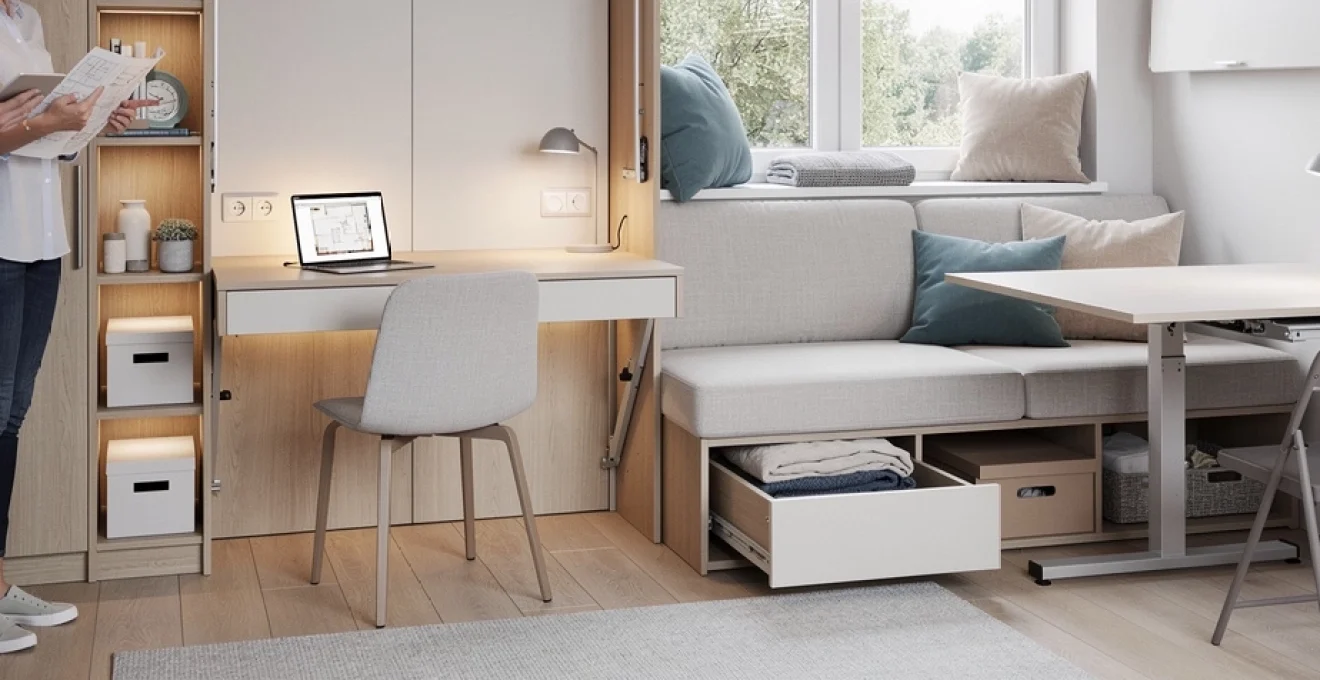
Modern urban living has redefined our relationship with space, making compact living environments increasingly common across global cities. The art of transforming small spaces into highly functional, comfortable homes requires strategic planning, innovative design solutions, and a deep understanding of spatial psychology. With property prices soaring and urban density increasing, maximising every square metre has become essential for creating liveable environments that don’t compromise on comfort or style.
Small space renovation extends far beyond simple decluttering or choosing smaller furniture pieces. It demands a comprehensive approach that considers human behaviour patterns, ergonomic requirements, and the psychological impact of spatial design. Effective micro-living solutions integrate architectural principles with cutting-edge storage technologies, creating environments that feel expansive despite their physical constraints. The challenge lies in balancing functionality with aesthetics whilst maintaining the essential human need for comfortable, uncluttered living spaces.
Space planning principles for Micro-Living environments
Successful small space renovation begins with understanding fundamental space planning principles that govern how humans interact with their environment. Micro-living environments require careful consideration of every design decision, as poor planning can quickly result in spaces that feel cramped, inefficient, or uncomfortable. The foundation of effective small space design rests on three core principles: efficient circulation, strategic zoning, and vertical integration.
Anthropometric data application in compact layout design
Anthropometric data provides the scientific foundation for creating functional small spaces by establishing minimum dimensional requirements for human comfort and movement. Standard measurements indicate that individuals require approximately 60 centimetres of personal space radius for comfortable stationary activities, whilst dynamic activities demand additional clearances. In compact environments, these measurements become critical for preventing spaces from feeling claustrophobic or restrictive.
Kitchen design exemplifies the importance of anthropometric considerations, where work triangle efficiency directly impacts functionality. Standard counter depths of 60 centimetres accommodate most users comfortably, whilst maintaining 90-centimetre clearances between opposing surfaces ensures adequate workspace. Compact kitchen layouts must balance these requirements with storage needs, often requiring custom solutions that optimise dimensional efficiency without sacrificing usability.
Circulation path optimisation using 36-inch minimum clearances
Circulation paths form the invisible infrastructure of any living space, determining how efficiently occupants can move through their environment. The 36-inch (91-centimetre) minimum clearance standard ensures wheelchair accessibility whilst providing comfortable passage for most users. In small spaces, these corridors must serve multiple functions, often doubling as storage zones or transitional areas between different activity zones.
Strategic circulation planning involves creating clear sight lines that visually expand spaces whilst maintaining functional pathways. Multi-directional circulation patterns prevent bottlenecks and create opportunities for flexible furniture arrangements. Corner circulation spaces often present challenges but can be transformed into valuable storage or display areas through careful planning and custom millwork solutions.
Zone-based activity mapping for Multi-Functional spaces
Activity mapping transforms small spaces into highly functional environments by establishing clear zones for different daily activities. This approach recognises that modern living requires spaces to serve multiple purposes throughout the day, from sleeping and working to cooking and entertaining. Effective zoning strategies create visual and physical boundaries without requiring permanent walls or substantial square footage.
Temporal zoning allows spaces to transform based on time-of-day usage patterns. A dining area might serve as a workspace during morning hours, transition to a meal preparation zone at midday, and become an entertainment space during evening hours. This approach maximises spatial efficiency by recognising that not all activities occur simultaneously, allowing multiple functions to share the same physical footprint.
Vertical adjacency planning in studio apartments
Studio apartments present unique challenges requiring sophisticated vertical adjacency planning to create distinct living zones within open floor plans. Vertical relationships between different activity areas become crucial when horizontal separation isn’t feasible. Strategic placement of sleeping areas above living spaces, or elevated work zones above storage areas, maximises functional density whilst maintaining privacy and comfort.
Loft-style arrangements exemplify successful vertical adjacency planning, where sleeping areas positioned above living spaces create distinct zones without requiring additional floor area. These solutions require careful attention to ceiling heights, structural requirements, and access methods.
Guardrails, privacy screens, and acoustic separation must also be factored in, ensuring that vertical zoning enhances the user experience rather than introducing safety or comfort issues. When executed well, vertical adjacency planning allows a single room to behave like a one-bedroom apartment, with subtle level changes, lighting variations, and furniture placement reinforcing the perception of distinct, highly functional zones.
Multi-functional furniture systems and Space-Saving solutions
Once the core layout is established, the next step in renovating small spaces to maximise functionality is investing in multi-functional furniture systems. In micro-living environments, every item should work harder, performing at least two roles wherever possible. Well-chosen transformable pieces reduce visual clutter, support flexible lifestyles, and extend the usable life of compact interiors as needs evolve over time.
Murphy bed integration with desk and storage combinations
Murphy beds represent one of the most efficient ways to reclaim floor area in studio apartments and compact guest rooms. Modern systems integrate desks, shelving, and wardrobe modules into the same wall unit, allowing a single piece of joinery to serve as bedroom, office, and storage. When the bed is folded up, the desk surface often pivots or stays level, enabling you to maintain a fully set-up workstation without clearing items away.
From an ergonomic perspective, it is crucial to respect anthropometric clearances around the bed in both open and closed positions. A minimum of 75–90 centimetres in front of the lowered bed ensures safe access, whilst 36-inch side clearances support comfortable circulation in very small bedrooms. Specifying gas-assisted or counterbalanced mechanisms reduces lifting forces, making daily transitions between “day mode” and “night mode” quick and intuitive.
Modular seating systems with hidden storage compartments
Modular seating systems allow living rooms in small homes to adapt to different activities, from solo relaxation to group entertaining. Sectional sofas with moveable components can be reconfigured into loungers, daybeds, or guest sleeping areas as needed. When these modules incorporate hidden storage compartments, they also replace bulky chests and freestanding cabinets, freeing up valuable circulation space.
Storage ottomans, chaise lounges with lift-up bases, and benches with hinged seats are particularly effective in micro-living environments. They provide ideal locations for storing blankets, seasonal cushions, or even media equipment that might otherwise clutter the room. By aligning storage volumes along perimeter walls and under seating, you keep the central floor area open, reinforcing the perception of a larger, more fluid space.
Transformable dining tables with expandable mechanisms
Dining functions are often the first to be sacrificed in small apartments, yet a well-designed transformable dining table can reinstate this social hub without permanently occupying floor area. Expandable mechanisms such as butterfly leaves, telescopic frames, or fold-out wings allow a compact console or two-seater table to extend into a four- or six-person dining surface when required. The key is selecting proportions that feel balanced both when closed and fully opened.
For very tight spaces, wall-mounted drop-leaf tables offer an elegant solution, folding flat when not in use to preserve circulation paths. Consider locating these tables adjacent to windows or within open-plan kitchen–living areas to maintain visual connection and natural light. When paired with stackable or folding chairs stored nearby, these transformable dining solutions ensure that entertaining does not come at the expense of everyday functionality.
Built-in banquette seating with under-seat storage access
Built-in banquette seating transforms awkward corners, bay windows, or narrow dining zones into high-performance multi-functional spaces. By anchoring seating against walls, you free up central floor areas and improve circulation in compact kitchens and open-plan living spaces. The vertical surfaces behind the banquette can be used for shelving, artwork, or acoustic panelling, further enhancing functionality and comfort.
Under-seat storage accessed via lift-up lids or front-facing drawers is especially valuable in small homes with limited cabinetry. These concealed compartments are ideal for storing table linens, board games, or rarely used small appliances. When designing banquettes for micro-living environments, ensure that seat heights and depths align with ergonomic standards—typically 45–48 centimetres high and 45–55 centimetres deep—to maintain comfort during extended use.
Floating nightstands with integrated charging stations
Bedrooms in compact homes benefit greatly from floating nightstands, which maintain visual openness by exposing more floor area. Wall-mounted bedside tables also simplify cleaning and allow for under-bed storage or low-level lighting to be incorporated without obstruction. Integrating cable management and charging stations into these units keeps surfaces clear and reduces visual clutter from wires and devices.
In micro-living environments where the bed may share space with a work zone, floating nightstands can also double as small side tables or perches for laptops. Specifying drawers or concealed cubbies ensures that essential items remain accessible yet out of sight, supporting the minimalist, calm atmosphere that is crucial in small sleeping spaces. As with all compact-space solutions, the goal is to achieve maximum utility within the smallest possible footprint.
Vertical storage maximisation techniques
With floor area at a premium, successful renovation of small spaces depends heavily on vertical storage maximisation. Walls, corners, and overhead zones become valuable real estate for storage, display, and functional elements. By extending joinery to the ceiling and using adjustable systems, you can tailor storage to changing needs while maintaining a refined, integrated aesthetic.
Floor-to-ceiling shelving systems with adjustable components
Floor-to-ceiling shelving systems take full advantage of vertical wall space, dramatically increasing storage capacity without expanding the room footprint. Adjustable shelves, hanging rails, and modular drawer units allow you to customise configurations for books, decor, clothing, or kitchen items. In living rooms and home offices, combining closed lower cabinets with open upper shelves balances visual tidiness with display potential.
In terms of spatial perception, tall shelving draws the eye upward, reinforcing the impression of greater ceiling height and a more expansive volume. To prevent these systems from overwhelming small rooms, consider lighter finishes, integrated lighting, and carefully curated styling. You can also use sliding or pocket-style doors to conceal sections of shelving, maintaining a calm visual field while keeping everything accessible.
Wall-mounted fold-down desk solutions
Wall-mounted fold-down desks are ideal for micro-living environments where a dedicated home office is not feasible. These compact workstations fold flat against the wall when not in use, preserving circulation path optimisation in tight corridors, bedrooms, or living spaces. Many designs incorporate shallow shelves or pinboards within the folded panel, keeping essential items in place and ready for use.
When positioning fold-down desks, it is important to respect the 36-inch minimum clearance in front of the work surface to avoid conflicts with neighbouring furniture or doors. Locating the desk near a window enhances natural light and reduces eye strain, while task lighting integrated into the unit ensures usability after dark. For renters or short-term solutions, freestanding ladder desks that lean against the wall provide similar benefits with minimal installation.
Overhead storage installation above doorways and windows
The often-overlooked space above doorways and windows can play a significant role in maximising small-space storage. Shallow overhead cabinets or open shelves installed in these zones are perfect for items used infrequently, such as seasonal decor, luggage, or archival documents. Because they sit above eye level, they add substantial capacity without encroaching on perceived room size.
Structurally, it is important to secure overhead storage units into wall studs or appropriate anchors, particularly when spanning wide openings. To maintain a cohesive aesthetic, align the depth and finish of these elements with adjacent joinery or architraves. In some cases, running a continuous shelf band around a room at transom height can create a unifying design element while dramatically increasing display and book storage.
Pegboard organisation systems for tool and kitchen storage
Pegboard organisation systems offer highly flexible, low-profile storage ideal for kitchens, workshops, and utility zones in small homes. By moving tools, utensils, and accessories onto vertical surfaces, you free up drawers and worktops, improving both functionality and cleanliness. Hooks, shelves, and custom brackets can be easily rearranged as your storage needs change, making pegboards a future-proof solution for evolving lifestyles.
In compact kitchens, a well-planned pegboard can replace bulky wall cabinets along one elevation, maintaining an open, airy feel while keeping everyday items within arm’s reach. Choosing a neutral pegboard finish and limiting the colour palette of displayed items helps avoid visual clutter. For renters or those wary of permanent installations, modular rail systems and magnetic strips provide similar benefits with fewer fixings.
Lighting design strategies for spatial perception enhancement
Lighting plays a pivotal role in how we perceive the size and comfort of a room. In small-space renovation, a considered lighting design strategy can make the difference between a compact home that feels spacious and inviting and one that feels cramped and cave-like. Rather than relying on a single central fixture, layered lighting schemes use a combination of ambient, task, and accent lighting to sculpt the interior volume.
Recessed downlights or low-profile ceiling fixtures provide general illumination without visual bulk, while wall sconces and floor lamps add softness and depth. By washing light across walls and ceilings—rather than directing it straight down—you minimise harsh shadows and visually push boundaries outward. In fact, studies in environmental psychology suggest that evenly distributed, indirect light can increase perceived room size by up to 10–15% compared to stark, directional lighting.
Task lighting is especially critical in micro-living environments where activities overlap within the same footprint. Under-cabinet LEDs in kitchens, adjustable reading lights near beds, and focused desk lamps in work zones ensure comfort and productivity without over-illuminating the entire space. Dimmable controls and smart bulbs allow you to adjust brightness and colour temperature throughout the day, supporting circadian rhythms and creating different moods for work, relaxation, and entertaining.
Accent lighting—such as LED strips in coves, behind headboards, or within shelving—adds depth and visual interest without consuming extra floor space. These subtle layers of light can emphasise vertical lines, highlight architectural features, and create focal points that distract from limited square footage. When coordinated with reflective surfaces, mirrors, and light-coloured finishes, well-designed lighting becomes a powerful tool for enhancing spatial perception in even the smallest homes.
Colour psychology and visual space expansion methods
Colour selection has a profound psychological impact on how we experience space. In small home renovations, leveraging colour psychology can significantly enhance the perception of openness and calm. Light, cool hues such as soft whites, pale greys, and muted blues tend to recede visually, making walls appear farther away and rooms feel more expansive. In contrast, dark and highly saturated tones absorb light and bring surfaces visually closer, which can be used strategically but must be balanced carefully.
For compact spaces, a cohesive, low-contrast palette across walls, ceilings, and major furnishings reduces visual interruptions and creates a seamless, flowing environment. This does not mean the space must be devoid of character; rather, bolder colours can be introduced through smaller accents—textiles, artwork, or a single feature wall—without overwhelming the room. As a rule of thumb, maintaining a dominant light base with 70–80% of surfaces in similar tones helps maximise the sense of volume.
Ceilings play a particularly important role in visual space expansion. Painting the ceiling a slightly lighter shade than the walls or using a subtle gloss finish encourages the eye to travel upward, enhancing perceived height. Conversely, painting end walls in deeper tones can create a sense of depth, much like the vanishing point in a landscape painting, which is especially useful in long, narrow rooms or hallways.
Patterns and contrast should be handled with care in micro-living environments. Large-scale patterns can actually make a small room feel bigger when used sparingly, as they read as deliberate design statements rather than visual noise. However, excessive small-scale patterns or high-contrast stripes may create busyness and reduce perceived calm. By combining thoughtful colour choices with strategic use of texture—such as matte walls, soft textiles, and a few reflective accents—you can create compact interiors that feel both spacious and richly layered.
Technology integration for smart storage and automation
As smart home technology becomes more accessible, integrating smart storage and automation into small-space renovations offers new ways to maximise functionality. Motorised lift systems for overhead cabinets, for example, allow seldom-used items to be stored high up while remaining reachable at the touch of a button. Similarly, automated wardrobe lifts and rotating closet systems make full-height storage practical even in tight bedrooms or entryways.
Connected lighting, heating, and shading controls are particularly valuable in micro-living environments, where comfort conditions can change rapidly. Smart thermostats and zoned heating systems optimise energy use, while automated blinds and dimmable lighting scenes adapt the ambience throughout the day. With many compact homes located in dense urban areas, integrating acoustic sensors and sound-masking systems can also enhance privacy and wellbeing without adding bulky physical partitions.
In the realm of security and access, smart locks and compact video doorbells reduce the need for additional hardware and keys, streamlining entry in buildings where every centimetre of corridor space matters. Voice assistants and app-based control centres further declutter surfaces by replacing multiple remotes and control panels with a single digital interface. The result is a more streamlined environment where technology quietly supports daily routines instead of visually dominating the room.
Looking ahead, the convergence of Internet of Things (IoT) devices with modular furniture promises even greater efficiency for renovating small spaces to maximise functionality. We are already seeing prototypes of beds that adjust firmness based on sleep data, kitchens that track pantry contents, and workstations that adapt to user height and posture. By selectively integrating these innovations into renovation projects today, you can future-proof compact homes, ensuring that limited square metres continue to deliver maximum comfort, flexibility, and performance over time.