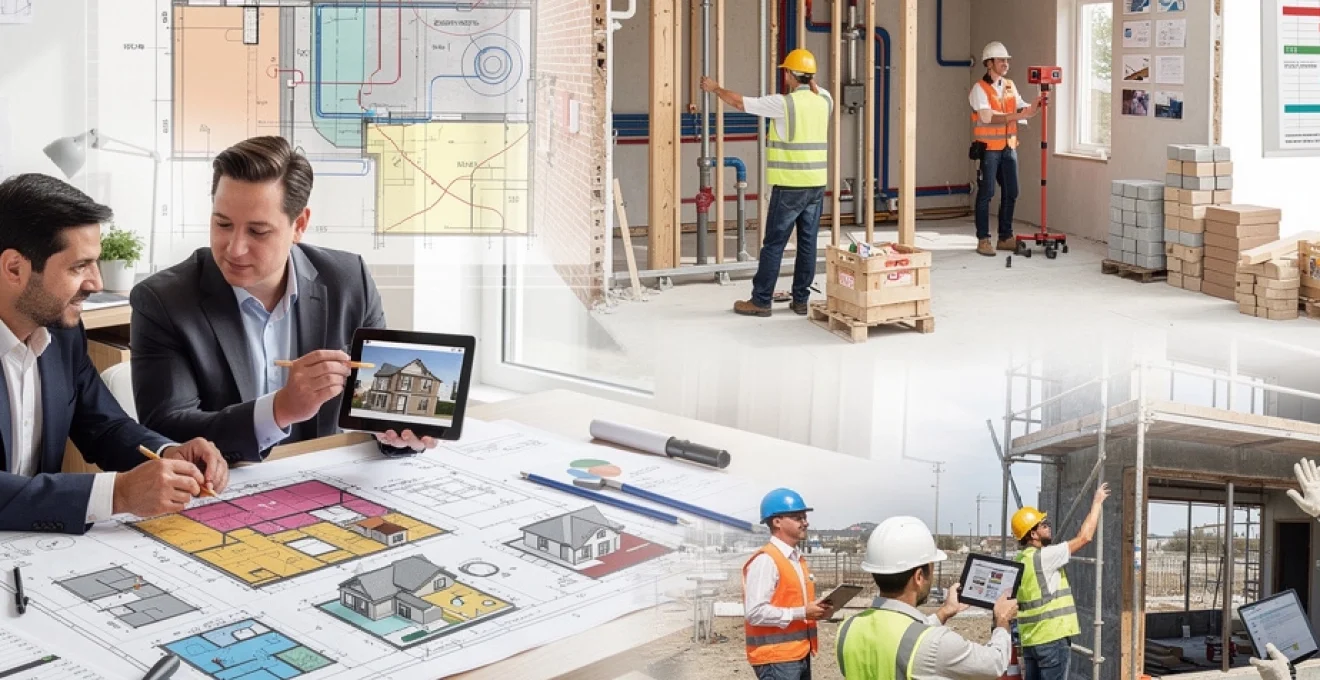
Home renovation projects represent some of the most significant investments homeowners will undertake, often requiring careful orchestration of multiple professionals, complex regulatory compliance, and substantial financial commitment. The construction industry statistics reveal that poorly planned renovations can exceed initial budgets by 20-40%, with timeline delays averaging 6-8 weeks beyond original estimates. Understanding the comprehensive planning process becomes crucial for achieving successful outcomes whilst maintaining cost control and quality standards.
Modern renovation projects demand a methodical approach that encompasses everything from initial feasibility studies through to final handover procedures. The complexity of contemporary building regulations, evolving environmental standards, and sophisticated construction technologies requires homeowners to navigate an increasingly intricate landscape of requirements and opportunities. Professional project management principles, when applied to residential renovations, can dramatically improve outcomes and reduce the stress associated with major home improvements.
Pre-construction planning and feasibility assessment
The foundation of any successful renovation lies in thorough pre-construction planning that examines both the technical feasibility and financial viability of proposed improvements. This initial phase determines whether your renovation vision aligns with structural realities, regulatory constraints, and budgetary parameters. Property assessment begins with understanding the existing building’s condition, age, and construction methodology, as these factors significantly influence renovation complexity and cost implications.
Contemporary renovation planning incorporates digital surveying technologies and building information modelling (BIM) to create accurate baseline documentation. Laser measurement systems and 3D scanning can reveal structural anomalies, dimensional variations, and hidden building services that traditional surveys might miss. This technological approach reduces the likelihood of costly surprises during construction phases and enables more accurate cost estimation from the project’s inception.
Building regulations compliance and planning permission requirements
Navigating the UK’s building regulations landscape requires careful attention to current standards and local authority requirements. Building regulations cover structural integrity, fire safety, accessibility, and energy efficiency aspects that directly impact renovation design and execution. The 2023 updates to Part L regulations have introduced more stringent thermal performance requirements, affecting insulation specifications and glazing choices for renovation projects.
Planning permission requirements vary significantly depending on the scope and location of proposed works. Permitted development rights allow certain types of renovation work without formal planning applications, but these rights can be restricted in conservation areas or for listed buildings. Understanding these constraints early prevents costly redesign work and project delays that occur when proposals require unexpected planning submissions.
Structural engineering survey and Load-Bearing wall analysis
Structural assessments form the cornerstone of renovation planning, particularly when proposed works involve removing walls, creating openings, or adding loads to existing structures. Professional structural engineers utilise advanced analysis software to model building behaviour under various load scenarios, ensuring that proposed modifications maintain structural integrity whilst achieving design objectives.
Load-bearing wall identification requires expertise beyond visual inspection, as modern construction methods can disguise structural elements within apparently non-structural partitions. Ground-penetrating radar and endoscopic surveys can reveal hidden steel reinforcement and structural connections without destructive investigation. This non-invasive assessment approach preserves existing finishes whilst gathering crucial structural information for renovation planning.
Utility infrastructure mapping and service relocation planning
Comprehensive utility mapping prevents disruption to essential services during renovation work and identifies opportunities for infrastructure improvements. Modern homes contain increasingly complex service networks including high-speed data cables, smart home systems, and renewable energy installations that require careful coordination during renovation projects.
Service relocation planning becomes particularly critical when structural works affect existing utility routes. Early engagement with utility providers ensures adequate notice periods for service diversions and prevents delays caused by statutory waiting periods. The integration of new technologies such as heat pump systems or electric vehicle charging infrastructure requires careful consideration of existing electrical capacity and distribution arrangements.
Archaeological and environmental impact considerations
Properties in historically sensitive areas may require archaeological assessment before major renovation work commences. Local authority archaeological departments maintain databases of known sites and can advise whether proposed works require professional archaeological supervision. This requirement particularly affects rural properties and urban areas with historical significance.
Environmental impact assessment encompasses both immediate construction effects and long-term sustainability implications. Modern renovation planning increasingly incorporates whole-life carbon assessment to evaluate the environmental impact of material choices and construction methods. This approach aligns with emerging sustainability standards and can influence material selection and construction methodology decisions.
These environmental considerations extend beyond insulation and heating systems to encompass water efficiency, waste reduction, and biodiversity enhancements in gardens and external spaces. For significant projects, undertaking an Environmental Performance Certificate (EPC) pre- and post-renovation can provide measurable evidence of improvement and support future resale value. Thoughtful specification of low-VOC paints, sustainably sourced timber, and high-performance glazing not only improves your home’s performance but also contributes to healthier indoor air quality and occupant wellbeing.
Property valuation impact and return on investment calculations
Before committing to a major home renovation, it is prudent to analyse how proposed works will affect overall property value and long-term return on investment (ROI). Estate agents and RICS-registered valuers can provide comparative market analysis, highlighting ceiling prices in your area and the uplift typically associated with extensions, loft conversions, and high-specification refurbishments. This market insight helps ensure you do not overspend on upgrades that the local market will not support when you eventually decide to sell.
ROI calculations should take into account both direct financial returns and indirect benefits such as reduced energy bills, improved comfort, and enhanced lifestyle value. Many homeowners now evaluate payback periods for energy efficiency measures, comparing upfront installation costs with projected savings over 10–20 years. By combining valuation advice with robust cost planning, you can prioritise renovation works that deliver the strongest value uplift whilst aligning with your personal objectives for the property.
Professional team assembly and contractor selection
Once feasibility is confirmed, the next stage in planning a home renovation project is assembling the right professional team. The complexity of even medium-sized residential projects often demands coordinated input from architects, structural engineers, contractors, specialist trades, and potentially a project manager or quantity surveyor. Treating your renovation like a small commercial project, with clear roles, responsibilities, and communication channels, significantly reduces the risk of disputes, delays, and cost overruns.
Careful selection of your professional team is as important as the design itself. Beyond technical competence, you are looking for partners who communicate clearly, respect your budget constraints, and demonstrate a track record of delivering similar home renovation projects. Investing time at this stage to vet credentials and expectations pays dividends once construction is underway and decisions must be made quickly.
RIBA architect selection and design brief development
Engaging a RIBA-chartered architect provides assurance that your designer operates to recognised professional and ethical standards. When shortlisting architects, review their portfolios for projects of similar scale, budget, and style to your own renovation goals. Many practices specialise in particular types of work, such as period property refurbishments, contemporary extensions, or deep energy retrofits, so alignment with your project type is essential.
The cornerstone of an effective design process is a clear, well-structured design brief. This document should articulate your functional requirements (such as number of bedrooms or workspaces), aesthetic preferences, sustainability priorities, and budget parameters. A strong brief acts like a roadmap, helping your architect translate aspirations into coherent plans while avoiding scope creep. During early design workshops, you can refine this brief collaboratively, exploring alternative layouts and phasing options before committing to a preferred scheme.
Principal contractor vetting through construction line database
Selecting a principal contractor capable of coordinating all works on site is one of the most critical decisions in any home renovation project. In the UK, many clients use the Constructionline database and similar pre-qualification platforms to identify contractors who meet established standards for health and safety, financial stability, and technical competence. While not a guarantee of performance, Constructionline accreditation indicates that a contractor has undergone independent vetting and complies with baseline industry requirements.
Beyond database checks, you should request recent client references, visit completed renovation projects where possible, and review example contracts and programmes of work. Asking potential contractors how they manage quality control, site supervision, and communication provides valuable insight into their working methods. For substantial projects, consider issuing a detailed tender package and evaluating responses not only on cost but also on methodology, proposed team structure, and programme realism.
Specialist trade contractors and supply chain management
Complex home renovation projects often require specialist trade contractors such as joiners, tilers, roofing specialists, renewable energy installers, and smart home integrators. Whether these trades are engaged directly by you or subcontracted through the principal contractor, clarity on scope, sequencing, and interfaces between disciplines is essential. Poor coordination between trades is a common cause of defects and rework, particularly around bathrooms, kitchens, and building services installations.
Supply chain management has become a more prominent concern since material lead times and prices have fluctuated significantly in recent years. Early selection and reservation of key items—such as windows, doors, tiles, and sanitaryware—helps avoid project slowdowns when long lead products fail to arrive on time. Agree in advance who is responsible for ordering which materials, and ensure that specifications are frozen in sufficient time to place orders without incurring premium delivery charges.
Project management consultant and quantity surveyor appointment
For larger or more technically demanding home renovation projects, appointing an independent project management consultant can provide the structured oversight required to keep works on time and on budget. A professional project manager coordinates design team activities, chairs site meetings, monitors risk, and provides you with concise progress reports. This role can be particularly valuable if you have limited time to be on site or are unfamiliar with construction processes.
A quantity surveyor (QS) contributes detailed cost planning and commercial management expertise. From initial cost estimates through to tender evaluation and final account settlement, the QS maintains a transparent record of expenditure and anticipated commitments. Their involvement can help prevent budget drift, particularly when design changes or unexpected site conditions arise. Think of the QS as your financial navigator, ensuring the renovation journey reaches its destination without sinking under unanticipated costs.
Technical specifications and material procurement
With the design team and contractor framework in place, attention turns to technical specifications and the procurement of materials. This phase translates conceptual designs into detailed documentation that builders can price accurately and construct reliably. Specifications cover everything from structural steel sizes and insulation types to door ironmongery, paint finishes, and electrical fixtures. The more comprehensive and coordinated these documents are, the lower the likelihood of misinterpretation on site.
Developing robust technical specifications supports both performance and durability. For example, specifying moisture-resistant board in wet areas, selecting appropriate vapour control layers, and designing airtightness details all reduce the risk of future defects. Similarly, choosing flooring materials rated for the expected footfall and specifying high-quality fixings for kitchen cabinetry can extend the life of your renovation and reduce long-term maintenance costs.
Material procurement strategy should balance quality, availability, and budget. In recent years, homeowners have increasingly prioritised sustainable materials, favouring products with Environmental Product Declarations (EPDs), FSC certification, or recycled content. Where premium finishes are important—such as bespoke joinery, stone worktops, or high-end glazing—early engagement with specialist suppliers is vital to secure production slots and agree realistic delivery dates. For more standardised items, your contractor may leverage existing supplier relationships to secure competitive pricing, but ensure that any substitutions still meet agreed performance criteria.
Construction phase management and quality control
Once construction begins, the focus shifts from planning to execution. Effective management of the construction phase is central to delivering a successful home renovation project from start to finish. At this stage, clear lines of communication, adherence to health and safety requirements, and disciplined progress monitoring are essential. Even the best-laid plans can be challenged by unforeseen conditions, weather, or supply issues, so a structured approach to decision-making and change management is crucial.
Regular site meetings, documented actions, and up-to-date programmes provide the backbone of construction phase control. As the client, you should feel informed but not overwhelmed; your professional team should filter technical detail and present key decisions and risks in an accessible format. Think of this phase as steering a ship through changing tides—constant small adjustments keep the project on course toward the agreed completion date and budget.
Site establishment and health and safety executive compliance
Proper site establishment is the first step in safe and efficient construction. This includes setting up secure boundaries, welfare facilities, material storage areas, and protected access routes for both workers and, where necessary, residents who remain in occupation. For projects under the Construction (Design and Management) Regulations 2015, roles such as Principal Designer and Principal Contractor must be formally appointed, and a Construction Phase Plan produced to address health and safety risks.
Compliance with Health and Safety Executive (HSE) requirements is non-negotiable. This encompasses safe working at height, control of dust and noise, proper handling of hazardous materials such as asbestos, and appropriate use of personal protective equipment. You should expect your contractor to undertake regular toolbox talks, maintain risk assessments and method statements (RAMS), and promptly report any incidents or near misses. A well-managed site not only protects workers but also reduces the likelihood of accidents that could delay your renovation project.
Progress monitoring through critical path method scheduling
To maintain control over time and sequence of works, many professional teams utilise Critical Path Method (CPM) scheduling. This project planning technique identifies the sequence of tasks that directly determine the overall project duration. Activities on the critical path have no float; any delay in these tasks will push back the completion date unless corrective action is taken. Understanding this path allows you and your team to focus attention where it matters most.
In practice, CPM schedules are often visualised using Gantt charts or specialist project management software. Regularly updating the programme to reflect actual progress provides early warning of slippage, enabling mitigation measures such as resequencing trades, extending working hours, or accelerating critical activities. For homeowners, reviewing a simplified version of the schedule at each site meeting can demystify the process and clarify why certain decisions—such as freezing design changes at agreed milestones—are necessary to protect the timeline.
Building control inspections and sign-off procedures
Throughout the construction phase, your local authority building control department or an approved inspector will carry out staged inspections to verify compliance with building regulations. Typical inspection points include foundations, drainage, structural elements, insulation installation, and final completion. Coordinating these visits with key construction milestones ensures that any issues are identified early, when they are easier and less costly to rectify.
Maintaining an organised record of inspection reports, compliance certificates (for gas, electrical, and boiler installations), and product warranties simplifies the final sign-off process. At project completion, building control will issue a completion certificate, confirming that the works meet regulatory standards. This document is essential for future property sales and mortgage applications, so it should be stored securely alongside other renovation documentation such as as-built drawings, manuals, and guarantees.
Variation orders management and cost control systems
Even with meticulous planning, most home renovation projects will encounter changes—whether due to unexpected site conditions, evolving client preferences, or product availability issues. These alterations are typically formalised through variation orders, which adjust the original contract scope, cost, or programme. Without a disciplined process for managing variations, budgets can quickly spiral and relationships between client and contractor may become strained.
Establishing a clear variation process from the outset is therefore essential. This usually involves written proposals outlining the change, associated costs, and any impact on the completion date, followed by formal client approval before additional work proceeds. A robust cost control system, often managed by a quantity surveyor, tracks approved variations against the original budget and contingency allowance. Regular financial reports, sometimes referred to as cost value reconciliations, keep you informed of current spend, committed costs, and forecast final expenditure, allowing you to make informed decisions about prioritising or deferring non-essential upgrades.
Final inspections and project handover procedures
The concluding phase of a home renovation project focuses on verification, documentation, and transition into everyday use. As construction activities wind down, attention turns to final inspections, resolution of outstanding defects, and formal handover from contractor to client. Handling this stage with the same rigour as the earlier phases ensures that the finished home performs as intended and that you have the information needed to operate and maintain new systems.
Typically, the contractor will notify you and the project team when the works are approaching practical completion. At this point, you will carry out a detailed inspection, often accompanied by your architect or project manager, to identify any outstanding issues or snagging items. These may include minor cosmetic defects, adjustments to doors or windows, incomplete sealant work, or commissioning tweaks to heating and ventilation systems. A comprehensive snagging list is then issued to the contractor with an agreed timeframe for rectification.
Alongside physical inspections, the handover process should include the provision of operation and maintenance manuals, product warranties, certificates, and as-built drawings. For projects involving sophisticated building services, a structured handover meeting or demonstration session is advisable so that you understand how to operate controls, set heating schedules, and maintain filters or ventilation systems. Think of this as the user manual for your new home environment, ensuring you can fully realise the benefits of your investment.
Once snagging works are completed and building control has issued the final completion certificate, the project moves from construction into the defects liability period, during which the contractor remains responsible for addressing latent issues that emerge under normal use. At the end of this period—typically 6–12 months—a final inspection and settlement of the account take place. By following this structured handover process, you gain confidence that your home renovation project has been delivered to the agreed quality standard, with robust documentation and support in place for the years ahead.